GUÍA DE COMPRA
Kamado barbecue: what it is, how it works and which one to buy in Spain (2026)
The kamado barbecue, plainly: how the ceramic works, which types and sizes exist, what it really costs and which models deserve your money in Spain this year.
Quick answer
A kamado barbecue is a charcoal grill with a thick ceramic body, a domed lid and two air vents that runs from 80 to 400 °C as a grill, oven and smoker. Most people should pick the 46 cm size, for 4-8 diners; in Spain, our 2026 choice is the Kamado Joe Classic III.
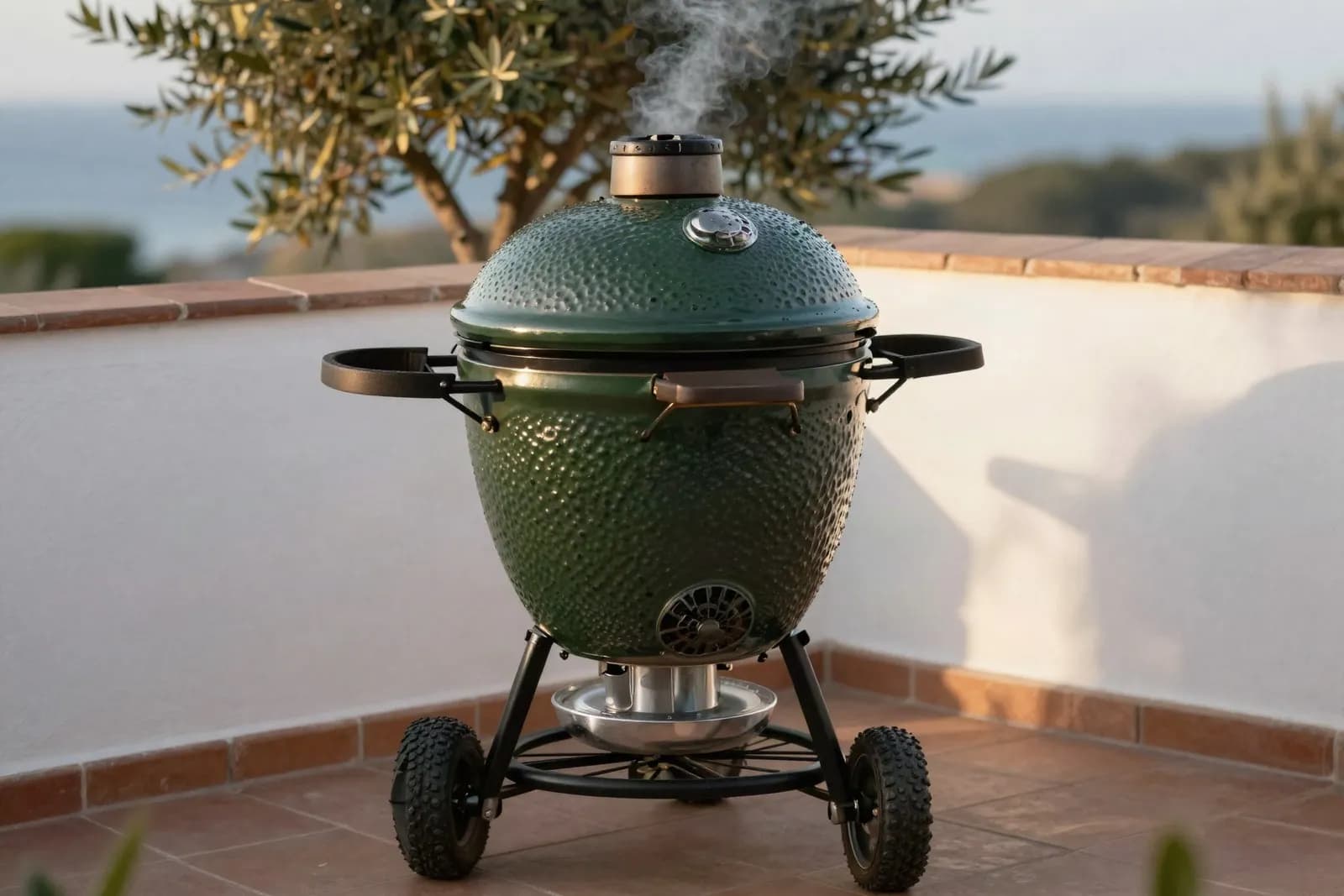
A kamado barbecue is a lump-charcoal grill with a thick ceramic body and a domed lid that controls temperature through two air vents, one at the bottom and one at the top. With a deflector between fire and food it runs from 80 to 400 °C and works as a grill, an oven and a smoker.
This page is the full map before you buy. If you only want the definition and the history, you will find them in what is a kamado; if you have already decided and need the final checklist, go to your first kamado. Here we cover everything in between: how a kamado grill behaves against gas or a thin-steel barbecue, which types and sizes exist, what each price tier costs and which models we recommend in Spain in 2026. I write from Torrevieja, after six years of cooking on kamados, with a Big Green Egg Large as my test bench. Nobody pays us for reviews.
| Grate size | Diners | Example models | Best for |
|---|---|---|---|
| 33 cm / 13" | 2-4 | Kamado Joe Joe Jr and Big Green Egg MiniMax | Couples, balconies and trips |
| 40-46 cm / 16-18" | 4-8 | Kamado Joe Classic III and Big Green Egg Large | The default size for families |
| 51-59 cm / 20-23" | 6-10 | Monolith LeChef Pro 2.0 XL and Kamado Bono Grande XXL | Large families who entertain often |
| 61 cm+ / 24" | 8-12 | Kamado Joe Big Joe III and Big Green Egg XL | Hosts, events and whole cuts |
How a kamado barbecue works: air and ceramic
All the control of a kamado barbecue comes down to two parts: the bottom vent, a door level with the charcoal, and the top vent, at the crown of the dome. Air comes in at the bottom, feeds the embers and leaves hot through the top. Open up and the temperature rises; close down and it falls. There is no burner and no thermostat, only oxygen and patience. The exact settings and the tricks for nailing each range are in our guide to kamado temperature control.
The other half of the trick is the thick ceramic. The walls store heat and give it back as radiation, so the grill barely reacts when you lift the lid or a sea breeze picks up. That thermal mass explains three things you will notice in the first week: the temperature holds for hours on very little charcoal, meat loses less juice because the inside stays closed and moist, and a ten-hour smoke does not need constant babysitting.
The deflector is the third piece. Placed between the fire and the grate, it blocks direct radiation and turns the chamber into a convection oven. Without it you grill over live fire; with it you make brisket, bread or pizza. In what is a kamado we cover the full anatomy and where the design comes from. For buying purposes, keep this idea: air decides how much heat there is, ceramic holds it, and the deflector decides how it reaches the food.
Kamado versus a gas grill or a classic charcoal kettle
The question we get most is not which kamado to buy, but whether it is worth it compared with what you already have.
Against a thin-steel charcoal grill, kettle style, the kamado wins on stability and fuel use. Thin steel leaks heat everywhere, so long cooks mean topping up charcoal and fighting spikes and drops. A kamado, by contrast, holds 110-130 °C for a whole day on a single load. The kettle is still lighter, cheaper and perfect for occasional direct grilling.
Against a gas grill, the difference is the temperature ceiling and the flavour. Gas lights instantly and adjusts with a knob, but it rarely goes past 250-280 °C and adds no charcoal aroma. A kamado grill reaches 400 °C for pizza or for searing a big steak and drops to 80-110 °C for smoking, something a patio gas grill does not do well. We go head to head in kamado vs gas barbecue.
What the kamado asks in return matters too: mid-size ceramic models weigh 70 to 100 kg, take 15-20 minutes to settle and require you to learn the vents. If you cook every week and like the idea of smoking or baking, it pays off handsomely. If you grill four times a year, it does not.
Types of kamado barbecue: ceramic, insulated steel and portable
Not every kamado barbecue is ceramic, and it is worth knowing before you compare prices.
Refractory ceramic. The classic kamado and the one we recommend for most people: Kamado Joe, Big Green Egg, Monolith, Primo or Kamado Bono. Thick walls, lots of thermal mass, serious weight and, from the serious brands, a long warranty on the ceramic. It holds steady temperatures best and lasts the longest.
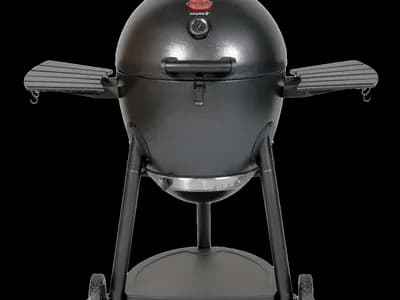
Insulated steel. Here the dome is enamelled steel with a double or triple wall and insulation between the layers. The best-known example is the Char-Griller Akorn, far lighter and cheaper than a ceramic unit; at the other end sits the Weber Summit Kamado E6, double-walled steel with a 61 cm grate. They heat up faster and will not crack if knocked, but they hold less heat and the metal suffers more from humidity and salt air. They work the same way, with two vents and a deflector.
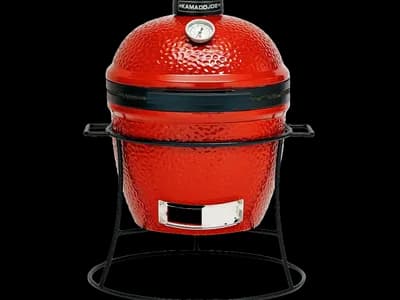
Small and portable. Kamados with a 33-34 cm grate such as the Kamado Joe Joe Jr, the Big Green Egg MiniMax or the Monolith Icon, and in steel the Akorn Jr. They are the same cooking at a smaller scale: good for couples, balconies or taking to the beach house, although small ceramic still weighs 30-35 kg.
Sizes: how many people each kamado feeds
The size of a kamado barbecue is measured by the grate diameter, not by its height or outer body. The rule we use across mikamado is short: 33 cm for 2-4 people, 46 cm for 4-8 and 61 cm for 8-12. In between there are 38-40 cm and 50-59 cm sizes depending on the brand.
The 46 cm, 18-inch size is the default recommendation. It is the size of the Kamado Joe Classic and the Big Green Egg Large: it fits two whole chickens or several trimmed racks of ribs and leaves room for guests. The most common mistake is going too small. Empty, a kamado looks huge; with a shoulder of lamb inside, not so much. That is why we suggest counting your usual diners and adding a margin.
Drop to 33 cm only if space dictates it or you nearly always cook for two. Go up to 61 cm if you host big meals often or want several heat zones at once, knowing the ceramic body easily tops 100 kg and burns more charcoal per session.
Remember too that the grate is not the whole grill: a 46 cm Classic takes up considerably more room with its cart and side tables, so measure your terrace first. The full reasoning is in which kamado size to choose and, if you would rather let a tool work it out, in our size calculator.
How much a kamado barbecue costs in Spain
The price of a kamado barbecue depends mainly on material, size and what comes in the box. Think in three tiers.
Entry level. Insulated-steel kamados and ceramic units from budget brands, usually under €800. They do the job to get started, but the ceramic warranty tends to be shorter, the hardware flimsier and spare parts harder to find in Europe.
Mid range. Thick ceramic from an established brand in the 46 cm size. A Classic or a Large sits around €1,200-1,900 depending on the version and what is included: cart, side tables, deflector or multi-level grates. This is the sweet spot for most people and where our recommendations cluster.
Premium. 56-61 cm sizes, models with electronic control and complete bundles, usually above €2,000.
Two warnings that save grief. First, compare the price of the complete setup: some brands include the deflector, cart and grates as standard while others sell every piece separately, and that is easily where the gap between two models goes. Second, keep some budget for the first year: a deflector if it is not included, a reliable thermometer, a cover and good charcoal.
These tiers are indicative. Prices move often, so Amazon is the source of the price at the moment of purchase: on every product page we link to the listing so you can see the current price before you decide. To line several models up side by side, use the comparison tool.
Which kamado barbecue to buy in Spain in 2026
These are the kamado barbecues we recommend today, each for a specific profile. The full ranking, with criteria and scores, is in best kamado 2026.
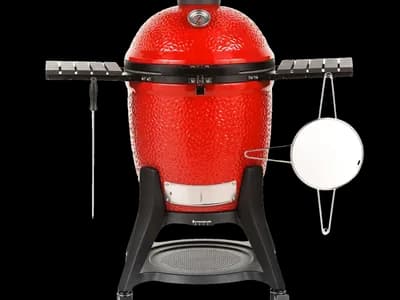
Kamado Joe Classic III. Our 2026 verdict, scoring 9.4 out of 10. 46 cm ceramic, multi-level grates and a very complete standard kit. For the family that wants one grill for everything and no extra purchases for years.
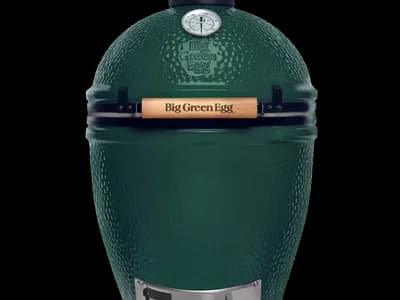
Big Green Egg Large. The classic benchmark and our test bench in Torrevieja. For those who value the dealer network and a huge accessory ecosystem, knowing that almost everything is sold separately. We pit them against each other in Big Green Egg Large vs Kamado Joe Classic III.
Monolith Classic Pro 2.0. The European alternative in the same size, well finished and with its own accessory range. For anyone who wants to step outside the usual duel; we compare it in Classic III vs Monolith Classic Pro 2.0.
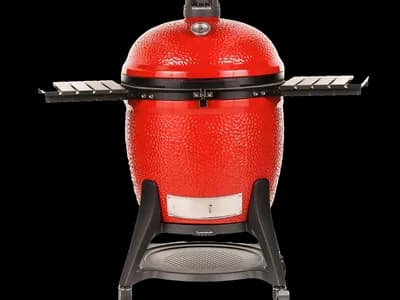
Kamado Joe Big Joe III. A 61 cm grate for hosts who cook for ten or more and want to fit whole cuts.
Kamado Joe Joe Jr. Real ceramic in a tabletop format, for couples and balconies.
Char-Griller Akorn. The insulated-steel kamado for trying the concept on a small budget before making the jump to ceramic.
What to start with: accessories and charcoal
A kamado barbecue fresh out of the box already cooks, but it cooks better with four well-chosen extras. The complete, reasoned list is in essential kamado accessories; here are the basics.
Deflector. If your model does not include one, it is your first purchase: without it there is no indirect cooking and no smoking. At Big Green Egg it is called the ConvEGGtor and is sold separately; full-size Kamado Joe models ship with it as standard.
Probe thermometer. The dial on the lid reads the air in the dome and tends to drift. To know when the meat is done you need a probe, and a Bluetooth model such as the Inkbird IBT-4XS is more than enough for year one.
Clean lighting. No lighter fluid: porous ceramic soaks it up and gives it back as off-flavours for months. A hot-air starter like the Looftlighter gets charcoal going in a few minutes, and a pair of leather gloves lets you move grates and deflector while hot.
Lump charcoal. A kamado wants large pieces of hardwood lump, not briquettes with binders. Kamado Joe Big Block XL is a safe bet for long cooks, and Orework Spanish holm oak is a great local option. Why piece size matters and how to pick a bag is explained in which charcoal to use in a kamado.
Maintenance and lifespan in a coastal climate
A well-kept ceramic kamado barbecue lasts fifteen to twenty years, and serious brands put a long warranty on the ceramic. What wears out first is everything else: gasket, hinge, bands, hardware and the lid thermometer. On the coast, salt air speeds that up.
Basic maintenance is simple and we cover it in kamado maintenance and cleaning. The ceramic almost cleans itself: a hot burn with the lid closed turns built-up grease into ash, and then you just brush the grate. No soap, degreaser or oven cleaner inside. Empty the ash regularly, especially after rain, because damp ash holds water and attacks the metal parts.
In places like Torrevieja the enemy is salty air. It does not harm the ceramic, but it rusts exposed metal within months. The routine that works for us: let the kamado dry before covering it, use a breathable cover and never airtight plastic, and wipe the hinge and bands with oil every few weeks. It is all in how to protect a kamado from salt air and humidity.
The gasket is the only part designed to wear out. When the kamado will not come down in temperature even with the vents shut, or you see smoke escaping around the lid, it is time to check it; replacing it is an afternoon job and we walk you through it in how to replace a kamado gasket.
A kamado barbecue is neither the cheapest nor the fastest option, but it is the most versatile: a single ceramic body that grills, smokes and bakes for decades on little charcoal. If we had to sum up the decision in one line, it would be this: 46 cm of ceramic from an established brand, with the Kamado Joe Classic III as the default pick for 2026, a deflector and a thermometer from day one and a cover if you live near the sea. From there, fine-tune the size with the calculator, line up models in the comparison tool and go through the final checklist in your first kamado before you hit buy.
Gear featured in this guide

GO DEEPER
Continue with these
- Related guide
What Is a Kamado: The Complete Guide
What a kamado is, how it works and what it's for: the honest guide to understanding the ceramic grill before you buy.
- Related guide
Your first kamado: the complete pre-purchase guide
Size, materials, brand and budget. Everything you have to decide before clicking Buy, told by someone who has made enough mistakes.
- Related guide
What Size Kamado to Buy: Inches, cm and Guests
A kamado is sized by its grill diameter. Here is exactly how many inches you need for your crowd and your cooking, without buying too small.
- Related guide
Kamado vs gas grill: which one really suits you
Real cooking, flavour, total cost and convenience. A long comparison without paternalism so you can decide before spending 1,500 euros on either.
- Editorial comparison
big green egg large vs kamado joe classic iii
The classic kamado matchup: the Big Green Egg Large, the indestructible pioneer with the widest accessory network, again
- Glossary term
Refractory ceramic
High-density ceramic that absorbs, stores and radiates heat between 70 and 400 °C without cracking.
- Glossary term
Heat deflector
Ceramic plate placed between the coals and the grate to turn direct fire into indirect cooking.
- Glossary term
Top vent (damper)
Exhaust vent on top of the kamado that regulates draft and therefore cooking temperature.
Frequently asked questions
What is a kamado barbecue?
It is a lump-charcoal grill with a thick ceramic body and a domed lid that controls temperature through two air vents. With a ceramic deflector between fire and food it runs from 80 to 400 °C, so it works as a grill, an oven and a smoker in a single unit. There are also insulated-steel versions that work the same way, with less thermal mass.
Is a kamado barbecue worth it?
Yes, if you cook at least every other week and like the idea of smoking, baking pizza or doing long cooks: it uses little charcoal, holds temperature for hours and the ceramic lasts fifteen to twenty years. If you only grill direct three or four times a year, a classic charcoal grill will serve you better. We break it down in kamado pros and cons.
What size kamado do I need?
Size is measured by grate diameter. The rule: 33 cm for 2-4 people, 46 cm for 4-8 and 61 cm for 8-12. The 46 cm (18-inch) size is the safe choice for most families. Count your usual diners, add a margin for guests and check it with the calculator.
How long does a kamado barbecue last?
Ceramic from a serious brand is built to last fifteen to twenty years, and usually carries a long warranty. What gets replaced are the wear parts: the lid gasket every few years depending on use and, in coastal climates, the hinge, bands and hardware if they are not protected from salt air. Steel kamados last less if they live outdoors.
Can you use a kamado on a terrace or balcony?
Generally yes, if it is portable, your building's bylaws and the local ordinance do not forbid it and you do not bother the neighbours. Cooking with the lid closed produces far less smoke than an open barbecue. Give it clear space around it and a firm base, because ceramic is heavy. The legal detail is in kamado on a terrace and community rules.
Ceramic or steel kamado?
For most people, ceramic: it holds much more heat, keeps temperatures steady on less charcoal and lasts decades. Insulated steel, like the Char-Griller Akorn, weighs and costs far less and heats up faster, but loses more heat and suffers from humidity and salt air. It is a good way in if you are not yet sure a kamado is for you.