TÉCNICA
What charcoal to use in a kamado (and which to avoid)
Quebracho or holm-oak lump wins; supermarket briquettes and chemical lighter fluid stay out. Here is what to load and why.
Quick answer
In a kamado, hardwood lump charcoal rules — quebracho, holm oak or marabú: it burns clean, leaves only 5-7% ash and lasts through long cooks. Compressed briquettes with binders and lighter fluid are out: they produce more ash and chemical flavours, and they clog the fire chamber's air intake.
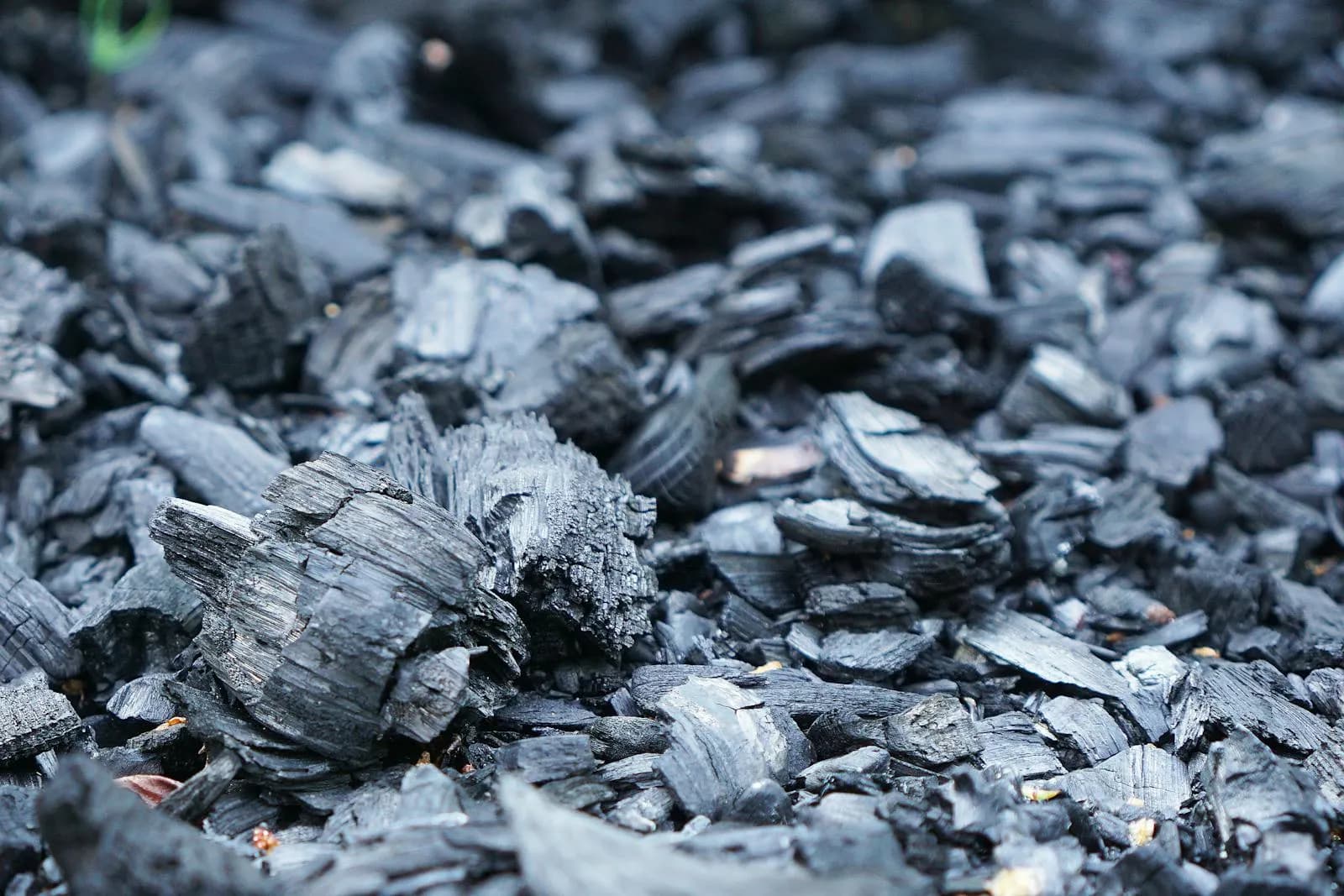
Charcoal is the only fuel a kamado runs on, and almost nobody spends ten minutes on it before grabbing the first bag at the supermarket. Mistake. The ceramic holds heat for hours, but that heat comes from the embers: bad charcoal gives the kamado off-flavours, fills it with ash and forces you to reload halfway through an eight-hour brisket.
At mikamado we test bags constantly, and the conclusion is always the same: in a kamado, lump charcoal rules over briquettes, and lighter fluid has no place at all. The gap between quebracho lump and chemical-laced petrol-station charcoal is not subtle: it is the difference between cooking and ruining a 40-euro cut of meat.
This guide is straight to the point. You will learn why lump wins in ceramic, which woods to use for smoking and which to avoid, what you must never put in a kamado, how much charcoal to load by cook type, and where to buy reliable brands in Spain. With real numbers for temperature, duration and quantity.
Lump vs briquettes: why lump charcoal rules in a kamado
Lump charcoal is simply carbonised wood: no binders, no starch, no borate. It lights in 12-15 minutes, reaches 350-400 °C effortlessly for a pizza, settles to a stable 110 °C for a long smoke and, once you shut the vents, self-extinguishes so you reuse what is left next cook. That reuse is key in ceramic: with a well-sealed kamado, a quality bag of lump lasts roughly twice as long as in an open grill.
Pressed briquettes are a different animal. They contain a binder to hold their shape, light more slowly, throw more ash (3-5% more by volume) and many supermarket brands carry chemicals that a kamado, being a sealed chamber, concentrates. The extra ash is the real practical problem: it clogs the lower air intake and chokes your temperature exactly when you are six hours into a cook. On an open grill you do not notice; in a kamado you do.
The honest exception: for very long, stable low-temperature sessions, a pure additive-free briquette — like ProFagus Grillis or BlackSellig coconut — holds a more uniform ember bed than irregular lump. But for 90% of cooks, and certainly anything above 250 °C, lump wins on clean flavour, control and less ash. If you are only buying one bag, make it hardwood lump.
Smoking wood is not fuel: it goes in separately, in chunks
Smoking wood is not fuel: you do not load it for heat, you add it separately from the charcoal and purely for aroma. In a kamado it goes in as chunks spread among the embers, not as fine chips, which burn off in two minutes and flare instead of smoking. And a little goes a long way: the sealed ceramic circulates that smoke for hours, so overdoing it is the classic mistake that leaves an ashtray taste. Which species suits which cut, how many chunks to use and where to place them is all in our guide to smoking woods for a kamado.
What you must NEVER use in a kamado: lighter fluid and petrol-station charcoal
Lighter fluid is the kamado's number-one enemy. The porous ceramic absorbs the fluid's hydrocarbons and releases them for months: a single use can leave your kamado smelling of kerosene on every cook for half a year, with no easy way to reverse it. The same goes for cheap chemical firelighters and pre-soaked "instant light" briquettes: in a sealed oven those vapours do not vent, they concentrate in the food.
Always light dry. The cleanest and cheapest option is wax or vegetable-fibre cubes (two or three, in the centre of the pile, 12-15 minutes to ember), or an electric blower like Looftlighter or Looftlighter Air that lights smoke-free in 60-90 seconds. If you come from a traditional grill, a chimney starter like the Weber Rapidfire also works, though a kamado needs it less.
The other big reject is anonymous petrol-station or bazaar charcoal. It is usually mixed softwood, poorly carbonised, with tiny pieces that slip through the grate and a high share of fines that produce only ash. You spot it because the bag names neither the wood species nor the origin: if it does not say "quebracho", "holm oak", "marabú" or "hardwood", be suspicious. A 1,500-euro kamado fed with 3-euro-a-bag charcoal cooks like a 30-euro grill.
How much charcoal to load in the kamado for each type of cook
The most important kamado rule runs counter to intuition: you always load the basket full, no matter what. Temperature is not controlled by the amount of charcoal but by the air vents. Filling the basket and then choking the oxygen gives you a stable session; loading little charcoal to "run a low temperature" only gets it to die out mid-cook.
For short, high-heat cooks — pizza at 350-400 °C, a quick-seared ribeye, vegetables — light a single spot in the pile with one cube: the ember front spreads on its own and in 15 minutes you are ready. The unburnt charcoal is saved for next time. For a medium session (whole chicken, ribs in 3-4 hours at 150-160 °C) light one or two spots and let it climb slowly.
For real low & slow — brisket or pulled pork of 8-14 hours at 110-120 °C — a basket filled to the brim is non-negotiable: a well-sealed Classic/Large burns around 1 kg of lump per hour at that temperature, so 6-8 kg cover the whole night without reloading. A dedicated charcoal basket like the stainless Onlyfire helps here, keeping the pile compact and improving the draught. A 9-15 kg bag — Kamado Joe Big Block XL, Jealous Devil Quebracho or Orework Spanish holm oak — gives you between two long sessions and a whole season of short cooks.
Kamado charcoal brands and where to buy in Spain
The Spanish market now has excellent options that did not exist five years ago. For top-tier lump, the benchmark is Jealous Devil 100% White Quebracho (15.8 kg): large, dense pieces, almost no fines, that burn very long and withstand sear temperatures without crumbling. The Kamado Joe Big Block XL (9.1 kg) is the brand option designed for ceramic, with pieces sized just right for the basket.
For local, sustainable product, Orework Spanish Holm Oak (15 kg) is hard to beat: Iberian holm oak, very stable embers and zero food miles. TODOBRASA Marabú Premium (10 kg), from Cuban marabú, is another favourite for its density and burn time. For a tight budget and big-box availability, Big K Lumpwood (10 kg) does the job without pretension, and Kingston Tools Lumpwood (750 g) is handy to try before committing to a big bag.
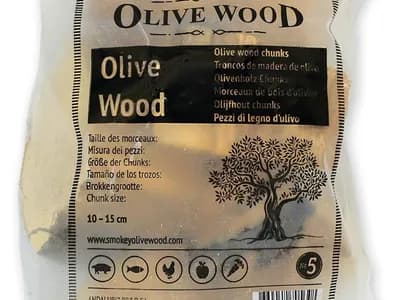
In pure briquettes — if you want them for those ultra-long sessions — ProFagus Grillis and PINI COAL Premium are the reliable ones; BlackSellig coconut briquettes last an age. For smoke, round it off with a couple of chunk bags: fruit (Weber Apple, Grill Republic cherry), domestic olive (Smokey Olive Wood) and hickory/pecan (Weber, Axtschlag) cover everything you will cook in the first year.
Where to buy: specialist kamado and barbecue shops carry the best range of premium lump and chunks; big-box stores cover briquettes and basic lump; and online you find the import brands (Jealous Devil, Kamado Joe) that are rarely in a physical store. Buy the big bag of your favourite lump and a couple of chunk bags, and you have fuel for months.
In short: in a kamado, load hardwood lump charcoal — quebracho, holm oak or marabú — light it with wax cubes or an electric blower, and save the briquettes for another grill. Smoking-wood chunks go on top, sparingly, and lighter fluid never comes into the house. Get the fuel right and the kamado does the rest. If you are torn between bags or want to estimate how much charcoal you will burn per month given your cooks, drop by our charcoal comparator and load calculator: they tell you which bag and how many kilos for what you actually cook.
Gear featured in this guide
Recipes to get started
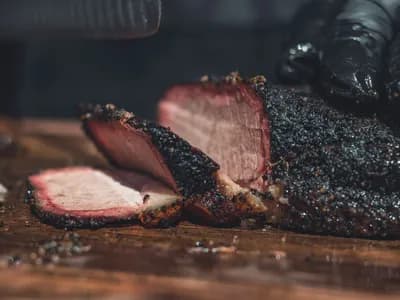
Low-and-slow smoked brisket
The kamado acid test. Ten hours at 110°C, a deep bark, a pink smoke ring and a texture that gives way under the weight of a fork.
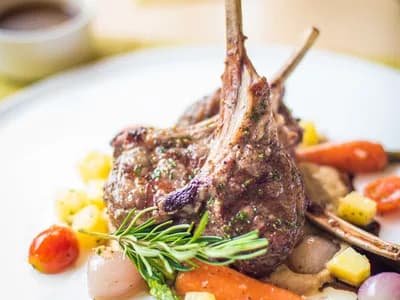
Levante-style smoked leg of lamb
A boneless leg of lamb, marinated in rosemary, lemon and Costa Blanca olive oil, smoked over local almond wood. The kamado paying tribute to the Alicante countryside.
GO DEEPER
Continue with these
- Related guide
How to light a kamado: the step-by-step method
No petrol, no weird tablets and no 45-minute waits. The cone method, airflow control and the mistakes that prevent 80% of the frustration.
- Related guide
Kamado Temperature Control: The Pitmaster's Guide
The dual airflow system, the rookie mistake of overshooting, and why the dome thermometer lies. This is the skill that separates a beginner from a pitmaster.
- Related guide
Minion Method and Snake Method: 12 Hours of Kamado Fire
How to build the charcoal bed to hold 110-120 °C for 8-14 hours without refueling or lifting the lid. The mother technique of low & slow, step by step.
- Recipe to practice
Low-and-slow smoked brisket
The kamado acid test. Ten hours at 110°C, a deep bark, a pink smoke ring and a texture that gives way under the weight of a fork.
- Recipe to practice
Levante-style smoked leg of lamb
A boneless leg of lamb, marinated in rosemary, lemon and Costa Blanca olive oil, smoked over local almond wood. The kamado paying tribute to the Alicante countryside.
- Editorial comparison
big green egg large vs kamado joe classic iii
The classic kamado matchup: the Big Green Egg Large, the indestructible pioneer with the widest accessory network, again
- Glossary term
Low & slow
Cooking at low temperature (95-130 °C) for many hours to tenderise tough cuts and develop deep smoke.
- Glossary term
Lump charcoal
Irregular-chunk hardwood charcoal with no binders, made by pyrolysis.
- Glossary term
Briquette
Uniformly compressed charcoal with binders; burns steadily but generates ash and off-flavours.
Frequently asked questions
Can I use ordinary briquettes in a kamado?
Only pure additive-free briquettes, like ProFagus Grillis or BlackSellig coconut, and reserved for very long low-temperature sessions. Avoid supermarket briquettes with binders or pre-soaked ones: in a sealed kamado they release chemicals and excess ash that clogs the air intake. For almost everything, lump is better.
Why can't you use lighter fluid in a kamado?
Because the kamado's porous ceramic absorbs the fluid's hydrocarbons and releases them for months, leaving a kerosene taste on every cook that is nearly impossible to remove. As a sealed chamber, those vapours concentrate in the food instead of venting out. Always light with wax cubes or an electric blower.
What is the best charcoal for a kamado?
Hardwood lump charcoal. For top tier, quebracho (like Jealous Devil) and Spanish holm oak (Orework) stand out for large pieces, long-lasting embers and very little ash. Kamado Joe Big Block XL and TODOBRASA marabú are also excellent. The key: the bag should name the wood species and contain no binders.
How much charcoal do you put in for a long smoke?
The basket filled to the brim, always. For an 8-14 hour low & slow at 110-120 °C, a well-sealed Classic/Large kamado burns around 1 kg of lump per hour, so 6-8 kg cover the whole night without reloading. You do not control temperature with less charcoal but by closing the air vents once it is lit.
Which wood do I use for smoking and which do I avoid?
To start, fruit woods or olive: mild smoke that forgives excess. The only one to handle with tongs is mesquite, and only on heavily seared red meat. The full pairing, species by species and food by food, is in our guide to smoking woods for a kamado.