COMPARATIVA
Kamado or Weber: kettle, Summit Kamado and open barbecue compared
Three ways to cook over charcoal, and one that is called a kamado without being ceramic. What changes in temperature, charcoal, smoke and space, and when each makes sense.
Quick answer
If you cook over direct heat a few times a year, a Weber-style kettle or an open barbecue is enough. If you want to smoke for hours, bake pizza and burn less charcoal, a ceramic kamado wins on airtightness and thermal mass. The Weber Summit Kamado sits in between: insulated double-wall steel, not ceramic, lighter and quicker to start.
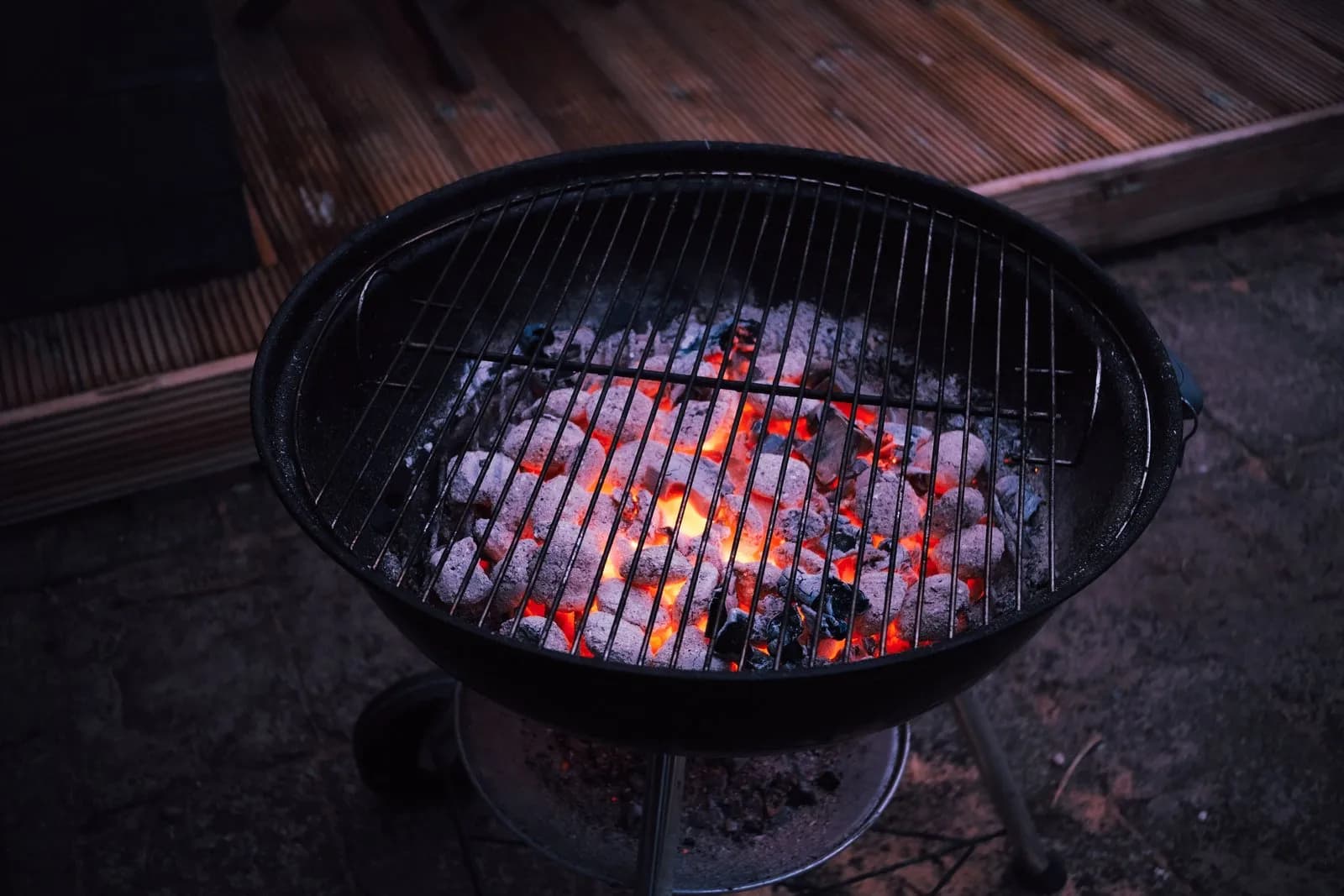
"Kamado or Weber" is a loaded comparison, because Weber sells both: the dome-shaped kettle that has sat in gardens for decades and a Summit Kamado that has the shape and the two vents of a kamado, but not the ceramic. In between sits the classic open barbecue, the one with skewers resting over the embers, which many Russian speakers on the Costa Blanca know as a мангал. In short: a kettle or open barbecue if you cook over direct heat now and then; a ceramic kamado if you smoke, bake or cook nearly every week; the Summit Kamado if you want the kamado format with less weight.
Here we compare charcoal cookers only. If you are torn between charcoal and gas, that is settled in kamado vs gas barbecue; if the question is whether a kamado is worth it at all, see kamado pros and cons.
Product data comes from Weber's spec sheets and our own product pages; the rest is physics: thermal mass, airtightness and draught.
| Criterion | Charcoal kettle | Open barbecue (мангал) | Ceramic kamado | Weber Summit Kamado |
|---|---|---|---|---|
| Material and insulation | Single-wall enamelled steel; lid without gasket | Sheet metal or brick, no lid | Thick refractory ceramic; gasketed lid | Double-wall enamelled steel with air gap; hinged lid with gasket |
| Useful temperature range | Strong direct heat; low with two zones (Weber publishes no range) | Direct only, by embers and height | 80-400 °C | 90-370 °C per our product page (Weber publishes no range) |
| Stability on a long cook | Possible with a snake fire and supervision | Not applicable: no chamber | Hours at 110-120 °C on one load | Good; reacts sooner to wind and cold |
| Time until cooking | As long as the embers take: 15-20 min with a chimney starter | As long as the embers take | About 30 min from cold | Sooner than ceramic; S6: charcoal lit in 15 min |
| Reuses charcoal | Yes, by closing lid and dampers | No | Yes, by closing both vents | Yes, by closing both vents |
| Approximate weight | 21 kg (Master-Touch 57 cm, Weber) | Varies widely by model | 70-100 kg in mid sizes; over 100 kg at 61 cm | 66 kg (E6, per Weber) |
| Maintenance and salt air | Watch for chips in the enamel; 10 years on bowl and lid | Thin sheet metal rusts sooner than enamelled steel; brick-built, less so | Ceramic does not rust; bands and bolts do | Watch for chips in the enamel; 10 years on bowl, lid and ring |
| Ideal for | Occasional direct heat and two zones | Skewers for a crowd | Smoking, pizza and weekly use | Kamado format with less weight than ceramic |
Short answer: which to choose depending on how you cook
Four questions decide it: how many times a year you light it, what you cook, how much room you have and how much weight your terrace can take.
- You cook over direct heat a few times a year (chops, burgers, sardines): a 57 cm kettle or an open barbecue. They are light and need no learning curve. - You mostly cook skewers and shashlik for a crowd: the open barbecue, the мангал type, is the native tool. A kamado does them well too, but fewer fit at once. - You want to smoke long cuts, bake pizza or bread and cook almost every week: a ceramic kamado. Airtightness and thermal mass hold 110 °C for hours without constant attention. - You want kamado behaviour with less weight and a quicker start: an insulated steel hybrid, such as the Weber Summit Kamado E6 or the Char-Griller Akorn. You gain agility and lose inertia.
What each cooker is and how the air moves through it
57 cm kettle. Weber's dome barbecue (Original Kettle, Master-Touch): a single-wall enamelled steel bowl and lid, with dampers in the lid and in the body. Air enters at the bottom, passes through the embers and leaves through the lid, but the lid sits metal on metal with no gasket, and air also leaks in around the rim.
Open barbecue or мангал. A sheet-metal or brick box with no lid, the skewers resting over the embers. Air arrives from every side and there is no draught to regulate: you control the heat with the amount of embers, the height and a fan.
Ceramic kamado. A thick-walled refractory ceramic body, between 12 and 25 mm depending on the brand, with a domed lid, a gasket on the rim and two vents: one at the bottom, below the charcoal grate, and one at the top. Because the seal is nearly airtight, the air that gets in is the air you open.
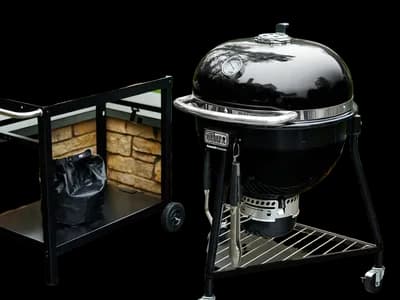
Steel hybrids. The Weber Summit Kamado, in E6 and S6 versions, has the shape and the two vents of a kamado, but its bowl and lid are double-wall enamelled steel with an air gap, not ceramic. Char-Griller's Akorn uses triple-wall insulated steel, according to its product page. And Kamado Joe's KettleJoe goes the other way: it starts from a 56 cm steel kettle and adds a hinged lid and the SlōRoller insert for smoking.
Temperature and control: why a gasketed lid changes everything
Temperature depends on how much oxygen reaches the embers, so what most separates these cookers is the seal. In a kamado with a healthy gasket, closing the bottom vent really does cut the air. In a kettle it reduces it, but the rim of the lid still lets some through. In an open barbecue there is nothing to close.
The second factor is thermal mass: thick ceramic stores heat and gives it back as radiation; thin sheet metal loses it almost as fast as it receives it.
- Range. A ceramic kamado works between 80 and 400 °C, from low smoking to pizza. Our Summit Kamado E6 page puts it at 90-370 °C, a figure Weber does not publish. Weber does not publish a range for the kettle: it performs well at strong direct heat and drops to smoking with the fire to one side. - Stability at 110-120 °C. The window for 2-2-1 ribs or a brisket. The kamado holds it for hours on one load; the kettle holds it with supervision; the open barbecue has no chamber to maintain. - Wind and cold. A gust blowing straight into the bottom vent feeds the embers and in a kamado can lift the chamber by about 40 °C without you touching anything. In single-wall sheet metal, wind also cools the walls. With a Levante (easterly) wind, point the bottom vent at right angles to the wind.
The price of airtightness: if you overshoot, the kamado comes down sluggishly. The kettle corrects sooner.
A warning for the ceramic kamado and for the Summit Kamado, which according to Weber also has a lid gasket: with the vents nearly closed, unburnt gases build up, and if you throw the lid open while hot, oxygen rushes in at once and a flashback can leap out. Open it in two stages: five centimetres, about five seconds, then fully, wearing gloves and keeping your face away from the opening.
Charcoal, lighting and time until you can cook
Consumption. There is no reliable published figure comparing kilos of charcoal across these cookers under the same conditions, so we do not give one. The reason is clear, though: on a long cook the kamado burns less because less air gets in and the wall loses less heat; on a short direct cook the gap narrows. The running cost calculator lets you enter your own kilos.
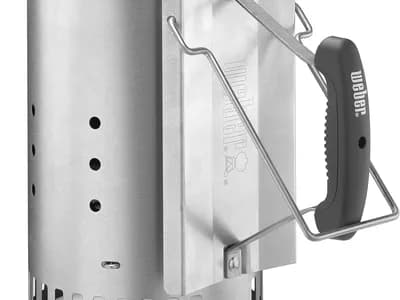
Lighting. All four light with firelighter cubes or a Rapidfire chimney starter, which according to our product page brings the charcoal to red-hot in about 15-20 minutes; the S6 also has gas ignition. No lighter fluid. Pour the chimney wearing heat-resistant gloves, tipping it towards the bowl and away from you.
Time until you can cook. - Kettle and open barbecue: as soon as the embers are ready. - Ceramic kamado: about 30 minutes from cold to stable embers, and longer for pizza. Step by step in how to light a kamado. - Summit Kamado: Weber states that the S6's Snap-Jet gas ignition lights the charcoal in 15 minutes; the E6 does not have it. The double wall heats up sooner than ceramic.
Shutting down and reusing. In the kamado you close both vents and the embers smother themselves; what is left serves for the next session. The kettle does the same, though without a gasket it burns a little more before going out. On the open barbecue there are no vents to close: the embers burn through entirely and you need to watch them until they are cold ash. And never pour water on hot ceramic.
What comes out best on each
- Direct searing. Honours even with the embers at full blast. In the kamado, a Galician chuletón (bone-in ribeye) is seared with the kamado at 350 °C and the vents open. - Shashlik and skewers. The мангал's territory: skewers at a fixed height over the embers, lots at once. In the kamado they come out very well on raised holders with the lid closed: our pork neck shashlik goes at 220 °C for 18-20 minutes. The limit is the diameter. If you prefer minced meat, the lamb lyulya kebab goes on flat skewers over direct embers at 240 °C. - Long smoking. Kamado. A low-temperature brisket needs 10-13 hours at 110 °C. The kettle can manage ribs or chicken; an all-night brisket is already a fight. - Pizza and bread. Ceramic kamado: the dome radiates from above while the stone cooks from below. The Summit bakes too; our product page puts its maximum at 370 °C, against 400 °C for ceramic. - Two zones. The kettle is the most convenient: charcoal on one side, meat on the other.
Weber Summit Kamado E6 and S6: what it is and what it is not
Weber does sell a kamado, but it is not ceramic. The Weber Summit Kamado has a double-wall enamelled steel bowl and lid with an air gap, a 61 cm grate, a gasketed lid and the two vents of a kamado. The E6 sits on its integrated mobile stand with wheels; the S6 is the cooking centre with a cart, side tables and Snap-Jet gas ignition.
What it gains over ceramic: - Weight. 66 kg for the E6, according to Weber: lighter than a ceramic of its size. - Start-up. Quicker, and on the S6 without a chimney starter. - Toughness. Steel does not crack if the lid drops. - Warranty. Weber gives 10 years on the bowl, lid and centre ring against rust-through or burn-through, 5 on the One-Touch cleaning system and the plastics, and 2 on the remaining parts.
What it loses: inertia. The air gap insulates, but it does not store heat like dense ceramic: it reacts sooner to an open lid, wind or cold. On short cooks you barely notice; on an overnight smoke, you do.
Who it suits: someone who wants the 61 cm kamado format, prefers enamelled steel for its weight or toughness and does not want to move over a hundred kilos of ceramic. If your priority is long, stable smoking, we pit it against the Big Joe III in Big Joe III vs Summit Kamado E6.
The other hybrid, the KettleJoe, takes the opposite route: a kettle with a hinged lid and a smoking insert.
Space, weight, terrace and coast
Weight. The 57 cm Master-Touch weighs 21 kg according to Weber. A mid-size ceramic kamado weighs 70 to 100 kg, and a 61 cm one easily tops 100 kg. A ceramic needs a fixed spot, a cart with lockable wheels and a floor that can bear it.
Smoke and neighbours. The open barbecue spreads the most smoke; with the lid closed, kettle and kamado contain it better. For by-laws and local ordinances, see kamado on a terrace and your community of owners. One rule applies to all four: never light charcoal indoors, in a garage or on an enclosed terrace, because of carbon monoxide.
Salt air. On the coast, enamelled steel holds up as long as the enamel is intact; a knock or a chip opens the door to rust. Weber's 10-year warranty covers rust-through or burn-through of the bowl and lid; the other parts get 2 years. Ceramic does not rust, but its bands and bolts do. The routine is in protecting your kamado from salt air and damp.
I already have a kettle: how to bring it closer to a kamado and when to make the jump
Before buying anything, get the most out of the kettle:
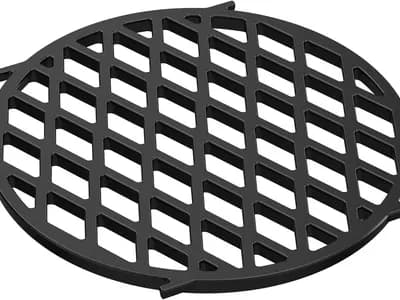
- Two zones, always. Charcoal on one side and the meat on the other, with the lid closed: it is the mode for almost anything that takes more than twenty minutes. - Snake fire for smoking. A row of unlit charcoal around the bowl, lit at one end, stretches the fire out for hours: that is the Minion and snake method. With a few hickory chunks spread along the row you get real smoke. - Iron for searing. If your kettle has the GBS grate with a central opening, a cast-iron insert such as the Onlyfire for Weber Kettle 22.5" stores heat and marks better. It is not universal. - A pizza stone over the indirect zone and with the lid closed.
What you will not get is airtightness or thermal mass.
Signs that a kamado is worth it for you: you light up nearly every week; you spend the afternoon adjusting dampers on every smoke; you want to make pizza or bread seriously; or you run out of charcoal halfway through a rack of ribs. If the kettle comes out four times each summer, keep it.
The kettle and the open barbecue are direct-heat tools, light and quick. The ceramic kamado is an oven and a smoker that also cooks over direct heat, and it wins as soon as the cook goes past an hour. The Summit Kamado is an honest middle ground: kamado format in double-wall steel, with less weight and a quicker start in exchange for inertia.
If in doubt, count how many times you lit up last year and what you cooked. If the answer is "few, and over direct heat", kettle or open barbecue. If it is "often, and with a wish to smoke and bake", kamado.
Gear featured in this guide
Recipes to get started
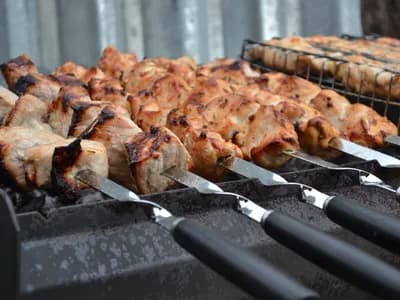
Pork Neck Shashlik on the Kamado, Onion Marinade
The skewer of the Russian-speaking world, cooked as I make it on my Big Green Egg Large: pork neck in 3 cm cubes, a grated onion marinade with not a drop of vinegar, and twenty minutes of steady direct fire.
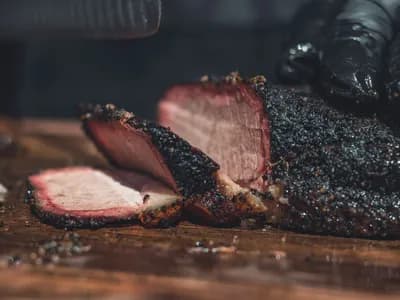
Low-and-slow smoked brisket
The kamado acid test. Ten hours at 110°C, a deep bark, a pink smoke ring and a texture that gives way under the weight of a fork.
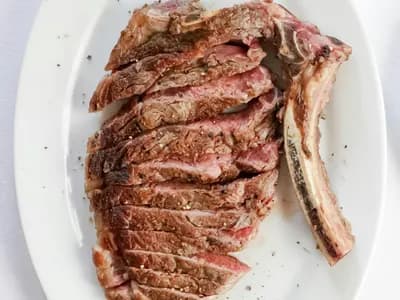
Galician ribeye on the kamado, direct sear
A one-kilo Galician ribeye, Maldon salt, embers at 350°C and not a thing more. The shortest recipe of the year and the hardest to mess up if you respect the timings.
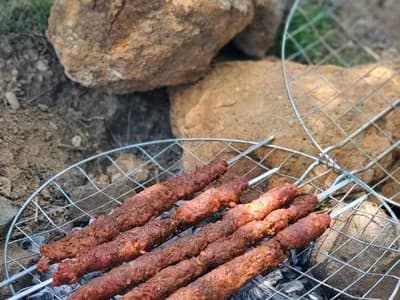
Lamb Lyulya Kebab on the Kamado
The question is never how to season it, but why it falls off the skewer. The answer is fat, a hand-chopped grain and real kneading: juicy lamb that holds together over direct fire.
GO DEEPER
Continue with these
- Related guide
Kamado vs gas grill: which one really suits you
Real cooking, flavour, total cost and convenience. A long comparison without paternalism so you can decide before spending 1,500 euros on either.
- Related guide
Is a Kamado Worth Buying? Real Pros and Cons
The honest decision filter, no sugar-coating: real upsides, serious drawbacks and exactly who should buy one before parting with the cash.
- Related guide
Kamado barbecue: what it is, how it works and which one to buy in Spain (2026)
The kamado barbecue, plainly: how the ceramic works, which types and sizes exist, what it really costs and which models deserve your money in Spain this year.
- Related guide
What Is a Kamado: The Complete Guide
What a kamado is, how it works and what it's for: the honest guide to understanding the ceramic grill before you buy.
- Recipe to practice
Pork Neck Shashlik on the Kamado, Onion Marinade
The skewer of the Russian-speaking world, cooked as I make it on my Big Green Egg Large: pork neck in 3 cm cubes, a grated onion marinade with not a drop of vinegar, and twenty minutes of steady direct fire.
- Recipe to practice
Low-and-slow smoked brisket
The kamado acid test. Ten hours at 110°C, a deep bark, a pink smoke ring and a texture that gives way under the weight of a fork.
- Recipe to practice
Galician ribeye on the kamado, direct sear
A one-kilo Galician ribeye, Maldon salt, embers at 350°C and not a thing more. The shortest recipe of the year and the hardest to mess up if you respect the timings.
- Editorial comparison
kamado joe big joe iii vs weber summit kamado e6
Two grills Amazon lists together under "XL kamado", but only one really is. The Big Joe III is dense ceramic, 184 kg wit
- Glossary term
Refractory ceramic
High-density ceramic that absorbs, stores and radiates heat between 70 and 400 °C without cracking.
- Glossary term
SlōRoller
Convection chamber patented by Kamado Joe that evens out low-temperature heat and removes hotspots.
- Glossary term
Bottom vent (damper)
Air-intake vent at the kamado's base; controls how much oxygen reaches the coals.
Frequently asked questions
Which is better, a barbecue or a kamado?
A kamado, if you want to smoke for hours, bake pizza or bread and cook almost every week; a charcoal barbecue is enough if you cook over direct heat a few times a year and want simplicity. The difference lies in the gasketed lid and the thick ceramic: the kamado controls the air and stores heat, so it holds 110 °C for hours and burns less charcoal on long cooks. The open barbecue wins on simplicity and weight.
Does Weber make kamados?
Yes, but not in ceramic. The Weber Summit Kamado, in E6 and S6 versions, has a kamado shape, a 61 cm grate and two air vents, and its bowl and lid are double-wall enamelled steel with an air gap. It heats up sooner and weighs less than a ceramic kamado of its size. In exchange, it retains less heat than dense ceramic on very long cooks or in the cold.
Can you smoke on a Weber kettle?
Yes. Pile the charcoal to one side or lay it in a snake around the bowl, put the meat on the side without embers, close the lid and dampers almost fully and add wood chunks. It works for ribs or chicken. The hard part is holding 110-120 °C all night: the lid has no gasket and the sheet metal loses heat in the wind, so it needs more supervision than a kamado.
Does a kamado use less charcoal than a Weber barbecue?
On long cooks, yes, by physics: only the air you open gets in and the ceramic loses less heat through the wall, so less charcoal burns to hold the same temperature. Closing the vents also smothers the embers, and what is left can be reused. On a short cook the difference shrinks a lot. There is no reliable published figure comparing the two under the same conditions, so be wary of round percentages.
Kamado or open barbecue for skewers and shashlik?
For quantity, the open barbecue or мангал: skewers rest on the edges at a fixed height and plenty fit at once. For control, the kamado: with raised holders and the lid closed, gusts do not move the temperature and the heat wraps around the meat; a pork neck shashlik is done in 18-20 minutes at 220 °C, turning every two or three. For a big group, the мангал; for four people, the kamado is more even.
Can you make pizza on a charcoal kettle?
Yes, with a stone over the indirect zone and the lid closed, although do not expect oven behaviour: the sheet metal does not store heat, the top cooks more slowly than the base and it helps to turn the pizza halfway. If you want a crisp base and topping done together, the ceramic kamado has the edge because the dome radiates from above; we explain it in how to make pizza in a kamado.