EQUIPO
5 essential accessories to get started with your kamado
Heat deflector, probe, lighter, cover and cast iron: what truly earns its price on day one, and what is just hot air.
Quick answer
To start with a kamado you only need five accessories: the ceramic heat deflector (no indirect cooking without it), a reliable temperature probe, a safe lighter (natural firelighters or an electric torch, never fluid), a breathable cover and a cast-iron piece or pizza stone. Together they run about €200-400.
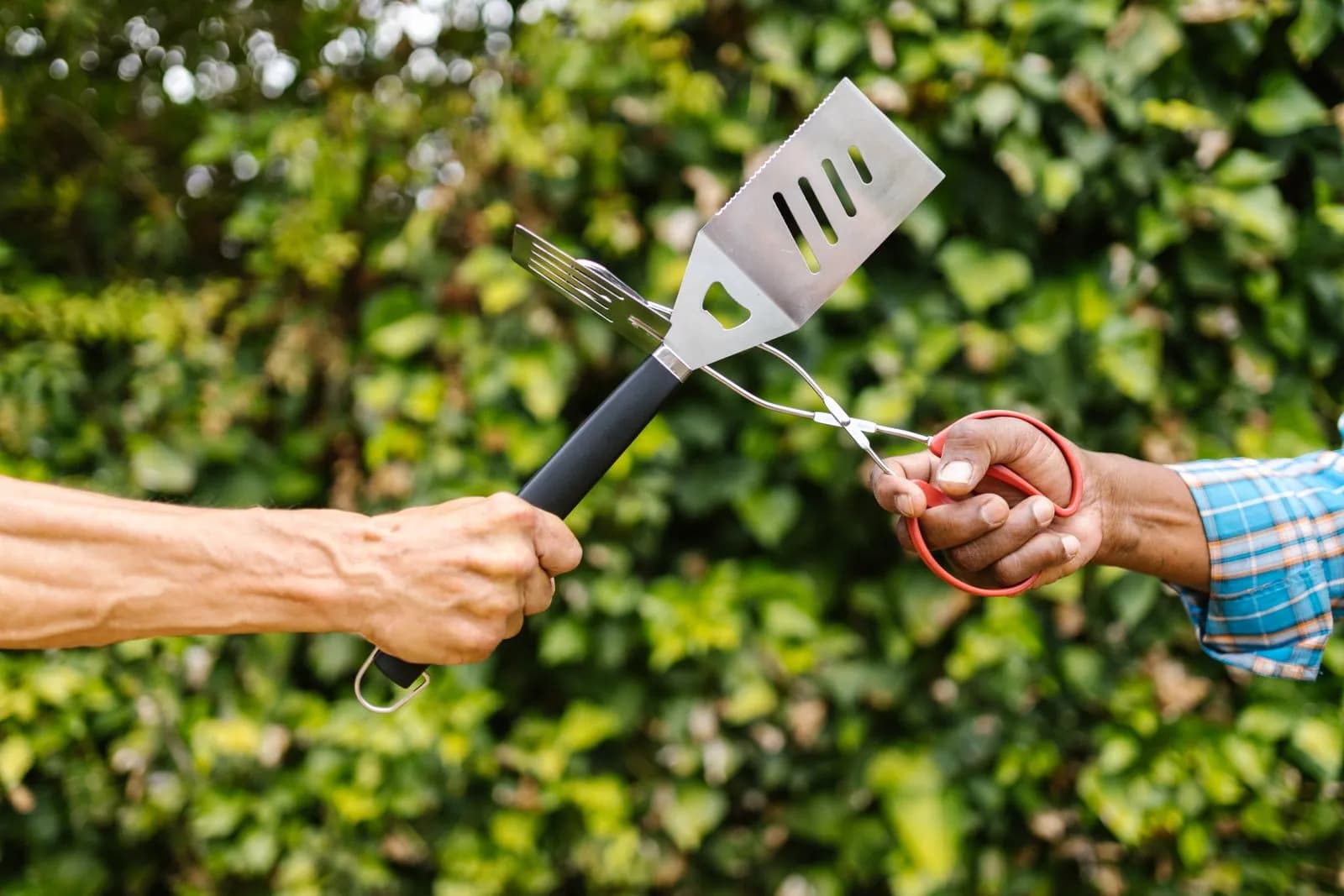
A new kamado arrives surrounded by an accessory catalogue that easily doubles the price of the grill itself. Rib racks, skewers, ash rakes, baskets, rotisseries, griddles in three different shapes: everything looks essential before you have cooked a single thing. Almost none of it is.\n\nAt mikamado we test accessories every week, and the conclusion, after plenty of avoidable spending, is that on day one you only need five things. Five. The rest you buy over time, based on what you actually cook rather than what the brochure tells you that you will cook.\n\nThis guide separates what earns its price from what is just hot air. I explain what each essential accessory does, the sensible price range in Spain in 2026, and the specific models we have used and recommend. No hidden affiliate angle, no padded lists.
| Accessory | What it unlocks | Guide price |
|---|---|---|
| Ceramic heat deflector | Indirect cooking and smoking | €30-60 per pair (third party) |
| Temperature probe | Track the meat without opening the lid | €30-50 Bluetooth · €80-100 WiFi |
| Electric lighter or firelighters | Lighting without chemical fluids | €60-150 |
| Breathable cover | Protects metal and gasket outdoors | €50-90 |
| Cast iron or pizza stone | Deep searing and pizza at 350-400 °C | Depends on piece and brand |
| Full starter set | All five pieces on day one | €200-400 |
Which kamado accessories are worth the money and which are just hot air
The rule we apply at mikamado is simple: an accessory is worth it on day one if it unlocks a technique the kamado cannot do without it, or if it saves you from an expensive mistake. Everything else is convenience, and convenience can wait until you know what you actually cook.
With that filter, only five accessories make the cut: the heat deflector (no indirect cooking or smoking without it), a reliable temperature probe (you control the meat without opening the lid), a safe lighting system (never flammable liquid), a cover (you live on the coast and the kamado lives outside), and a piece of cast iron or a pizza stone (it raises your searing and pizza game). Together they run about 200-400€ depending on brand.
What is just hot air on day one: 200€ rotisseries, five-chicken racks, fifteen-skewer sets, designer ash rakes and reversible griddles that duplicate what your grate already does. They are not bad — we own and use some of them — but none changes what you can cook in your first week. Buy those when you know you need them, not before.
Heat deflector or plate setter: the essential for indirect cooking
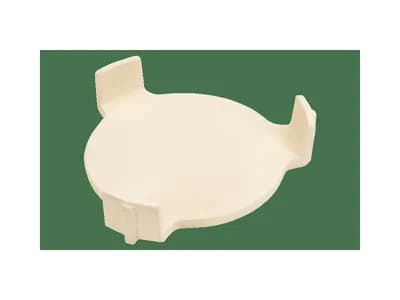
If you buy only one accessory on day one, make it this one. The heat deflector — the classic plate setter — is a ceramic piece placed between the coals and the food that blocks direct radiation. Without it, the kamado does one thing: sear over direct fire. With it, it does everything else: smoke a brisket at 110 °C for twelve hours, bake bread at 230 °C, or roast a shoulder without charring the underside.
The mechanics are pure physics. The deflector's ceramic gets in the way, turns direct heat into surrounding heat and turns your kamado into a stable convection oven. It is exactly what a home oven does, but with woodsmoke flavour and a far wider temperature range. No deflector means no indirect cooking, and indirect cooking is 70% of what makes a kamado special.
Kamado Joe ships its Divide & Conquer system with half-moon deflectors as standard, and Big Green Egg sells its ConvEGGtor plate setter separately (the Large version is the usual one). If your kamado does not include a deflector, third-party ceramic half-moons such as BBQ Future or Vankey, compatible with the Classic I/II/III, do the job fine at 30-60€ a pair. Thickness is what matters: a thin piece cracks from thermal shock on its second or third use. Always place the deflector while the kamado is still cold, never over live coals.
Kamado thermometer or probe: how to control temperature without opening the lid
The second accessory we always buy is a reliable probe, for one concrete reason: the factory analogue lid thermometer typically reads 15-20 °C off the grate centre, and opening the lid to check the meat drops the internal temperature and lets in oxygen that fires up the coals. Every time you lift the lid you lose a few minutes of cooking and some control.
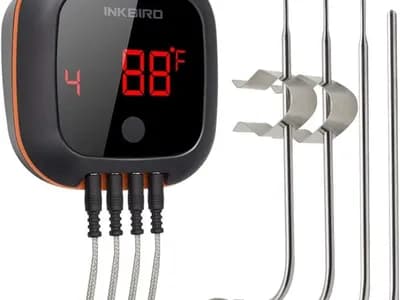
A probe solves both. You insert it into the centre of the cut, leave an ambient probe on the grate if you like, close the lid and read everything on your phone. You know the brisket is at 71 °C internal without opening anything across twelve hours. To start, a Bluetooth probe with a cable like the Inkbird IBT-4XS (around 30-50€) is the cheapest and most honest option; if you want fully wireless with no cables to burn, the MEATER+ over WiFi (around 80-100€) is our favourite for convenience.
If you cook long cuts often, step up to a WiFi multi-probe: the Inkbird IBBQ-4T carries four probes and alerts your phone wherever you are, ideal for overnight smokes. And for quick day-to-day checks — a steak, a chicken, a burger — an instant-read thermometer like the Lavatools Javelin that reads in 2-3 seconds is worth its weight in gold. Start with a single probe; the rest comes once you know what you cook.
Chimney starter or electric lighter: how to light the kamado without fluid
First rule of lighting ceramic: never use lighter fluid. The kamado holds aromas in its porous walls for weeks, and the petroleum in flammable fluid leaves a chemical taste that ruins the first ten cooks and, in the worst case, never fully clears. You do not need it anyway: lighting charcoal is easy and clean with the right method.
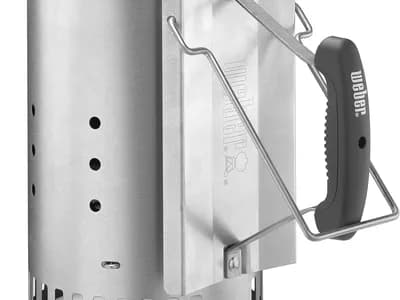
There are two honest paths. The first, wax or natural-fibre fire starters: place one or two in the centre of the charcoal, light them, leave the vents open and in 10-15 minutes you have embers. Cheap, foolproof, no electricity. The Weber Chimney + briquettes + starters set is a good starting point if you are coming from a classic charcoal grill. The Rapidfire chimney also works, though it is used less on a kamado than on a kettle.
The second path, faster and cleaner, is a hot-air electric lighter like the Looftlighter: you aim at the charcoal, it ignites in 60 seconds and you have embers in 3-4 minutes, with no start-up smoke and no starters. The Looftlighter Air version is cordless and battery-powered, handy if your kamado is far from a socket. It runs about 60-150€ depending on the model; for anyone lighting the kamado two or three times a week, it pays for itself in convenience and cleanliness fast.
Kamado cover: why it is essential in a coastal climate
Here in Torrevieja and across the Costa Blanca the kamado lives outside all year, and that is perfectly normal: the refractory ceramic of serious brands shrugs off sun, rain and the coast's mild frosts. What does not hold up as well without protection are the metal parts and the gasket, and that is where a cheap cover becomes the most cost-effective accessory on this list.
The real enemy on the coast is not cold: it is salt air, constant humidity and direct summer sun. Salt air rusts hinges, screws and metal bands; humidity can sneak in through the chimney if you leave it open; and UV dries out the felt lid gasket, the part that seals the kamado and the most expensive to replace. A breathable cover cuts all three problems at once.
Kamado Joe's official covers (Classic and Big Joe) fit to the millimetre and usually run 50-90€. If you have another brand or want an alternative, the Onlyfire Universal 76 cm or the Coverstore Premium cover well for less. Two rules: always cover it with the kamado cold, never hot, and choose a breathable cover — not airtight plastic — so trapped moisture does not do more damage than the rain you were trying to avoid.
Cast-iron grate or pizza stone: how to level up your kamado
The four accessories above are functional: they let you cook. This fifth one is what changes the result, which is why we leave it for last. A piece of cast iron or a pizza stone is what separates a good meal from one that makes the guest ask how you did it.
The cast-iron grate sears better than any stainless steel. It holds far more heat, marks the meat with those deep grill lines, and keeps its contact temperature when you drop a cold steak on it instead of plunging. The Kamado Joe cast-iron half-moon grate fits the Classic's Divide & Conquer system and lets you keep half the kamado at brutal searing heat and half at gentle heat to finish. Season it with oil like a skillet and it lasts decades.
The pizza stone is the other leap. The kamado hits 350-400 °C with the lid closed, and on a properly hot cordierite stone a Neapolitan cooks in 60-90 seconds with a crisp base and a puffed-up cornicione. The Onlyfire cordierite 38×30 cm or the Kamado Joe Classic stone do the job comfortably; preheat the stone for 20-30 minutes with the deflector under it, and never put it on cold over coals or it cracks. Between the two pieces, choose by what you cook most: iron for meat, stone for pizza and bread. If unsure, start with the one you will use most and add the other when its moment comes.
These five accessories — deflector, probe, lighter, cover and a piece of cast iron or stone — cover 95% of what you will cook in your first year, and together they run about 200-400€ well spent, against double that in parts destined for a drawer. Start with the deflector and the probe; the rest can wait until your second or third cook. If you are still choosing the kamado all this will sit on, drop by our model comparator and size calculator to get the foundation right first.
Gear featured in this guide
Recipes to get started
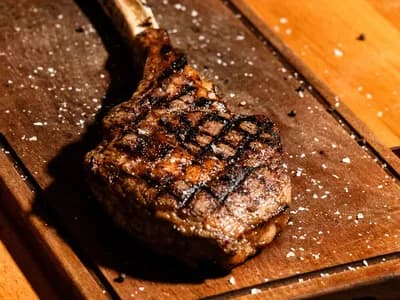
Reverse-sear tomahawk on the kamado
A 1.4 kg tomahawk, probe in the centre, ceramic at 110°C and a 90-second final sear. The Sunday centrepiece for when you want to impress without gambling on doneness.
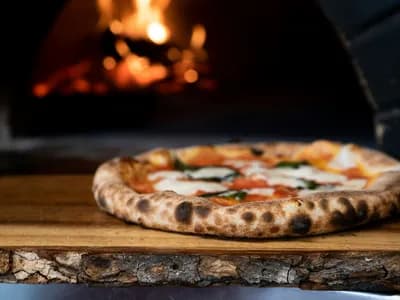
Neapolitan pizza on the kamado
At 350°C the base puffs in 90 seconds and the cornicione comes out leopard-spotted and pillowy. One pizza, three minutes, zero margin for error.
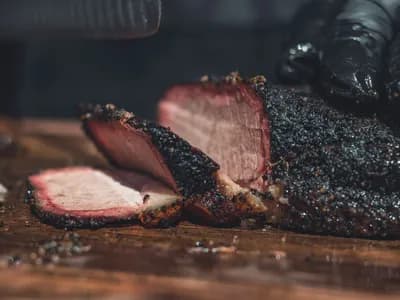
Low-and-slow smoked brisket
The kamado acid test. Ten hours at 110°C, a deep bark, a pink smoke ring and a texture that gives way under the weight of a fork.
GO DEEPER
Continue with these
- Related guide
Your first kamado: the complete pre-purchase guide
Size, materials, brand and budget. Everything you have to decide before clicking Buy, told by someone who has made enough mistakes.
- Related guide
Kamado Temperature Control: The Pitmaster's Guide
The dual airflow system, the rookie mistake of overshooting, and why the dome thermometer lies. This is the skill that separates a beginner from a pitmaster.
- Related guide
How to maintain and clean a ceramic kamado
Ceramic almost cleans itself: burn-off, grates, gaskets and rust, explained with no miracle products and no needless chemicals.
- Recipe to practice
Reverse-sear tomahawk on the kamado
A 1.4 kg tomahawk, probe in the centre, ceramic at 110°C and a 90-second final sear. The Sunday centrepiece for when you want to impress without gambling on doneness.
- Recipe to practice
Neapolitan pizza on the kamado
At 350°C the base puffs in 90 seconds and the cornicione comes out leopard-spotted and pillowy. One pizza, three minutes, zero margin for error.
- Recipe to practice
Low-and-slow smoked brisket
The kamado acid test. Ten hours at 110°C, a deep bark, a pink smoke ring and a texture that gives way under the weight of a fork.
- Editorial comparison
big green egg large vs kamado joe classic iii
The classic kamado matchup: the Big Green Egg Large, the indestructible pioneer with the widest accessory network, again
- Glossary term
Refractory ceramic
High-density ceramic that absorbs, stores and radiates heat between 70 and 400 °C without cracking.
- Glossary term
Heat deflector
Ceramic plate placed between the coals and the grate to turn direct fire into indirect cooking.
- Glossary term
Divide & Conquer
Kamado Joe's modular two-tier grate and deflector system that enables simultaneous multi-zone cooking.
Frequently asked questions
Which accessories do I really need on day one with a kamado?
Only five: a heat deflector for indirect cooking and smoking, a reliable temperature probe, a fluid-free lighting system (starters or an electric lighter), an outdoor cover, and a piece of cast iron or a pizza stone. Together they run about 200-400€. The rest (rotisseries, racks, skewers) you add later based on what you cook.
What is a kamado heat deflector or plate setter for?
The deflector is a ceramic piece placed between the coals and the food that blocks direct radiation, turning the kamado into a stable convection oven. Without it you can only sear over direct fire; with it you can smoke at 110 °C, bake bread at 230 °C, or roast large cuts without charring the underside. It is the most essential accessory.
Which thermometer or probe should I buy for my first kamado?
To start, a Bluetooth probe with a cable like the Inkbird IBT-4XS (30-50€) or, if you want it fully wireless, the MEATER+ over WiFi (80-100€). The factory analogue lid thermometer typically reads 15-20 °C off, and opening the lid to check drops the internal temperature. A probe lets you control the meat without opening anything for hours.
Why should I not use lighter fluid in a kamado?
Because the kamado's porous ceramic absorbs the petroleum in flammable fluid and holds that chemical taste for weeks, ruining your first cooks. Use wax or natural-fibre starters (embers in 10-15 minutes) or a hot-air electric lighter like the Looftlighter (embers in 3-4 minutes). Both are clean, safe and leave no taste.
Do I need a cover if I leave the kamado outside on the coast?
Yes. The ceramic withstands rain, sun and mild frost, but on the coast salt air rusts hinges and screws, humidity sneaks in through the chimney and UV dries out the felt lid gasket, the most expensive part to replace. A breathable cover (official 50-90€, universal less) cuts all three problems. Always cover it with the kamado cold.