GUÍA DE COMPRA
Your first kamado: the complete pre-purchase guide
Size, materials, brand and budget. Everything you have to decide before clicking Buy, told by someone who has made enough mistakes.
Quick answer
For a first kamado, buy a Large/Classic with a 45-46 cm grate if you cook for 4-6 people, from a brand with a lifetime warranty on the ceramic (Kamado Joe, Big Green Egg, Monolith). A realistic budget in Spain is €1,500-2,200 for the first year including accessories and charcoal; below €800, don't buy a kamado.
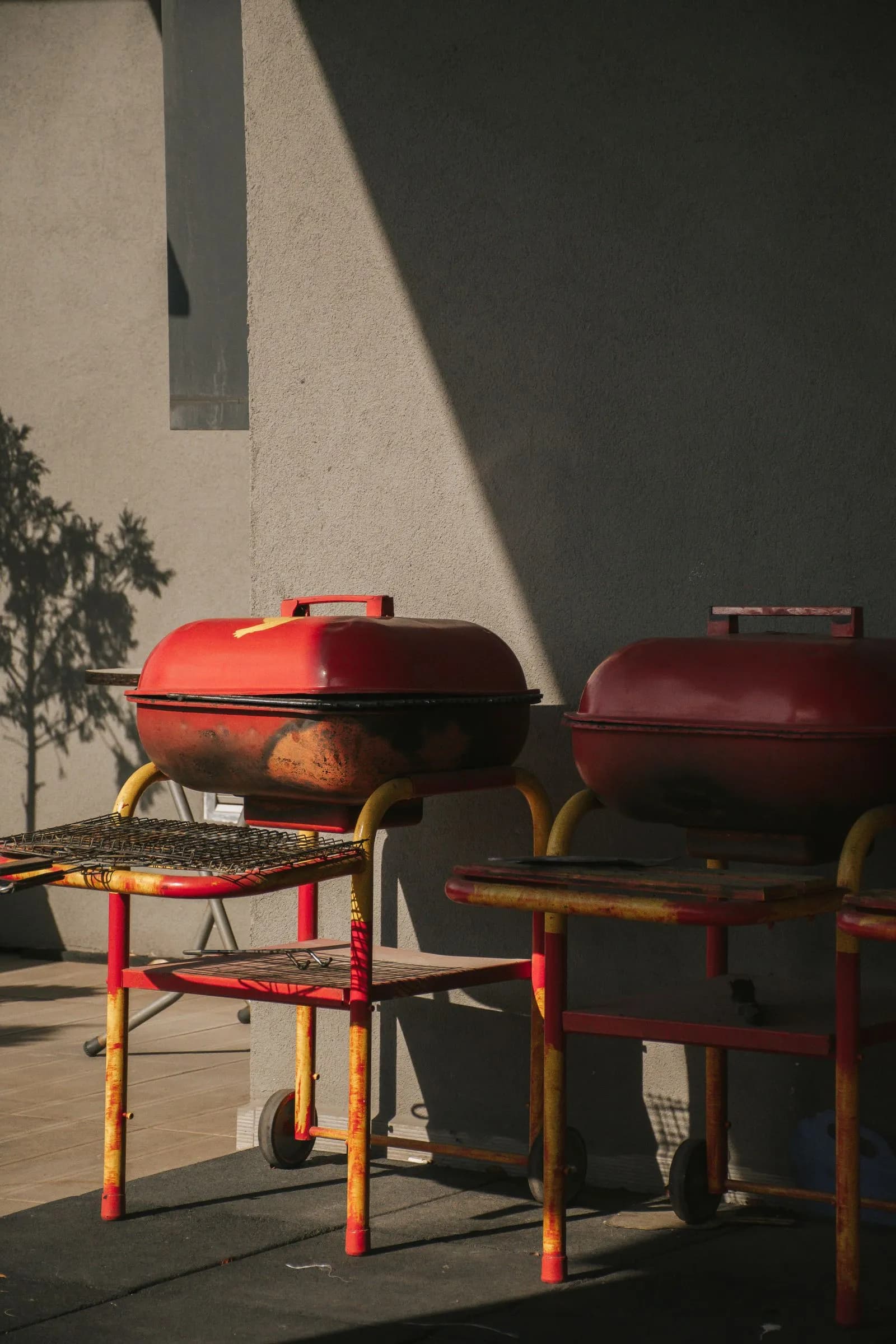
Buying your first kamado is an unusual decision: you are going to spend between 800 and 3,500 euros on a ceramic object that weighs 80 kg, takes up a square metre of your terrace and, if you choose well, will last you twenty years. Almost nobody tells the story that way.
This guide exists because it would have saved me three dubious purchases and one painful return. It goes straight to the point: what a kamado is, what size you need, how to pick a brand, what budget is realistic and where to put it at home. No hidden affiliation, no empty tables, no padding recipes.
| Size | Grate diameter | Diners | When to choose it |
|---|---|---|---|
| Medium | 33-38 cm | 1-3 | Only if your terrace can't fit more or you cook for very few |
| Large / Classic | 45-46 cm | 4-6 | The default buy: fits a pork crown, two whole chickens or six St. Louis racks |
| XL / Big Joe | 60-61 cm | 6-10 | If you often host a big table; €300-500 price gap versus the Large |
What exactly a kamado is
A kamado is a double-walled ceramic grill derived from the traditional Japanese kamado, which cooks by radiating heat from the walls — not only by convection like an oven or by contact like a gas grill. That changes the result noticeably: the ceramic holds heat for hours, regulates humidity and lets you cook from 80 °C (long brisket smokes) up to 400 °C (Neapolitan pizza in 90 seconds) with a single appliance.
The two vents — bottom intake and top exhaust — control the oxygen, and therefore the temperature. There is no electric thermostat, no burner, no gas regulator. Just lump charcoal, air, and a ceramic seal that smothers the coals when you close the lid. It is simpler than a modern oven and, paradoxically, more demanding of the cook.
How to choose a size: mistake number one
Seventy per cent of first-time buyers go too small. The reason is psychological: the kamado looks huge in the shop and tiny when you start cooking for more than four people or try to fit a whole lamb shoulder inside.
Market standard sizes are Medium (33-38 cm grill diameter), Large/Classic (45-46 cm) and XL/Big Joe (60-61 cm). My recommendation, after going through three sizes, is straight: if you regularly cook for 4-6 people, buy Large/Classic; if you think you will cook for 6-10, go directly to XL. Only pick Medium if your terrace cannot fit anything else or if you live alone and you really know you will not host.
A Large fits a crown roast, two whole chickens or six trimmed St. Louis racks. A Medium falls short on all three. The price difference between sizes is usually 300-500€, and the difference in usefulness is years.
Materials and brands: where to stand and where not
Kamado ceramic is not all equal. Serious brands use refractory ceramic with thick walls (12-15 mm) that tolerate repeated thermal cycles without cracking; cheap ones use thin ceramic with no lifetime warranty and split by year two or three.
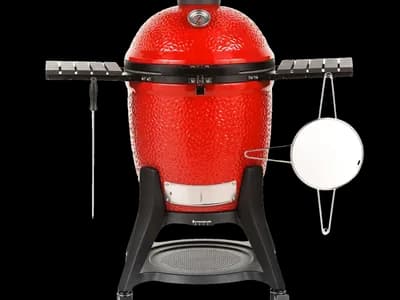
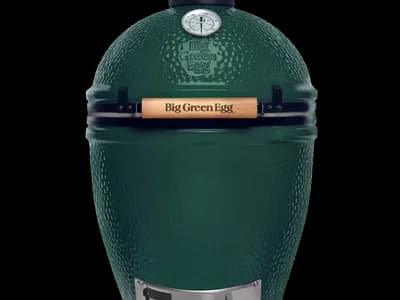
Brands worth trusting today in Spain: Kamado Joe (Classic III and Big Joe III, lifetime warranty on the ceramic for the original purchaser), Big Green Egg (the American reference, identical philosophy, distribution is pricier here), Monolith (German, smart integrations and excellent finishing), Primo (oval, USA-made, for anyone who wants distinct heat zones).
Brands to avoid for your first kamado: any without an explicit ceramic warranty, white-label units from Aliexpress, and "low-cost" kamados from home centres whose hinges give up after six months. A kamado without spare parts available in Europe is a dead kamado the day your firebox cracks.
Realistic budget in Spain (2026)
Real numbers, not manufacturer's RRP. A decent Large/Classic kamado in Spain costs between 1,200 and 1,800 euros new, no accessories. Add 200-400€ in essential accessories (plate setter or deflector, reliable thermometer, outdoor cover, long tongs, electric or wax-cube lighter) and another 80-120€/year in quality lump charcoal.
A reasonable budget to start is 1,500-2,200€ all-in for the first year. Under 800€, do not buy a kamado: buy an old-school Weber charcoal kettle and learn to cook with fire first. Above 3,500€ you cross into Big Joe XL or Monolith Avantgarde territory, where the difference is heavy use, not marginal improvement.
Where to place it at home
A kamado weighs 70-100 kg, radiates heat from its sides (it will not burn you, but you feel the hot ceramic at 30 cm) and emits charcoal and wood smoke through the chimney. Three non-negotiable rules: the distance your model's manual sets, 2 to 3 metres in the ones we checked, from walls, railings, windows and any combustible material (each manual's figures); on a firm, non-combustible surface (tile, stone or concrete, never unprotected wooden decking), and with enough headroom to open the lid without hitting an awning.
On a small flat terrace it can absolutely coexist if the building rules allow it and if you respect your neighbours' hours. In an indoor closed patio, do not even try — hot ceramic plus concentrated smoke is a serious risk. Most brands sell a wheeled cart: the kamado moves, it is not fixed furniture. That helps in flats.
The quick verdict
If you are going to cook for 4-6 people, buy a Kamado Joe Classic III or a Big Green Egg Large. Budget 1,500-2,000€ all-in the first year including accessories. Place it outside with clear space and buy the plate setter on day one. Learn to control temperature with the vents before you attempt anything complicated — the first ten cooks make the cook, not the kamado brand.
If you have read this far, you are already above 90% of people who buy a kamado on impulse. The real decision is not Kamado Joe versus Big Green Egg — they are essentially equivalent in real-world use. The real decision is right size, right location and realistic budget. Get those three correct, and your first kamado will be the last one you need to buy.
Gear featured in this guide
Recipes to get started
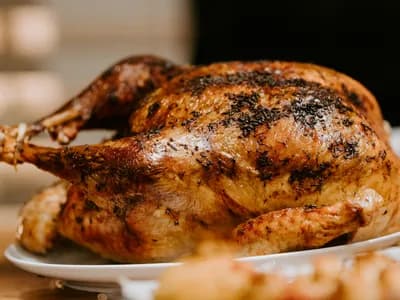
Beer-can chicken with crackling skin
The American beer-can chicken classic, taken to the kamado: the beer steams from within, the ceramic concentrates the heat and the skin finishes like crisp parchment.
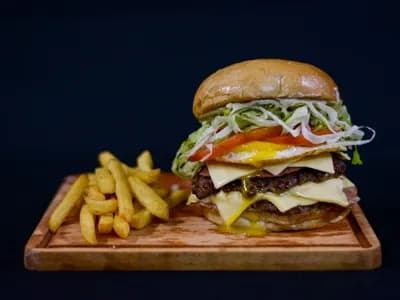
Smash burger on the kamado with American cheese
The viral burger done right: 90 g ball, cast-iron plancha at 250°C and a 30-second smash that builds the definitive crust. No tricks, no marketing.
GO DEEPER
Continue with these
- Related guide
What Is a Kamado: The Complete Guide
What a kamado is, how it works and what it's for: the honest guide to understanding the ceramic grill before you buy.
- Related guide
Kamado vs gas grill: which one really suits you
Real cooking, flavour, total cost and convenience. A long comparison without paternalism so you can decide before spending 1,500 euros on either.
- Related guide
5 essential accessories to get started with your kamado
Heat deflector, probe, lighter, cover and cast iron: what truly earns its price on day one, and what is just hot air.
- Related guide
Is a Kamado Worth Buying? Real Pros and Cons
The honest decision filter, no sugar-coating: real upsides, serious drawbacks and exactly who should buy one before parting with the cash.
- Related guide
What Size Kamado to Buy: Inches, cm and Guests
A kamado is sized by its grill diameter. Here is exactly how many inches you need for your crowd and your cooking, without buying too small.
- Recipe to practice
Beer-can chicken with crackling skin
The American beer-can chicken classic, taken to the kamado: the beer steams from within, the ceramic concentrates the heat and the skin finishes like crisp parchment.
- Recipe to practice
Smash burger on the kamado with American cheese
The viral burger done right: 90 g ball, cast-iron plancha at 250°C and a 30-second smash that builds the definitive crust. No tricks, no marketing.
- Editorial comparison
big green egg large vs kamado joe classic iii
The classic kamado matchup: the Big Green Egg Large, the indestructible pioneer with the widest accessory network, again
- Glossary term
Refractory ceramic
High-density ceramic that absorbs, stores and radiates heat between 70 and 400 °C without cracking.
- Glossary term
Heat deflector
Ceramic plate placed between the coals and the grate to turn direct fire into indirect cooking.
- Glossary term
Plate setter
Big Green Egg's name for its three-legged ceramic deflector, equivalent to the modern ConvEGGtor.
Frequently asked questions
What size kamado do I need for my family?
For a family of 4-6, the Large/Classic size (45-46 cm grate) is the safe answer: it fits two whole chickens or six trimmed St. Louis racks and leaves room for occasional guests. If you regularly cook for 6-10 or host events, go straight to XL/Big Joe. The Kamado Joe Classic III is the default choice in this segment — full review at /kamados/kamado-joe-classic-iii.
What does it really cost to get started with a kamado in Spain?
Realistic all-in first-year budget is 1,500-2,200€: decent Large/Classic kamado (1,200-1,800€), minimum essential accessories like plate setter, thermometer and cover (200-400€), and quality lump charcoal for year one (80-120€). Under 800€, do not buy a kamado — buy a Weber charcoal kettle and learn to cook with fire first.
Big Green Egg or Kamado Joe: which one should I buy?
In real use they are essentially equivalent: same ceramic philosophy, same lifetime warranty, same temperature range. The practical difference is in accessories and distribution: Kamado Joe ships with plate setter, divided grates and cart included as standard, while Big Green Egg sells each piece separately. In Spain, the Kamado Joe Classic III usually ends up cheaper at the final ticket.
Is a Konnected Joe or a smart Wi-Fi kamado worth it?
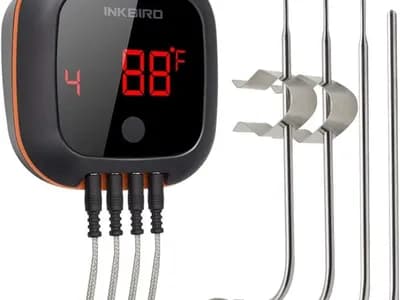
For your first kamado, no. Automatic fan control and the app are convenient but they isolate you from actually learning to control fire with vents, which is where you become a real ceramic cook. Better to buy a classic kamado plus a wireless probe like the Meater Plus or Inkbird IBT-4XS for 80-150€: you get product temperature control without losing the craft. Smart kamados make sense after two years of experience.
Can I leave the kamado outside all year in Spain?
Yes, no problem. The refractory ceramic of serious brands is designed to live outdoors and is unaffected by rain, sun or the mild frosts of the Spanish coast. The only parts needing protection are the bottom gasket and the metal hardware: buy a brand-supplied outdoor cover (50-90€) and use it whenever the kamado is cold. In areas with hard frosts (inland Spain, several days sub-zero), keep the lid-mounted analogue thermometer indoors in winter.
Which accessories are essential on day one?
Four: plate setter or ceramic deflector (without it you cannot do indirect cooks or smokes), a reliable clip-on or wireless thermometer (the factory lid one is often off by 20 °C), long stainless-steel tongs of at least 40 cm, and a good ignition system — vegetable-wax cubes or an electric blower lighter like the Looftlighter. The rest (divided grates, rib racks, dedicated smokers) you add over time depending on what you cook.