GUÍA DE COMPRA
Is a Kamado Worth Buying? Real Pros and Cons
The honest decision filter, no sugar-coating: real upsides, serious drawbacks and exactly who should buy one before parting with the cash.
Quick answer
A kamado is worth it if you cook at least every two weeks, you are into smoking, bread or pizza and you have a fixed outdoor spot: it controls 70 to 400 °C on little charcoal and lasts decades. It does not pay off if you grill three times a year or want weekday speed — gas wins there.
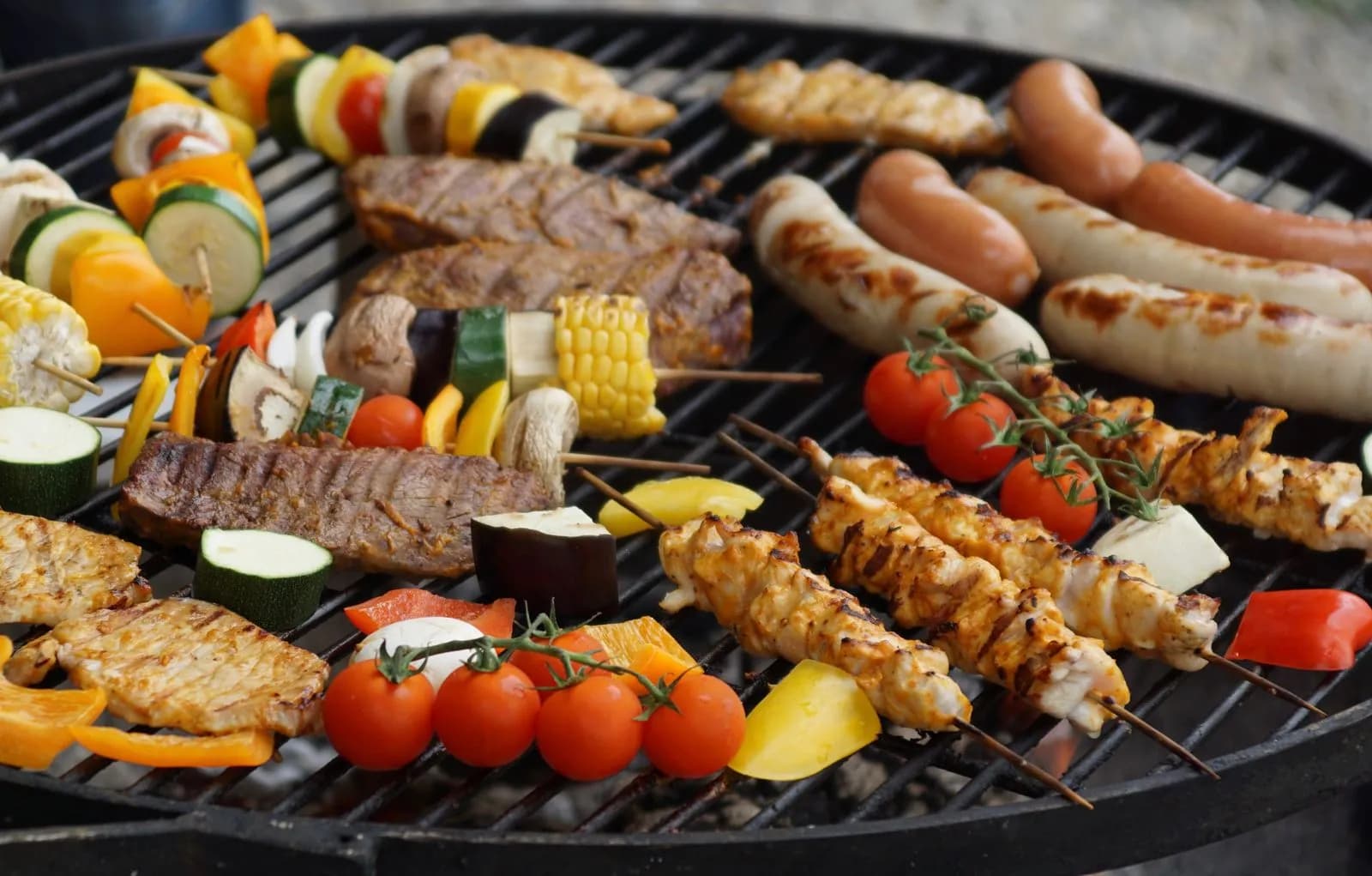
A kamado is worth it if you cook at least every two weeks, enjoy smoking or pizza and have a terrace with a fixed spot: its double-wall ceramic holds heat so well you control 70 to 400 °C on little charcoal, and it lasts decades. Grill three times a year and it does not pay off.
What makes a kamado special
What sets a kamado apart from any other barbecue is its double-wall refractory ceramic. That 2-3 cm thick mass absorbs the charcoal's heat and radiates it back steadily, like the walls of a wood-fired oven. On our terrace we see the ceramic hold temperature remarkably steady for hours, with minimal swings compared with a thin sheet-metal grill —something the community's testing confirms (Naked Whiz, AmazingRibs).
Three talents grow from that retention. First, efficiency: because heat does not escape, a single basket of charcoal lasts 12-14 hours at low temperature. Second, genuine versatility: with the two vents (bottom and top) you regulate oxygen and cover the whole spectrum, from a slow smoke at 80 °C to a Neapolitan pizza at 400 °C. Third, moisture: the sealed cook barely dries food out, so meat stays juicy.
This is not marketing. It is the physics of thermal inertia, the same we explain in our guide on what a kamado is. Grasping this principle is the key to deciding whether the rest of the investment is worth it, because every upside —and almost every drawback— flows from that heavy ceramic.
The real upsides: why it hooks you
Let us start with what matters most: flavour. Charcoal and smoke give meat, fish or vegetables a profile no gas barbecue can match. The sealed, moist cook leaves a rack of ribs tender after six hours without drying out. It is the number-one reason people never go back.
The second is control. Once you get the knack of the vents, a kamado locks onto whatever temperature you ask for, 70 to 400 °C, and holds it almost on its own. That turns a single device into smoker, pizza oven, griddle and roaster. The third is efficiency: in our tests, a 12-hour overnight smoke burned less charcoal than two afternoons with an open barbecue.
And the fourth, decisive over time: durability. The ceramic does not rust or warp. Good brands give 15-25 years or a lifetime warranty on the ceramic component. Well cared for, a kamado gets handed down. You repay the upfront investment over a decade of cooking that, quite simply, tastes better.
The drawbacks, no sugar-coating
Time to be honest, because none of the upsides above falls from the sky. The first catch is weight: the very ceramic that holds heat weighs roughly 35 to 185 kg depending on size. A kamado is not portable. Forget taking it to the beach or storing it every night; it needs a fixed spot.
The second is the investment. A serious kamado starts at 500 € and the good ones live between 800 and 1,000 €+. Below that, thin ceramic cracks at the first frost. The third is the learning curve: the two vents demand practice, and almost all of us burn a couple of dinners learning not to overshoot, because cooling a hot kamado down is painfully slow.
The fourth is inertia working against you: overshoot to 300 °C when you wanted 150, and you will wait 30-40 minutes for it to drop. The fifth is fragility under impact: glazed ceramic chips if the lid slams shut or you knock it with the peel. And the sixth is space: it takes a permanent corner of the terrace, with its cart and accessories. None of these is a hidden defect; they are the physical price of what it does well.
Pros versus cons: the table
To see it at a glance, we have put what you gain against what you sacrifice in one table. Read it honestly about your real habits, not the cook you wish you were. Each upside on the left has its physical counterpart on the right: the two columns are two faces of the same heavy ceramic.
| Pros | Cons |
|---|---|
| Unbeatable charcoal and smoke flavour | High upfront cost (500-1,000 €+) |
| Stable control from 70 to 400 °C | Learning curve with the vents |
| Very efficient: little charcoal, 12-14 h | Takes 30-40 min to cool if you overshoot |
| Versatile: smokes, bakes, sears, roasts | Weighs 35-185 kg: not portable at all |
| Ceramic that lasts decades | Fragile to knocks and lid slams |
| Juicy meat, moist cooking | Takes a fixed corner of the terrace |
Our reading after two years of use: if the upsides on the left make you salivate and the drawbacks on the right feel acceptable, you are the "yes" profile. If reading the right column makes you think "this is a hassle", pay attention to the next section, because you are probably the "no" profile, and that is perfectly fine.
Who it is for and who it is not
Now the verdict that matters. A kamado is for YOU if you cook at least every one or two weeks and enjoy the process, not just the result. It is for you if slow smoking, high-temperature pizza or the Sunday roast pull at you. And it is for you if you have a terrace or garden with a fixed spot to keep it, and you accept that the first months are practice.
It is NOT for you if you only fire up the grill three or four times a year in summer: you will pay 800 € for something you barely use and still have to clean and protect. It is not for you if you want quick midweek dinners: a kamado takes 15-30 minutes to be ready, against gas's one minute. And it is not for you if you live in a flat with no terrace or a tiny balcony, because it neither fits nor moves.
We say this plainly because we have seen beautiful kamados growing mould in a corner. The honest question is not "is the kamado good?" —it is— but "am I the person who will use it?". If you hesitate, read our guide on choosing your first kamado: it helps you land the decision on a concrete model and size before you part with the money.
Honest alternatives if a kamado does not fit
If after reading both columns a kamado does not fit your life, do not feel bad: there are more sensible options for your case, and as an honest guide we would rather tell you than sell you something that ends up abandoned.
If you grill a few times a year and value simplicity, a charcoal barrel or kettle barbecue (40-150 €) gives you that ember flavour with no learning curve and no dead weight. If your priority is midweek speed, a gas barbecue (200-600 €) lights in a minute, is controlled with a dial and cleans up easily; you lose real smoking but gain daily convenience. If you live on a balcony or in a flat with no terrace, an electric grill or an induction plancha solve it with no smoke and no neighbour complaints.
And if what draws you is smoking alone, a dedicated barrel smoker does it better than a kamado for less money, at the cost of being useless for pizza or a quick sear. We compare the kamado against gas in depth in our kamado versus gas barbecue guide. The best barbecue is not the most expensive one, but the one you will actually light.
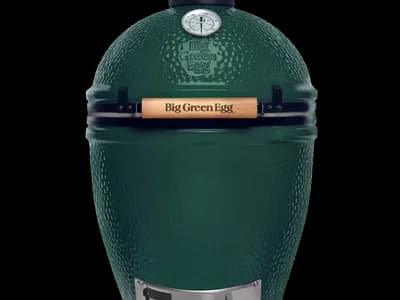
After cooking in earnest on our Torrevieja terrace with the Big Green Egg Large, our verdict is plain and unvarnished: a kamado is one of the best buys a passionate cook can make, and one of the worst for someone who just wants quick chops on a Saturday. It is neither a gimmick nor a scam; it is a precision tool that rewards the person who uses it and punishes the one who leaves it forgotten in a corner.
If you recognised yourself in the "yes" profile —you cook often, smoking and pizza pull at you, you have a fixed spot and you accept the learning curve— take the plunge without fear: you will repay it in flavour and in years of use. If you saw yourself in the "no", save the outlay and the frustration: a good gas or charcoal barbecue will make your life happier. To fine-tune the choice, read our guide on what a kamado is and how it works inside, and our guide on choosing your first kamado to nail the size and brand. Honesty is the best recommendation we can give you.
Gear featured in this guide
Recipes to get started
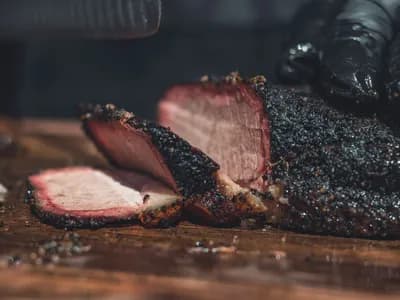
Low-and-slow smoked brisket
The kamado acid test. Ten hours at 110°C, a deep bark, a pink smoke ring and a texture that gives way under the weight of a fork.
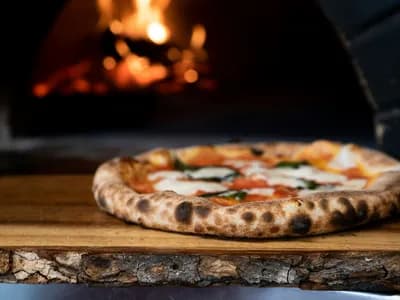
Neapolitan pizza on the kamado
At 350°C the base puffs in 90 seconds and the cornicione comes out leopard-spotted and pillowy. One pizza, three minutes, zero margin for error.
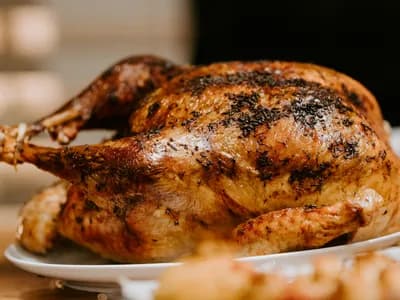
Beer-can chicken with crackling skin
The American beer-can chicken classic, taken to the kamado: the beer steams from within, the ceramic concentrates the heat and the skin finishes like crisp parchment.
GO DEEPER
Continue with these
- Related guide
What Is a Kamado: The Complete Guide
What a kamado is, how it works and what it's for: the honest guide to understanding the ceramic grill before you buy.
- Related guide
Your first kamado: the complete pre-purchase guide
Size, materials, brand and budget. Everything you have to decide before clicking Buy, told by someone who has made enough mistakes.
- Related guide
Kamado vs gas grill: which one really suits you
Real cooking, flavour, total cost and convenience. A long comparison without paternalism so you can decide before spending 1,500 euros on either.
- Recipe to practice
Low-and-slow smoked brisket
The kamado acid test. Ten hours at 110°C, a deep bark, a pink smoke ring and a texture that gives way under the weight of a fork.
- Recipe to practice
Neapolitan pizza on the kamado
At 350°C the base puffs in 90 seconds and the cornicione comes out leopard-spotted and pillowy. One pizza, three minutes, zero margin for error.
- Recipe to practice
Beer-can chicken with crackling skin
The American beer-can chicken classic, taken to the kamado: the beer steams from within, the ceramic concentrates the heat and the skin finishes like crisp parchment.
- Editorial comparison
big green egg large vs kamado joe classic iii
The classic kamado matchup: the Big Green Egg Large, the indestructible pioneer with the widest accessory network, again
- Glossary term
Refractory ceramic
High-density ceramic that absorbs, stores and radiates heat between 70 and 400 °C without cracking.
- Glossary term
Cast-iron griddle (plancha)
Solid cast-iron plate heated over the grate to cook by contact heat, like a kitchen griddle.
- Glossary term
Sear
Apply very high heat (250-400 °C) to a piece's surface to form a crust and develop Maillard.
Frequently asked questions
Is a kamado worth it if I only grill in summer?
Honestly, no. If you only fire up the grill three or four times a year, you will pay 500-1,000 € for something you barely amortise and still have to clean and protect over winter. For occasional use, a charcoal kettle barbecue (40-150 €) gives you the ember flavour without the weight, the investment or the kamado's learning curve. The full comparison is in kamado vs Weber kettle.
How much does a kamado worth buying cost?
A serious kamado starts around 500 €, and the value sweet spot sits between 800 and 1,000 €+, where the ceramic is thick and the warranty long. Below 300-400 € you find thin-ceramic clones that crack at the first frost or thermal shock: cheap turns very expensive when you have to bin it after two years.
Is it hard to learn to use a kamado?
There is a learning curve, but a manageable one. The hardest part is mastering the two vents to set the temperature without overshooting, because cooling a hot kamado takes 30-40 minutes. Almost all of us burn a couple of dinners at first. After three or four cooks you get the knack, and from then on it holds temperature almost on its own. The early patience pays off in years of precise cooking.
Can you move a kamado around?
With a locking-caster cart you can roll it across a flat terrace, but it is not genuinely portable: it weighs roughly 35 to 185 kg depending on size. Do not take it to the beach or store it every night. It needs a fixed spot and, if you do move it, do so cold and carefully, because glazed ceramic chips on impact. Treat it as outdoor furniture, not a travel gadget.
What is the alternative if I do not want a kamado?
It depends on your real use. For midweek speed, a gas barbecue (200-600 €) lights in a minute and cleans up easily. For ember flavour without fuss, a charcoal kettle (40-150 €); what you gain and lose against a kamado is in kamado vs Weber kettle. For a smoke-free balcony, an electric grill or plancha. And if smoking is all you want, a barrel smoker does it better for less. The best barbecue is the one you will actually light.