GUÍA DE COMPRA
What Size Kamado to Buy: Inches, cm and Guests
A kamado is sized by its grill diameter. Here is exactly how many inches you need for your crowd and your cooking, without buying too small.
Quick answer
Kamado size is measured by grate diameter, not height. The 18-inch (46 cm) is the default recommendation: it covers 6-8 diners, a whole chicken or a small brisket. Below 15 inches (38 cm) you run short as soon as you have guests; the 21-24 inch is for hosts of 10-12.
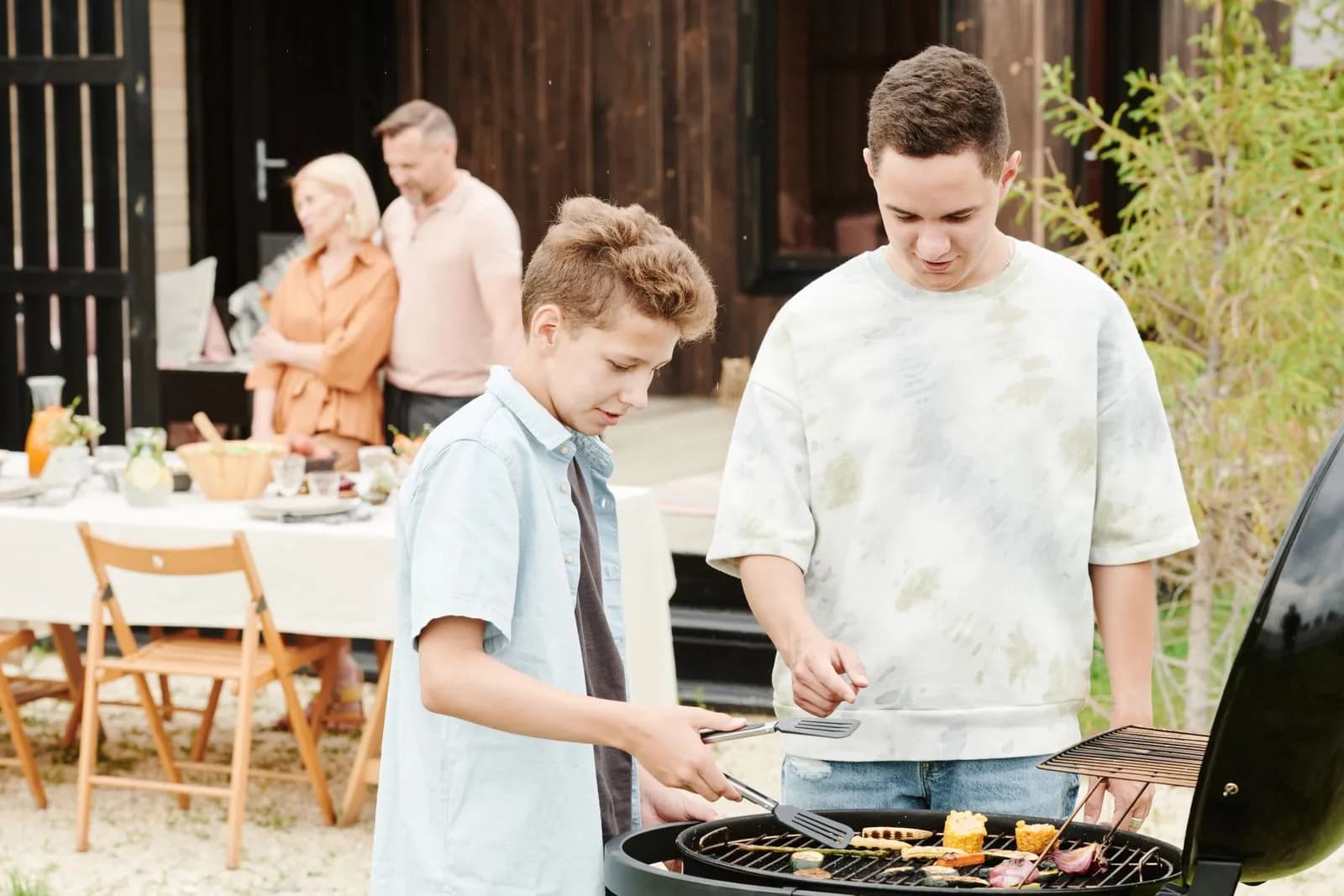
A kamado's size is defined by its grill diameter, not its height. The 18" (46 cm) is the do-it-all sweet spot for most homes: 6-8 guests, a whole chicken or a small brisket. Below 15" (38 cm) you run short the moment you invite people; the 21"/24" is for hosts feeding 10-12.
This is the question we hear most before a purchase, and it almost always arrives framed wrong: "which kamado is best?" when the real question is "what size?". Getting the diameter right shapes everything else —how many people you feed, what cuts fit, how much charcoal you burn and whether it fits your terrace— far more than the brand does.
At mikamado we have compiled the real sizes sold in Spain and cross-checked them against real-world cooks: burgers, chickens, ribs and brisket. This guide is the dimensional hub: the master inches-to-guests table, the mistake of buying small "to start", the terrace space you need and a recommendation by profile. From here we link to the buyer guides by profile.
How a Kamado Is Measured (and Why Surface Rules)
A kamado is measured by the diameter of its main grill, almost always given in inches. When a maker says "18 inches", they mean the diameter of the cooking circle, not the height of the egg or the outer width. That figure is what you compare across brands, because each names its models differently: one brand's "Classic" is another's "Medium".
What truly matters is not the linear diameter but the usable surface, and here lies a geometric trap. Surface grows with the square of the radius, so going from 15" to 18" does not add 20 % of space —it adds nearly 45 %. We measured on our terrace that an 18" gives around 1,660 cm², against 1,140 cm² for a 15". Three inches on paper translate into half a dozen more burgers.
That is why comparing inches alone misleads. When torn between two sizes, think in square centimetres and in real items —how many chickens, how many steaks— not the round catalogue number.
Master Table: Inches, cm, Guests and What Fits
This is the table we wished existed when we started: the real sizes sold in Spain, cross-referenced with guests, approximate surface and concrete cuts. Surface figures are indicative (they vary a few cm² between brands) and guest counts assume a generous host portion, not a restaurant one.
| Diameter (inches / cm) | Guests | Approx. surface | What fits |
|---|---|---|---|
| 13" (33 cm) | 2-3 | ~860 cm² | 3-4 burgers, 1 chicken (tight), ideal portable |
| 15" (38 cm) | 4 | ~1,140 cm² | 5 burgers, 1 roomy chicken, 1 rack of ribs |
| 18" Classic (46 cm) | 6-8 | ~1,660 cm² | 1 small brisket, 1 chicken + veg, 8-9 burgers |
| 21"/24" Big (55-61 cm) | 10-12 | ~2,400-2,900 cm² | 1 large brisket, 2 chickens, 12+ burgers |
| 2XL (74 cm) | up to 20 | ~4,300 cm² | 2 briskets, 8 chickens, event cooking |
Our read: the 18" is the pivot size. Below it you cook for your daily table; from the 21" up you start cooking for parties. If your real use lands right on the border between two rows, size up: charcoal you can regulate, steel does not stretch.
The Mistake of Buying Small "to Start"
The most common trap we see: buying a 13" or 15" "to start and see if I like it". It sounds prudent, but it ignores how a kamado is really used. Ceramic hooks you fast, and the moment you discover it makes a stunning pizza or a smoked chicken, you want to share it. Then you invite four friends and realise a 15" holds neither two chickens nor a decent rack of ribs.
The cost of getting it wrong is not just money: it is the frustration of cooking in batches, pulling one round off while the next waits cold. We have watched more than one owner resell their 13" within six months to move up to the 18", losing a good chunk in the deal. Buying twice costs more than buying right once.
The only legitimate exception for "small" is genuine portable use: if you want it for the beach, camping or a tiny balcony, the 13" makes complete sense. But "starting out" is not a reason: start with the size you will want a year from now.
Size vs Terrace Space (Measure With the Cart)
Before you fall for a 24", grab the tape measure. The mistake we made early on was measuring only the egg's diameter and forgetting the cart and side shelves, which is where it really takes up room. An 18" on its iron cart runs about 120-130 cm wide with both folding tables open; a 21" climbs to 140-150 cm. Folding the shelves reclaims 40-50 cm on each side.
Three measurements matter, not one. The total width with tables open (to know if it clears your terrace door), the depth (the egg plus the lid swinging up and back, which wants about 50 cm of air) and the free height above: never place a kamado under a fabric awning or a low ceiling, because the open lid throws heat and the ceramic radiates.
Our rule for Mediterranean terraces: when measuring, add at least 30 cm on each side of working room to move around and open the shelves. That is not the safety distance: from walls, railings and any combustible material, follow your model's manual, 2 to 3 metres in the ones we checked (the figures are in first use of a new kamado). Also check the floor can take it. A 24" with cart and charcoal tops 90 kg.
Size vs Charcoal Use (Bigger Does Not Mean Pricier)
The myth we hear most: "a big kamado burns far more charcoal". False, and worth grasping before buying small to save. In a kamado you load the charcoal the cook needs, not what fits the chamber. For two burgers and a couple of peppers you fill a third of the basket in a 15" just as in an 18": you spend almost the same.
What does change consumption is the target temperature and duration, not the size. A sear at 350 °C burns faster than a smoke at 110 °C, whatever the size. We measured on our 18": a chicken at 180 °C for 75 minutes eats about 700-900 g of charcoal; an 8-hour brisket at 110 °C, around 2 kg. The big one only burns more when you genuinely fill it to feed twelve.
The kamado's efficiency is its trump card: the ceramic insulates so well that, once stabilised, the coals ask for very little air and last hours. Buying big does not penalise your day-to-day charcoal bill.
Recommendation by Profile: Couple, Family or Host
We distil the whole guide into three clear profiles, which is how the purchase actually gets decided. If you are a couple with no kids cooking midweek for two, the 13"-15" (33-38 cm) is enough and takes little room; step up to 15" if you host another couple now and then. It is the balcony and small-terrace size.
Family of four or five with weekend meals: the 18" Classic (46 cm) rules here, no debate. It covers daily use and handles a birthday for eight without stress, which is exactly where a 15" falls short. It is the buy we recommend by default and the one fewest people resell in regret.
Big-table host, regular parties or anyone smoking whole cuts: 21"/24" (55-61 cm), or the 2XL if you run genuine events. Here grill space is the priority above price or terrace footprint.
These profiles are the gateway to our dedicated buyer guides —kamado for a couple, for a family and first kamado— where we drill down to the specific model and budget.
To sum up what we measured: size rules, and the number that matters is the grill diameter. If you are a couple cooking daily, the 13"-15" does the job; but the moment you entertain with any regularity, the 18" (46 cm) is the buy that never falls short and our default recommendation for most Spanish homes. The 21"/24" only makes sense if you genuinely host a big table.
The expensive mistake is not going too big —it is going too small. An 18" cooking for two burns almost exactly what a 15" does, because you load the charcoal you need, not what fits. But a 13" will never stretch to eight, however hard you try.
Measure your terrace with the cart included, decide how many people you really cook for (not the number you dream of) and choose with room to spare. From this dimensional hub you can move on to our buyer guides by profile —couple, family, host and first kamado— to lock in the exact model.
Gear featured in this guide
Recipes to get started
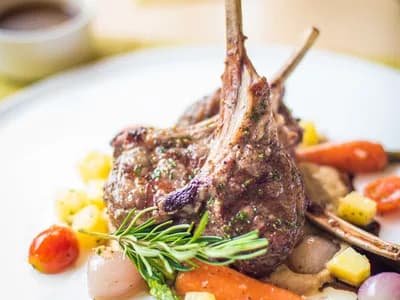
Levante-style smoked leg of lamb
A boneless leg of lamb, marinated in rosemary, lemon and Costa Blanca olive oil, smoked over local almond wood. The kamado paying tribute to the Alicante countryside.
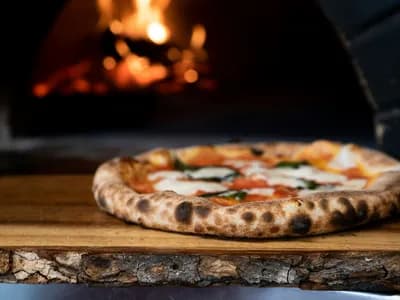
Neapolitan pizza on the kamado
At 350°C the base puffs in 90 seconds and the cornicione comes out leopard-spotted and pillowy. One pizza, three minutes, zero margin for error.
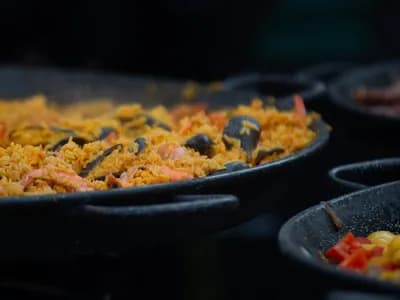
Alicante-style baked rice on the kamado in a clay cazuela
Traditional Alicante baked rice —chickpeas, pork rib, blood sausage, potato and tomato, with a whole garlic head in the centre— baked in a clay cazuela at 220°C indirect.
GO DEEPER
Continue with these
- Related guide
Your first kamado: the complete pre-purchase guide
Size, materials, brand and budget. Everything you have to decide before clicking Buy, told by someone who has made enough mistakes.
- Related guide
What Is a Kamado: The Complete Guide
What a kamado is, how it works and what it's for: the honest guide to understanding the ceramic grill before you buy.
- Related guide
5 essential accessories to get started with your kamado
Heat deflector, probe, lighter, cover and cast iron: what truly earns its price on day one, and what is just hot air.
- Recipe to practice
Levante-style smoked leg of lamb
A boneless leg of lamb, marinated in rosemary, lemon and Costa Blanca olive oil, smoked over local almond wood. The kamado paying tribute to the Alicante countryside.
- Recipe to practice
Neapolitan pizza on the kamado
At 350°C the base puffs in 90 seconds and the cornicione comes out leopard-spotted and pillowy. One pizza, three minutes, zero margin for error.
- Recipe to practice
Alicante-style baked rice on the kamado in a clay cazuela
Traditional Alicante baked rice —chickpeas, pork rib, blood sausage, potato and tomato, with a whole garlic head in the centre— baked in a clay cazuela at 220°C indirect.
- Editorial comparison
big green egg large vs kamado joe classic iii
The classic kamado matchup: the Big Green Egg Large, the indestructible pioneer with the widest accessory network, again
- Glossary term
Sear
Apply very high heat (250-400 °C) to a piece's surface to form a crust and develop Maillard.
Frequently asked questions
Which kamado size is the best-seller and why?
The 18" (46 cm), known as Classic or Medium depending on the brand. It is the all-rounder: it cooks for 6-8 guests, takes a whole chicken or a small brisket and fits a normal terrace. It does not fall short for a birthday nor feel excessive for a family's daily use. That is why it is the size we recommend by default for most people.
How many people does an 18-inch kamado feed?
An 18" (46 cm) comfortably cooks for 6-8 guests with a host-sized portion. That is around 1,660 cm² of surface: room for 8-9 burgers at once, a whole chicken with sides or a small brisket. For an occasional meal for ten you can cook in batches, but if you host ten regularly, move up to the 21"/24".
How is a kamado's size measured, inside or outside?
By the diameter of the main cooking grill, in inches, not by the outer width or height. An "18 inch" has a grill 46 cm across. Always compare that number between brands, because the trade names (Classic, Medium, Large) change from one maker to another and are not direct equivalents.
Does a big kamado use more charcoal than a small one?
Not in normal use. You load the charcoal the cook needs, not what fits the chamber: for two burgers you spend almost the same in a 15" as in an 18". Consumption is set by temperature and duration, not size. A big one only burns more when you actually fill it to feed twelve people.
Is a 13-inch kamado worth it as a starter?
Only if your use is genuinely portable or for a very small balcony. As a "starter size" it is a mistake: it cooks for 2-3 and runs short the moment you invite people, so many resell it within six months to move up to the 18", losing money. If unsure, start with the size you will want a year from now, not the cheapest.