TÉCNICA
Kamado Temperature Control: The Pitmaster's Guide
The dual airflow system, the rookie mistake of overshooting, and why the dome thermometer lies. This is the skill that separates a beginner from a pitmaster.
Quick answer
A kamado's temperature is controlled by regulating oxygen with two vents: the bottom intake and the top chimney. The ceramic reacts slowly — every adjustment takes 15-20 minutes to show — so the golden rule is to close down before reaching the target: bringing an overshot temperature down always costs far more than raising it.
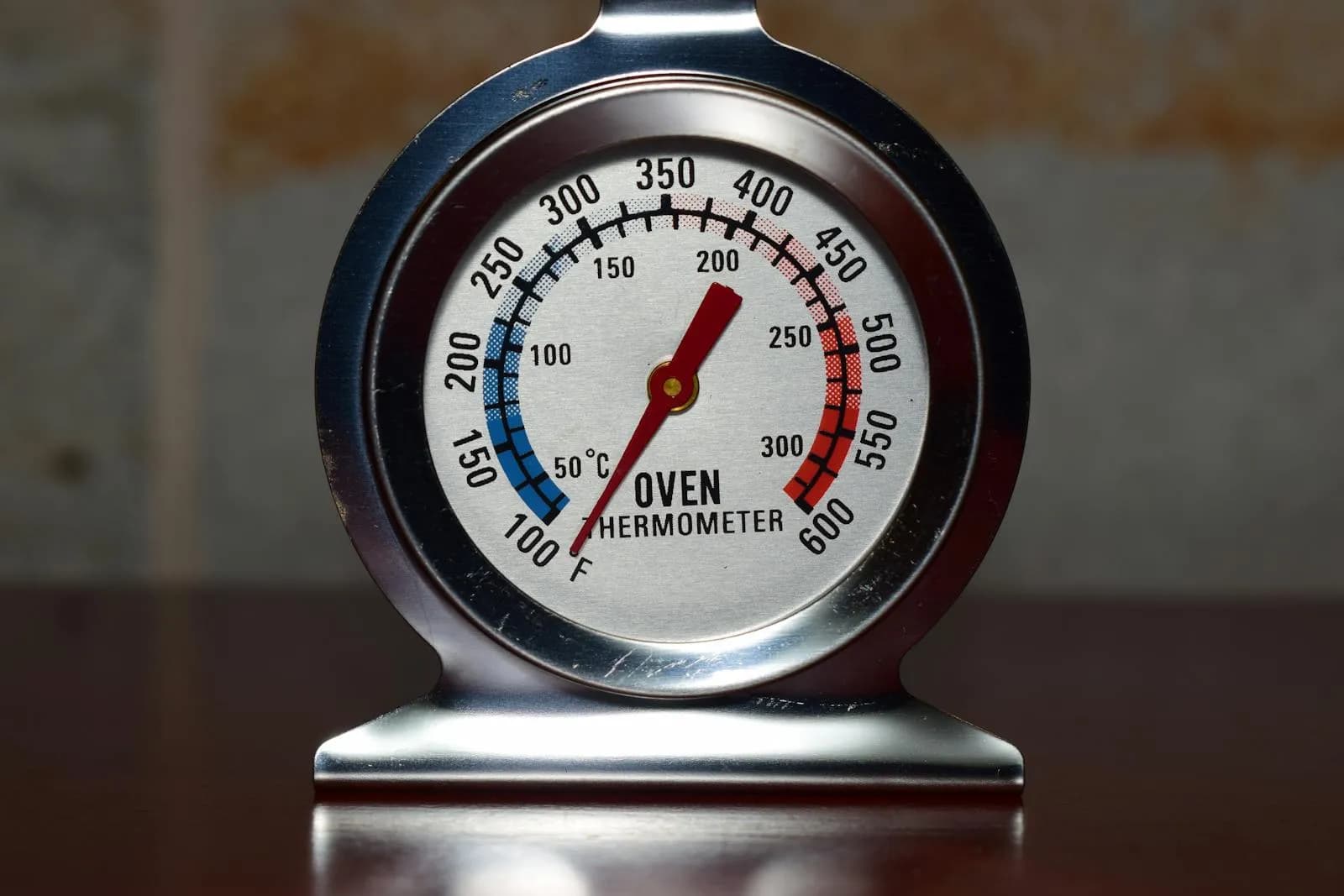
Controlling a kamado's temperature means regulating airflow through two vents — the bottom intake and the petal-style top chimney — to lock the burning charcoal at your target heat. There is no gas, no dial: you steer with oxygen, and the ceramic responds slowly.
That slowness is the whole game. By the time the thermometer starts to climb, the ceramic already has enough momentum to keep rising another 30 to 40 °C. That is why beginners overshoot again and again, while the cook who has mastered the kamado closes the vents before reaching the target.
This guide gathers what we have checked on our terrace in Torrevieja with our Big Green Egg Large, cross-referenced with what the kamado community reports, including how the cooker behaves on windy Levante days. No catalogue theory here: real numbers, vent by vent.
The dual airflow: why a kamado is controlled by air
A kamado works like a sealed chimney with two vents that operate as a pair. At the bottom, an intake regulator — a sliding grille in the base — lets cold air in to feed the coals. At the very top of the dome, the petal-style chimney (a metal disc with rotating slots) lets the hot gases escape. Natural draft does the rest: cold air enters below, passes through the charcoal, heats up, and exits above.
The amount of oxygen moving through that circuit decides the intensity of the fire, and therefore the temperature. More air, more fire; less air, less fire. There is no burner to adjust and no flame to turn up: you only control two openings. That is why we say a kamado is steered by air, not by gas.
The rule we apply: the bottom vent sets how much fuel you burn, the top vent fine-tunes and stabilises. On our terrace we adjust the bottom first and finish with the daisy wheel. Both nearly shut: slow smoking. Both wide open: above 350 °C for searing or pizza.
Mistake number one: overshooting the target
The mistake that ruins more cooks is not undershooting: it is overshooting. A kamado's ceramic stores an enormous amount of heat, and that heat has momentum. When the thermometer reads 180 °C and climbing, the mass of ceramic and embers already holds enough energy to carry you to 220 or 240 °C even if you slam everything shut. And here is the real problem: coming down is painfully slow. In our tests in Torrevieja, dropping from 250 °C to 130 °C took us 35 to 50 minutes with the vents nearly closed. Climbing those same degrees takes five.
The consequence is asymmetric, so the strategy must be too. We always climb slowly and close before reaching the target, usually around 25-30 °C early. If we want 110 °C for smoking, we start choking the air as soon as the thermometer passes 80-85 °C on the way up.
If it runs away from you, do not panic and do not open the lid to vent it: you would do the opposite, feeding in more oxygen. Close the bottom vent almost fully, leave only a sliver on the daisy wheel, and wait. Patience is the only lever that truly works.
Reference table: target, vents and dish
These are the starting settings we use on our terrace with the Big Green Egg Large, taken with a dry dome and no wind. Treat them as a departure point, not dogma: every cooker, every charcoal, and every day has its own character. The bottom-vent column is measured in finger-widths of grille opening; the chimney, in how far you turn the daisy wheel.
| Target | Bottom vent | Chimney | Dish |
|---|---|---|---|
| 100-120 °C | 1 finger or less | Slots only | Long smokes: brisket, pulled pork, ribs |
| 130-150 °C | 1-2 fingers | 1/4 open | Salmon, pork belly, gentle indirect |
| 160-180 °C | 2 fingers | Half open | Whole chicken, duck breast, bread |
| 200-230 °C | 3 fingers | 3/4 open | Vegetables, grilled ribs, thin pizza |
| 250-300 °C | Nearly full | Nearly full | Neapolitan pizza, steak searing |
| 320-400 °C | Wide open | Wide open | Live fire, final sear, stone pizza |
One important note: these values are for cooking with the heat deflector in place (indirect) except for searing and live fire. Without the deflector, the grate temperature is far higher than the dome reads, so do not compare apples with oranges. Write down your own numbers the first time you nail a cook: that notebook is worth more than any table of ours.
The heat deflector: the key to indirect cooking
The heat deflector — plate setter on a Big Green Egg, heat deflector with the Divide & Conquer system on a Kamado Joe — is a ceramic piece that sits between the coals and the food. Its job is simple and transformative: it blocks the fire's direct radiation so the food cooks with surrounding heat, not with the flare. It turns the kamado into a convection oven rather than a grill.
Without a deflector, the coals radiate at over 500 °C across the base: perfect for searing a ribeye in ninety seconds a side, but a guarantee of charcoal if you try to cook a whole chicken or smoke ribs for hours. With the deflector in place, that same bed of embers holds the chamber steady at 110-180 °C and the food cooks through inside without burning outside.
Two details we learned the hard way. First: always leave an air gap between the deflector and the grate — stack them tight together and you create a cold spot in the centre. Second: set a water pan on top of the deflector and you stabilise the temperature even further while adding moisture, ideal for long smokes where you do not want the meat to dry out.
Thermometers: why the dome lies to you
The dome thermometer measures the air at the very top of the chamber, the hottest point and the one furthest from the food: between what the lid shows and what sits at grate height the difference runs 15 to 30 °C. It is there to read the trend — whether the kamado is climbing, dropping or settling after you touch a vent — not to decide anything. For regulating, the chamber probe is what counts: that thin cable resting at grate height, next to the food, is the true cooking temperature and the one that should guide your hand on the vents. Which device to buy, where the meat probe goes in and how to calibrate it are all in our guide to kamado thermometers and probes.
Recovery, the Levante wind and the Minion method
Every time you open the lid, a gust of oxygen rushes in and the temperature spikes momentarily, followed by a dip as cold air washes the chamber. Do not panic and do not touch the vents: in our tests, a dome steady at 130 °C recovers on its own in 6-10 minutes if you leave the vents as they were. Opening and closing the lid with judgement — quickly and only when needed — is half the battle won.
Wind is another story. Here in Torrevieja, the Levante wind pushes air straight at the bottom intake and can send you up 40-60 °C without touching anything, because it is forcing more oxygen into the fire. On Levante days we orient the cooker with the bottom vent on the leeward side, close one notch tighter than usual, and watch closely. An improvised windbreak helps more than you would think.
For long smokes of 12 to 18 hours we use the Minion method: instead of lighting all the charcoal, we fill the chamber with unlit lump and ignite only a handful of coals at one end or in a small central crater. The fire creeps slowly through the cold charcoal like a fuse, holding 110-120 °C all night on a single load, with no need to refuel at dawn.
Temperature control is not a trick you pick up in an afternoon: it is a sense you develop when you stop staring at the thermometer and start reading the cooker — the hiss of the air, the colour of the coals, the slow way the ceramic reacts. Climb gently, close before you arrive, and be patient, because in a kamado coming down always costs more than going up.
If you take one idea from this guide, let it be this: a kamado is driven, not lit. The numbers we have given are our starting point in Torrevieja; you will find yours cook after cook, by noting where you leave the vents. That notebook is what truly turns you into a pitmaster.
Gear featured in this guide
Recipes to get started
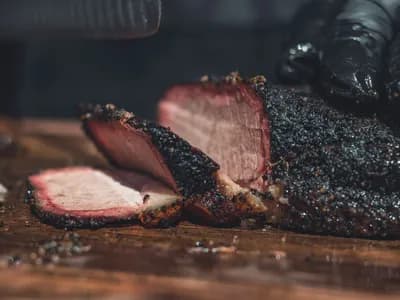
Low-and-slow smoked brisket
The kamado acid test. Ten hours at 110°C, a deep bark, a pink smoke ring and a texture that gives way under the weight of a fork.
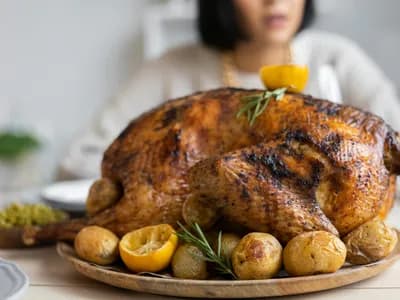
Smoked Christmas turkey on the kamado
The recipe that retires the family oven on December 25th: 12-hour brine, butter under the skin, apple wood smoke and a whole turkey at 120 °C — tender inside, deep gold outside, properly smoked.
GO DEEPER
Continue with these
- Related guide
What charcoal to use in a kamado (and which to avoid)
Quebracho or holm-oak lump wins; supermarket briquettes and chemical lighter fluid stay out. Here is what to load and why.
- Related guide
How to light a kamado: the step-by-step method
No petrol, no weird tablets and no 45-minute waits. The cone method, airflow control and the mistakes that prevent 80% of the frustration.
- Related guide
Kamado won't heat, keeps dying or overshoots: fixes by symptom
Why it won't climb, why it dies, why it runs away, and how to bring a runaway temperature back down without ruining the cook. Diagnosis by symptom, step by step.
- Related guide
Kamado cooking temperatures and times: a cheat-sheet by cut
The four heat zones, the technique-to-temperature table and the cut-to-internal-temp-to-time cheat-sheet. Why the probe beats the clock, every time.
- Recipe to practice
Low-and-slow smoked brisket
The kamado acid test. Ten hours at 110°C, a deep bark, a pink smoke ring and a texture that gives way under the weight of a fork.
- Recipe to practice
Smoked Christmas turkey on the kamado
The recipe that retires the family oven on December 25th: 12-hour brine, butter under the skin, apple wood smoke and a whole turkey at 120 °C — tender inside, deep gold outside, properly smoked.
- Editorial comparison
big green egg large vs kamado joe classic iii
The classic kamado matchup: the Big Green Egg Large, the indestructible pioneer with the widest accessory network, again
- Glossary term
Heat deflector
Ceramic plate placed between the coals and the grate to turn direct fire into indirect cooking.
- Glossary term
Divide & Conquer
Kamado Joe's modular two-tier grate and deflector system that enables simultaneous multi-zone cooking.
- Glossary term
Plate setter
Big Green Egg's name for its three-legged ceramic deflector, equivalent to the modern ConvEGGtor.
Frequently asked questions
How do you control the temperature of a kamado?
You control it by regulating air through two vents: the bottom intake and the petal-style top chimney. More air means more fire and more heat; less air, less heat. The bottom vent sets how much fuel you burn and the top vent fine-tunes and stabilises. There is no gas and no dial: you only control the oxygen coming in and the gases going out.
Why does my kamado always overshoot the temperature?
Because the ceramic has a lot of thermal inertia: by the time you see the thermometer rising, another 30-40 °C is already on the way even if you close up. The fix is to climb slowly and shut the vents around 25-30 °C before the target. If you overshoot, do not open the lid to vent it — you only feed in more oxygen. Close the vents nearly fully and be patient, because coming down is very slow.
Is the kamado's lid thermometer reliable?
Only as a trend reference. The dome thermometer measures the air at the very top of the chamber, the hottest point and the furthest from the food. We have measured differences of 15 to 30 °C compared with grate height, where the cooking actually happens. To adjust the vents use a chamber probe, and to know whether the meat is done, a meat probe driven into the centre.
How long does a kamado take to cool down?
Far longer than it takes to heat up. In our tests in Torrevieja, dropping from 250 °C to 130 °C took us 35 to 50 minutes with the vents nearly closed, against the five minutes it takes to climb those same degrees. That is why the golden rule is to never overshoot: close before you reach the target, because correcting excess heat costs a fortune in time.
What is the Minion method for long smokes?
It is a technique for holding a low, steady temperature for 12-18 hours on a single charcoal load. Instead of lighting the whole chamber, you fill it with unlit lump and ignite only a handful of coals at one end or in a small central crater. The fire creeps slowly through the cold charcoal like a fuse, holding 110-120 °C all night with no need to refuel at dawn.