COMPARATIVA
Kamado vs gas grill: which one really suits you
Real cooking, flavour, total cost and convenience. A long comparison without paternalism so you can decide before spending 1,500 euros on either.
Quick answer
The kamado wins on flavour, temperature range (80-420 °C) and long cooks; the gas barbecue wins on speed — seven minutes versus thirty — and weekday convenience. Five-year cost is similar: €1,800-2,500 for the kamado versus €1,700-2,200 for gas. Choose a kamado if you cook unhurried weekends; gas if you improvise midweek.
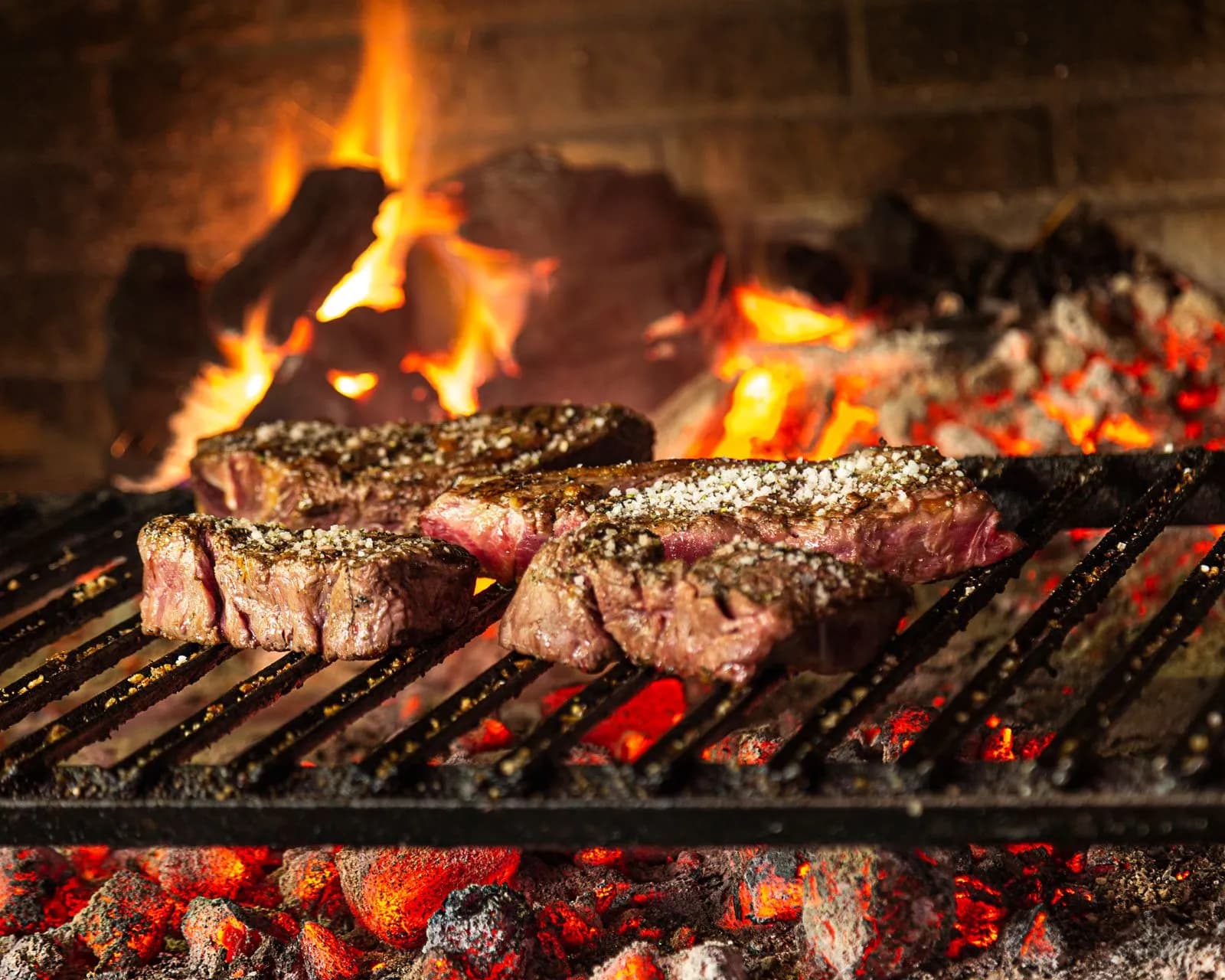
This is probably the question I get asked the most: I have the budget for a decent grill and I am torn between a ceramic kamado and a premium gas grill. They cost about the same. Which one would someone serious about cooking buy?
The short answer is: it depends on how you cook and how patient you are. The long answer fills this guide, and it is worth reading because both options are legitimate, and the wrong decision means a 1,500€ object collecting dust on the terrace.
| Criterion | Kamado | Gas barbecue |
|---|---|---|
| Temperature range | 80-420 °C | 180-320 °C |
| Start-up time | ≈30 minutes | ≈7 minutes |
| Real smoke flavour | Yes: charcoal and wood | No: clean combustion |
| Annual upkeep | €100-150 in charcoal | €60-100 in gas and parts |
| Warranty | Lifetime on ceramic (serious brands) | 2-5 years on burners |
| Five-year total cost | €1,800-2,500 | €1,700-2,200 |
| Learning curve | 3-6 months | Almost none |
Flavour and on-plate result
The kamado wins on flavour for a physical reason: real combustion of lump charcoal and wood produces aromatic compounds (phenols, short-chain aromatic hydrocarbons, wood terpenes) that gas, being a clean combustion, does not generate. A twelve-hour brisket from a kamado has a pink smoke ring and a smoked crust that gas cannot reproduce, not even by adding chips in a smoker box above the burner.
For quick searing (steak, burger, prawns) the difference is smaller: the gas grill reaches 280-320 °C with a hot grate and the flavour outcome is very decent. For pizza, the very high temperature of the kamado (380-420 °C) gives a crust that gas does not match. For roast chicken at 200 °C both work, but the kamado retains humidity in the ceramic, so the breast stays juicier.
Convenience and total time
Here the gas grill wins, no argument. You press a button, wait seven minutes for the grate to come up to temperature and start cooking. When you are done, close the gas, let it cool, done. Total: half an hour for an improvised Tuesday-night ribeye at nine pm.
A kamado asks for thirty minutes from ignition to stable coals, another thirty for the ceramic to actually accumulate heat, and a shutdown of three to four hours (close the vents, let the coals smother on their own; you never wet a hot kamado). If your real life is cooking mid-week after work, gas wins. If your cooks happen on Saturdays with time, the kamado is not a problem.
Total cost over five years
Real numbers in Spain, 2026. Premium gas grill (Weber Genesis or equivalent, three burners, cast-iron grates, lidded with thermometer): 1,200-1,600€. Add maintenance: a 12.5 kg butane bottle lasts about thirty cooks, so figure 60-80€/year in gas; burner replacement at five years, 80-150€; new grates every three years, 60€. Five-year total: 1,700-2,200€.
Decent Large/Classic kamado: 1,300-1,800€. Quality lump charcoal: eight to twelve 9 kg sacks per year, 100-150€. Maintenance essentially zero for the first ten years (serious brands offer lifetime ceramic warranties). Five-year total: 1,800-2,500€. The real gap is 200-400€ in favour of gas over five years — not a decisive figure.
Who each one is for
The kamado makes sense if: you cook at least once a week, you care more about result than speed, you have stable outdoor space, you value real smoke flavour, and you enjoy controlling fire (not seeing it as a chore). It also makes sense if you want a single machine that cooks from 80 °C up to 400 °C.
The gas grill makes sense if: you cook often mid-week, you are not willing to anticipate thirty minutes every time, your priority is quick steaks and weekend burgers, you live in a flat where charcoal smoke could be a neighbour issue, or you have small kids running around the terrace and prefer the closed combustion of gas.
If you cook three times a year for events, neither: rent a grill, buy a portable pizza oven if it appeals, or spend the money on something else.
The quick comparison
A mental table to decide. Temperature versatility: kamado clearly, covers the 80-420 °C range; gas stays in 180-320 °C. Flavour: kamado in long cooks and pizza; gas in quick searing both are fine. Time to start: gas seven minutes; kamado thirty. Annual maintenance: gas 60-100€; kamado 100-150€. Warranty: kamado lifetime on ceramic; gas two to five years on burners. Multi-zone capacity: kamado has a single chamber, gas has three to five independent burners. Learning curve: gas almost zero; kamado three to six months to master.
If you want a piece-by-piece detailed comparison, check the site's comparison tool: it is worth it for deciding with cold data instead of shop marketing.
And if I do not want to choose
Many people end up with both. It is not a marketing line: if your house has space and budget, a decent mid-range (not premium) gas grill plus a high-end kamado cover every scenario. The gas solves Tuesday; the kamado solves Saturday and events. Add it up to 2,500-3,000€ total and, in terms of real ten-year use, it works out better than buying one premium machine trying to do everything.
That said, if you have to choose one and your life is weekend cooking with time, the kamado wins on flavour and versatility. If your life is mid-week sprinting and Saturdays go elsewhere, gas wins on logistics alone.
There is no universal answer. I have run both in parallel for two years and the use balance was 70% kamado, 30% gas — but I cook to write about cooking, so my case is biased. In yours, look first at how many times a week you genuinely cook. If the answer is "almost all", gas. If the answer is "weekends, with time", kamado without doubt. And if you are very undecided, try writing down for a month how many times you would actually go to the terrace to cook — the numbers will surprise you and they will make the decision for you.
Gear featured in this guide
Recipes to get started
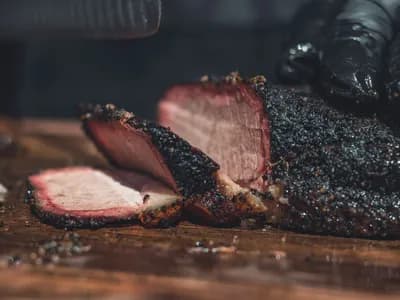
Low-and-slow smoked brisket
The kamado acid test. Ten hours at 110°C, a deep bark, a pink smoke ring and a texture that gives way under the weight of a fork.

Carolina-style smoked pulled pork
Eight hours of patience, a five-and-a-half-kilo pork shoulder and North-Carolina vinegar — this is what a kamado does better than any other fire.
GO DEEPER
Continue with these
- Related guide
What Is a Kamado: The Complete Guide
What a kamado is, how it works and what it's for: the honest guide to understanding the ceramic grill before you buy.
- Related guide
Your first kamado: the complete pre-purchase guide
Size, materials, brand and budget. Everything you have to decide before clicking Buy, told by someone who has made enough mistakes.
- Recipe to practice
Low-and-slow smoked brisket
The kamado acid test. Ten hours at 110°C, a deep bark, a pink smoke ring and a texture that gives way under the weight of a fork.
- Recipe to practice
Carolina-style smoked pulled pork
Eight hours of patience, a five-and-a-half-kilo pork shoulder and North-Carolina vinegar — this is what a kamado does better than any other fire.
- Editorial comparison
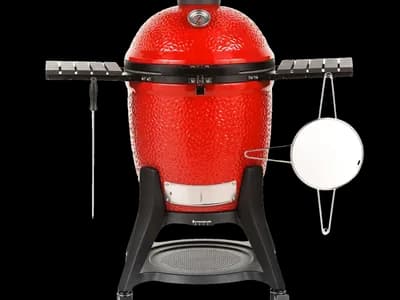
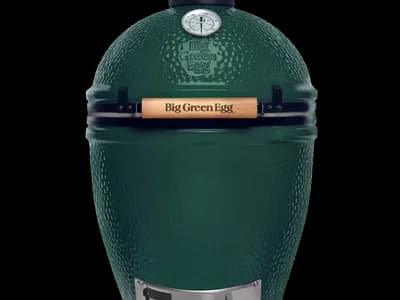
big green egg large vs kamado joe classic iii
The classic kamado matchup: the Big Green Egg Large, the indestructible pioneer with the widest accessory network, again
- Glossary term
Smoke ring
Pink band visible under the crust of smoked meat, formed when nitric oxide from smoke reacts with myoglobin.
- Glossary term
Lump charcoal
Irregular-chunk hardwood charcoal with no binders, made by pyrolysis.
- Glossary term
Sear
Apply very high heat (250-400 °C) to a piece's surface to form a crust and develop Maillard.
Frequently asked questions
Which cooks faster, kamado or gas grill?
The gas grill, no argument. You press a button and in 7 minutes the grate is at searing temperature. A kamado needs 30 minutes from ignition to stable coals, plus another 15-20 for the ceramic to accumulate real heat. For an improvised Tuesday-night ribeye, gas wins on pure logistics. For a long Saturday cook, the kamado's 30 minutes are irrelevant compared to the 4-12 hours of cook time.
Does the kamado really give better flavour than gas?
Yes, but only on long cooks and pizza. Real combustion of lump charcoal and wood generates aromatic compounds (phenols, wood terpenes) that clean gas combustion does not produce. A 12-hour brisket from a kamado has a pink smoke ring and a smoked crust that gas cannot reproduce, not even with a smoker box. For quick searing — steak, burger, prawns — the difference is minimal and a gas grill with a hot grate does the job perfectly.
How much does each consume in fuel per year?
In Spain 2026, typical annual budget: gas butane 60-80€ (a 12.5 kg bottle lasts about 30 cooks), quality lump charcoal for a kamado 100-150€ (8-12 sacks of 9 kg). Gas is slightly cheaper in pure fuel, but a kamado has essentially no maintenance for the first ten years, whereas a gas grill needs a burner replacement at year 5 (80-150€) and new grates every 3 (60€). Five-year total cost: 1,700-2,200€ gas vs 1,800-2,500€ kamado.
Which is easier to maintain?
The kamado, by a wide margin. Refractory ceramic needs no maintenance for the first ten years — only emptying the ash every 4-5 cooks. A gas grill has mechanical parts that degrade: burners with piezoelectric ignition (5 years), cast-iron grates that rust if you do not care for them (3 years), bottles to swap every 30 cooks. A serious kamado has a lifetime ceramic warranty; gas grills give you two to five years on the burners.
Can I have a kamado on a flat's terrace?
Yes, with three conditions: that the building rules explicitly allow it (check the statutes), that you respect neighbour hours, and that you respect the clearance your model's manual specifies, 2 to 3 metres from walls, railings and combustible material in the manuals consulted. Hot ceramic does not burn but charcoal smoke concentrates more than gas, so if your neighbour's window is 2 metres away, you will have problems. In a closed indoor patio, do not even try — serious risk. In those cases, a gas grill is the reasonable choice.
Which one lasts longer in real use?
The kamado, by a wide margin. A serious brand ceramic unit (Kamado Joe, Big Green Egg, Monolith) carries a lifetime ceramic warranty and literally lasts 20-30 years if you do not hit it, with internal parts (grate, plate setter) replaced every 8-10 years for 80-120€. A premium gas grill lasts 10-15 years with maintenance (burner, grate and ignition replacements), after which buying new is more rational. On cost per year, the kamado clearly wins from year seven onwards.