MANTENIMIENTO
Protecting Your Kamado from Salt and Sea Air on the Coast
Living by the Mediterranean takes a toll on your kamado's steel. Which parts suffer from salt air, how to stop rust, and how to keep it pristine for years.
Quick answer
In coastal climates, salt air does not harm a kamado's ceramic but does attack its metal: hinge, bands, hardware and thermometer can rust within months. Protection is simple: dry the unit before covering it, use a breathable cover — never airtight plastic — empty damp ash and wipe the metal parts with oil every few weeks.

Salt air is invisible but relentless. On the Costa Blanca, the sea breeze leaves a thin film of salt on anything left outdoors, and the kamado's ceramic shrugs it off — what suffers is the metal: hinge bands, hardware, thermometer and gaskets. With high humidity and salt, rust shows up in months, not years.
The good news: protecting it is simple and cheap if you start on day one. In this guide we share the routine we follow in Torrevieja, two hundred metres from the sea, to keep a kamado pristine for a decade. No miracle products: oil, a breathable cover and the habit of drying it before covering up.
Why sea air attacks your kamado (and the ceramic doesn't)
A kamado's ceramic is virtually indestructible against salt air: it doesn't rust, doesn't corrode, doesn't care about humidity. The problem is everything else. The air on the Costa Blanca carries suspended sodium chloride, and salt is hygroscopic: it pulls moisture from the air and holds it against the metal. As a result, metal surfaces stay damp far longer than you'd think, even without rain.
Add to that the Levante's high relative humidity, which in summer sits around 70-80 % overnight. Salt plus water plus oxygen is the exact recipe for rust. That's why an identical kamado lasts much longer in Madrid than in Torrevieja if it's neglected.
The mental shift: here you're not protecting against rain, you're protecting against the air. Even if it doesn't rain for weeks, salt keeps settling every night with the sea breeze. Protection has to be continuous, not reactive.
The parts that suffer: a table of vulnerable zones
Not every part of the kamado runs the same risk. The ceramic and cast-iron grates hold up fine; what we watch at home are the exposed steel and brass pieces. Here is our table of vulnerable parts and how to protect them, ranked by urgency in a coastal climate:
| Part | Typical material | Salt-air risk | How to protect it |
|---|---|---|---|
| Hinge and vent bands | Steel | High | Light oil every 2-3 weeks, always dry |
| Bolts and nuts | Steel / stainless | High | Oil, and swap for A4 stainless if pitted |
| Lid thermometer | Steel / glass | Medium | Clean the bezel, don't submerge, dry well |
| Felt/mesh gasket | Fibreglass | Medium | Keep dry; replace if it compacts |
| Grate and deflector | Iron / stainless | Medium | Season with oil, store indoors if possible |
| Ceramic and glaze | Glazed ceramic | Low | Just dry before covering |
If you can only watch two things, make them the metal hinge bands and the hardware: they're the first to pit and the most visible. A wipe of oil there every fortnight completely changes the kamado's lifespan.
Anti-rust routine: five minutes every fortnight
The protection that works is the kind that fits into a short routine. Ours in Torrevieja is this, and we do it every two or three weeks, more often in high summer when the breeze picks up:
1. Run a dry cloth over all the metal bands, the hinge, the hardware and the thermometer bezel to remove the salt that has settled. If you see a whitish dust, that's salt.
2. If salt has caked on, clean it with a barely damp cloth and dry it immediately — never leave moisture on the metal.
3. Apply a very thin coat of oil to the steel parts: the hinge and vent bands, the bolts and nuts. Cooking oil (sunflower, olive) or a light mineral oil works fine; what matters is a thin film, not a puddle.
4. Check the bolts: if you spot an early orange speck, scrub it with a fine scouring pad, dry and oil it. Don't wait.
5. Only cover it once everything is dry. Done with discipline, this single habit is 80 % of the protection. Our cleaning and maintenance guide covers general care in depth.
Breathable covers: the key choice on the coast
Here's the most common mistake we see on the Costa Blanca: covering the kamado with a cheap, waterproof plastic cover. In a marine climate that backfires. A 100 % sealed cover traps the moisture rising from the warm ceramic and the ground, creating a damp chamber around the metal — a rust greenhouse. The plastic also cracks under the Levante sun in a couple of summers.
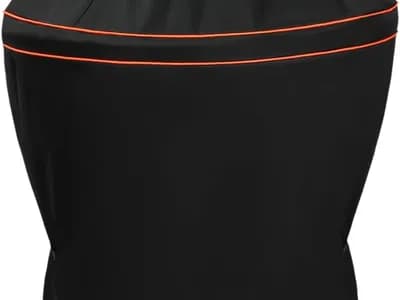
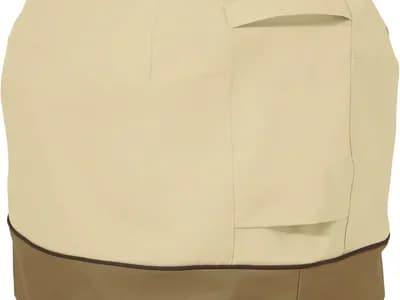
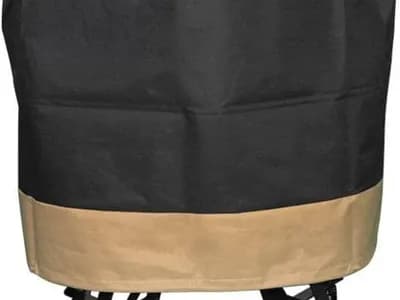
What we want is a breathable cover: a technical fabric that repels rain but lets vapour escape, with vents. Brands like Coverstore or Classic Accessories work with these fabrics; on a tight budget there are decent universal covers, but check that they breathe.
Two details that matter on the coast: a snug fit so the sea wind doesn't lift it (a bottom strap or drawstring), and a light or UV-opaque colour, because the Mediterranean sun degrades dark fabrics faster. And we'll say it again: never cover a kamado that's damp or hot.
Drying the ceramic before covering, and where to store it
The step most people skip is the cheapest one: drying it before covering. The kamado's ceramic is porous and absorbs moisture; if you cover it wet after rain or after steam-cooking, that water gets trapped under the cover and migrates to the metal. After rain, leave the kamado uncovered for a few hours in sun or breeze so the ceramic can breathe, and only then put the cover on.
If you've cooked and the lid is hot, wait until it has cooled completely: covering it hot creates condensation inside the cover. Ideally, wipe the thermometer bezel and the gasket area dry with a cloth before closing up.
On location: if you can, place the kamado under a porch or eave, not in the open facing the sea. Every metre of shelter from the sea wind counts. Storing the grate and deflector indoors between cooks also extends their life. And our kamado in winter guide has the details for the rainier months and Levante storms.
Coastal calendar: what to do each season
Salt air doesn't bite equally all year on the Levante, so we adapt the care to the season. Summer is the critical period: humid nights, a strong sea breeze and heavy use. Here we oil every two weeks and dry religiously after every cook, because the overnight condensation is brutal a few metres from the sea.
Autumn and winter bring the Levante storms: rain with salt-laden wind hitting full force. After each storm, uncover it, let it dry and check the hardware; that's when early rust appears most. A breathable, well-secured cover is essential in these months.
Spring is a good time for a thorough check-up: scrub and oil all the hardware, confirm the gasket hasn't compacted, and replace pitted bolts with A4 stainless, which handles the marine environment far better. A well-seasoned, well-stored kamado reaches the next summer pristine, ready for some roasted seasonal vegetables or Galician-style octopus with a Mediterranean view.
Protecting a kamado on the coast isn't hard, it's consistent: dry it before covering, use a breathable cover, and wipe a little oil on the metal parts every few weeks. That five-minute routine is the only thing separating a kamado that lasts fifteen years from one that rusts out in two summers.
Our advice from Torrevieja: don't wait for the first orange speck. In a marine climate, prevention costs a cloth and a splash of oil; fixing it costs sanding, scrubbing and sometimes buying new parts. Build the habit from day one and forget about the salt.
Gear featured in this guide
Recipes to get started

Costa Blanca grilled seasonal vegetables on the kamado
Eggplant, zucchini, Levante red pepper, red onion and whole skin-on garlic, grilled direct at 220°C and finished with warm sherry vinaigrette. A vegetarian plate that stands on its own, not a side.

Galician-style octopus on the kamado
The classic Galician "á feira" octopus with a twist: after the traditional boil, the tentacles hit the hot kamado and pick up charcoal aroma.
GO DEEPER
Continue with these
- Related guide
How to maintain and clean a ceramic kamado
Ceramic almost cleans itself: burn-off, grates, gaskets and rust, explained with no miracle products and no needless chemicals.
- Related guide
Using your kamado in winter and Levante wind
Dense ceramic makes the kamado the best cold-weather grill there is, but Levante wind and damp air demand real adjustments. Here they are, drawn from our experience on the Torrevieja terrace and from the ceramic's specs.
- Related guide
Kamado on the Terrace? Rules and Neighbour Community
A portable kamado is rarely banned outright, but your community statutes and your town hall's by-laws have the final word. We walk through the legal framework, why it smokes far less than an open barbecue, and how to cook without falling out with the neighbour across the terrace.
- Recipe to practice
Costa Blanca grilled seasonal vegetables on the kamado
Eggplant, zucchini, Levante red pepper, red onion and whole skin-on garlic, grilled direct at 220°C and finished with warm sherry vinaigrette. A vegetarian plate that stands on its own, not a side.
- Recipe to practice
Galician-style octopus on the kamado
The classic Galician "á feira" octopus with a twist: after the traditional boil, the tentacles hit the hot kamado and pick up charcoal aroma.
- Editorial comparison
big green egg large vs kamado joe classic iii
The classic kamado matchup: the Big Green Egg Large, the indestructible pioneer with the widest accessory network, again
- Glossary term
Heat deflector
Ceramic plate placed between the coals and the grate to turn direct fire into indirect cooking.
- Glossary term
Gasket
Fibre band that seals the join between the ceramic base and lid, ensuring the kamado is airtight.
Frequently asked questions
Does a kamado really rust on the coast, or is that an exaggeration?
It's not an exaggeration. The ceramic doesn't rust, but the metal parts do, and in a marine climate the process is much faster: salt is hygroscopic and keeps the metal damp. In Torrevieja, a few metres from the sea, we've seen hardware pit in a single summer if it's neglected. With a routine of oil and drying, it's avoided entirely.
What oil should I use to protect the metal parts?
A vegetable cooking oil (sunflower or olive) or a light mineral oil works fine. What matters isn't the brand but the technique: a very thin film over the hinge bands, vents and hardware, not a puddle that traps dust. On the grate and deflector, oil also seasons them and stops food sticking. Reapply every two or three weeks in summer.
Why is a waterproof cover worse than a breathable one?
Because a 100 % sealed cover traps the moisture rising from the ceramic and the ground and locks it around the metal, creating a damp chamber that accelerates rust. A breathable cover repels rain but lets vapour escape. In a coastal climate the difference is huge: cheap and waterproof usually ends up costing more in rust and sun-cracked plastic.
How often should I do the anti-salt maintenance?
In summer, when the sea breeze and overnight humidity are strong, every two weeks: cloth, thin oil and drying. The rest of the year every three or four weeks usually suffices, except after a Levante storm, when you should uncover, dry and check the hardware right away. It's a five-minute routine that multiplies the kamado's lifespan.
Can I cover the kamado right after cooking?
No, wait until it has cooled completely and is dry. Covering a hot kamado creates condensation inside the cover, and that moisture will attack the metal all night. After steam-cooking or after rain, let the ceramic breathe in the open for a few hours before putting the cover on. Wiping the thermometer bezel and gasket area dry with a cloth finishes the job.