NORMATIVA
Kamado on the Terrace? Rules and Neighbour Community
A portable kamado is rarely banned outright, but your community statutes and your town hall's by-laws have the final word. We walk through the legal framework, why it smokes far less than an open barbecue, and how to cook without falling out with the neighbour across the terrace.
Quick answer
As a general rule you can use a portable kamado on a private terrace in Spain: it is not banned by default, but your community statutes and the municipal ordinance have the final say. The Horizontal Property Law (art. 7.2) only bans nuisance activities; a closed kamado with good charcoal smokes far less than an open barbecue.
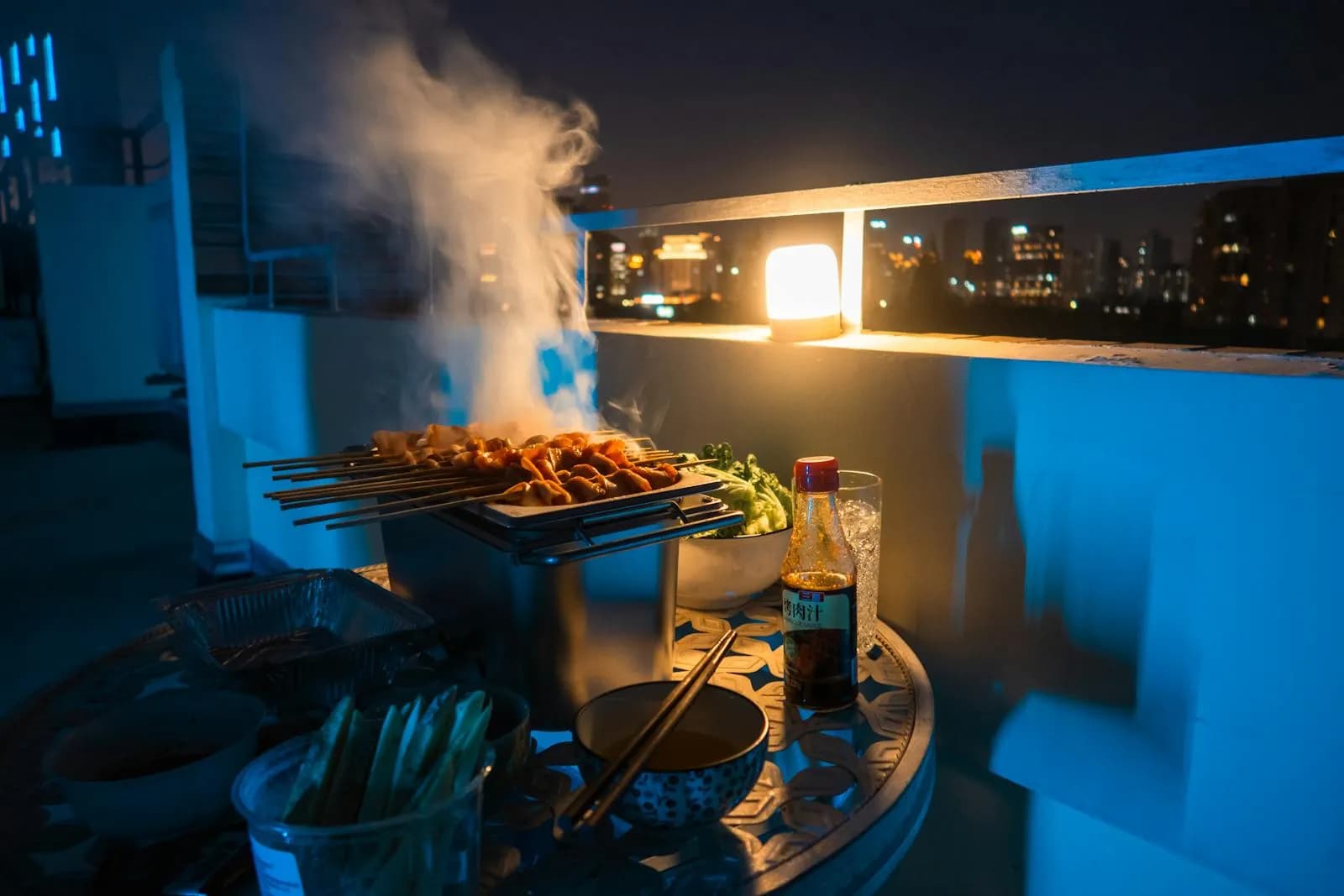
As a general rule you can use a portable kamado on a private terrace, provided your community statutes and the local town by-law do not forbid it and you cause no nuisance to neighbours. Spain's Horizontal Property Law (art. 7.2) bans nuisance or unhealthy activities, but the detail is set by your statutes and your town hall.
The legal framework: what the Horizontal Property Law says
Let's start with what matters, because there are plenty of myths here. In Spain there is no national law that expressly bans using a kamado or a barbecue on a private terrace. What exists is article 7.2 of the Horizontal Property Law, which forbids an owner from carrying out, in their flat or the rest of the building, activities that are "annoying, unhealthy, harmful, dangerous or unlawful".
That is deliberately vague, and for a reason: the detail is set by two documents you really must read. First, your owners' community statutes and the board's resolutions, which may regulate or even ban barbecues on terraces and common areas. Second, your town hall's by-law, which in many Costa Blanca municipalities regulates smoke, odours and the use of fire.
The legal key word is "annoying". A kamado in itself is not illegal; what may be is the smoke, the smell or the risk caused by misusing it. That is why everything after this section is about not being a nuisance. And that is why we insist: check your statutes and your by-law first.
Why a kamado bothers far less than an open barbecue
Here the kamado has the upper hand, and it pays to know how to explain it to a neighbour or the community chairman. An open garden barbecue is basically a bonfire: open flame, fat dripping onto the coals and columns of smoke that the wind spreads across the whole block. A kamado is the opposite.
First, it runs closed. Cooking happens with the lid down, so fat barely touches exposed coals and smoke does not billow out but is filtered through an adjustable chimney. Second, it works at a controlled low temperature: when we smoke at 110-130 °C, the combustion of holm-oak charcoal is very clean and visible smoke is minimal, nothing like the flare-ups of an uncovered grill. Third, it is ceramic and portable: it is not building work, you move it, aim it and put it away.
On our Torrevieja terrace we have confirmed that, once stabilised at smoking temperature, the smoke plume all but vanishes within ten minutes. That airflow control — bottom vent and top chimney — is precisely what makes the kamado the most neighbour-friendly appliance on the market.
How to minimise smoke and odour: charcoal, technique and timing
Ninety per cent of neighbour complaints are not caused by the kamado but by the fuel and the timing. Start with charcoal: always use quality lump — holm oak or quebracho — in large chunks, which burns clean and with almost no ash. Forget cheap petrol-station briquettes and, above all, never use lighter fluid or chemical firelighter cubes: they are the number one source of chemical odour and black smoke, and they cling to the food and to your neighbour's air.
To light up, a chimney starter or an electric lighter such as a Looftlighter gives you clean coals in ten minutes with no blue smoke. Always cook with the lid down: every time you lift it, smoke escapes, so open only as much as needed. If you smoke with wood chunks — olive, apple, cherry — use little; a kamado needs far less wood than an offset smoker.
And the most underrated factor: the timing. Don't fire up mid-morning on a laundry day, when the urbanisation's drying lines are full. Cooking in the late afternoon or at dusk, with the washing already in, instantly removes the most typical complaint in any Costa Blanca community.
Good safety and neighbourly practice on the rooftop
Safety is where the stakes are highest, because an outdoor kamado reaches 350 °C and is no lightweight. Rules we apply on our rooftop without exception.
Distances: whatever your model's manual specifies, and in the manuals consulted that is 2 to 3 metres from walls, façade, railings, furniture and any combustible material. The manual for Kamado Joe's Joe Jr asks for 3 metres; the Kamado Bono TQ0015 manual gives 3 on the cover and 2 inside, and the one for Aldi's Kamado L, 2 all round and overhead. If in doubt, go with the larger figure. Never place it under an awning, a roof, a canvas pergola, a hedge or any dry vegetation. The radiant heat from above is real. The figures from each manual are in first use of a new kamado. Surface: the kamado sits on a stable, level, non-combustible base — tile, stone or an approved cart — never on unprotected wooden decking or artificial turf, which melts.
Wind: on the Costa Blanca this is decisive. In a strong Levante wind we simply don't light up, full stop. Gusts suddenly fan the coals, make temperature control harder and carry sparks and smoke towards the terraces next door. If it blows lightly, aim the chimney downwind and shield the bottom vent.
Always keep an extinguisher or a bucket of sand nearby — never water on hot ceramic, it can crack it — and never leave the appliance lit unattended. This is not only safety: it is the best proof of good neighbourliness you can show the community.
Portable vs fixed installation: the difference that changes the permit
Here is one of the most overlooked legal keys, which is why we give it a whole section. A portable kamado and a built-in masonry barbecue are not the same thing — not for the community, not for the town hall.
A kamado on its wheeled cart is furniture: an object you bring out and put away, like a large planter or a table. It does not alter the common element, it is not anchored to the façade or the roof, and in general it needs no building permit or board authorisation just to own, the same way a sun lounger doesn't. Its use is still governed by the statutes and the by-law, but its mere presence is rarely arguable.
A fixed installation is another story. As soon as you embed the kamado in a masonry island, build a hood or, above all, install a flue that crosses or attaches to the façade, you are touching common elements and almost certainly need community authorisation — sometimes by qualified majority — and possibly a municipal licence.
Our recommendation for rooftops and terraces in an urbanisation is clear: stay portable. You get 95% of the upside and 5% of the legal headache.
Quick table and what to do if the community objects
We sum up in a table the situations we are most often asked about on the Costa Blanca. Remember that "normally allowed" means the law does not ban it from the outset, but your statutes and your by-law override this table.
| Situation | Normally allowed? | Conditions / recommendation |
|---|---|---|
| Portable kamado on a rooftop or private terrace | Yes, unless expressly banned | Read statutes and by-law; cook lidded, no Levante wind, outside laundry hours |
| Portable kamado on a small balcony | With caution | Tight space: keep distance from façade and awning, watch smoke rising upward |
| Use on a communal terrace or shared roof | Depends on the board | Needs community agreement; never go it alone |
| Fixed installation with a flue | Requires authorisation | Touches common elements: board permit and, almost certainly, municipal licence |
| Statutes that ban "barbecues" | Probably not | Ask the board whether a portable kamado counts; get it in writing |
If the community objects, don't go to war. First, ask to see the resolution or the specific statute article in writing. Second, offer solutions: show them this guide, propose agreed hours and demonstrate the kamado's low smoke. Third, if a board resolution harms you, you can request the topic be put on the agenda of the next general meeting. And in a serious dispute, consult a lawyer: this is our editorial experience, not legal advice.
After three years cooking on our rooftop in Torrevieja, our conclusion is reassuring: a well-managed portable kamado is one of the least troublesome outdoor cooking appliances there is. The sealed ceramic, the airflow control and a good holm-oak charcoal mean smoke and odour are a fraction of those from an open garden barbecue.
But legality is decided not by the appliance but by two documents within easy reach: your community statutes and your town hall by-law. Read them before buying, talk to your neighbours before the first cook, and grill with common sense — away from the façade, never in a strong Levante wind, never during laundry-drying hours. If a dispute arises, it is almost always settled with a conversation and a few neighbourly gestures, not a legal letter. And remember: this is our experience, not legal advice; when in doubt, check your statutes, your by-law and, if needed, a lawyer.
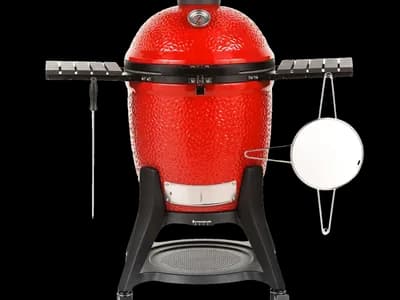
Gear featured in this guide
Recipes to get started
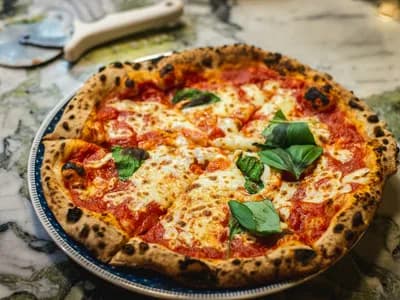
Margherita pizza on the kamado
Tomato, fior di latte and basil: three ingredients and nowhere to hide. On a 350°C stone the cornicione puffs in seconds and the margherita reminds you why it is still the queen.
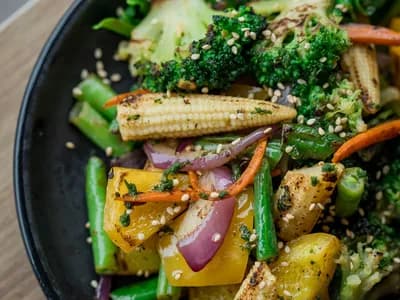
Costa Blanca grilled seasonal vegetables on the kamado
Eggplant, zucchini, Levante red pepper, red onion and whole skin-on garlic, grilled direct at 220°C and finished with warm sherry vinaigrette. A vegetarian plate that stands on its own, not a side.
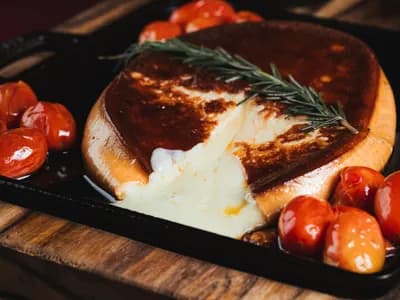
Grilled provolone on the kamado with tomato, oregano and olive oil, in a cast-iron skillet
Argentine-style provoleta over direct heat: a wheel of provolone in a cast-iron skillet at 230°C until you get a golden crust and a molten centre. Tomato, oregano, olive oil and bread. A starter in 12 minutes. Serves 4.
GO DEEPER
Continue with these
- Related guide
Your first kamado: the complete pre-purchase guide
Size, materials, brand and budget. Everything you have to decide before clicking Buy, told by someone who has made enough mistakes.
- Related guide
What Is a Kamado: The Complete Guide
What a kamado is, how it works and what it's for: the honest guide to understanding the ceramic grill before you buy.
- Related guide
Using your kamado in winter and Levante wind
Dense ceramic makes the kamado the best cold-weather grill there is, but Levante wind and damp air demand real adjustments. Here they are, drawn from our experience on the Torrevieja terrace and from the ceramic's specs.
- Recipe to practice
Margherita pizza on the kamado
Tomato, fior di latte and basil: three ingredients and nowhere to hide. On a 350°C stone the cornicione puffs in seconds and the margherita reminds you why it is still the queen.
- Recipe to practice
Costa Blanca grilled seasonal vegetables on the kamado
Eggplant, zucchini, Levante red pepper, red onion and whole skin-on garlic, grilled direct at 220°C and finished with warm sherry vinaigrette. A vegetarian plate that stands on its own, not a side.
- Recipe to practice
Grilled provolone on the kamado with tomato, oregano and olive oil, in a cast-iron skillet
Argentine-style provoleta over direct heat: a wheel of provolone in a cast-iron skillet at 230°C until you get a golden crust and a molten centre. Tomato, oregano, olive oil and bread. A starter in 12 minutes. Serves 4.
- Editorial comparison
big green egg large vs kamado joe classic iii
The classic kamado matchup: the Big Green Egg Large, the indestructible pioneer with the widest accessory network, again
- Glossary term
Bottom vent (damper)
Air-intake vent at the kamado's base; controls how much oxygen reaches the coals.
- Glossary term
Stall
Internal-temperature plateau between 65 and 75 °C on long cooks, caused by surface-moisture evaporation.
- Glossary term
Briquette
Uniformly compressed charcoal with binders; burns steadily but generates ash and off-flavours.
Frequently asked questions
Is it legal to use a kamado on a flat's terrace in Spain?
As a general rule yes; there is no national law banning it. The Horizontal Property Law only forbids nuisance or unhealthy activities. The detail is set by your community statutes and your town hall by-law, which may regulate smoke or barbecues. Read them before buying and, if in doubt, ask the board or a lawyer.
Can the neighbour community ban me from having a kamado?
It can regulate or ban its use if the statutes or a valid board resolution say so, especially in common areas. But a portable kamado on your private terrace is, in practice, furniture, and banning mere ownership is much harder than limiting a nuisance use. Always ask for the resolution in writing and, in a dispute, seek legal advice.
Does a kamado make a lot of smoke on a terrace?
Far less than an open barbecue. Cooking lidded and at low temperature, with good holm-oak charcoal and no lighter fluid, visible smoke is minimal and all but vanishes ten minutes after stabilising. The key is quality charcoal, lighting with a chimney or Looftlighter, and not opening the lid more than needed. That way you'll barely bother the neighbour.
Do I need a permit to install a fixed kamado on my rooftop?
If it's portable, on a cart, normally no: it's furniture. But a fixed installation — built into masonry or with a flue to the façade — touches common elements and almost always needs community authorisation, sometimes by qualified majority, and possibly a municipal licence. For Costa Blanca rooftops and urbanisations we recommend staying portable: far fewer legal complications.
What do I do if a neighbour complains about the kamado's smoke?
Talk before you argue. Ask what bothers them and when, then adjust: shift the timing outside laundry hours, upgrade the charcoal, cook more tightly lidded and avoid Levante days. Almost all complaints are solved with these gestures. If they persist, ask to see the specific resolution or article they invoke and, if the conflict escalates, consult a lawyer.