TÉCNICA
How to maintain and clean a ceramic kamado
Ceramic almost cleans itself: burn-off, grates, gaskets and rust, explained with no miracle products and no needless chemicals.
Quick answer
A ceramic kamado barely needs cleaning: a burn-off at 280-320 °C every 8-10 cooks pyrolyses the grease, the ash is emptied cold after cooking, and the felt gasket is checked once a season and replaced every 2-4 years. Inside, never soap or oven cleaner: the porous ceramic absorbs chemicals.
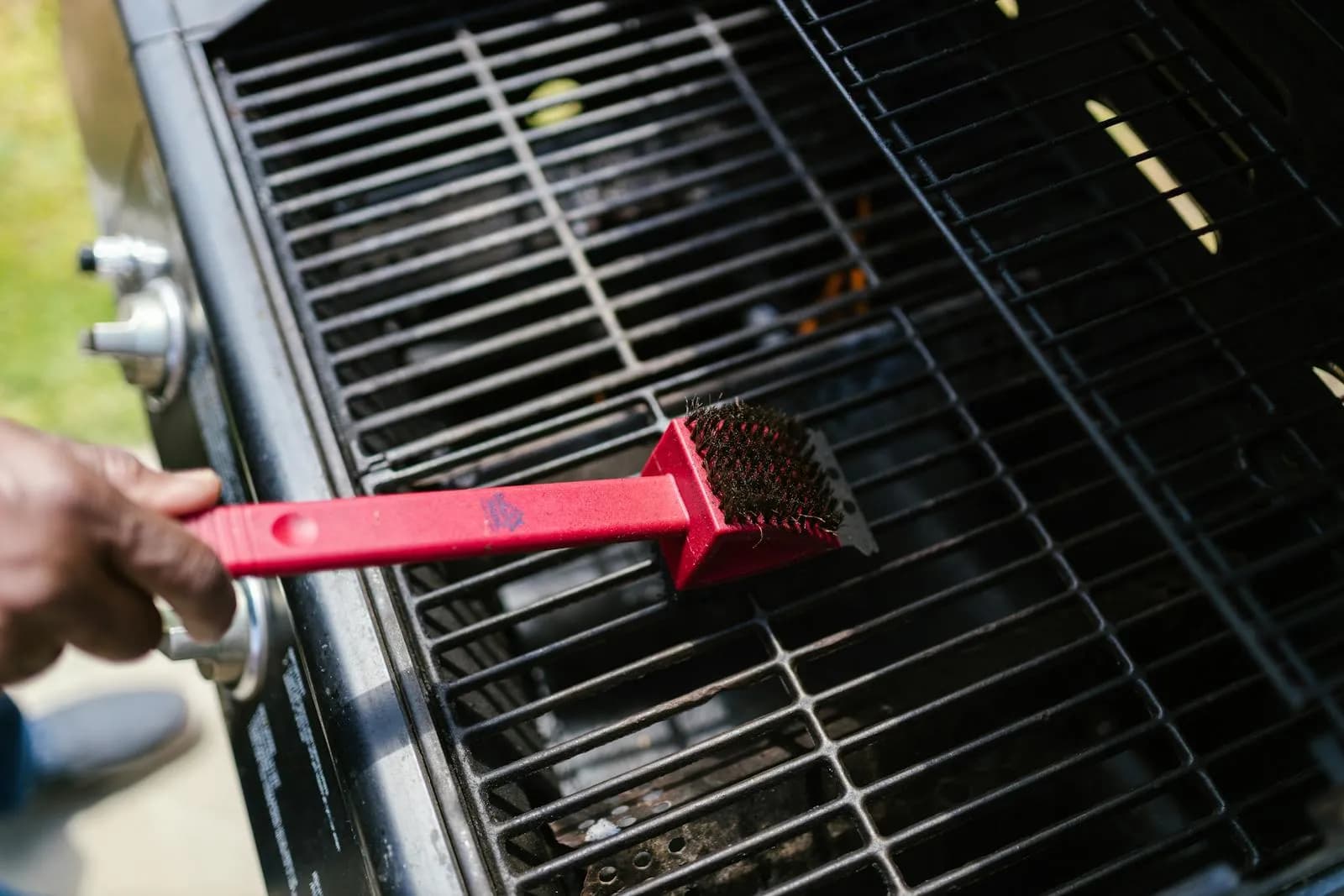
The biggest secret about kamado maintenance is that there is barely any. If you are coming from a gas barbecue or a classic Weber, you will have to unlearn the routine of scouring pads, degreaser and a bucket of soapy water. Almost all of that is unnecessary here, and overusing it is the fastest way to ruin the one delicate part the grill has: the gasket felt.
At mikamado we have spent years cooking on ceramic and cleaning it the bare minimum, and the conclusion is always the same. A well-used kamado asks three things of you per year: a couple of high-temperature burn-offs, emptying the ash when it builds up, and checking the gasket once a season. Everything else is a myth inherited from gas grills.
This guide gets straight to it: why ceramic needs no chemicals, how to do a burn-off properly, how and how often to handle the grates and the deflector, when to replace the felt gasket, and how to protect the metal parts from rust if you live on the Levante coast, where the salt air complicates everything a little.
| Task | Frequency | Key point |
|---|---|---|
| Empty the ash | After each cook, once cold | Damp ash attracts moisture and rusts the drawer |
| Brush the grates | After cooking, hot and dry | Non-metal brush for cast iron |
| Burn-off at 280-320 °C | Every 8-10 cooks | 20-30 minutes with the lid closed |
| Flip the deflector | Each cook | Never washed: the fire burns off the residue |
| Grease hinge and spring | Once a season | Lithium grease or light oil |
| Replace the felt gasket | Every 2-4 years | Banknote test to check the seal |
Do you need to clean a kamado with chemical products?
No, and it is worth insisting on this because it is the mistake that ruins the most ceramic. The inner wall of a kamado routinely works between 100 °C and 400 °C; at those temperatures, fat and organic residue carbonise and turn into inert ash. That dark layer covering the interior is not dirt: it is carbon, sterilised by the heat itself, and it actually helps seal the ceramic's micropores. Scrubbing it off with a scouring pad means working to make the grill worse.
Kitchen degreaser, soap and caustic oven cleaners are flatly banned inside. Refractory ceramic is porous and absorbs whatever you put on it; an oven cleaner can stay soaked in for weeks and release a chemical taste and smell on your next cook. Plenty of soapy water is out too: if the body soaks through inside and you then jump to 250 °C, the trapped steam can cause microcracks or, worst case, thermal shock. Dry, hot ceramic is happy; soaked, cold ceramic is not.
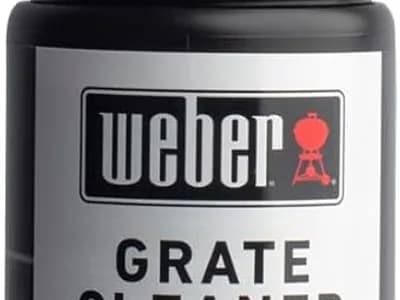
Our rule at mikamado is simple: nothing goes on the inside. For the few tasks where chemicals do make sense — cleaning a heavily crusted grate or degreasing a steel side shelf — we use something biodegradable and barbecue-specific, such as Weber's 300 ml Grill Cleaner, and always away from the ceramic body. If you have cooked very oily fish and a smell lingers, the answer is not soap: it is a burn-off, which is exactly what we cover next.
What is a burn-off and how do you do a pyrolytic clean?
The burn-off is the kamado's native cleaning method: take the grill up to high temperature so that pyrolysis turns all the accumulated fat into ash that then falls away on its own. It is exactly the same principle as a domestic oven's pyrolytic self-clean function, except here you do it with charcoal and air instead of heating elements. It is free, uses no chemicals, and leaves the interior and grates like new.
The recipe we use: light the kamado as if to cook, open the bottom vent and the chimney wide, and let it climb to 280-320 °C. Hold that temperature for 20 to 30 minutes with the lid closed. You will see the grease crust on the grates and the dome turn grey and brittle; that is the sign it is done. There is no need to reach 400 °C or leave it for an hour: beyond that you go from cleaning to needlessly wearing out the gasket and the charcoal. We do it every 8-10 cooks, or always after oily fish, a very long cook, or before switching to pizza or bread, where you do not want residual flavours.
Two important warnings. First: never throw the lid open at 300 °C with the chamber full of oxygen; do the burping — lift the lid about five centimetres, wait about five seconds and then open fully — to avoid flashback, that flare-up that singes eyebrows and forearms. Second: the burn-off punishes the felt gasket, so do not turn it into a weekly routine. Once it has fully cooled, run a dry brush over the grates and open the bottom vent so the ash drops into the tray. Done.
How and how often should you clean a kamado's grates and deflector?
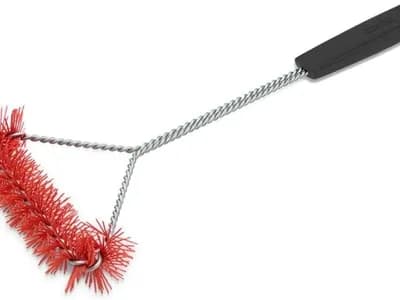
Grates are cleaned hot and dry, not cold and with water. The ideal moment is right when the kamado is still at 150-200 °C after cooking, or at the end of a burn-off: you run a brush over them and the crust flicks straight off. For stainless steel a steel-bristle brush is fine, but if you have cast-iron grates — like the Big Green Egg Cast Iron Grid or the Kamado Joe half-moons — go for a metal-free brush, such as the all-nylon Char-Broil 360 Cool-Clean, so you do not strip the seasoning layer that protects them from rust. Cast iron is cleaned, dried and given a thin coat of oil; it is never left wet.
No dishwasher for cast-iron grates: the detergent and the drying cycle strip the seasoning and rust spots appear within 48 hours, especially on the coast. If a steel grate has genuinely crusted up after months of neglect, then yes, it makes sense to take it out of the kamado, soak it in hot water with a little biodegradable Weber Cleaner and scrub it with a double-sided sponge — but this is the exception, not the weekly norm.
The ceramic deflector — Big Green Egg's ConvEGGtor, the plate setter, the BBQ Future or Vankey half-moons — barely gets cleaned at all. The dripping fat carbonises with the heat of the next cook, so it is enough just to flip it: cook once with side A up and the next time with side B, and the coals themselves burn off the residue. Do not put it under the tap or scrub it: cordierite is porous and, if you soak it and then heat it, it can crack from thermal shock just like the body. When it gets so black it makes you uneasy, a burn-off turns it ash-grey again.
When do you need to replace a kamado's felt gasket?
The gasket — that cord of fibreglass felt that seals lid and base — is the kamado's only true wear part and the one most abused by normal use. Its job is to make the dome close airtight: if it is intact, you control temperature with the vents alone and the grill holds 110 °C for twelve hours without budging. When it gets crushed or burned, air leaks in through the gasket, you lose fine control over the oxygen and suddenly you cannot get below 180 °C even with everything shut.
The diagnosis is two two-minute tests. The first is the banknote test: close the lid with a sheet of paper half-tucked between dome and base and pull; if it slides out with almost no resistance, it is not sealing there. Repeat it at six or eight points around the rim, because gaskets do not die whole, they go in patches. The second is a smoke test: with the kamado settled at a low fire, look along the rim against the light, and if you see wisps escaping around the perimeter instead of out of the chimney, you have located the leak without dismantling anything. Then there are the usual signs: felt that is black and charred, crumbles when touched or has lost thickness, and a lid that goes metal-on-metal as it closes. Frequent burn-offs above 300 °C shorten its life, and cooking lots of pizzas at 350-400 °C burns it out sooner. Once the diagnosis is clear, the procedure — which fibre to choose, how to strip the old adhesive and the 24-hour cure that stops the new gasket peeling — is in our guide to replacing a kamado gasket.
How do you prevent rust and store the kamado over winter on the coast?
Ceramic is indestructible outdoors, but a kamado is not only ceramic: it has metal bands, a hinge, the lid spring, vent hardware, the ash drawer and often a steel cart. Those are the parts that rust, and on the Levante coast — Torrevieja, the Costa Blanca, the whole shoreline — salt air speeds the process up. Here the air carries suspended sodium chloride, and a fitting that would last years inland starts pitting within one season on the coast if you do not look after it. We go deeper into this in our guide on protecting your kamado from salt and sea air.
The anti-rust routine takes five minutes. After cooking, once the grill is cold, always empty the ash: damp ash is hygroscopic and acidic, it draws moisture from the sea air and eats the drawer and the bottom grate from the inside out. Use a stainless-steel ash rake or scoop — the Grilliance ash rake-scoop or a Weber Charcoal Rake — and never leave it sitting in the body from one month to the next. Once a season, go over the hinge and spring with a little lithium grease or light oil, and hand-dry any metal band where the paint has chipped. If a spot of surface rust appears, fine steel wool and a drop of oil stop it dead.
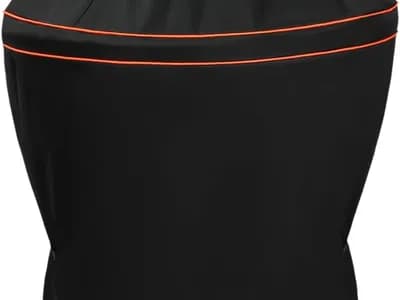
Winter on the Levante coast is mild — we rarely drop below 0 °C — so the kamado stays outside all year without issue; ceramic does not suffer in light frosts. What is non-negotiable is the cover: a good breathable cover like the official Kamado Joe Cover, the Onlyfire Universal 76 cm or the Coverstore Premium keeps water off the hardware and, crucially, lets it breathe so moisture does not condense underneath. Always fit it with the kamado cold and dry, never over hot or wet ceramic. If you are storing the grill unused for months, put the analogue lid thermometer inside and leave the bottom vent slightly open so air circulates and moisture is not sealed in. With that, a kamado on the seafront reaches twenty years just as well as one inland.
In short: ceramic is not cleaned, it is burned; grates are brushed dry; the deflector is flipped and forgotten; the gasket is replaced once every couple of years and the metal parts are dried and covered. Doing less, and doing it well, is exactly what stretches a kamado's life to twenty years. If you are still deciding which model to buy or torn between two sizes, drop by our kamado comparator and the budget calculator to get it right the first time; the best maintenance starts with choosing ceramic that lasts.
Gear featured in this guide
Recipes to get started
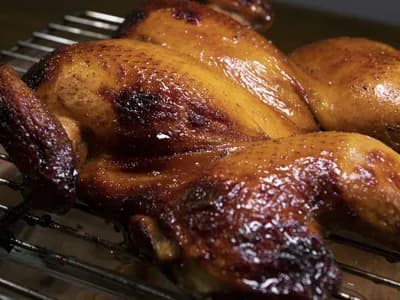
Whole spatchcock chicken on the kamado, even crispy skin
A 1.6 kg chicken butterflied flat, roasted at 180°C indirect over a deflector. Golden crackling skin end to end, juicy meat, ready in an hour: the Sunday roast I actually cook on my Torrevieja terrace.

Margherita pizza on the kamado
Tomato, fior di latte and basil: three ingredients and nowhere to hide. On a 350°C stone the cornicione puffs in seconds and the margherita reminds you why it is still the queen.
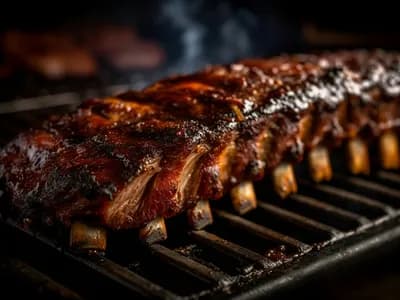
St. Louis-style ribs on the kamado
St. Louis-cut ribs (no rib tips), cooked reverse-sear: four hours at 130°C with light smoke, then a final blast of direct heat to caramelise the glaze.
GO DEEPER
Continue with these
- Related guide
Using your kamado in winter and Levante wind
Dense ceramic makes the kamado the best cold-weather grill there is, but Levante wind and damp air demand real adjustments. Here they are, drawn from our experience on the Torrevieja terrace and from the ceramic's specs.
- Related guide
5 essential accessories to get started with your kamado
Heat deflector, probe, lighter, cover and cast iron: what truly earns its price on day one, and what is just hot air.
- Recipe to practice
Whole spatchcock chicken on the kamado, even crispy skin
A 1.6 kg chicken butterflied flat, roasted at 180°C indirect over a deflector. Golden crackling skin end to end, juicy meat, ready in an hour: the Sunday roast I actually cook on my Torrevieja terrace.
- Recipe to practice
Margherita pizza on the kamado
Tomato, fior di latte and basil: three ingredients and nowhere to hide. On a 350°C stone the cornicione puffs in seconds and the margherita reminds you why it is still the queen.
- Recipe to practice
St. Louis-style ribs on the kamado
St. Louis-cut ribs (no rib tips), cooked reverse-sear: four hours at 130°C with light smoke, then a final blast of direct heat to caramelise the glaze.
- Editorial comparison
big green egg large vs kamado joe classic iii
The classic kamado matchup: the Big Green Egg Large, the indestructible pioneer with the widest accessory network, again
- Glossary term
Refractory ceramic
High-density ceramic that absorbs, stores and radiates heat between 70 and 400 °C without cracking.
- Glossary term
Heat deflector
Ceramic plate placed between the coals and the grate to turn direct fire into indirect cooking.
- Glossary term
Plate setter
Big Green Egg's name for its three-legged ceramic deflector, equivalent to the modern ConvEGGtor.
Frequently asked questions
How often should you clean a ceramic kamado?
Very little. Brush the grates dry and hot after each use, and empty the ash every 3-5 cooks. The ceramic interior only needs a burn-off at 280-320 °C every 8-10 cooks or after oily fish. Check the gasket once a season. Never use soap or degreaser inside.
Can I wash the inside of a kamado with soap and water?
No. Refractory ceramic is porous and absorbs soap, which then releases a chemical taste when you cook. Soaking it with water also risks microcracks or thermal shock when heated. The black layer inside is sterilised carbon, not dirt: clean it with heat (a burn-off), never with chemicals or a scouring pad.
How do you do a burn-off in a kamado?
Light the kamado, open the bottom vent and chimney fully and climb to 280-320 °C. Hold for 20-30 minutes with the lid closed: the fat carbonises into grey ash that falls away on its own. Always open the lid with the burping technique to avoid flashback. Do it every 8-10 cooks, no more, as it wears the gasket.
When should you replace a kamado's felt gasket?
There is no fixed interval, there is a test: if the banknote slides out with no resistance between dome and base, or you see smoke escaping around the rim instead of out of the chimney, the gasket no longer seals. How to change it step by step is covered in our guide to replacing a kamado gasket.
How do I protect a kamado from rust on the Levante coast?
Salt air attacks only the metal parts, not the ceramic. Always empty the cold ash (it is acidic and hygroscopic), lubricate the hinge and spring once a season, and dry any fitting where the paint has chipped. Always use a breathable cover over a cold, dry kamado. Coastal winters are mild, so it can stay outside all year.