MANTENIMIENTO
First use of a new kamado: seasoning, set-up and your first cooks
What each manufacturer really asks for when you start up a new kamado, what to check before lighting and how to raise the heat without cracking anything or lifting the gasket.
Quick answer
A ceramic kamado is not seasoned like an iron frying pan: what has to settle is the gasket adhesive. Big Green Egg asks for the first cooks to stay under 177 °C so it can cure, and Kamado Joe caps the first hour at 204 °C. Use little lump charcoal, no lighter fluid, and step up before making pizza.
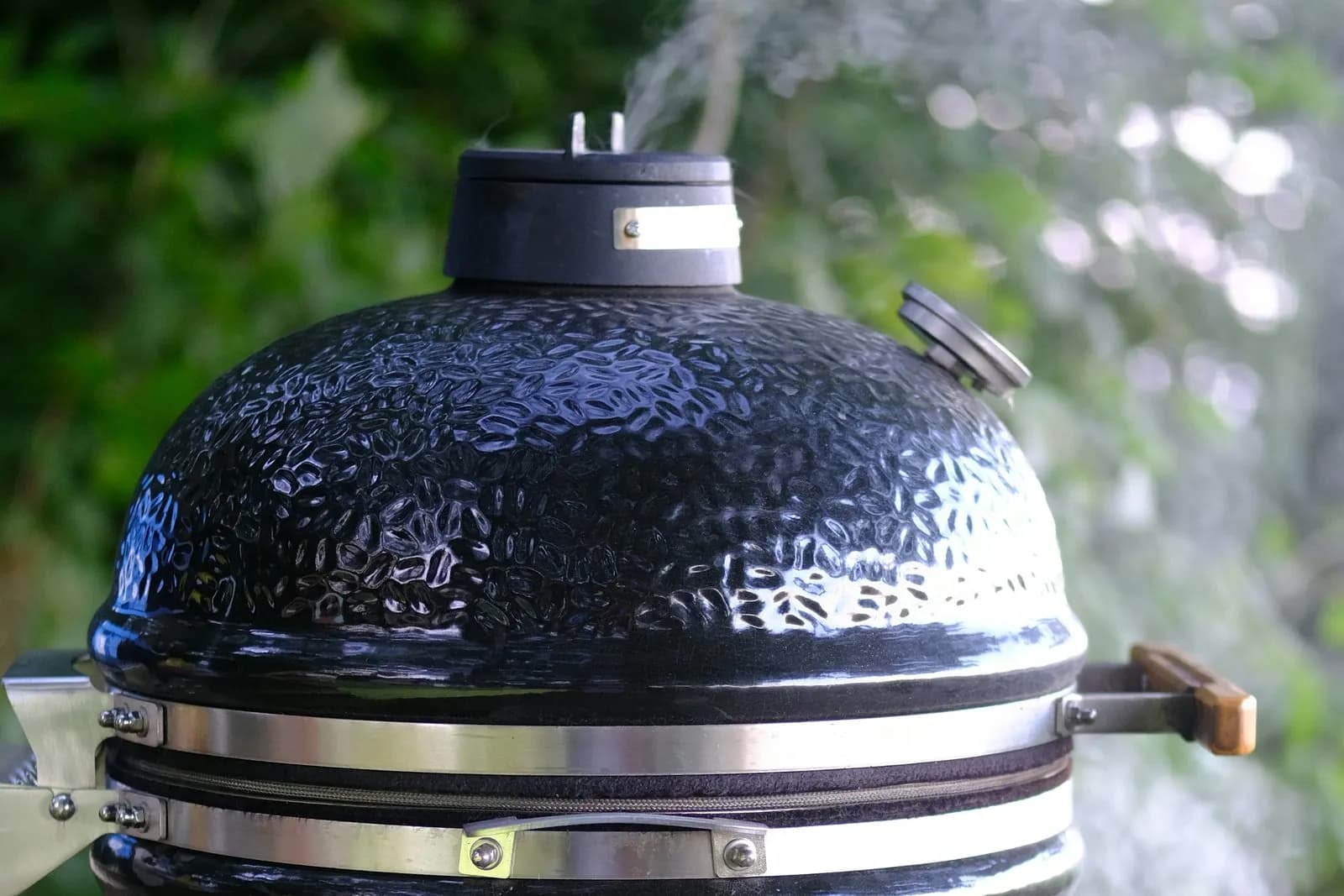
Does a new kamado need seasoning, or curing? Not like an iron frying pan: the ceramic comes fired from the factory and needs no oil or burn-in. What deserves a careful start is the gasket and its adhesive. Forums offer rituals of every kind; the manuals are far more sober, and they do not all say the same thing.
What has not yet done any work is the gasket and its adhesive, the hardware on the bands and, on some models, the lacquer on the metal parts. That is what you break in carefully.
This guide sums up in one table what each manual says and proposes a plan: what to check when you unpack, how to light the first fire and what to cook in the first three sessions. If the kamado is a Christmas or Epiphany (Three Kings, 6 January) present, read it before opening the box: the first step is taking photos.
| Brand and model | Does it ask for curing or running in? | Maximum temperature in the first cooks | How many cooks | Source (manual and year) |
|---|---|---|---|---|
| Big Green Egg (all sizes) | Not for the ceramic; yes, a running-in so the gasket adhesive cures | Below 177 °C (350 °F) | "The first ones", no number | First Timer Tips, official website (withdrawn; archived copy from December 2024) |
| Kamado Joe (Classic, Joe Jr and the rest of the range) | Says curing is not needed; recommends a first warm-up | Below 204 °C (400 °F) for the first hour, with 1.36 kg of charcoal at most | A one-hour first fire; then check the hardware | Kamado Joe official website, first warm-up guide (undated) |
| Monolith | No: it can be used straight after assembly | The manual does not say | None; wait for the lacquer smell of the charcoal grate to go | Monolith user manual, 2018 |
| Kamado Bono | Yes: a first fire left to burn out | The manual gives no figure: do not overload with charcoal; too high a fire can damage the felt gasket | One, until the charcoal goes out on its own; then check the bands and fasteners | Kamado Bono TQ0015 manual (undated) |
| Weber Summit Kamado E6 (steel, as a contrast) | Yes: burn-off of factory residues | The manual does not say | One: 30 minutes minimum with the charcoal glowing red and the lid closed | Weber owner's manual, 2020 |
| Aldi Kamado L (supermarket ceramic) | Yes: "pre-treatment" | The manual gives no figure: a little charcoal and the lid closed | One, until the charcoal goes out on its own | Aldi manual (Germany), 2019 |
Does a kamado need seasoning? What each manufacturer says
Three things that forums lump together need to be pulled apart. The ceramic is not cured: it is porous, but no manual in the table asks you to oil it or burn it empty at high heat to break it in, and whatever it soaks up stays there (hence the rule on lighter fluid). The gasket does need a running-in period, because its adhesive must settle before it takes strong heat. And the metal parts may carry a lacquer that burns off the first time.
Big Green Egg is the most explicit: it asks you to keep the first cooks below 177 °C (350 °F) so the gasket adhesive can cure. Kamado Joe says the kamado does not need curing, but recommends a first warm-up with no more than 1.36 kg of charcoal and below 204 °C (400 °F) for the first hour.
Monolith goes further: its manual says you can use it straight after assembly, with no initial burn-off. It only warns that the cast-iron charcoal grate carries an anti-corrosion lacquer that burns off on first use. The Weber Summit Kamado, made of double-walled porcelain-enamelled steel, asks for the opposite: at least 30 minutes with the charcoal glowing red and the lid closed to burn off manufacturing residues. And the German manual of the Aldi Kamado L, a supermarket ceramic, calls its first fire a "pre-treatment" ("Aushärten", hardening, in the original): a little charcoal, lid closed, and let it burn out. The Kamado Bono manual asks for the same and warns that too high a fire can damage the felt gasket.
The practical conclusion does not depend on the brand: moderate first cooks, below roughly 175-200 °C. The "empty burn at 300 °C" from some videos is not a first-use step in any manual in the table. Kamado Joe does describe a 315 °C (600 °F) cleaning burn, but after the initial heating and not as curing; for the first cooks, Big Green Egg asks for exactly the opposite.
Before lighting: unpacking, photos and a transport check
Transport damage shows up when you open the pallet, not on the third cook. Before assembling anything, take photos of the base, the dome, the rim of both pieces, the inside and the packaging if it is marked. That is exactly what you will be asked for if you need to claim.
Then look in raking light. Crazing, a network of fine lines in the glaze, is normal: Monolith explains that it comes from the factory firing, and the Aldi manual gives the test, because those lines can only be felt by running a fingernail over them. Big Green Egg and Kamado Joe treat it the same way. A crack that goes through the piece, or a chip on the edge where the gasket sits, is another matter, and you claim for it.
In Spain, the shop is liable for lack of conformity that appears within three years of delivery (article 120 of the TRLGDCU, Spain's consumer law, as worded since 2022), and in the first two the defect is presumed to have existed already (article 121). The brand's own warranty is separate and has small print: Big Green Egg and Kamado Joe require you to register the kamado and to have bought it from an authorised dealer, and the gasket only gets one year. The Big Green Egg terms published online are the US ones, so check the European version when you buy. Register the purchase on day one and keep the invoice; the shop's legal guarantee does not depend on any of that.
Finally, the inside: the fire box and the ring must sit flat, with no packaging debris underneath. The cart or nest should be level with the brakes on, and Big Green Egg reminds you that the kamado must never stand directly on wood or any combustible surface.
Bands, hinge and a centred dome
Transport and the first heat shift the bands that hold the dome. Kamado Joe asks you to check bands and hinge before lighting and again after the first warm-up, because expansion loosens the hardware. Big Green Egg recommends checking them after the first few uses and then twice a year, and the Aldi manual warns that the band expands and can work loose.
With the kamado cold, close the lid and look along the perimeter at eye level: the gap must be the same all the way round. Then the banknote test: a sheet of paper pushed halfway between the dome and the base should come out with resistance all along the rim. The detail is in the guide to replacing a kamado gasket. Monolith, mind you, does not trust the paper: it suggests settling at about 110 °C indirect, adding smoking chips and closing the top vent fully; if smoke comes out at the rim, the lid is not seating.
If the lid rubs or sits off-centre, you adjust the bands; you do not force the gasket. Monolith gives a reference: tighten until the two screw tabs tilt towards each other, and no further. Over-tightening does not seal better and puts the ceramic under strain.
The first fire, step by step
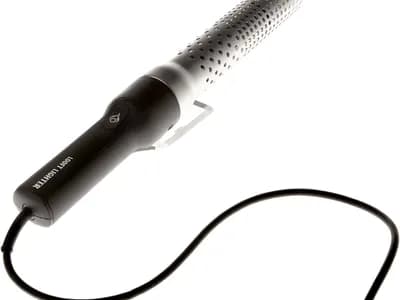
The first fire must be small: Kamado Joe sets the ceiling at 1.36 kg of charcoal and Aldi talks about two or three handfuls. Lump charcoal, never briquettes or self-lighting charcoal, which Big Green Egg rules out, lit at a single point with wax or wood-wool firelighters or an electric lighter, no gel or fluid. The method is in how to light a kamado.
The target is a dome between 120 and 175 °C for an hour, lid closed: the range that respects both the Big Green Egg limit and the Kamado Joe one. Ceramic reacts late, so start closing the bottom vent and the chimney before you get there, because while it is climbing there are still 30-40 °C on the way. If you overshoot, close up and wait; opening the lid feeds the embers.
You can already cook on that fire: Kamado Joe speaks of the first hour as "warm-up or cooking". When you finish, close the vents and let it go out on its own. The next day, bands, hinge and banknote test again.
Which smell is normal? A slight burning in the first minutes, from lacquer or factory residue, that goes away by itself; Monolith asks you to wait until it disappears before putting food on. Smoke leaking all round the rim, on the other hand, points to a gasket that is not seating.
Your first three cooks: a temperature ladder
The gasket works first in the low temperature range and goes up in steps, with a real recipe on each one. No manufacturer fixes how many cooks are needed; Big Green Egg says "the first ones", with no number. Three steps is a prudent guideline, not a rule.
First: gentle indirect, 160-175 °C. A pork loin with mustard and honey: the recipe calls for 180 °C indirect to 63 °C internal, the USDA FSIS figure for whole cuts of pork, with a 3-minute rest, and at 170 °C it simply takes a little longer. With the deflector in (the guide to direct and indirect cooking explains what it is for), the dome climbs slowly, and you learn how long your kamado takes to respond to a quarter turn of the vent.
Second: medium indirect, around 180 °C. The spatchcocked whole chicken roasts flat at 180 °C with the deflector, for 55 to 65 minutes, under the Kamado Joe ceiling. On an EGG, to respect the 177 °C to the letter, stay at 170-175 °C and roast for longer.
Third: direct, 220-250 °C. An escalivada (Catalan roasted peppers and aubergine) at 230 °C over the embers, or smash burgers on a griddle at 250 °C. It is the first time the gasket spends a good while above 200 °C. If afterwards no smoke escapes at the rim in the Monolith test and the banknote drags all the way round, there is no sign of trouble, although no manufacturer gives a criterion for the end of running-in. With a Big Green Egg, which does not say how many "the first" cooks are, you can stretch the low end of the ladder.
The fourth, pizza. A Neapolitan pizza needs the stone loaded at 350 °C or more, which punishes the adhesive hardest; that is why it comes after the ladder, and the full method is in how to make pizza in a kamado. And the climb is gradual, lid closed, never ten minutes from cold.
Safety from day one
Burping. With the kamado hot and the vents closed, there are embers inside with little oxygen; if you open suddenly, a fireball can come out towards you, the flashback. Lift the lid a few centimetres (Big Green Egg says 5-10 cm, Kamado Joe 5-8 cm and Monolith 4-5 cm), wait a few seconds (Kamado Joe says about 5) and then open fully. Big Green Egg suggests repeating the move two or three times. The why is in temperature problems.
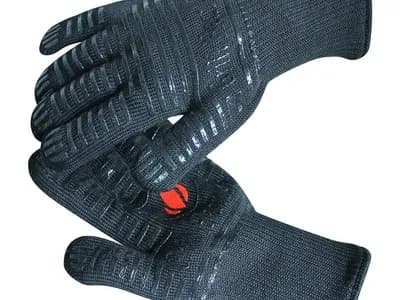
Gloves. Ceramic, grates and hinge stay burning hot long after you put it out. Long aramid gloves are the first safety purchase.
Never indoors. Charcoal produces carbon monoxide, a gas that has no smell and can kill, as the Kamado Joe manual reminds you. A prevention bulletin published by Spain's Ministry of Health puts it in one line: "Do not use charcoal barbecues… inside the home". A garage or a glazed, closed terrace counts as indoors.
Cold ash and clearances. Empty the ash only when the kamado is completely cold. Clearance to walls, awnings and vegetation is set by your manual, and they do not all agree: the Kamado Joe Joe Jr manual asks for 3 metres from any combustible material and from roofs, walls and railings; the Kamado Bono TQ0015 manual gives 3 metres on the cover and 2 inside; and Aldi's, 2 metres all round and above, and never under a roof, a parasol or a gazebo. When in doubt, go with the larger figure. For a flat's terrace, the guide to a kamado on a terrace goes over community rules and neighbourly relations.
First-day mistakes that crack it, make it smell or lift the gasket
- Lighter fluid or additive-laden briquettes. Ceramic is porous and absorbs it; Big Green Egg speaks of permanent contamination. - From cold to over 300 °C in minutes. All the charcoal lit, vents open and lid open in wind: the recipe for thermal shock, for the ceramic and for the gasket. - Water on hot ceramic. Big Green Egg forbids putting out the charcoal with water; you put it out by closing the vents. - Soap or degreaser inside. The inside is not washed; it is cleaned with heat. - Lighting it when it is wet. Big Green Egg warns that water that gets into the ceramic can crack it if it freezes, and after a spell unused it recommends heating slowly to about 177 °C to dry it out. - Letting the lid drop. Letting the dome fall flattens the new gasket; Monolith asks you to close it gently.
A fine crack in the fire box or the ring is no drama: Monolith explains that they cannot be entirely avoided, which is why those parts have expansion slots. What must not crack is the base or the dome.
What to buy to get started (and what is surplus)
On day one you need very little:
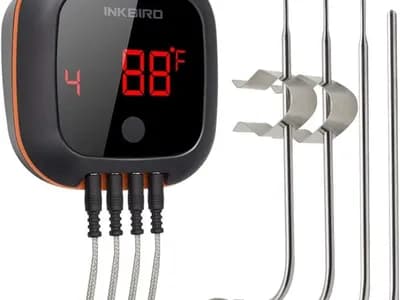
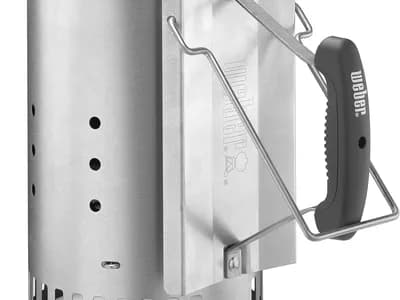
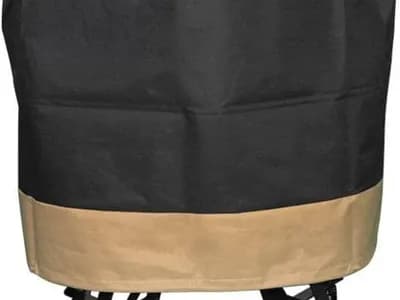
- A digital probe, because the dome thermometer measures the air and not the food: a Bluetooth model such as the Inkbird IBT-4XS, calibrated when new with the ice test from the guide to thermometers and probes. - Heat-resistant gloves. - A chemical-free light: a Weber Rapidfire chimney or an electric lighter. - A cover, such as the Onlyfire universal, waterproof and 76 cm across, which covers most 18-22 inch kamados on a stand. On the coast it matters from the first day; the guide to salt air and damp describes the routine. - Lump charcoal, in large pieces: the guide to which charcoal to use explains how to choose it.
The first month you can do without twenty-accessory kits, because you do not yet know what you will cook, and without briquettes and paraffin firelighters. The reasoned list is in essential kamado accessories. A gasket damaged at the factory is claimed from the shop; if it ever needs replacing, the gasket guide compares the options.
Starting up a kamado involves less ritual than it seems. The ceramic is not cured; what settles is the gasket, and that calls for moderate first cooks, little charcoal and no chemicals. Photos, bands and banknote test before lighting; 120-175 °C on the first fire; a ladder of three cooks up to 250 °C, and pizza once no smoke escapes at the rim and the banknote still drags.
The rest is habit: burping when you open, vents closed to put it out and no water. If your manual clashes with this guide, the manual wins.
Gear featured in this guide
Recipes to get started
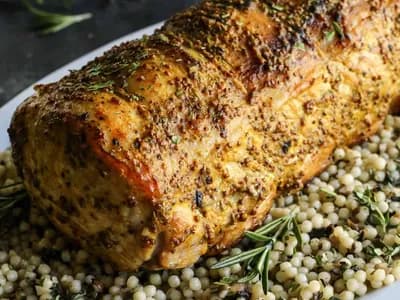
Pork loin with mustard-honey crust
A no-pretensions cook that nails it the first time. Dijon mustard, orange-blossom honey and a touch of rosemary: a golden crust that seals the juices without drying the loin.
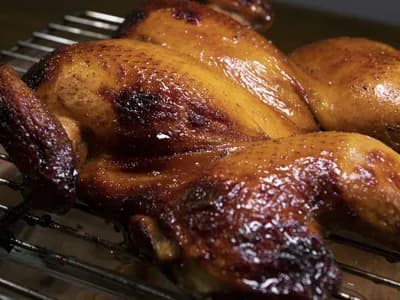
Whole spatchcock chicken on the kamado, even crispy skin
A 1.6 kg chicken butterflied flat, roasted at 180°C indirect over a deflector. Golden crackling skin end to end, juicy meat, ready in an hour: the Sunday roast I actually cook on my Torrevieja terrace.
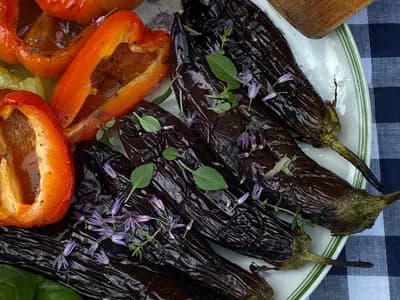
Kamado escalivada with smoked peppers and aubergine
Red pepper, aubergine and onion roasted whole over live coals until the skin chars black, then peeled and dressed with nothing but extra-virgin olive oil and flaky salt.
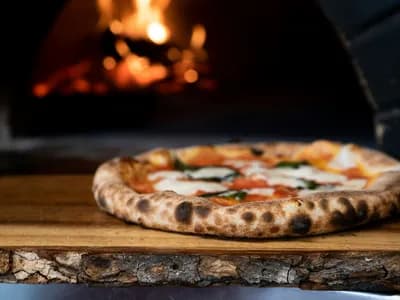
Neapolitan pizza on the kamado
At 350°C the base puffs in 90 seconds and the cornicione comes out leopard-spotted and pillowy. One pizza, three minutes, zero margin for error.
GO DEEPER
Continue with these
- Related guide
How to light a kamado: the step-by-step method
No petrol, no weird tablets and no 45-minute waits. The cone method, airflow control and the mistakes that prevent 80% of the frustration.
- Related guide
Replacing a kamado gasket: when it is due and how to fit it
The banknote test, which fibre to choose, how to strip the old adhesive and the cure that stops a new gasket peeling off on the first hot fire.
- Related guide
5 essential accessories to get started with your kamado
Heat deflector, probe, lighter, cover and cast iron: what truly earns its price on day one, and what is just hot air.
- Related guide
Kamado won't heat, keeps dying or overshoots: fixes by symptom
Why it won't climb, why it dies, why it runs away, and how to bring a runaway temperature back down without ruining the cook. Diagnosis by symptom, step by step.
- Recipe to practice
Pork loin with mustard-honey crust
A no-pretensions cook that nails it the first time. Dijon mustard, orange-blossom honey and a touch of rosemary: a golden crust that seals the juices without drying the loin.
- Recipe to practice
Whole spatchcock chicken on the kamado, even crispy skin
A 1.6 kg chicken butterflied flat, roasted at 180°C indirect over a deflector. Golden crackling skin end to end, juicy meat, ready in an hour: the Sunday roast I actually cook on my Torrevieja terrace.
- Recipe to practice
Kamado escalivada with smoked peppers and aubergine
Red pepper, aubergine and onion roasted whole over live coals until the skin chars black, then peeled and dressed with nothing but extra-virgin olive oil and flaky salt.
- Editorial comparison
big green egg large vs kamado joe classic iii
The classic kamado matchup: the Big Green Egg Large, the indestructible pioneer with the widest accessory network, again
- Glossary term
Heat deflector
Ceramic plate placed between the coals and the grate to turn direct fire into indirect cooking.
- Glossary term
Firebox
Lower ceramic part inside the kamado that holds the charcoal and contains combustion.
- Glossary term
Top vent (damper)
Exhaust vent on top of the kamado that regulates draft and therefore cooking temperature.
Frequently asked questions
Does a new kamado need seasoning (curing) before I cook?
Not in the sense of an iron frying pan: the ceramic needs no oil and no high-temperature burn, and Kamado Joe and Monolith state outright that it does not need curing. What does need running in is the gasket adhesive. That is why Big Green Egg asks for the first cooks to stay under 177 °C, and Kamado Joe for the first hour to stay under 204 °C.
What is the maximum temperature for the first few cooks?
Between 120 and 175 °C on the first day, an editorial range that respects the Big Green Egg limit (177 °C in the first cooks) and the Kamado Joe one (204 °C for the first hour). After that you go up in steps: an indirect cook around 180 °C, a direct one at 220-250 °C and pizza at 350 °C or more once the gasket is still stuck all the way round.
Is it normal for it to smell of glue or paint on the first day?
A slight burning smell in the first minutes, yes: protective lacquer, high-temperature paint or factory residue. Monolith asks you to wait for it to go before putting food on, and Weber asks for a 30-minute burn for the same reason. A chemical smell that repeats on later cooks is not normal and usually comes from lighter fluid. If it has not faded after two or three cooks, ask the shop before carrying on.
How many cooks should I wait before making pizza at 300 °C or more?
No manufacturer gives a number. Big Green Egg asks for the first cooks to stay under 177 °C without saying how many, and Kamado Joe only limits the first hour. A prudent guideline is three stepped cooks, from 160-175 to 250 °C, and then checking that no smoke escapes at the rim and that the banknote drags all the way round. If so, the fourth can be pizza, climbing slowly with the lid closed.
What do I do if the kamado arrives with a crack or a chip?
Do not light it. Photograph the piece and the packaging, note the damage on the delivery note if the courier is still there, and claim from the shop as soon as possible. The shop is liable for lack of conformity for three years from delivery, and in the first two the defect is presumed to have existed at delivery. Crazing, fine lines you can only feel with a fingernail, is normal and is not claimed for.
Do cast-iron grates need curing too?
Bare cast iron does, and there the seasoning is real: a layer of polymerised oil that forms at 230-260 °C in very thin coats. You do not need to do it on day one, because the kamado itself builds it up cook by cook. Enamelled cast iron, on the other hand, needs no seasoning. The whole process is in the guide to cast iron in the kamado.