TÉCNICA
Cast iron and dutch ovens in a kamado: choosing and caring for it
Skillet, griddle, wok or cocotte: what each piece solves inside a closed ceramic, how cast iron is seasoned and why thermal shock breaks it.
Quick answer
Cast iron works in a kamado because the ceramic surrounds it with heat on every side, not just from below. Use bare iron to sear, to gratinate and to bake bread above 250 °C, and enamelled for stews and acidic puddings. Season it with wafer-thin coats of oil at 230-260 °C, and never hit it with cold water while hot.
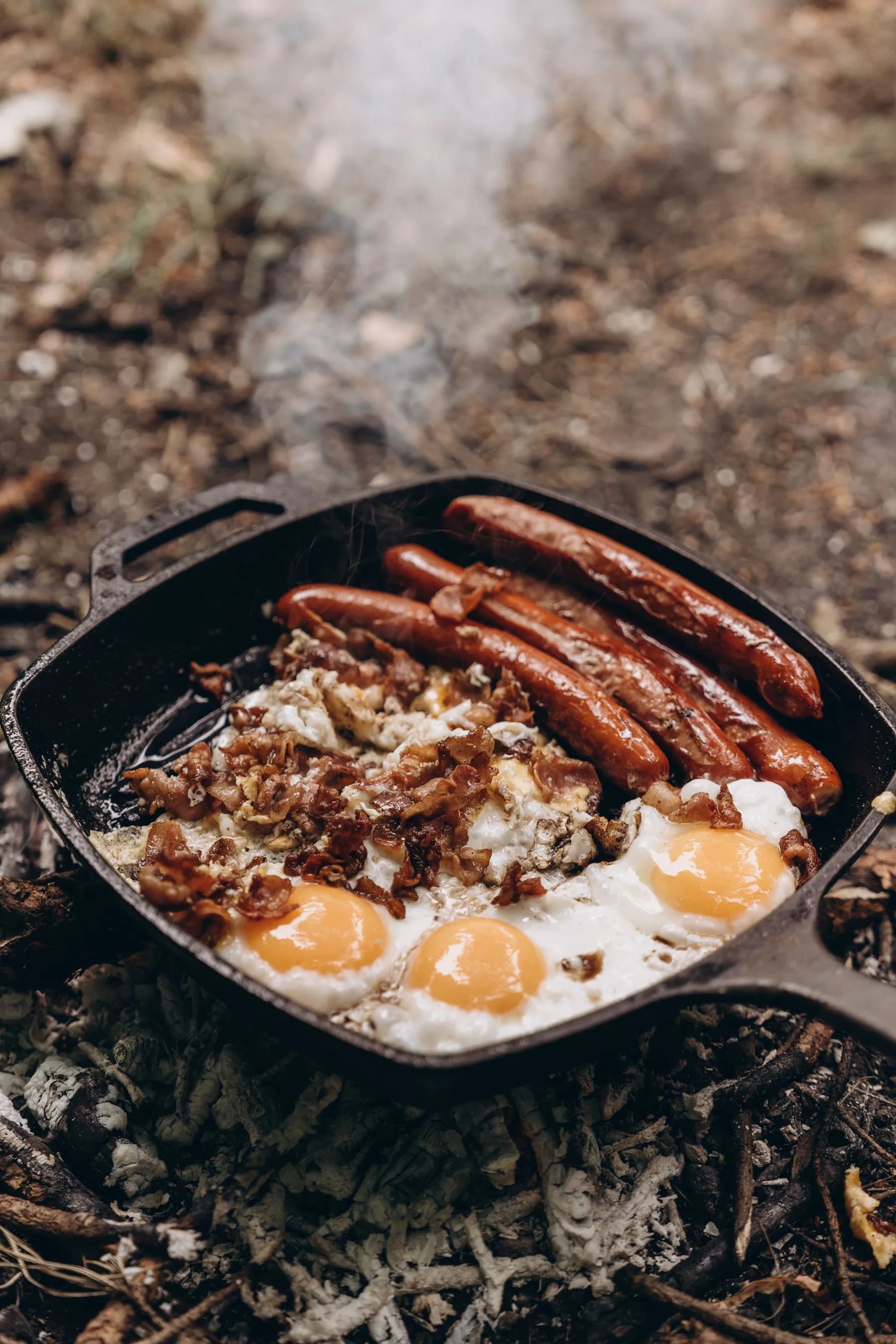
A cast-iron skillet on a kitchen hob heats from below. Inside a closed kamado it heats from all four sides, handle included, and that changes almost everything: the timings, which pieces make sense, the temperature you can work at and how you get it out without burning yourself. Cast iron is the only material that takes that treatment indefinitely, which is why half a dozen recipes on this site — bread, brownie, Tatin, provolone — call for a piece of iron inside the ceramic.
This guide is about the material, not the recipes. What each piece solves (skillet, griddle, wok, cocotte, dutch oven, cooking grate), when bare iron is the right call and when enamelled is, how the polymerised layer is built using the kamado itself as the oven, and what really breaks when thermal shock hits. With one warning the product listings never give: the diameter of your grate overrules everything else, and a piece that covers it entirely turns the kamado into a closed griddle and kills the convection. If the setup is still unclear, the guide to direct and indirect cooking is this one's other half.
| Piece | What it solves | Zone and temperature | Minimum kamado | Recipe that uses it |
|---|---|---|---|---|
| Skillet 24-30 cm | Searing, gratinating, puddings | Direct or indirect, 180-300 °C | Small / 33 cm | Brownie |
| Smooth or half-moon griddle | Sepia, small vegetables, eggs | Direct, 200-260 °C | Medium / 38 cm | Griddled sepia |
| Cast-iron wok 30-35 cm | Fast stir-fry for 2-3 portions | Direct with the lid open, 250 °C+ | Large / 46 cm | — |
| Enamelled cocotte 4-5 L | Stews, acidic dishes, fruit puddings | Indirect, max. 250-260 °C | Medium / 38 cm | Tatin tart |
| Bare dutch oven with legs | Crusty bread, pulses, braises | Indirect, 200-250 °C | Large / 46 cm | Rustic loaf |
| Cast-iron cooking grate | Sear marks, more thermal mass | Direct, 300 °C+ | The one for your model | Chuletón |
What happens to cast iron inside a closed ceramic
On a hob, the heat comes in through the base. In a kamado with the lid shut, the iron sits inside an oven of radiant walls: heat reaches it from below off the embers, from above off the dome and from the sides off the ceramic itself. The practical upshot is that the whole piece works, not just the bottom: a pisto (Spanish stewed vegetables) browns against the wall of the pan as well, a Tatin caramelises around the rim and a loaf in a dutch oven rises evenly.
The second consequence is the handle. On a hob the handle stays warm to the touch; inside the kamado it is at chamber temperature, so at 250 °C the handle is at 250 °C. No tea towel will do: you handle it with long welding or aramid gloves and, if the piece is heavy, with both hands. It is the beginner's burn number one, and it happens with your body leaning over the mouth of the kamado. And with the kamado hot and the vents shut down, that lid never goes up in one movement: crack it five centimetres, count two or three seconds, then open it fully, because a sudden rush of oxygen throws a flashback straight at your face (why it runs away and flashes back).
The third is inertia. A 30 cm skillet weighs four or five kilos and does not heat on a burst of flame but by saturation: allow 15-20 minutes from the moment the chamber is stable until the piece truly is, exactly as with a pizza stone. Put it in cold and drop the food in two minutes later and you get a sad sauté that weeps water. In exchange, that thermal mass is what sears a chuletón (bone-in rib steak) without collapsing when the meat lands on it.
And there is an advantage nobody buys on purpose: the kamado seasons the iron by itself. Every cook with fat at 200-300 °C in a sealed chamber thickens the seasoning, so a skillet that lives in the kamado turns black and slick far sooner than the same one in a kitchen. On the outside it picks up soot, which is purely cosmetic: it does not come off and there is no need to take it off.
The pieces worth having and what each one solves
The skillet is the one everybody buys and the one that gets used most: it sears, it gratinates, it makes the provolone bubble and it bakes a brownie the kitchen oven cannot match. Between 24 and 30 cm covers almost everything. Inside a dome, two short handles beat one long one: the long handle fouls the wall or stops the lid closing, and closing the lid is what makes a kamado cook.
The griddle deals with whatever falls through the bars: sepia (cuttlefish), asparagus, ajetes (young garlic shoots), eggs. Nearly all of them are reversible, smooth on one face and ribbed on the other; in a kamado the ribbed face is redundant, because the grate already gives you the bar marks, and what you are really buying is the smooth side. Mind the shape: a rectangular 42×24 cm griddle does not go into a Large. In a round mouth, the half-moon and the 28 cm square are the ones that work.
The cast-iron wok has an honest limit. Stir-frying wants flame licking the walls and room to toss, and that means cooking with the lid open: you give up the kamado and burn charcoal for nothing. It works for two or three portions with everything cut in advance; for six, it does not. The cast-iron cooking grate is a clear upgrade on the steel one: far more thermal mass and proper sear marks, in exchange for 10-15 minutes of preheating.
At the top sit the two pots. The 4-5 litre enamelled cocotte is for the wet and the acidic: stews, pulses and Tatin. The bare-iron dutch oven, with legs and a flat lid, is for bread: preheated to 230-250 °C and covered, it traps the steam from the dough itself and gives a crust no domestic oven matches; the legs lift it off the grate and stop the base scorching. What has no use in a ceramic is the lipped lid for sitting embers on top: the dome already supplies that heat.
Bare or enamelled: where each one wins
Bare iron has no temperature ceiling. It can sit over the coals at 400 °C without suffering; all that happens is that the seasoning burns off, and seasoning can be rebuilt. It is the material for searing, for bread and for anything dry and very hot. In return it demands seasoning, it will not tolerate soaking and it does not get on with acid: two hours of tomato stew in bare iron eats the layer and leaves a metallic edge in the food.
Enamelled is cast iron with a layer of glass fused over it. There is nothing to season, it does not react with tomato, wine or lemon, and it washes with water and a soft brush. Its ceiling is set by the manufacturer and is worth reading before you buy: most cocottes are rated to 250-260 °C, and the bakelite knob on the lid often stops at 190-220 °C. That knob is the real weak point inside a kamado: either swap it for a metal one or take it off and plug the hole.
What does get ruined on enamel is the surface. The glass chips when knocked — metal tongs, a steel ladle, a bump against the grate — and crazes with abrupt changes of temperature. And the outside blackens with charcoal soot permanently, from the first cook onwards. It is cosmetic, but worth knowing before you put a coloured cocotte in there: it will never look new again.
The working rule fits on one line. Dry and above 250 °C, bare iron; wet, acidic or long, enamelled. That is why bread comes out better in a bare dutch oven, which wants 230-250 °C and a lid with no knob to melt, and why three hours of chickpeas come out better in an enamelled cocotte. And if you are only going to own one piece, the bare 26-30 cm skillet is the one you will reach for most often.
Seasoning iron in the kamado itself: the polymerised layer
Seasoning is not greasing. When a film of oil passes its smoke point, its molecules break and bond to one another, forming a hard polymer that grips the pores of the iron. That is seasoning: a lacquer, not a coat of fat. The proof that it has worked is that the piece comes out dry to the touch, with an even matt sheen. If it is tacky, there was too much oil.
The kamado is the best possible oven for the job, because it holds 250 °C for an hour without filling the kitchen with smoke. Wash the piece, dry it, warm it to open the pores and spread a wafer-thin coat of neutral oil — sunflower, grapeseed, rapeseed. Then wipe with kitchen paper until it looks as though nothing is left: that is the right thickness. Set up indirect with the deflector, stabilise at 230-260 °C and leave the piece for 45-60 minutes, upside down if you have doubts about the excess. Let it cool inside. For a new piece, or one brought back from rust, repeat the cycle three or four times.
Two caveats. The first: do not season with smoking chunks in the fire. The soot settles, it looks black and it passes for seasoning, but it is not bonded and it goes with the first scourer. The second, on oils: extra virgin olive is fine for day-to-day upkeep, though it smokes early and is not ideal for a thorough seasoning. Flaxseed oil gets talked about a great deal because it gives the hardest layer; it is also the one that flakes off in patches most readily, so it is not where we would start.
Enamel gets no seasoning at all. Only the bare rim of the mouth and of the lid, which on many cocottes is left unenamelled and is where the rust shows up: a finger of oil after every wash. And the shortcut to blacken a new piece quickly is to cook fatty things in it — panceta (pork belly), chorizo, provolone — each of those cooks is worth half a seasoning.
Thermal shock: what must never happen to hot iron
Thermal shock is a change of temperature so fast that the surface contracts or expands at a different rate from the core and the material tears itself apart. It is worth ranking who really suffers, because it is not what you are told. The first thing to go is the enamel, which is glass in the end. Then the stone: pizza stones and soapstone craze with an ease that iron never shows. Bare iron is, by a distance, the most tolerant thing you will put in there.
Even so, there are four things it should never be given. Never cold water on the hot piece, nor ice, nor frozen food onto a base at 300 °C. Never a cold cocotte onto a grate at 250 °C: it goes in while the kamado is still climbing, or it comes up to room temperature for 10-15 minutes outside. Never deglaze a red-hot piece with liquid from the fridge; bring the temperature down first and use liquid at room temperature. And never leave the skillet you have just pulled out on marble, granite or a wet worktop: wood or a trivet.
There is a fifth that belongs to the ceramic: throwing the lid wide open at 300 °C and leaving it open. The chamber loses a hundred degrees in a minute while the iron stays where it was. Nothing happens to the iron, but that is what cracks whatever stone you have underneath. And before it reaches the stone it reaches you: with the vents shut, throwing it open feeds oxygen to unburnt gases and a fireball comes back out, so crack the lid five centimetres, wait two or three seconds, and only then open it fully (flashback, explained). And on the coast there is a sixth: the summer storm that breaks over an open kamado with the griddle red hot. If the sky turns odd, the lid goes down.
The other way to lose a piece is not thermal, it is mechanical. Cast iron is brittle: a five-kilo pot that falls onto a terrazzo floor breaks, and that happens when you lift it out hot with one hand at chest height. With a heavy piece: two hands, a hook or a detachable handle, and the spot where you are going to put it down decided before you open the lid.
Cleaning without the myths: ash, hot water and the truth about soap
Bare iron is cleaned while it is still warm, not the next morning. Scrape the residue off with a wooden spatula or a stainless-steel mesh, rinse with hot water and dry it at once. The drying is not done with a cloth: you put the piece back on the grate for two or three minutes over the dying embers, and the heat itself evaporates the water left in the pores. What kills a skillet is not use, it is leaving it to soak in the sink.
Ash has its grain of truth. It is mildly alkaline — potassium carbonate — and abrasive, so made into a paste with a few drops of water it lifts burnt-on grease better than almost anything, and you have it right there under the grate. But it is an abrasive: use it for the odd stubborn patch, never as a routine, because every pass thins the seasoning. On enamel, ash never.
And soap. The myth dates from when soap was made with lye and did attack fat chemically. Modern hand washing-up liquid is a detergent: a drop of it with hot water will not dissolve a polymer. What does destroy the seasoning is another list: prolonged soaking, the dishwasher, oven degreasers and boiling tomato in bare iron for hours. After drying, a coat of conditioning oil so thin that the paper comes away almost clean; more than that turns tacky and rancid.
Storage is where most pieces are lost on the coast. Do not leave iron inside a cold, closed kamado: the chamber holds damp and one night of levante (the humid easterly) hands it back to you freckled orange. It is stored indoors, and pots with a sheet of paper between lid and body so they breathe. And if rust appears, that is not the end either: steel wool down to grey metal, a full seasoning and the piece lives on. The guide to salt air and damp on the coast goes into what the Mediterranean does to metal.
What actually fits: the piece against your grate diameter
A kamado is measured by the diameter of its grate, and that figure rules the catalogue. The rule that works: the piece should be at least 5 cm smaller than the grate, and 8 cm is better. That gap is where the hot air climbs towards the dome. A skillet that covers the whole grate turns the kamado into a closed griddle: the air stops circulating and the dome temperature collapses.
Always measure with the handles on. A skillet with a 35 cm pan goes to 41-43 cm once you count the handles, so it fits a 46 cm Large and does not fit a 38 cm Medium. And measure the height as well: between the deflector, its supports and the grate you have already spent several centimetres, and a tall pot with a lid can touch the dome. The check is done cold, with the kamado unlit: you put the piece in and close it. If it does not close on its own, it is not your piece.
As a reference by size: a 25 cm MiniMax takes little more than a 20 cm skillet. A 33 cm Small gets on well with a 24 cm skillet and a 3-4 litre cocotte. A 38 cm Medium is the sweet spot for the 26-28 cm skillet and the 4-5 litre cocotte. A 46 cm Large will swallow an 8-9 litre dutch oven and the half-moon griddle. From XL upwards, anything goes in.
What is missing is the question nobody asks until it is too late: how it comes out. A dutch oven full of stew can run to eight or ten kilos and has to be lifted from the bottom of the dome in thick gloves. If your kamado is small or built into a masonry island, choose a piece you can lift out with both hands without catching the gasket. And if you are still deciding on the kamado itself, the guide to inches and guests works it through.
Cast iron and the kamado understand each other because both work by thermal mass: they store heat and give it back slowly. With that in mind, the decisions sort themselves out. Bare iron for the dry and the very hot — searing, gratinating, bread; enamelled for the wet, the acidic and the long, always below the 250-260 °C its spec sheet allows and with no plastic knob on the lid.
The seasoning is done in the kamado itself, at 230-260 °C, in coats so thin it looks as though you have put nothing on. The rest is simply not mistreating it: no cold water on hot iron, no soaking in the sink, no leaving it overnight in the damp inside the ceramic. Measure your grate, take 5-8 cm off it and buy that piece, not the one in the photo. Treated properly, a cast-iron skillet outlasts the kamado.
Gear featured in this guide
Weber Cast Iron Protector 17889, 200 ml fine-mist spray
€10
Weber 6415 — small aluminium drip pans, 22 × 15 cm, pack of 10
€6
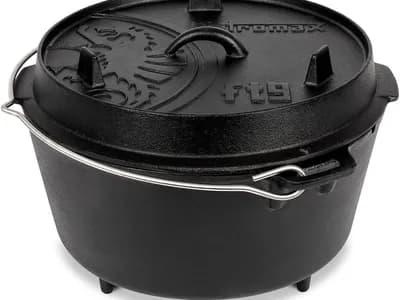
Petromax FT9 Cast Iron Fire Pot (Dutch Oven)
€113
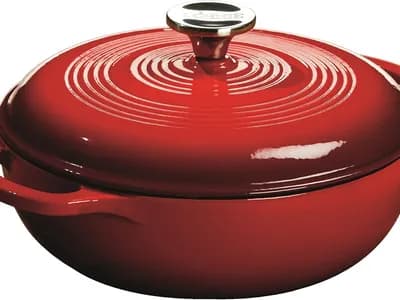
Lodge Enameled Cast Iron Dutch Oven 2.84 L (Red)
€168
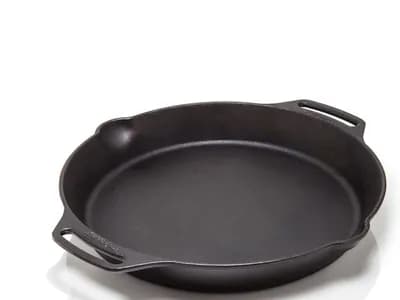
Petromax FP35 Cast Iron Fire Skillet 35 cm with Handles
€67
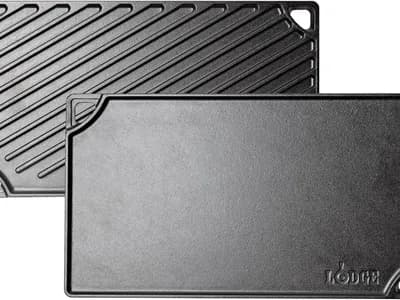
Lodge Reversible Cast Iron Grill/Griddle 42×24 cm (LDP3)
€85
Recipes to get started
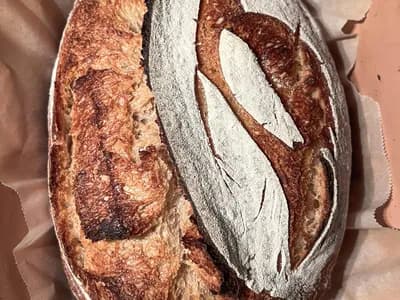
Rustic sourdough loaf in a dutch oven on the kamado
The definitive loaf: 24 hours of fermentation with active starter, cold retard in a banneton and a dutch oven that turns the kamado into a pro bakery oven.
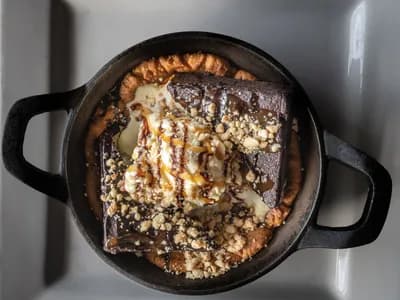
Smoked skillet brownie on the kamado, fudgy centre
Chocolate brownie baked in a cast-iron skillet over indirect heat, with a veil of apple-wood smoke. Crackled crust, fudgy centre and a hint of orange. Serves 10.
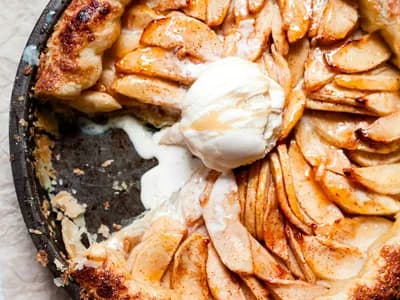
Apple tarte Tatin in a dutch oven on the kamado, golden caramel
Caramelised apples in a cast-iron dutch oven, golden puff pastry and an amber caramel that runs as you flip it. Indirect at 190°C: the tarte Tatin that earns applause.
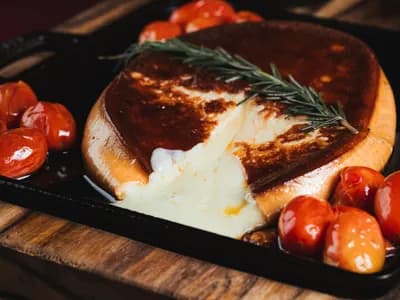
Grilled provolone on the kamado with tomato, oregano and olive oil, in a cast-iron skillet
Argentine-style provoleta over direct heat: a wheel of provolone in a cast-iron skillet at 230°C until you get a golden crust and a molten centre. Tomato, oregano, olive oil and bread. A starter in 12 minutes. Serves 4.
GO DEEPER
Continue with these
- Related guide
What to Cook in a Kamado: Ideas Beyond Meat
A kamado isn't just a steak machine. Pizza, bread, vegetables, fish, rice and even dessert come out just as well. Here's how, and at what temperature.
- Related guide
Direct vs Indirect Cooking in a Kamado: The Deflector
When to cook over the coals and when with surrounding heat, what the ceramic deflector does, and how to build the indirect zone without getting it wrong.
- Related guide
5 essential accessories to get started with your kamado
Heat deflector, probe, lighter, cover and cast iron: what truly earns its price on day one, and what is just hot air.
- Recipe to practice
Rustic sourdough loaf in a dutch oven on the kamado
The definitive loaf: 24 hours of fermentation with active starter, cold retard in a banneton and a dutch oven that turns the kamado into a pro bakery oven.
- Recipe to practice
Smoked skillet brownie on the kamado, fudgy centre
Chocolate brownie baked in a cast-iron skillet over indirect heat, with a veil of apple-wood smoke. Crackled crust, fudgy centre and a hint of orange. Serves 10.
- Recipe to practice
Apple tarte Tatin in a dutch oven on the kamado, golden caramel
Caramelised apples in a cast-iron dutch oven, golden puff pastry and an amber caramel that runs as you flip it. Indirect at 190°C: the tarte Tatin that earns applause.
- Editorial comparison
big green egg large vs kamado joe classic iii
The classic kamado matchup: the Big Green Egg Large, the indestructible pioneer with the widest accessory network, again
- Glossary term
Heat deflector
Ceramic plate placed between the coals and the grate to turn direct fire into indirect cooking.
- Glossary term
Gasket
Fibre band that seals the join between the ceramic base and lid, ensuring the kamado is airtight.
- Glossary term
Pizza stone
Refractory cordierite or ceramic disc that stores heat and cooks a pizza base by direct contact.
Frequently asked questions
Can I put an enamelled cocotte in the kamado?
Yes, but indirect and with the deflector in place, never over bare coals. Respect the ceiling on the manufacturer's spec sheet, which on most cocottes sits at 250-260 °C, and take the bakelite knob off the lid or swap it for a metal one: many stop at 190-220 °C and it is the first thing to fail. Assume as well that the outside will blacken with soot permanently from day one.
Can cast iron be washed with soap?
Yes. The myth dates from when soap was made with lye and attacked fat chemically; modern hand washing-up liquid is a detergent, and a drop of it with hot water will not dissolve a polymerised layer. What does destroy the seasoning is prolonged soaking, the dishwasher, oven degreasers and boiling acids for hours. Wash quickly, dry it with heat and wipe on a minimal film of oil.
How often should I season the skillet, and why does food stick?
It does not run on a calendar, it runs on how it looks: you season when the surface goes grey or dull, when things start sticking, or after an acidic stew or a bout of rust. A skillet used every week in the kamado almost seasons itself on the fat from the cooking. If food sticks, it is usually one of three things: a thin layer, a badly preheated piece, or cold, wet food dropped in too soon.
Does cast iron crack from thermal shock?
Bare iron is the most resistant thing you will put in the kamado; it takes brutal cooling, of the plunge-a-300-°C-skillet-into-cold-water kind, to warp or break it. What does go first is the enamel, which is glass and will craze or chip, along with pizza stones and soapstone. In practice, more pieces are lost to a drop on the floor than to temperature.
Which cast-iron skillet should I buy for a Large kamado?
A 26-30 cm one in bare iron with two short handles, which is the format that handles best inside a dome. A Large with a 46 cm grate will even take a 35 cm pan, but remember that with handles it measures 41-43 cm and leaves you barely any air. If you are only going to buy one piece of iron, that skillet is the one you will use most.