TÉCNICA
Kamado won't heat, keeps dying or overshoots: fixes by symptom
Why it won't climb, why it dies, why it runs away, and how to bring a runaway temperature back down without ruining the cook. Diagnosis by symptom, step by step.
Quick answer
If a kamado won't reach temperature, it is almost always too little charcoal, ash blocking the air intake or vents closed too far; if it dies, it lacks oxygen; if it runs away, there is too much. Check air, charcoal and ash before every cook, and close the vents 10-15 °C before target: coming down costs more than going up.
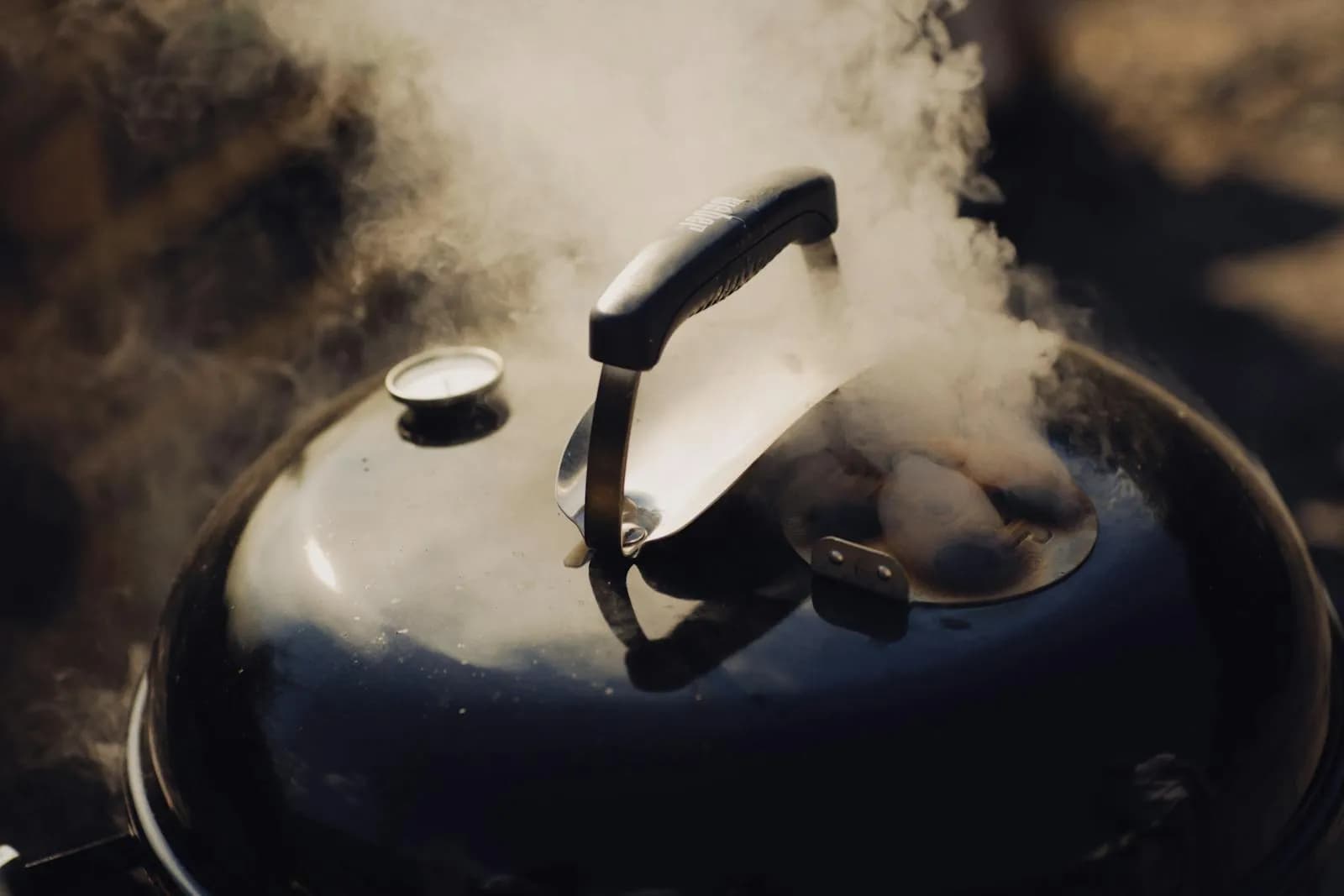
If your kamado won't reach temperature, it is almost always one of three things: too little or poor-quality charcoal, accumulated ash blocking the air intake, or the vents shut too tight. If it keeps dying, it is starved of oxygen; if it runs away, it has too much. Here we diagnose it symptom by symptom.
This guide is the reactive flip-side of our temperature-control guide: that one teaches you to drive well, this one gets you out of trouble once something has already gone wrong. We have spent years cooking on our terrace in Torrevieja with our Big Green Egg Large, and nearly every failure we see —our own and the ones the community tells us about— comes down to air, charcoal, or ash.
No theory here: go to the symptom in front of you, read the likely cause, apply the fix. At the end you will find a quick-reference table to keep beside the cooker.
Won't climb: the five reasons a kamado won't heat
When the thermometer sticks at 120-140 °C and goes no further, it is almost never a fault with the cooker: it is one of these five culprits, listed roughly by how often we see them.
1. Too little charcoal. A single thin layer never builds enough ember mass. Fill the basket to the rim; whatever is left over you reuse next time. 2. Damp or poor-quality charcoal. Lump that has soaked up terrace humidity lights badly and burns weak. Store it sealed and dry, and bin the dusty bags with no real lumps left. 3. Built-up ash. This is the silent killer: ash from the last cook coats the bottom grate and chokes the air from below. Empty it before every cook. 4. Vents nearly shut. Start everything strangled and the fire has no oxygen to grow. To climb, open both vents wide and close them as you near the target. 5. A cold deflector. The deflector's ceramic soaks up heat for 15-20 minutes before it settles. It is not refusing to climb — it is still charging. Give it time.
Keeps dying: why the fire goes out mid-cook
A kamado that keeps dying is a kamado starved of oxygen. Charcoal does not suddenly "run out": it stops getting air and suffocates. These are the three causes we have diagnosed over and over.
1. Air intake blocked by ash. By far the most common. Mid-cook, ash falls and gradually seals the bottom grate. Fix: with a glove on, give the basket a couple of taps or run a poker across the lower grate so the ash drops into the tray and air flows again. 2. Too little charcoal or a bad light. If you lit only one small spot and it never caught properly, the fire has no continuity. To guarantee the start, light in two or three spots and wait for live embers before closing the lid. 3. Bottom vent shut too tight. Below a certain opening the fire simply won't hold. For a 100-110 °C smoke, do not go under one finger-width at the bottom and leave at least the slots open up top.
Rule of thumb: if it dies, open first, don't close. The problem is almost always too little air, not too much.
Runs away: when it won't stop climbing and flashback appears
The runaway kamado has the opposite problem: too much oxygen, and ceramic that builds momentum you can no longer brake on a dime. Here are the three causes, and why the lid is your worst enemy here.
1. Too much charcoal lit at once. Light the whole bed instead of one spot and you have a bonfire, not a controllable oven. For smokes, light only a small focal point (the Minion method); save the fully-lit bed for pizza or searing. 2. Vents wide open. Starting everything wide is fine for a fast climb, but lose focus and you jump from 150 to 280 °C in minutes. Start closing far sooner than you think. 3. Lid open too long. With the lid open the embers gorge on oxygen, and when you close it the temperature jumps by a sharp 40-60 °C. Open just enough, work fast, close.
A true flashback is something else, and it is the one that burns: after a while with the vents nearly shut, the chamber fills with unburnt gases; if you throw the lid open, the oxygen rushes in all at once, ignites them and a fireball comes out towards your face and forearms. You avoid it by burping: lift the lid about five centimetres, wait about five seconds and then open it fully, wearing gloves and keeping your face away. Big Green Egg talks of opening 5-10 cm and repeating it two or three times; Kamado Joe, of 5-8 cm and about 5 seconds. More safety guidance in first use of a new kamado.
On our terrace, nine out of ten runaways come from lighting too much charcoal or leaving the lid open chatting. The cooker is not faulty — we gave it too much air.
How to bring a runaway temperature down without ruining the cook
Bringing the heat down is the most delicate moment, because the ceramic holds its heat and reacts with a lag of minutes. If you have overshot, here is what works and, above all, what not to do.
1. Do not throw the lid open. It is the wrong instinct: you'd let cold air in for a second, then a gust of oxygen that reignites the fire. A closed lid is your ally. 2. Partly close the bottom vent — not all the way. Strangling the air from below is the real lever. But shutting it completely can put the fire out and leave you with nothing; keep a thread of air. 3. Anticipate: close 10-15 °C before the target. Because the ceramic keeps climbing on momentum, waiting until you arrive is already too late. In our tests, recovering from 250 to 150 °C took 30-45 minutes. 4. Once set, stop touching it. The classic mistake is correcting every couple of minutes: each touch adds lag. Close, wait ten minutes, observe.
Patience is the only tool that truly brings a kamado down. If you are in a hurry, you have lost: here the one who waits wins.
The maintenance that prevents most failures
Most temperature problems are not fixed — they are prevented. A well-maintained kamado barely gives you a fright. These are the three habits we repeat on our terrace that cut ninety percent of failures off at the root.
1. Empty the ash before every cook. It is the most ignored and the most decisive. Ash blocks the air intake and causes both the "won't climb" and the "keeps dying" faults. Lift the grate, scoop the cold ash into the tray and empty it. Two minutes that save a cook. 2. Check the gasket and felt. Run your hand around the closed lid: if you feel heat escaping, the gasket is leaking uncontrolled air and you will never settle properly. Felt gets crushed and burns out over the years. 3. Seat the deflector correctly. Badly seated or with no air gap, it creates cold spots and false readings. Leave it level and with clearance from the grate.
A fourth tip worth its weight in gold: write down in a notebook where you set the vents when you nail a cook. That log prevents more failures than any expensive thermometer.
When it's the gasket or the ceramic: quick-diagnosis table
If you have checked air, charcoal, and ash and the cooker still won't obey, it is time to look at the material. The gasket and felt are consumables: over the years they crush, burn, and start leaking air, which makes holding low temperatures impossible. The telltale sign: you see smoke or feel heat escaping along the edge of the closed lid, and the kamado always overshoots your target. They cost around 20-40 € to replace and it is a fifteen-minute fix.
The ceramic is another matter. Fine hairline cracks from thermal shock are cosmetic and do not affect the cook. Only worry if a crack runs clean through and lets air pass, or if a piece has snapped: that is where you lose your seal. Most premium brands cover the ceramic with a long warranty, so check before paying for anything.
Use this table as a quick map from symptom to cause to fix:
| Symptom | Likely cause | Fix |
|---|---|---|
| Won't pass 120-140 °C | Too little charcoal or ash blocking air | Fill the basket, empty ash, open vents |
| Charcoal lights poorly | Damp or poor-quality lump | Store it dry; use premium lump |
| Dies mid-cook | Air intake blocked by ash | Shake the basket, open the bottom vent |
| Sudden overshoot | Too much charcoal or open lid (flashback) | Light one focal point only; close earlier |
| Won't come down after overshoot | Ceramic momentum | Partly close the vent, wait, don't open |
| Heat along the lid edge | Worn gasket or felt | Replace the gasket (20-40 €) |
| Leak through a through-crack | Cracked ceramic | Check warranty before repairing |
Almost every kamado temperature problem is solved by three questions: is enough air getting in, is there dry charcoal to spare, and is ash blocking the intake? Answering those three before every cook prevents ninety percent of the grief we have had on our terrace.
We learned the most expensive lesson by overshooting: bringing the heat down always costs far more than raising it, because the ceramic holds its momentum. That is why the golden rule is preventive — close the vent 10-15 °C before the target and stop touching it — rather than reactive. And never, ever throw the lid open to vent an overshoot: you feed in oxygen, liven up the coals and, with the vents shut, risk a flashback.
If after checking air, charcoal, and ash the cooker still won't settle, the culprit is usually a worn gasket or felt seal. That is the one repair that genuinely needs spare parts; everything else is maintenance and patience.
Gear featured in this guide
Recipes to get started
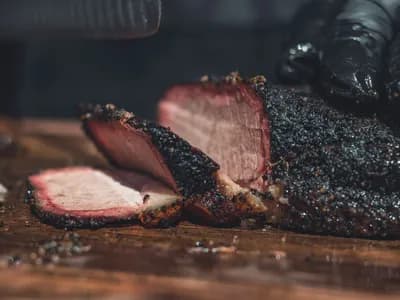
Low-and-slow smoked brisket
The kamado acid test. Ten hours at 110°C, a deep bark, a pink smoke ring and a texture that gives way under the weight of a fork.
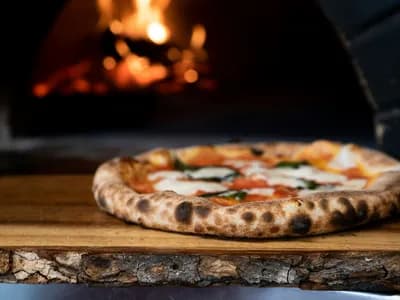
Neapolitan pizza on the kamado
At 350°C the base puffs in 90 seconds and the cornicione comes out leopard-spotted and pillowy. One pizza, three minutes, zero margin for error.
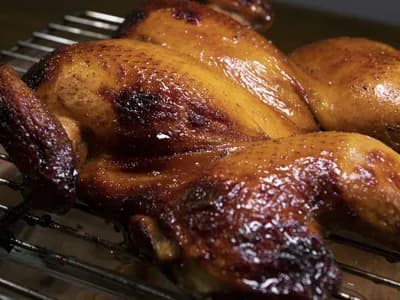
Whole spatchcock chicken on the kamado, even crispy skin
A 1.6 kg chicken butterflied flat, roasted at 180°C indirect over a deflector. Golden crackling skin end to end, juicy meat, ready in an hour: the Sunday roast I actually cook on my Torrevieja terrace.
GO DEEPER
Continue with these
- Related guide
Kamado Temperature Control: The Pitmaster's Guide
The dual airflow system, the rookie mistake of overshooting, and why the dome thermometer lies. This is the skill that separates a beginner from a pitmaster.
- Related guide
How to light a kamado: the step-by-step method
No petrol, no weird tablets and no 45-minute waits. The cone method, airflow control and the mistakes that prevent 80% of the frustration.
- Related guide
What charcoal to use in a kamado (and which to avoid)
Quebracho or holm-oak lump wins; supermarket briquettes and chemical lighter fluid stay out. Here is what to load and why.
- Recipe to practice
Low-and-slow smoked brisket
The kamado acid test. Ten hours at 110°C, a deep bark, a pink smoke ring and a texture that gives way under the weight of a fork.
- Recipe to practice
Neapolitan pizza on the kamado
At 350°C the base puffs in 90 seconds and the cornicione comes out leopard-spotted and pillowy. One pizza, three minutes, zero margin for error.
- Recipe to practice
Whole spatchcock chicken on the kamado, even crispy skin
A 1.6 kg chicken butterflied flat, roasted at 180°C indirect over a deflector. Golden crackling skin end to end, juicy meat, ready in an hour: the Sunday roast I actually cook on my Torrevieja terrace.
- Editorial comparison
big green egg large vs kamado joe classic iii
The classic kamado matchup: the Big Green Egg Large, the indestructible pioneer with the widest accessory network, again
- Glossary term
Heat deflector
Ceramic plate placed between the coals and the grate to turn direct fire into indirect cooking.
- Glossary term
Bottom vent (damper)
Air-intake vent at the kamado's base; controls how much oxygen reaches the coals.
- Glossary term
Gasket
Fibre band that seals the join between the ceramic base and lid, ensuring the kamado is airtight.
Frequently asked questions
Why won't my kamado reach temperature?
Almost always one of five causes: too little charcoal, damp or poor-quality charcoal, built-up ash blocking the air intake, the vents shut too tight, or a still-cold deflector charging up. The most common and most silent is ash: empty it before every cook, fill the basket properly, and open both vents to climb. If it still won't rise after that, suspect the gasket.
Why does my kamado keep dying mid-cook?
Because it has run out of oxygen. The three causes are: the air intake blocked by ash that has fallen during the cook, too little charcoal or a poor single-spot light, and the bottom vent shut too tight to sustain combustion. If it dies, open before you close: with a glove on, shake the basket so the ash drops and open the bottom vent a notch.
How do I bring down a kamado that has overshot?
With patience and without opening the lid. Partly close the bottom vent leaving only a thread of air, set the chimney nearly shut, and wait: the ceramic holds the heat and falls slowly, 30-45 minutes to drop 100 °C in our tests. Do not lift the lid to vent it, because you feed it oxygen and make it worse, and do not correct every two minutes: close, wait ten, observe.
Why won't my kamado's temperature stop rising?
Because it has too much oxygen. The three usual causes are: too much charcoal lit at once instead of a single focal point, the vents open too wide, and leaving the lid open too long, which sends it up 40-60 °C when you close it. For smokes, light only one spot, start closing well before the target, and open the lid just enough, working fast. And if you have been running with the vents shut for a while, open it by burping (about 5 cm, about 5 seconds, then fully) to avoid a flashback, the flare-up of unburnt gases.
When should you replace a kamado's gasket?
When you feel heat or see smoke escaping along the edge of the closed lid and the cooker always overshoots your target. The gasket and felt are consumables: over the years they crush and burn, leaking uncontrolled air that stops you holding low temperatures. Replacing it costs around 20-40 € and is a fifteen-minute fix. The ceramic, by contrast, is only a concern if a crack runs clean through it.