TÉCNICA
How to light a kamado: the step-by-step method
No petrol, no weird tablets and no 45-minute waits. The cone method, airflow control and the mistakes that prevent 80% of the frustration.
Quick answer
Light a kamado by stacking lump charcoal in a pyramid with a 10 cm central gap, lighting two or three natural firelighters or using an electric torch, with both vents fully open. Live embers appear in 10-12 minutes and a stable temperature in about 30. Never use lighter fluid: it leaves a kerosene taste in the ceramic for weeks.
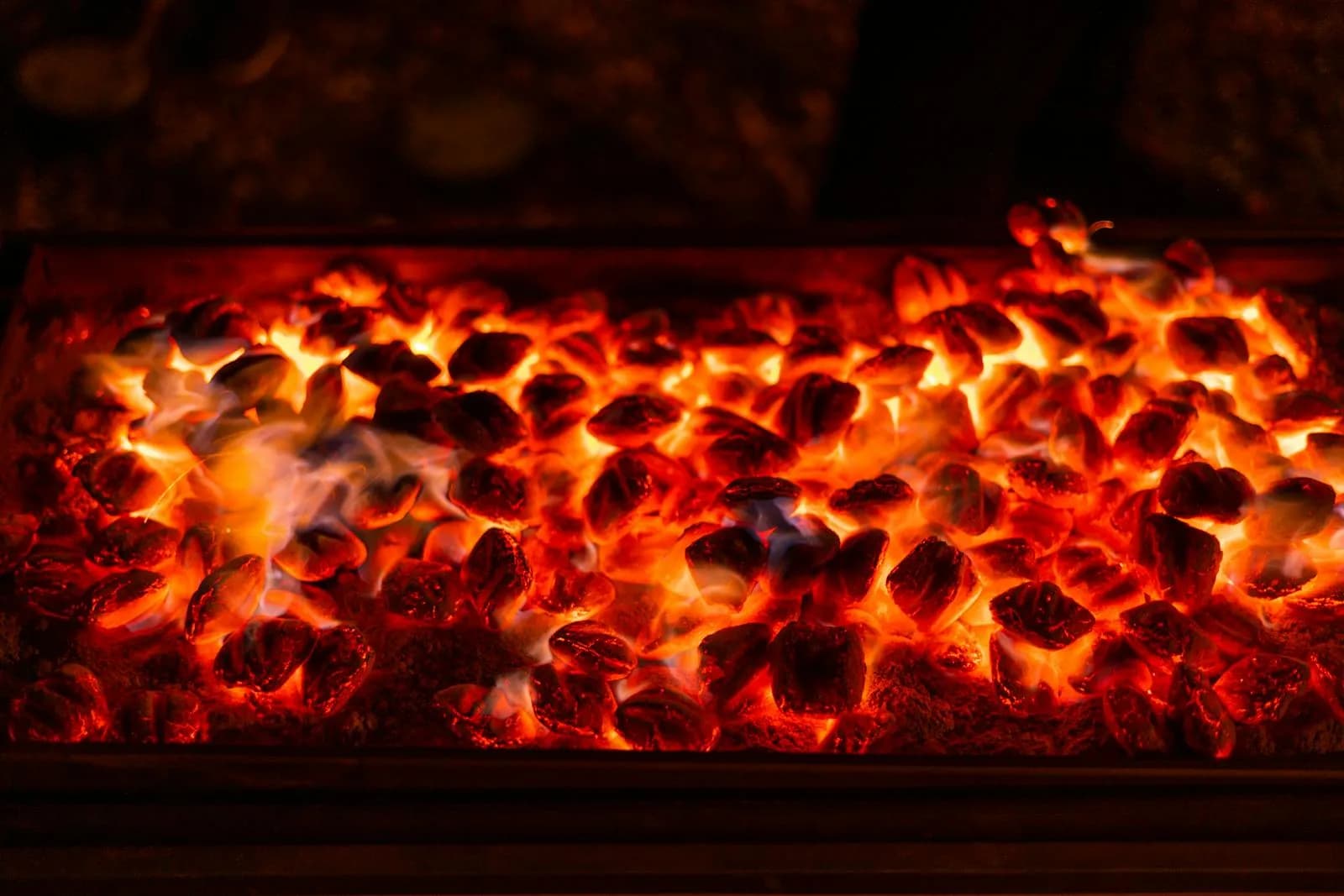
Lighting a kamado is not like lighting a regular charcoal grill. The ceramic retains heat brutally: if you overshoot the lighting, you land at 350 °C when you wanted 110 °C and it takes forty minutes to come back down. If you undershoot, the coals smother as soon as you close the lid.
This guide describes the method I have used for six years, on Big Green Egg and Kamado Joe units, with no chemical tablets and no gas lighter. Thirty minutes from cold to stable coals at the target temperature, valid for any serious kamado on the market.
| Target temperature | Bottom vent | Top vent |
|---|---|---|
| 110 °C · long smoke | Open one finger | Almost closed, only the slots visible |
| 180-200 °C · normal indirect | Open two fingers | Half open |
| 250-280 °C · whole chicken, live embers | Fully open | Three-quarters open |
| 350-400 °C · pizza | Fully open | Fully open |
Materials: what you actually need
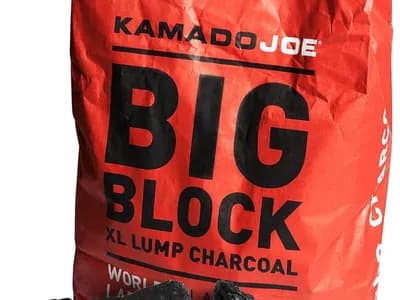
Lump charcoal, not compressed briquettes. The reason is chemical: briquettes contain binders that produce ash and metallic flavours when they reach 200 °C. Lump burns cleaner, regulates better and leaves less residue in the chamber. Decent brands in Spain: Kamado Joe Big Block, Cuban Marabú (if you can find it), Argentinian White Quebracho. If you are unsure, our guide on what charcoal to use in a kamado breaks down the options.
Electric blower-style lighter (Looftlighter or equivalent) or traditional vegetable-wax cubes (no paraffin, no kerosene). Forget lighter fluid, oil-soaked newspaper and methylated spirits — they are shortcuts that ruin your first brisket because they leave a flavour in the ceramic that may never go: Big Green Egg speaks of permanent contamination.
The cone method
Pile the charcoal in a pyramid at the centre of the chamber, on the firebox grate (not directly on the ceramic at the bottom). The cone should reach just below where the plate setter rests, with big pieces at the base and medium chunks on top.
Leave a central hollow about 10 cm in diameter: that is where the lighter cube goes, or where you aim the blower. The idea is for the fire to grow from the centre outwards, not for the whole mass to ignite at once. Three cubes in a cross pattern inside the hollow are enough: you light them, lower the lid only partway (do not close fully), and leave the bottom vent 100% open and the top vent 100% open as well.
In 10-12 minutes you will see live coals in the centre. That is when the real cook starts, not before.
Briquettes vs lump charcoal
The argument is still alive on forums, but in a kamado the answer is clear: lump charcoal, always. Compressed briquettes (the classic pillow-shape) are designed for open grills like a Weber kettle, where you need uniform, prolonged combustion with little oxygen. Inside a closed kamado, combustion is already self-regulated by the vents, so uniformity is your job, not the fuel format's.
Briquettes also leave more ash (20-25% by weight versus 5-7% for lump), and ash clogs the bottom grate, smothers the coals and forces you to empty the kamado every three or four cooks instead of every ten. If you insist on briquettes — because someone gave them to you, say — at least do not mix them with lump: the uneven combustion will cause unpredictable temperature steps.
Temperature control with the vents
This is the real art of kamado cooking. The vents (bottom slide-style, top spinning daisy) regulate the incoming oxygen and therefore the intensity of the fire. But ceramic reacts slowly: by the time you see the thermometer rise, another 30-40 °C are already on the way. The trick is to start closing before you hit the target. For the full picture, see our guide on kamado temperature control.
Practical rules that work: for 110 °C (long smokes), bottom vent open one finger-width, top almost closed (only the slots visible). For 180-200 °C (standard indirect cook), bottom two fingers, top half open. For 250-280 °C (whole chicken, live coals), bottom fully open, top three-quarters. For 350-400 °C (pizza), everything open and ignore the thermometer for ten minutes while the ceramic charges up.
If you overshoot, never fully open the lid — only crack the top vent a millimetre and wait three minutes. Opening the lid drops ten degrees and then bounces back up forty thanks to the fresh oxygen.
The five mistakes that kill the most coals
First: closing the lid fully too early. If the coals are not yet ash-grey white in the centre and you close, they smother. Always wait for at least a fist-sized white zone. Second: using flammable liquid. I am saying it again because people relapse. The porous ceramic absorbs it and, according to Big Green Egg, the contamination is permanent. Third: piling fresh charcoal on top of nearly spent coals. Fresh charcoal absorbs heat before igniting and drops your temperature by forty degrees. Fourth: not emptying the ash. If you do not open the bottom trap every four or five cooks, the coals choke mid-session. Fifth: lighting with the lid fully closed. The kamado needs air at the start — close only once the temperature is stable. If yours keeps dying or overshooting despite this, the guide on kamado temperature problems and fixes diagnoses it by symptom.
Lighting a kamado well takes about fifteen attempts. After that, you do it half asleep in thirty minutes. What matters is not inventing chemical shortcuts and understanding that hot ceramic is a slow system — you anticipate moves instead of reacting to them. And when thin blue-white smoke starts coming out of the chimney, instead of thick grey smoke, you will know you are cooking, not burning.
Gear featured in this guide
Recipes to get started
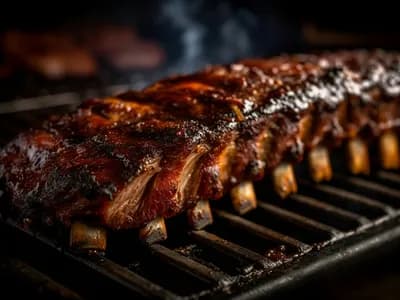
St. Louis-style ribs on the kamado
St. Louis-cut ribs (no rib tips), cooked reverse-sear: four hours at 130°C with light smoke, then a final blast of direct heat to caramelise the glaze.
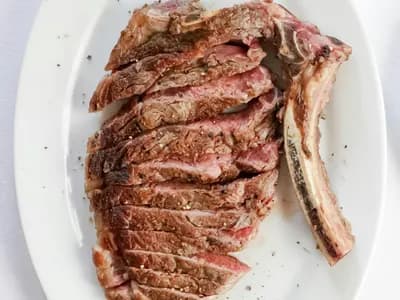
Galician ribeye on the kamado, direct sear
A one-kilo Galician ribeye, Maldon salt, embers at 350°C and not a thing more. The shortest recipe of the year and the hardest to mess up if you respect the timings.
GO DEEPER
Continue with these
- Related guide
What charcoal to use in a kamado (and which to avoid)
Quebracho or holm-oak lump wins; supermarket briquettes and chemical lighter fluid stay out. Here is what to load and why.
- Related guide
Kamado Temperature Control: The Pitmaster's Guide
The dual airflow system, the rookie mistake of overshooting, and why the dome thermometer lies. This is the skill that separates a beginner from a pitmaster.
- Recipe to practice
St. Louis-style ribs on the kamado
St. Louis-cut ribs (no rib tips), cooked reverse-sear: four hours at 130°C with light smoke, then a final blast of direct heat to caramelise the glaze.
- Recipe to practice
Galician ribeye on the kamado, direct sear
A one-kilo Galician ribeye, Maldon salt, embers at 350°C and not a thing more. The shortest recipe of the year and the hardest to mess up if you respect the timings.
- Editorial comparison
big green egg large vs kamado joe classic iii
The classic kamado matchup: the Big Green Egg Large, the indestructible pioneer with the widest accessory network, again
- Glossary term
Plate setter
Big Green Egg's name for its three-legged ceramic deflector, equivalent to the modern ConvEGGtor.
- Glossary term
Firebox
Lower ceramic part inside the kamado that holds the charcoal and contains combustion.
- Glossary term
Top vent (damper)
Exhaust vent on top of the kamado that regulates draft and therefore cooking temperature.
Frequently asked questions
How much charcoal for a 4-hour cook?
For a 4-hour indirect cook at 110-130 °C on a Large/Classic kamado, fill the firebox up to just below the plate setter — about 3-4 kg of lump charcoal in large pieces. The ceramic holds heat for hours, so it is better to have leftover than to run short: the unburned remainder is reused on the next cook simply by stirring it. For a 12-14 hour brisket, fill the firebox to capacity and add two or three chunks of hardwood between the coals.
Wax cube, electric blower or gel lighter?
Vegetable-wax cubes or an electric blower-style lighter like the Looftlighter — never gel or flammable liquid. Cubes are the cheapest and most reliable option: three in a cross pattern inside the central hollow of the cone will light any kamado in 10-12 minutes. The electric blower costs 60-80€ but drops the time to 5-7 minutes and lasts years. Gel and chemical liquids leave a kerosene flavour in the ceramic, and Big Green Egg warns that the contamination is permanent.
How long does a kamado take to stabilise at 110 °C for smoking?
About 30-40 minutes from cold with the cone method: 10-12 minutes to get live coals, another 15-20 for the ceramic to accumulate real heat, and 5-10 adjusting the vents to nail the target. The main trap is closing the vents too early when you see the thermometer rise — the ceramic still has another 30-40 °C on the way. Start closing when you hit 80 °C if your target is 110 °C.
Why does my kamado die when I close the damper?
Three causes, in order of likelihood: you closed before the coals had at least a fist-sized white zone (the abrupt cut of oxygen smothers them), the bottom grate is clogged with accumulated ash (empty the trap every 4-5 cooks), or you are using compressed briquettes instead of lump charcoal (combustion is less stable in a closed chamber). Immediate fix: re-open both vents fully for five minutes and start closing more gradually.
Can I reuse leftover charcoal from a previous cook?
Yes, and you should. When the cook is done, fully close both vents: the coals will smother in 1-2 hours without burning more fuel. Next time, mix the leftover charcoal (already partially carbonised) with fresh lump on top to form the cone — it lights faster and performs the same. Only empty and start from scratch when the chamber is full of fine ash or you have stacked up ten cooks of leftover.