Recipe · Smoked · Easy
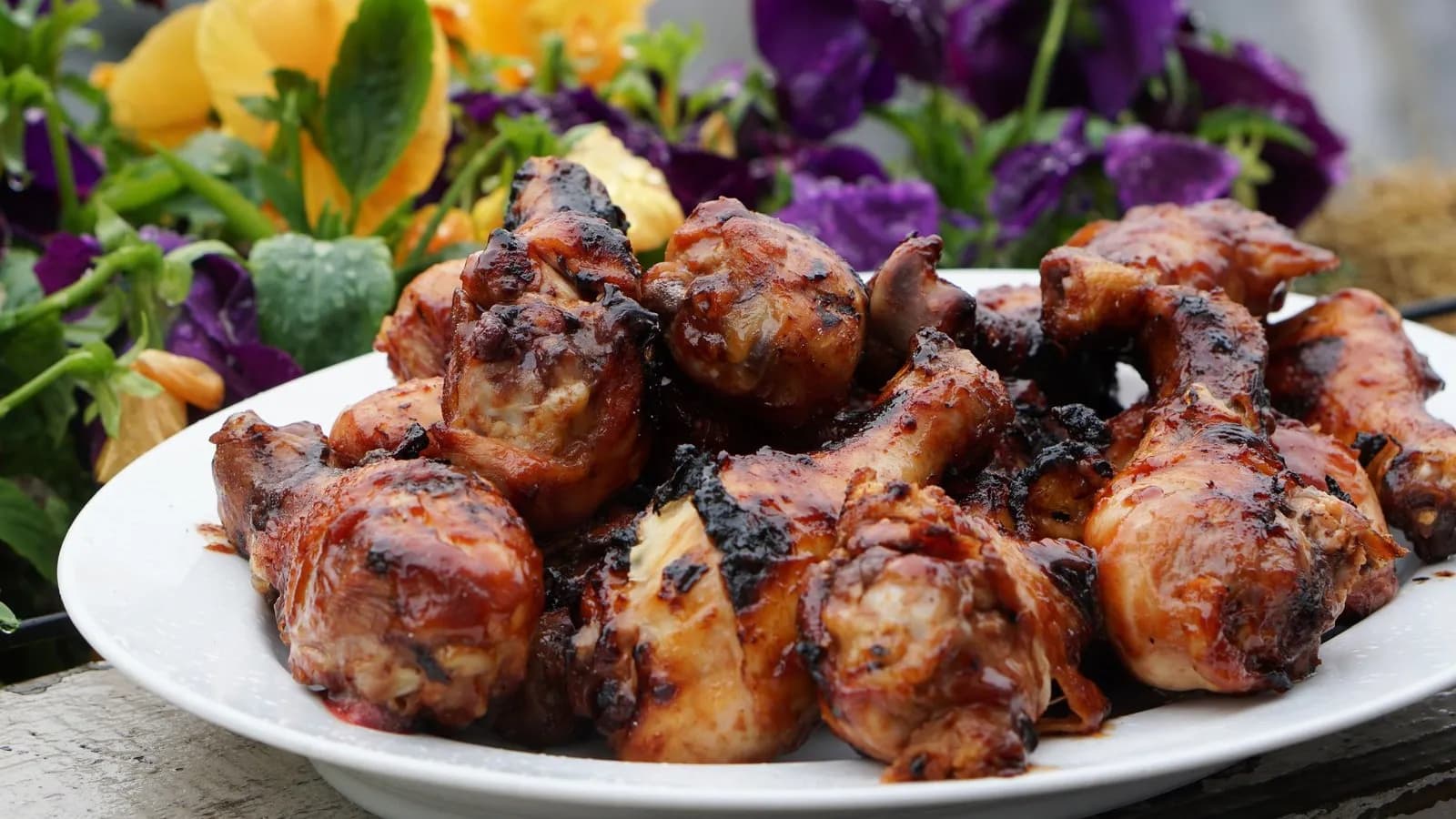
Smoked and glazed chicken drumsticks on the kamado, twelve at once on a rack
Twelve chicken drumsticks (the lower part of the leg, not the thigh) hung on a rack, mild smoke from a poultry blend at 150-160 °C and a homemade barbecue glaze that goes on only in the last 10-15 minutes.
Quick answer
Salt the drumsticks the day before and leave them uncovered in the fridge. Hang them on a 12-piece rack and smoke indirect at 150-160 °C with mild poultry wood chips, about 50-70 minutes to 75 °C. Open the vents at 70 °C so the chamber reaches 180-190 °C, brush on two coats of glaze over 10-15 minutes and pull at 80-85 °C. Safe from 74 °C.
- Prep
- 25 min
- Cook
- 90 min
- Servings
- 6 servings
- Temperature
- 155 °C
Ingredients
- chicken drumsticks of similar size (about 1.8 kg in total)12 ud
- fine salt18 g
- sweet pimentón de la Vera (Spanish smoked paprika; 10 g for the rub, 5 g for the glaze)15 g
- garlic powder6 g
- ground black pepper4 g
- extra virgin olive oil30 ml
- ketchup250 g
- honey60 g
- brown sugar40 g
- apple cider vinegar60 ml
- Dijon mustard15 g
- Worcestershire sauce15 ml
The gear for this recipe
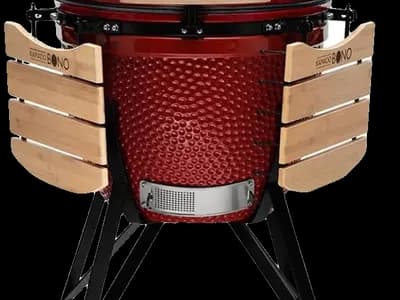
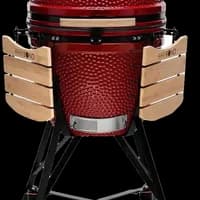 Kamado Bono Grande XXL 59 cmThis recipe depends on one measurement: the diagonal of the rack, about 46 cm. The Kamado Bono Grande XXL has 59 cm of ceramic and a roughly 49-50 cm grate, so the twelve-drumstick rack sits centred with about 1.5-2 cm clear at each corner, which is not guaranteed on a 46 cm grate. It comes with a ceramic deflector in two half-moons as standard, which cover the coals and keep the rack indirect at all times, both at 150-160 °C for smoking and at 180-190 °C for glazing. The product page gives no clearance under the dome, so the 15 cm of the rack is checked with a drumstick in place and the lid lowered before lighting.
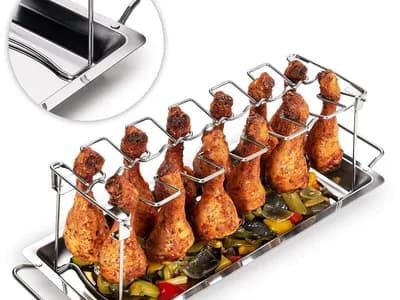
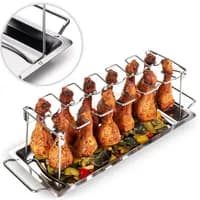 Blumtal stainless steel rack for 12 chicken drumsticks, drip tray, 43 cmTwelve drumsticks lying on the grate need turning one by one and touch each other. The Blumtal stainless steel rack keeps them apart so hot air and smoke reach them on every side, with no turning, and its tray catches the fat and glaze that drip, which would otherwise fall on the deflector and smoke. It measures 43 × 16.5 × 15 cm: its diagonal is around 46 cm, which is why here it goes on the roughly 49-50 cm grate of the XXL and not on a 46 cm one without measuring first. The product page declares it oven-safe but publishes no maximum temperature, so in this recipe it always works indirect, never over direct coals.
 Weber 17833: poultry smoking chips, fruit and nut wood blend, 700 gA cook of just over an hour with thin, fatty skin calls for mild, short smoke, and that is what this bag gives. The Weber 17833 wood chips are the blend the brand makes for poultry, with hardwoods, fruitwoods and nut woods; the product page does not detail species or proportions. Being chips rather than chunks, they catch quickly and smoke for a short time, so they have to coincide with the first stretch of the cook, when the skin is still cold and takes up most of the smoke. Two handfuls in a perforated foil packet, on the charcoal a hand's width from the lit spot, are enough for all twelve drumsticks if they go in as soon as the smoke thins.
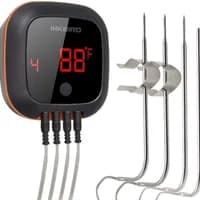 Inkbird IBT-4XS Bluetooth thermometerWith twelve drumsticks spread along a 43 cm rack, a single probe says little: the pieces at the edge, next to the ceramic, can run at a different pace from those in the centre. The Inkbird IBT-4XS comes with four wired probes and Bluetooth connection, and here all of them work: three in drumsticks in different positions and the fourth clipped to the grate to read the chamber at chicken height. With an alarm at 70 °C on the drumstick probes, the app marks the moment to open the vents and raise to 180-190 °C, and another at 80-85 °C the moment to take them out, without opening the lid to look. Those temperatures sit within the range its product page declares.
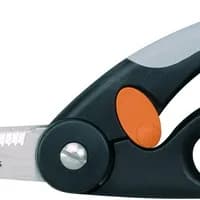 Fiskars Functional Form 1003033: 25 cm poultry shearsDrumsticks arrive from the butcher with flaps of skin and scraps of fat at the end, which on the rack hang down, burn before everything else and foul the glaze. The Fiskars Functional Form poultry shears, 25 cm long with a 9.5 cm serrated stainless steel blade, trim that excess skin in a couple of cuts and grip wet skin well, where a knife slips. Their job here ends before salting: the drumsticks are served whole, so they are not needed for carving. Afterwards they work just as well for spatchcocking a whole chicken.
Method
- 01
Trim and salt
The day before, pat the drumsticks dry with kitchen paper and use the Fiskars poultry shears to trim the loose skin that hangs off and any scraps of fat at the end. Sprinkle the salt over every side and leave the drumsticks on a rack over a tray, uncovered, on the bottom shelf of the fridge, for 8 to 24 hours. The salt seasons right to the bone and the cold fridge air dries the skin, which is half the work of keeping it from turning rubbery.
- 02
Make the glaze
In a saucepan, mix the ketchup, honey, brown sugar, apple cider vinegar, mustard, Worcestershire sauce and 5 g of pimentón. Simmer gently for 8-10 minutes, stirring, until it coats the back of a spoon. Set aside a third in a clean bowl to serve at the table: that part will never touch the brush. The rest, lukewarm, is what you will brush onto the chicken.
- 03
Light for clean smoke
Fill the firebox with lump charcoal and light a single spot. Wrap two handfuls of Weber poultry wood chips in foil, punch 4-5 holes in the packet and set it on the charcoal a hand's width from the lit spot: it will catch as the fire spreads. Fit the two half-moons of the deflector and the grate. Bring the chamber to 150-160 °C at grate level, closing the vents when about 30 °C short, because the ceramic stores heat, and have the chicken ready: the chips smoke for 10-20 minutes.
- 04
Hang and probe
Mix the oil with 10 g of pimentón, the garlic and the pepper, and rub it over the drumsticks. Hang them in the slots of the Blumtal rack, with the tray underneath, and set it centred on the grate. Push three Inkbird IBT-4XS probes into the thickest part of three drumsticks, one from the centre and two from the ends, without touching bone. Clip the fourth to the grate to read the chamber and close the lid. The temperature table gives 75 °C in the drumstick; going up to 80-85 °C is a choice for texture, not for safety.
- 05
Smoke
Let the kamado run at 150-160 °C without opening the lid. With drumsticks of about 150 g, count roughly 50-70 minutes until the slowest probe reads 75 °C, although the next step starts at 70 °C; the clock is only for planning, the probe decides. If the chamber goes over 165 °C, close the top vent a little and watch the trend before touching anything else: ceramic cools down slowly.
- 06
Raise and glaze
When the slowest drumstick reaches 70 °C, open the vents to 180-190 °C, leaving the deflector in place: the ceramic takes a few minutes to climb and the chicken keeps cooking. At around 75 °C, open with burping (about 5 cm, about 5 seconds, then fully) and brush the drumsticks with a thin coat of glaze. Close the lid for 5-7 minutes, apply another coat and close it for 5-8 minutes more. Take them out when the slowest probe reads 80-85 °C and the glaze shines without blackening.
- 07
Rest and serve
Lift out the rack with heat-resistant gloves and let it rest for 5 minutes outside the kamado: the glaze sets and stops sticking to your fingers. Remove the probes, move the drumsticks to a platter and sprinkle with a little flaky salt. Serve with the reserved glaze from the clean bowl, a vinegary coleslaw and bread for mopping up.
About this recipe
Barbecue chicken drumsticks are the cut for long meals: cheap, hard to dry out and easy to eat with your hands. It is worth being clear which cut this is, because the names get mixed up at the butcher's. The drumstick (muslo) is the lower part of the leg, with its bone and knuckle; the thigh (contramuslo) is the upper part, the boneless one used in the tandoori chicken thighs, and wings have their own recipe for crisp skin without frying, and the whole bird has its spatchcock chicken. The challenge here is different: getting twelve drumsticks done at once, smoked, with properly cooked skin and a shiny glaze that does not taste burnt.
Why 150-160 °C and not 110
Classic low-temperature smoking works for ribs and pork shoulder, which need hours to melt collagen. With chicken it is a trap: at 110 °C the meat reaches its target before the fat under the skin has rendered and the water has evaporated, and the skin turns rubbery. At 150-160 °C measured at grate level the fat melts, the skin tightens and smoke keeps getting in, because a piece takes up most of its smoke early in the cook, while its surface is still cold and damp. For a bird that cooks in just over an hour, a mild wood is enough; the guide to woods for smoking explains why hickory or mesquite, used on their own, turn such thin skin bitter, and the one on bitter smoke versus clean smoke shows how to recognise the thin bluish wisp before loading the meat.
Twelve drumsticks hung up, if the rack fits
The Blumtal rack is a stainless steel piece measuring 43 × 16.5 × 15 cm with a drip tray. The drumsticks hang apart, hot air reaches them on all sides and the fat falls into the tray instead of dripping onto the deflector and smoking. The measurement that decides things is the diagonal: about 46 cm. On a 46 cm grate (Large or Classic) it fits by a whisker or not at all; on the roughly 49-50 cm grate of the Kamado Bono Grande XXL it sits centred with about 1.5-2 cm clear at each corner. Check the height too, because the dome narrows as it rises: before lighting, put the rack on the grate with one drumstick in it and lower the lid slowly, watching the top corners. The product page says it is oven-safe but gives no maximum temperature, so here it always works indirect, with the two ceramic half-moons of the deflector covering the coals.
Three monitored drumsticks and the air at the grate
Twelve pieces do not finish together: the ones at the edge, closer to the ceramic wall, can run at a different pace from those in the centre. The Inkbird IBT-4XS comes with four probes, and the layout that gives the most information is one in a drumstick at the centre, one in a drumstick at the edge, one at the opposite end and the fourth clipped to the grate to read the chamber, because the lid thermometer measures the air in the dome and drifts away from what is next to the food, as the guide to thermometers and probes explains. The slowest drumstick rules. Safety sits at 74 °C; taking them to 80-85 °C is a choice for texture, because the drumstick has more connective tissue than the breast and at that temperature the meat comes away from the bone.
The glaze, only at the end
A homemade barbecue glaze contains ketchup, honey and brown sugar, and sugar goes from caramel to burnt in very little time. Brushed on from the start, an hour in the chamber would leave it black and bitter. That is why, at around 70 °C, you open the vents to raise the chamber to 180-190 °C, always indirect, and when the drumsticks are around 75 °C you apply two thin coats over 10-15 minutes. Every time you open the lid, do it with burping: lid up about 5 cm, wait about 5 seconds, then open fully, wearing gloves and keeping your face turned away.
In 30 seconds
Drumsticks salted the day before, hung on a 12-piece rack in a kamado with a roughly 49-50 cm grate, mild poultry-blend smoke indirect at 150-160 °C until 75 °C (50-70 minutes), vents opened from 70 °C, then barbecue glaze in two coats at 180-190 °C for 10-15 minutes. Safe from 74 °C; pull at 80-85 °C so the meat comes away from the bone.
Editor's tips
- If your kamado is 46 cm (Large or Classic), measure before buying the rack: its diagonal is around 46 cm and it may not fit. The alternative is to lay the drumsticks on the grate, indirect and at the same temperature, turning them halfway through the cook.
- The glaze you serve at the table comes from a bowl the brush has not touched. The brush goes over skin that is still cooking, and whatever comes back on it into the pan should not go raw to the table.
- A packet of chips smokes for about 10-20 minutes, according to the guide to woods for smoking, so the chicken has to be hanging while it lasts. If thick white smoke comes out when you close the lid, wait for it to thin before hanging the chicken: more smoke does not give more flavour, it gives bitterness.
- Choose drumsticks of similar size. With uneven pieces, the small ones overcook while the big ones are still catching up; if there is no alternative, follow the larger pieces with the probes and pull the small ones earlier once they read 80-85 °C.
Gear for this recipe
As an Amazon Associate, mikamado.es earns from qualifying purchases. At no extra cost to you.
Kamado Bono Grande XXL 59 cm
This recipe depends on one measurement: the diagonal of the rack, about 46 cm. The Kamado Bono Grande XXL has 59 cm of ceramic and a roughly 49-50 cm grate, so the twelve-drumstick rack sits centred with about 1.5-2 cm clear at each corner, which is not guaranteed on a 46 cm grate. It comes with a ceramic deflector in two half-moons as standard, which cover the coals and keep the rack indirect at all times, both at 150-160 °C for smoking and at 180-190 °C for glazing. The product page gives no clearance under the dome, so the 15 cm of the rack is checked with a drumstick in place and the lid lowered before lighting.
€1,084
Blumtal stainless steel rack for 12 chicken drumsticks, drip tray, 43 cm
Twelve drumsticks lying on the grate need turning one by one and touch each other. The Blumtal stainless steel rack keeps them apart so hot air and smoke reach them on every side, with no turning, and its tray catches the fat and glaze that drip, which would otherwise fall on the deflector and smoke. It measures 43 × 16.5 × 15 cm: its diagonal is around 46 cm, which is why here it goes on the roughly 49-50 cm grate of the XXL and not on a 46 cm one without measuring first. The product page declares it oven-safe but publishes no maximum temperature, so in this recipe it always works indirect, never over direct coals.
€22
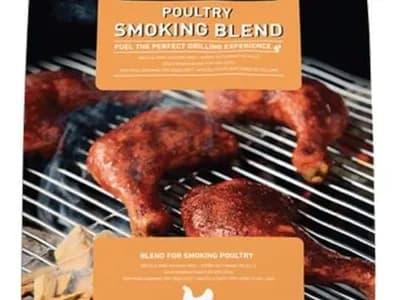
Weber 17833: poultry smoking chips, fruit and nut wood blend, 700 g
A cook of just over an hour with thin, fatty skin calls for mild, short smoke, and that is what this bag gives. The Weber 17833 wood chips are the blend the brand makes for poultry, with hardwoods, fruitwoods and nut woods; the product page does not detail species or proportions. Being chips rather than chunks, they catch quickly and smoke for a short time, so they have to coincide with the first stretch of the cook, when the skin is still cold and takes up most of the smoke. Two handfuls in a perforated foil packet, on the charcoal a hand's width from the lit spot, are enough for all twelve drumsticks if they go in as soon as the smoke thins.
€8
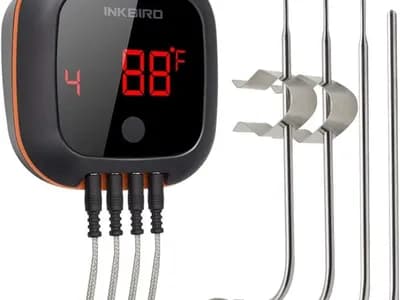
Inkbird IBT-4XS Bluetooth thermometer
With twelve drumsticks spread along a 43 cm rack, a single probe says little: the pieces at the edge, next to the ceramic, can run at a different pace from those in the centre. The Inkbird IBT-4XS comes with four wired probes and Bluetooth connection, and here all of them work: three in drumsticks in different positions and the fourth clipped to the grate to read the chamber at chicken height. With an alarm at 70 °C on the drumstick probes, the app marks the moment to open the vents and raise to 180-190 °C, and another at 80-85 °C the moment to take them out, without opening the lid to look. Those temperatures sit within the range its product page declares.
€72
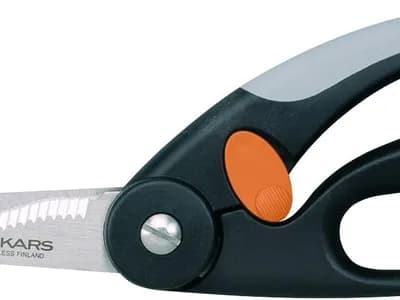
Fiskars Functional Form 1003033: 25 cm poultry shears
Drumsticks arrive from the butcher with flaps of skin and scraps of fat at the end, which on the rack hang down, burn before everything else and foul the glaze. The Fiskars Functional Form poultry shears, 25 cm long with a 9.5 cm serrated stainless steel blade, trim that excess skin in a couple of cuts and grip wet skin well, where a knife slips. Their job here ends before salting: the drumsticks are served whole, so they are not needed for carving. Afterwards they work just as well for spatchcocking a whole chicken.
€32
FAQ
What internal temperature are chicken drumsticks done at?
Chicken is safe from 74 °C at the thickest part, away from the bone: that is the reference from AESAN (the Spanish food safety agency) and the USDA (165 °F). For drumsticks it pays to go further for texture: at 80-85 °C the connective tissue softens and the meat comes away from the bone without drying out. Measure with a probe in the thickest drumstick, not by the colour of the juices, which misleads in both directions.
How long do chicken drumsticks take on the barbecue?
In a kamado, indirect at 150-160 °C, drumsticks of about 150 g take roughly 50-70 minutes to reach 75 °C, then another 10-15 minutes at 180-190 °C to glaze and finish at 80-85 °C. The time changes with the size of the piece, the starting temperature and the wind, so plan by the clock and take the chicken off by the probe.
Why does smoked chicken skin turn rubbery?
Because it was smoked too low. At 110-120 °C the meat reaches its temperature before the fat under the skin has melted and the water has evaporated, and the skin stays soft and elastic. Smoking at 150-160 °C, drying the skin with salt in the fridge the day before and raising to 180-190 °C at the end fixes almost every case without giving up the smoke.
When do you put barbecue sauce on chicken?
At the end, in the last 10-15 minutes. Barbecue sauces contain sugar, honey or molasses, and sugar darkens and turns bitter if it spends an hour in the heat. The practical approach is to wait until the chicken is close to done, raise the chamber to 180-190 °C from about 70 °C in the drumstick and brush on two thin coats from around 75 °C, with a few minutes of closed lid between them.
Which wood is best for smoking chicken?
A mild wood: fruitwoods such as apple or cherry, or a blend of fruitwoods and nut woods made for poultry. Chicken skin is thin and fatty, takes up smoke quickly, and a strong wood used on its own, such as hickory or mesquite, leaves it bitter in a cook of just over an hour. In a kamado, the chips go in a perforated foil packet on the charcoal, a hand's width from the lit spot, never soaked.
More kamado recipes
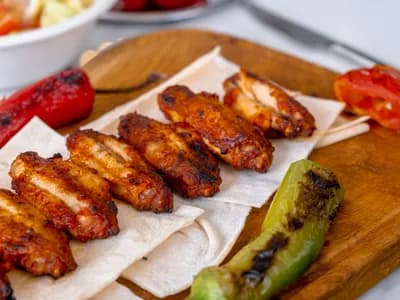
Crispy chicken wings on the kamado with honey and Pimentón de la Vera (crackling skin, no frying)
Glass-crisp skin without a fryer: dry brine with baking soda, indirect at 200°C with apple smoke and a final sear. Honey and Pimentón de la Vera glaze. Serves 4.
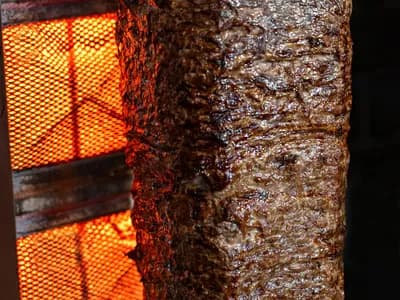
Chicken Gyros on the Rotisserie in a Kamado
A block of chicken thighs marinated in yoghurt, lemon and oregano, turning on the kamado's rotisserie at 180 °C: shave thin slices as the outer face browns, send the block back to the fire, repeat.
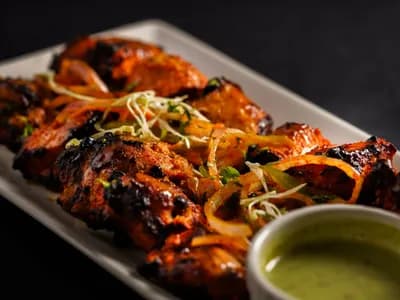
Tandoori Chicken Thighs on the Kamado
Yogurt, garam masala and live fire: tandoori chicken thighs on the kamado come out juicy inside and lacquered with spice outside, with a cool cucumber raita to cut the heat.
KEEP READING
Go deeper on this dish
- Recommended kamado
Kamado Bono Grande XXL 59 cm
This recipe depends on one measurement: the diagonal of the rack, about 46 cm. The Kamado Bono Grande XXL has 59 cm of ceramic and a roughly 49-50 cm grate, so the twelve-drumstick rack sits centred with about 1.5-2 cm clear at each corner, which is not guaranteed on a 46 cm grate. It comes with a ceramic deflector in two half-moons as standard, which cover the coals and keep the rack indirect at all times, both at 150-160 °C for smoking and at 180-190 °C for glazing. The product page gives no clearance under the dome, so the 15 cm of the rack is checked with a drumstick in place and the lid lowered before lighting.
- Editorial guide
How to light a kamado: the step-by-step method
No petrol, no weird tablets and no 45-minute waits. The cone method, airflow control and the mistakes that prevent 80% of the frustration.
- Glossary term
Low & slow
Cooking at low temperature (95-130 °C) for many hours to tenderise tough cuts and develop deep smoke.
- Related comparison
big green egg large vs kamado joe classic iii
The classic kamado matchup: the Big Green Egg Large, the indestructible pioneer with the widest accessory network, agai…