Recipe · Indirect · Easy
Apple crumble on the kamado in a dutch oven
Apple wedges with cinnamon and oats, baked in a cast-iron cocotte at 190°C indirect with a whisper of apple-wood smoke.
Quick answer
Apple crumble on the kamado bakes in a cast-iron pot at 190 °C indirect with a deflector for about 40 minutes. Tart apple wedges with cinnamon underneath, a topping of cold-butter, flour and oat crumbs on top. A handful of apple wood at the start adds gentle smoke. Done when it's evenly golden and the filling bubbles.
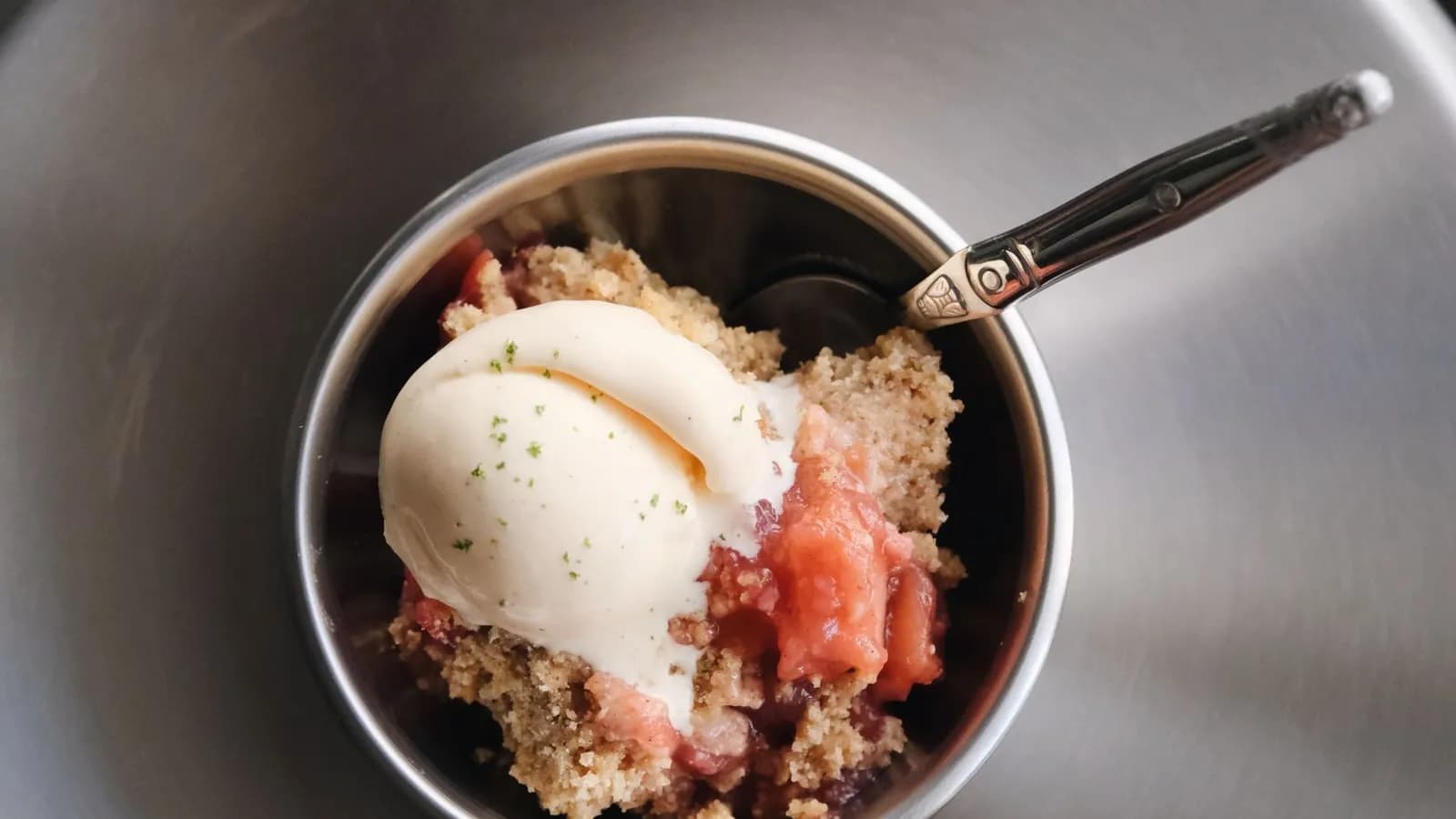
One big step at a time, screen kept on and built-in timers.
- Prep
- 20 min
- Cook
- 40 min
- Servings
- 6 servings
- Temperature
- 190 °C
What time do you want to eat?
Pick a time and we'll tell you when to start.
12:20
Start the prep
12:40
Light the kamado
13:10
Onto the kamado
14:00
Serve
Estimate: it includes lighting and settling the kamado plus a margin for large cuts. If the recipe asks you to marinate or salt ahead, add that time.
Fire setupIndirect
- Dome
- 190 °C
- Deflector
- Yes
- Grate
- Standard height
- Fuel
- Charcoal
- Wood
- A handful of soaked apple wood chips
- Setup
- Deflector; cast-iron Dutch oven
Temperature curve
1:20 h from lighting
Kamado dome
| # | From | Phase | Dome |
|---|---|---|---|
| 1 | 0:00 | Light the charcoalDeflector in, indirect cooking at 190 °C | 20 → 190 °C |
| 2 | 0:20 | StabiliseWait for 10 steady minutes before the crumble goes in | 190 °C |
| 3 | 0:30 | Put the food inThin apple smoke, cocotte uncovered in the centre | 190 → 165 °C |
| 4 | 0:31 | BakeAt 25 min turn 180° if one side browns; until bubbling | 165 → 190 °C |
| 5 | 1:10 | RestRest 10 min: the filling sets like jam | 190 → 150 °C |
| 6 | 1:20 | Serve | off |
0:00 is the moment you light the charcoal. Internal temperatures are the ones the recipe gives; without a probe, go by the times. Turn these times into clock times with the planner
For this recipe
Ingredients
- tart apples, reineta or Granny Smith (about 6-7 medium), peeled and cut into wedges1.2 kg
- lemon (zest and juice)1
- ground cinnamon (1 for the apples, 1 for the crumble)2 tsp
- brown sugar (90 for the apples, 60 for the crumble)150 g
- plain wheat flour150 g
- rolled oats100 g
- cold unsalted butter, diced (plus a knob to grease the cocotte)130 g
- flaked or chopped almonds (optional, adds a Mediterranean crunch)40 g
- fine salt (lifts the caramel and the butter)1 pinch
- apple-wood chips soaked 20 min (for the gentle smoke)1 handful
- good vanilla ice cream (to serve)6 balls
Allergens
- Gluten
- Milk
- Tree nuts
The almonds are optional; vanilla ice cream may contain egg: check the label.
Based on the recipe's ingredients. Always check the label of every product you buy.
The gear for this recipe
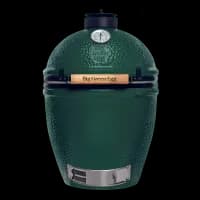 Big Green Egg LargeThe Large bakes the crumble in a casserole indirect at 190 °C with room for the apple wood chunk.
 Orework Spanish Holm Oak Charcoal 15 kg
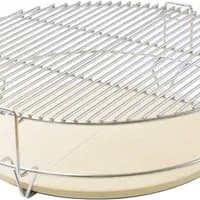 Onlyfire GCG-8552 Cooking System (2 grates + rack + 2 deflectors) for Large Kamado
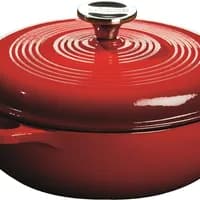 Lodge Enameled Cast Iron Dutch Oven 2.84 L (Red)The apple with cinnamon and oats bakes and browns inside the cast-iron casserole.
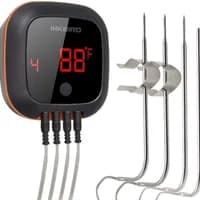 Inkbird IBT-4XS Bluetooth thermometerKeeps the dome at a steady 190 °C throughout the bake.
Method
- 01
Macerate the apples
Peel and core the apples and cut them into finger-thick wedges — not thin slices (they collapse) nor huge chunks (they stay raw). Toss them in a bowl with the lemon zest and juice, 90 g of brown sugar and one teaspoon of cinnamon. The lemon slows oxidation and brings acidity that balances the sweetness. Leave them 10 minutes while you set up the kamado.
- 02
Rub the crumble by hand
In another bowl combine the flour, oats, 60 g of brown sugar, one teaspoon of cinnamon and a pinch of salt. Add the cold diced butter and rub it in with your fingertips to a coarse-crumb texture with pea-sized lumps. The butter must stay cold: if it melts, the crumble clumps and never turns crisp. Fold in the almonds at the end.
- 03
Set the deflector and stabilise 190°C
Light the charcoal, set the deflector for indirect cooking and stabilise the kamado at 190°C. It takes 15-20 minutes. Do not load the crumble until the chamber temperature holds steady for 10 minutes. Direct heat scorches sugar and butter; the deflector is non-negotiable for any dessert.
- 04
Fill the cocotte
Grease the cast-iron cocotte with a knob of butter. Drain the excess liquid from the apples and spread them over the base in an even layer. Cover the whole surface with the loose crumble, without pressing — the air between the crumbs is what crisps them. Leave a finger of clear rim so the filling can bubble without overflowing.
- 05
Add the apple wood and load the kamado
Drain the soaked apple-wood chips and scatter a handful over the coals, beside one edge of the deflector. Set the uncovered cocotte in the centre of the grate and close the lid. The smoke should be a thin blue wisp, never a thick white cloud — that would turn the dessert bitter.
- 06
Bake for 40 minutes
Bake at 190°C indirect for about 40 minutes. At the 25-minute mark take a quick look: if the topping is colouring too fast on one side, turn the cocotte 180°. It is ready when the crumble is an even golden brown and the filling bubbles visibly at the edges. A skewer into an apple should meet no resistance.
- 07
Rest and serve with ice cream
Lift the cocotte out with gloves and let it rest 10 minutes: the filling is boiling hot and will burn, and that rest thickens it to a jammy texture. Serve straight from the cocotte at the table, still hot, with a scoop of vanilla ice cream per portion. The hot-cold contrast and the ice cream melting over the crisp crumble is the whole point of the dish.
About this recipe
Yes, you can make desserts on a kamado, and this crumble is proof the ceramic is not just for ribeyes. The trick is to treat the kamado as what it really is: a thick-walled wood oven. With the deflector in and the ceramic steady at 190°C, a cast-iron cocotte bakes a crumble just as well as your kitchen oven, but with an apple-wood smoke note no electric oven will ever give you. Tart apples that hold their shape, an oat-and-butter topping baked deep golden, and no filler: 20 minutes of prep, 40 in the heat.
Why a dessert needs indirect heat
A crumble is sugar and butter, and both scorch over direct heat in seconds. Over the coals, the sugar in the base caramelises too far and turns bitter, and the oats on top go from golden to black with no warning. Indirect cooking with the deflector removes all contact with the flame: the ceramic radiates an enveloping, steady heat that browns the topping above while the apples soften beneath, exactly like an oven. Here the deflector is not optional — it is what separates a golden crumble from a charred one.
The cast-iron cocotte: your dish and your thermostat
I bake this crumble in an enamelled cast-iron cocotte rather than a tray for one specific reason: thermal mass. Cast iron takes longer to heat, but once hot it spreads the heat evenly across the base and walls, so the apples cook through without burning at the edges. It also keeps the dessert hot and bubbling on the table for 20 minutes, which is exactly when you want the ice cream going on top. Bake with the lid off the whole time: a crumble needs dry air to brown, not trapped steam.
The apple-wood smoke: subtle or none
Apple smoke and apples are a natural pairing, but sweet dishes forgive very little smoke. A handful of apple-wood chips, not chunks, on the coals, and only for the first 10-15 minutes: just enough for a perfumed background that recalls a county-fair pie. Any more and the dessert turns bitter, because sugar absorbs smoke compounds greedily. Soak the chips for 20 minutes first so they smoulder slowly rather than flaring up. For the rest of the bake, no smoke — you have already left your mark.
In 30 seconds
Reineta or Granny Smith apples (they hold up in the oven without collapsing) in wedges with brown sugar, cinnamon and lemon. Crumble of flour + oats + cold butter + sugar, rubbed to crumbs with your fingers. All into a cast-iron cocotte, lid off. Kamado 190°C indirect with the deflector. A handful of soaked apple-wood chips for the first 10-15 min only. Bake 40 min until the topping is golden and the filling bubbles at the edges. Rest 10 min and a scoop of vanilla ice cream on top. Serves 6.
Will it fit your kamado?
Small
33-40 cm · Joe Jr, MiniMax
Fits
The 2.84 L Dutch oven fits, probably with little margin for the handles.
Medium
46-51 cm · Classic, Large
Fits
The Dutch oven fits with room to turn it 180° midway.
Large
56-61 cm · Big Joe, XL
Fits
A larger Dutch oven fits to double the recipe.
What to serve with it
Sides
- Vanilla ice cream or whipped cream
- Wine
- Moscatel de Valencia
- Beer
- Brown ale with caramel notes
- Alcohol-free
- Cinnamon and apple infusion, hot or iced
Leftovers and storage
- In the fridge
- Covered in the fridge within 2 hours: 2-3 days. Without the ice cream.
- Freezing
- Freezes well once baked, in portions, 2-3 months. Thaw in the fridge; do not refreeze.
- Reheating
- Uncovered at 160 °C for 10-15 minutes until hot and the topping crisps again.
- Using them up
- Cold with Greek yogurt for breakfast, or layered in glasses with cream.
Cool and refrigerate within 2 hours. When in doubt, throw it out.
Leftover embers
You still have embers: what to do with the leftover heat
For 40 min at 190 °C in a classic kamado you load about 800 g of charcoal and burn 400 g: when you serve, about 380 g of live embers remain. Before you shut the vents, that is still enough for:
Without touching the vents
190 °Cdessert while you eat
1 h 20 minof embers
- Whole roasted cauliflower on the kamado with saffron aioli1 h · 180 °C
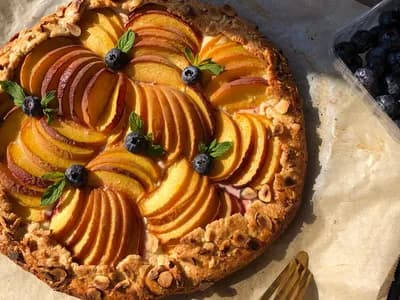
- Nectarine and raspberry galette on the kamado40 min · 190 °C
- Smoked Loaded Nachos on the Kamado12 min · 185 °C
No recipe needed
- Yesterday's bread with oil and garlic, on the grate (10 min)
- Corn cobs in their husks (30 min)
- Whole apples with a slit in the skin (45 min)
Closing the vents almost fully and waiting for it to drop
100-130 °Ca short smoke
2 h 25 minof embers
- Hot-Smoked Whole Mackerel on the Kamado45 min · 120 °C
No recipe needed
- Coarse salt on a tray, with a wood chunk: smoked salt for months (1-2 h)
- Almonds or walnuts on a rack (45 min)
- Whole heads of garlic, for spreading (1 h)
Opening the vents almost fully
210-270 °Cgrilled vegetables
30 minof embers
- Bacon-Wrapped Dates on the Grill14 min · 210 °C
- Coca de recapte on the kamado, escalivada and sardine25 min · 250 °C
- Saffron Milk Caps on a Steel Griddle with Garlic and Parsley10 min · 250 °C
No recipe needed
- Strips of courgette and aubergine, char-marked (5 min)
- Pita or naan from shop dough, on the grate (3 min each)
- Halved tomatoes, cut side down, for a sauce (10 min)
Before opening the lid, crack it open for a few seconds first; if you raise the heat, stir the ash so the coals can breathe. And if you are not going to use them: once the food is out, close the bottom and top vents. The charcoal that does not burn (about 380 g) can be used next time. Different size of kamado? Work out your load for 1 h 30 min of fire, lighting included.
Editor's tips
- If your kamado is small (a MiniMax or a Joe Jr), the cocotte sits very close to the deflector and the base cooks faster. In that case, lift the cocotte on an extra grate or three balls of foil to create an air gap — those 2-3 cm stop the bottom toasting ahead of the top.
- Cold butter, no exceptions. It is the number-one crumble mistake: if the butter softens while you set up the kamado, put the crumble bowl in the freezer for 10 minutes before baking. Cold butter melting inside the heat is what creates crisp crumbs; soft butter makes a paste that bakes gummy.
- Get ahead: you can keep the macerated apples and the rubbed crumble in the fridge, separately, up to 6 hours ahead. Only assemble the cocotte just before baking so the crumble does not go soggy with the apple juice. It is the perfect dessert for when the kamado is already hot from the main course.
Gear for this recipe
As an Amazon Associate, mikamado.es earns from qualifying purchases. At no extra cost to you.
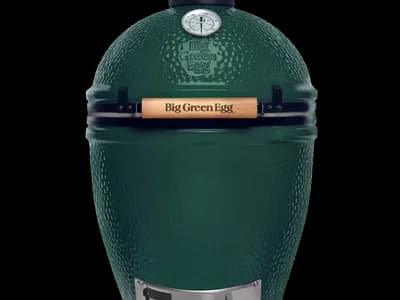
Big Green Egg Large
The Large bakes the crumble in a casserole indirect at 190 °C with room for the apple wood chunk.
€2,099
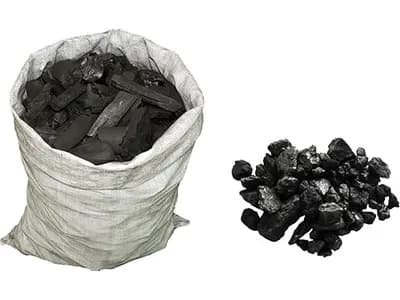
Orework Spanish Holm Oak Charcoal 15 kg
€45
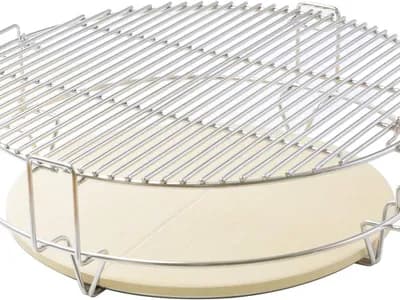
Onlyfire GCG-8552 Cooking System (2 grates + rack + 2 deflectors) for Large Kamado
€95
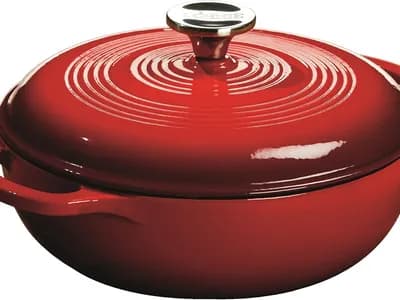
Lodge Enameled Cast Iron Dutch Oven 2.84 L (Red)
The apple with cinnamon and oats bakes and browns inside the cast-iron casserole.
€170
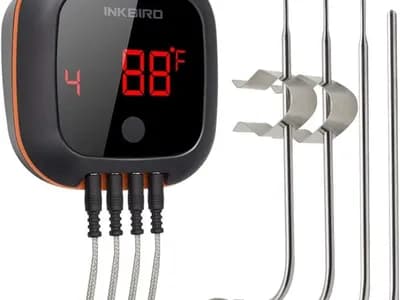
Inkbird IBT-4XS Bluetooth thermometer
Keeps the dome at a steady 190 °C throughout the bake.
€72
Have you made it?
Tell us how it turned out on your kamado. We review every rating before publishing it.
No published ratings yet. Be the first!
FAQ
Can you make desserts on a kamado, and how do I control the heat?
Yes, and they come out as well as in an oven, because a kamado is essentially a thick-walled ceramic oven. The key is to set the deflector for indirect cooking and stabilise the temperature before loading anything: you manage the heat with the dampers — open to raise, close to lower — and wait until the chamber holds 190°C for 10 minutes. Once steady, the ceramic keeps that temperature with very little swing, far better than a home oven that bleeds heat every time the door opens. A reliable chamber thermometer is your best ally.
Why does the crumble need indirect cooking with a deflector?
Because sugar and butter scorch over direct heat in a matter of seconds. Over the coals the sugary apple base caramelises too far and turns bitter, and the oat topping goes from golden to black with no margin to react. The deflector sits between the flame and the cocotte, turning direct heat into enveloping radiant heat: it browns the topping above while the apples soften beneath, exactly like an oven. Without a deflector no crumble survives — indirect cooking is not an option here, it is the only way the dessert comes out golden instead of charred.
Which apple holds up best in the oven without falling apart?
Tart, firm apples. The reineta is the Spanish queen for baking: acidic, aromatic and it holds its structure in the heat without turning to mush. Granny Smith is the easiest alternative to find and works just as well — its acidity also balances the sweetness of the crumble. Avoid Golden and Royal Gala: they are eating apples, too sweet and soft-fleshed, and they collapse into compote within 20 minutes. A trick I use: mix two-thirds reineta with one-third of a softer variety, so you get whole wedges and a creamy sauce at once.
How do I get the smoky note without it turning the sweet dish bitter?
With very little smoke, and only at the start. Sugar absorbs smoke compounds greedily, so a dessert needs a fraction of what you would use on meat. Add a handful of apple-wood chips — never large chunks — soaked for 20 minutes so they smoulder slowly rather than flaring, and only for the first 10-15 minutes of the bake. Aim for a thin wisp of blue smoke; a thick white cloud means you used too much and it will turn bitter. Apple wood is also the mildest, fruitiest of the woods, ideal for not burying the sweetness. After those minutes the chips burn out and the rest of the bake runs clean.
Can I use other seasonal fruit (pear, plum, berries)?
Absolutely, and here on the Costa Blanca I work with whatever each month brings. Firm pears like conference behave almost exactly like apple, they just need 5 minutes less. Plum brings acidity and a gorgeous colour but releases more juice: add a tablespoon of cornflour to the filling so it does not go watery. Berries are perfect mixed with apple — one part raspberry or blueberry to three of apple — but on their own they turn too liquid. A combination I love in autumn is pear and quince. Adjust the sugar to the fruit's acidity and keep the rest of the recipe identical: deflector, 190°C indirect and the same crumble topping.
What do I do with the embers left after making Apple crumble on the kamado in a dutch oven?
After 40 min at 190 °C in a classic kamado about 380 g of live embers remain: 1 h 20 min more at 190 °C without touching the vents, 2 h 25 min at 100-130 °C closing the vents or 30 min at 210-270 °C opening the vents. If you are not going to use them, close both vents and keep the charcoal for next time.
More kamado recipes

KEEP READING
Go deeper on this dish
- Recommended kamado
Big Green Egg Large
The Large bakes the crumble in a casserole indirect at 190 °C with room for the apple wood chunk.
- Editorial guide
How to light a kamado: the step-by-step method
No petrol, no weird tablets and no 45-minute waits. The cone method, airflow control and the mistakes that prevent 80% of the frustration.
- Glossary term
Heat deflector
Ceramic plate placed between the coals and the grate to turn direct fire into indirect cooking.
- Related comparison
big green egg large vs kamado joe classic iii
The classic kamado matchup: the Big Green Egg Large, the indestructible pioneer with the widest accessory network, agai…