Recipe · Direct · Easy
Kamado-roasted figs with goat cheese and honey
Figs scored into a cross, stuffed with melting goat cheese, glazed with honey and rosemary. Seven minutes over direct heat and you have the kamado's late-summer dessert.
Quick answer
Cut a cross in the figs, fill them with cold goat's cheese and roast them upright on a stone at 200 °C direct, 6-7 minutes with the lid closed, until the cheese bubbles. Glaze with honey off the heat: on the heat it scorches and turns bitter. Serve hot with walnuts and flaky salt.
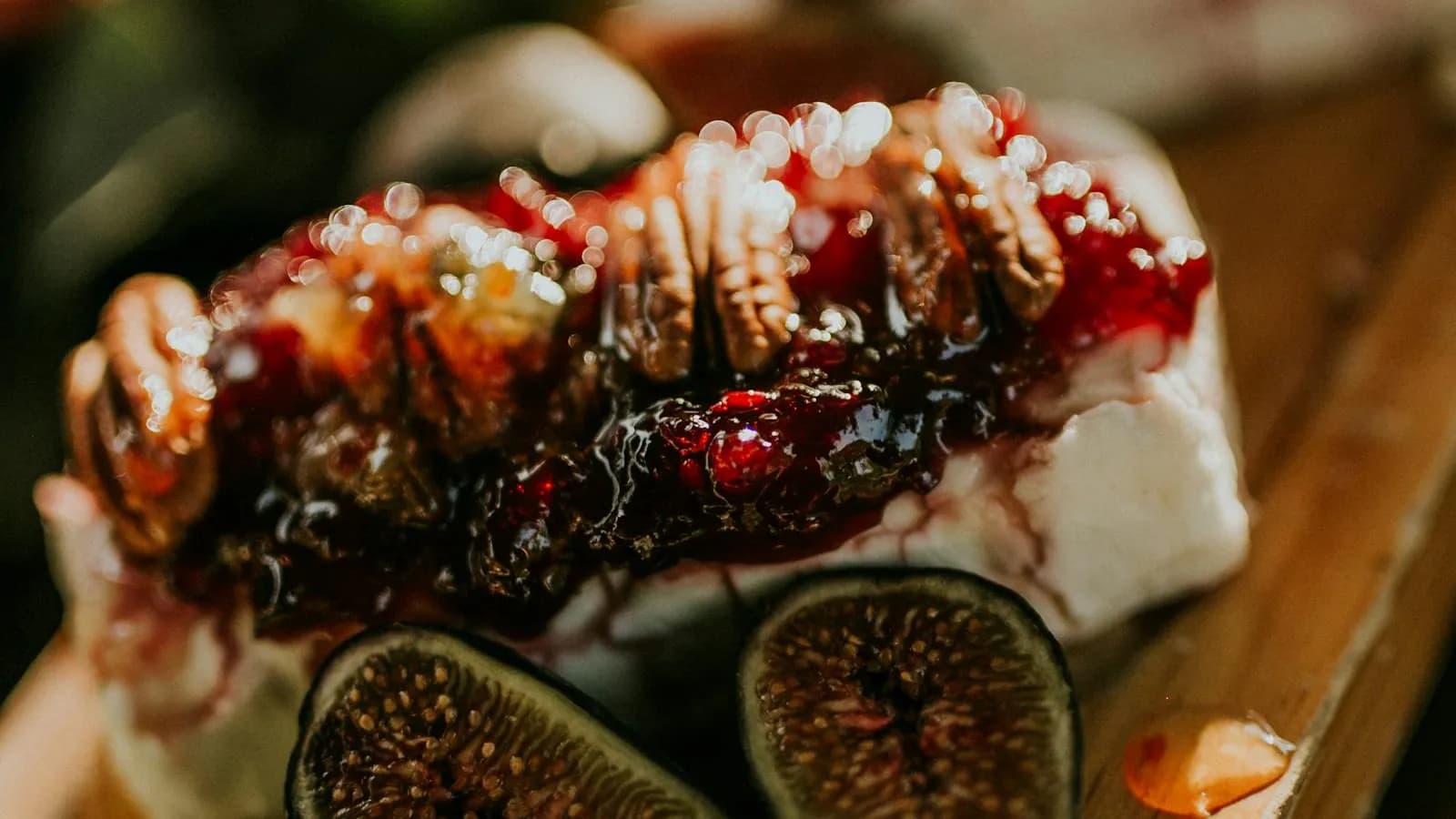
One big step at a time, screen kept on and built-in timers.
- Prep
- 10 min
- Cook
- 7 min
- Servings
- 4 servings
- Temperature
- 200 °C
What time do you want to eat?
Pick a time and we'll tell you when to start.
13:13
Start the prep
13:23
Light the kamado
13:43
Onto the kamado
14:00
Serve
Estimate: it includes lighting and settling the kamado plus a margin for large cuts. If the recipe asks you to marinate or salt ahead, add that time.
Fire setupDirect heat
- Dome
- 200 °C
- Deflector
- No
- Grate
- Standard height
- Fuel
- Charcoal
- Setup
- Soapstone or cast-iron griddle; optional grill basket
Temperature curve
0:40 h from lighting
Kamado dome
| # | From | Phase | Dome |
|---|---|---|---|
| 1 | 0:00 | Light the charcoalDirect, no deflector | 20 → 200 °C |
| 2 | 0:20 | StabiliseSoapstone or griddle on the grid, 10 min | 200 °C |
| 3 | 0:30 | Put the food inFigs standing on the stone | 200 → 175 °C |
| 4 | 0:31 | CookLid closed until the cheese bubbles | 175 → 200 °C |
| 5 | 0:37 | RestOff the heat, honey on top | 200 → 150 °C |
| 6 | 0:40 | Serve | off |
0:00 is the moment you light the charcoal. Internal temperatures are the ones the recipe gives; without a probe, go by the times. Turn these times into clock times with the planner
For this recipe
Ingredients
- ripe but firm figs (3 per person)12
- goat cheese (log) chilled, in small cubes120 g
- rosemary or orange-blossom honey4 tbsp
- fresh rosemary (one to roast, one chopped for the cheese)2 sprigs
- orange (zest; a splash of juice optional)1
- toasted, chopped walnuts (or flaked almonds)40 g
- freshly ground black pepper1 pinch
- flaky sea salt, Maldon-style (to finish, balances the sweetness)1 pinch
- butter or a little extra-virgin olive oil (to wipe the stone, optional)10 g
Allergens
- Milk
- Tree nuts
Based on the recipe's ingredients. Always check the label of every product you buy.
The gear for this recipe
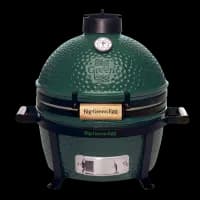 Big Green Egg MiniMaxThe MiniMax is enough for a quick dessert for 4 over direct heat.
 TODOBRASA Premium Marabú Charcoal 10 kgMarabú charcoal that lights fast for 7 minutes over direct heat.
 Kamado Joe SoapStone for Joe Jr — Cooking Soapstone
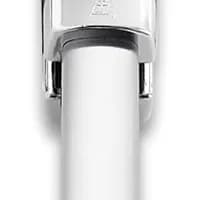 Weber Precision Tongs 46 cm (6760)Place and lift off the cross-cut figs without losing the filling.
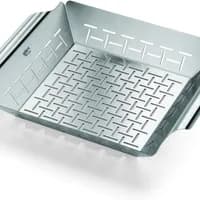 Weber Deluxe Grilling Basket Large Stainless Steel (35×30 cm)
Method
- 01
Choose and prep the figs
Use ripe but firm figs: they should give a little when pressed without being soft or weeping. Pat them dry with paper and score them into a cross from the top without reaching the base, leaving a whole centimetre intact at the bottom so they open like a flower and stand upright without spilling.
- 02
Stuff with cold goat cheese
Gently squeeze the base of each fig between two fingers to open the cavity and tuck in a small cube of cold goat cheese, a touch of pepper and a few flakes of chopped rosemary. Cold, the cheese handles without smearing and holds in the centre longer before it melts on the stone.
- 03
Set the kamado for direct heat and preheat the stone
Light the charcoal without a deflector, set up for direct heat and stabilise the ceramic at 200°C. Set the soapstone or the cast-iron griddle on the grate and let it heat for 10 minutes. A smooth, hot surface catches the cheese and honey that would otherwise burn on the coals.
- 04
Roast upright, 6-7 minutes lid closed
Stand the figs upright on the stone at 200°C, in a roasting basket if you have one so you can move them all at once. Close the lid for 6-7 minutes: the kamado works like an oven and melts the cheese through enveloping heat, not just from the base. They are ready when the cheese bubbles and the base shows a golden mark.
- 05
Glaze with honey off the heat
Move the figs to a plate and drizzle each with a thread of honey, orange zest and, if you like, the leaves of the rosemary sprig you toasted for a second on the stone. The residual heat melts the honey without burning it. Glazing off the heat keeps it glossy and aromatic instead of bitter.
- 06
Serve hot with walnut and flaky salt
Serve three figs per person on a pale ceramic plate, still hot and with the cheese melting. Scatter chopped toasted walnuts over the top and finish with a pinch of flaky salt, which balances the sweetness of the honey. Eat right away, before the cheese cools and sets again.
About this recipe
Figs roasted with goat cheese over live coals are the late-summer dessert I pull out most often on the Torrevieja terrace: five minutes of prep, seven of cooking and a hot, creamy, golden result that looks like it came from a restaurant. It is also one of those rare desserts you cook over direct heat rather than indirect — we are not baking here, we are warming and caramelising. The dry heat of the ceramic melts the cheese in the centre of the fig, concentrates its sugars and lightly marks the base, while the honey and rosemary turn dark and aromatic on top.
Why this dessert goes over direct heat (and at moderate temperature)
Most kamado desserts call for a deflector and indirect heat, because sugar and butter scorch over flame. The fig is the exception: the fruit is already sweet and ripe, we only want to warm it through, melt the cheese and caramelise its juice at the base, not bake it. That is why it sits over direct heat, on a moderate ceramic at 200°C — neither a searing inferno nor a gentle oven. At that temperature the fig warms and the goat cheese softens in 6-7 minutes without the skin scorching or the fruit collapsing. Push to 280°C and the skin bursts and the honey turns bitter; drop below 170°C and the centre stays cold and weeps water.
The cross-cut and the filling: technique, not decoration
Score each fig into a cross from the top, without reaching the base, leaving a whole centimetre intact at the bottom — that way it opens like a flower and stands up without spilling. Gently squeeze the base between two fingers to open the cavity and tuck in a small cube of cold goat cheese (cold, it handles without smearing and holds in the centre longer before it melts). A touch of black pepper and, if you like, a few flakes of chopped rosemary inside the cheese. The cross is not for looks: it increases the cheese surface exposed to the heat, so it melts evenly instead of leaving a cold lump at the bottom.
The Mediterranean touch: honey, rosemary, orange and walnut
Here on the Costa Blanca the late-August and September figs arrive at their peak, and I work them with what is close at hand: rosemary or orange-blossom honey, fresh rosemary off the balcony, a hit of orange zest and toasted walnuts for crunch. The rosemary, warmed a second on the stone, perfumes without taking over; the honey turns darker and more complex as it warms. The key contrast is temperature and texture: hot creamy fig, melting salty cheese, sweet honey and the toasted walnut that snaps through. A truly ripe fig barely needs any added sugar — it brings its own.
In 30 seconds
Ripe but firm figs scored into a cross without reaching the base. Fill the centre with a cube of cold goat cheese, pepper and a little rosemary. Kamado direct, 200°C, on a preheated soapstone or cast-iron griddle (10 min), standing upright (in a roasting basket if you have one). 6-7 min lid closed until the cheese melts and the base marks. Off the heat, a thread of honey + rosemary + orange zest, and to serve toasted walnuts and a pinch of flaky salt. Serves 4, 7 min of cooking.
Will it fit your kamado?
Small
33-40 cm · Joe Jr, MiniMax
Fits
This is the recipe's size: the 12 standing figs fit on a mini kamado's stone.
Medium
46-51 cm · Classic, Large
Fits
Fits with room; with a larger stone you can double to 24 figs.
Large
56-61 cm · Big Joe, XL
Fits
Plenty of room; light less charcoal so it doesn't exceed 200 °C.
What to serve with it
Sides
- Slices of toasted glass bread
- Green leaves with orange vinaigrette
- Wine
- Moscatel from Alicante or a Jerez oloroso
- Beer
- Belgian dubbel ale, malty and fruity
- Alcohol-free
- Iced green tea with rosemary and lemon
Leftovers and storage
- In the fridge
- Best eaten fresh; leftovers keep 1-2 days in the fridge, airtight, chilled within 2 h.
- Freezing
- Does not freeze well: the figs collapse and the goat cheese turns grainy.
- Reheating
- A few minutes in the kamado or a covered pan over low heat, just until the cheese softens.
- Using them up
- Mash them with the cheese and honey and spread on toast or over a salad.
Cool and refrigerate within 2 hours. When in doubt, throw it out.
Leftover embers
You still have embers: what to do with the leftover heat
For 7 min at 200 °C in a classic kamado you load about 800 g of charcoal and burn 100 g: when you serve, about 660 g of live embers remain. Before you shut the vents, that is still enough for:
Without touching the vents
200 °Cdessert while you eat
2 h 20 minof embers
- Apple crumble on the kamado in a dutch oven40 min · 190 °C
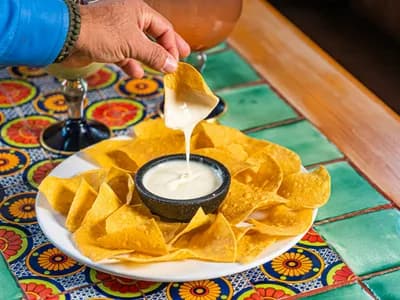
- Smoked Loaded Nachos on the Kamado12 min · 185 °C
- Reina Pepiada Arepas on a Budare in the Kamado, Crisp Outside1 h · 200 °C
No recipe needed
- Yesterday's bread with oil and garlic, on the grate (10 min)
- Corn cobs in their husks (30 min)
- Whole apples with a slit in the skin (45 min)
Closing the vents almost fully and waiting for it to drop
100-130 °Ca short smoke
4 h 25 minof embers
- Cherry-Smoked Baby Back Ribs on the Kamado, 2-1-1 Method4 h · 115 °C
- Hot-Smoked Whole Mackerel on the Kamado45 min · 120 °C
No recipe needed
- Coarse salt on a tray, with a wood chunk: smoked salt for months (1-2 h)
- Almonds or walnuts on a rack (45 min)
- Whole heads of garlic, for spreading (1 h)
Opening the vents almost fully
210-270 °Cgrilled vegetables
1 hof embers
- Grilled peaches with honey and vanilla ice cream on the kamado8 min · 210 °C
- Blistered Padrón Peppers on the Kamado8 min · 260 °C
- Olive Oil Ciabatta on the Kamado25 min · 245 °C
No recipe needed
- Strips of courgette and aubergine, char-marked (5 min)
- Pita or naan from shop dough, on the grate (3 min each)
- Halved tomatoes, cut side down, for a sauce (10 min)
Before opening the lid, crack it open for a few seconds first; if you raise the heat, stir the ash so the coals can breathe. And if you are not going to use them: once the food is out, close the bottom and top vents. The charcoal that does not burn (about 660 g) can be used next time. Different size of kamado? Work out your load for 30 min of fire, lighting included.
Editor's tips
- Ripeness is everything with figs. One that is too ripe collapses and weeps water the moment it touches the stone; an underripe one has no sugar to concentrate and ends up bland and tough. Look for fruit that gives slightly when pressed with the thumb but holds its shape when scored into a cross. If all you have are figs that are a bit green, give them a day at room temperature on a plate, never in the fridge, which kills the sweetness.
- Never put the honey on the fig inside the kamado. Honey starts to burn from around 150°C and at 200°C turns bitter in seconds, on top of dripping onto the coals and smoking the dessert the wrong way. Roast the fig with only the cheese inside and keep the honey for glazing off the heat, with the residual warmth. That is the difference between a glossy dessert and one with a burnt aftertaste.
- Fill with the cheese cold and right before roasting. Goat cheese at room temperature softens as you handle it and melts too fast, escaping from the fig onto the stone. The cold cube holds up to the cross-cut, keeps its shape for the first few minutes and melts just as the fig is already hot inside.
Gear for this recipe
As an Amazon Associate, mikamado.es earns from qualifying purchases. At no extra cost to you.
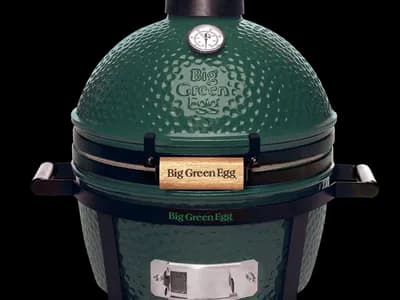
Big Green Egg MiniMax
The MiniMax is enough for a quick dessert for 4 over direct heat.
€1,349
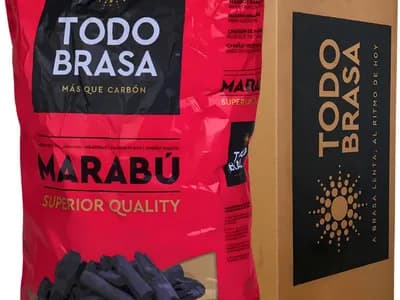
TODOBRASA Premium Marabú Charcoal 10 kg
Marabú charcoal that lights fast for 7 minutes over direct heat.
€49
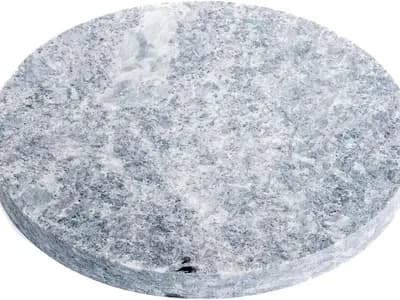
Kamado Joe SoapStone for Joe Jr — Cooking Soapstone
€100
Weber Precision Tongs 46 cm (6760)
Place and lift off the cross-cut figs without losing the filling.
€28
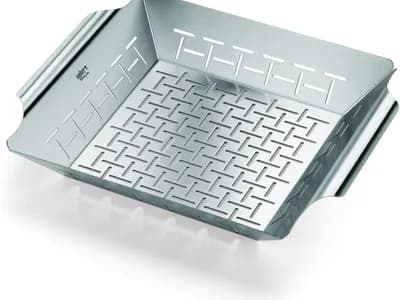
Weber Deluxe Grilling Basket Large Stainless Steel (35×30 cm)
€39
Have you made it?
Tell us how it turned out on your kamado. We review every rating before publishing it.
No published ratings yet. Be the first!
FAQ
How do I pick figs at the right point to roast without them breaking?
Look for ripe but firm figs: they should give a little when gently pressed with the thumb, with smooth skin and no cracks or wet patches. A soft fig oozing syrup is overripe and will collapse the moment it touches the hot stone. A hard, dull-coloured one is underripe, has no sugar to concentrate and tastes bland. The trick is the cross-cut leaving a whole centimetre intact at the base: that way the fig opens like a flower but keeps a firm structure underneath that holds it upright and stops it spilling as the cheese melts. Here on the Costa Blanca the late-August and September figs arrive at exactly the right point for this.
What cheese to use besides goat: feta, mascarpone or blue?
All four work, depending on the balance you are after. Goat cheese is the classic: salty, tangy and melting, it cuts through the sweetness of the fig and honey without disappearing. Feta gives a drier, saltier version that does not fully melt, ideal if you want more bite and a Greek note with oregano instead of rosemary. Mascarpone is the indulgent, silky extreme, almost a dessert within a dessert, but as it melts it escapes the fig more easily, so use a small spoonful and keep it well chilled. Blue cheese (a mild Cabrales or a sweet gorgonzola) is the boldest and most striking pairing: its salty punch against the honey is spectacular, but it dominates, so use a small dose. Goat cheese is still the most balanced choice and the safest place to start.
How long to roast the figs so they stay creamy inside?
Between 6 and 7 minutes with the lid closed over a stone at 200°C. That is enough time for the kamado to work like an oven and warm the fig through, melt the goat cheese and mark the base, but without the skin bursting or the fruit collapsing. You will know it is ready when the cheese in the centre bubbles and glistens, the base shows a golden mark and the fig, lifted with the tongs, gives a little but still holds its shape. Leave it beyond 8-9 minutes and the flesh turns to water and the fig collapses; pull it before 5 and the centre is still cold and the cheese has only warmed. The residual heat keeps softening it a little off the fire, so take it off right at the point.
Can roasted figs be made as a savoury starter instead of a dessert?
Absolutely, and it is one of the terrace appetisers that work best on the kamado. The same direct technique at 200°C, but wrap each fig in half a slice of serrano ham or pancetta before roasting: the dry heat of the stone crisps the ham and the fat bastes the fig. Fill with goat cheese or with a stronger blue, and as you pull them off glaze with a touch of honey and a little Pedro Ximénez or sherry vinegar instead of orange, to take it to the savoury side. A leaf of rocket or a drizzle of reduced balsamic rounds it off as a starter. Serve one or two per guest on toast or on their own, hot. The contrast of sweet fig, salty cheese and crisp ham works just as well before the meal as after it.
How do I store and reheat roasted figs?
They are a dessert to eat right away, freshly roasted, when the cheese is melting and the fig hot; that is their best version. If you have leftovers, let them cool, cover them and keep them in the fridge for up to 2 days, without the honey or walnut yet (add those when reheating so they do not go soft). To reheat, the ideal is to go back to the kamado stone or a griddle over medium heat for 2-3 minutes, which brings back some marking and melts the cheese again; failing that, an oven at 180°C for about 4-5 minutes. Avoid the microwave: it bursts the fig skin, leaves the cheese rubbery and weeps water. Once reheated, glaze again with fresh honey, orange zest and toasted walnut, and serve them straight away.
What do I do with the embers left after making Kamado-roasted figs with goat cheese and honey?
After 7 min at 200 °C in a classic kamado about 660 g of live embers remain: 2 h 20 min more at 200 °C without touching the vents, 4 h 25 min at 100-130 °C closing the vents or 1 h at 210-270 °C opening the vents. If you are not going to use them, close both vents and keep the charcoal for next time.
More kamado recipes
KEEP READING
Go deeper on this dish
- Recommended kamado
Big Green Egg MiniMax
The MiniMax is enough for a quick dessert for 4 over direct heat.
- Editorial guide
How to light a kamado: the step-by-step method
No petrol, no weird tablets and no 45-minute waits. The cone method, airflow control and the mistakes that prevent 80% of the frustration.
- Glossary term
Heat deflector
Ceramic plate placed between the coals and the grate to turn direct fire into indirect cooking.
- Related comparison
big green egg minimax vs kamado joe joe jr
The portable-kamado derby for small terraces, beach houses or campervan trips. The MiniMax weighs 35 kg and includes th…