Recipe · Indirect · Easy
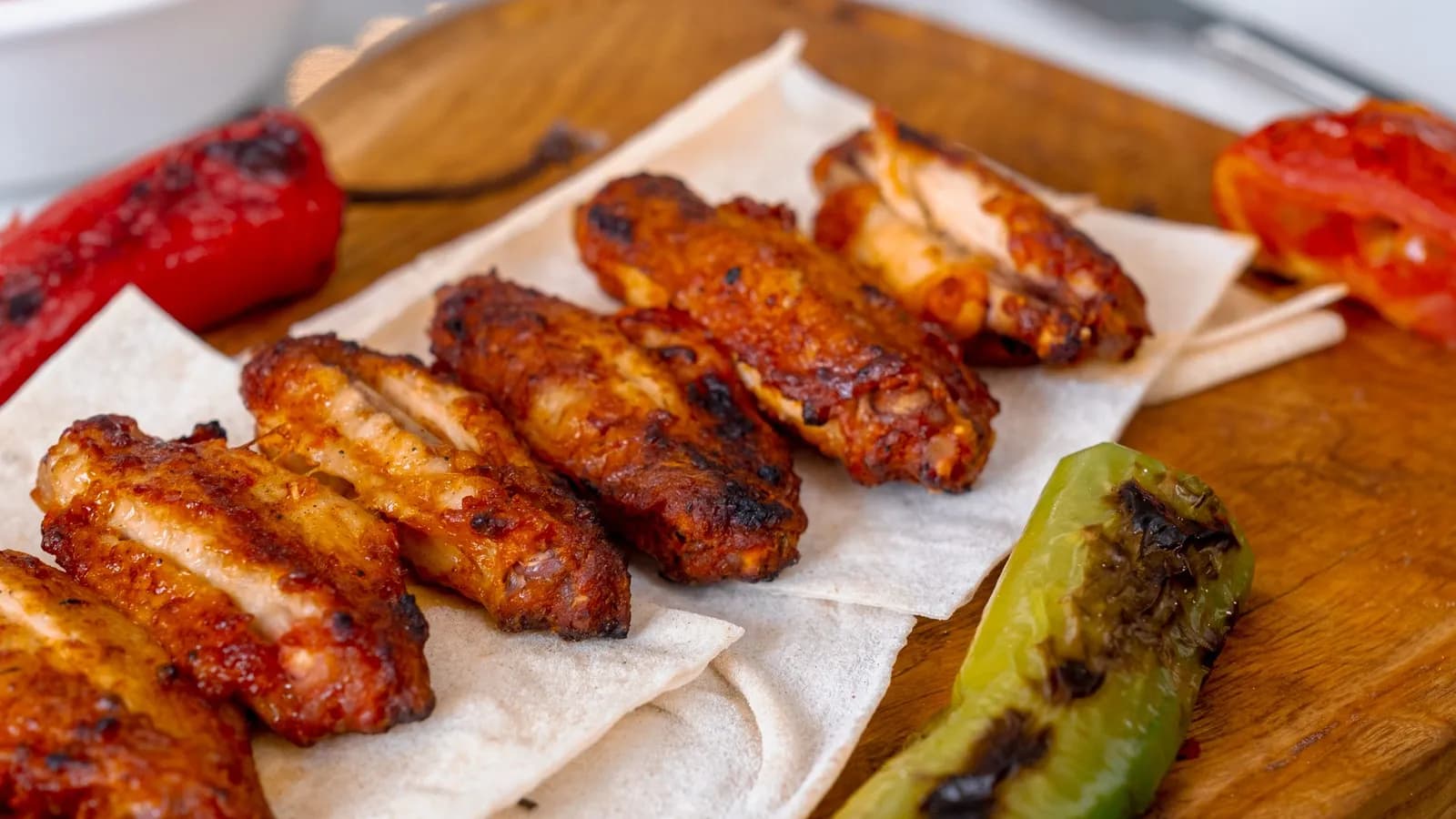
Crispy chicken wings on the kamado with honey and Pimentón de la Vera (crackling skin, no frying)
Glass-crisp skin without a fryer: dry brine with baking soda, indirect at 200°C with apple smoke and a final sear. Honey and Pimentón de la Vera glaze. Serves 4.
Quick answer
For crispy kamado wings, dry-brine them with salt and baking soda the night before and rest them uncovered in the fridge. Roast indirect at 200°C with a deflector and apple smoke for 35-40 minutes to 75°C inside; glaze with honey and Pimentón de la Vera and sear at 230-250°C for the last few minutes.
- Prep
- 20 min
- Cook
- 40 min
- Servings
- 4 servings
- Temperature
- 200 °C
Ingredients
- whole chicken wings (split in two at the joint, tips saved for stock)1.2 kg
- fine salt2 cdita
- baking soda (or baking powder), for the crispy skin1 cdita
- honey (local orange-blossom if you have it)3 cda
- Pimentón de la Vera (sweet or bittersweet, smoked)2 cdita
- extra-virgin olive oil2 cda
- orange (the zest and a splash of juice)1 ud
- garlic cloves, finely grated (into the glaze)2 dientes
- freshly ground black pepper1 cdita
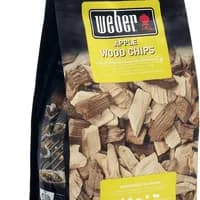
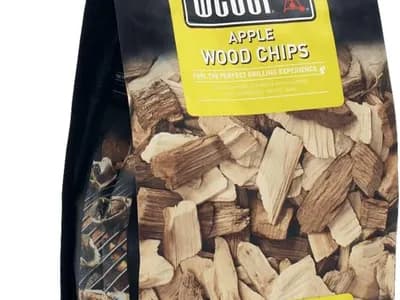
- apple-wood chips (sweet smoke for poultry)1 puñado
- flaky salt and chopped chives (to finish)1 pizca
Method
- 01
Dry-brine the day before
Pat the wings very dry with kitchen paper. Mix the salt with the baking soda and dust the wings evenly on all sides. Set them on a rack over a tray, uncovered, and leave them in the fridge for 8 to 24 hours: the salt seasons deep and the dry fridge air dehydrates the skin, which is half the crispness.
- 02
Set the deflector and stabilise 200°C
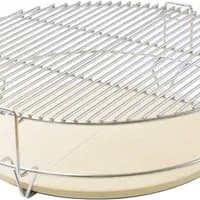
Light the charcoal, set the deflector for indirect cooking and stabilise the chamber at 200°C with a reliable chamber probe, not the dome thermometer. It takes 20-25 minutes to settle. Don't load the wings until the temperature holds steady at 200°C for 10 minutes: go in with the kamado swinging and the skin steams instead of drying.
- 03
Season and add the apple smoke
Take the wings out of the fridge and rub them with a thread of olive oil and the black pepper (don't add more salt: they're already salted). Toss a small handful of apple-wood chips on the coals just before loading them: the smoke works in the first half hour, while the skin is still cold and receptive, leaving a sweet background that suits poultry.
- 04
Roast indirect 35-40 min, flipping
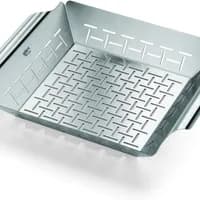
Lay the wings in a single layer on the grate (a grilling basket lets you flip them all at once), skin up. Close the lid and roast 35-40 minutes, turning them halfway so they brown evenly. Don't keep opening the lid: each opening drops the temperature and stalls the crisping. They're ready when the skin is golden and taut and the inside reads 75°C.
- 05
Make the honey and pimentón glaze
While they roast, mix the honey, the Pimentón de la Vera, the grated garlic, the orange zest and a splash of its juice into a smooth, glossy glaze. The juice lengthens it and brings acidity that balances the sweetness; the pimentón adds smoke and that deep red. Warm it for a few seconds if the honey is very thick so it brushes on well.
- 06
Glaze and sear at 230-250°C
In the last 5-7 minutes brush the wings with the glaze on both sides and open the vents to climb to 230-250°C. Watch closely: the honey's sugar caramelises fast and goes from lacquered to burnt in a minute. Give them a second coat of glaze if you want more lacquer, turn them so they don't stick and pull them the moment they gleam and the skin crackles.
- 07
Rest and serve
Move the wings to a platter and let them rest 5 minutes: the glaze sets and stops being sticky, and the juices redistribute. Finish with a little flaky salt and chopped chives on top. Serve them hot, with orange wedges and a fresh yoghurt or mild aioli dip to cut the sweetness.
About this recipe
The promise of crispy wings without a fryer sounds like a trick, but it's pure physics: chicken skin crisps when it loses water and its surface turns alkaline, and the kamado does both better than your oven. The secret isn't wild flame but treating the kamado as a convection oven at 200°C indirect with the deflector in place, letting dry air circulate around every wing and finishing with a thirty-second final sear. Before that, a dry brine with baking soda the night before: that's the step that separates a decent wing from one with glass-crisp skin.
The dry brine with baking soda: why the skin crisps
The big mistake with barbecue wings is loading them wet: damp skin steams, softens and never crisps. The fix is a dry brine: salt, a pinch of baking soda (or baking powder) and an uncovered rest in the fridge for 8-24 hours. The salt draws out moisture and seasons deep; the baking soda raises the skin's pH, which breaks down proteins and speeds up Maillard browning, so the skin puffs, dries and turns thin and crisp instead of rubbery. Don't overdo the baking soda —a quarter teaspoon per half teaspoon of salt— or it leaves a soapy aftertaste. Pat the wings dry with paper before seasoning: every drop of water is an enemy of crispness.
Indirect at 200°C and a veil of apple smoke
Wings cook indirect with the deflector, never over the flame: over direct heat the dripping fat flares up, soots the skin and turns it bitter before the inside is done. With the deflector in place the kamado stabilises 200°C and surrounds the wings with dry, enveloping heat, like a real convection oven, slowly rendering the subcutaneous fat —that's the engine of crispness— while a small handful of apple-wood chips leaves a sweet, fruity background that suits poultry without bullying it. Apple beats hickory here: chicken is delicate and strong wood masks it. Govern by a chamber probe at grate height, not the dome thermometer, which lies thanks to the cupola.
The honey and Pimentón de la Vera glaze, at the end
The glaze goes on at the end, never at the start: honey carries sugar and sugar burns at medium heat into a black bitterness. Brush the wings with the honey and Pimentón de la Vera mix in the last 5-7 minutes, when they're nearly done, and open the vents to climb to 230-250°C for that final sear that caramelises the glaze without scorching it. Pimentón de la Vera —oak-smoked in Extremadura— adds a layer of smoke and a deep red colour that the honey sets and glosses. A splash of local orange juice in the glaze lengthens it and balances it with acidity. The result: a lacquered skin that's crisp, sweet and smoky all at once.
In 30 seconds
Dry brine the day before: salt + a pinch of baking soda, wings uncovered in the fridge for 8-24 h so the skin dries. Kamado with deflector at 200°C indirect, reliable chamber probe, a small handful of apple-wood chips. Wings 35-40 min, flipping halfway, until the skin is golden and crisp and the inside reads 75°C. In the last 5-7 min brush with honey + Pimentón de la Vera and open the vents to 230-250°C for the final sear that caramelises the glaze without burning it. Rest 5 min. Serves 4.
Editor's tips
- The baking soda is optional but a game-changer, and the dose is everything. A quarter teaspoon per half teaspoon of salt raises the skin's pH just enough to crisp without leaving an aftertaste. Overdo it and the wings taste of soap. No baking soda? Use baking powder (already buffered and more forgiving) or, worst case, trust salt alone and a long uncovered rest: they'll crisp less, but they'll crisp.
- No glazing early. Honey is sugar, and sugar starts to burn from about 160°C, leaving a black bitterness that ruins the dish. Roast the wings naked almost to the end and save the glaze for the last 5-7 minutes, with a short sear at 230-250°C. That window caramelises the honey and sets the pimentón without going from lacquered to charcoal. The same rule applies to any sweet barbecue sauce: at the end, always.
- With poultry, gentle smoke. Chicken is delicate and strong wood —hickory, mesquite, holm oak— masks it and turns it bitter. Stick to fruit woods: apple is the safe bet, sweet and discreet, and cherry adds a deeper note if you want colour. A small handful at the start is plenty: smoke penetrates the cold skin of the first wings better than an already dry, sealed surface. More wood isn't more flavour, it's soot.
Gear for this recipe
As an Amazon Associate, mikamado.es earns from qualifying purchases. At no extra cost to you.
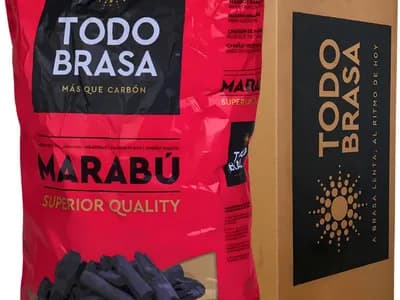
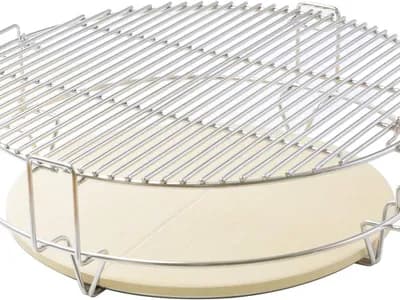
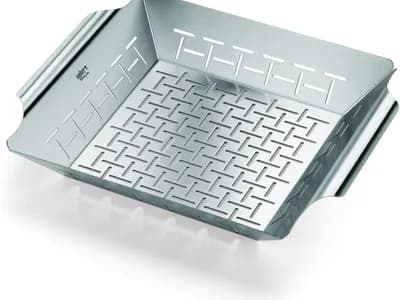
FAQ
Do they really come out crisp without frying or using flour?
Yes, and the trick isn't flour but the skin's chemistry. The crispness of a roasted wing depends on two things: the skin losing water, and its subcutaneous fat melting and frying it from within. A dry brine with salt and a touch of baking soda does both: the salt dehydrates, and the baking soda raises the skin's pH, which breaks down proteins and speeds Maillard browning, leaving thin, crisp skin with no batter needed. The uncovered fridge rest for 8-24 hours dries the surface completely. Then the 200°C indirect heat renders the fat slowly and the 230-250°C final sear finishes the crackle. A well-made kamado wing crisps as much as a fried one, but tastes of coal and smoke, not oil.
Why indirect and not straight over the coals?
Because wings carry a lot of fat and a lot of skin, and over direct heat that fat drips onto the coals, ignites and sends up flare-ups that blacken the skin and turn it bitter before the inside is done. Wings need time for the subcutaneous fat to render and the skin to dry, and that calls for steady, enveloping heat, not the lash of flame. With the deflector in place the kamado behaves like a 200°C convection oven: it surrounds each wing with dry heat, browns them evenly and renders the fat with nothing scorching. We save direct fire for the finishing touch, opening the vents to 230-250°C in the last minutes to caramelise the glaze, but with the wings already nearly done and watched closely.
Which paprika should I use and why de la Vera?
Pimentón de la Vera is a Protected Designation of Origin paprika from Extremadura, dried over oak or holm-oak smoke, which gives it a natural smoky aroma no ordinary paprika has. For kamado wings it's perfect because it adds a second layer of smoke that talks to the apple wood, plus a deep red that the honey sets and glosses. Pick the sweet one for just smoke and colour, the bittersweet for a touch of character, or the hot one if you like heat. If all you have is ordinary paprika, it's not the same —you lose the smokiness— but it works; in that case a little extra wood on the coals makes up for it. What you must avoid is throwing it raw onto strong fire with no fat: paprika burns and turns bitter in seconds, which is why here it goes mixed into the honey and oil, protected, and only at the end.
What internal temperature means they're done and how do I check it?
Chicken is safely cooked at 74-75°C in the thickest part, but on a wing the best reference isn't just the number, it's texture: at 75°C the meat pulls clean from the bone and the juices run clear, not pink. Since wings are small, an instant-read thermometer beats a fixed probe: pierce the meaty part of the drumette without touching bone, which gives falsely high readings. The skin, though, isn't governed by temperature but by sight and sound: it must be golden, taut and crackle when pressed. The nice thing about wings is they tolerate a few extra degrees well —they're rich in collagen and fat— so if you land at 78-80°C it's fine, in fact the meat turns even more tender. The serious mistake is undercooking: a wing at 65°C has rubbery skin and a raw joint.
Can I cook a big batch of wings at once for a party?
Yes, and the kamado is ideal for big batches because it holds a steady temperature for hours without reloading charcoal. The key is not to crowd them: wings need dry air circulating around each one to crisp, so keep a single layer with a finger's gap between them. If they won't all fit on the grate, use a vertical grilling basket or a multi-tier rack to multiply the surface without piling up. A grilling basket also lets you flip every wing at once in a single move instead of one by one, which with forty wings is the difference between cooking and despairing. For big groups, dry-brine a day ahead and roast in batches if needed: the first ones stay crisp for 15-20 minutes on a rack inside the switched-off kamado or in the oven at 80°C, uncovered (covering them softens them instantly).
More kamado recipes
Smoked Christmas turkey on the kamado
The recipe that retires the family oven on December 25th: 12-hour brine, butter under the skin, apple wood smoke and a whole turkey at 120 °C — tender inside, deep gold outside, properly smoked.
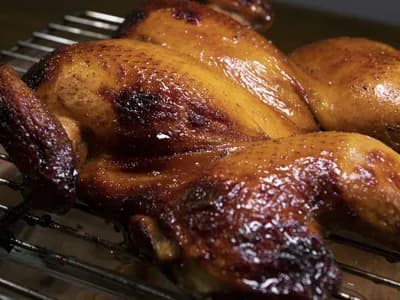
Whole spatchcock chicken on the kamado, even crispy skin
A 1.6 kg chicken butterflied flat, roasted at 180°C indirect over a deflector. Golden crackling skin end to end, juicy meat, ready in an hour: the Sunday roast I actually cook on my Torrevieja terrace.
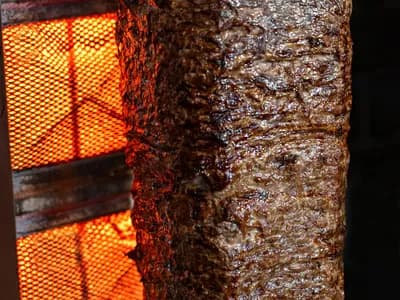
Chicken Gyros on the Rotisserie in a Kamado
A block of chicken thighs marinated in yoghurt, lemon and oregano, turning on the kamado's rotisserie at 180 °C: shave thin slices as the outer face browns, send the block back to the fire, repeat.
KEEP READING
Go deeper on this dish
- Recommended kamado
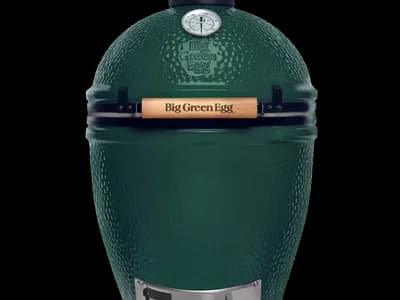
Big Green Egg Large
The classic kamado that defined the category
- Editorial guide
How to light a kamado: the step-by-step method
No petrol, no weird tablets and no 45-minute waits. The cone method, airflow control and the mistakes that prevent 80% of the frustration.
- Glossary term
Heat deflector
Ceramic plate placed between the coals and the grate to turn direct fire into indirect cooking.
- Related comparison
big green egg large vs kamado joe classic iii
The classic kamado matchup: the Big Green Egg Large, the indestructible pioneer with the widest accessory network, agai…