TÉCNICA
Bitter smoke in a kamado: creosote vs thin blue smoke
Why smoking sometimes leaves meat bitter, and how to get that clean, bluish wisp of smoke that perfumes instead of ruining. The truth about creosote.
Quick answer
Bitter smoke flavour comes from creosote, deposited by the thick white smoke of a dirty or oxygen-starved fire. Good smoke — thin blue smoke — is a faint bluish wisp you can barely see. You get it with embers fully lit before adding wood, three or four dry chunks and enough airflow for the fire to breathe.
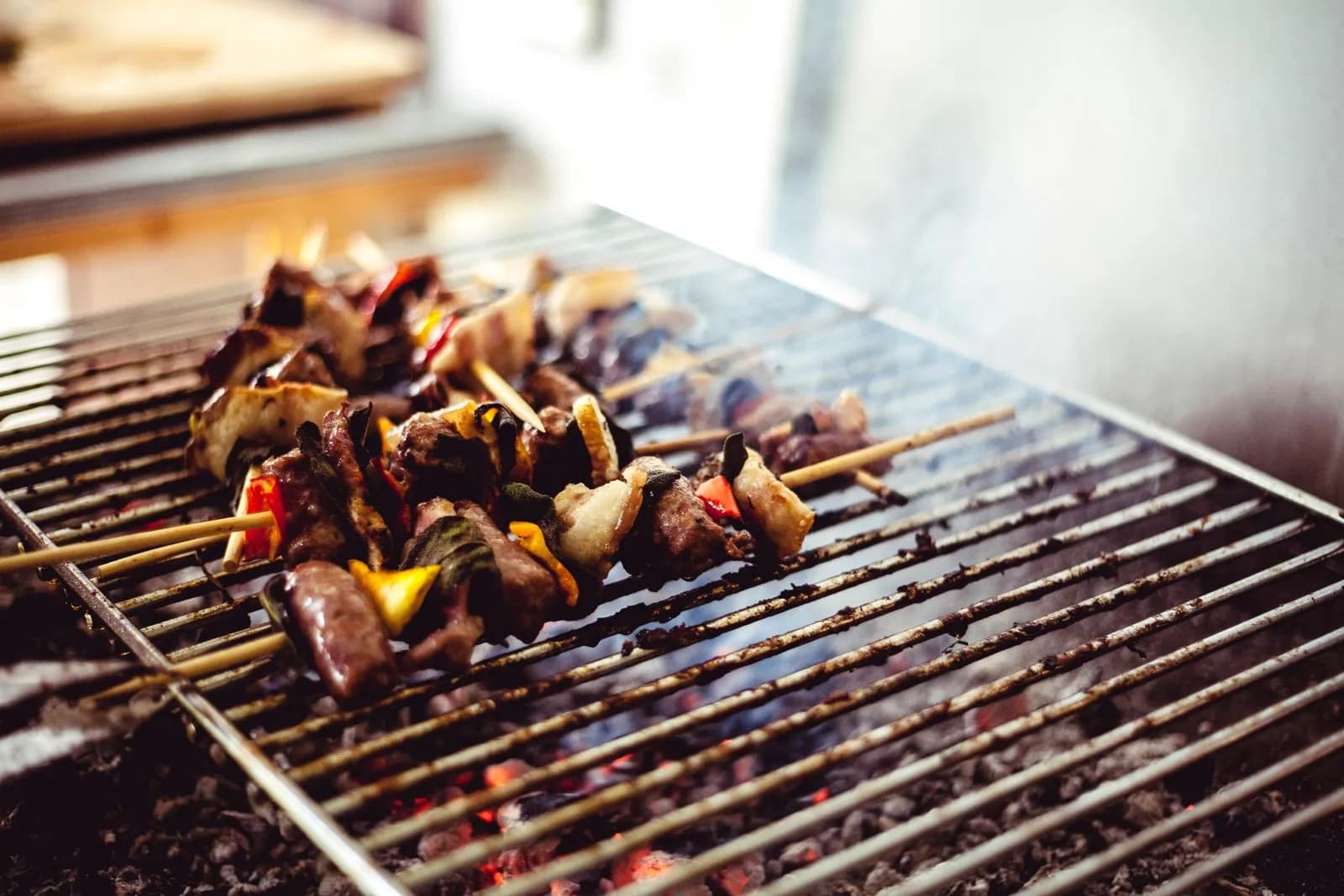
If your pulled pork has ever come out with an acrid, ashtray-or-cough-syrup aftertaste, it isn't the meat or the charcoal: it's creosote. That bitterness comes from the white, dirty smoke a badly built fire throws off, and it's one of the most common — and easiest to fix — mistakes new smokers make.
Good smoke, the kind that truly perfumes meat, is almost invisible: a fine, bluish wisp the Americans call thin blue smoke. Bad smoke is the opposite — those thick white clouds so many people mistake for "really smoking now."
In this guide we explain what creosote is, what causes it and, above all, how to get clean smoke in your kamado. What we've learned smoking on our terrace in Torrevieja, measuring and getting it wrong. No mystery here: it's fire physics, not magic.
What creosote is and why it makes meat bitter
Creosote is a dark, oily residue that forms when wood and charcoal don't burn completely. When combustion is incomplete — because oxygen is short or the fire is cold — the wood doesn't burn clean: it releases gases, tars and unburnt particles that ride along in that thick white smoke. When they hit the cold surface of the meat, those compounds condense and stick in a tacky layer.
That deposit is creosote, and it's exactly what leaves the bitter, acrid, almost medicinal aftertaste. It isn't a "strong smoke" flavour: it's a defect. The meat ends up with a dry back-note that scratches the throat and won't go away no matter how much sauce you add.
Creosote doesn't show up all at once: it builds. A cut exposed to dirty smoke for ten hours absorbs far more than one that sees clean smoke. That's why on long cooks — brisket, pulled pork — the problem stands out so much: you have hours to ruin it, or to nail it.
White smoke vs thin blue smoke: learn to read the chimney
The simplest way to know you're on track is to watch what comes out of the kamado's daisy-wheel vent, without opening the lid. The smoke tells you everything.
Bad smoke is white, dense and moves in heavy clouds; sometimes it leans grey or yellowish and smells acrid, sharp, burnt. That's incomplete combustion: smothered wood, a cold fire, creosote on the way. It's the smoke that fools beginners, who think "the more that comes out, the more it's smoking." The exact opposite is true.
Good smoke — thin blue smoke — is nearly invisible. It's a very fine, almost transparent wisp with a bluish cast you spot best backlit or against a dark background. It barely smells burnt: it smells sweet, like toasted wood. That's the one that perfumes meat without souring it.
The rule we use in Torrevieja is by eye and by nose: if the chimney is throwing white clouds, wait. Don't put the meat on yet. Let the fire settle until the smoke thins and turns blue. Those ten minutes of patience are the difference between a sweet smoke and a bitter one.
What causes creosote: the three sins of a dirty fire
Creosote doesn't appear by chance. It's almost always one of these three mistakes, and all three come down to how the fire burns.
The first is lack of oxygen. If you choke the vents too hard to bring the temperature down, you smother the fire: the wood smoulders instead of burning clean and gives off unburnt gases. Over-closing is the number-one cause of white smoke in a kamado, because the beginner's reflex is to shut everything to control the heat.
The second is wet or excess wood. Soaked wood — that widespread myth — doesn't smoke more, it just makes steam and dirty smoke while it dries out inside the kamado. And piling in too many chunks at once smothers the fire itself with all that unburnt wood. More wood isn't more flavour: it's more creosote.
The third is a dirty fire at start-up. If you load the meat and wood while the charcoal is still smoking black, freshly lit and full of volatiles, those first acrid minutes of smoke go straight onto the cut. You have to wait until the coals are clean and grey before you begin.
How to get thin blue smoke, step by step
Getting clean smoke in a kamado isn't hard; it's a matter of doing things in the right order. These are the steps we follow on every smoke.
1. Clean coals first. Light the charcoal and wait until the coals are grey and free of black smoke before you add anything. The kamado should be stable at your target temperature — for low & slow, 110-120 °C / 230-250 °F — with the chimney throwing fine smoke, not clouds. Same principle as any clean light-up.
2. The right number of chunks. For a large cut, three or four pieces the size of a big walnut are plenty. Spread them out, don't pile them. More wood only adds bitterness, not flavour.
3. Enough airflow. Don't suffocate the fire. To hold a low temperature, regulate with slightly open vents and little live ember, not by sealing everything shut. The fire has to breathe to burn clean.
4. Dry wood, never soaked. Forget the soaking myth. Dry wood lights and smokes clean; wet wood only gives steam and creosote.
5. Put the wood on unlit charcoal for long cooks, so the fire reaches it gradually and the smoke comes out fine over hours, not all at once in the first hour.
Resinous, green or wet wood: when the log is the problem
Not all creosote comes from how you govern the fire: some of it comes from the log you throw in. Resinous woods are the clearest case. Their resin burns with a dirty flame, lays down soot and leaves a turpentine note that no amount of extra draught will fix. In a steel smoker that smoke escapes up the chimney; in a sealed ceramic it stays inside and ends up on the meat.
Green wood fails by another route. Before it can break down and give aroma, it has to evaporate the water it carries inside, and while it does so it cools its own embers and gives off white smoke loaded with particles — exactly the same mechanism as soaking, which we have already covered. That is why properly seasoned wood, at 15 to 20 % moisture, gives its best smoke, while a fresh prune gives dirty smoke even when the species is the right one.
Notice that none of these faults has anything to do with the species: a wood can be perfect for your cut and still dirty the smoke if it is green, wet or full of resin. Seasoned, dry wood first; then the pairing by species, which we develop in full in our guide to smoking woods for a kamado.
The myth of "the more smoke, the better"
It's the most widespread idea and the one that ruins the most cooks: thinking that the more smoke you see, the better the meat will taste. It's false — in fact, the opposite is almost always true.
Meat absorbs smoke mostly in the first few hours, while the surface is cold and moist. Past that point, extra smoke adds no flavour: it just lays down more creosote. And as we've seen, that abundant white smoke that's so seductive is precisely the dirty smoke, the bitter one. More smoke isn't more smoky flavour; beyond a point it's just more bitterness.
The best pitmasters say it plainly: if you see a lot of smoke, something's wrong. The goal isn't to gush smoke, but to produce the right smoke — that blue, near-invisible wisp — steadily over time. A single cut smoked well with three apple chunks tastes infinitely better than the same cut buried under ten chunks all burning at once.
Good smoking is subtle: it lifts the meat, it doesn't bury it. If a bite tastes only of "smoke" with a bitter back-note, you've overdone it. Less wood, a better fire, and patience. That's the whole philosophy.
Bitter smoke isn't bad luck or bad wood: it's a dirty fire, and that can be fixed. If you take one idea away, make it this: good smoke is nearly invisible. When you see thick white clouds pouring from the chimney, you aren't smoking better — you're laying creosote onto your meat.
The road to thin blue smoke is always the same: clean, well-lit coals before you add wood, the right number of chunks — three or four, not ten — enough airflow for the fire to breathe, and dry wood, never soaked. Do that and the smoke will come out fine, bluish and sweet.
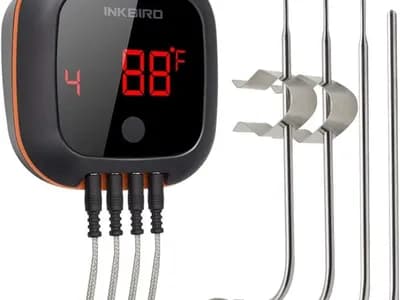
Our final recommendation, after many cooks in Torrevieja: forget about quantity and obsess over smoke quality. Less wood, a better fire, and a probe so you don't open the lid. The meat will thank you in every bite.
Gear featured in this guide
Recipes to get started
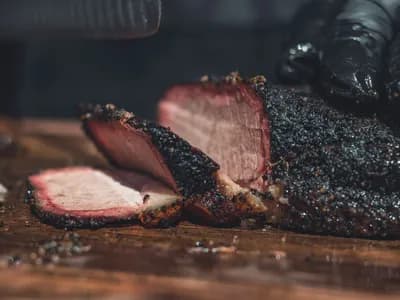
Low-and-slow smoked brisket
The kamado acid test. Ten hours at 110°C, a deep bark, a pink smoke ring and a texture that gives way under the weight of a fork.
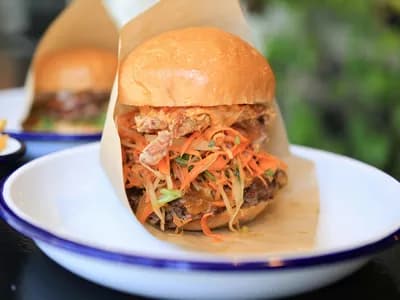
Carolina-style smoked pulled pork
Eight hours of patience, a five-and-a-half-kilo pork shoulder and North-Carolina vinegar — this is what a kamado does better than any other fire.
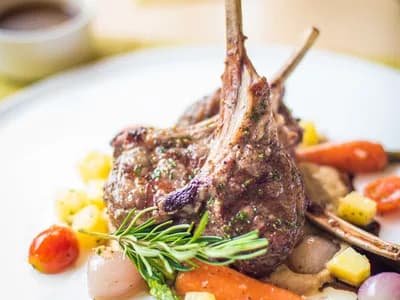
Levante-style smoked leg of lamb
A boneless leg of lamb, marinated in rosemary, lemon and Costa Blanca olive oil, smoked over local almond wood. The kamado paying tribute to the Alicante countryside.
GO DEEPER
Continue with these
- Related guide
What charcoal to use in a kamado (and which to avoid)
Quebracho or holm-oak lump wins; supermarket briquettes and chemical lighter fluid stay out. Here is what to load and why.
- Related guide
How to light a kamado: the step-by-step method
No petrol, no weird tablets and no 45-minute waits. The cone method, airflow control and the mistakes that prevent 80% of the frustration.
- Related guide
Kamado Temperature Control: The Pitmaster's Guide
The dual airflow system, the rookie mistake of overshooting, and why the dome thermometer lies. This is the skill that separates a beginner from a pitmaster.
- Related guide
Minion Method and Snake Method: 12 Hours of Kamado Fire
How to build the charcoal bed to hold 110-120 °C for 8-14 hours without refueling or lifting the lid. The mother technique of low & slow, step by step.
- Recipe to practice
Low-and-slow smoked brisket
The kamado acid test. Ten hours at 110°C, a deep bark, a pink smoke ring and a texture that gives way under the weight of a fork.
- Recipe to practice
Carolina-style smoked pulled pork
Eight hours of patience, a five-and-a-half-kilo pork shoulder and North-Carolina vinegar — this is what a kamado does better than any other fire.
- Recipe to practice
Levante-style smoked leg of lamb
A boneless leg of lamb, marinated in rosemary, lemon and Costa Blanca olive oil, smoked over local almond wood. The kamado paying tribute to the Alicante countryside.
- Editorial comparison
big green egg large vs kamado joe classic iii
The classic kamado matchup: the Big Green Egg Large, the indestructible pioneer with the widest accessory network, again
- Glossary term
Apple
Mild, fruity fruitwood smoke; ideal for poultry, cured pork and fish.
- Glossary term
Oak
Mediterranean hardwood with balanced, long-burning smoke; the European brisket and beef standard.
- Glossary term
Probe
Pin or clip thermal sensor that measures food internal temperature or chamber air temperature.
Frequently asked questions
Why does my smoked meat taste bitter?
It's almost always creosote: a residue from the white, dirty smoke a badly built fire throws off. Three things cause it: choking the vents too hard and smothering the fire, using wet wood or too many chunks, or loading the meat while the charcoal still smokes black. Wait for clean coals and fine bluish smoke before you start and the bitterness disappears.
What exactly is thin blue smoke?
It's the smoke of clean combustion: a very fine, almost transparent wisp with a bluish cast, best seen backlit or against a dark background. It smells sweet, like toasted wood, not burnt. It's the smoke that perfumes meat without souring it, the opposite of thick white smoke. If your chimney is throwing that fine blue wisp, you're spot on.
Should you soak smoking wood before using it?
No, it's a myth worth dropping. Soaked wood doesn't smoke more: it just makes steam as it dries out inside the kamado, and that steam drags dirty smoke that lays down creosote. Dry wood lights sooner, burns clean and gives the fine bluish smoke you want. Keep your chunks somewhere dry and use them as they are, unsoaked.
How many wood chunks should I use?
Fewer than you think. For a large cut, three or four pieces the size of a big walnut are enough; spread them out rather than piling them. Throw in ten chunks at once and you smother the fire with all that unburnt wood, and the meat comes out bitter. Remember: meat absorbs smoke mostly in the first few hours, so excess only adds creosote.
Does clean smoke depend on the charcoal or the wood?
On both, but the charcoal leads. Good lump charcoal burns cleaner than cheap briquettes with binders, which throw dirty smoke at start-up. Over that well-lit, grey charcoal, dry and well-dosed wood gives fine smoke. If you start from dirty or smothered coals, not even the best wood in the world will prevent creosote. Clean coals first, always.