TÉCNICA
Smoking woods for a kamado: which wood for which food
Olive, holm oak, apple or hickory: which aroma each cut asks for, how many chunks go into a sealed ceramic, when to add them and why soaking the wood does not help.
Quick answer
In a kamado you smoke with hardwood chunks buried in the charcoal, not with chips: one or two chunks for a short cook and four or five, around 200 grams, for a twelve-hour low and slow. Fruit woods, olive and citrus for pork, poultry and fish; holm oak and hickory for beef. The wood is not soaked.
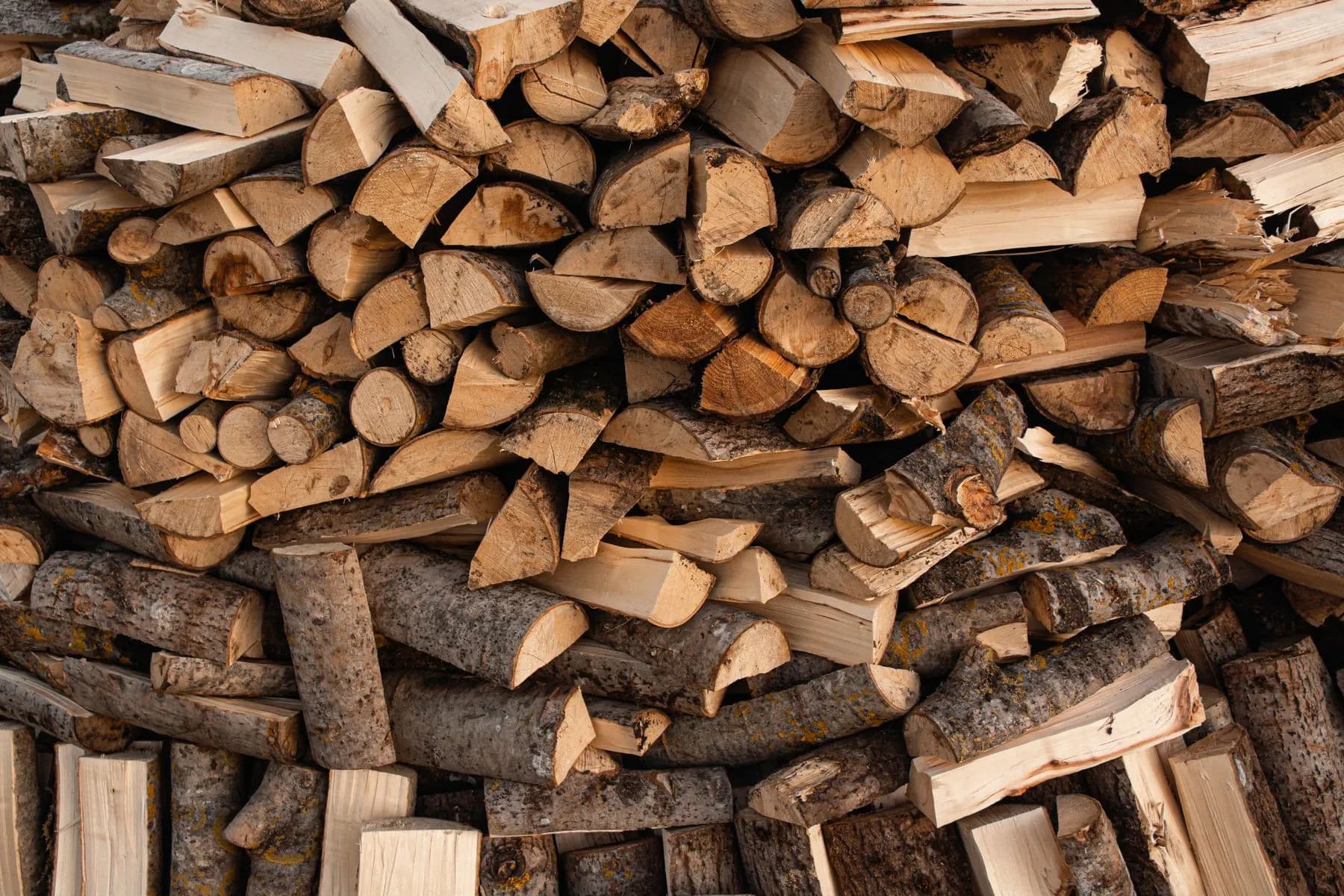
The question always arrives in this order: first, which charcoal is best, and then, what wood do I add. They are two separate decisions and it pays not to mix them. Charcoal is the fuel, and that gets settled in what charcoal to use in a kamado; smoking wood is a seasoning that goes in by the gram, not by the kilo. A full basket is five or six kilos of charcoal; the wood for a long session, around two hundred grams. That ratio explains almost every mistake made with smoke.
The other half of the problem is that nearly all the available information comes from American barbecue: steel, strong draught, smoke that goes in one end and out of a chimney. A sealed ceramic works the other way round. Air barely circulates, the smoke recirculates inside the chamber, and what in a steel drum would be a reasonable dose turns here into an ashtray flavour that there is then no way to air out.
What gets decided here is the concrete part: which species goes with which food and which one ruins it, what you can actually find in Spain, what format to buy it in, how much to use and when. With doses in grams for a Classic- or Large-sized kamado, and with the list of woods that must never go in.
| Wood | Intensity | Goes well with | Avoid it on | Dose in a sealed kamado |
|---|---|---|---|---|
| Olive (local) | Medium | Lamb, pork, vegetables, bread | Delicate fish, and never green | 2-3 chunks over 4 h; 4 over 12 h |
| Holm oak and oak (local) | Medium | Beef, brisket, rib rack | Short poultry cooks | 3-4 chunks over 12 h |
| Vine prunings (local) | Mild-medium, fleeting | Chuletillas, gambas, vegetables | Low & slow: gone in minutes | A handful, short cook |
| Orange or lemon (Levante) | Mild, citrus | Poultry, fish, lean pork | Long brisket: falls short | 2-3 chunks over 3-4 h |
| Almond (Levante) | Mild-medium | Poultry, pork, bread and pizza | Very fatty 12-hour cuts | 2-3 chunks over 4 h |
| Apple and cherry (imported) | Mild and sweet | Pork, poultry, ribs, cheese | Long beef cooks: barely registers | 3-4 chunks over a long session |
| Hickory and pecan (imported) | Strong | Ribs, brisket, panceta (pork belly) | Fish and delicate poultry | 1-2 chunks, blended with fruit wood |
| Mesquite (imported) | Very strong | Fast beef sear, tex-mex | Poultry, fish and anything low & slow | Chips only, by the spoonful |
Charcoal heats, wood perfumes: two separate purchases
A kamado does not cook with logs as fuel. The ceramic regulates the fire by choking the air, and a log needs precisely the opposite: plenty of oxygen to burn clean. Load firewood into the basket and you get runaway temperature while it flames and dirty smoke the moment it is starved. The heat comes from lump charcoal; smoking wood goes in as chunks, inside that charcoal, and its job is aromatic, not thermal.
It is worth knowing that the charcoal already contributes something on its own. Holm-oak or quebracho lump is not an odourless fuel: it leaves a toasted background that on a short, fierce cook — a chuletón (thick-cut rib steak) at four minutes a side, some vegetables straight over the coals — is usually enough. On those cooks the surface of the food dries out immediately and contact time with the smoke is minimal, so adding wood changes little and gets in the way quite a lot. Wood starts to make sense from the one-hour mark and is essential beyond four.
Nor does it heat to any appreciable degree, though there is one effect that throws people. When a chunk catches, the dome climbs by 5 to 15 °C for a few minutes and then goes back where it was. That is normal, and you let it pass. The classic error is to correct with the vents and end up short of air exactly when the wood is beginning to break down, which is the precise recipe for bitter smoke.
One practical consequence follows from that separation: getting the charcoal right and getting the wood right are independent purchases. An excellent bag will not fix damp chunks from a recent pruning, and impeccable apple chunks will not rescue a charcoal full of binders that is going to put its own flavours into the chamber. Both have to be right.
What decides the aroma: wood temperature, resin and minutes of contact
The smoke that perfumes and the smoke that turns bitter come from the same wood. What changes is the temperature at which it breaks down and how much oxygen it has. Above roughly 300 °C the lignin releases the phenolic compounds — guaiacol, syringol — responsible for the toasted-vanilla and clove aroma of smoking. Below 250 °C and with the air choked off, what comes out is tar and unburnt particles: dense white smoke, creosote and a bitterness that never leaves. In a steel smoker that dirty smoke escapes up the chimney; in a sealed ceramic it settles on the meat.
Resin is the second factor, the one that rules out entire families. Conifers carry terpenes and rosin that burn with a dirty flame and leave a turpentine aftertaste impossible to disguise. Moisture is the third: well-seasoned wood sits around 15-20 % moisture and a recent pruning can be at 40-50 %. That water evaporates before the wood pyrolyses, cools the area and stretches out the white-smoke phase right at the start, which is when the meat is most receptive.
The third factor is not in the wood but in the food. Smoke fixes onto cold, damp surfaces; as the bark dries and the exterior passes roughly 60-70 °C, deposition falls off a cliff. In practice, a cut takes most of its smoke in the first two or three hours. Which is why there is no point opening the lid at hour eight of a brisket to add chunks: you lose stability and add bitterness to a bark that no longer absorbs.
And a warning: the pink ring under the bark does not measure flavour, it only tells you there were combustion gases and a damp surface at low temperature. The detail of why smoke turns bitter and how to recognise the blue wisp is in bitter smoke versus clean smoke.
Mild, medium and strong: pairing by fat, thickness and hours of cooking
The usual three-tier split works as a starting point. Mild: apple, cherry, peach, orange, lemon, almond, alder and beech, with a sweet, discreet smoke. Medium: holm oak, oak, olive, maple and pecan, with more body and that toasted edge that stands up to big cuts. Strong: hickory, with its hint of bacon, and mesquite, which plays in another league of aggression altogether. None is better than another; they simply are not for the same job.
The real pairing, though, depends less on the type of meat than on three variables: how much fat the cut has, how thick it is and how many hours it will be exposed. The fattier, the bigger and the longer the cook, the more strong wood it tolerates. A five-kilo brisket over twelve hours eats hickory without breaking a sweat; that same hickory on a chicken of an hour and a half leaves the skin with a metallic bitterness, because skin is thin, fatty and absorbs very fast. It works the other way round too: a brisket smoked with apple alone comes out correct but flat, because fruit wood has no body for that much mass.
The working rule that serves best: choose intensity by duration. Up to two hours, mild. From two to five hours, mild or medium. Beyond six hours and with a fatty cut, medium or strong. Fish and vegetables always stay on the mild tier, with the exception of olive, which pairs well with lamb and with roasted vegetables because it is a Mediterranean wood with a short smoke.
Blending is fine, but with judgement: two species at most and in unequal proportion, along the lines of three fruit chunks to one of hickory. Three or four different woods in the same session do not produce complexity, they produce an indistinct smoke in which you no longer recognise anything. The table further down sums up what each species asks for and what it ruins, with a rough dose for a sealed chamber.
What you actually buy in Spain: olive, holm oak, vine prunings, orange and almond
Olive is the local wood par excellence and probably the best opening purchase if you cook lamb, pork or vegetables. It is medium in intensity, with a smoke slightly sweeter than oak, and it is made here in chunk form — Smokey Olive Wood produces it in Spain — as well as being sold loose in any olive-growing area. Its only problem is moisture: green olive gives off a great deal of water and produces white smoke for far too long, so it needs to be properly seasoned.
Holm oak and oak are the serious base for beef. It is the same species that gives the best charcoal, and as a smoking wood it behaves like American oak: body, no sweetness and plenty of tolerance for big cuts. Used barrel oak adds a winey background on top of that, which works on a rib rack. Vine prunings (sarmiento) are a case apart: they burn very fast and in a sealed ceramic they are gone in minutes, so they suit chuletillas (small lamb cutlets) or gambas (prawns) straight over the coals, but make no sense at all in a long session. It is also worth knowing which vineyard they come from, because freshly cut prunings can carry residues of copper and sulphur treatments.
Two underrated woods come out of the Levante. Orange and lemon give a mild smoke with a citrus background that goes very well with poultry and fish, though you almost always have to make the chunks yourself from prunings. Almond sits halfway between fruit wood and oak and is excellent with chicken, pork and bread.
The imports — hickory, pecan, mesquite, maple — arrive in kilo-and-a-half chunk bags from barbecue brands and are easy to find alongside the rest of the charcoal and smoking woods. Whatever you buy, the quality test is the same: the chunk should sound dry when you knock it, feel light for its size and show cracks at the ends. If it smells damp or has mould on it, out.
Chunks, chips, pellets or sawdust: what format a sealed ceramic asks for
The right format for a kamado is the chunk: a piece of four to eight centimetres weighing between 40 and 60 grams. Buried in the charcoal, a chunk does not burn with a flame; it heats through in layers and gives off smoke gradually for an hour or two. That is what a sealed chamber with little draught needs: a steady thread of smoke, not a cloud.
Chips are the format of the gas barbecue and of short cooks in the open. In a kamado they have two problems: they are almost all surface, so they are spent in ten or twenty minutes, and loose on the embers they flare instead of smoking. If they are all you have, wrap them in a foil parcel with four or five holes and set it next to the lit spot: they smoulder in an orderly way rather than going up all at once. For an eight-hour cook you would need so many parcels that buying chunks works out better.
Pellets are designed for the auger of a pellet grill and in a charcoal basket they burn far too fast, but they have one very specific use: loaded into a perforated tube or a maze generator, they produce smoke for hours with the kamado switched off. The same goes for sawdust, the cold-smoking format. One honest limit: you cannot cold-smoke in a lit kamado. Any ember leaves the chamber well above the 30 °C that a cheese or a cured salmon asks for; that is done with the unit off, with a generator, and on the Mediterranean coast it is only viable in the cold months.
Cedar or alder planks are a different technique, not a smoking wood: the board is soaked, set under the fish and toasted, contributing aroma and steam. That the cedar plank exists does not mean you can throw cedar on the fire: in the basket, that same wood is pure resin.
How much wood and when to add it: from a short sear to a twelve-hour low & slow
These are the doses that work in a Classic or Large kamado, with a full basket and the vents governing the temperature. Short, fierce cook, twenty to forty minutes — chuletón, wings, vegetables: one chunk, right up against the lit spot so it smokes from minute ten. Medium cook, three to four hours at 150-160 °C — ribs, whole chicken: two or three chunks, around 100-150 grams. Low & slow of eight to twelve hours at 110-120 °C: four or five chunks, between 200 and 250 grams. No more. A steel smoker with draught asks for double; a sealed ceramic does not.
Placement matters as much as quantity. The chunks go buried at different depths, not piled on top of one another: one next to the lighting point and the rest spread through the basket, so they catch in sequence as the ember front advances. If they all sit on the surface they catch at once in the first half hour, when the meat is cold and absorbing like a sponge, and the smoke comes out unbalanced. If you are working with the Minion or Snake method, place the chunks along the fire's intended path.
When you put the meat in separates a clean smoke from a bitter one. After lighting, the chamber goes through a phase of dense white smoke lasting ten to twenty minutes. You wait. When the plume turns almost transparent, with that barely visible blue thread, the meat goes in. On the Big Green Egg Large at home, four holm-oak chunks of around 50 grams spread through the basket give smoke for the first three hours of a brisket; after that the meat takes no more, and opening up to add wood only costs temperature.
Plan the smoke before you light. In a ceramic, every lid opening costs between fifteen and thirty minutes of real recovery and a spike of oxygen that sends the embers up. The wood goes in when you build the fire, not as you go.
Do you have to soak the wood? What actually happens when you wet it
No. And it is not a matter of opinion, it is elementary physics. Wood is a porous but closed material: half an hour in a bucket of water wets the first few millimetres and little else. Even if you left it a whole day, the water would barely reach the heart of the chunk. What you get is a piece of dry wood with a soaked outer layer.
That layer does three things, all of them bad. First, it steals energy: evaporating water consumes a great deal of heat, so the wet chunk cools the bed of embers around it and delays the moment the wood really starts to break down. Second, what comes off during those minutes is not aromatic smoke, it is steam and white smoke loaded with particles, precisely the kind that turns bitter and that in a sealed chamber stays inside. Third, that steam condenses on the cold surface of the meat, which is the part that most greedily fixes whatever reaches it.
In a kamado the effect is multiplied because the temperature is governed by vents. The dome drops a few degrees when wet wood goes in, the instinct is to open up the air, and when the water finishes evaporating you find yourself with more oxygen than you wanted and the embers running away. A lot of trouble for no gain. The belief comes from gas barbecues, where chips are soaked inside a little metal box so they do not burst into flame; there it has a debatable logic, but it is a problem a kamado does not have.
If what you want is for the wood to last longer, the solution is geometric, not aquatic: use a bigger chunk, bury it deeper in the charcoal and keep it away from the lighting point. A well-buried seven-centimetre chunk smokes twice as long as two small chunks on the surface. And the wood, always seasoned and dry: between 15 and 20 % moisture is where it gives its best smoke.
Woods that never go in: resinous, treated and prunings of doubtful origin
Conifers are ruled out as a block: pine, fir, cypress, larch, cedar and Spanish fir. Their resin burns with a dirty flame, deposits soot and leaves a turpentine flavour that ruins the food. Eucalyptus, so abundant across half of Spain, has the same problem by another route: its essential oils give a medicinal smoke that goes with nothing. And two are outright dangerous: oleander, common on Mediterranean central reservations and in gardens, whose glycosides are toxic, and yew. Neither goes anywhere near food.
Out too goes anything that has been through a factory. Pallets carry treatments and, frequently, residues of whatever was spilled on them; chipboard, MDF and plywood are glued with urea-formaldehyde resins; painted, varnished or pressure-treated wood — the greenish kind — contains metal salts. Railway sleepers are impregnated with creosote, precisely. And wood picked up on the beach accumulates salts that release chlorinated compounds when burnt. None of this is textbook exaggeration: it is the reason smoking wood is sold as a food product.
With your own prunings the criterion is traceability. An olive, an almond or an orange tree from the garden is excellent wood as long as you know it has not been treated with pesticides shortly before cutting and you season it for six to twelve months in the shade, well ventilated. Discard wood with mould, wood that smells damp or has soft sapwood, and any piece carrying fungus: that does not get burnt, it gets thrown away.
The reason you have to be especially strict with ceramic is the memory of the material. Porous ceramic and the felt gasket absorb the heavy compounds of a dirty smoke and release them for weeks, cook after cook. A burn-off at 260-300 °C with the chamber empty helps clean the surface, but it is far cheaper not to put the wrong wood in than to fix the consequences.
To sum up what matters: wood is seasoning and charcoal is fuel, so it gets measured in grams. One chunk for a short cook, two or three for three or four hours and four or five — around 200 grams — for a full low & slow, always buried at different depths and put in before lighting. Choose the intensity by hours and by fat: fruit woods, citrus and olive for poultry, fish, vegetables and pork; holm oak, oak and hickory for beef and for cuts that run many hours.
The rest is two firm noes. Do not soak it, because all it generates is steam and white smoke. And no conifers, no treated timber and no prunings of unknown origin, because ceramic keeps whatever you give it. With that you can take on a pulled pork knowing exactly what is going into the basket and why.
Gear featured in this guide
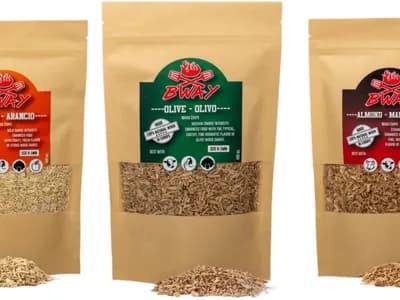
BWAY Legna Tris: olive, orange and almond smoking chips (3×400 ml)
€12
Weber Whisky Barrel Smoking Wood Chips, 700 g bag
€8
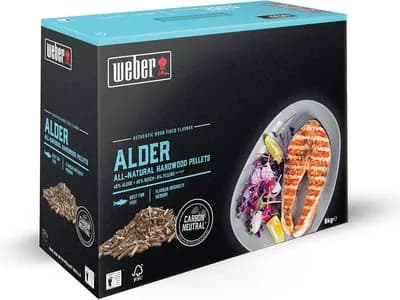
Weber Alder Wood Pellets 8 kg — the mildest smoke for fish
€25
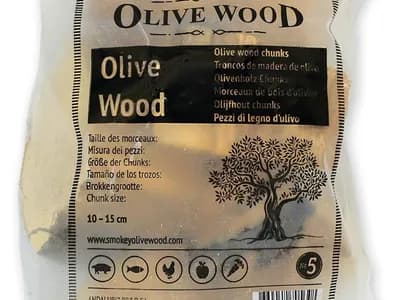
Smokey Olive Wood Olive Wood Chunks 1.5 kg
€18
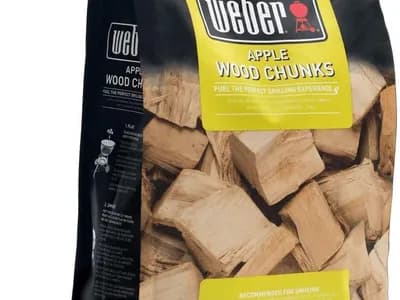
Weber Apple Wood Smoking Chunks 1.5 kg
€9
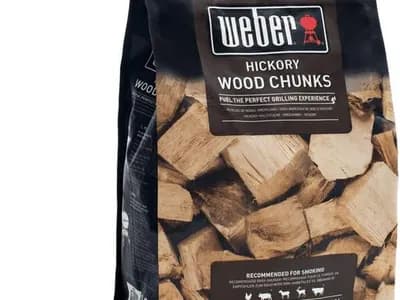
Weber Hickory Smoking Chunks 1.5 kg
€12
Recipes to get started
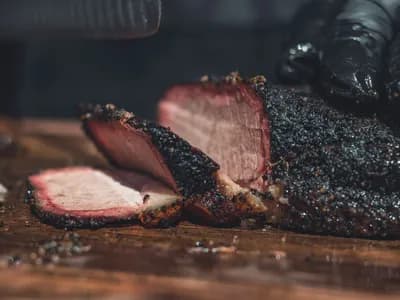
Low-and-slow smoked brisket
The kamado acid test. Ten hours at 110°C, a deep bark, a pink smoke ring and a texture that gives way under the weight of a fork.
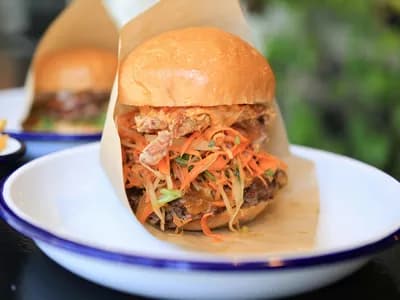
Carolina-style smoked pulled pork
Eight hours of patience, a five-and-a-half-kilo pork shoulder and North-Carolina vinegar — this is what a kamado does better than any other fire.
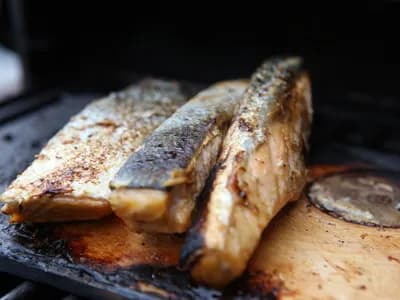
Guajillo-cured smoked salmon, low indirect
A 900 g salmon fillet, 24 hours dry-cured in Maldon salt, brown sugar, ground guajillo and dill. Smoked at 130°C with apple and cherry. Silky texture and a spicy crust.
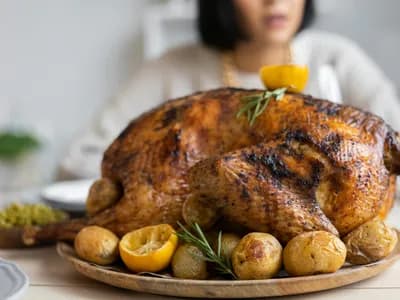
Smoked Christmas turkey on the kamado
The recipe that retires the family oven on December 25th: 12-hour brine, butter under the skin, apple wood smoke and a whole turkey at 120 °C — tender inside, deep gold outside, properly smoked.
GO DEEPER
Continue with these
- Related guide
What charcoal to use in a kamado (and which to avoid)
Quebracho or holm-oak lump wins; supermarket briquettes and chemical lighter fluid stay out. Here is what to load and why.
- Related guide
Bitter smoke in a kamado: creosote vs thin blue smoke
Why smoking sometimes leaves meat bitter, and how to get that clean, bluish wisp of smoke that perfumes instead of ruining. The truth about creosote.
- Related guide
Minion Method and Snake Method: 12 Hours of Kamado Fire
How to build the charcoal bed to hold 110-120 °C for 8-14 hours without refueling or lifting the lid. The mother technique of low & slow, step by step.
- Recipe to practice
Low-and-slow smoked brisket
The kamado acid test. Ten hours at 110°C, a deep bark, a pink smoke ring and a texture that gives way under the weight of a fork.
- Recipe to practice
Carolina-style smoked pulled pork
Eight hours of patience, a five-and-a-half-kilo pork shoulder and North-Carolina vinegar — this is what a kamado does better than any other fire.
- Recipe to practice
Guajillo-cured smoked salmon, low indirect
A 900 g salmon fillet, 24 hours dry-cured in Maldon salt, brown sugar, ground guajillo and dill. Smoked at 130°C with apple and cherry. Silky texture and a spicy crust.
- Editorial comparison
big green egg large vs kamado joe classic iii
The classic kamado matchup: the Big Green Egg Large, the indestructible pioneer with the widest accessory network, again
- Glossary term
Gasket
Fibre band that seals the join between the ceramic base and lid, ensuring the kamado is airtight.
- Glossary term
Felt gasket
Untreated wool-fibre gasket; cheap, effective at low temperatures, burns above 320 °C.
- Glossary term
Low & slow
Cooking at low temperature (95-130 °C) for many hours to tenderise tough cuts and develop deep smoke.
Frequently asked questions
How many wood chunks should go into a kamado?
For a short cook at high temperature, one. For three or four hours, two or three. For a low & slow of eight to twelve hours, four or five chunks, which is around 200 grams. A sealed ceramic recirculates the smoke with very little air, so it asks for between a third and half of what you would use in a steel smoker with a chimney. When in doubt, go short: excess smoke cannot be aired out afterwards.
Can I smoke with prunings from my own olive or orange tree?
Yes, as long as you know which tree it came from and you season it. Cut chunks of five to seven centimetres, strip off any loose bark and leave them in the shade, well ventilated, for six to twelve months, until they sound dry when knocked and show cracks at the ends. Discard wood with mould, wood that smells damp and any pruning from a plot treated with pesticides shortly before cutting.
Why does the smoke taste bitter if I put in very little wood?
It is almost never quantity, it is combustion. A chunk that stews without enough oxygen gives off tar instead of aromatic compounds. The three usual causes are putting the meat in during the initial white-smoke phase, closing the vents right down to bring the temperature back while the wood is catching, and using green wood. Wait ten or twenty minutes for the blue thread and do not choke the air intake.
Which wood do I use for chicken or a whole turkey?
Fruit or citrus: apple, cherry, orange or almond, one or two chunks and nothing more. Poultry skin is thin and fatty, it absorbs smoke very quickly, and a cook of two to four hours concentrates everything you throw at it; with hickory or mesquite it comes out bitter. On the Christmas smoked turkey cherry also lends the skin a coppery tone that apple does not give.
I can only find chips instead of chunks — will they do?
They will do for short cooks. In a sealed ceramic, chips are spent in ten or twenty minutes and, loose on the embers, they flare rather than smoke. Wrap them in a foil parcel with four or five holes and set it next to the lit spot: that way they smoulder gradually. For an eight-hour session you would need so many parcels that buying chunks pays off.
Can you cold-smoke cheese or salmon in a kamado?
Not with the kamado lit. Cold smoking works below 30 °C and any ember leaves the chamber well above that. It is done with the unit switched off and a maze generator loaded with sawdust, which produces smoke for hours with almost no heat. Even so, on the Alicante coast it is only viable at night and in the cold months: in summer the ambient temperature alone melts the cheese.