Recipe · Indirect · Easy
Cornbread in an Iron Skillet on the Kamado, with Brown Butter
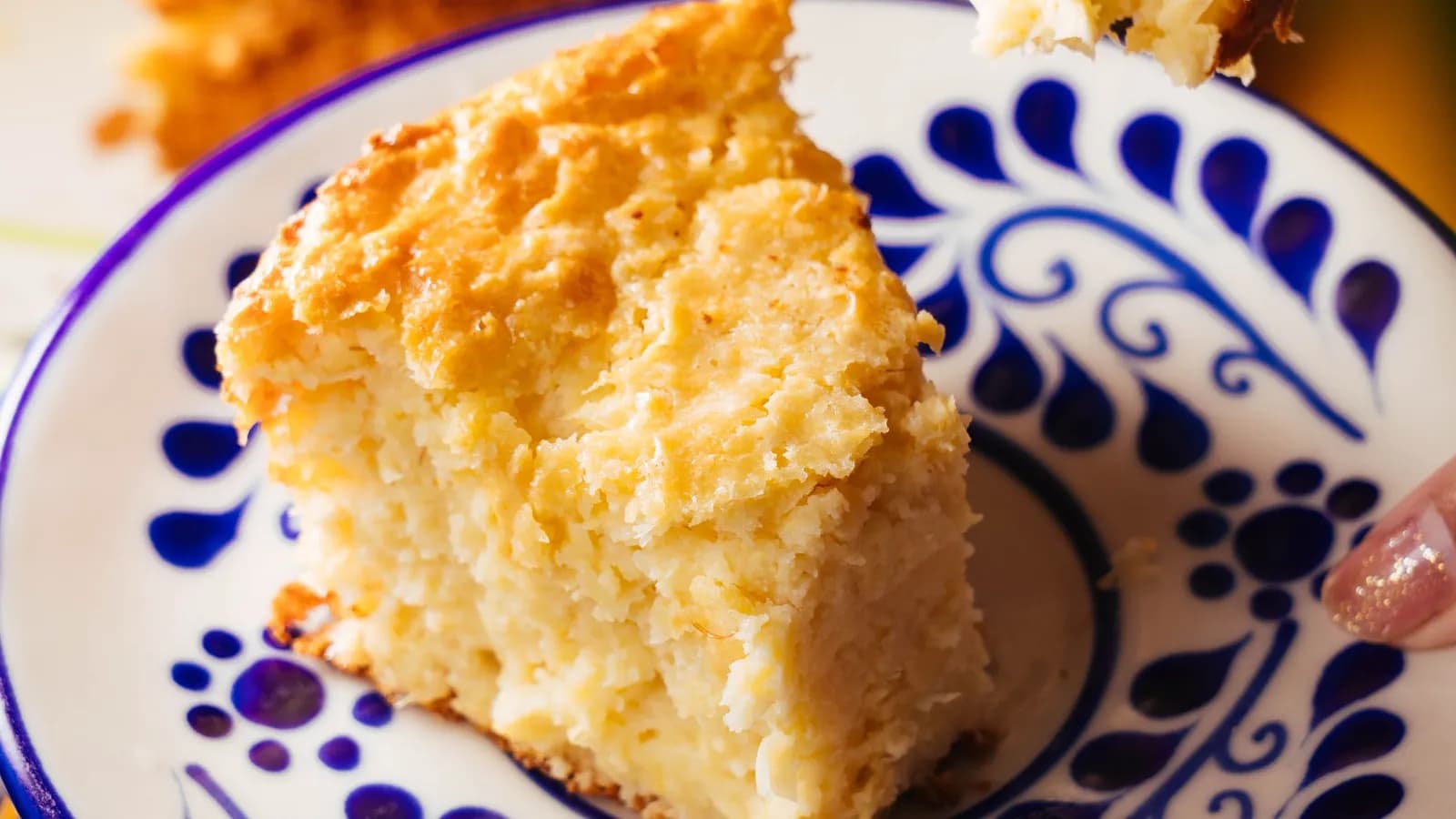
Cornbread is a spoon-and-knife cornmeal bread: tender crumb, crunchy crust and brown butter. Here it bakes in an iron skillet preheated inside the kamado, indirect at about 200 °C.
Quick answer
With the deflector in (indirect) and the chamber at about 200 °C, heat a 28 cm iron skillet for 15-20 min. Mix cornmeal, wheat flour, buttermilk, eggs and brown butter without overmixing, pour it over sizzling butter and bake with the lid closed for 20-25 min, until golden and a toothpick comes out dry.
One big step at a time, screen kept on and built-in timers.
- Prep
- 20 min
- Cook
- 45 min
- Servings
- 8 servings
- Temperature
- 200 °C
What time do you want to eat?
Pick a time and we'll tell you when to start.
12:15
Start the prep
12:35
Light the kamado
13:05
Onto the kamado
14:00
Serve
Estimate: it includes lighting and settling the kamado plus a margin for large cuts. If the recipe asks you to marinate or salt ahead, add that time.
Fire setupIndirect
- Dome
- 200 °C
- Deflector
- Yes
- Grate
- Standard height
- Bottom vent
- A crack
- Top vent
- Half open
- Fuel
- Charcoal, full firebox
- Setup
- 28 cm iron skillet and infrared thermometer
Ingredients
- fine cornmeal (not pre-cooked polenta)200 g
- plain wheat flour120 g
- baking powder2 tsp
- bicarbonate of soda0.5 tsp
- fine salt1 tsp
- sugar (optional)2 tbsp
- buttermilk, or 250 g plain yoghurt loosened with 100 ml milk350 ml
- medium eggs, at room temperature2
- unsalted butter, for browning90 g
Allergens
- Gluten
- Eggs
- Milk
Based on the recipe's ingredients. Always check the label of every product you buy.
The gear for this recipe
 De Buyer 5130.28: 28 cm iron skillet with stainless handleThis is the pan for the recipe: a 28 cm iron pan 2.5-3 mm thick that preheats on the grate so the batter lands on metal at about 200 °C and the crust turns out crisp. The de Buyer has a stainless steel handle and its listing marks it as oven safe. Honest drawback: it weighs about 2 kg, is hand-wash only, and the handle also reaches chamber temperature, so it has to come out with gloves.
 Inkbird INK-IFT01: surface infrared thermometer up to 550 °CIt tells you whether the iron is ready before the batter goes in, without touching it. The Inkbird IFT01 reads from -50 to 550 °C, with a 12:1 distance-to-spot ratio, accuracy of 2% or 2 °C and adjustable emissivity from 0.1 to 1.0. Drawback: it reads surfaces only, never internal temperature, and bright metal reflects and gives low readings, so adjust the emissivity and take the figure as a guide.
 Kamado Bono Media 51 cmThe recipe needs a kamado that holds a steady 200 °C with the deflector in for close to an hour, with room for a 28 cm skillet and its handle. The Kamado Bono Media measures 51 cm according to its listing and is sold as a bundle with a deflector included, so it can bake indirect from day one. Honest drawback: it weighs about 90 kg and, with the skillet’s long handle, it is worth testing the fit cold before lighting.
 Jealous Devil 100% White Quebracho lump charcoal 15.8 kgA good hour of kamado at a steady 200 °C calls for charcoal that does not burn away quickly or fill the firebox with ash. Jealous Devil is 100% quebracho blanco lump charcoal, a very dense wood, and its listing credits it with little ash (around 3%) and a neutral aroma that does not get into the bread. Drawback: it tends to run hotter than supermarket charcoal, so creep up to 200 °C slowly; whatever has not burned goes out when you close the vents and can be reused.
Method
- 01
Light and set the deflector
Fill the firebox with charcoal and light it. When the coals catch, fit the deflector and the grate, and put the empty iron skillet in the centre. Bring the chamber to about 200 °C with the bottom vent open about two fingers and the top vent at half. Let it settle 15-20 minutes with the lid closed so the iron heats right through.
- 02
Brown the butter
While the kamado settles, melt the 90 g of butter in a small pan over medium heat, stirring, until it stops foaming and smells of hazelnut, about 5 minutes. Take it off the heat at once, because it goes from browned to burnt in seconds. Set 2 tablespoons aside in a separate bowl for the skillet and let the rest cool a little.
- 03
Mix the dry ingredients
In a large bowl combine the cornmeal, wheat flour, baking powder, bicarbonate, salt and sugar. Whisk to aerate and spread the raising agents evenly. Make a well in the centre.
- 04
Mix the wet and combine
In another bowl whisk the buttermilk with the eggs and, still whisking, add the cooled brown butter (the part you did not set aside). Pour it all into the well of the dry mix and fold with a spatula just until no dry pockets remain, ten or twelve strokes. The batter is thick but pourable and slightly uneven. Work it more and the crumb turns rubbery. Rest it for 5 minutes while the iron finishes heating.
- 05
Burp the lid and check the iron
Burp the lid: lift it about 5 cm, wait about 5 seconds, then open fully with your face turned away. Straight away, aim the infrared thermometer at the base of the skillet without taking it off the grate. Look for a reading around 190-220 °C; it is indicative, because bright metal reflects and reads low. If it reads much lower, close the lid, wait another 5 minutes and burp again before reopening.
- 06
Pour the batter into the hot skillet
With gloves on, take the skillet out and set it on a heat-proof board, since the handle is at chamber temperature, and close the kamado lid so you do not lose heat. Add the 2 tablespoons of reserved butter, swirl to coat the base and sides, and pour in the batter in one go: it should sizzle. Burp the lid again and return the skillet to the centre of the grate.
- 07
Bake with the lid closed
Close the lid and check that the chamber returns to 200 °C, adjusting the vents little by little. Bake 20-25 minutes without opening in the first 15. It is done when the edges pull away, the surface is golden and a toothpick comes out dry from the centre. If the top browns too fast, close the top vent slightly.
- 08
Rest and serve
Open with burping and gloves, take out the skillet and leave it 5 minutes on a board. Run a knife round the edge and turn out onto a rack, or serve straight from the skillet. Close both vents fully to put out the coals. Cut into wedges and serve warm, with butter if you like.
About this recipe
Cornbread is the cornmeal bread of the American South: a quick batter, no kneading and no proving, with a tender, slightly sandy crumb and the golden, crunchy crust that only a very hot iron skillet gives. It goes with ribs, pulled pork, chilli or a good stew, and in autumn and winter it is one of the most rewarding things to bake in a kamado. This version uses cornmeal, buttermilk (or yoghurt loosened with milk) and brown butter, which adds the hazelnut depth that sets it apart from any ordinary corn cake.
An iron skillet that goes in already hot
The crust of a cornbread is decided before baking: the batter has to land on metal that is already at 200 °C and on a layer of sizzling butter. A carbon steel pan like the 28 cm de Buyer does that job, with a thickness of 2.5 to 3 mm, a stainless steel handle and a listing that says oven safe. It stores heat well and copes easily with the kamado chamber, though it has two honest drawbacks: it weighs about 2 kg and, if new, needs seasoning with oil before first use, and the handle also reaches chamber temperature, so it is always handled with gloves. With its handle it is also a good deal longer than 28 cm: before lighting, check that it fits on the grate with the lid closed. For more on how iron behaves inside the ceramic, see the guide to cast iron and dutch ovens on the kamado.
Indirect at 200 °C with the deflector
This is a bread, not a roast: what you want is enveloping, even heat, not coals underneath. So it goes indirect, with the deflector between the coals and the grate and the chamber settled at about 200 °C. If the pan sat over direct coals, the base would toast long before the centre set. That choice of set-up is exactly what separates an evenly set loaf from one burnt underneath. Settling takes time: temperature control is done with the bottom intake and the top outlet, and it is better to creep up to 200 °C than to overshoot and come back, because the ceramic is slow to cool.
Brown butter, buttermilk and cornmeal
Brown butter is made in a small pan over medium heat until it stops foaming and smells of nuts, about five minutes. Split it in two: most goes into the batter and a spoonful or two stays back to grease the hot skillet. Buttermilk is acidic and reacts with the bicarbonate for a light crumb; in Spain it turns up now and then in big supermarkets, and if not, plain yoghurt loosened with a little milk does almost the same. As for the flour, use fine cornmeal (not pre-cooked polenta, which turns too sandy): the finer it is, the more tender the crumb. Mixed with some wheat flour, the batter holds together and does not crumble when cut.
How to tell it is done
At 200 °C, a 28 cm skillet needs 20 to 25 minutes. It is ready when the edges pull away from the pan, the surface is golden and a toothpick comes out of the centre dry. Do not open the lid in the first 15 minutes: the heat you lose delays the rise and the centre can sink. When it is done, let the cornbread rest 5 minutes in the pan and turn it out onto a rack. If you want another seasonal corn side, see the grilled elote on the kamado.
In 30 seconds
Indirect kamado with the deflector at about 200 °C. Heat the iron skillet 15-20 minutes, mix cornmeal, wheat flour, buttermilk, eggs and brown butter without overmixing, pour into the skillet over a spoonful of sizzling butter and bake with the lid closed for 20-25 minutes. Rest 5 minutes and serve warm.
Will it fit your kamado?
Small
33-40 cm · Joe Jr, MiniMax
Won't fit
The 28 cm skillet with handle probably won't fit; use a 20-24 cm one and check doneness earlier.
Medium
46-51 cm · Classic, Large
Tight
The 28 cm skillet with handle probably just fits; check cold that the lid closes.
Large
56-61 cm · Big Joe, XL
Fits
The skillet fits easily, handle included.
What to serve with it
Sides
- Honey butter
- Coleslaw with a sharp vinaigrette
- Wine
- White Chardonnay from Somontano or Penedès
- Beer
- Amber lager
- Alcohol-free
- Unsweetened iced peach tea
Leftovers and storage
- In the fridge
- Best well wrapped at room temperature for 1-2 days; the fridge dries it out faster.
- Freezing
- Freezes well for 2-3 months in wrapped portions; thaw in the fridge and do not refreeze.
- Reheating
- Pan with a knob of butter, 2 min per side, or oven at 160 °C for 5 min wrapped in foil.
- Using them up
- Croutons for soups and salads, or breakfast toast with honey.
Cool and refrigerate within 2 hours. When in doubt, throw it out.
Editor's tips
- The skillet really must go in hot. If the batter does not sizzle when poured, the crust will be pale and stick: better to wait 5 more minutes with the lid closed than to bake on lukewarm iron.
- Do not overmix. Ten or twelve strokes of the spatula are enough; small lumps vanish in the bake, and every extra stroke develops gluten and toughens the crumb.
- If the chamber overshoots 220 °C, the base toasts before the centre sets. Close the bottom vent a little at a time, as the temperature control guide describes, and do not open the lid to cool it: air gets in and the coals flare up.
- Leftover cornbread keeps wrapped at room temperature for a day, and reheated in a pan with a little butter it gets its crust back. Next-day squares toasted in butter are among the best there is.
Gear for this recipe
As an Amazon Associate, mikamado.es earns from qualifying purchases. At no extra cost to you.

De Buyer 5130.28: 28 cm iron skillet with stainless handle
This is the pan for the recipe: a 28 cm iron pan 2.5-3 mm thick that preheats on the grate so the batter lands on metal at about 200 °C and the crust turns out crisp. The de Buyer has a stainless steel handle and its listing marks it as oven safe. Honest drawback: it weighs about 2 kg, is hand-wash only, and the handle also reaches chamber temperature, so it has to come out with gloves.
€44
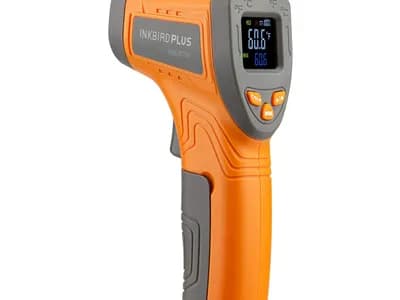
Inkbird INK-IFT01: surface infrared thermometer up to 550 °C
It tells you whether the iron is ready before the batter goes in, without touching it. The Inkbird IFT01 reads from -50 to 550 °C, with a 12:1 distance-to-spot ratio, accuracy of 2% or 2 °C and adjustable emissivity from 0.1 to 1.0. Drawback: it reads surfaces only, never internal temperature, and bright metal reflects and gives low readings, so adjust the emissivity and take the figure as a guide.
€26
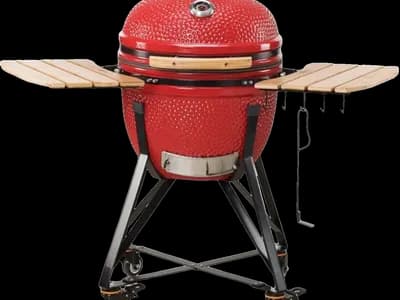
Kamado Bono Media 51 cm
The recipe needs a kamado that holds a steady 200 °C with the deflector in for close to an hour, with room for a 28 cm skillet and its handle. The Kamado Bono Media measures 51 cm according to its listing and is sold as a bundle with a deflector included, so it can bake indirect from day one. Honest drawback: it weighs about 90 kg and, with the skillet’s long handle, it is worth testing the fit cold before lighting.
€785

Jealous Devil 100% White Quebracho lump charcoal 15.8 kg
A good hour of kamado at a steady 200 °C calls for charcoal that does not burn away quickly or fill the firebox with ash. Jealous Devil is 100% quebracho blanco lump charcoal, a very dense wood, and its listing credits it with little ash (around 3%) and a neutral aroma that does not get into the bread. Drawback: it tends to run hotter than supermarket charcoal, so creep up to 200 °C slowly; whatever has not burned goes out when you close the vents and can be reused.
€234
Have you made it?
Tell us how it turned out on your kamado. We review every rating before publishing it.
No published ratings yet. Be the first!
FAQ
What can I use if I cannot find buttermilk?
Plain unsweetened yoghurt loosened with milk works almost the same: 250 g of yoghurt plus 100 ml of milk for every 350 ml of buttermilk. 350 ml of milk with a tablespoon of lemon juice, left for 10 minutes, also works. What matters is the acidity, because it reacts with the bicarbonate so the crumb rises and stays light.
Can it be made in a small kamado?
Yes, but a 28 cm skillet with a long handle rarely fits with the lid closed in a kamado with a small grate (33-40 cm). There a 20-22 cm iron skillet, or one with short loop handles, works better: halve the recipe (with 1 egg) and start testing with a toothpick at 15-18 minutes.
How do I know the cornbread is done?
Three signs: the edges pull away from the skillet, the surface is an even golden and a toothpick pushed into the centre comes out dry or with a few crumbs. If it comes out with wet batter, close the lid and give it 5 more minutes. At 200 °C it usually takes 20 to 25 minutes in a 28 cm skillet.
Does cornbread have sugar?
It depends on the tradition. Southern cornbread usually has very little or none and is eaten as a savoury bread with stews and meats; the northern kind is sweeter. Here it is 2 tablespoons, optional: with them it comes out a little more tender and golden, without them drier and more cornmeal-forward.
Can I make it ahead?
The dry and wet mixes can be prepared separately the day before and combined just before pouring. Baked cornbread keeps a day wrapped at room temperature and reheats for 10 minutes at 180 °C in the kamado itself or in a pan. It freezes well in wrapped portions for up to a month.
More kamado recipes
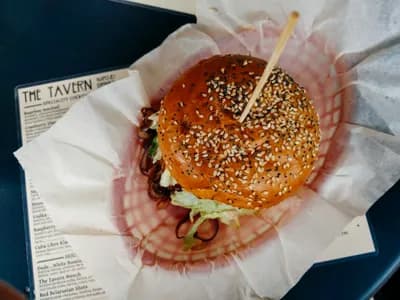
Brioche Burger Buns on the Kamado
Brioche burger buns baked on the kamado: a soft, buttery crumb, an egg-glazed shine and a scatter of sesame. The perfect cushion for your next homemade smash burger.

Valencian coca de recapte on the kamado, escalivada and sardine
A thin oil-dough savoury coca topped with red-pepper and aubergine escalivada and salted sardine strips. Indirect at 250°C on stone, crisp base. No cheese, the Levante way. Serves 6.
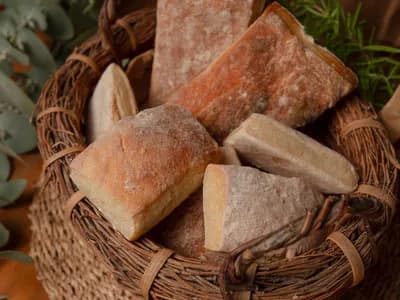
Olive Oil Ciabatta on the Kamado
A very wet poolish dough with a wild, open crumb and a thin, crackly crust. Baked on a cordierite stone with a burst of steam, this ciabatta comes out of the kamado like it left a hearth oven.
KEEP READING
Go deeper on this dish
- Recommended kamado
Kamado Bono Media 51 cm
The recipe needs a kamado that holds a steady 200 °C with the deflector in for close to an hour, with room for a 28 cm skillet and its handle. The Kamado Bono Media measures 51 cm according to its listing and is sold as a bundle with a deflector included, so it can bake indirect from day one. Honest drawback: it weighs about 90 kg and, with the skillet’s long handle, it is worth testing the fit cold before lighting.
- Editorial guide
How to light a kamado: the step-by-step method
No petrol, no weird tablets and no 45-minute waits. The cone method, airflow control and the mistakes that prevent 80% of the frustration.
- Glossary term
Heat deflector
Ceramic plate placed between the coals and the grate to turn direct fire into indirect cooking.
- Related comparison
big green egg large vs kamado joe classic iii
The classic kamado matchup: the Big Green Egg Large, the indestructible pioneer with the widest accessory network, agai…