Recipe · Direct · Easy
Saffron Milk Caps on a Steel Griddle with Garlic and Parsley
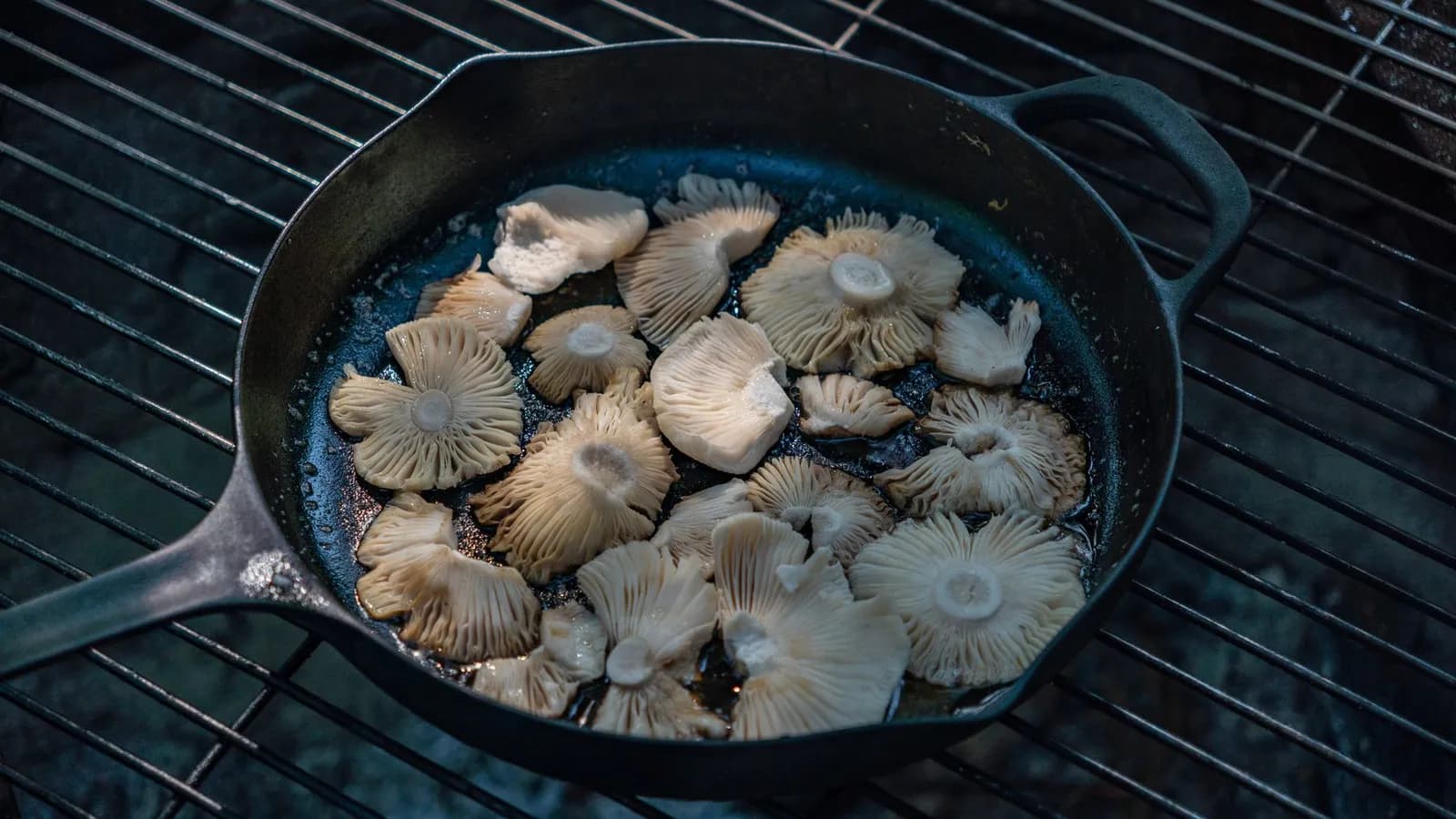
Saffron milk caps hit dry steel at 250 °C: first they give up their water, then they brown. Garlic and parsley go in at the very end, in the last minute. The shortest autumn recipe here, and the easiest to ruin.
Quick answer
Heat a solid griddle plate over direct kamado heat until the surface reads 230-250 °C. Lay the cleaned saffron milk caps on dry, with no oil, gills down for 3 minutes, then flip onto the cap for 3-4 minutes more. Only then add the olive oil, chopped garlic and parsley, for 60 seconds. Flaky salt off the heat.
- Prep
- 20 min
- Cook
- 10 min
- Servings
- 4 servings
- Temperature
- 250 °C
Ingredients
- fresh saffron milk caps, medium and firm700 g
- garlic cloves3 ud
- fresh parsley leaves15 g
- extra virgin olive oil (Arbequina or Picual)4 cda
- flaky sea salt1 cdta
- freshly ground black pepper1 pizca
- diced serrano ham (optional)60 g
- sweet smoked paprika from La Vera (optional)0.5 cdta
- sherry vinegar1 cdta
- dried cayenne chilli, crumbled (optional)1 ud
- lemon, zest only (optional)0.5 ud
- slices of country bread4 ud

Method
- 01
Clean them dry
Brush the soil off the saffron milk caps with a soft brush and wipe the cap with a barely damp cloth. Trim the gritty base of the stem and halve any very large specimens; medium ones go on whole. Never run them under the tap: a mushroom soaks up water like a sponge, and that water is exactly what stops them browning later.
- 02
Chop the garlic mix
Finely chop the garlic cloves and the parsley leaves, then mix them in a bowl with two tablespoons of olive oil, the crumbled cayenne and the paprika. Keep it within reach of the griddle: it all goes on at once in the final minute, and there is no time to chop anything with the mushrooms already on the steel.
- 03
Heat the griddle
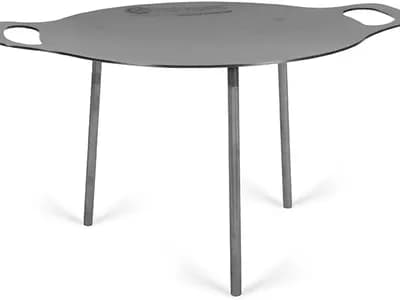
Light the kamado for direct cooking and settle it at 250 °C with the lid closed. Set the solid-steel Petromax Griddle FS38 on the grate — or the Lodge Reversible Grill Griddle 42×24 cm on its smooth side — and leave it for 12-15 minutes. Steel needs that long to load heat through its whole thickness, not just the top face.
- 04
Read the surface
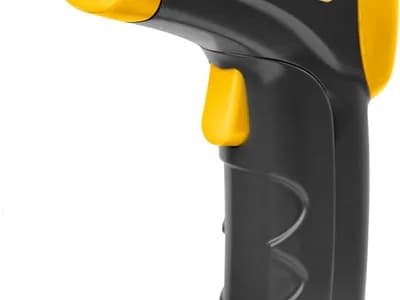
Point the Ooni infrared thermometer at the middle of the plate: it should read 230-250 °C. The kamado's dome and the steel do not move in step, and it is the surface that does the cooking. If it falls short, open the bottom vent a little more and wait three minutes; if it climbs past 270 °C, close the top vent a notch and let it settle.
- 05
First side, gills down
Lay the mushrooms gills down, with no oil and without crowding: leave a finger's width between them. You will hear a steady hiss for 2-3 minutes; that is the water in the gills evaporating against the steel. Do not move them, do not press them down and do not salt them yet. If they do not all fit, work in two batches.
- 06
Flip onto the cap
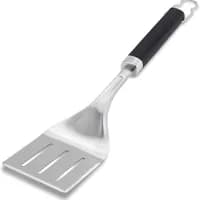
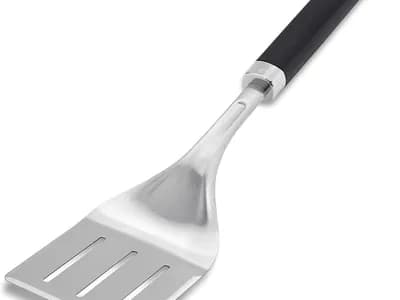
Using the Weber Precision spatula, turn each mushroom and leave them 3-4 minutes cap down. Any remaining water escapes through the gill cavity, now facing up. Look for a hazelnut-coloured edge on the cap; if the plate has lost temperature, open the bottom vent slightly and give them another minute.
- 07
Garlic, parsley and oil
Turn them back gills up and spoon the garlic, parsley and oil mixture into the hollow of each cap. Count 60 seconds: the garlic should perfume the air and barely take colour, never fully brown. The hollow acts as a little pan and keeps the garlic off the steel, which is where it would scorch in seconds.
- 08
Salt and serve
Move them to a warm dish, drizzle with the remaining oil and a few drops of sherry vinegar, then finish with flaky salt, pepper and, if you like the contrast, a fine grating of lemon zest. If you are using ham, sizzle the dice for 30 seconds on the now-empty plate and scatter them over. Serve at once, with bread for the juices.
About this recipe
From September to November the pine woods inland from Alicante and Valencia fill with saffron milk caps, and with them comes the one vegetable recipe on this site you cannot cook in August. Three ingredients, eight minutes on the plate: which makes it deceptive, because almost everyone ruins it with the very first move, tipping oil onto the steel before the mushrooms.
Why mushrooms stew instead of browning
A mushroom is ninety per cent water. If the oil goes on first, it forms a film that traps that water against the surface: the milk cap stews in its own juice, shrinks, turns rubbery and leaks a greyish liquid that never evaporates. Dry, the opposite happens. The water meets bare steel, boils and leaves as vapour, and only once the moisture is gone does the Maillard reaction start and give you that toasted edge.
Solid steel, not the grate
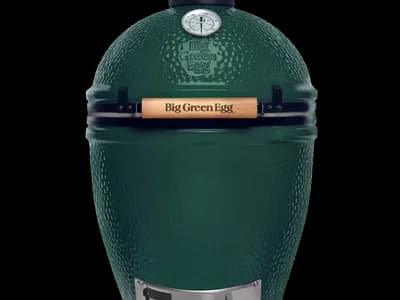
On the grate the mushroom sticks, tears as you turn it and drips its juice into the coals. A solid griddle does the reverse: it banks heat through its whole thickness and gives it back every time the mushroom steals some. The Petromax Griddle FS38 in solid steel is the natural piece here: 38 round centimetres that sit on a Large's grate with air all round. Measure your grate first, and rule out rectangular griddles: in a round chamber they block the heat at the sides and force you to cook on the diagonal. On my Big Green Egg Large the FS38 fits with room to spare. Give it time to heat through: a cold plate defeats the whole idea.
Garlic goes in last
Chopped garlic burns above 180 °C in under a minute, and burnt garlic turns the whole dish bitter. So it goes on once the mushrooms are back gills up: the hollow of the cap acts as a little pan, the garlic softens in the oil without touching the steel, and the parsley keeps its colour. Sixty seconds is enough. Which is why the garlic mix should be chopped and standing beside the griddle before you light anything.
In 30 seconds
Solid griddle at 230-250 °C surface temperature. Mushrooms brushed clean and dry, no oil: 3 minutes gills down, 3-4 minutes cap down. In the final minute, oil, garlic and parsley into the hollow. Flaky salt off the heat.
Editor's tips
- Choose medium, firm saffron milk caps whose caps still curl inwards; wide-open ones are usually past their best, wetter, and often riddled with larvae in the stem.
- Do not crowd the plate: each mushroom needs full contact with the steel and a finger of air around it, so two short batches beat one long one every time.
- If you did not pick them yourself, buy them at a market or a greengrocer you trust, and never cook a wild mushroom you have not identified with certainty.
- Do not bin the stems and trimmings: brown them on the same plate at the end, once it is free, and keep them for a rice dish or for huevos rotos.
Gear for this recipe
As an Amazon Associate, mikamado.es earns from qualifying purchases. At no extra cost to you.
FAQ
Why do my saffron milk caps turn rubbery and release so much water?
Because they started cooking in oil, or on a surface that was not hot enough. A mushroom is ninety per cent water and needs dry steel above 230 °C for that water to leave as vapour. With oil at the start, or a plate crowded to the edge, it simply stews in its own juice.
Should saffron milk caps be washed in water?
Not under the tap. The cap soaks up water easily and after that no griddle will brown it. Brush the soil off with a soft brush, wipe with a barely damp cloth and trim the gritty base of the stem. If one is really filthy, clean it separately and dry it thoroughly before it touches the steel.
What temperature should the griddle be for saffron milk caps?
Between 230 and 250 °C measured on the steel itself, with the kamado settled at 250 °C on direct heat. Use an infrared thermometer and do not trust the dome gauge: a plate you have only just put on can sit fifty degrees below the air around it until it has loaded through its thickness.
Is it normal for saffron milk caps to turn green when cut?
Yes, and it is one of the signs you have the right mushroom. The orange latex of Lactarius deliciosus oxidises in air and turns verdigris green at cuts and bruises; in the bloody milk cap, Lactarius sanguifluus, the latex runs more wine-red. That green does not affect the flavour or mean the mushroom has gone off.
Can I cook them straight on the kamado grate, without a griddle?
You can, but the result changes. On the grate the mushroom sticks, tears as you turn it and drips its juice into the coals, so you lose both the liquid and the even browning. Without a griddle, use a well-heated cast-iron skillet and work in small batches so the temperature does not collapse.
More kamado recipes
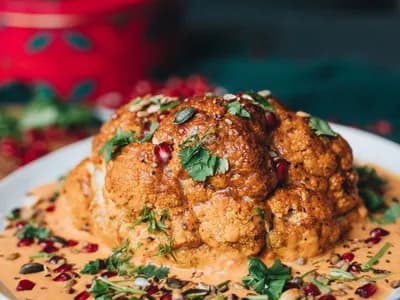
Whole roasted cauliflower on the kamado with saffron aioli
A whole cauliflower roasted indirect at 180°C: steam first to tame the core, then a deep sear and a spiced glaze. Golden outside, tender inside, with saffron aioli. Serves 4.
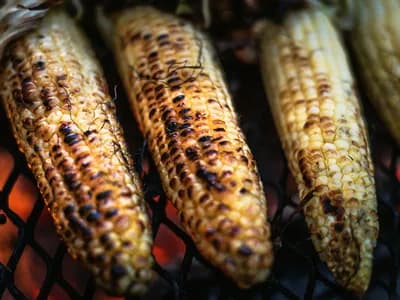
Grilled Corn Mexican Elote Style on the Kamado
Cobs charred over direct fire, slathered with lime mayo, cotija cheese, chili and cilantro. Got leftovers? Strip the kernels and turn them into cups of esquites.
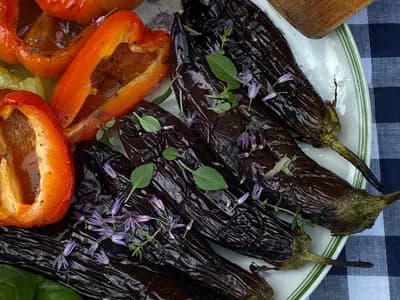
Kamado escalivada with smoked peppers and aubergine
Red pepper, aubergine and onion roasted whole over live coals until the skin chars black, then peeled and dressed with nothing but extra-virgin olive oil and flaky salt.
KEEP READING
Go deeper on this dish
- Recommended kamado
Big Green Egg Large
The classic kamado that defined the category
- Editorial guide
How to light a kamado: the step-by-step method
No petrol, no weird tablets and no 45-minute waits. The cone method, airflow control and the mistakes that prevent 80% of the frustration.
- Glossary term
Heat deflector
Ceramic plate placed between the coals and the grate to turn direct fire into indirect cooking.
- Related comparison
big green egg large vs kamado joe classic iii
The classic kamado matchup: the Big Green Egg Large, the indestructible pioneer with the widest accessory network, agai…