TÉCNICA
Minion Method and Snake Method: 12 Hours of Kamado Fire
How to build the charcoal bed to hold 110-120 °C for 8-14 hours without refueling or lifting the lid. The mother technique of low & slow, step by step.
Quick answer
The Minion and Snake methods stack charcoal so it burns like a fuse: you light only a handful of embers at one point and the fire creeps slowly through the cold charcoal. That is how a kamado holds a stable 110-120 °C for 8 to 14 hours on a single load, without refuelling or opening the lid.
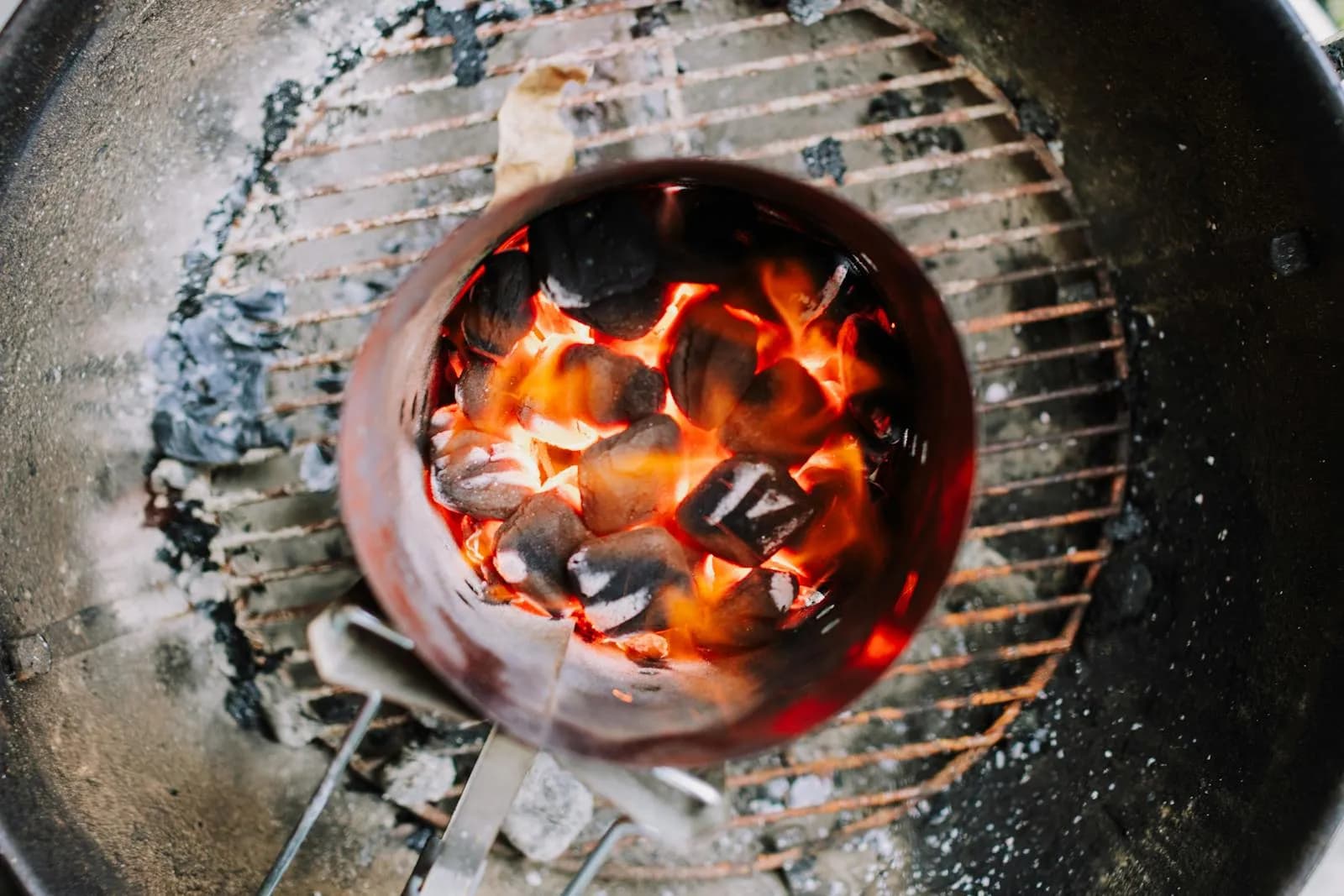
The Minion method and the Snake method are two ways of stacking charcoal so it burns very slowly, like a fuse: you ignite only a handful of coals at one end and the fire creeps through the cold charcoal. That is how we hold a steady 110-120 °C for 8 to 14 hours on a single load.
The difference versus lighting everything at once is huge. Light the full chamber and you hit 250 °C in fifteen minutes and burn through the charcoal in three or four hours — no way to smoke a brisket. These two methods flip the logic: you burn little, slowly, under control.
In this guide we share what we have verified on our terrace in Torrevieja with our Big Green Egg Large, cross-checked against what the smoking community reports (AmazingRibs, kamado forums). How many coals to light, where to place the smoking wood, how to set the vents, and which mistakes ruin the night. No catalogue theory.
Why You Need These Methods: a Long Fire Is Not Improvised
A real smoke — a brisket, a pulled pork, a rack of ribs — asks for 8 to 14 hours at a low and, above all, steady temperature: 110-120 °C from start to finish. That is where the difficulty lies. Holding those degrees through half the night without the thermometer spiking or the fire dying is what separates a juicy cut from a slab of dry leather.
The trouble with the obvious method — light a pile of charcoal and close the vents — is that it does not work for long cooks. Light the whole chamber at once and you have too much live coal at the same time: even if you choke the air, the initial heat carries you well above 120 °C, and by the time it drops you have burned half a bag. In our tests, a fully lit load lasts three or four hours at most.
The Minion method and the Snake method solve this with the same idea: light very little charcoal and let the fire spread slowly through the rest, which stays cold. That way you control how much coal is live at any moment, and therefore the temperature, all night long. It is the mother technique of low & slow.
The Minion Method Step by Step: the Crater of Coals
The Minion method is the easiest and the one we use daily for all-night smokes. The idea: you fill the basket with UNLIT charcoal and tip a handful of already-lit coals into a single spot. The fire spreads slowly from there into the rest of the cold charcoal. Here are the steps:
1. Fill the basket to the top with lump charcoal, all unlit. Favour medium and large pieces over fines: good lump burns cleaner (see our guide on which charcoal to use).
2. Dig a hollow or crater, usually to one side or in the centre, about 8-10 cm across.
3. Lay the smoking wood on top of the unlit charcoal, spread out, so the fire reaches it gradually (we detail this in the next section).
4. Separately light only a handful of coals — 8 to 12 pieces — in a chimney or with a torch, until they are well ashed over.
5. Tip those lit coals into the hollow, on one side, not scattered across the whole basket.
6. Fit the deflector, the grate and the cut, close the lid and set the vents. The fire "eats" cold charcoal sideways for hours, like a candle burning down slowly. On our terrace, with the Big Green Egg Large this nails 110-115 °C all night with no refueling.
The Snake (or Fuse) Method: a Trail of Briquettes
The Snake method (serpent or "fuse") is even more predictable than the Minion and the favourite for very long, precise smokes. Instead of a pile with a crater, you build a tidy trail of charcoal around the rim of the basket and light it at one end only. It burns like a firework fuse, advancing one piece at a time. Steps:
1. Lay a trail of briquettes in a C or U shape following the rim of the basket, usually two briquettes wide and two high. Briquettes, with their regular shape, fit this method better than irregular lump.
2. Leave a small gap: the fire must not reach there, so the snake does not close into a circle and speed up.
3. Set chunks of smoking wood along the trail, on top, every hand-span or so.
4. Light one end only: 6-10 briquettes, with a firelighter or torch, until they catch well.
5. Close the lid and set the vents. The fire travels the snake piece by piece. The advance speed — and therefore the duration — is set by you through the width and height of the trail: two by two gives about 8-10 hours; three by two, up to 14. It is pure geometry, which is why it is so reliable.
How Many Coals to Light and Where to Place the Wood
The mistake that most ruins a long fire is lighting too many coals at the start. The rule we apply on our terrace is counterintuitive: the fewer, the better. For the Minion method, 8 to 12 well-lit lump pieces are enough; for the Snake, 6-10 briquettes at one end. Tip in half a lit chimney and the fire spreads too fast, putting you at 160-180 °C before the meat is even on, with no way back.
Smoking woods — oak, holm oak, apple, cherry, hickory — go in when you build the fire, not as you go along, and not all in the same place: one chunk right against the lighting point, so it smokes from the first few minutes, and the rest buried at different depths along the path the burn front will take, so they catch one after another. What you want to avoid is piling them all on the surface: they then catch at once in the first hour and the meat takes a heavy smoke just when it absorbs most.
We use chunks the size of a walnut or a little larger, not chips, which burn up in minutes. How many chunks each cook calls for, which species suits which cut and why the wood is never soaked are all in our guide to smoking woods for a kamado.
Setting the Vents for 110-120 °C and Why Not to Touch Them
With the charcoal built and the end lit, the vents decide the temperature. For 110-120 °C we start from very tight vents: the bottom intake open barely a finger or less, and the petal chimney showing only the fine slots. Remember the kamado is steered by air (we expand on this in our temperature-control guide): with so little live coal, you need very little oxygen.
The key is to climb slowly and close before you arrive. The ceramic has huge inertia: wait until you see 120 °C to close and there are already 30-40 °C on the way. We start choking the air as soon as the thermometer passes 80-85 °C climbing, and let it settle on its own. Better to undershoot and crack a vent than to overshoot, because on a kamado coming down costs far more than going up.
Once the temperature is locked, touch nothing. Each adjustment takes 15-20 minutes to show through the ceramic's inertia, so if you chase the number with the vents you enter a rollercoaster that never ends. Set once, wait, confirm it holds across two readings and forget it. The kamado keeps those degrees alone for hours: that is the whole point of the method.
Comparison Table and the Mistakes That Ruin the Night
Each method has its turf. The Minion is fast to build and perfect for most smokes; the Snake is more laborious but gives clockwork precision and duration. This is our reference:
| Method | Best for | Duration | Difficulty |
|---|---|---|---|
| Minion (crater) | All-night smokes, day to day | 8-12 h | Low |
| Snake 2x2 | Long, precise smokes | 8-10 h | Medium |
| Snake 3x2 | Marathons: big brisket, full rack | 12-14 h | Medium-high |
| Full light | Live coals, searing, pizza (NOT smoking) | 3-4 h | Low |
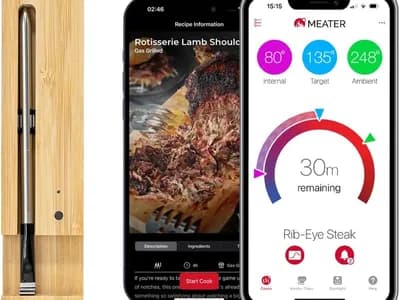
The three mistakes we most often see ruin a long cook: First, lighting too many coals at the start — half a chimney and you have already overshot; a handful is enough. Second, stacking the charcoal badly: with loose pieces and big gaps, the fire jumps and runs away; the lump must sit well settled and the snake must be compact. And third, the costliest: opening the lid "for a look". Each opening lets in a gust of oxygen that spikes the fire and breaks the stability you worked so hard for. And when you do have to open it, open in two stages: crack it five centimetres, wait about five seconds, then open fully — with the vents that tight, throwing it open can send a flashback straight at your face. Use a wireless probe and watch from your phone. On a long fire, the best hand is the one that touches nothing.
The Minion method and the Snake method are not unreachable expert tricks: they are two simple ways of stacking charcoal that anyone masters by the second or third cook. The skill is not in your hands, it is in your head — start with very few coals, leave the vents nearly shut and, above all, touch nothing for hours.
If you take one idea from this guide, make it this: the enemy of a long fire is impatience. The urge to open the lid for a look, to stoke the fire, to add more coals "just in case", is exactly what ruins the cook. Build the charcoal carefully, light the end, set the vents once and go to bed. The kamado works alone all night.
The numbers we give are our starting point in Torrevieja; you will find yours by logging every cook. That notebook is worth more than any table of ours.
Gear featured in this guide

Recipes to get started
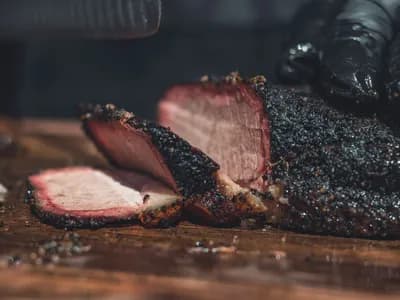
Low-and-slow smoked brisket
The kamado acid test. Ten hours at 110°C, a deep bark, a pink smoke ring and a texture that gives way under the weight of a fork.

Carolina-style smoked pulled pork
Eight hours of patience, a five-and-a-half-kilo pork shoulder and North-Carolina vinegar — this is what a kamado does better than any other fire.
GO DEEPER
Continue with these
- Related guide
What charcoal to use in a kamado (and which to avoid)
Quebracho or holm-oak lump wins; supermarket briquettes and chemical lighter fluid stay out. Here is what to load and why.
- Related guide
Kamado Temperature Control: The Pitmaster's Guide
The dual airflow system, the rookie mistake of overshooting, and why the dome thermometer lies. This is the skill that separates a beginner from a pitmaster.
- Related guide
How to light a kamado: the step-by-step method
No petrol, no weird tablets and no 45-minute waits. The cone method, airflow control and the mistakes that prevent 80% of the frustration.
- Recipe to practice
Low-and-slow smoked brisket
The kamado acid test. Ten hours at 110°C, a deep bark, a pink smoke ring and a texture that gives way under the weight of a fork.
- Recipe to practice
Carolina-style smoked pulled pork
Eight hours of patience, a five-and-a-half-kilo pork shoulder and North-Carolina vinegar — this is what a kamado does better than any other fire.
- Editorial comparison
big green egg large vs kamado joe classic iii
The classic kamado matchup: the Big Green Egg Large, the indestructible pioneer with the widest accessory network, again
- Glossary term
Heat deflector
Ceramic plate placed between the coals and the grate to turn direct fire into indirect cooking.
- Glossary term
Snake method
Arranging charcoal in a C or snake shape around the perimeter for long, stable, low-temperature cooks.
- Glossary term
Minion method
Lighting technique where a few coals are ignited on top of a full chamber of cold charcoal, letting fire spread slowly.
Frequently asked questions
Which method is better, Minion or Snake?
It depends on the precision you want. The Minion is faster to build and our everyday favourite: it covers most 8-12 hour smokes. The Snake or serpent is more laborious but gives clockwork duration — a 3x2 trail reaches 14 hours — and is ideal for long marathons where you want no surprises. To start out, we recommend the Minion.
How many lit coals do I need to start?
Very few, and this is the most common mistake. For the Minion method, 8 to 12 well-lit lump pieces tipped into a single spot are enough; for the Snake, 6-10 briquettes at one end of the trail. Pour in half a lit chimney and the fire spreads too fast, pushing past 160 °C before the meat is on. With a long fire, less is more.
Where do I place the smoking wood?
Always on the unlit charcoal and spread out, never beside the lit coals. Put them over the starting fire and they all burn in the first hour, giving the meat a bitter smoke just when it absorbs most. Spread across the cold charcoal, the fire reaches them one by one and the smoke stays clean for hours. Use chunks, not chips, and do not soak them: dry wood smokes better.
Why should I not open the lid during the smoke?
Because every time you open it a gust of oxygen rushes in, spiking the fire and breaking the temperature stability you worked so hard for. On top of that, the ceramic takes 15-20 minutes to recover its balance because of its inertia. On a long smoke, opening "for a look" is one of the mistakes that most ruins the cook. Use a wireless probe and watch the temperature from your phone without lifting the lid. And when you do have to lift it, crack it five centimetres first, wait about five seconds and only then open fully: with the air that restricted, a sudden opening can trigger a flashback.
How long does a kamado last with the Minion method without refueling?
With the basket full of lump and the vents well shut at 110-120 °C, with our Big Green Egg Large in Torrevieja we hold 8 to 12 hours on a single load with the Minion method, and up to 14 hours with a 3x2 Snake. That is ample for a brisket, a pulled pork or a full rack without getting up at dawn to add charcoal. The key is building the basket well from the start.