Recipe · Direct · Advanced
Lamb Lyulya Kebab on the Kamado
The question is never how to season it, but why it falls off the skewer. The answer is fat, a hand-chopped grain and real kneading: juicy lamb that holds together over direct fire.
Season:Spring ·SummerCuisine:Russia, Caucasus & Central Asia
Quick answer
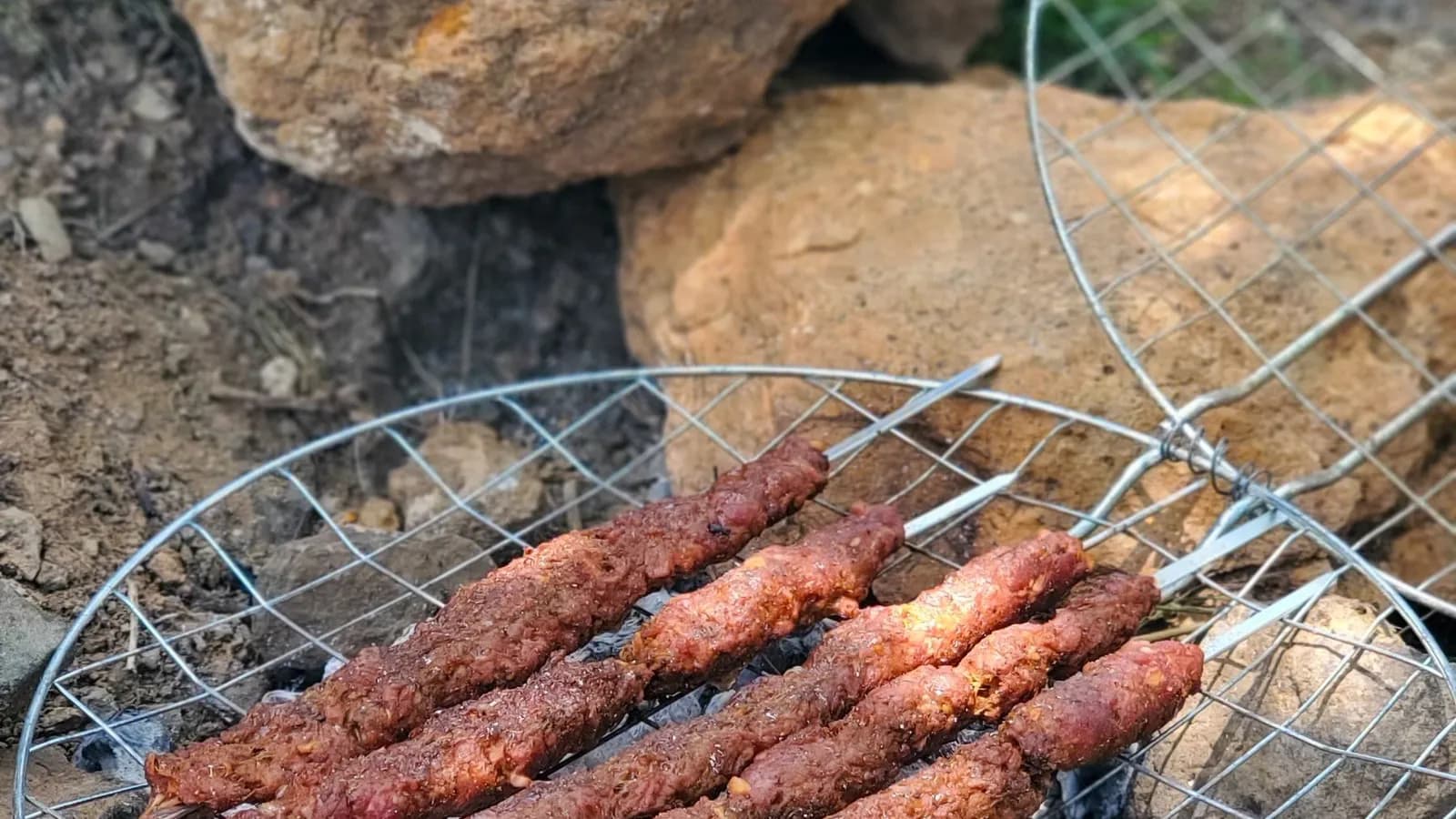
Lyulya kebab stays on the skewer for three reasons: 20-25 % lamb fat, meat chopped by hand and ten minutes of kneading until the mixture stops sticking to your hands. Chill it for an hour, mould it onto flat skewers and sear it three untouched minutes at 240 °C over direct heat: 12-15 minutes over the coals in all.
One big step at a time, screen kept on and built-in timers.
- Prep
- 40 min
- Cook
- 15 min
- Servings
- 6 servings
- Temperature
- 240 °C
What time do you want to eat?
Pick a time and we'll tell you when to start.
12:35
Start the prep
13:15
Light the kamado
13:35
Onto the kamado
14:00
Serve
Estimate: it includes lighting and settling the kamado plus a margin for large cuts. If the recipe asks you to marinate or salt ahead, add that time.
Fire setupDirect heat
- Dome
- 240 °C
- Deflector
- No
- Grate
- Standard height
- Top vent
- Open
- Fuel
- Charcoal basket filled halfway
- Setup
- Skewer set with supports, flat skewers and charcoal basket
Temperature curve
0:37 h from lighting
Kamado domeInside the meat (probe)
| # | From | Phase | Dome | Internal |
|---|---|---|---|---|
| 1 | 0:00 | Light the charcoalCharcoal basket half full, live embers, no white smoke | 20 → 240 °C | no probe |
| 2 | 0:20 | Put the food inSkewers on the supports over the coals, lid closed | 240 → 215 °C | 6 °C |
| 3 | 0:21 | SearThree minutes untouched to set the crust | 215 → 240 °C | 6 → 28 °C |
| 4 | 0:24 | CookQuarter turns every 2-3 min; pull at 70-72 °C | 240 °C | 28 → 71 °C |
| 5 | 0:35 | RestResting on a pita bread | 240 → 235 °C | 71 → 72 °C |
| 6 | 0:37 | Serve | off | no probe |
0:00 is the moment you light the charcoal. Internal temperatures are the ones the recipe gives; without a probe, go by the times. Turn these times into clock times with the planner
For this recipe
Ingredients
- boneless lamb shoulder1 kg
- lamb fat (tail or kidney fat)250 g
- white onion250 g
- chopped fresh parsley20 g
- chopped fresh coriander20 g
- fine salt18 g
- ground cumin (zira)1 tsp
- freshly ground black pepper1 tsp
- dried chilli flakes0.5 tsp
- red onions2
- sumac1 tsp
- lemon juice1 tbsp
- pita breads or lavash6
Allergens
- Gluten
Based on the recipe's ingredients. Always check the label of every product you buy.
The gear for this recipe
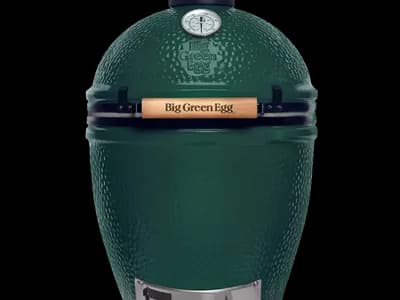
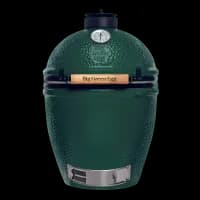 Big Green Egg Large
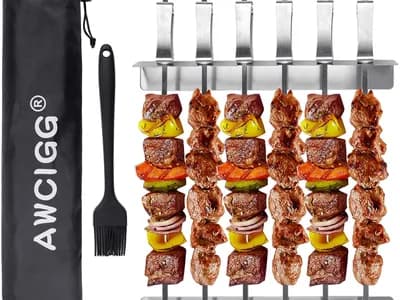
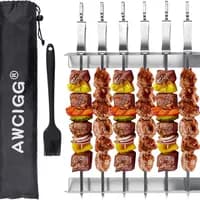 AWCIGG Skewer Set with StandsThe first three minutes decide whether the cylinder holds, and for that the meat must not touch the iron of the grate. The AWCIGG skewer and rest set covers both conditions of this recipe: wide flat skewers, on which the mixture does not spin on itself as you make quarter turns, and rests that keep the lyulya suspended over the 240 °C while the crust that holds it sets.
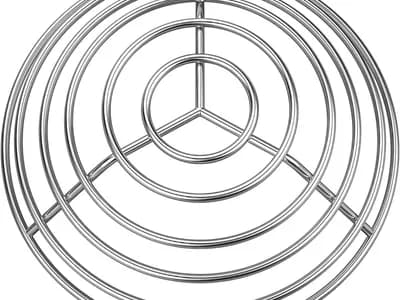
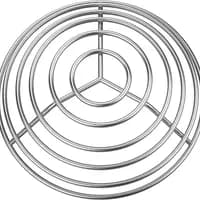 Onlyfire stainless steel charcoal basket for kamadoFifteen minutes of direct heat at 240 °C with the lid opening every two or three call for concentrated, live embers, not charcoal scattered across the bottom. The Onlyfire charcoal basket gathers the load right under the skewers, channels the airflow through the lower grate and lets ash drop away instead of smothering the fire. That way the second and third batches of lyulya cook as strongly as the first.
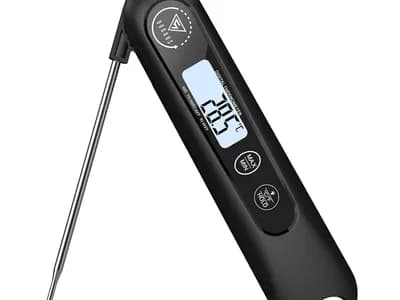
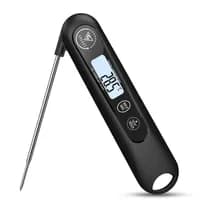 DOQAUS instant-read thermometer, folding probe, 3-second readBetween 70 and 72 °C the lamb stays juicy; five degrees more and the fat you worked so hard to chop has gone into the coals. The DOQAUS folding thermometer reads in about three seconds, just enough time to probe from one end, parallel to the skewer, and close the lid again before the kamado loses temperature. It is what stops you guessing your way through a fifteen-minute cook.
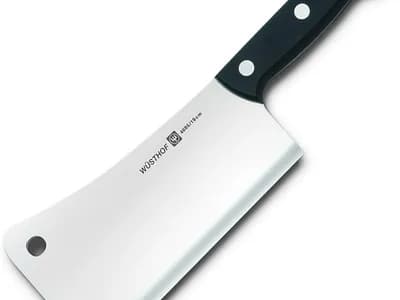
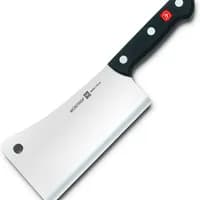 Wüsthof Classic Cleaver 4685/19 — Butcher Knife 19 cmHand-chopping is what separates a juicy lyulya from a paste that splits open over the coals, and the blade decides it. The Wüsthof Classic Cleaver 19 cm cuts near-frozen shoulder instead of crushing it, and its weight does the work stroke after stroke through the twenty minutes a kilo of lamb takes. What you get is the uneven three- to four-millimetre grain that keeps the juice inside the cylinder.
Method
- 01
Choose meat and fat
Ask your butcher for lamb shoulder with its fat and, separately, tail or kidney fat: you are aiming for 20-25 % fat on the total weight. Cut meat and fat into two-centimetre dice and spread them on a tray in the freezer for thirty minutes. Firm and very cold they chop cleanly; at room temperature they smear and the mixture loses its texture.
- 02
Chop by hand
On a wide board, chop the meat with the Wüsthof Classic Cleaver 19 cm, gathering the mass back to the centre every few strokes. Aim for an uneven three- to four-millimetre grain, never a paste. Chop the fat separately and slightly finer, then fold it in: that way it distributes without melting from the heat of your hands. Allow twenty unhurried minutes.
- 03
Onion without water
Chop the white onion into a tiny brunoise or grate it, salt it with a teaspoon and leave it for ten minutes. Then wrap it in a clean cloth and wring it out hard until not a drop falls. That juice is the main reason lyulya splits open over the coals. Chop the parsley and coriander too, discarding any thick stalks.
- 04
Knead and chill
Combine meat, fat, wrung-out onion, herbs, salt, cumin, pepper and chilli flakes. Knead for ten minutes, then lift the mass and slap it back into the bowl twenty or thirty times. It is ready when it stops sticking to your palms and holds as one compact ball. Cover and chill for an hour: without that cold the fat runs out on the skewer.
- 05
Light the kamado
Fill the Onlyfire charcoal basket halfway, light it in two spots and open the top vent. Settle the kamado at 240 °C for direct cooking and wait until the white smoke has gone: you want live embers, not flame. Set the rests from the AWCIGG skewer set on the grate and keep the Grill Heat Aid gloves within reach.
- 06
Shape on the skewer
Dip your hands in very cold water and take about 120 grams of the mixture. Press the cylinder around a flat skewer from top to bottom, leaving no air pockets, until it is roughly eighteen centimetres long and three thick. Seal both ends firmly with your fingers and return each skewer to the fridge while you shape all twelve.
- 07
Sear without touching
Rest four or five skewers on the supports with the meat suspended over the coals and close the lid. Work in two or three batches so the grate is never crowded. Three minutes without touching them: that is how long the surface needs to set and build the crust that holds the cylinder. Turn them earlier and the mixture tears where it clings to the metal.
- 08
Turn and finish
From then on give a quarter turn every two or three minutes, up to 12-15 minutes in total. The surface should be deep golden and slightly cracked, never black. Slide the thermometer in from one end, parallel to the skewer, and pull at 70-72 °C in the centre. Rest for two minutes lying on a piece of pita.
- 09
Sumac onion and serve
Slice the red onion into very fine petals, rinse them for thirty seconds under cold water to knock back the bite, and pat dry. Dress with sumac, lemon juice and a pinch of salt. Slide the lyulya off the skewer by pulling it through the pita, and serve hot with the onion on top. Eat it wrapped, with your hands.
About this recipe
On any Caucasian cooking forum the question repeats without variation: why does lyulya fall off the skewer. Nobody asks about the spices. And the answer is not a kitchen trick, it is physics: a lamb mixture short on fat, under-kneaded and loaded with onion water has nothing to grip the metal with. Once the meat sticks to itself, it stays where you put it.
Why it falls off the skewer
Three causes, always the same. First, fat: below 20 % the mixture turns dry and brittle, and as it contracts in the heat it splits. Second, onion water, which boils inside and cracks the cylinder open; that is why the onion is chopped very fine, salted and wrung out in a cloth. Third, the kneading: without working the mass there is no protein network holding it together. Egg and breadcrumbs fix none of the three, they only disguise them.
Hand-chopped, never machine-minced
A mincer crushes and warms the meat; a knife cuts it. With a heavy cleaver such as the Wüsthof Classic Cleaver 19 cm, shoulder becomes a three- to four-millimetre grain that keeps its fibre and holds its juice. Then come ten minutes of kneading and slapping the mass back into the bowl: you feel it change under your hands, stop clinging to your fingers and start clinging to itself. That is when it is ready, not before. An hour in the fridge sets the fat.
The fire holds it in the first three minutes
On my Big Green Egg Large I bank the coals in the Onlyfire stainless charcoal basket and settle the dome at 240 °C, direct. The skewers sit on rests, never flat on the grate: the cylinder must not touch iron until it has a crust. The first three minutes are sacred, no turning, no poking. Once the surface is browned and firm, the rest is routine: quarter turns every two or three minutes until the centre reads 70-72 °C.
In 30 seconds
Lamb at 20-25 % fat, hand-chopped, onion wrung dry, ten minutes of kneading and an hour in the cold. Flat skewers, 240 °C direct and three still minutes to build the crust. Total over the coals: 12-15 minutes.
Will it fit your kamado?
Small
33-40 cm · Joe Jr, MiniMax
Tight
Probably 2-3 skewers per batch; all 12 in 4-6 batches.
Medium
46-51 cm · Classic, Large
Fits
4-5 skewers per batch, in 2-3 batches, as the recipe states.
Large
56-61 cm · Big Joe, XL
Fits
Probably 6-8 skewers per batch; all 12 in two batches.
What to serve with it
Sides
- Stone-baked puffed pita
- Charred aubergine baba ganoush
- Tomato, cucumber and sumac onion salad
- Wine
- Ribera del Duero crianza or a Monastrell from Jumilla
- Beer
- Amber ale or a mild porter
- Alcohol-free
- Ayran (salted yogurt drink with mint)
Leftovers and storage
- In the fridge
- Off the skewer, airtight within 2 h; 3-4 days in the fridge.
- Freezing
- 2-3 months well wrapped; thaw in the fridge. The sumac onions do not freeze.
- Reheating
- Kamado or oven at 160 °C, covered with a little stock, to 74 °C in the centre without drying.
- Using them up
- Crumbled into a spiced tomato sauce with poached eggs, or in pita with garlic yogurt.
Cool and refrigerate within 2 hours. When in doubt, throw it out.
Leftover embers
You still have embers: what to do with the leftover heat
For 15 min at 240 °C in a classic kamado you load about 800 g of charcoal and burn 600 g: when you serve, about 250 g of live embers remain. Before you shut the vents, that is still enough for:
Without touching the vents
240 °Cgrilled vegetables
25 minof embers
- Charred Wild Green Asparagus on the Kamado8 min · 240 °C
- Rum-glazed grilled pineapple on the kamado14 min · 220 °C
- Grilled provolone on the kamado with tomato, oregano and olive oil, in a cast-iron skillet12 min · 230 °C
No recipe needed
- Strips of courgette and aubergine, char-marked (5 min)
- Pita or naan from shop dough, on the grate (3 min each)
- Halved tomatoes, cut side down, for a sauce (10 min)
Closing the vents halfway and waiting for it to drop
140-200 °Cdessert while you eat
35 minof embers
- Brioche Burger Buns on the Kamado18 min · 190 °C
- Garlic-stuffed portobello mushrooms grilled in the kamado22 min · 190 °C
- Kamado-roasted figs with goat cheese and honey7 min · 200 °C
No recipe needed
- Yesterday's bread with oil and garlic, on the grate (10 min)
- Corn cobs in their husks (30 min)
Before opening the lid, crack it open for a few seconds first; if you raise the heat, stir the ash so the coals can breathe. And if you are not going to use them: once the food is out, close the bottom and top vents. The charcoal that does not burn (about 250 g) can be used next time. Different size of kamado? Work out your load for 1 h of fire, lighting included.
Editor's tips
- Before shaping all twelve skewers, fry a small ball of the mixture in a pan and taste it: it is the only way to correct salt and cumin in time.
- Use flat, wide skewers: on round ones the cylinder spins on itself every time you turn it and ends up in the coals.
- If you cannot find lamb tail fat, ask for kidney fat or a very fatty shoulder, but do not compensate with lean meat plus egg: egg toughens the mixture and still will not hold it.
- Always work with cold mixture. In summer on the Costa Blanca I put the bowl back in the fridge between batches: at thirty degrees on the terrace the fat softens within minutes.
Gear for this recipe
As an Amazon Associate, mikamado.es earns from qualifying purchases. At no extra cost to you.
Big Green Egg Large
€2,099
AWCIGG Skewer Set with Stands
The first three minutes decide whether the cylinder holds, and for that the meat must not touch the iron of the grate. The AWCIGG skewer and rest set covers both conditions of this recipe: wide flat skewers, on which the mixture does not spin on itself as you make quarter turns, and rests that keep the lyulya suspended over the 240 °C while the crust that holds it sets.
€23
Onlyfire stainless steel charcoal basket for kamado
Fifteen minutes of direct heat at 240 °C with the lid opening every two or three call for concentrated, live embers, not charcoal scattered across the bottom. The Onlyfire charcoal basket gathers the load right under the skewers, channels the airflow through the lower grate and lets ash drop away instead of smothering the fire. That way the second and third batches of lyulya cook as strongly as the first.
€28
DOQAUS instant-read thermometer, folding probe, 3-second read
Between 70 and 72 °C the lamb stays juicy; five degrees more and the fat you worked so hard to chop has gone into the coals. The DOQAUS folding thermometer reads in about three seconds, just enough time to probe from one end, parallel to the skewer, and close the lid again before the kamado loses temperature. It is what stops you guessing your way through a fifteen-minute cook.
€6
Wüsthof Classic Cleaver 4685/19 — Butcher Knife 19 cm
Hand-chopping is what separates a juicy lyulya from a paste that splits open over the coals, and the blade decides it. The Wüsthof Classic Cleaver 19 cm cuts near-frozen shoulder instead of crushing it, and its weight does the work stroke after stroke through the twenty minutes a kilo of lamb takes. What you get is the uneven three- to four-millimetre grain that keeps the juice inside the cylinder.
€129
Have you made it?
Tell us how it turned out on your kamado. We review every rating before publishing it.
No published ratings yet. Be the first!
FAQ
Why does lyulya kebab fall off the skewer?
Three reasons that add up: too little fat, un-drained onion and not enough kneading. With 20-25 % lamb fat, onion wrung out in a cloth and ten minutes of kneading until the mixture clings to itself, the cylinder holds. The fourth factor is the fire: the first three untouched minutes build the crust that keeps it in place.
Can I use machine-minced meat?
You can, but ask the butcher for a single pass through the coarsest plate and keep the meat very cold. A mincer crushes the fibre and releases water, so the mixture is softer and needs even more kneading and chilling. Hand-chopping gives an uneven grain that holds the lamb's juice far better.
Do I need to add egg, breadcrumbs or flour?
No. None of the three belongs in the traditional recipe. Egg compacts the mixture and gives it a meatball texture; breadcrumbs soak up the juice and dry it out. If the mixture will not hold, the real problem is fat, onion water or kneading, and none of those binders fixes it.
How long and at what temperature on the kamado?
Twelve to fifteen minutes at 240 °C over direct heat, lid closed and the skewers suspended on rests. The first three minutes go without turning; after that, a quarter turn every two or three minutes. Pull them when the centre reads 70-72 °C: below that it is underdone, above it the lamb dries out.
What do you serve lyulya kebab with?
With warm pita or lavash, red onion dressed in sumac and lemon, and plenty of fresh herbs: parsley, coriander and purple basil if you can find it. A tomato charred on the same coals while the skewers rest rounds it off. Eat it wrapped, sliding the meat off the skewer with the bread itself.
What do I do with the embers left after making Lamb Lyulya Kebab on the Kamado?
After 15 min at 240 °C in a classic kamado about 250 g of live embers remain: 25 min more at 240 °C without touching the vents or 35 min at 140-200 °C closing the vents. If you are not going to use them, close both vents and keep the charcoal for next time.
More kamado recipes
KEEP READING
Go deeper on this dish
- Recommended kamado
Big Green Egg Large
The classic kamado that defined the category
- Editorial guide
How to light a kamado: the step-by-step method
No petrol, no weird tablets and no 45-minute waits. The cone method, airflow control and the mistakes that prevent 80% of the frustration.
- Glossary term
Heat deflector
Ceramic plate placed between the coals and the grate to turn direct fire into indirect cooking.
- Related comparison
big green egg large vs kamado joe classic iii
The classic kamado matchup: the Big Green Egg Large, the indestructible pioneer with the widest accessory network, agai…