Recipe · Direct · Easy
Pork Neck Shashlik on the Kamado, Onion Marinade
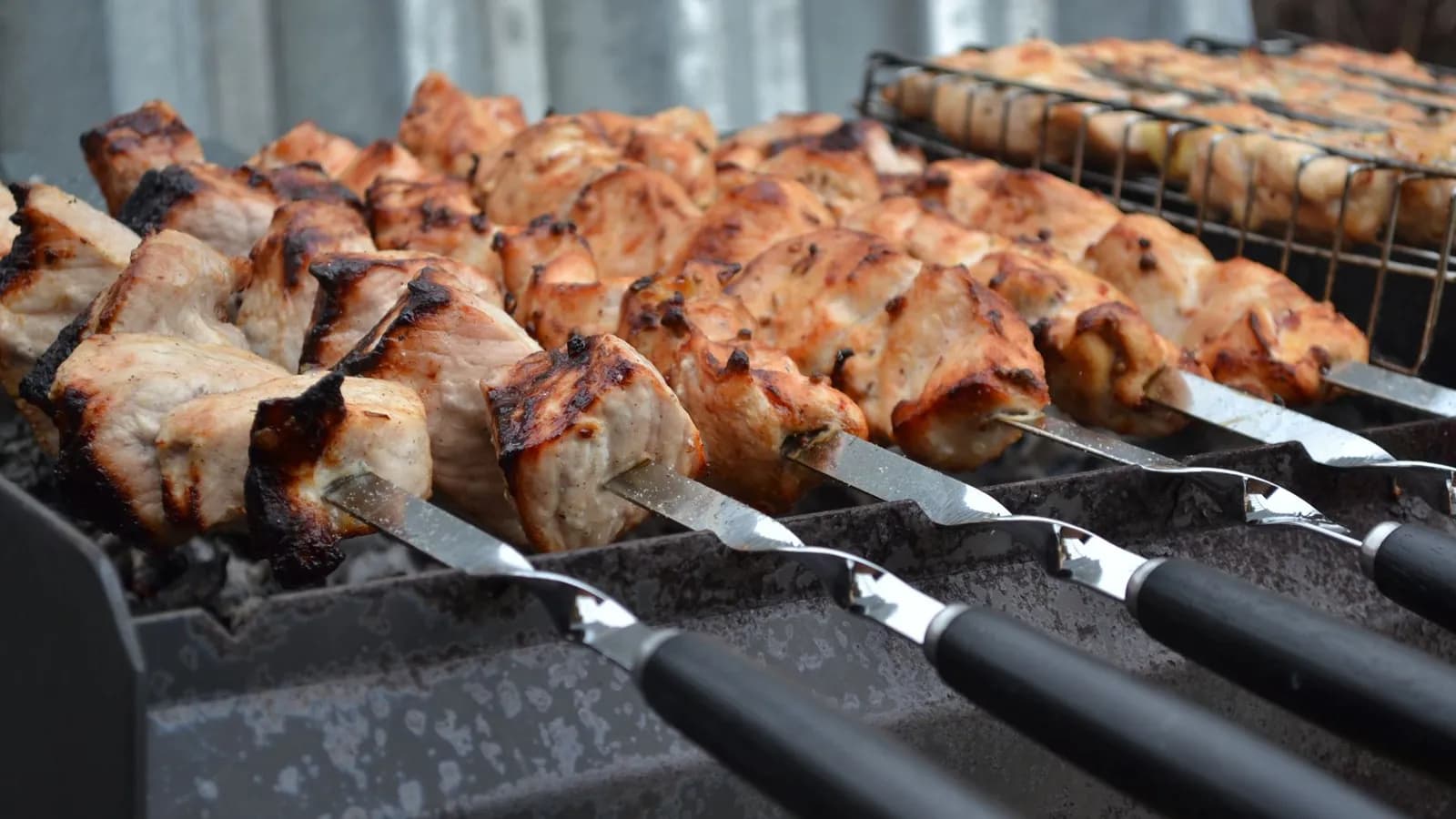
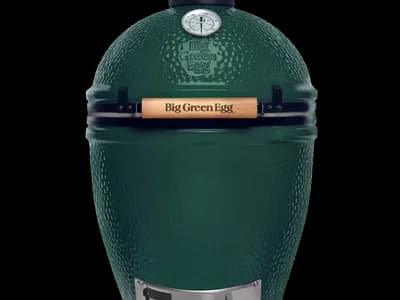
The skewer of the Russian-speaking world, cooked as I make it on my Big Green Egg Large: pork neck in 3 cm cubes, a grated onion marinade with not a drop of vinegar, and twenty minutes of steady direct fire.
Quick answer
Marinate 3 cm cubes of pork neck for 12-24 hours in the fridge with grated onion, salt, pepper and bay, and no vinegar. Skewer them, wipe off the clinging onion and grill on the kamado at 220 °C on raised supports, turning every 2-3 minutes for 18-20 minutes, until 71-75 °C in the centre. Rest 5 minutes.
- Prep
- 30 min
- Cook
- 20 min
- Servings
- 6 servings
- Temperature
- 220 °C
Ingredients
- pork neck (collar), in 3 cm cubes1.5 kg
- white onion for the marinade700 g
- coarse salt18 g
- black peppercorns, coarsely crushed1.5 cdta
- ground coriander seed1 cdta
- bay leaves3 ud
- extra virgin olive oil2 cda
- red onions, thinly sliced into rings, to serve2 ud
- sumac (or sweet Vera paprika)1 cda
- fresh parsley and dill, chopped1 puñado
- lemon, cut into wedges1 ud
- lavash or pita breads, to serve6 ud

Method
- 01
Cut the pork neck
Ask for a whole piece of pork neck with its seam of fat running through it, and cut it into 3 cm cubes. Smaller and they dry out before they colour; larger and they scorch outside without reaching the centre. Keep the marbling and remove only the tough white sinew. From 1.5 kg you get around 45 cubes, six generous skewers.
- 02
Grate the onion
Grate the white onion on the coarse side of a box grater and collect pulp and juice in a large bowl. Do not use a blender: the fine purée clings to the meat and carbonises on the fire. Add the salt, the crushed peppercorns, the ground coriander and the bay leaves torn in half, and stir well.
- 03
Marinate cold
Mix the cubes into the onion until they are coated on every face, press the meat down to push out the air and cover. Fridge, 12 to 24 hours. No vinegar, lemon or wine: strong acid tightens the fibres and leaves the pork dry. Stir once halfway through and take the meat out 30 minutes before it goes on the fire.
- 04
Light the kamado
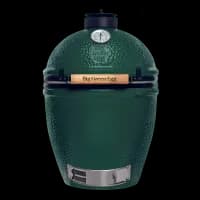
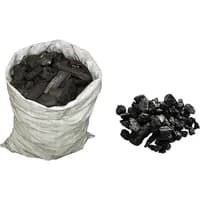
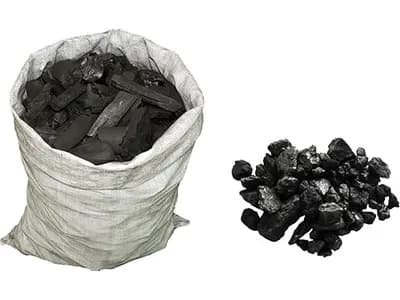
Light the kamado with two or three firelighters spread across the charcoal; Orework's Spanish holm oak burns with a short flame and a bed that lasts. Leave the dome open for ten minutes, close it with both vents wide and settle at 220 °C. Wait until the smoke runs clean and almost invisible before anything goes on.
- 05
Thread the skewers
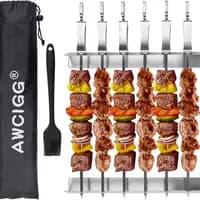
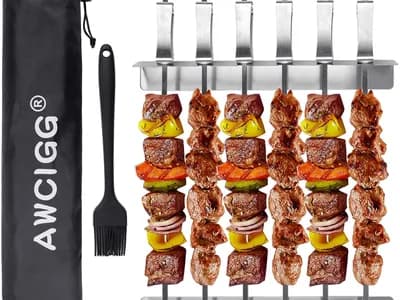
Lift the cubes out and wipe off every scrap of onion clinging to them: on the fire it carbonises and turns bitter. Thread six or seven cubes per skewer, alternating the fattier faces, snug against each other but not crushed. Set the AWCIGG skewer rests on the grate so the skewers sit raised, with the meat clear of the iron.
- 06
Grill and turn
Lay the skewers on the rests and close the dome. Every two or three minutes give them a quarter turn with long tongs, the curved Rösle ones work well, always holding them by the handle. Eighteen to twenty minutes in total. If dripping fat sets off a flare-up, close the dome for a few seconds: it dies on its own, no water needed.
- 07
Probe the centre
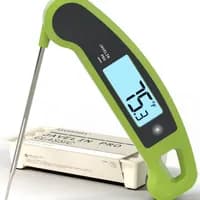
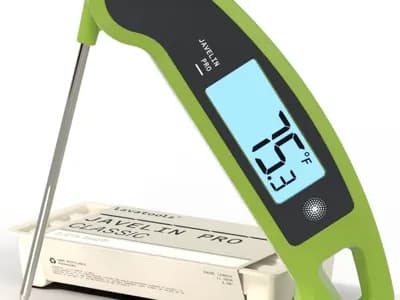
At the sixteen-minute mark, probe the largest cube from the side with an instant thermometer such as the Lavatools Javelin PRO Duo, aiming for the centre and staying off the metal skewer, which runs far hotter. Between 71 and 75 °C the neck is juicy and the fat has rendered. If it is short, give it two more minutes and probe again.
- 08
Rest and serve
Move the skewers to a platter, tent them loosely with foil and rest for five minutes: the meat settles its juices and stops shedding them at the first bite. Meanwhile dress the red onion rings with the sumac and the herbs. Serve the cubes over warm lavash, with the lemon wedges alongside.
About this recipe
Shashlik is not just another skewer. It is the grilling recipe cooked from Baku to Moscow, the one that goes up in a courtyard the moment the weather turns, and the one I actually make on my Big Green Egg Large. Two things define it: the cut, which is always pork neck, and an onion marinade with no vinegar anywhere in it.
Grated onion, not vinegar
Badly translated recipe books call for vinegar, and that is where the dish is lost: strong acid tightens the surface fibres, leaves the meat tight and adds a sour undertone that buries the pork. Grated onion does something else. Its juice is only faintly acidic, it brings sugars and sulphur compounds that perfume the meat, and the pulp keeps the cubes moist through twelve or twenty-four hours in the fridge. Grate it, do not chop it: the juice is the point, and a grater gets all of it.
The kamado gives the steady fire a mangal chases
On an open mangal the embers rise and fall with the breeze, and you end up fanning them. A closed kamado does that work for you: the ceramic stores heat and, with the right fuel — Orework's Spanish holm oak charcoal, short-flamed and low in ash — the bed holds steady for the twenty minutes the cook lasts. The rests from the AWCIGG skewer set lift the skewers a few centimetres above the grate, so the meat never sticks, never marks on one side only, and the fat drips away from the hottest spot.
Turn every two minutes, then measure
Shashlik is made by turning, not by waiting. Every two or three minutes, a quarter turn with long tongs — the curved Rösle ones grip the skewer by its handle and keep your hand away from the fire — so all four faces colour evenly. At the sixteen-minute mark, probe the biggest cube with an instant thermometer such as the Lavatools Javelin PRO Duo: between 71 and 75 °C the neck is juicy and the marbling has rendered.
In 30 seconds
Pork neck in 3 cm cubes, 12-24 h in a vinegar-free grated onion marinade, direct fire at 220 °C on raised supports, a quarter turn every 2-3 minutes for 18-20 minutes, and 71-75 °C in the centre. Raw onion with sumac alongside.
Editor's tips
- Vinegar is the most repeated mistake in shashlik: it tightens the surface of the meat and leaves a sour undertone, while grated onion softens gently and perfumes without masking the pork.
- If you cannot find neck, shoulder and belly both work well; loin does not, because without marbling it dries out before the surface has a chance to colour.
- Use flat or square-section skewers: round ones spin freely and the cubes end up with the same face to the fire every time.
- Bank the charcoal so that a quarter of the firebox holds less of it: that gentler zone gives you somewhere to move a skewer that is colouring too fast.
Gear for this recipe
As an Amazon Associate, mikamado.es earns from qualifying purchases. At no extra cost to you.

FAQ
Why is shashlik marinated in onion rather than vinegar?
Because vinegar works far too fast: it contracts the surface, leaves the meat tight and adds a sour note that buries the pork. Onion juice is only faintly acidic, keeps the cubes moist, and its sugars help the skewer colour. Vinegar reached shashlik through badly translated recipe books and through tough meat that needed covering up.
Which cut of pork is used for shashlik?
The neck, sold in Spain as aguja or cabecera de lomo. It carries marbling right through the piece, and that fat is what keeps the cube juicy over direct fire. Shoulder works too, with a little more sinew. Loin does not, because it dries out before the surface has a chance to colour.
How long should shashlik marinate?
Twelve hours is the minimum for the onion juice to reach the centre of a 3 cm cube, and twenty-four is the sensible maximum. Always in the fridge, never at room temperature. Beyond a day it gets no better: the onion starts to ferment and the meat picks up a sweetish note you do not want.
What internal temperature is the pork done at?
The food-safety reference is 63 °C with a three-minute rest, but neck asks for more: between 71 and 75 °C the marbling renders and the cube turns juicy rather than rubbery. Always measure in the centre of the largest cube, going in from the side and away from the metal skewer.
Do I need raised skewer rests, or will the kamado grate do?
You can rest the skewer straight on the grate, but the meat touches iron, marks on that face alone and sticks when you turn it. On rests the skewer hangs free, turns with one finger and all four faces get the same heat. That is the difference between a griddled kebab and a shashlik.
More kamado recipes
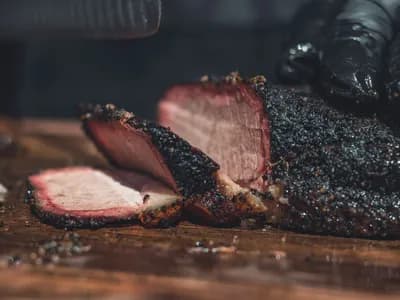
Low-and-slow smoked brisket
The kamado acid test. Ten hours at 110°C, a deep bark, a pink smoke ring and a texture that gives way under the weight of a fork.
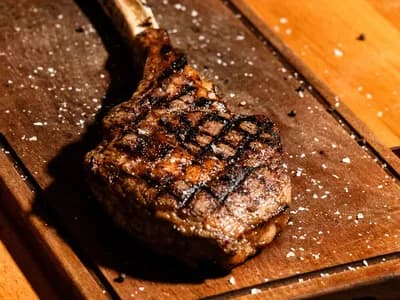
Reverse-sear tomahawk on the kamado
A 1.4 kg tomahawk, probe in the centre, ceramic at 110°C and a 90-second final sear. The Sunday centrepiece for when you want to impress without gambling on doneness.
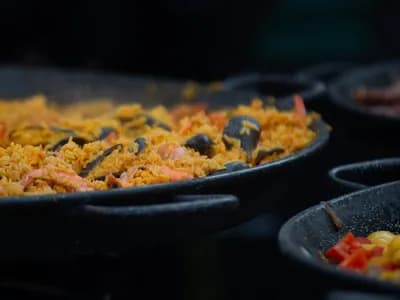
Alicante-style baked rice on the kamado in a clay cazuela
Traditional Alicante baked rice —chickpeas, pork rib, blood sausage, potato and tomato, with a whole garlic head in the centre— baked in a clay cazuela at 220°C indirect.
KEEP READING
Go deeper on this dish
- Recommended kamado
Big Green Egg Large
The classic kamado that defined the category
- Editorial guide
How to light a kamado: the step-by-step method
No petrol, no weird tablets and no 45-minute waits. The cone method, airflow control and the mistakes that prevent 80% of the frustration.
- Glossary term
Heat deflector
Ceramic plate placed between the coals and the grate to turn direct fire into indirect cooking.
- Related comparison
big green egg large vs kamado joe classic iii
The classic kamado matchup: the Big Green Egg Large, the indestructible pioneer with the widest accessory network, agai…