Recipe · Smoked · Medium
Cherry-Smoked Baby Back Ribs on the Kamado, 2-1-1 Method
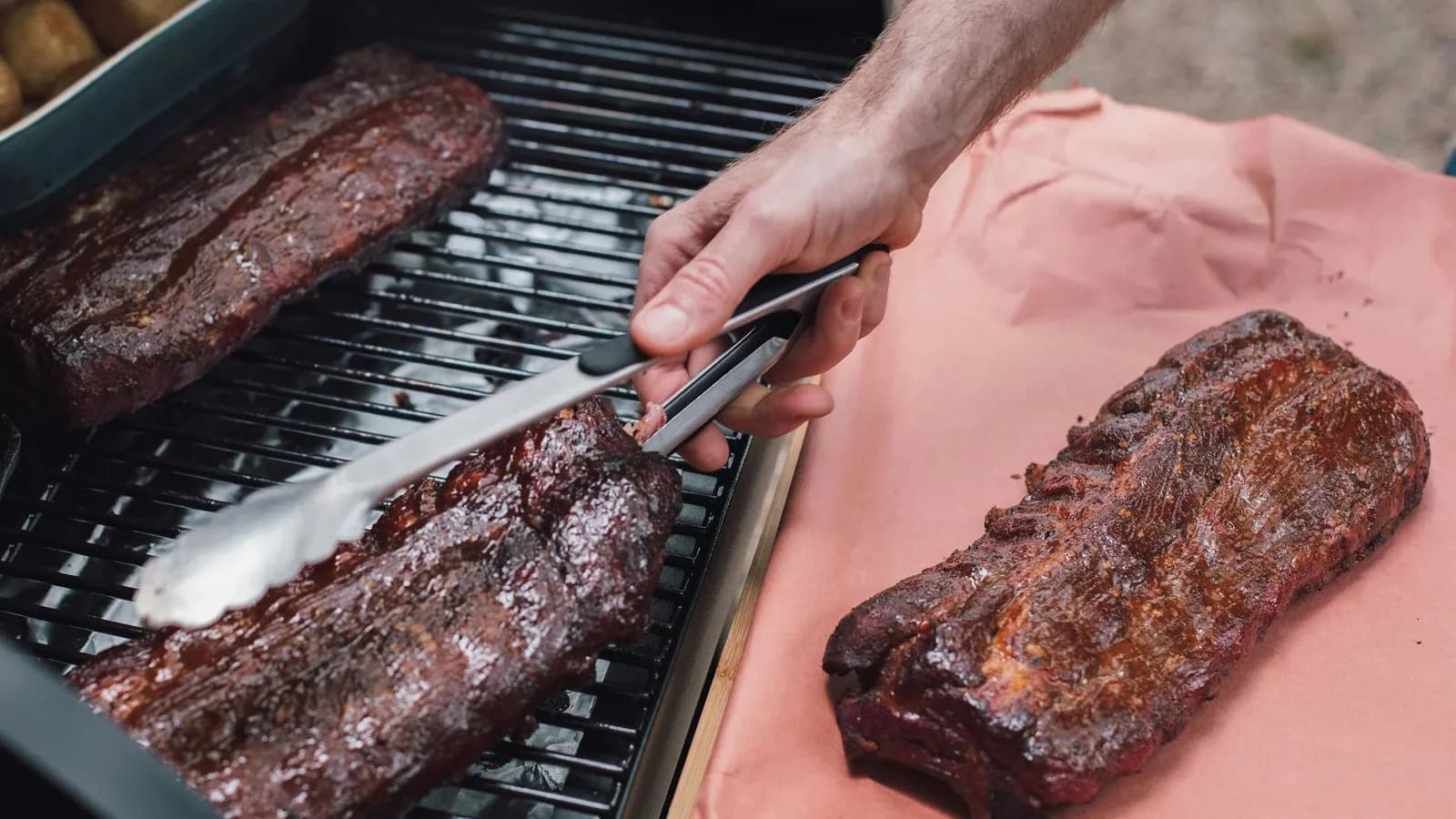
Smoke baby back ribs from start to finish: two hours on edge in cherry smoke, one wrapped and one with sauce, at 110-120 °C measured at the grate, until they bend and read 90-93 °C between the bones.
Quick answer
Strip the membrane from two racks of baby back ribs (costillar de lomo) and rub them. Smoke indirect at 110-120 °C measured at the grate, with cherry chips set only when building the fire: 2 hours on edge in a rack, 1 hour flat in double foil with juice and butter, 1 hour unwrapped, sauced at the end. Done when they bend and read 90-93 °C between the bones.
- Prep
- 30 min
- Cook
- 240 min
- Servings
- 4 servings
- Temperature
- 115 °C
Ingredients
- whole racks of baby back ribs (costillar de lomo), uncut, 1-1.3 kg each2 ud
- yellow mustard, as a binder2 cda
- fine salt1 cda
- soft brown sugar2 cda
- sweet pimentón de la Vera (Spanish smoked paprika)2 cda
- freshly ground black pepper2 cdta
- garlic powder1 cdta
- onion powder1 cdta
- apple juice, for the wrapped phase100 ml
- butter, in four pieces50 g
- barbecue sauce150 ml
The gear for this recipe
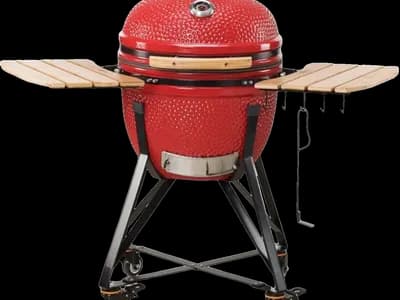
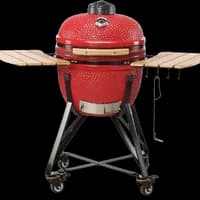 Kamado Bono Media 51 cmFour hours at 110-120 °C call for a chamber that holds heat and moisture with the vents almost closed, and the thick ceramic of the **Kamado Bono Media** does that. According to the manufacturer, its grate measures 44.5 cm: it takes the rib rack with two slabs on edge and, in the wrapped phase, the two flat parcels, cut in half if need be. It comes with two side deflectors that, together, cover all the embers for indirect cooking, so there is no need to buy a separate stone. And it is a kamado you can buy today, medium in size, with plenty of ceramic for two racks without heating up a big cooker.
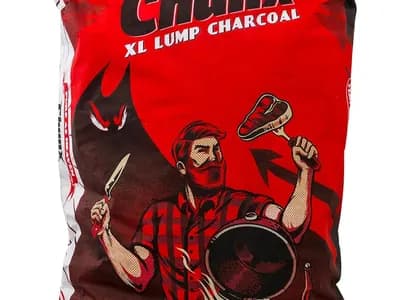
 Jealous Devil 100% White Quebracho lump charcoal 15.8 kgIn this recipe the charcoal brings the heat and the cherry the aroma: quebracho leaves a toasted background of its own, as the wood guide explains, but the fuel's job is to hold 110-120 °C for four hours. **Jealous Devil** is lump charcoal from Paraguayan white quebracho, with no binders, and the manufacturer claims more than 20 hours of burn with little oxygen and little ash. The big lumps let air pass between them, which matters in the Minion method, where the fire creeps slowly from one lit spot through the unlit charcoal. A full firebox is plenty for the 2-1-1, and what is left when you close the vents serves for the next cook.
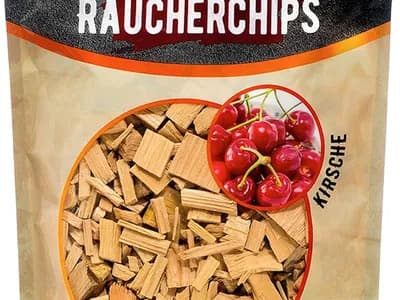
 grillart cherry wood smoking chips, 750 g resealable bagCherry is a soft, fruity wood that complements pork without overpowering it, which is why it is the wood of this recipe. The **grillart cherry chips** come in a 750 g resealable bag and, according to the seller, are natural wood with no additives. Being chips, they burn fast: in the kamado they go wrapped in two foil packets with holes, set in place when you build the fire, one buried in the path of the embers and the other next to them, and are not topped up during the cook. That way they smoke in the first hours, when the rack is still absorbing smoke. One bag yields several sessions; if you cannot find it, a few chunks of cherry or apple do the same job.
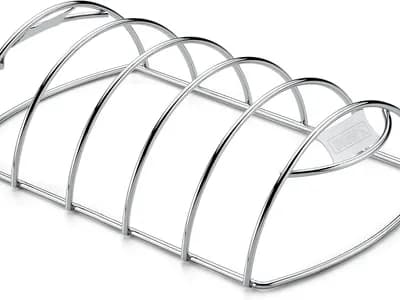
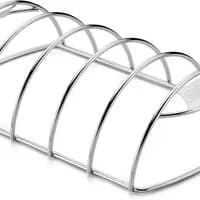 Weber Rib Rack (6605)Two racks of loin ribs lying flat take up almost the whole grate of a medium kamado and only get smoke from above. The **Weber 6605 rib rack** stands them on edge for the two hours of smoke: according to Weber it measures about 34 × 20 cm and 9 cm high and holds up to five racks. Standing, the smoke washes both faces and the fat drips cleanly towards the pan. It comes out in the wrapped phase, because the foil parcels go flat. Before lighting, check with the racks in place that the dome closes without touching them.
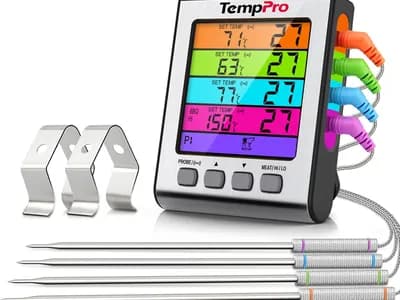
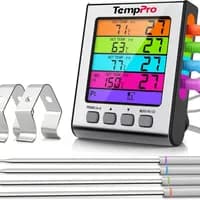 ThermoPro TP17H: 4-probe wired thermometer, -10 to 300 °CIn a four-hour smoke the number that rules is the temperature at grate height, not the dome's. The **ThermoPro TP17H** has four wired probes and, according to its spec sheet, a range of -10 to 300 °C with ±1 °C accuracy. In this recipe one is pushed into half a potato beside the racks, because the box does not include a grate clip, and two more go between the bones, one per rack. Its high and low range alarm warns if the chamber leaves 105-125 °C. It has no app or Bluetooth: the display stays next to the kamado, and the cables come out together at one point of the gasket, away from the hinge.
Method
- 01
Prepare the racks
The day before, or at least 4 hours ahead, lift the membrane on the bone side with a knife tip and pull it off diagonally with kitchen paper. Mix the salt, sugar, paprika, pepper, garlic and onion. Brush the racks thinly with mustard, spread the rub evenly and refrigerate them, covered. Test them cold, on edge in the rib rack on the grate, and close the dome: if they touch it, overhang the edge or do not fit flat side by side, cut each slab in half between two bones.
- 02
Load charcoal and chips
Fill the kamado's firebox with unlit Jealous Devil quebracho charcoal. Divide two or three handfuls of cherry chips, unsoaked, between two foil packets and poke four or five holes in each. Half-bury one packet a hand's width from the spot you will light, in the path of the fire, and set the other aside. Light just one spot at one side of the firebox, with the vents open, for about 10 minutes. Take the ribs out of the fridge now.
- 03
Set up indirect
Set the second packet against the lit coals and fit above it the Kamado Bono Media's two deflectors, together so they cover all the embers, a drip pan with a finger of water on top, and the grate. Push the ambient probe of the ThermoPro TP17H into half a potato beside where the racks will sit and run the cables out together at one point of the gasket. Close up and start closing the vents as you approach 110 °C at the grate; set the range alarm to 105-125 °C.
- 04
Two hours of smoke
Wait for the white start-up smoke to turn almost clear, 10 to 20 minutes with the chamber already steady at 110-120 °C. Stand the slabs, out of the fridge since you lit the fire, on edge in the Weber 6605 rib rack on the grate and push a probe between two bones in the centre of each. Close and do not open for 2 hours: correct the temperature only with small movements of the top vent.
- 05
One hour wrapped
Open with burping: raise the lid about 5 cm, wait about 5 seconds and open fully, wearing gloves. The bark should be set and mahogany in colour. Take the slabs out of the rib rack, set it aside and lay each one flat, meat side down, on a double sheet of foil with 50 ml of juice and 25 g of butter. Seal the parcels well, return them flat to the grate with the probes inside and cook 1 hour at 110-120 °C.
- 06
One hour unwrapped
Burp the lid again before opening fully. Open the parcels with your face turned away, because steam escapes, discard the liquid and leave the slabs flat on the grate, bone side down. Close for 30-45 minutes at 110-120 °C so the bark dries out again. Then, burping first, brush on a thin coat of barbecue sauce and close for another 15-30 minutes, to make roughly the hour; longer in the heat burns the sugar and turns bitter.
- 07
Check for doneness
Lift each rack by the centre with tongs: it is ready when it bends about 30° without breaking and the surface cracks. Confirm with the probe between two bones, without resting the tip on bone: 90-93 °C. A toothpick should slide in between bones with only slight resistance. If it is still tough, give it another 15-30 minutes and test again; if it splits when lifted, it has gone too far.
- 08
Rest and cut
Move the racks to a board and rest them for 10 minutes, uncovered. Turn them bone side up to see where each bone runs and cut between the bones with a long knife in one stroke. Close both vents of the kamado to snuff out the spare charcoal, which is good for next time. Leftovers go in the fridge within 2 hours.
About this recipe
This recipe smokes a rack of loin ribs, the cut you ask for at a Spanish butcher's as costillar de carré or baby back, from start to finish in a closed kamado. There is no direct-heat finish and no reverse-sear: just about four hours at 110-120 °C measured at the grate, with cherry smoke only at the start and an ending decided by the meat, not the clock. It is the practical application of the 3-2-1 and 2-2-1 method guide, which explains why a ceramic cooker calls for less wrapping, scaled to two racks of 1-1.3 kg for four people.
Why 2-1-1 and not 2-2-1
The 2-2-1 is the classic baby back pattern, as the 3-2-1 guide notes; the temperature and time chart lists it alongside the 3-2-1 and the 2-1-1. It is two hours of smoke with the rack bare, two wrapped and one with sauce. It is a schedule born in steel smokers, where dry air forces you to protect the meat. The ceramic of a kamado holds far more moisture, so the wrapped phase can be halved: 2 hours of smoke, 1 wrapped in foil and 1 unwrapped. Steven Raichlen suggests that same 2-1-1 when the 2-2-1 leaves baby backs too soft. It is not canon; it is a starting point: if the rack comes out tough, add half an hour to the final phase; if it falls apart when you cut it, take half an hour off the wrapped phase next time.
Cherry at the start, quebracho all the way
Cherry is a soft, fruity wood, the kind that complements pork without overpowering it. The grillart cherry chips burn fast and, scattered loose on the coals, flare instead of smoking; that is why they go in two perforated foil packets, set in place when you build the fire, one buried in the path of the embers and the other next to them, and are not topped up. The meat takes up most of its smoke in the first two or three hours, according to the guide to woods for smoking: opening mid-cook to add wood costs temperature and adds the bitterness described in the guide to bitter smoke and creosote. The heat comes from a different product: a lump charcoal of white quebracho, a dense South American hardwood, such as Jealous Devil, with the firebox full and lit at one side in the Minion method; that load is more than enough for the ribs.
Setup: rib rack, heat deflector and probe at the grate
The Weber 6605 rib rack stands the two slabs on edge for the two hours of smoke. Weber gives it as roughly 34 × 20 cm, so its base fits the 44.5 cm grate of the Kamado Bono Media and lets the smoke wash both faces; depending on their length, the slabs standing on edge may need cutting in half. In the wrapped phase the slabs leave the rib rack and go flat, each in its own double-foil parcel, because standing up the liquid runs to one end. Underneath, always a deflector and a drip pan: the ribs cook indirect, and fat falling on hot ceramic smokes and turns bitter. Every time you open the lid, burp it: lift it about 5 cm, wait about 5 seconds and open fully, wearing gloves and keeping your face away; after hours with the vents almost closed, a sudden rush of air can ignite the gases that have built up.
The dome thermometer reads the air at the top and, with the deflector in, can differ from the grate by 10-25 °C, according to the thermometer and probe guide. The ThermoPro TP17H has four wired probes: the ambient one, pushed into half a potato at grate height, runs the cook and its range alarm warns if the chamber leaves 105-125 °C; two more go between the bones, one per rack. The finish is set by the bend, the cracked surface and 90-93 °C between the bones. They are safe long before that, at 62.8 °C according to USDA FSIS, but at that temperature they are still tough.
In 30 seconds
Two racks of baby back ribs, membrane off and rubbed the day before. Kamado set up indirect with deflector and drip pan, quebracho in the Minion method and two packets of cherry chips, chamber at 110-120 °C measured at the grate. 2 hours on edge in the rack, 1 hour flat in double foil with apple juice and butter, 1 hour unwrapped with sauce in the last 15-30 minutes. Done when they bend about 30° and read 90-93 °C between the bones.
Editor's tips
- If you cannot find cherry chips, two chunks of cherry or apple wood buried in the charcoal do the same job and smoke for longer; never mix more than two woods in the same session.
- The 3-2-1 guide suggests butcher paper as the starting point in a kamado: the bark suffers less, in exchange for a little more time. This recipe uses foil because the juice and butter need a sealed parcel; if you try paper, leave out the liquid.
- Adjust in half-hour steps: tough ribs call for a longer final phase; ribs that fall apart when cut call for a shorter wrapped phase. Write down the real chamber temperature, not the dome's.
- There is no need to bring the meat up to room temperature: the half hour the kamado takes to settle is enough, and USDA FSIS advises against leaving meat out for more than 2 hours.
Gear for this recipe
As an Amazon Associate, mikamado.es earns from qualifying purchases. At no extra cost to you.
Kamado Bono Media 51 cm
Four hours at 110-120 °C call for a chamber that holds heat and moisture with the vents almost closed, and the thick ceramic of the **Kamado Bono Media** does that. According to the manufacturer, its grate measures 44.5 cm: it takes the rib rack with two slabs on edge and, in the wrapped phase, the two flat parcels, cut in half if need be. It comes with two side deflectors that, together, cover all the embers for indirect cooking, so there is no need to buy a separate stone. And it is a kamado you can buy today, medium in size, with plenty of ceramic for two racks without heating up a big cooker.
€923
Jealous Devil 100% White Quebracho lump charcoal 15.8 kg
In this recipe the charcoal brings the heat and the cherry the aroma: quebracho leaves a toasted background of its own, as the wood guide explains, but the fuel's job is to hold 110-120 °C for four hours. **Jealous Devil** is lump charcoal from Paraguayan white quebracho, with no binders, and the manufacturer claims more than 20 hours of burn with little oxygen and little ash. The big lumps let air pass between them, which matters in the Minion method, where the fire creeps slowly from one lit spot through the unlit charcoal. A full firebox is plenty for the 2-1-1, and what is left when you close the vents serves for the next cook.
€205
grillart cherry wood smoking chips, 750 g resealable bag
Cherry is a soft, fruity wood that complements pork without overpowering it, which is why it is the wood of this recipe. The **grillart cherry chips** come in a 750 g resealable bag and, according to the seller, are natural wood with no additives. Being chips, they burn fast: in the kamado they go wrapped in two foil packets with holes, set in place when you build the fire, one buried in the path of the embers and the other next to them, and are not topped up during the cook. That way they smoke in the first hours, when the rack is still absorbing smoke. One bag yields several sessions; if you cannot find it, a few chunks of cherry or apple do the same job.
€15
Weber Rib Rack (6605)
Two racks of loin ribs lying flat take up almost the whole grate of a medium kamado and only get smoke from above. The **Weber 6605 rib rack** stands them on edge for the two hours of smoke: according to Weber it measures about 34 × 20 cm and 9 cm high and holds up to five racks. Standing, the smoke washes both faces and the fat drips cleanly towards the pan. It comes out in the wrapped phase, because the foil parcels go flat. Before lighting, check with the racks in place that the dome closes without touching them.
€22
ThermoPro TP17H: 4-probe wired thermometer, -10 to 300 °C
In a four-hour smoke the number that rules is the temperature at grate height, not the dome's. The **ThermoPro TP17H** has four wired probes and, according to its spec sheet, a range of -10 to 300 °C with ±1 °C accuracy. In this recipe one is pushed into half a potato beside the racks, because the box does not include a grate clip, and two more go between the bones, one per rack. Its high and low range alarm warns if the chamber leaves 105-125 °C. It has no app or Bluetooth: the display stays next to the kamado, and the cables come out together at one point of the gasket, away from the hinge.
€36
FAQ
What is the 2-1-1 method for ribs?
It is a three-phase schedule at 110-120 °C: 2 hours of smoke with the rack bare, 1 hour wrapped (in foil with a splash of liquid, or in paper without it) and 1 hour unwrapped, with sauce at the end. It takes about four hours and suits baby back ribs (costillar de lomo). In a kamado, which holds more moisture than a steel smoker, it usually gives a better bark than the 2-2-1 because it spends less time wrapped; it is a starting point you adjust in half-hour steps.
Do you need a rib rack in a medium kamado?
It helps if you want two slabs at once. The Weber 6605 rib rack (about 34 × 20 cm according to Weber) stands the slabs on edge, and its base fits the 44.5 cm grate of the Kamado Bono Media, according to the manufacturer; smoke washes both faces and more meat fits than lying flat. Depending on their length, you may need to cut the slabs in half. Without a rack you can smoke flat, but then only one slab fits, or two overlapped that cook unevenly.
Can you do the 2-1-1 with butcher paper?
Yes, it is the alternative the 3-2-1 guide suggests for a kamado: the bark suffers less, in exchange for a little more time in the wrapped phase. This recipe uses foil because the juice and butter need a sealed parcel; with paper, leave out the liquid and judge doneness by the bend test and 90-93 °C between the bones, not by the clock.
What is the best wood for smoking pork ribs?
For pork, mild and medium woods work: cherry, apple and olive. Cherry gives a fruity, discreet smoke that does not mask the meat. In a kamado the dose is small, about 100-150 g for a four-hour cook, set in place when you build the fire. Chips go in perforated foil packets, because loose they flare; chunks are buried straight in the charcoal. There is no need to soak the wood.
How do you know when smoked ribs are done?
With three tests, because a probe in such thin meat easily touches bone. Lift the rack by the centre with tongs: if it bends about 30° and the surface cracks, it is ready. A toothpick slides in between two bones with little resistance. And the temperature, measured between the bones without touching bone, reads 90-93 °C. If the rack splits when lifted, it has gone too far.
More kamado recipes
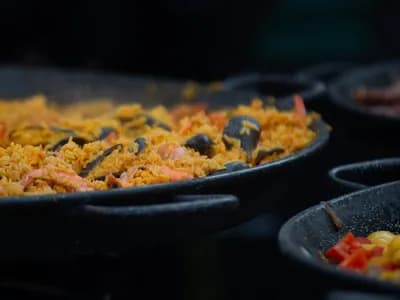
Alicante-style baked rice on the kamado in a clay cazuela
Traditional Alicante baked rice —chickpeas, pork rib, blood sausage, potato and tomato, with a whole garlic head in the centre— baked in a clay cazuela at 220°C indirect.
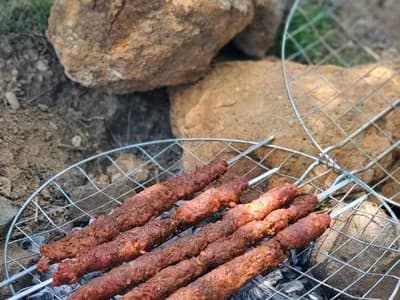
Lamb Lyulya Kebab on the Kamado
The question is never how to season it, but why it falls off the skewer. The answer is fat, a hand-chopped grain and real kneading: juicy lamb that holds together over direct fire.
Pork Neck Shashlik on the Kamado, Onion Marinade
The skewer of the Russian-speaking world, cooked as I make it on my Big Green Egg Large: pork neck in 3 cm cubes, a grated onion marinade with not a drop of vinegar, and twenty minutes of steady direct fire.
KEEP READING
Go deeper on this dish
- Recommended kamado
Kamado Bono Media 51 cm
Four hours at 110-120 °C call for a chamber that holds heat and moisture with the vents almost closed, and the thick ceramic of the Kamado Bono Media does that. According to the manufacturer, its grate measures 44.5 cm: it takes the rib rack with two slabs on edge and, in the wrapped phase, the two flat parcels, cut in half if need be. It comes with two side deflectors that, together, cover all the embers for indirect cooking, so there is no need to buy a separate stone. And it is a kamado you can buy today, medium in size, with plenty of ceramic for two racks without heating up a big cooker.
- Editorial guide
How to light a kamado: the step-by-step method
No petrol, no weird tablets and no 45-minute waits. The cone method, airflow control and the mistakes that prevent 80% of the frustration.
- Glossary term
Low & slow
Cooking at low temperature (95-130 °C) for many hours to tenderise tough cuts and develop deep smoke.
- Related comparison
big green egg large vs kamado joe classic iii
The classic kamado matchup: the Big Green Egg Large, the indestructible pioneer with the widest accessory network, agai…