Recipe · Indirect · Easy
Kamado-Roasted Squash with Honey and Pimentón de la Vera
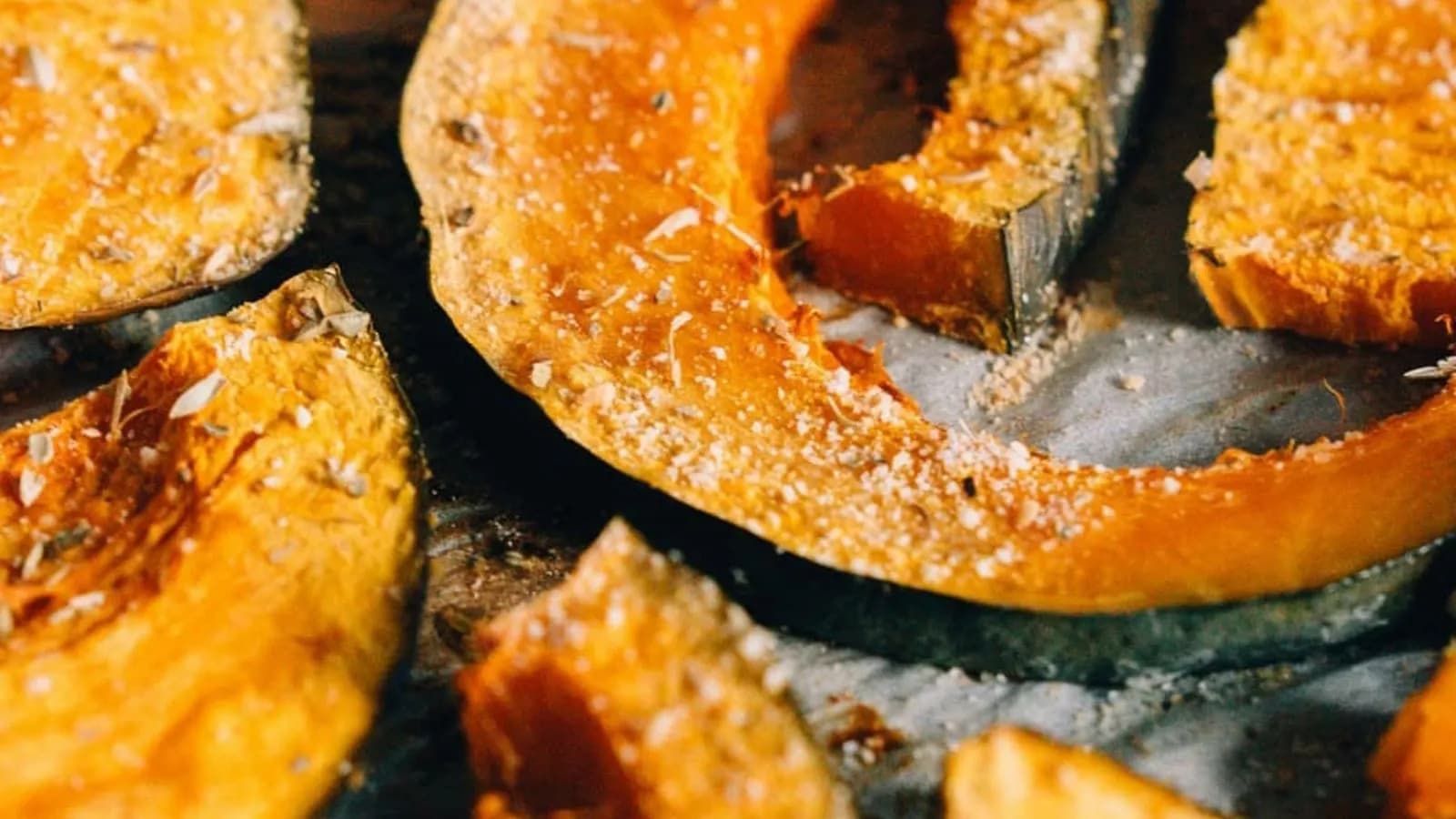
Skin-on squash wedges in a 35 cm cast iron skillet, indirect at 200 °C for 40-45 minutes, with a honey and pimentón de la Vera glaze that goes on only at the end so it caramelises without burning. An autumn side dish.
Quick answer
Cut skin-on squash into 3 cm wedges, toss with oil and salt and lay them flesh down in a preheated cast iron skillet, in the kamado with the deflector in at 200 °C. After 20 minutes turn them skin down and carry on until a knife tip slides in with no resistance (40-45 min). Glaze with honey, pimentón de la Vera and oil for the last 10 minutes.
- Prep
- 15 min
- Cook
- 45 min
- Servings
- 6 servings
- Temperature
- 200 °C
Ingredients
- butternut or Hokkaido squash, skin on, in 3 cm wedges1.8 kg
- extra virgin olive oil4 cda
- coarse salt8 g
- garlic cloves, thinly sliced2 ud
- sprigs of fresh rosemary2 ud
- rosemary or wildflower honey3 cda
- sweet pimentón de la Vera2 cdta
- hot pimentón de la Vera0.5 cdta
- sherry vinegar1 cda
- toasted pumpkin seeds, to serve40 g
Method
- 01
Cut the squash
Choose a butternut or a thin-skinned Hokkaido squash: both are eaten skin and all. Wash it, halve it, scoop out the seeds with a spoon and cut it into wedges about 3 cm across at their thickest point. Thinner wedges are overdone before the glaze goes on; thicker ones stretch out the cook. Pat them dry with kitchen paper: moisture on the surface slows the browning on the iron.
- 02
Light for indirect
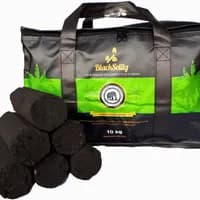
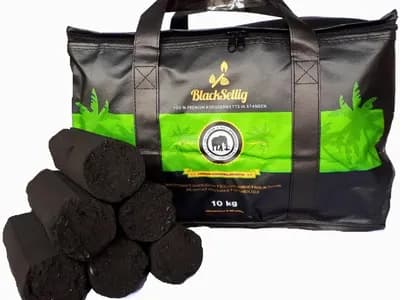
Fill the kamado's charcoal basket halfway with BlackSellig coconut briquettes and light them with two or three firelighters spread across the top. Once the surface has caught, after about ten minutes, put in the kamado's deflector with the grate on top, close the dome and adjust both vents until the needle settles at 200 °C. Allow 30-40 minutes: the ceramic and the deflector need to be hot before anything goes in.
- 03
Preheat the iron
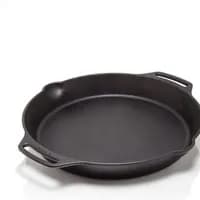
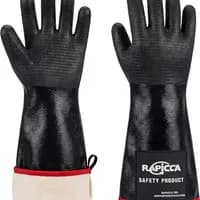
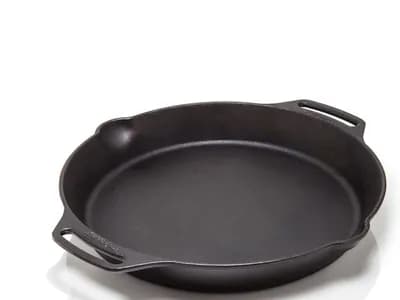
With the Rapicca gloves on, set the empty Petromax FP35 cast iron skillet on the grate, above the deflector, and close the dome for ten minutes. The iron has to be at the temperature of the air before the squash goes in: if it goes in cold, the wedge weeps water and steams instead of browning. Meanwhile, toss the wedges in a large bowl with three tablespoons of the oil and the salt until every face glistens; keep the sliced garlic for the turn.
- 04
Flesh down
Open the dome and lay the wedges in the hot skillet with one cut face against the iron, in a single layer with no crowding; if they do not all fit, keep the extras for a second batch. Scatter the rosemary among them, close the dome and leave them alone for 20 minutes at 200 °C: the crust needs that time to form and release itself from the metal.
- 05
Turn onto the skin
After 20 minutes, use long tongs to turn each wedge so it sits on its skin. The browned face is now on top, with dark marks and a caramelised edge. Now scatter the garlic slices over the browned face: in the 20-25 minutes left they toast without burning. Close the dome and carry on at 200 °C for another 10 to 15 minutes, until the tip of a knife slides into the thickest part almost without resistance.
- 06
Make the glaze
While the squash finishes, mix the honey, the sweet and hot pimentón, the remaining tablespoon of oil and half a tablespoon of the sherry vinegar in a small bowl. If the honey is thick, warm it for a few seconds over a bain-marie until it runs off the brush without dragging the pimentón into lumps. Taste it: it should be sweet, smoky and with a short, sharp edge.
- 07
Glaze for the last ten minutes
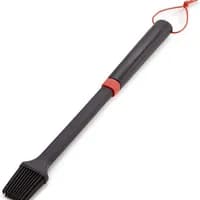
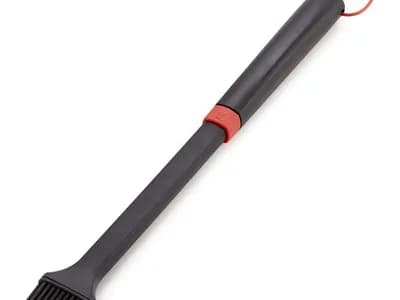
Open the dome and brush only the top face of each wedge with the 40 cm Weber silicone brush, keeping your hand well away from the iron; a thin coat is enough, since any honey that drips ends up burnt in the skillet. Close and give it 10 more minutes at 200 °C. The glaze should bubble and darken to a glossy mahogany, not to black; if the pimentón smells burnt, take the skillet out early.
- 08
Lift out the skillet and finish the sauce
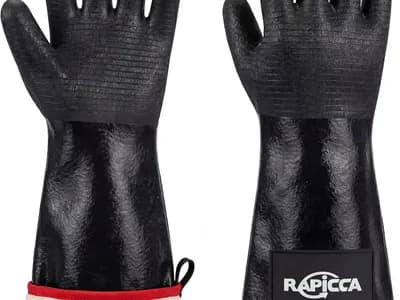
With the Rapicca gloves on, grip the skillet by both handles and carry it to a board or a trivet; the iron stays hot enough to burn long after it leaves the kamado, so do not touch it without gloves. Move the wedges to a serving dish. Pour the remaining half tablespoon of vinegar and a tablespoon of water into the skillet, scrape the base with the brush to lift the stuck-on glaze and pour that jus over the squash. Finish with the toasted seeds and the rosemary leaves.
About this recipe
Squash is the autumn vegetable that best repays a long roast. It is dense, high in sugar and low in free water, and over direct fire it burns on the outside before it softens inside. In a kamado with the deflector in, the opposite happens: at 200 °C of steady air, in a 35 cm cast iron skillet, the wedges cook slowly and right through to the centre for around 40 minutes and only at the end receive the honey and the pimentón de la Vera. The result is a side dish with melting flesh, a caramelised edge and skin you can eat. It goes alongside a roast or on its own, with toasted pumpkin seeds on top.
A long indirect cook: why squash needs the deflector
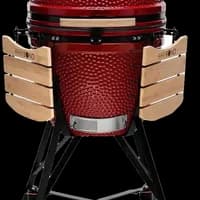
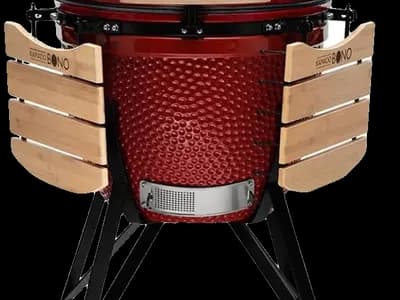
With the kamado's deflector between the charcoal and the grate, the skillet gets no flame, only hot air circulating round the dome, like a wood-fired oven that also smells of embers. [Indirect cooking](/guias/coccion-directa-vs-indirecta-kamado-deflector) keeps the iron at the temperature of the air, with no hot spots to scorch one wedge and leave the next one raw. A vegetable this dense needs that time: the cell walls soften slowly and the sugars concentrate at the surface as the water evaporates. The 59 cm Kamado Bono Grande XXL comes with its own deflector and its grate takes the 35 cm skillet with room for the air to pass around it. For 45 minutes at a constant temperature, BlackSellig coconut briquettes, uniform in size and even-burning, give a level bed that helps keep the thermometer needle still.
Skin down or skin up: two different results
A wedge has two faces and each responds differently to the iron. With the flesh against the skillet, contact with the metal dries the surface and sets off the [Maillard reaction](/glosario#maillard): a golden crust forms, tasting of toast and caramel, at the price of the wedge soaking up more oil and sticking if it is moved too soon. Skin down, the skin works as an individual tray: it protects the flesh, lets it cook in the hot air around it and comes out smooth and even, but with no crust. This recipe uses both positions: twenty minutes flesh down to brown, then the rest on the skin, which is also the position in which the glaze stays on top of the wedge instead of running off onto the iron.
The honey goes on last and the iron finishes the sauce
Honey is almost pure sugar, and sugar goes from caramel to bitter in a few minutes at 200 °C. Brush it on at the start and after twenty minutes there is a black layer, and the pimentón, which also burns easily, tastes of ash. That is why the glaze arrives with the 40 cm Weber silicone brush in the last ten minutes, when the knife tip already slides into the wedge almost without resistance, and only the top face is painted, in a thin coat.
A [cast iron skillet](/guias/hierro-fundido-y-dutch-oven-en-kamado) holds heat long after it leaves the kamado, and that residual heat is the sauce. When you lift out the wedges, traces of honey and pimentón are left stuck to the base; half a tablespoon of sherry vinegar and one of water loosen them and form a glossy jus in half a minute, without lighting anything again. A hot 35 cm skillet is heavy and both handles will burn you: the 43 cm Rapicca gloves cover the wrist and forearm so you can lift it out of the dome without brushing the ceramic rim. If you like this logic of deflector and whole vegetable, the [whole roasted cauliflower](/recetas/coliflor-entera-asada-kamado) follows the same path; the [sweet potato in the embers](/recetas/castanas-boniato-rescoldo-kamado) is the opposite: ash and direct fire, no iron.
In 30 seconds
Skin-on squash wedges in a 35 cm cast iron skillet, kamado with the deflector in at 200 °C. Twenty minutes flesh down, then on the skin until a knife tip slides in with no resistance, around 40-45 minutes in total depending on thickness. Honey, pimentón de la Vera and oil glaze only in the last ten minutes. The sauce is finished in the hot iron with sherry vinegar.
Editor's tips
- Butternut and Hokkaido (red kuri) squash are eaten with the skin on; the calabaza de Castilla, the big Spanish pumpkin with thick, hard skin, needs peeling and cutting into 4 cm wedges, which hold together through the roast and usually want ten minutes or so beyond the 45.
- If the honey darkens too soon, the kamado is running hot: do not open the dome to cool it, close the top vent a little and check the needle again after five minutes.
- With pimentón de la Vera, which is smoked to begin with, wood is surplus: a chunk of oak on the charcoal competes with the pimentón and the honey instead of adding to them.
- The cold wedges, skin removed, mash with a fork and make a filling for empanadillas (small Spanish pasties) or the base of a squash hummus with the same pimentón.
Gear for this recipe
As an Amazon Associate, mikamado.es earns from qualifying purchases. At no extra cost to you.
FAQ
Which squash is best for roasting on the barbecue?
Butternut and Hokkaido (red kuri). Both have dense flesh, little fibre and a thin skin that softens and can be eaten. The calabaza de Castilla, the big hard-skinned Spanish pumpkin, works peeled and in thicker wedges, but it releases more water and takes longer to brown. Avoid very watery-fleshed pumpkins: in 45 minutes they collapse before they caramelise.
How long does roasted squash take in the kamado at 200 °C?
With wedges 3 cm across at the thick end, between 40 and 45 minutes indirect, including the last ten for the glaze. Timing depends on thickness and variety, so the reference is not the clock but the knife tip: when it slides into the thickest part almost without resistance, it is time to glaze; the ten minutes of glazing finish the job. Wedges of 2 cm finish sooner; 4 cm may want ten minutes more.
Can you roast squash direct, without the deflector?
You can, but it becomes a different dish. Over direct fire the surface of the wedge marks within minutes while the centre stays hard, and the honey burns the moment it touches the grate. Without a deflector it is better to cut thin 1 cm slices, turn them often and glaze off the heat. For thick wedges with melting flesh, indirect at 200 °C is the short route.
Why does the honey burn on roasted squash?
Because honey is almost all sugar and, at the 200 °C this recipe works at, it goes from caramel to bitter in a matter of minutes. Brushed on at the start, it blackens long before the squash is done. The trick is the order: the vegetable roasts bare, with oil and salt, and the honey with the pimentón goes on only in the last ten minutes.
Do you need to peel squash before roasting it?
Not with butternut or Hokkaido: the skin softens in the roast, is perfectly good to eat and holds the wedge together when you turn it. Resting on the iron, it also protects the flesh and acts as a plate for the glaze. Peeling is only worth it for the calabaza de Castilla and other varieties with thick, woody skin that will not soften in 45 minutes.
More kamado recipes

Whole roasted cauliflower on the kamado with saffron aioli
A whole cauliflower roasted indirect at 180°C: steam first to tame the core, then a deep sear and a spiced glaze. Golden outside, tender inside, with saffron aioli. Serves 4.
Grilled Corn Mexican Elote Style on the Kamado
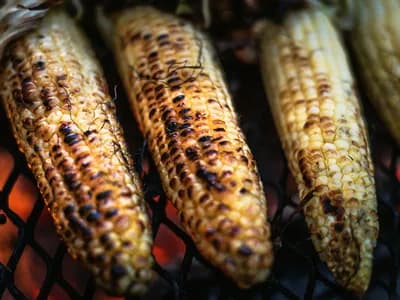
Cobs charred over direct fire, slathered with lime mayo, cotija cheese, chili and cilantro. Got leftovers? Strip the kernels and turn them into cups of esquites.
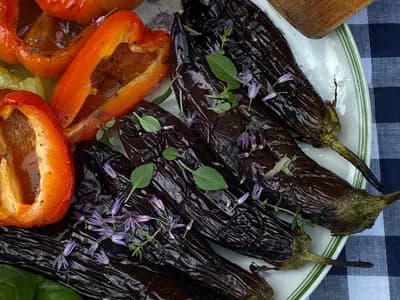
Kamado escalivada with smoked peppers and aubergine
Red pepper, aubergine and onion roasted whole over live coals until the skin chars black, then peeled and dressed with nothing but extra-virgin olive oil and flaky salt.
KEEP READING
Go deeper on this dish
- Recommended kamado
Kamado Bono Grande XXL 59 cm
The biggest Bono, with a 6-piece accessory set
- Editorial guide
How to light a kamado: the step-by-step method
No petrol, no weird tablets and no 45-minute waits. The cone method, airflow control and the mistakes that prevent 80% of the frustration.
- Glossary term
Heat deflector
Ceramic plate placed between the coals and the grate to turn direct fire into indirect cooking.
- Related comparison
big green egg large vs kamado joe classic iii
The classic kamado matchup: the Big Green Egg Large, the indestructible pioneer with the widest accessory network, agai…