Recipe · Indirect · Medium
Beef Cheeks in Red Wine, Braised in a Dutch Oven on the Kamado
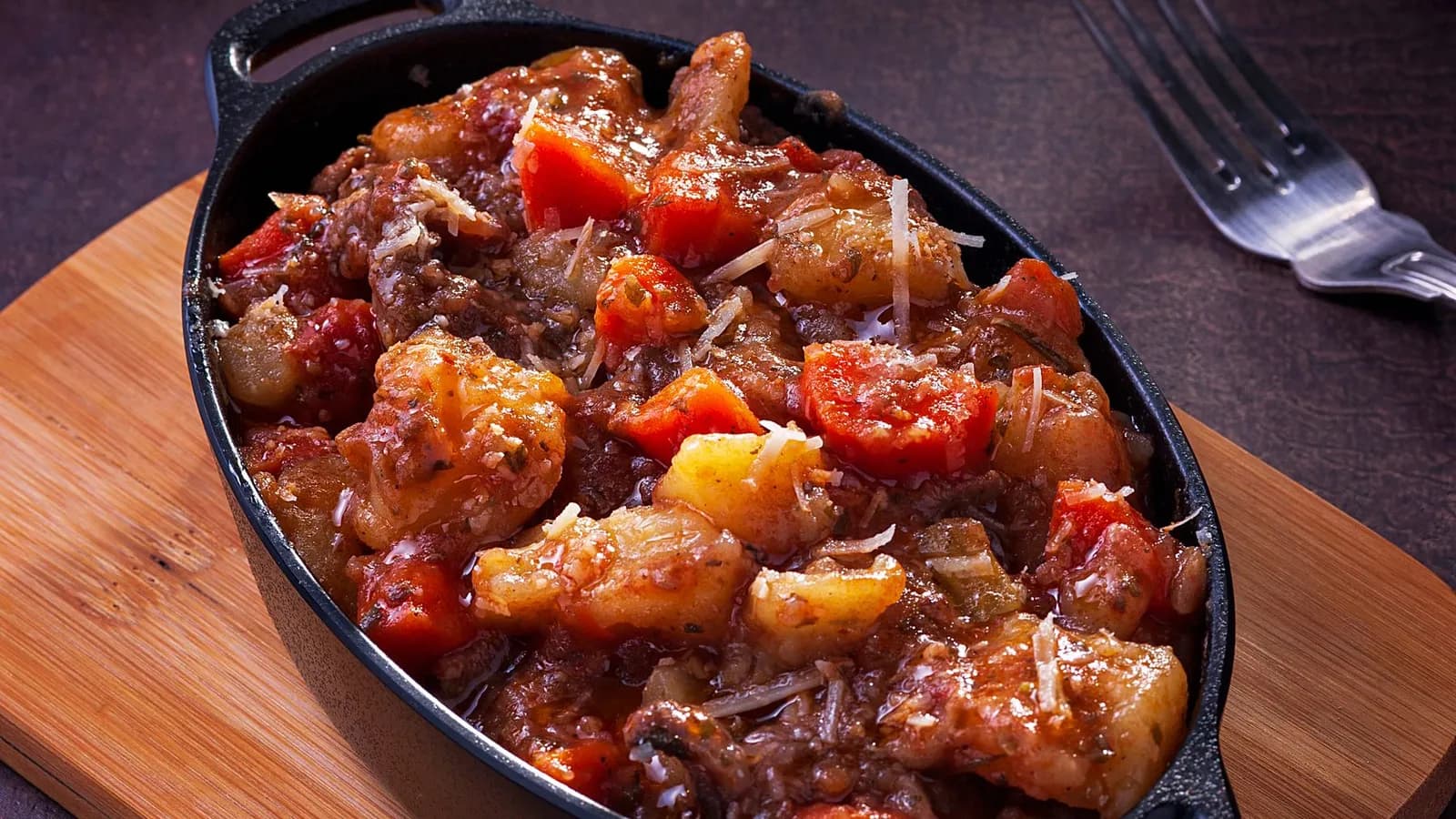
Three hours of red wine, cast iron and a thread of olive-wood smoke your kitchen oven simply cannot make. The braise that justifies lighting the kamado in midwinter.
Quick answer
Sear the beef cheeks in a cast-iron dutch oven inside the kamado at 230 °C with no deflector, soften the vegetables and reduce the red wine. Fit the deflector, drop to 150 °C and braise for three hours: the first twenty minutes uncovered over olive-wood chunks, the rest with the lid on until the meat falls apart.
- Prep
- 30 min
- Cook
- 180 min
- Servings
- 6 servings
- Temperature
- 150 °C
Ingredients
- beef cheeks, trimmed of silverskin1500 g
- large onion2 ud
- carrot2 ud
- garlic clove4 ud
- small shallots, whole12 ud
- full-bodied red wine (Monastrell, Rioja or Ribera del Duero)750 ml
- beef stock500 ml
- extra virgin olive oil40 ml
- plain flour30 g
- bay leaf2 ud
- thyme sprig2 ud
- salt10 g
- freshly ground black pepper1 cdita
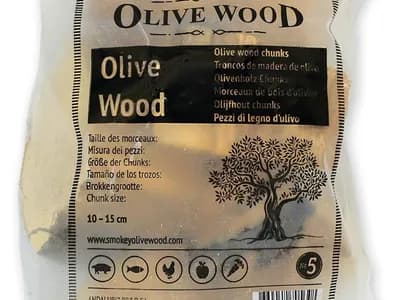
- olive-wood chunks2 ud

Method
- 01
Trim and season
With a thin knife, strip the silverskin off the beef cheeks: left on, it shrinks with the heat and buckles the meat. Salt them on both sides, grind black pepper over the top and dust the flour through a sieve in a very fine layer. Let them come up to room temperature for thirty minutes while you light the kamado.
- 02
Light up and heat the pot
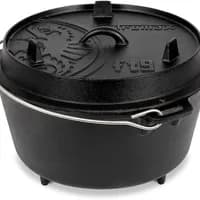
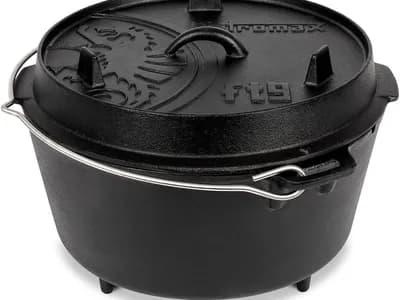
Light the kamado for direct cooking, no deflector, and settle it at 230 °C with the lid closed. Put the empty Petromax FT9 on the grate and let it heat for ten minutes: cast iron needs that head start to sear without stalling when the meat goes in. Keep the Rösle silicone and leather barbecue glove within reach, because the handle will be searing hot.
- 03
Sear in two batches
Pour the oil into the hot pot and sear the cheeks in two batches, three to four minutes a side, until you have a dark, even crust. Do not crowd them: touching, they weep water and stew instead of browning. Lift them onto a dish and leave the toasted fond in the pot, because that is where the flavour lives.
- 04
Soften and deglaze
Tip the onion, carrot, garlic and shallots into the same fat and soften them for ten to twelve minutes with the kamado lid closed, stirring every three or four. Once the onion is sweet and translucent, pour in the red wine, scrape the base with a wooden spoon and let it reduce by half, about eight minutes.
- 05
Deflector in, down to 150 °C
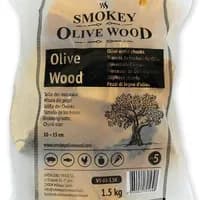
Lift the pot out with the glove, close the vents almost completely and fit the ConvEGGtor legs up. Drop two olive-wood chunks onto the coals and wait until the smoke turns from thick and white to thin and blue. The ceramic takes twenty to thirty minutes to fall from 230 to 150 °C: do not force it by opening the lid.
- 06
Twenty minutes of smoke
Return the cheeks to the pot with the stock, the bay and the thyme; the liquid should come two thirds up the meat, not drown it. Set the dutch oven uncovered inside the kamado and close the kamado lid. Twenty minutes like that: the olive smoke dissolves into the sauce, which is precisely what an oven cannot do.
- 07
Cover and braise
Put the lid on the pot and hold the dome at 150 °C for another two and a half hours. Try not to open the kamado: every peek costs roughly ten minutes of recovery. At the two-hour mark test with a fork; it is ready when the tines turn inside the meat with no resistance, around 94 °C in the centre.
- 08
Reduce the sauce
Lift the cheeks onto a dish and cover them. Fish out the bay and thyme, open the vents to bring the dome to 180 °C and leave the pot uncovered for fifteen minutes, until the sauce coats the back of a spoon. For a smoother sauce, blitz half the vegetables and stir them back in.
- 09
Rest and serve
Slide the meat back into the sauce, put the lid on the dutch oven and rest it for fifteen minutes off the kamado: the cheek draws juice back in and settles. Serve with mashed potato, a good country loaf or sliced potatoes cooked under the meat. It will be better still the next day.
About this recipe
There is a stubborn idea that a kamado is summer kit. A cast-iron dutch oven says otherwise. Beef cheeks are pure collagen, the cut that rewards three slow hours of gentle heat better than any other, and in ceramic they get something a kitchen oven cannot give them: a base note of olive-wood smoke dissolved into the wine itself.
Why the dutch oven beats the oven
A kitchen oven braises cheeks perfectly well, no point pretending otherwise, but it cooks with hot air and nothing else. In the kamado, during the first minutes with the pot uncovered, smoke from the olive-wood chunks dissolves into the stock and stays there, underneath the wine. It is not a barbecue flavour: it is a toasted, woody undertone, closer to dying embers than to smoked brisket.
Sear first, deflector afterwards
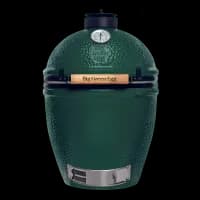
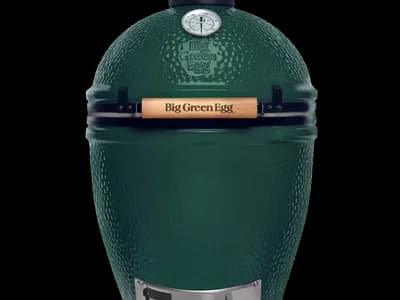
Order matters. The Petromax FT9 goes onto the grate bare, with no deflector and the kamado at 230 °C: the cheeks colour there better than in any frying pan, because heavy iron does not collapse in temperature when the meat goes in. The FT9's bare iron sears like nothing else, but three hours of red wine is pure acid on the seasoning: if your pot is freshly seasoned, or you would rather not redo it, braise in an enamelled cocotte and keep the FT9 for the browning. Only once the vegetables are softened and the wine reduced does the ConvEGGtor go in, the vents close and the dome is allowed to fall to 150 °C. On my Big Green Egg Large the ceramic takes the best part of half an hour to come down: time enough to deglaze without rushing.
Twenty minutes open, the rest with the lid on
The first twenty minutes of the braise happen with the pot open inside a closed kamado. Liquid takes on smoke quickly and unevenly, so after that the lid goes on and stays on until the end. Three hours later a fork tip turns inside the cheek without meeting any resistance.
In 30 seconds
Cheeks seared in the dutch oven at 230 °C with no deflector, vegetables softened and wine reduced; then deflector in and 150 °C: twenty minutes uncovered over olive wood and about two and a half hours with the lid on. Reduce the sauce at the end and rest for 15 minutes.
Editor's tips
- Ask your butcher for cheeks already trimmed of silverskin: it is slow work with a small knife, and you can taste the difference on the plate.
- The liquid should reach two thirds up the meat and never cover it: braising is not boiling, and the part that stands proud toasts in the hot air.
- Two olive-wood chunks are plenty: smoke builds up fast in a liquid, and with four the sauce turns bitter.
- Cook them the day before, chill the whole pot and reheat covered at 140 °C: the gelatine redistributes and the sauce gains body.
Gear for this recipe
As an Amazon Associate, mikamado.es earns from qualifying purchases. At no extra cost to you.
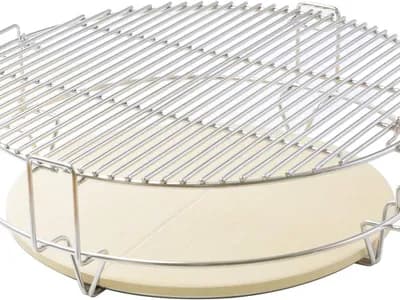

FAQ
Can I use pork cheeks instead of beef?
Yes, and they are easier to find. They weigh about half as much and need less time: with the same set-up, reckon on an hour and a half to two hours at 150 °C rather than three. Nothing else changes, though reduce the sauce a little longer at the end, as pork gives up less gelatine than beef.
Which red wine works best?
One with body and ripe fruit: Monastrell from Alicante or Jumilla, Rioja or Ribera del Duero. Steer clear of very tannic or heavily oaked bottles, because three hours of cooking concentrate bitterness and astringency. You do not need a grand vintage, but do use a wine you would drink: any fault in it is multiplied in the sauce.
What if I do not have a cast-iron dutch oven?
You can use an earthenware casserole or a deep iron tray sealed with foil. You lose thermal inertia: earthenware cools when the meat goes in and the sear suffers for it. The fix is to sear the cheeks in a separate iron pan and keep the casserole strictly for the 150 °C braise.
Doesn't the smoke make the sauce bitter?
Not if you keep to the twenty minutes uncovered and use only two olive-wood chunks. A liquid takes on smoke far faster than a dry piece of meat, and olive is among the mildest woods. After that window the lid goes on and the meat carries on cooking in its own steam, picking up no further smoke.
Can I make it the day before?
It is the best way to serve it. Finish the braise, let the whole pot cool and keep it in the fridge: the fat rises and lifts off cold with a spoon. Reheat covered at 140 °C for about forty minutes, in the kamado or the oven, and reduce the sauce at the end if it needs it.
More kamado recipes
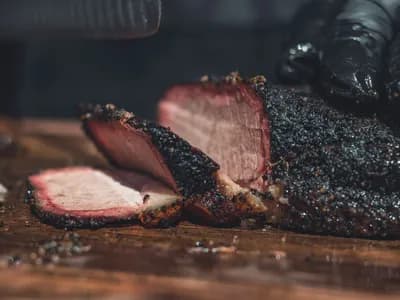
Low-and-slow smoked brisket
The kamado acid test. Ten hours at 110°C, a deep bark, a pink smoke ring and a texture that gives way under the weight of a fork.
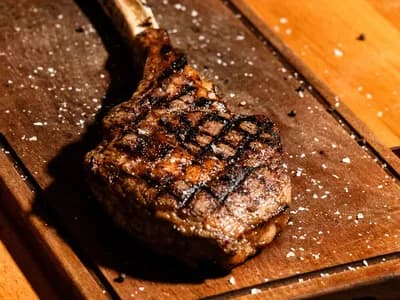
Reverse-sear tomahawk on the kamado
A 1.4 kg tomahawk, probe in the centre, ceramic at 110°C and a 90-second final sear. The Sunday centrepiece for when you want to impress without gambling on doneness.

Alicante-style baked rice on the kamado in a clay cazuela
Traditional Alicante baked rice —chickpeas, pork rib, blood sausage, potato and tomato, with a whole garlic head in the centre— baked in a clay cazuela at 220°C indirect.
KEEP READING
Go deeper on this dish
- Recommended kamado
Big Green Egg Large
The classic kamado that defined the category
- Editorial guide
How to light a kamado: the step-by-step method
No petrol, no weird tablets and no 45-minute waits. The cone method, airflow control and the mistakes that prevent 80% of the frustration.
- Glossary term
Heat deflector
Ceramic plate placed between the coals and the grate to turn direct fire into indirect cooking.
- Related comparison
big green egg large vs kamado joe classic iii
The classic kamado matchup: the Big Green Egg Large, the indestructible pioneer with the widest accessory network, agai…