Recipe · Smoked · Medium
Kamado-Smoked Duck with Apples (Utka s Yablokami), Orange-Wood Smoke
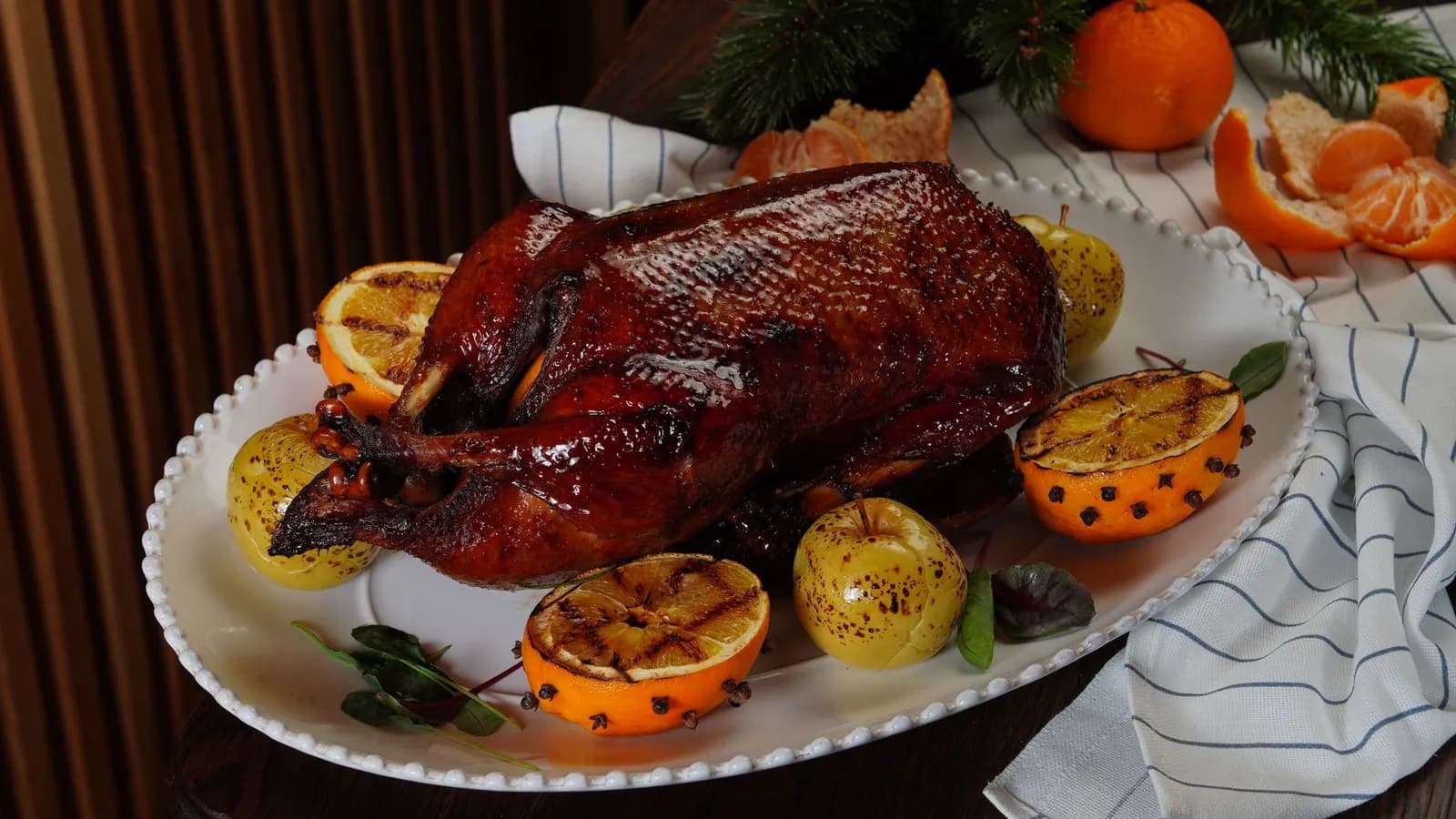
The celebration duck of the Russian repertoire, stuffed with sharp apples and given three hours on the kamado at 130-140 °C, with orange-wood chips fed from a smoker box. The fat drips into the tray and ends up on the potatoes.
Quick answer
Dry-salt the duck for 12-24 h, stuff it with sharp apples and prunes and smoke it on the kamado at 130-140 °C over a deflector and drip tray, with dry orange-wood chips in a smoker box on the coals, reloaded in batches. Raise to 190-200 °C at the end and pull it at 74 °C in thigh, breast and stuffing; about 3 hours. Rest 20 minutes.
- Prep
- 40 min
- Cook
- 200 min
- Servings
- 4 servings
- Temperature
- 135 °C
Ingredients
- whole duck, dressed, giblets removed2.3 kg
- coarse salt30 g
- freshly ground black pepper1 cdta
- dried marjoram (or thyme)1 cdta
- garlic cloves, crushed3 ud
- sharp apples (Granny Smith or reineta, a Spanish Reinette), quartered and cored700 g
- stoned prunes80 g
- lemon, juice only0.5 ud
- bay leaves2 ud
- medium potatoes, peeled and halved800 g
- sauerkraut or pickled red cabbage, to serve300 g
Method
- 01
Dry-salt the duck
The day before, pat the duck dry inside and out with kitchen paper and prick the skin over the breast and thighs with the tip of a knife, skin only, without reaching the meat: those holes are where the rendered fat escapes. Mix the salt, pepper, marjoram and crushed garlic and rub the bird all over and inside the cavity. Leave it uncovered in the fridge for 12-24 hours on a rack so the skin dries out.
- 02
Stuff with apples
Toss the apple quarters in the lemon juice so they do not brown and mix them with the prunes and the bay leaves. Fill the cavity loosely: the apples swell and release juice as they cook, and a packed stuffing will not reach 74 °C in time. Close the opening with two or three toothpicks and tie the legs with kitchen string so the duck sits compact on the grate. Any quarters that do not fit are set aside and go into the tray with the potatoes in step 7.
- 03
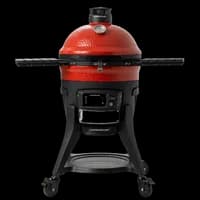
Light the Konnected Joe
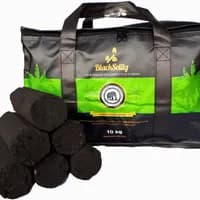
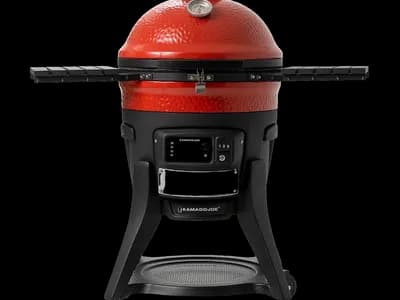
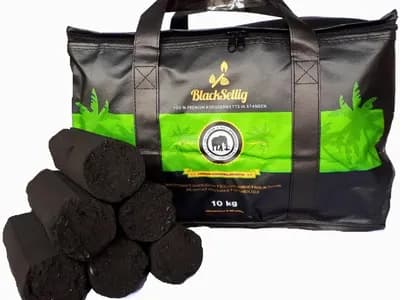
Fill the firebox with BlackSellig coconut briquettes and light it with the Kamado Joe Konnected Joe's built-in electric igniter. Fit the two deflector plates that come with the kamado, set the drip tray with a finger of water on just one of the two halves and the two half grates above: the half without the tray stays free to reach the coals. Close the dome and settle at 130-140 °C with the bottom vent barely open.
- 04
Load the smoker box
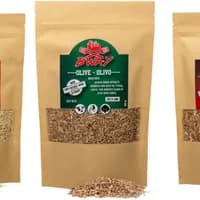
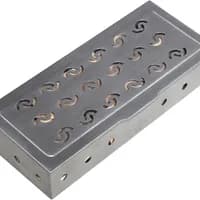
Once the air is steady, load the La Cuisine smoker box with dry BWAY orange-wood chips and close it. With gloves, lift the half grate and the half deflector plate on the side without the tray and set the box on the briquettes, at the edge of the bed. Put plate and grate back. That free half is the one you will open at every reload without touching duck or tray. Loading it earlier, over young coals, wastes the first batch as acrid smoke in an empty chamber.
- 05
Place the probes and the duck
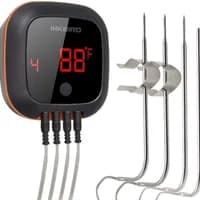
Insert three probes of the Inkbird IBT-4XS: one in the thick part of the thigh clear of the bone, another in the centre of the breast, the third in the heart of the stuffing. Fix the fourth to the grate with a generic probe clip, a few centimetres from the bird. Set the duck breast up on the half grate that sits over the tray, keeping clear of the other half, close the dome and set the alarms to 74 °C on the three meat probes and 145 °C on the air probe.
- 06
Smoke in batches
When the box stops giving off bluish smoke, reload it: with gloves and tongs, lift out the free half of the grate and the half deflector plate beneath it (duck and tray stay on the other half), add another handful of dry chips to the box, close it and put everything back. Two or three reloads over the first two hours are enough; after that the skin has taken on all the smoke it is going to take. Keep the air between 130 and 140 °C by touching only the top vent.
- 07
Potatoes into the tray
While the duck smokes, boil the potatoes in salted water for 10 minutes from the boil and drain them. When the thigh probe reads 60-62 °C, lift the half grate with the duck on it out with gloves and rest it on a board, take out the tray, pour off any water left, spread the potatoes and the reserved apple in the fat, turn them and put tray and duck back. In the time the duck has left, they confit without browning; the colour comes in the next step.
- 08
Raise to 190-200 °C and pull at 74 °C
With the thigh at 64-66 °C, open both vents until the air reaches 190-200 °C, without removing the deflectors or the tray, and move the air-probe alarm up to 210 °C. The skin crisps and the potatoes brown in the fat. Take the duck out when thigh, breast and stuffing all read 74 °C; on a 2.3 kg bird the total comes to about three hours, but the probe decides. Leave the potatoes in for 10 more minutes if they need colour.
- 09
Rest and carve
Move the duck to a board and rest it for 20 minutes, uncovered, so the skin does not soften in the steam. Remove the toothpicks and spoon the stuffing into a bowl: the apples are by now a spiced compote with the prunes. Carve into drumsticks, thighs and sliced breasts, and serve with the potatoes from the tray, the apple compote and the cold sauerkraut alongside, which cuts through the fat.
About this recipe
Duck with apples, utka s yablokami (утка с яблоками), is the long-table roast of the Russian-speaking world: New Year, birthdays, the guests who matter. The home-oven version gives you a golden duck and a kitchen full of burnt-fat smoke. The kamado version does the opposite. At 130-140 °C, with a [deflector](/glosario#deflector) and a tray beneath, the fat under the skin renders slowly and drips away clean, the sharp apples in the stuffing collapse into compote inside the bird, and orange-wood chips add a sweet, citrussy smoke that suits apple better than oak does. It is a different bird and a different technique from the [reverse-seared magret](/recetas/magret-pato-reverse-sear-piel-crujiente) or the [Christmas turkey](/recetas/pavo-ahumado-navidad): no brine here, no searing, just a whole bird, fat and patience.
A fatty bird is smoked over a deflector and tray, never with the lid ajar
A 2.3 kg duck sheds fat for the whole cook. Over direct coals that fat drips onto the embers and flares up, scorching the skin and coating the bird in soot. The answer is not to crack the lid a finger's width: on a kamado a lid left ajar is the direct route to a flashback, and the [temperature troubleshooting guide](/guias/kamado-temperatura-problemas-soluciones) explains why. The answer is physical. The Kamado Joe Konnected Joe comes with its deflector plates as standard, so no extra accessory is needed: above them goes an aluminium or steel drip tray with a finger of water, and the duck on the upper grate. The fat lands where there is no flame and is saved for the potatoes. The ceramic holds 130-140 °C for three hours with the vents almost closed.
Chips in a box, fed in batches
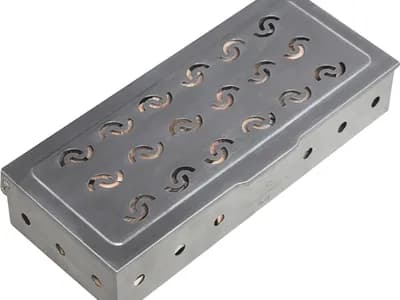
Throwing loose wood chunks onto the coals works with oak or holm oak on a twelve-hour brisket. With fine orange-wood chips it does not: they go up in a flare, give a minute of dirty smoke and are gone. The La Cuisine smoker box, stainless steel with a slotted lid, acts as a regulator. Fill it with dry chips, close it and set it directly on the coals, not on the grate: starved of free oxygen the wood does not burn, it chars slowly and releases a thin, bluish smoke through the slots. When the box stops smoking, reload it with another handful, and so on for two or three batches over the first two hours, which is when the skin is still taking on smoke. There is no need to soak the chips: wet wood only makes steam and delays the smoke.
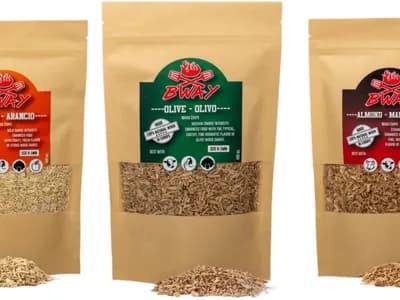
The wood matters. The BWAY Legna Tris set brings olive, orange and almond chips, three Mediterranean woods that grow here on the Costa Blanca, and all three are mild. Orange is the choice for duck with apple: sweet, faintly citrussy smoke that does not smother the fruit. The [guide to smoking woods](/guias/maderas-para-ahumar-kamado) sets each one against oak and hickory. The base fuel should keep quiet: BlackSellig coconut briquettes burn long and even, with little smoke of their own and little ash, and leave the smoke from the box as the only wood aroma in the dome.
Four probes for three temperatures
A whole duck is deceptive. Thigh and breast can run almost level in a kamado, and the stuffing always lags behind because the cold apples insulate the cavity. That is why this recipe uses all four probes of the Inkbird IBT-4XS: thigh clear of the bone, breast, centre of the stuffing, and the fourth held at grate level with a probe clip, reading the air that actually surrounds the bird rather than the dome thermometer, which reads higher. The [internal temperature](/glosario#internal-temperature) to pull at is the one for any whole bird: 74 °C in thigh, breast and stuffing. The 57 °C of a magret is for a lone breast, not a whole stuffed duck. When the thigh reads 64-66 °C the vents open up to 190-200 °C to crisp the skin and brown the potatoes already swimming in the fat in the tray. With a 2.3 kg duck the whole thing runs to about three hours; the probe decides and the clock only guides. The [temperature and timing table](/guias/tabla-temperaturas-tiempos-kamado) helps you plan the meal.
In 30 seconds
A 2.3 kg duck dry-salted for 12-24 h, stuffed with sharp apples and prunes, on the kamado at 130-140 °C over a deflector and drip tray, with dry orange-wood chips in a smoker box on the coals, reloaded in batches over the first two hours. Four probes: thigh, breast, stuffing and air. At 64-66 °C in the thigh, raise to 190-200 °C until 74 °C in thigh, breast and stuffing; about 3 hours. Rest 20 minutes, and potatoes in the tray fat.
Editor's tips
- Prick only the skin, not the meat: the holes drain the subcutaneous fat, but if they go through the muscle the breast loses juice and dries out before the thigh reaches 74 °C.
- If the Granny Smiths are very green, use half Granny Smith and half reineta: the reineta breaks down more and gives the compote body, while the Granny Smith keeps the acidity that balances the fat.
- Strain the fat left in the tray and keep it in a jar in the fridge: it is orange-smoked duck fat, good for potatoes, confits or frying a couple of eggs another day.
- Set the smoker box at the edge of the charcoal bed, not in the centre: it takes less heat, the chips burn down more slowly and each load smokes for longer without the wood catching.
Gear for this recipe
As an Amazon Associate, mikamado.es earns from qualifying purchases. At no extra cost to you.

FAQ
What temperature is a whole smoked duck done at?
74 °C in the thick part of the thigh and in the breast, measured clear of the bone, and also in the centre of the stuffing, which has been in contact with the raw cavity. That is the rule for any whole bird. The 57 °C that applies to a magret is for a lone breast cooked like a steak; in a whole stuffed duck it would leave thighs and stuffing raw.
How long does a whole duck take on the kamado at 135 °C?
A 2.3 kg duck takes about three hours including the final stretch at 190-200 °C, but the time depends on the weight, how cold it goes in and how full the stuffing is. The reference is the probe, not the clock: when the thigh reads 64-66 °C you raise the temperature, and you pull it at 74 °C. Plan with half an hour's margin.
How do you stop duck fat flaring up in a kamado?
With indirect cooking: deflector in place and a drip tray with a finger of water between the deflector and the grate. The fat lands in the tray and never touches the coals. What you do not do on a kamado is leave the lid ajar to tame a flame: the incoming air feeds the fire and can cause a flashback when you open it fully.
Which wood is good for smoking duck?
Mild fruit woods: orange, apple, cherry or almond. Duck has fat and flavour of its own, but three hours of oak or hickory smoke buries it. Orange suits the apple stuffing because its smoke is sweet and slightly citrussy. In a smoker box, fine chips last longer and give clean smoke; loose on the coals, they burn up in a minute.
Which apples should I use for duck with apples if there is no Antonovka?
The Russian recipe calls for Antonovka, a very sharp apple that is not sold in Spain. The greengrocer's substitutes are Granny Smith, which holds its shape and keeps its acidity, and reineta (the Spanish Reinette), which collapses into compote and is more fragrant. Mixing the two gives you the best of both. Sweet apples such as Golden or Fuji turn soft and cloying next to the duck fat.
More kamado recipes
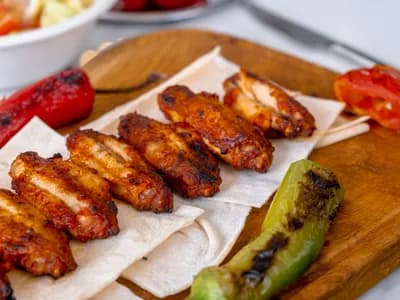
Crispy chicken wings on the kamado with honey and Pimentón de la Vera (crackling skin, no frying)
Glass-crisp skin without a fryer: dry brine with baking soda, indirect at 200°C with apple smoke and a final sear. Honey and Pimentón de la Vera glaze. Serves 4.
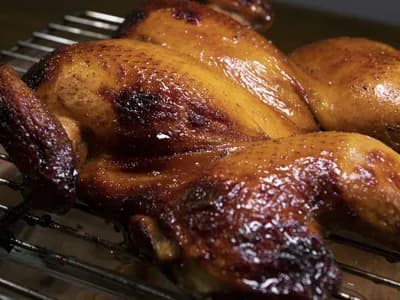
Whole spatchcock chicken on the kamado, even crispy skin
A 1.6 kg chicken butterflied flat, roasted at 180°C indirect over a deflector. Golden crackling skin end to end, juicy meat, ready in an hour: the Sunday roast I actually cook on my Torrevieja terrace.
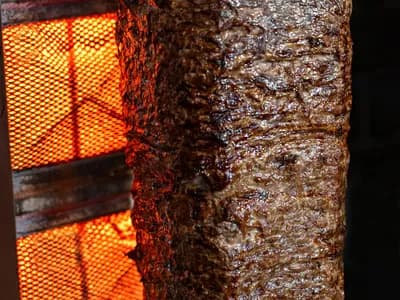
Chicken Gyros on the Rotisserie in a Kamado
A block of chicken thighs marinated in yoghurt, lemon and oregano, turning on the kamado's rotisserie at 180 °C: shave thin slices as the outer face browns, send the block back to the fire, repeat.
KEEP READING
Go deeper on this dish
- Recommended kamado
Kamado Joe Konnected Joe
The first kamado that lights itself and runs from your sofa
- Editorial guide
How to light a kamado: the step-by-step method
No petrol, no weird tablets and no 45-minute waits. The cone method, airflow control and the mistakes that prevent 80% of the frustration.
- Glossary term
Low & slow
Cooking at low temperature (95-130 °C) for many hours to tenderise tough cuts and develop deep smoke.
- Related comparison
kamado joe classic iii vs kamado joe konnected joe
Same Kamado Joe, two opposite philosophies. The Classic III is the classic kamado you light by hand and watch with your…