Recipe · Direct · Easy
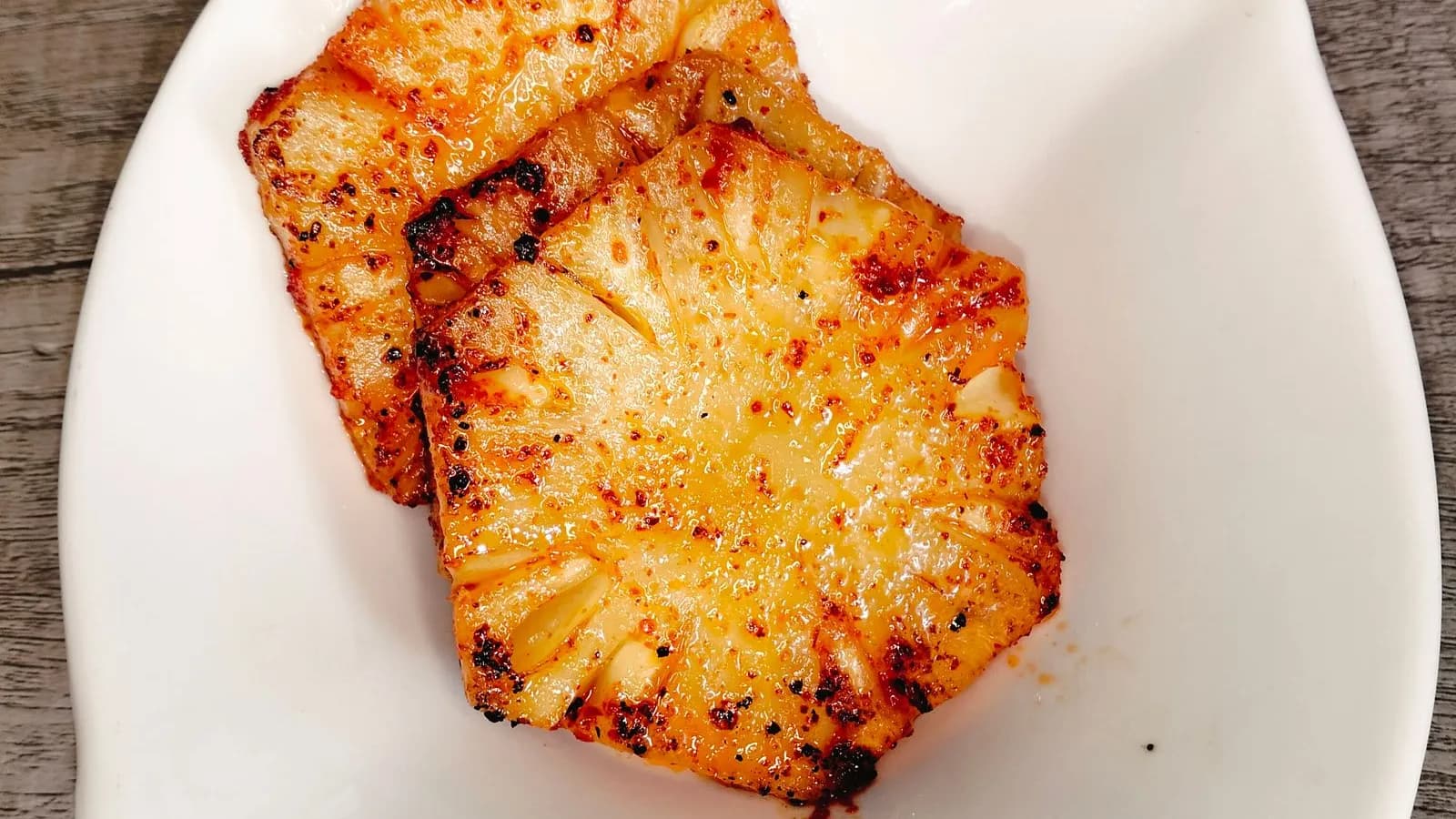
Rum-glazed grilled pineapple on the kamado
Thick pineapple rings with a rum and brown-sugar glaze, grilled direct at 220°C until the edges caramelise. About thirteen to fourteen minutes on the grill to the best barbecue dessert you'll taste all summer.
Season:SummerCuisine:Latin American
Quick answer
Grill 1.5-2 cm pineapple slices over direct heat at 220 °C, 4-5 minutes per side dry, until you get dark-brown grill marks. Brush on the rum and brown-sugar glaze only in the last 3-4 minutes so it doesn't burn. About 13-14 minutes in all. Serve hot with vanilla ice cream.
One big step at a time, screen kept on and built-in timers.
- Prep
- 15 min
- Cook
- 14 min
- Servings
- 6 servings
- Temperature
- 220 °C
What time do you want to eat?
Pick a time and we'll tell you when to start.
13:01
Start the prep
13:16
Light the kamado
13:36
Onto the kamado
14:00
Serve
Estimate: it includes lighting and settling the kamado plus a margin for large cuts. If the recipe asks you to marinate or salt ahead, add that time.
Fire setupDirect heat
- Dome
- 220 °C
- Deflector
- No
- Grate
- Standard height
- Fuel
- Charcoal
Temperature curve
0:35 h from lighting
Kamado dome
| # | From | Phase | Dome |
|---|---|---|---|
| 1 | 0:00 | Light the charcoal | 20 → 215 °C |
| 2 | 0:20 | StabiliseLet the grate heat at least 5 min | 215 → 220 °C |
| 3 | 0:25 | SearDon't touch until they release | 220 → 195 °C |
| 4 | 0:30 | CookTurn once | 195 → 210 °C |
| 5 | 0:32 | CookGlaze and flip, 60-90 s a side; watch the caramel | 210 → 220 °C |
| 6 | 0:35 | Serve | off |
0:00 is the moment you light the charcoal. Internal temperatures are the ones the recipe gives; without a probe, go by the times. Turn these times into clock times with the planner
For this recipe
Ingredients
- large ripe fresh pineapple (about 6 thick rings)1
- aged rum (dark, Caribbean-style; see FAQ for an alcohol-free version)60 ml
- brown sugar (panela or muscovado if you have it)80 g
- unsalted butter30 g
- orange (juice of half plus a little zest)1
- ground cinnamon0.5 tsp
- flaky salt (lifts the caramel at serving)1 pinch
- neutral or mild olive oil (to oil the grate)1 tbsp
- good vanilla ice cream (to serve)6 balls
- fresh mint leaves (to serve)1 handful
Allergens
- Milk
Vanilla ice cream may contain egg: check the label. The glaze contains rum.
Based on the recipe's ingredients. Always check the label of every product you buy.
The gear for this recipe
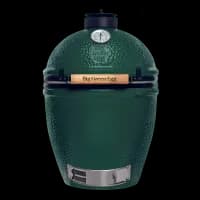 Big Green Egg LargeThe Large fits several pineapple slices at once for 6 over direct heat.
 Jealous Devil 100% White Quebracho lump charcoal 15.8 kgQuebracho with fierce embers at 220 °C to caramelise the rum glaze.
 Weber Precision Tongs 46 cm (6760)Flip the thick slices during the 13-14 minutes on the grill.
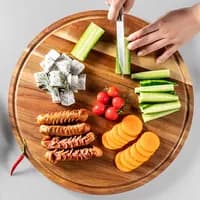 JF JAMES.F round acacia cutting board 30 cmRound board to plate up and serve the grilled pineapple.
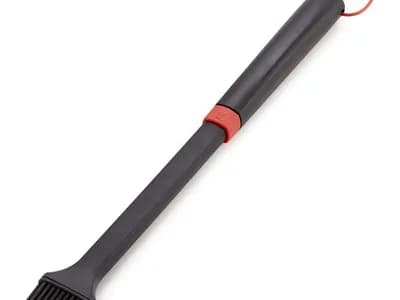
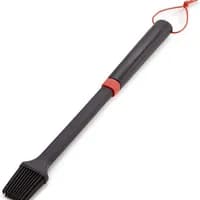 Weber Silicone Barbecue Basting Brush 40 cm
Method
- 01
Cut the pineapple into thick rings
Cut off the base and crown, peel the pineapple removing the eyes properly, and slice it into 1.5-2 cm rings — any thinner and they fall apart between the bars. Leave the core as a ring (it holds the slice and softens in the heat) or remove it with a corer. Pat the rings dry: a dry surface marks and caramelises, a wet one steams.
- 02
Reduce the rum glaze
In a pan over medium heat melt the butter, add the brown sugar, rum, the juice of half the orange and the cinnamon. Bring to a gentle boil and reduce for 4-5 minutes, stirring, to a coating consistency: it should coat the back of a spoon. Much of the alcohol cooks off here, though a short reduction like this always leaves a trace. Set aside warm — if it cools too much it hardens.
- 03
Stabilise the kamado at 220°C direct
Light the charcoal with no deflector — this dessert is direct heat. Stabilise the chamber around 220°C and let the grate heat for at least 5 minutes: it should be searing clean. Wipe the bars with an oiled paper towel held in tongs right before laying the pineapple on, so it doesn't stick and marks clean lines.
- 04
Grill the pineapple dry
Lay the rings over the direct zone, unglazed for now. Cook 4-5 minutes without touching until they release on their own with deep brown marks; flip once with tongs and another 4-5 minutes. If your kamado has hot spots, rotate the rings around the grate, but don't move them until they're marked.
- 05
Glaze in the last minutes
In the last 3-4 minutes, brush the top face of the rings with the rum glaze using a silicone brush. Flip, brush the other face and let the glaze bubble and turn sticky for 60-90 seconds a side. Watch it closely: sugar goes from caramel to burnt in seconds. Pull the moment it glistens and smells of caramel, no longer.
- 06
Serve hot with ice cream
Move the rings to plates while hot. Spoon over any leftover glaze, a pinch of flaky salt and the orange zest. Crown each portion with a scoop of vanilla ice cream and a few mint leaves. The contrast of hot caramelised pineapple against cold melting ice cream is the whole point — serve and eat right away.
About this recipe
This is the dessert that proves the kamado over direct heat isn't only for ribeyes: pineapple is tart, juicy and packed with its own sugars, so on a hot grate it caramelises by itself and develops those toasted grill marks that turn it into something else entirely. The rum and brown-sugar glaze is only there to push the caramelisation one step further and add a warm, spiced backbone. It's direct, easy and fast: 15 minutes of prep, about 13-14 on the grill and a scoop of vanilla ice cream melting on top.
Why pineapple wants direct fire, not a deflector
Almost every kamado dessert goes indirect with a deflector, because sugar burns. Pineapple is the honest exception: we want exactly that aggressive caramelisation that direct contact with the grate at 220°C produces in minutes. Its acidity and water content give you margin — it doesn't dry out like a more delicate fruit. The key is a hot, clean grate, a single flip, and pulling it the moment the marks turn deep brown. Overdo it and the surface sugar turns bitter; pull it early and it stays raw and lifeless.
The rum glaze: caramel, not sauce
The glaze reduces separately in a pan: aged rum, brown sugar, a little butter, orange juice and a pinch of cinnamon. You cook it until it thickens to a coating consistency — not runny (it slides off) nor dense (it scorches on the grate). Most of the rum's alcohol cooks off in the pan and more on the grill — being a quick cook, a little always lingers — leaving mainly the molasses-and-vanilla aroma of aged rum. You brush the pineapple in the last 3-4 minutes, never sooner: glaze it raw and the sugar carbonises before the fruit ever marks.
The cut: thick rings that hold together
A fresh, ripe pineapple cut into 1.5-2 cm rings is the difference between flipping it cleanly with tongs and watching it fall apart between the bars. The fibrous core can stay or come out with a corer — I leave it in rings because it holds the slice and softens in the heat. Here on the Costa Blanca I find gloriously sweet pineapple almost year-round; pick one that smells fruity at the base and gives slightly when pressed. Tinned pineapple in syrup won't do: too much water and it breaks up.
In 30 seconds
Ripe pineapple in thick 1.5-2 cm rings. Glaze separately: aged rum + brown sugar + butter + orange + cinnamon, reduced to a coating. Kamado direct heat, clean hot grate, 220°C. Grill the pineapple dry for 4-5 min a side until the marks go deep brown. Glaze in the last 3-4 min, one flip only. Pull before the sugar turns bitter. Serve hot with vanilla ice cream and a few mint leaves. Serves 6, 13-14 min on the grill.
Will it fit your kamado?
Small
33-40 cm · Joe Jr, MiniMax
Tight
The 6 slices just fit on the grate; otherwise cook in two batches.
Medium
46-51 cm · Classic, Large
Fits
This is the recipe's size: all 6 slices fit in one batch.
Large
56-61 cm · Big Joe, XL
Fits
Plenty of room; the slices from two pineapples probably fit in a single batch.
What to serve with it
Sides
- Vanilla or coconut ice cream
- Lime zest and mint leaves
- Wine
- Pedro Ximénez from Montilla-Moriles
- Beer
- Tropical wheat beer or a NEIPA
- Alcohol-free
- Chilled coconut water with lime
Leftovers and storage
- In the fridge
- 3-4 days in the fridge, airtight with its glaze, chilled within 2 h.
- Freezing
- Freeze chunks for 2-3 months for smoothies; thaw in the fridge, never refreeze.
- Reheating
- 1-2 min per side in a hot pan or on the grill to revive the caramel.
- Using them up
- Dice into a salsa with red onion, coriander and lime for tacos or grilled chicken.
Cool and refrigerate within 2 hours. When in doubt, throw it out.
Leftover embers
You still have embers: what to do with the leftover heat
For 14 min at 220 °C in a classic kamado you load about 800 g of charcoal and burn 600 g: when you serve, about 250 g of live embers remain. Before you shut the vents, that is still enough for:
Without touching the vents
220 °Cgrilled vegetables
25 minof embers
- Blistered Padrón Peppers on the Kamado8 min · 260 °C
- Garlic Butter Naan on the Kamado18 min · 260 °C
- Charred Wild Green Asparagus on the Kamado8 min · 240 °C
No recipe needed
- Strips of courgette and aubergine, char-marked (5 min)
- Pita or naan from shop dough, on the grate (3 min each)
- Halved tomatoes, cut side down, for a sauce (10 min)
Closing the vents halfway and waiting for it to drop
140-200 °Cdessert while you eat
35 minof embers
- Smoked Loaded Nachos on the Kamado12 min · 185 °C
- Brioche Burger Buns on the Kamado18 min · 190 °C
- Garlic-stuffed portobello mushrooms grilled in the kamado22 min · 190 °C
No recipe needed
- Yesterday's bread with oil and garlic, on the grate (10 min)
- Corn cobs in their husks (30 min)
Before opening the lid, crack it open for a few seconds first; if you raise the heat, stir the ash so the coals can breathe. And if you are not going to use them: once the food is out, close the bottom and top vents. The charcoal that does not burn (about 250 g) can be used next time. Different size of kamado? Work out your load for 1 h of fire, lighting included.
Editor's tips
- Clean, hot grate, non-negotiable. Pineapple releases sugar and sticks to a dirty or lukewarm grate, then tears and loses its marks when you flip. Heat for 5 minutes, brush off the main-course residue and wipe with an oiled paper towel right before the fruit. A hot cast-iron griddle or soapstone is the alternative: they won't reproduce the crossed bar pattern, but they give an even, consistent patisserie-grade browning with no hot spots and no gaps for the sugar to slip through.
- Glaze always goes on last. It's the classic mistake: brushing raw pineapple with a sugary glaze and watching it carbonise before the fruit ever marks. Grill dry first to get the marks and the pineapple's own caramelisation, then save the glaze for the last 3-4 minutes, when it only needs to activate and turn sticky.
- Get ahead: the rum glaze can be made hours or days in advance and kept in the fridge; a gentle reheat in the pan brings it back to coating consistency. And since the pineapple grills in about 13-14 minutes over direct heat, it's the perfect dessert to use the still-hot grate once you've pulled the main-course meat.
Gear for this recipe
As an Amazon Associate, mikamado.es earns from qualifying purchases. At no extra cost to you.
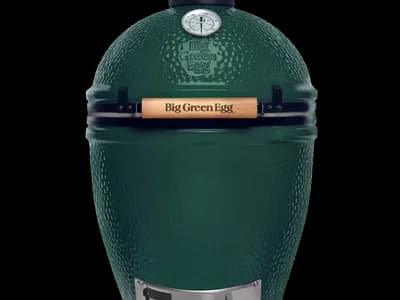
Big Green Egg Large
The Large fits several pineapple slices at once for 6 over direct heat.
€2,099

Jealous Devil 100% White Quebracho lump charcoal 15.8 kg
Quebracho with fierce embers at 220 °C to caramelise the rum glaze.
€206
Weber Precision Tongs 46 cm (6760)
Flip the thick slices during the 13-14 minutes on the grill.
€28
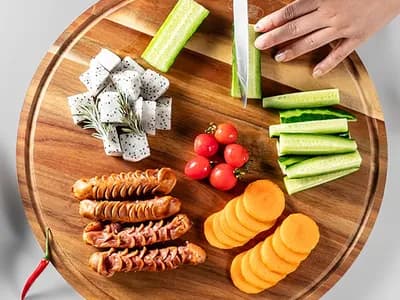
JF JAMES.F round acacia cutting board 30 cm
Round board to plate up and serve the grilled pineapple.
€48
Weber Silicone Barbecue Basting Brush 40 cm
€14
Have you made it?
Tell us how it turned out on your kamado. We review every rating before publishing it.
No published ratings yet. Be the first!
FAQ
How do I cut the pineapple so it doesn't fall apart on the grill?
Thick 1.5-2 cm rings, that's the golden rule. Any thinner and the fibre can't take the heat or the weight when you flip, and the ring breaks between the bars. Peel the pineapple thoroughly, removing the eyes, and leave the fibrous core as a ring: it acts as a frame that holds the slice together and softens just enough in the heat. If you'd rather remove it, use a corer and handle the rings carefully, as they're more fragile without the centre. Pat the rings dry before grilling: surface moisture makes the fruit steam rather than mark, and a ring that steams softens and collapses. Flip only once, with tongs, when it releases on its own.
What can I replace the rum with for an alcohol-free version or for children?
The rum brings two things: the molasses-and-vanilla aroma, and a liquid to reduce the glaze. For an alcohol-free version, swap it for orange or pineapple juice with a teaspoon of vanilla extract and an extra teaspoon of brown sugar — you recover the sweet, aromatic backbone without the alcohol. Another great option is reduced apple juice with a touch of cinnamon, which gives a similar caramel profile. Bear in mind that in the original recipe most of the rum's alcohol cooks off: part in the pan during the 4-5 minutes of reduction and the rest on the grill. It's a brief cook, so a little can remain, but the finished dish carries only a minimal residual aroma. Still, for children or if you want it fully free, the juice version works just as well and caramelises the same.
What temperature and how long do I grill the pineapple so it caramelises without burning?
Direct heat at around 220°C chamber, which is the band where pineapple caramelises fast without giving the sugar time to turn bitter. Reckon about 4-5 minutes a side for the rings dry — 8 to 10 minutes — enough for deep brown marks and natural caramelisation, but not overdone; with the glazing phase at the end, the total comes to around 13-14 minutes. The rum glaze only goes on in the last 3-4 minutes, because its added sugar burns long before the fruit's own sugars do. The visual cue beats the timer: pull the moment the marks are deep brown and the glaze glistens and smells of caramel; acrid smoke or black edges mean you've gone too far. If your kamado has hot spots, rotate the rings around rather than raising or lowering the heat.
What ice cream or cream pairs best with hot grilled pineapple?
Good vanilla ice cream is the classic, unbeatable match: its cold and dairy fat contrast with the hot, tart pineapple, and as it melts it forms a creamy sauce with the rum glaze that's half the point of the dish. To step off the obvious path, coconut ice cream reinforces the tropical note, and rum-and-raisin rounds out the Caribbean nod. Among creams, unsweetened whipped cream or, better still, crème fraîche or a lightly sweetened Greek yoghurt bring acidity that balances the caramelised sweetness. A very Costa Blanca option is to serve it with a spoonful of mascarpone whipped with orange zest, which is wonderful with the citrus backbone of the glaze. What matters is the cold-hot contrast: whatever you choose, have it properly cold.
Can the rum and sugar glaze be made ahead?
Yes, and it's actually the recommended approach. The glaze reduces in the pan and keeps perfectly in the fridge in a sealed jar for up to a week, because the sugar acts as a preservative. As it cools it thickens and even hardens — that's normal — so before using it give it a gentle reheat in the pan or a few seconds in the microwave to bring it back to the coating consistency you need for brushing. If it's too dense after reheating, loosen it with a teaspoon of orange juice or hot water. Having the glaze made the day before turns this dessert into a 13-14-minute affair on the grill: perfect for finishing a meal while the kamado is still hot from the main course.
What do I do with the embers left after making Rum-glazed grilled pineapple on the kamado?
After 14 min at 220 °C in a classic kamado about 250 g of live embers remain: 25 min more at 220 °C without touching the vents or 35 min at 140-200 °C closing the vents. If you are not going to use them, close both vents and keep the charcoal for next time.
More kamado recipes


KEEP READING
Go deeper on this dish
- Recommended kamado
Big Green Egg Large
The Large fits several pineapple slices at once for 6 over direct heat.
- Editorial guide
How to light a kamado: the step-by-step method
No petrol, no weird tablets and no 45-minute waits. The cone method, airflow control and the mistakes that prevent 80% of the frustration.
- Glossary term
Heat deflector
Ceramic plate placed between the coals and the grate to turn direct fire into indirect cooking.
- Related comparison
big green egg large vs kamado joe classic iii
The classic kamado matchup: the Big Green Egg Large, the indestructible pioneer with the widest accessory network, agai…