Recipe · Indirect · Medium
Cherry clafoutis in a cast-iron skillet on the kamado
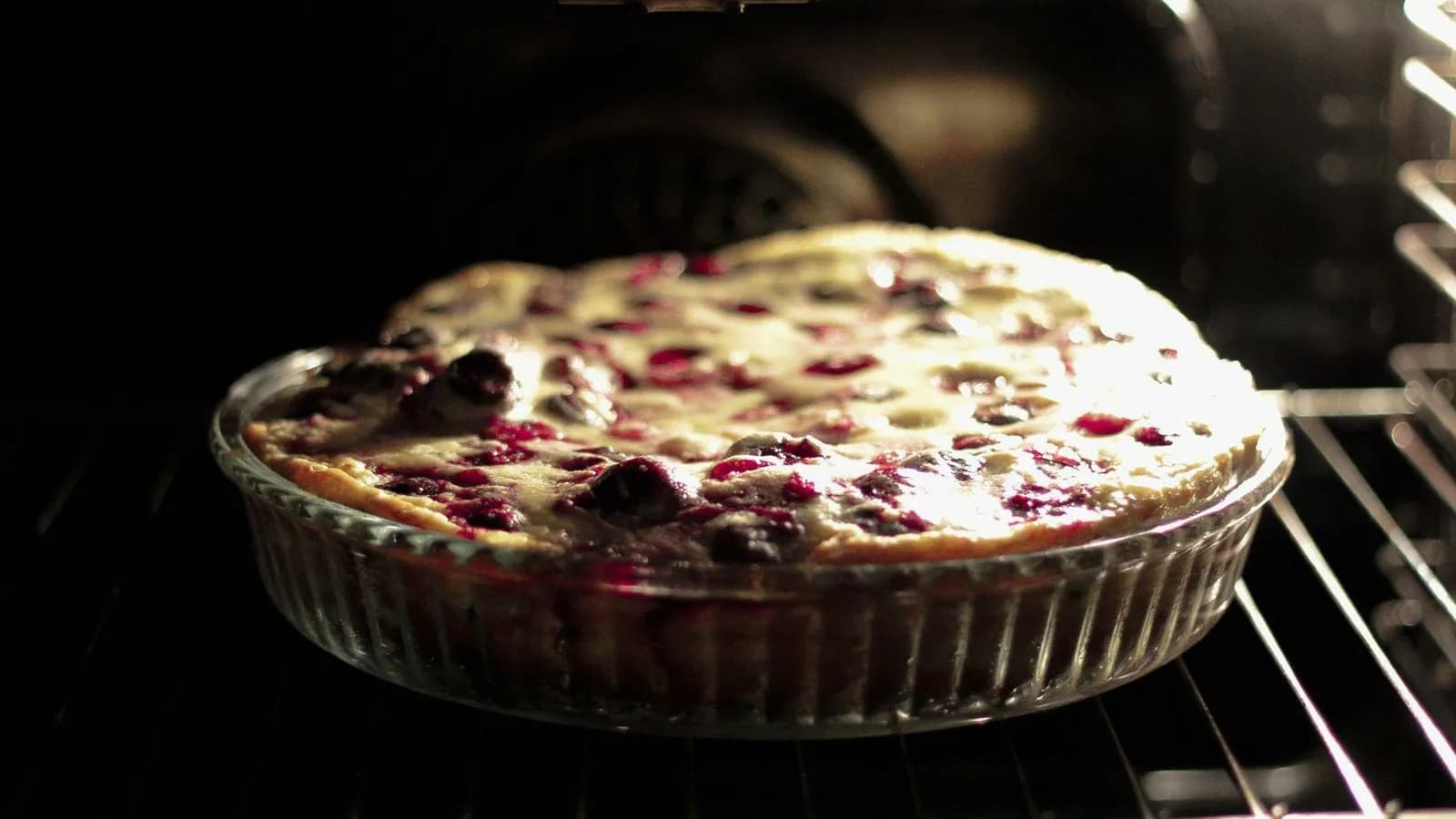
Dark cherries suspended in a custard halfway between flan and sponge, baked in a cast-iron skillet at 180°C indirect. The French summer dessert the kamado nails.
Quick answer
Cherry clafoutis bakes in a cast-iron skillet at 180 °C indirect with a deflector, 35 minutes without lifting the lid. The cherries (stones in, the French way) are covered with a batter of egg, flour and almond. It's done when it rises and puffs, the edges brown and the centre wobbles but isn't liquid. Rest it for 15 minutes and serve warm.
- Prep
- 15 min
- Cook
- 35 min
- Servings
- 6 servings
- Temperature
- 180 °C
Ingredients
- ripe cherries (stones in, French-style)500 g
- large eggs, at room temperature3 ud
- white sugar100 g
- plain flour, sifted80 g
- ground almond (reinforces the cherry-stone note)30 g
- whole milk250 ml
- single/cooking cream (18-35% fat)100 ml
- Costa Blanca orange (zest)1 ud
- kirsch or brandy (optional)1 cda
- butter to grease the skillet20 g
- icing sugar to dust before serving1 cda
Method
- 01
Set the deflector and stabilise 180°C
Light the kamado, set the deflector (plate-setter) and stabilise the chamber at 180°C indirect. It takes 20-25 minutes. Do not load the skillet until the thermometer holds at 180°C for 10 minutes: an oven still climbing sets the clafoutis outside and leaves it raw within.
- 02
Whisk the custard and let it rest
Whisk the eggs with the sugar until lightly foamy. Add the sifted flour and ground almond and whisk until no lumps remain. Beat in the milk, cream, orange zest and kirsch. Let the batter rest 10 minutes: the flour hydrates and the baked custard comes out finer, with no raw-flour taste.
- 03
Preheat and grease the skillet
Put the empty cast-iron skillet in the kamado for 5 minutes to take on bottom heat. Pull it with a glove, rub it generously with the butter on base and sides —it will sizzle— and arrange the cherries in a single layer. The hot iron sears the contact and gives the golden crepe-like edge that defines a good clafoutis.
- 04
Pour the custard over the cherries
Whisk the custard briefly again and pour it slowly over the cherries until they are almost covered —the tops should peek out. Do not stir inside the skillet: the cherries must stay on the bottom so the custard rises around them as it bakes. Take the skillet to the kamado without dawdling.
- 05
Bake 35 min without lifting the lid
Place the skillet on the grate over the deflector and close the kamado. Bake 35 minutes at 180°C without lifting the lid. It is done when the clafoutis has puffed up, the edges are golden and the centre wobbles but is not liquid. A skewer in the centre should come out clean or barely moist, never with raw custard.
- 06
Rest 15 min, dust with icing sugar, serve warm
Pull the skillet with a glove and let it rest 15 minutes: the clafoutis will fall and settle into a firm flan-like texture, which is correct. Dust with icing sugar through a sieve right before serving. Serve warm, straight from the skillet to the table; cold loses the contrast between set custard and juicy cherry.
About this recipe
Clafoutis is the most forgiving dessert there is for the kamado: a thin crepe-like batter, whole cherries and a cast-iron skillet. Set the deflector for a stable 180°C indirect oven, pour the custard over the cherries in a well-greased Petromax and bake 35 minutes until the centre sets, puffs up and goes golden at the edges. No mixer, no pastry-chef technique: just an even oven and the patience to leave the lid shut.
What clafoutis is, and why cherries with the stone
Clafoutis (from the Limousin in central France) is a baked custard halfway between a flan and a dense sponge, with fruit set inside. The classic recipe uses cherries with their stones in: the stone lends a faint bitter-almond note —the same aroma as amaretto— and, crucially, stops the cherry bleeding all its juice and turning the batter watery. The right texture is a wobbling but firm flan, never liquid in the centre. That is why temperature control is critical: at a steady 180°C the custard sets slowly and evenly; with heat spikes it sets outside and stays raw within.
Why the cast-iron skillet and kamado nail it
Clafoutis wants bottom heat so the batter starts setting from below, and a cast-iron skillet does that like no ceramic dish can: preheated inside the kamado, it sears the contact and gives that golden crepe-like edge that is the best part. Once pinned at 180°C with the deflector in, the kamado's ceramic behaves like a gentle convection oven that does not swing like the one at home. I give it a Mediterranean turn with orange zest from the Costa Blanca and a spoonful of ground almond, which reinforces the cherry-stone backdrop without masking it. Kirsch if you have it; if not, a splash of brandy or nothing.
Sweet wood? A single cherry chunk or none
Clafoutis is not a smoked dessert, but a single small cherry-wood chunk on the coals suits it beautifully: it echoes the cherry itself and leaves an almost imperceptible sweet backdrop. More than one and you have a flan that tastes of ashtray. Most of the time I do it clean, no smoke: orange, almond and browned butter already give all the complexity. If you do smoke it, add the chunk while stabilising the deflector, never as the skillet goes in, so the harsh first-minute smoke has already cleared.
In 30 seconds
Deflector in, kamado a stable 180°C indirect oven. Skillet preheated and greased with butter. Cherries (stones in, French-style) in the base. Custard whisked from egg, milk, cream, sugar, flour, ground almond and orange zest. Pour over the fruit. Bake 35 minutes without lifting the lid until set and puffed. Rest 15 min: it will fall and settle. Icing sugar and serve warm. Serves 6.
Editor's tips
- An independent chamber thermometer (Inkbird) is more reliable than the dome gauge, which reads the air under the lid, not next to the skillet. Clip the probe at grate height and tune the vents to that number: an exact 180°C is the difference between a silky flan and an over-set one.
- Out of cherry season, swap in halved-and-pitted red plums, apricots or seedless black grapes —then it is technically a flognarde, not a clafoutis, but the method and temperature do not change. Avoid very watery fruit like ripe peach, which would water down the custard.
- If you pit the cherries (with kids or nervous guests), add two or three drops of bitter-almond extract to the custard to recover the aroma the stone provides. And cut the bake by 3-4 minutes: pitted cherries release more juice and the batter sets a touch sooner.
Gear for this recipe
As an Amazon Associate, mikamado.es earns from qualifying purchases. At no extra cost to you.
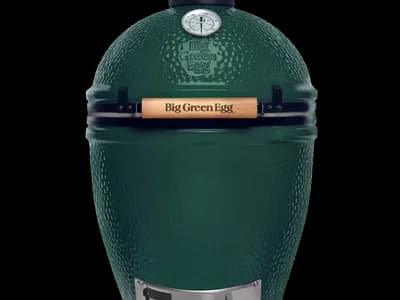
Big Green Egg Large
Large mantiene 180 C indirecto estable para cuajar el clafoutis en sarten para 6.
€2,099
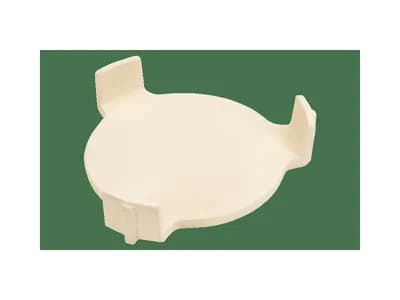
Big Green Egg ConvEGGtor plate setter (Large)
Deflector para hornear el clafoutis al indirecto sin quemar la base.
€85
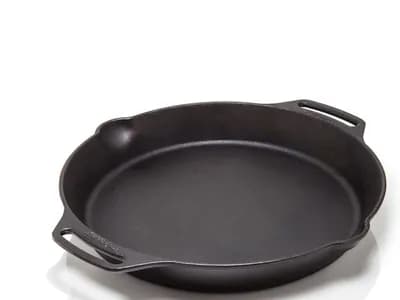
Petromax FP35 Cast Iron Fire Skillet 35 cm with Handles
Sarten de hierro que reparte el calor y cuaja la crema con las cerezas.
€69
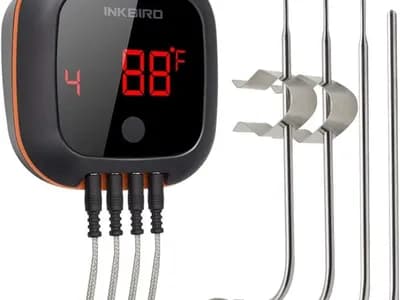
Inkbird IBT-4XS Bluetooth thermometer
Mantener los 180 C indirectos para que el centro quede entre flan y bizcocho.
€72
FAQ
Do you pit the cherries or leave the stones in, French-style?
The classic Limousin recipe leaves the stones in, and there is a culinary reason, not just tradition. The stone lends a subtle bitter-almond backdrop —the same compound as amaretto and marzipan— and, above all, stops the cherry breaking and bleeding all its juice, which would water the custard and ruin the set. The price is warning your guests to spit the stones out. If you are cooking for children or prefer convenience, pit them and make up the aroma with two drops of bitter-almond extract in the custard.
How do you tell when the clafoutis is set and not liquid in the centre?
Three signs at once, without opening the lid early. First: the clafoutis has puffed up and the edges are golden and pulling away from the skillet. Second: when you jiggle the skillet with a glove, the centre wobbles like a firm flan but does not slosh like liquid. Third, the clincher: stick a skewer in the centre and it should come out clean or barely moist, never with raw custard clinging. When in doubt, 3 minutes too long beats too short: a slightly over-baked clafoutis is still good, a raw centre cannot be served. Remember it falls as it rests —that is normal.
What fruit can replace cherries out of season?
The best are stone fruit or firm-fleshed fruit that does not bleed too much water: quartered red plums, halved apricots, seedless black grapes or even firm pear in wedges. Technically, when you swap cherries for another fruit the dish becomes a flognarde, but the method and the 180°C indirect are identical. Avoid very watery fruit —overripe peach, strawberry, melon— which release so much liquid the custard never sets. If you use frozen fruit, do not thaw it and add 4-5 minutes to the bake to compensate for the extra water.
Why does the clafoutis puff up in the kamado and then fall?
It is normal, expected physics, not a fault. During baking the water in the custard turns to steam and the whisked-in air expands with the heat: that puffs the clafoutis up like a soufflé. But clafoutis has almost no flour or leavening, so its structure is weak; as soon as it leaves the heat and the steam condenses, it falls and settles into the firm flan-like texture that is correct. If you want it to fall less and look neater, do not lift the lid during baking (a blast of cold air deflates it instantly) and let it rest 15 minutes before serving.
Is clafoutis served hot, warm or cold?
Warm is the sweet spot, and that is how it is served in France: not straight off the kamado, where the custard has not settled and burns, nor from the fridge, where the cold dulls the orange and almond aroma and hardens the texture. I pull it, let it rest 15-20 minutes and serve it when warm to the touch but already manageable, with the icing sugar freshly dusted. Leftovers are eaten cold from the fridge the next day —good, denser, more cake-like— but a 10-minute hit at 150°C in the kamado brings back its best version.
More kamado recipes
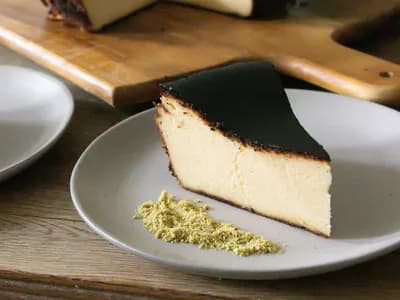
Burnt Basque cheesecake on the kamado, creamy inside
La Viña on the kamado: a near-burnt mahogany top and a wobbly, creamy centre. Indirect at 210°C, the Basque cheesecake that beats the home-oven version.
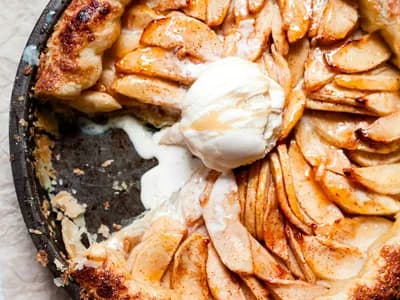
Apple tarte Tatin in a dutch oven on the kamado, golden caramel
Caramelised apples in a cast-iron dutch oven, golden puff pastry and an amber caramel that runs as you flip it. Indirect at 190°C: the tarte Tatin that earns applause.
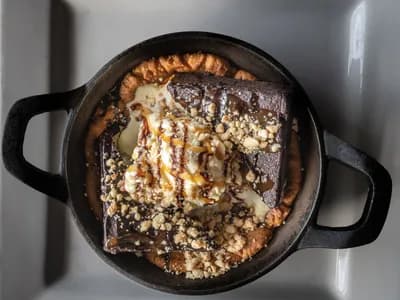
Smoked skillet brownie on the kamado, fudgy centre
Chocolate brownie baked in a cast-iron skillet over indirect heat, with a veil of apple-wood smoke. Crackled crust, fudgy centre and a hint of orange. Serves 10.
KEEP READING
Go deeper on this dish
- Recommended kamado
Big Green Egg Large
Large mantiene 180 C indirecto estable para cuajar el clafoutis en sarten para 6.
- Editorial guide
How to light a kamado: the step-by-step method
No petrol, no weird tablets and no 45-minute waits. The cone method, airflow control and the mistakes that prevent 80% of the frustration.
- Glossary term
Heat deflector
Ceramic plate placed between the coals and the grate to turn direct fire into indirect cooking.
- Related comparison
big green egg large vs kamado joe classic iii
The classic kamado matchup: the Big Green Egg Large, the indestructible pioneer with the widest accessory network, agai…