Recipe · Reverse-sear · Medium
Reverse-sear duck magret with crackling skin
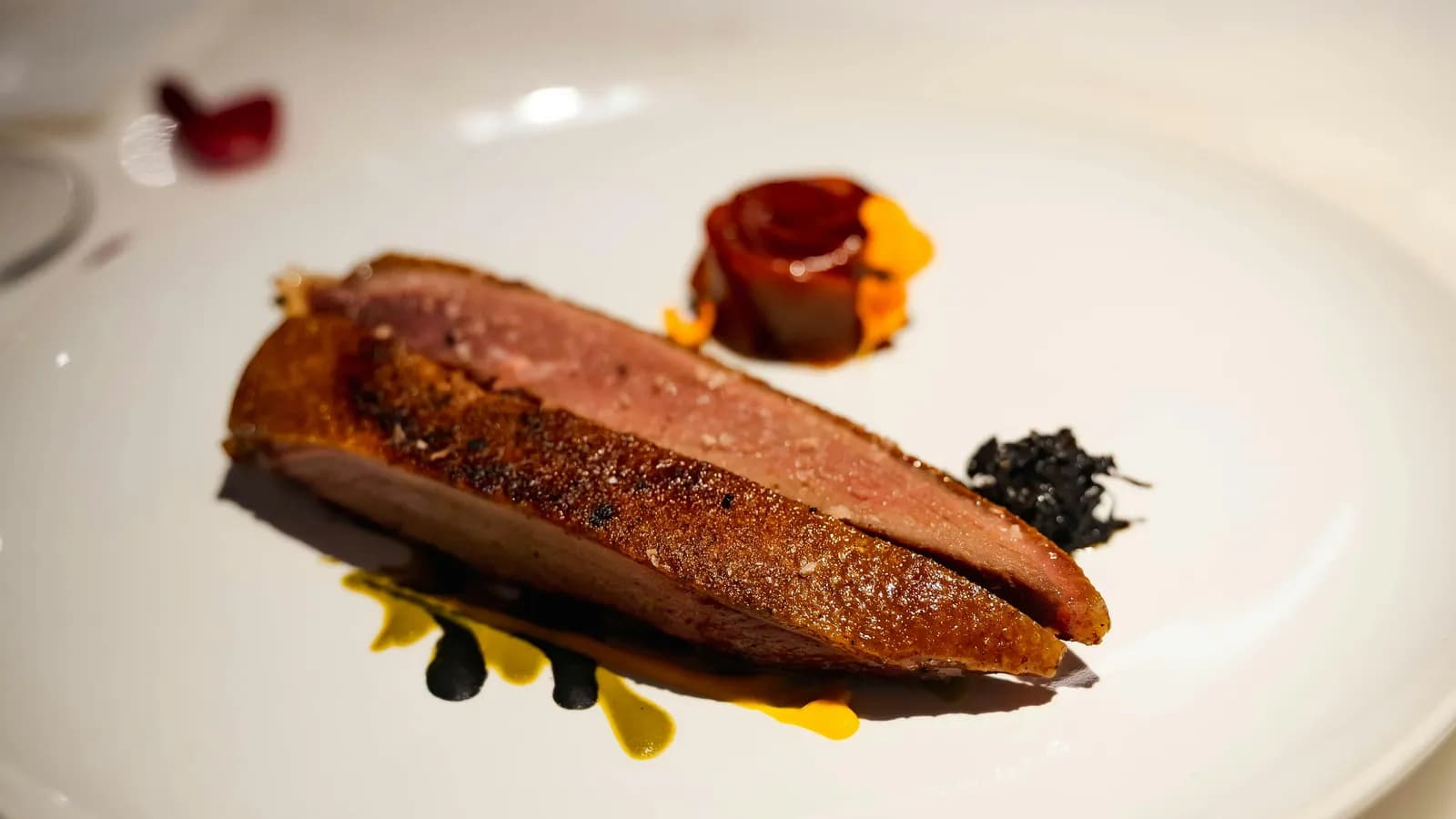
Two 380 g duck magrets, diamond scoring on the skin, 15 minutes at 120°C indirect and a final 90 seconds at 280°C. Skin like a cracker, meat pink edge to edge.
Quick answer
Duck breast on the kamado is done reverse-sear: cross-hatch score the skin, 12-15 minutes at 120 °C indirect to 50 °C internal (medium-rare), then a final 90-second sear skin-side down at 280 °C. The skin comes out crisp as a cracker and the meat pink from edge to edge.
One big step at a time, screen kept on and built-in timers.
- Prep
- 20 min
- Cook
- 25 min
- Servings
- 4 servings
- Temperature
- 120 °C
What time do you want to eat?
Pick a time and we'll tell you when to start.
12:35
Start the prep
12:55
Light the kamado
13:25
Onto the kamado
14:00
Serve
Estimate: it includes lighting and settling the kamado plus a margin for large cuts. If the recipe asks you to marinate or salt ahead, add that time.
Fire setupIndirect, then direct
- Dome
- 120 °C
- Deflector
- Yes
- Grate
- Standard height
- Setup
- Deflector (removed for searing)
Temperature curve
1:14 h from lighting
Kamado domeInside the meat (probe)
| # | From | Phase | Dome | Internal |
|---|---|---|---|---|
| 1 | 0:00 | Light the charcoal | 20 → 120 °C | no probe |
| 2 | 0:30 | StabiliseCheck it holds before loading | 120 °C | no probe |
| 3 | 0:45 | Put the food inSkin up, probe in the thickest part | 120 → 95 °C | 18 °C |
| 4 | 0:46 | Cook12-15 min to 50 °C internal, unopened | 95 → 120 °C | 18 → 50 °C |
| 5 | 0:59 | Take outRemove magrets and deflector, wear gloves | 120 → 100 °C | 50 °C |
| 6 | 1:01 | Raise the heatVents fully open to 280 °C | 100 → 280 °C | 50 °C |
| 7 | 1:07 | Sear90 s skin down, 30 s flesh side | 280 → 265 °C | 50 → 56 °C |
| 8 | 1:09 | Rest | 265 → 100 °C | 56 → 58 °C |
| 9 | 1:14 | Serve | off | no probe |
0:00 is the moment you light the charcoal. Internal temperatures are the ones the recipe gives; without a probe, go by the times. Turn these times into clock times with the planner
For this recipe
Ingredients
- duck magrets (350-400 g each)2
- coarse-grain salt1 tbsp
- freshly ground black pepper1 tsp
- large orange (juice + a little zest)1
- rosemary honey1 tbsp
- sherry vinegar1 tbsp
- fresh thyme (optional, for the sauce)1 sprig
Another cut
Got a different cut? Here is how the recipe changes
For 4 people the recipe uses 1.44 kg (4 pieces) of duck breast (magret): indirect at 180 °C, 18 min plus 10 min rest. If the shop had something else:
- Ibérico pork presaBuy 1.25 kg (in 2 pieces)
- Fire
- Reverse sear · 115 °C
- Time
- 53 min
- Rest
- 15 min
Light 40 min earlier
Iberian pork, same reverse sear. Dome at 115 °C, pull at 55-58 °C, sear hard and let it climb to 63 °C while resting.
- Picanha (rump cap)Buy 1.25 kg
- Fire
- Reverse sear · 160 °C
- Time
- 40 min
- Rest
- 10 min
Light 20 min earlier
Beef with a fat cap, same moves. Reverse sear at 160 °C with the fat scored in a diamond pattern; pull at 46-49 °C and sear until 52 °C in the centre.
- Whole duckBuy 2.4 kg
- Fire
- Indirect · 180 °C
- Time
- 2 h 24 min
- Rest
- 20 min
Light 2 h 35 min earlier
A different dish: whole duck. Indirect roast at 180 °C, skin pricked, drip tray below; no longer pink: 74 °C in the breast and 82 °C in the leg.
Times are a guide, based on the How much to buy figures; follow the recipe first. Full fire plan for 4 people: Ibérico pork presa, Picanha (rump cap), Whole duck.
Allergens
- Sulphites
Based on the recipe's ingredients. Always check the label of every product you buy.
The gear for this recipe
 Monolith Classic Pro 2.0
 Kamado Joe Big Block XL lump charcoal 9.1 kgLump that climbs fast to 280 °C for the final sear of the skin.
 Onlyfire GCG-8552 Cooking System (2 grates + rack + 2 deflectors) for Large Kamado
 MEATER+ wireless WiFi thermometerProbe to take the magret off at 50 °C before the final sear.
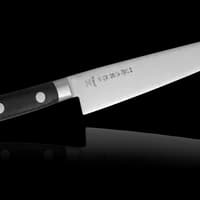 Tojiro DP F-802 – 15 cm Japanese Petty (Utility Knife) in VG-10
Method
- 01
Temper and dry
Take the magrets out of the fridge 30 minutes before cooking. Pat them dry on both sides. The skin must be perfectly dry before scoring so the fat renders rather than steams.
- 02
Diamond scoring
With a very sharp knife, score the skin in a diamond pattern every 1 cm: diagonals one way, then the other. Cuts deep into the fat but never into the meat. If you reach the meat, the juices will leak during cooking and the magret will dry out.
- 03
Season
Sprinkle coarse salt generously on the skin (it falls into the scoring cuts) and moderately on the meat side. Freshly ground black pepper on both faces. No oil — the magret has plenty of its own fat.
- 04
Stabilise at 120°C
Set the kamado for indirect with the deflector in place. Climb to 120°C and let it settle 15 minutes. Check the temperature holds steady before loading the magrets.
- 05
Indirect phase, skin up
Lay the magrets on the grate skin side up. Sink the probe into the thickest part of one of them, away from the edge. Cook until 50°C internal — 12 to 15 minutes. Do not lift the lid.
- 06
Pull and ramp to 280°C
Move the magrets onto a board. With gloves remove the deflector (heads up: heavy and very hot). Open the bottom damper and top vent fully. In 5-6 minutes the kamado clears 280°C.
- 07
Sear skin down
Return the magrets to the grate skin side down. Time 90 seconds untouched. The skin should turn deep golden brown and bubble up. Flip and 30 seconds on the meat side, purely for colour. Pull quickly.
- 08
Quick sauce and slicing
Move a tablespoon of the rendered duck fat into a hot pan. Add the orange juice, honey, sherry vinegar and thyme. Reduce over medium heat for 3-4 minutes to a light syrup. Meanwhile the magrets rest for 5 minutes. Slice 1 cm thick across the grain, spoon over the sauce and finish with a touch of orange zest.
About this recipe
Duck magret is one of the kamado cuts with the best return-per-hour: under 30 minutes of actual cooking gives you an editorial dish with skin crisp as a roof tile and meat pink throughout. The trick is not temperature — it is the skin scoring and the reverse-sear order.
Scoring: diamond, without cutting into the meat
Before anything else, score the skin with a very sharp knife in a diamond pattern every 1 cm. Cuts deep into the fat but never into the meat beneath. This serves two purposes: it increases exposed surface for the fat to render during the indirect phase and, at the final sear, it creates the crisp scales that separate a great magret from a flabby one. Season with coarse salt and freshly ground black pepper — generous on the skin, moderate on the meat side.
Indirect phase at 120°C, skin up
Kamado stabilised at 120°C with the deflector. Lay the magrets on the grate skin side up, probe in the thickest part of one of them. Cook until the probe reads 50°C internal — 12 to 15 minutes depending on thickness. The fat starts to render slowly and the meat climbs in temperature without drying. You are not after colour here, just the internal temperature.
Sear at 280°C: 90 seconds, skin down
Pull the magrets, open the vents and push the kamado to 280°C (5-6 minutes). Return the magrets skin side down and time 90 seconds. The skin should be deep golden brown and bubbling. Flip 30 seconds on the meat side, purely for colour. Rest 5 minutes on a board. Meanwhile, in a separate pan, I build a quick sauce with the rendered duck fat, orange juice, honey and a splash of sherry vinegar — the classic French recipe adapted to what is in the pantry. Slice 1 cm thick across the grain.
In 30 seconds
Diamond-score the skin every 1 cm, never into the meat. Coarse salt + pepper. Kamado 120°C indirect, skin up, probe to 50°C internal (12-15 min). Pull, ramp to 280°C. Return skin down 90 sec + 30 sec meat side. Rest 5 min. Quick sauce with duck fat + orange + honey + sherry vinegar in a pan. Slice 1 cm across the grain. Editorial plate, 4 diners, 25 min of cooking.
Will it fit your kamado?
Small
33-40 cm · Joe Jr, MiniMax
Fits
Both duck breasts fit easily; less charcoal is enough.
Medium
46-51 cm · Classic, Large
Fits
Both fit with room to spare; 4-6 breasts could cook at once.
Large
56-61 cm · Big Joe, XL
Fits
Plenty of room: easily enough to double the recipe.
What to serve with it
- Wine
- Priorat red or Mencía from Bierzo
- Beer
- Malty Belgian dubbel-style ale
- Alcohol-free
- Pomegranate juice with sparkling water and orange peel
Leftovers and storage
- In the fridge
- Refrigerate airtight within 2 hours: 3-4 days. Keep the sauce in a separate jar.
- Freezing
- 2-3 months well wrapped; the skin loses its crunch. Thaw in the fridge; do not refreeze.
- Reheating
- Skin-side down in a pan to re-crisp, then a low oven until piping hot in the centre (74 °C).
- Using them up
- Thinly sliced over an orange and endive salad, or in a sandwich with the reduced sauce.
Cool and refrigerate within 2 hours. When in doubt, throw it out.
Leftover embers
You still have embers: what to do with the leftover heat
For 25 min at 120 °C in a classic kamado you load about 800 g of charcoal and burn 100 g: when you serve, about 660 g of live embers remain. Before you shut the vents, that is still enough for:
Without touching the vents
120 °Ca short smoke
4 h 40 minof embers
- Hot-Smoked Whole Mackerel on the Kamado45 min · 120 °C
- Cherry-Smoked Baby Back Ribs on the Kamado, 2-1-1 Method4 h · 115 °C
No recipe needed
- Coarse salt on a tray, with a wood chunk: smoked salt for months (1-2 h)
- Almonds or walnuts on a rack (45 min)
- Whole heads of garlic, for spreading (1 h)
Opening the vents halfway
140-200 °Cdessert while you eat
2 h 10 minof embers
- Whole roasted cauliflower on the kamado with saffron aioli1 h · 180 °C
- Nectarine and raspberry galette on the kamado40 min · 190 °C
- Chestnuts and Sweet Potato Roasted in the Kamado Embers45 min · 180 °C
No recipe needed
- Yesterday's bread with oil and garlic, on the grate (10 min)
- Corn cobs in their husks (30 min)
- Whole apples with a slit in the skin (45 min)
Before opening the lid, crack it open for a few seconds first; if you raise the heat, stir the ash so the coals can breathe. And if you are not going to use them: once the food is out, close the bottom and top vents. The charcoal that does not burn (about 660 g) can be used next time. Different size of kamado? Work out your load for 1 h of fire, lighting included.
Editor's tips
- Score without cutting the meat, full stop: if the knife reaches the flesh, the juices will pool at the bottom of the kamado and the magret turns stringy. Better a very sharp knife and shallow cuts than deep ones gone wrong.
- Place the probe in the thickest zone, not the edge. Magrets are uneven cuts — if you probe the thin side, you will pull the whole batch late and the thick side will be undercooked.
- If you do not have a kamado on hand, this reverse-sear works in a screaming cast-iron pan: 12 min indirect in a 120°C oven, then 90 sec in the pan over the rendered fat. The probe still rules.
- The quick sauce is not optional. Without something acidic and sweet to cut the duck fat, the plate gets heavy by the second slice. Orange + honey + sherry is the minimalist formula; blackberries, pomegranate or quince also work.
Gear for this recipe
As an Amazon Associate, mikamado.es earns from qualifying purchases. At no extra cost to you.

Monolith Classic Pro 2.0
€2,000

Kamado Joe Big Block XL lump charcoal 9.1 kg
Lump that climbs fast to 280 °C for the final sear of the skin.
€67
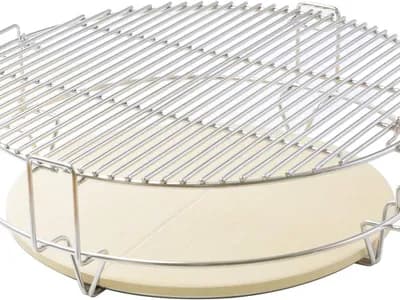
Onlyfire GCG-8552 Cooking System (2 grates + rack + 2 deflectors) for Large Kamado
€95
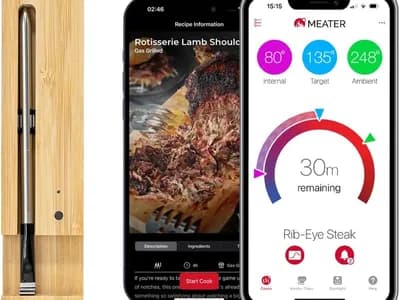
MEATER+ wireless WiFi thermometer
Probe to take the magret off at 50 °C before the final sear.
€99
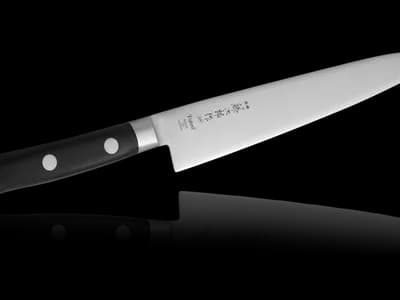
Tojiro DP F-802 – 15 cm Japanese Petty (Utility Knife) in VG-10
€139
Have you made it?
Tell us how it turned out on your kamado. We review every rating before publishing it.
No published ratings yet. Be the first!
FAQ
Is skin scoring really necessary?
Yes, it is the difference between an editorial magret and a mediocre one. Without scoring, the skin sits like an elastic flap over unrendered fat. With diamond scoring, the fat escapes through the cuts during the indirect phase and the final sear creates the crisp scales that define the dish. Some premium magrets come pre-scored; if you buy those, run the knife over the cuts to make sure they reach fat but not meat.
Is the Bluetooth probe mandatory here too?
Highly recommended. Magrets have a narrow doneness window: at 48°C internal they are raw, at 52°C they are well-done. Sweet spot for medium-rare is 50°C — barely 2-3 minutes of margin. With a Bluetooth probe you pull at exactly the right moment; without one, check with an instant-read every 2 minutes from minute 10. The analogue kamado probe is no use here — it reads chamber, not meat centre.
Difference between confit duck and reverse-sear magret?
Opposite techniques for different cuts. Duck confit uses legs submerged in their own fat at 75-90°C for 3-4 hours — shredded texture, deep flavour, perfect for winter. Reverse-sear magret is the opposite: breast cut, no submersion, fast cooking (25 min total), firm pink texture. Magret is sliced and served; confit is served whole or shredded. They share the duck and nothing else.
Without a kamado, does it work in a pan?
It works and is in fact the classic French technique. The difference: in a pan you start the magrets from cold skin-side down on medium-low heat and let the fat render for 8-10 minutes. Once the skin is golden, flip 2-3 minutes on the meat side. No prior indirect phase. Kamado reverse-sear gives tighter doneness control and a crisper skin because the final sear runs hotter. But the pan works, and plenty of Michelin kitchens do it that way.
Can I make this recipe with a different cut instead of duck breast (magret)?
Iberian presa and picanha keep the reverse sear and a fat cap that crisps when seared. Whole duck switches to an indirect roast, no longer pink. The probe decides, not the clock.
What do I do with the embers left after making Reverse-sear duck magret with crackling skin?
After 25 min at 120 °C in a classic kamado about 660 g of live embers remain: 4 h 40 min more at 120 °C without touching the vents or 2 h 10 min at 140-200 °C opening the vents. If you are not going to use them, close both vents and keep the charcoal for next time.
More kamado recipes
KEEP READING
Go deeper on this dish
- Recommended kamado
Monolith Classic Pro 2.0
The German alternative to the Kamado Joe Classic III
- Editorial guide
How to light a kamado: the step-by-step method
No petrol, no weird tablets and no 45-minute waits. The cone method, airflow control and the mistakes that prevent 80% of the frustration.
- Glossary term
Heat deflector
Ceramic plate placed between the coals and the grate to turn direct fire into indirect cooking.
- Related comparison
kamado joe classic iii vs monolith classic pro 2 cart
The comparison every European cook eventually makes: the Kamado Joe Classic III, the US reference with SlōRoller, again…