Recipe · Direct · Easy
Garlic Butter Naan on the Kamado
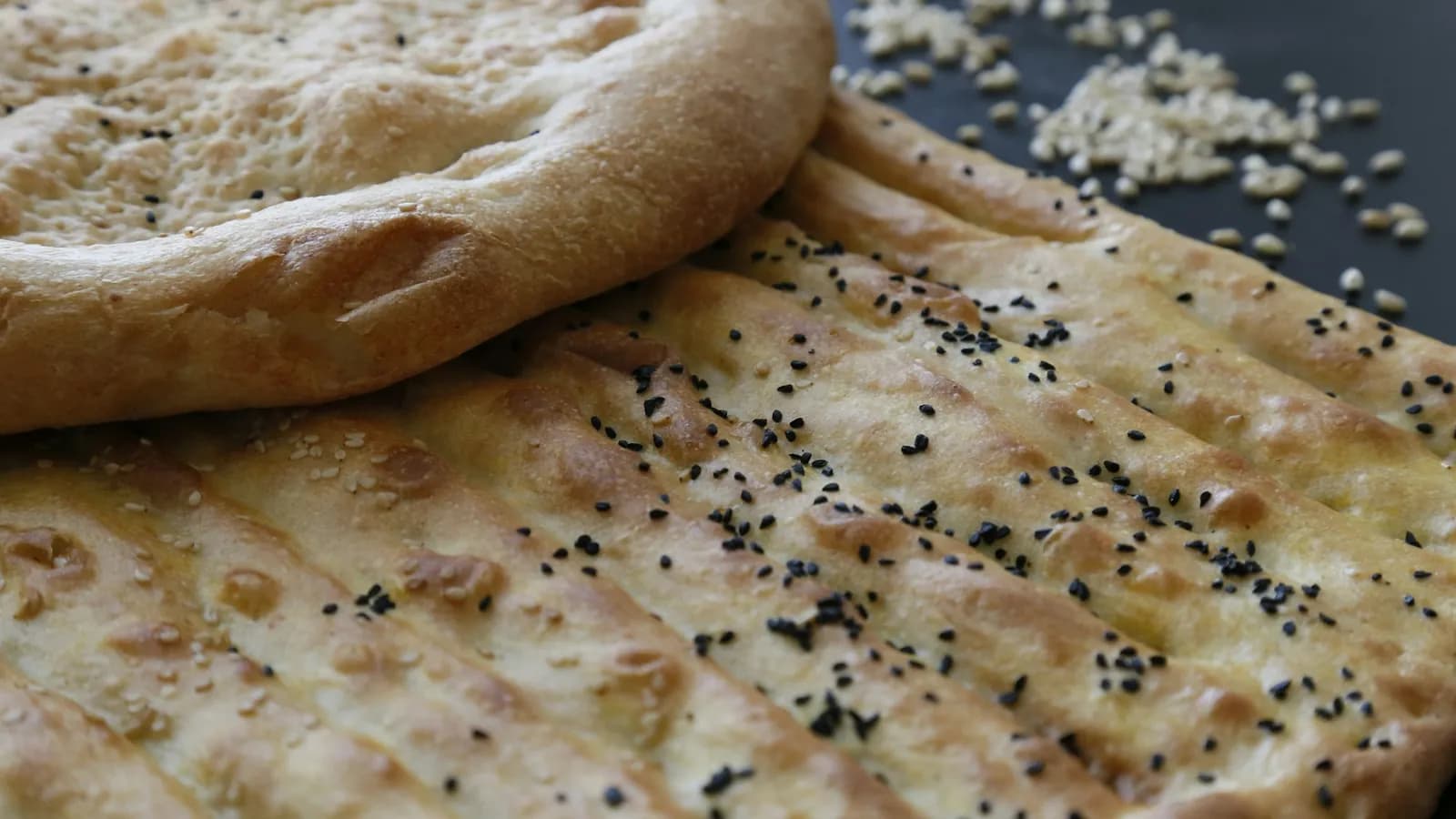
Yogurt-leavened Indian flatbread cooked on a blazing stone until blistered, then brushed with garlic-cilantro butter. The perfect partner for a curry or for mopping up anything off the grill.
Quick answer
Naan cooks on a hot stone or cast-iron plancha at 250-280 °C in the kamado over direct heat for 2-3 minutes per piece, until it puffs and blisters. Brush it hot with garlic-cilantro butter and serve alongside curries: chewy inside, charred and tender outside.
One big step at a time, screen kept on and built-in timers.
- Prep
- 25 min
- Cook
- 18 min
- Servings
- 6 servings
- Temperature
- 260 °C
What time do you want to eat?
Pick a time and we'll tell you when to start.
12:47
Start the prep
13:12
Light the kamado
13:32
Onto the kamado
14:00
Serve
Estimate: it includes lighting and settling the kamado plus a margin for large cuts. If the recipe asks you to marinate or salt ahead, add that time.
Fire setupStone or steel
- Dome
- 260 °C
- Deflector
- No
- Grate
- Standard height
- Fuel
- Holm oak lump charcoal
- Setup
- Cordierite stone (or cast-iron griddle) on the grid
Temperature curve
0:58 h from lighting
Kamado dome
| # | From | Phase | Dome |
|---|---|---|---|
| 1 | 0:00 | Light the charcoalCordierite stone on the grate from the start | 20 → 260 °C |
| 2 | 0:20 | StabiliseThe stone must reach 250-280 °C on the surface | 260 °C |
| 3 | 0:40 | BakeLid closed 2-3 min until it blisters, then flip for 30-60 s | 260 → 225 °C |
| 4 | 0:43 | Recover temperatureLid closed between naan; repeat until all six are baked | 225 → 260 °C |
| 5 | 0:58 | Serve | off |
0:00 is the moment you light the charcoal. Internal temperatures are the ones the recipe gives; without a probe, go by the times. Turn these times into clock times with the planner
For this recipe
Ingredients
- strong bread flour500 g
- natural Greek yogurt120 g
- warm water160 ml
- active dry yeast7 g
- salt1 tsp
- unsalted butter60 g
- garlic cloves3
- chopped fresh cilantro1 handful
Allergens
- Gluten
- Milk
Based on the recipe's ingredients. Always check the label of every product you buy.
The gear for this recipe
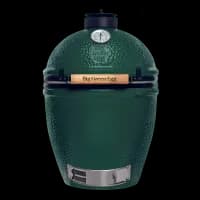 Big Green Egg LargeThe ceramic body of the Big Green Egg Large is what brings this naan closer to a tandoor: it stores and radiates a stable, enveloping heat that holds the dome at 260 °C without dips while you bake batch after batch. The Large gives plenty of room to preheat the stone and cook several naan in a row without the temperature crashing.
 Orework Spanish Holm Oak Charcoal 15 kg
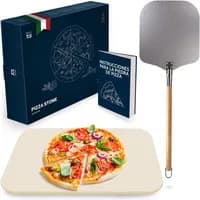 Blumtal Cordierite Pizza Stone 38×30 cm + Peel (bundle)The Blumtal cordierite stone is the surface that puffs and blisters the naan: preheated to 250-280 °C, it dumps heat into the base of the dough and generates the internal steam that inflates it. The 38×30 cm format fits two ovals at once, and the included peel makes it easy to place and turn the pieces without burning yourself.
 Ooni Digital Infrared Pizza Oven ThermometerHere the variable that decides the result is the surface temperature, not the air, and the Ooni infrared thermometer reads it instantly with a trigger. Pointing it at the stone and confirming 250-280 °C before the first naan is the difference between bread that puffs and blisters and one that dries out lukewarm with no bubbles.
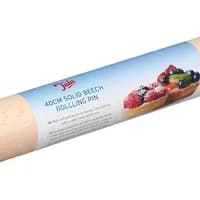 Tala solid beech rolling pin, 40 cm, straight cylinder with no handles
Method
- 01
Bloom and mix
Dissolve the yeast in the warm water (lukewarm, max 38 °C) with a pinch of sugar if you have it and leave for 10 minutes until foamy. Mix the flour with the salt, add the yogurt and the yeasted water, and bring it together into a sticky dough.
- 02
Knead and proof
Knead for 8-10 minutes on the counter until the dough is smooth and elastic; it will be soft, so resist adding much flour. Shape into a ball, cover with a cloth and let it proof somewhere warm for 60-90 minutes, until doubled in size.
- 03
Fire the kamado
Light the kamado for direct cooking and set the cordierite stone (or a cast-iron plancha) on the grate so it heats along with it. Stabilize the dome around 260 °C and let the stone soak up heat for at least 20 minutes; the surface should reach 250-280 °C.
- 04
Divide and shape
Turn out the dough, gently degas it and divide into 6 portions. With floured hands or a rolling pin, stretch each ball into an oval about 3-4 mm thick, leaving it a touch thicker in the centre. Keep them covered while they wait their turn so they don't dry out.
- 05
Cook and blister
Lightly brush the top side with water (it helps it stick and creates steam) and lay the naan on the stone. Close the lid and cook for 2-3 minutes: it will balloon up and toasted blisters will appear. Flip for 30-60 seconds to mark the other side, then pull it before it dries out.
- 06
Garlic butter
Melt the butter with the finely chopped garlic in a small pan in the kamado's heat, without letting the garlic brown (60-90 seconds). Off the heat, stir in the cilantro. Brush each naan while hot and stack them wrapped in a cloth so they stay supple until serving.
About this recipe
Naan is all about contrast: an enriched dough that puffs in seconds against a screaming-hot surface, throwing up those toasted blisters that mark a good flatbread. A tandoor achieves it by slapping the dough onto a clay wall; at home the kamado is the closest thing there is, because the ceramic stores and radiates a stable, enveloping heat that a kitchen pan simply can't match.
Why yogurt changes the crumb
Yogurt brings acidity and fat, both of which relax the gluten and give a soft, slightly chewy crumb instead of a dry one. It also keeps the bread supple the next day. Use thick natural Greek yogurt and let the yeast handle only the oven spring; we're not after a long sour ferment, just a quick, pillowy bread.
The stone rules
The critical variable isn't the kamado's air temperature but the surface temperature. A cordierite stone or a cast-iron plancha at 250-280 °C dumps heat into the base of the dough, generates internal steam and inflates it. If the stone is merely warm, the naan dries out before it blisters. Preheat generously and check the surface with an infrared thermometer.
In 30 seconds
Strong-flour dough with yogurt and yeast, proofed until doubled. Stone or plancha at 250-280 °C in the kamado, direct heat. Each naan cooks for 2-3 min until it puffs and blisters, then gets brushed hot with garlic-cilantro butter. Serve alongside curries or grilled meats.
It's a forgiving recipe for rounding out any cook: while the coals settle after searing meat or vegetables, the stone is already hot for quick batches of bread. And the garlic butter, infused in the kamado's own heat, turns a humble flatbread into the bite everyone reaches for again.
Will it fit your kamado?
Small
33-40 cm · Joe Jr, MiniMax
Tight
The 38×30 cm stone won't fit; with a ~30 cm stone, one naan per batch, about 6 batches.
Medium
46-51 cm · Classic, Large
Fits
The 38×30 cm stone probably fits (tight on 46 cm); 1-2 naan per batch.
Large
56-61 cm · Big Joe, XL
Fits
Room to spare around the stone; probably 2 naan per batch, in three batches.
What to serve with it
Sides
- Charred aubergine baba ganoush
- Cucumber and mint raita
- Spiced red lentil dal
- Wine
- White Verdejo from Rueda or a young Navarra rosé
- Beer
- Light lager or wheat beer
- Alcohol-free
- Yogurt and cardamom lassi
Leftovers and storage
- In the fridge
- 1-2 days at room temperature, tightly wrapped or in a sealed bag.
- Freezing
- Freeze 2-3 months interleaved with baking paper; thaw in the fridge.
- Reheating
- Sprinkle with water and warm 1 minute per side in a pan or on the kamado; brush with butter again.
- Using them up
- Cut into wedges, toast and dip in hummus, or use as a quick flatbread pizza base.
Cool and refrigerate within 2 hours. When in doubt, throw it out.
Leftover embers
You still have embers: what to do with the leftover heat
For 18 min at 260 °C in a classic kamado you load about 800 g of charcoal and burn 600 g: when you serve, about 250 g of live embers remain. Before you shut the vents, that is still enough for:
Without touching the vents
260 °Cgrilled vegetables
25 minof embers
- Bacon-Wrapped Dates on the Grill14 min · 210 °C
- Grilled Corn Mexican Elote Style on the Kamado15 min · 230 °C
- Kamado-Grilled Apricots with Honey and Rosemary10 min · 230 °C
No recipe needed
- Strips of courgette and aubergine, char-marked (5 min)
- Pita or naan from shop dough, on the grate (3 min each)
- Halved tomatoes, cut side down, for a sauce (10 min)
Closing the vents halfway and waiting for it to drop
140-200 °Cdessert while you eat
35 minof embers
- Smoked Loaded Nachos on the Kamado12 min · 185 °C
- Brioche Burger Buns on the Kamado18 min · 190 °C
- Garlic-stuffed portobello mushrooms grilled in the kamado22 min · 190 °C
No recipe needed
- Yesterday's bread with oil and garlic, on the grate (10 min)
- Corn cobs in their husks (30 min)
Before opening the lid, crack it open for a few seconds first; if you raise the heat, stir the ash so the coals can breathe. And if you are not going to use them: once the food is out, close the bottom and top vents. The charcoal that does not burn (about 250 g) can be used next time. Different size of kamado? Work out your load for 1 h of fire, lighting included.
No kamado?
How to make it without a kamado: oven, gas grill or pellets
Naan needs a stone at 250 °C and 2-3 minutes per piece to puff and blister. Without a kamado it works in all three cookers if the stone is properly hot.
Home oven
- Temp.
- Maximum, 250-275 °C, with a stone or steel
- Time
- 3-4 min per naan; about 25 min for all six
- Stone or steel on the top shelf, preheated for 40 minutes
- Grill for the last minute instead of flipping, to char the blisters
- Melt the butter and garlic in a small pan on the hob, not in the oven
SmokeBarkJuicinessVery good, with fewer charred spots than over coals
Gas grill
- Temp.
- 260-290 °C, burners high, lid closed
- Time
- 2-3 min per naan, same as on the kamado
- Stone or cast-iron griddle on the grate, 20-30 minutes with the lid closed
- If the base browns before the naan puffs, lower the burners underneath
- The final flip can go straight onto the grate for grill marks
SmokeBarkJuicinessPractically the same as on the kamado
Pellet grill or electric smoker
- Temp.
- Pellet grill at maximum, 260-290 °C
- Time
- 3-4 min per naan
- Pellet grill only: an electric smoker cannot heat a stone to 250 °C
- Stone or griddle on the grate from start-up, at least 40 minutes
- Bake two at a time and close fast; every opening cools the chamber
SmokeBarkJuicinessWell puffed with a touch of smoke, less charred
Temperatures and times are a guide; the original recipe is the kamado one. Tempted? which kamado to choose for what you cook
Editor's tips
- No stone? A well-preheated cast-iron plancha or skillet works just as well: always chase that 250-280 °C surface before the first naan.
- Don't overcook. Naan should come off supple; the moment it's blistered and puffed, pull it. Stacking them under a cloth keeps them tender thanks to their own trapped steam.
- For deeper flavour, clarify the butter or use ghee: it handles heat better and leaves a nutty aroma that plays well with garlic and cilantro.
Gear for this recipe
As an Amazon Associate, mikamado.es earns from qualifying purchases. At no extra cost to you.
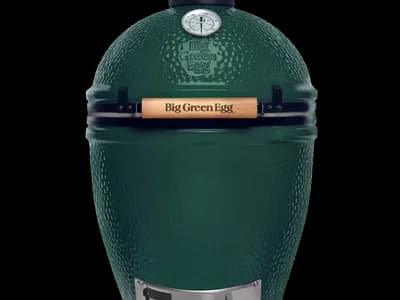
Big Green Egg Large
The ceramic body of the Big Green Egg Large is what brings this naan closer to a tandoor: it stores and radiates a stable, enveloping heat that holds the dome at 260 °C without dips while you bake batch after batch. The Large gives plenty of room to preheat the stone and cook several naan in a row without the temperature crashing.
€2,099
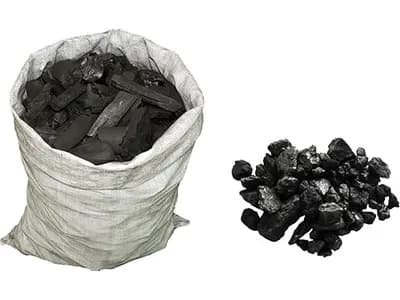
Orework Spanish Holm Oak Charcoal 15 kg
€45

Blumtal Cordierite Pizza Stone 38×30 cm + Peel (bundle)
The Blumtal cordierite stone is the surface that puffs and blisters the naan: preheated to 250-280 °C, it dumps heat into the base of the dough and generates the internal steam that inflates it. The 38×30 cm format fits two ovals at once, and the included peel makes it easy to place and turn the pieces without burning yourself.
€38

Ooni Digital Infrared Pizza Oven Thermometer
Here the variable that decides the result is the surface temperature, not the air, and the Ooni infrared thermometer reads it instantly with a trigger. Pointing it at the stone and confirming 250-280 °C before the first naan is the difference between bread that puffs and blisters and one that dries out lukewarm with no bubbles.
€29
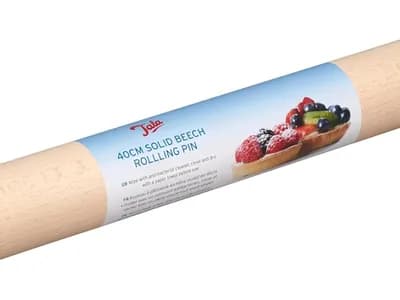
Tala solid beech rolling pin, 40 cm, straight cylinder with no handles
€8
Have you made it?
Tell us how it turned out on your kamado. We review every rating before publishing it.
No published ratings yet. Be the first!
FAQ
What temperature should naan cook at on a kamado?
On a stone or plancha with the surface at 250-280 °C and the dome around 260 °C, direct heat. Each naan takes 2-3 minutes to puff and blister.
Why won't my naan blister or puff up?
Almost always a too-cold stone or too-dry dough. Preheat longer, check 250-280 °C at the surface and brush the top with water before cooking.
Can I make naan without yogurt?
Yes, but you'll lose tenderness. Swapping in milk or kefir works if you add a spoonful of oil to make up for the fat; Greek yogurt still gives the pillowiest crumb.
Do I need a pizza stone or will a plancha do?
Either works as long as it retains and radiates heat. A cordierite stone gives a gentler blister; a cast-iron plancha gives darker marks and a crisper edge.
Can I make the dough ahead of time?
Yes. After the first proof, refrigerate it for up to 24 hours; it cold-ferments and gains flavour. Take it out 30-40 minutes before shaping so it comes to temperature.
Can you make garlic naan without a kamado?
Yes. On a gas grill with a stone at 260-290 °C it comes out almost identical in 2-3 minutes; in a home oven at full heat or on a pellet grill allow 3-4 minutes per piece and a little less char.
What do I do with the embers left after making Garlic Butter Naan on the Kamado?
After 18 min at 260 °C in a classic kamado about 250 g of live embers remain: 25 min more at 260 °C without touching the vents or 35 min at 140-200 °C closing the vents. If you are not going to use them, close both vents and keep the charcoal for next time.
More kamado recipes


KEEP READING
Go deeper on this dish
- Recommended kamado
Big Green Egg Large
The ceramic body of the Big Green Egg Large is what brings this naan closer to a tandoor: it stores and radiates a stable, enveloping heat that holds the dome at 260 °C without dips while you bake batch after batch. The Large gives plenty of room to preheat the stone and cook several naan in a row without the temperature crashing.
- Editorial guide
How to light a kamado: the step-by-step method
No petrol, no weird tablets and no 45-minute waits. The cone method, airflow control and the mistakes that prevent 80% of the frustration.
- Glossary term
Heat deflector
Ceramic plate placed between the coals and the grate to turn direct fire into indirect cooking.
- Related comparison
big green egg large vs kamado joe classic iii
The classic kamado matchup: the Big Green Egg Large, the indestructible pioneer with the widest accessory network, agai…