Recipe · Indirect · Medium
Beer-Braised Pork Knuckle in the Kamado: Cast-Iron Pot and Crackling
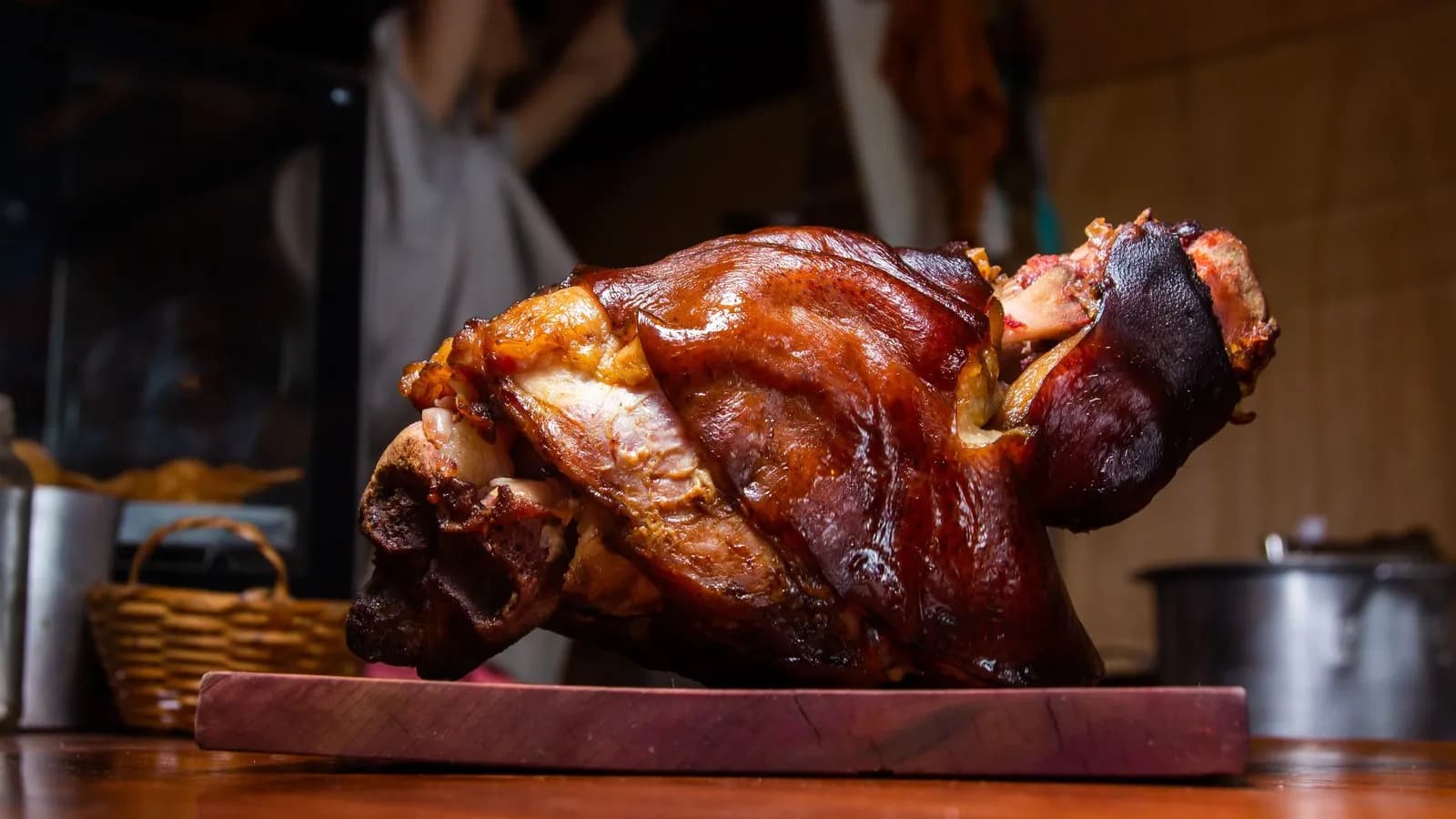
The pork knuckle of the Russian New Year table, the rulka, in two stages: 2.5 to 3 hours braising in a cast-iron pot with beer at 150 °C, then a dry finish at 230 °C so the skin blisters and crackles.
Quick answer
Braise two knuckles in a lidded cast-iron pot with 1 l of beer, onion and caraway, top of the skin above the liquid, indirect at 150 °C for 2.5-3 hours, until 93-96 °C or the probe slides in without resistance. Lift out, dry, score and salt the skin, then finish on the grate at 230 °C for 30-40 minutes, burping the lid.
- Prep
- 25 min
- Cook
- 230 min
- Servings
- 4 servings
- Temperature
- 150 °C
Ingredients
- hind pork knuckles (codillos traseros) with skin, 1-1.2 kg each2 ud
- amber lager (märzen style) or dark beer, at room temperature1 l
- large onions, in wedges2 ud
- head of garlic, halved1 ud
- caraway seeds5 g
- bay leaves3 ud
- black peppercorns10 ud
- coarse salt, divided between the meat and the skin30 g
- wholegrain mustard, for the sauce and for serving2 cda
- sauerkraut, to serve500 g
The gear for this recipe
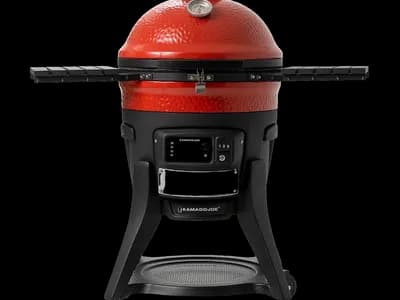
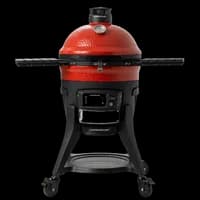 Kamado Joe Konnected JoeThis recipe has two very different set points, 150 °C for three hours of braising and 230 °C for the skin, and the **Konnected Joe** holds each one with its fan, which the maker rates for a range of 107 to 371 °C. That removes the tedious part: no need to go down and adjust the bottom vent every half hour while the pot works. It comes with the two ceramic deflectors and the two-level Divide & Conquer as standard, which is exactly the indirect set-up the knuckle needs in both stages, and it lights with a button, no firelighters. Its grate is the 46 cm of the Classic format, where a 29.7 cm pot fits across. The trade-off: it needs a power socket nearby and adds electronics to an appliance that will live outdoors.
 Jealous Devil 100% White Quebracho lump charcoal 15.8 kgAlmost four hours of lit kamado, first at 150 °C and then at 230 °C, with no opening to refuel: that calls for a charcoal that lasts and does not crumble to dust. The **white quebracho from Jealous Devil** is a very dense South American hardwood, and in big pieces it leaves gaps for air to pass right to the end of the cook, which matters in a fan-driven kamado, where forced air has to reach all the embers. The firebox is filled once, almost to the rim, and the climb from 150 to 230 °C for the skin comes from the charcoal that is already lit. The bag is 15.8 kg, so it covers several long cooks like this one.
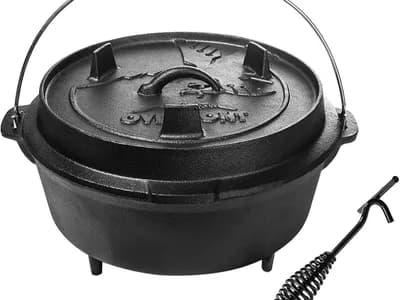
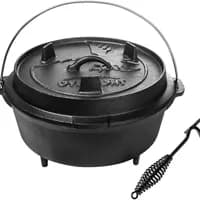 Overmont Dutch Oven-L: 6.3 L, 29.7 cm cast-iron Dutch ovenThe first stage of the knuckle is a stew inside the kamado, and the 6.3 L **Overmont pot** is the vessel: lidded cast iron, 29.7 cm across and 36 cm from handle to handle according to its images, so it fits across a 46 cm grate. Its mass of iron holds the beer at a gentle simmer and the heavy lid keeps the steam in. Its listing rates it up to 250 °C, far above the 150 °C of the braise. Two drawbacks. It is shallow inside: 6.3 L over 29.7 cm gives about 9 cm of depth, so a dry run with the knuckles, the lid on and the dome closed is a must. And it weighs 6.21 kg empty: gloves and two hands. One more: it is not enamelled and its listing says it rusts if not dried, so for a long wet braise strain the liquid as soon as the knuckles come out, wash, dry over the heat and wipe on oil (more in the description).
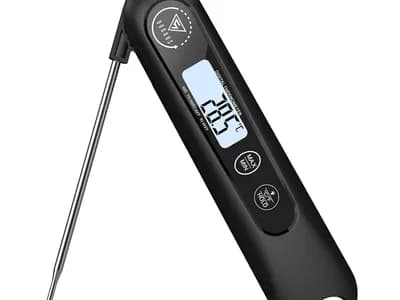
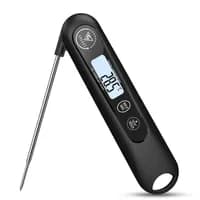 DOQAUS instant-read thermometer, folding probe, 3-second readWith a pork knuckle the clock misleads: two pieces of the same weight can differ by half an hour, and what decides it is whether the collagen has melted. The **DOQAUS thermometer** answers that question with one stab next to the bone, without touching it: look for 93-96 °C and, above all, for the probe going in like butter. It is a food probe: it is not left inside the kamado with the dome closed, nor is it for measuring the chamber.
Method
- 01
Prepare the knuckles
Pat the knuckles dry and rub them with two thirds of the coarse salt, mostly on the cut end. Lay them head to tail in the empty pot, nothing underneath (the thick end of one by the tip of the other), and put the lid on. If they are too long, ask the butcher to saw off the tip of the bone. If the lid will not sit because they are too tall, this pot cannot take them: use smaller front knuckles and go by the probe. Leave them out 20-30 minutes while you light up.
- 02
Light and set up indirect
Fill the firebox of the Konnected Joe with Jealous Devil quebracho lump above the air holes, almost to the rim: that is almost four hours and a final climb to 230 °C with no refuelling. Use big pieces and do not pack them down. Place the two ceramic deflectors on the lower level of the Divide & Conquer and the grate above them. Light with the button on the panel and set 150 °C. Wait until the temperature settles and the smoke runs thin and clean before putting the pot in.
- 03
Assemble the pot
In the Overmont pot, at room temperature, lay the knuckles straight on the base and spread the onion wedges, the head of garlic, the bay, the pepper and the caraway around them. Pour the beer in at one side, without wetting the top, until it covers roughly a third of the height of the knuckles. The top of the skin stays above the liquid throughout the braise; the skin underneath softens and dries out in the second stage. If 1 l does not reach that height, top up with water.
- 04
Braise with the lid on
Open the kamado with burping: lift the lid about 5 cm, wait about 5 seconds and then open fully, wearing gloves. Set the lidded pot in the centre of the grate, close up and let the fan hold 150 °C for 2 hours without opening. The liquid stays at a gentle simmer inside the pot even though the chamber is at 150 °C. After that time, burp the kamado again and lift the lid off the pot, wearing gloves.
- 05
Uncover and check the collagen
Carry on with the pot uncovered at 150 °C for another 30 to 60 minutes: the skin starts to dry and the liquid concentrates. At 2.5 hours in total, push the DOQAUS thermometer into the thickest part next to the bone, without touching it. You want 93-96 °C and, above all, a probe that goes in without resistance. If the probe still meets resistance, give it another 20-30 minutes and measure again. Do not go past 3.5 hours without checking the liquid level.
- 06
Dry and score the skin
Lift the knuckles out with tongs and a slotted spoon onto a tray, and take the pot out of the kamado onto a wooden trivet. Set 230 °C on the panel and open the top vent so it climbs. Dry the skin with kitchen paper, score it with a Stanley knife in 1.5 cm diamonds without reaching the meat, taking advantage of how the braise has softened it, and rub it with the rest of the salt. Strain the liquid from the pot and keep it.
- 07
Crackling at 230 °C
With the chamber steady at 230 °C, open with burping and set the knuckles straight on the grate, skin up, with a metal tray on the deflectors to catch the drips. Close up and leave for 30-40 minutes, until the skin puffs into blisters and sounds hollow when tapped with the tongs. Check at 20 minutes, always burping, and turn the joint if one side browns faster. Honey, beer and mustard never touch the skin.
- 08
Sauce, rest and serve
While the skin crisps, reduce the strained liquid over a high heat in the kitchen, 10-15 minutes, until it is halved, and bind it with a spoonful of mustard. Rest the knuckles for 10 minutes on a rack, not on a platter, so the skin does not go damp underneath. Serve one knuckle between two people, with the sauce on the side, warm sauerkraut and more mustard.
About this recipe
The pork knuckle, codillo in Spain and рулька (rulka) on many Russian New Year tables, allows no shortcuts. Beneath a thick skin sits meat bound by tendons and plenty of connective tissue, and that collagen only gives way after hours of moist heat. But moist heat leaves the skin as soft as a wet glove. That is why this recipe has two stages, each with its own tool: first a slow braise in a cast-iron pot with beer, onion and caraway; then the joint comes out of the pot and goes dry onto the grate, so the skin puffs up and crackles. The kamado acts as the oven for both.
Two stages, because they ask for opposite things
The first stage is a stew. The lidded pot sits on the grate with the deflectors beneath it, in indirect cooking at 150 °C, the same chamber used for the red wine carrilleras (beef cheeks) in a cocotte. The liquid never goes above the 100 °C at which water boils, and the meat cooks without drying out. What sets it apart from the cheeks is the liquid and the finish: here the beer covers only a third of the joint so the top of the skin stays out, and the dish does not end as a sauce but in a second stage at 230 °C without the pot, where the skin loses its water and blisters.
In a Kamado Joe Konnected Joe both set points are entered on the panel and the fan holds each one, so the three hours of braising do not call for standing beside it adjusting the bottom vent. Ignition is electric, at the press of a button. The fuel has to last almost four hours without a refill, and for that a very dense hardwood lump such as the white quebracho from Jealous Devil, in big pieces with a compact ember bed, is a good fit.
Which pot fits a 46 cm kamado
The Konnected Joe has the 46 cm grate of the Classic format, and the pot has to fit with the dome closed. The 6.3 L Overmont measures 29.7 cm across, 36 cm from handle to handle according to its images, and weighs 6.21 kg. In width it fits with room to spare; its listing does not make the height clear, and inside it is shallow: 6.3 L over 29.7 cm works out at about 9 cm deep. Before lighting, set the lidded pot on the grate and lower the dome slowly: if it touches, there is no recipe. Its listing rates it up to 250 °C, plenty for the braise. By the measurements, two hind knuckles of 1-1.2 kg should fit lying down, head to tail, with no onion underneath; the dry run in step 1 confirms it. More on cast iron and kamados in the guide to cast iron and Dutch ovens, and on the range in the Kamado Joe guide.
The guide reserves wet, long cooking for enamelled iron. Beer is far less acidic than wine, and a well-seasoned bare pot will take it as long as the liquid is not left sitting in it: strain it as soon as the knuckles come out (step 6), wash the pot, dry it over the heat and wipe on a thin film of oil. If you have an enamelled cocotte of 6 L or more, use that instead.
Done at 93-96 °C, not at 71
Safety comes first: the USDA sets 62.8 °C (145 °F) with a three-minute rest for whole cuts of pork, and this site's rule for pork roasts is 71-75 °C. But at 71 °C a knuckle is safe and tough. The collagen in the tendons has to reach 93-96 °C and stay there a while to turn to gelatine, and the reliable signal is not the clock but the probe: when a thermometer such as the DOQAUS goes into the thick part, next to the bone without touching it, as if into butter, the knuckle is ready.
The skin crackles from the water it loses, not from anything brushed on it. That is why it goes in at 230 °C dry and salted, with no honey or beer over the top. At that temperature the lid is always opened with burping: lift it about 5 cm, wait about 5 seconds and then open fully, wearing gloves and keeping your face away, as the temperature problems guide explains. For what to ask the butcher for, see the guide to cuts, and if you want another pork dish from Russian cooking, the pork neck buzhenina is served cold and sliced.
In 30 seconds
Two hind pork knuckles of 1-1.2 kg. Stage 1: cast-iron pot with 1 l of beer, onion, garlic and caraway, covering a third with the top of the skin above the liquid, indirect at 150 °C for 2.5-3 hours, until 93-96 °C or the probe slides in without resistance. Stage 2: out of the pot, skin dry, scored and salted, on the grate at 230 °C for 30-40 minutes, burping the lid. Mustard and sauerkraut on the side.
Editor's tips
- The braising stage can be done the day before: move the knuckles and the strained liquid out of the pot into shallow containers and get them into the fridge within 2 hours, as the USDA advises. The next day, heat the knuckles in the lidded pot with a little of the liquid at 150 °C until the centre is above 74 °C, the USDA figure for reheating leftovers, then dry them and do the skin stage at 230 °C.
- If at 40 minutes the skin has not fully puffed, raise the set point to 250 °C for 10 minutes and keep watch. Every time you open at that temperature, burp: about 5 cm, about 5 seconds, then fully.
- Avoid heavily hopped IPAs: as the base reduces, the hop bitterness concentrates and the sauce turns harsh. An amber lager or a mild dark beer gives a slightly sweet base that suits the caraway.
- The pot goes into the kamado at room temperature with the chamber at 150 °C, a moderate jump for cast iron. What it must not get is cold water while hot, or a sudden change when it comes out: never cool it down in the sink. When lifting it out, use two hands, gloves and the wooden trivet set ready beforehand.
Gear for this recipe
As an Amazon Associate, mikamado.es earns from qualifying purchases. At no extra cost to you.
Kamado Joe Konnected Joe
This recipe has two very different set points, 150 °C for three hours of braising and 230 °C for the skin, and the **Konnected Joe** holds each one with its fan, which the maker rates for a range of 107 to 371 °C. That removes the tedious part: no need to go down and adjust the bottom vent every half hour while the pot works. It comes with the two ceramic deflectors and the two-level Divide & Conquer as standard, which is exactly the indirect set-up the knuckle needs in both stages, and it lights with a button, no firelighters. Its grate is the 46 cm of the Classic format, where a 29.7 cm pot fits across. The trade-off: it needs a power socket nearby and adds electronics to an appliance that will live outdoors.
€3,140

Jealous Devil 100% White Quebracho lump charcoal 15.8 kg
Almost four hours of lit kamado, first at 150 °C and then at 230 °C, with no opening to refuel: that calls for a charcoal that lasts and does not crumble to dust. The **white quebracho from Jealous Devil** is a very dense South American hardwood, and in big pieces it leaves gaps for air to pass right to the end of the cook, which matters in a fan-driven kamado, where forced air has to reach all the embers. The firebox is filled once, almost to the rim, and the climb from 150 to 230 °C for the skin comes from the charcoal that is already lit. The bag is 15.8 kg, so it covers several long cooks like this one.
€205
Overmont Dutch Oven-L: 6.3 L, 29.7 cm cast-iron Dutch oven
The first stage of the knuckle is a stew inside the kamado, and the 6.3 L **Overmont pot** is the vessel: lidded cast iron, 29.7 cm across and 36 cm from handle to handle according to its images, so it fits across a 46 cm grate. Its mass of iron holds the beer at a gentle simmer and the heavy lid keeps the steam in. Its listing rates it up to 250 °C, far above the 150 °C of the braise. Two drawbacks. It is shallow inside: 6.3 L over 29.7 cm gives about 9 cm of depth, so a dry run with the knuckles, the lid on and the dome closed is a must. And it weighs 6.21 kg empty: gloves and two hands. One more: it is not enamelled and its listing says it rusts if not dried, so for a long wet braise strain the liquid as soon as the knuckles come out, wash, dry over the heat and wipe on oil (more in the description).
€56
DOQAUS instant-read thermometer, folding probe, 3-second read
With a pork knuckle the clock misleads: two pieces of the same weight can differ by half an hour, and what decides it is whether the collagen has melted. The **DOQAUS thermometer** answers that question with one stab next to the bone, without touching it: look for 93-96 °C and, above all, for the probe going in like butter. It is a food probe: it is not left inside the kamado with the dome closed, nor is it for measuring the chamber.
€8
FAQ
How long does a pork knuckle take to cook?
For a knuckle of 1-1.2 kg, allow 2.5 to 3 hours of braising at 150 °C in a lidded pot with the top of the skin above the liquid, then 30-40 minutes at 230 °C dry for the skin. The clock is only a guide: the knuckle is done when the thick part, next to the bone, reads 93-96 °C and the probe slides in without resistance. If the probe still meets resistance, give it another 20-30 minutes.
Does a pork knuckle need boiling before roasting?
Some moist cooking is needed, because the collagen in the tendons melts better in liquid than in dry air. The classic boil in a pot of water is replaced here by a beer braise inside the kamado, which gives more flavour and keeps the top of the skin out of the liquid. Roasting it raw, wrapped in aluminium foil, also works, but the skin comes out soft and still needs a hard finish.
Which beer is best for pork knuckle?
An amber lager of the märzen type, or a mild dark beer. Both have caramelised malt that gives a slightly sweet, dark base which goes with the onion and caraway and makes a good sauce when reduced. Heavily hopped IPAs are a poor choice: as the liquid concentrates, the hop bitterness multiplies. An ordinary blonde lager will do, though it contributes less.
What internal temperature is a pork knuckle done at?
For safety, the USDA sets 62.8 °C (145 °F) with a three-minute rest for whole cuts of pork, but at that temperature a knuckle is tough. For the tendons to turn to gelatine and the meat to come away from the bone, you need to reach 93-96 °C in the thick part, measuring next to the bone without touching it. The other sign is that the probe goes in without resistance.
Can you make the pork knuckle a day ahead?
Yes. Finish the braise, move the knuckles and the strained liquid to shallow containers and refrigerate them within 2 hours, as the USDA asks. The next day, reheat the knuckles in the lidded pot with a little of the liquid at 150 °C until the centre passes 74 °C, the USDA figure for reheating leftovers, then dry them and do the skin stage at 230 °C.
More kamado recipes
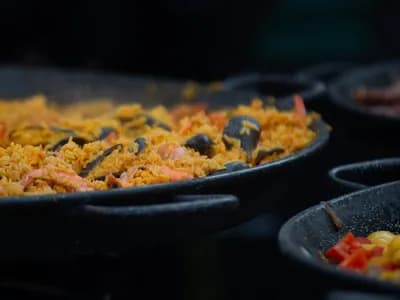
Alicante-style baked rice on the kamado in a clay cazuela
Traditional Alicante baked rice —chickpeas, pork rib, blood sausage, potato and tomato, with a whole garlic head in the centre— baked in a clay cazuela at 220°C indirect.
Lamb Lyulya Kebab on the Kamado
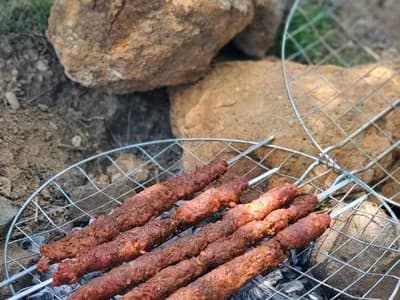
The question is never how to season it, but why it falls off the skewer. The answer is fat, a hand-chopped grain and real kneading: juicy lamb that holds together over direct fire.
Pork Neck Shashlik on the Kamado, Onion Marinade
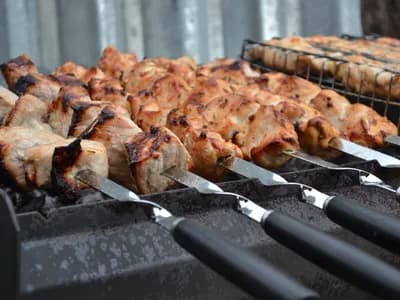
The skewer of the Russian-speaking world, cooked as I make it on my Big Green Egg Large: pork neck in 3 cm cubes, a grated onion marinade with not a drop of vinegar, and twenty minutes of steady direct fire.
KEEP READING
Go deeper on this dish
- Recommended kamado
Kamado Joe Konnected Joe
This recipe has two very different set points, 150 °C for three hours of braising and 230 °C for the skin, and the Konnected Joe holds each one with its fan, which the maker rates for a range of 107 to 371 °C. That removes the tedious part: no need to go down and adjust the bottom vent every half hour while the pot works. It comes with the two ceramic deflectors and the two-level Divide & Conquer as standard, which is exactly the indirect set-up the knuckle needs in both stages, and it lights with a button, no firelighters. Its grate is the 46 cm of the Classic format, where a 29.7 cm pot fits across. The trade-off: it needs a power socket nearby and adds electronics to an appliance that will live outdoors.
- Editorial guide
How to light a kamado: the step-by-step method
No petrol, no weird tablets and no 45-minute waits. The cone method, airflow control and the mistakes that prevent 80% of the frustration.
- Glossary term
Heat deflector
Ceramic plate placed between the coals and the grate to turn direct fire into indirect cooking.
- Related comparison
kamado joe classic iii vs kamado joe konnected joe
Same Kamado Joe, two opposite philosophies. The Classic III is the classic kamado you light by hand and watch with your…