GUÍA
Meat cuts for the kamado: what to ask for at a Spanish butcher
From brisket to pork butt: what each cut is called at the Spanish counter, what weight and what fat to ask for, and which method it needs afterwards on the kamado.
Quick answer
At a Spanish butcher, brisket is the whole pecho de vaca; pork butt is cabecero de lomo or aguja de cerdo; picanha is tapilla with its fat cap left on; tomahawk is a lomo alto chop with the long rib bone. Ask for them whole, uncut and untrimmed, and agree the weight beforehand.
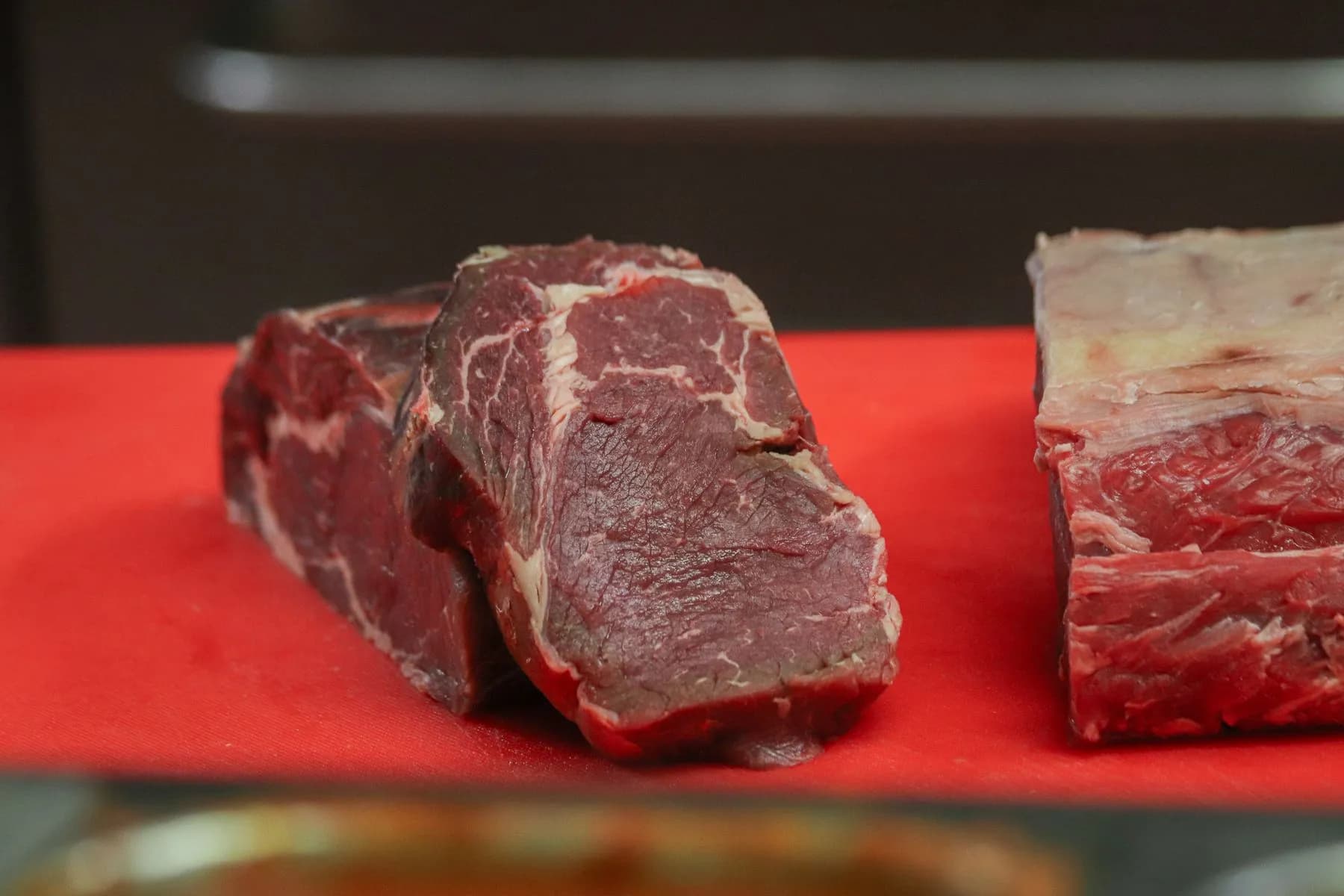
Half the failures of a long cook are decided before the charcoal is lit, at the butcher's counter. You turn up with a recipe that calls for a five-kilo brisket or a pork butt with its fat cap on, and on the other side of the glass stands a professional who breaks down a carcass the way it is broken down here, with different names and different cutting lines. It is not a language problem: Spanish and American butchery split the same animal in different places.
This guide translates barbecue vocabulary into the counter you actually stand at, cut by cut, with the weight to expect, the fat you have to insist on and the method each piece asks for afterwards. It also carries the warnings nobody gives you: that they will trim the fat off unless you expressly forbid it, that the breast of a milk-fed calf is not a brisket, and that the word costillar (rib rack) means, by default, a tray of ribs already cut into strips.
Internal temperatures and times are not the subject here: that is what the temperature and time table by cut is for. This is the step before, and it is the one almost nobody writes about: walking out of the butcher's with the right piece in the bag.
| Cut (BBQ name) | How to ask for it here | Whole weight | Kamado method | Recipe |
|---|---|---|---|---|
| Brisket | Pecho de vaca entero, con su grasa (whole beef breast) | 4-6 kg | Low & slow, 110-120 °C | Brisket |
| Pork butt | Cabecero de lomo o aguja de cerdo (top of the shoulder) | 2-3 kg | Low & slow, 110-120 °C | Pulled pork |
| St. Louis ribs | Costillar de panceta entero, cuadrado (belly rack, squared) | 1.5-2 kg | Indirect, 120-135 °C | Ribs |
| Tomahawk | Lomo alto con la costilla larga entera (rib chop, long bone) | 0.9-1.2 kg | Reverse sear | Tomahawk |
| Ribeye / chuletón | Lomo alto con hueso, 4-5 cm de grosor (bone-in rib chop) | 1-1.3 kg | Hot direct | Chuletón |
| Leg of lamb | Pierna de ternasco con hueso, no lechal (yearling lamb leg) | 1.5-2 kg | Indirect, 140-160 °C | Leg |
| Spatchcock chicken | Pollo campero abierto en mariposa (free-range, butterflied) | 1.8-2.5 kg | Indirect, 180-200 °C | Spatchcock |
Spanish and American butchery cut in different places
Barbecue vocabulary does not translate because, before the words, what changes is the knife. American butchery separates large primals meant for long cooks: the brisket, the pork butt and the rib rack come off the carcass almost whole. Spanish butchery has been optimised for generations for another kind of cooking — filete, escalope, a turn on the plancha and the stewpot — so the same area of the animal is opened into three small pieces with three names, and almost always trimmed of fat. That is exactly the opposite of what a kamado at 110 °C for twelve hours needs.
On top of that, the name changes from province to province and from shop to shop. Tapilla (rump cap) is rabillo de cadera across half of Spain; cabecero de lomo is aguja or cabeza de lomo depending on the counter; what one butcher calls lomo alto is entrecot next door. There is no official dictionary of Spanish butchery: there is local custom and the way each shop happens to work.
The trick that always works is to stop asking by name and ask by anatomy. Instead of «I want a brisket», say «quiero el pecho entero, la pieza plana que va entre las dos patas delanteras, sin trocear y con su grasa»: the whole breast, the flat piece that runs between the two front legs, uncut and with its fat on. A butcher knows exactly where that is even if he has never heard the word brisket in his life, and the conversation goes from misunderstanding to order in ten seconds.
It is worth dismantling the opposite prejudice too. More and more butchers, especially those who work with grill people, know brisket, picanha and presa by name, and either keep them broken down that way or will prepare them if you give notice. Ask first: if they understand you straight away, you have found a supplier for the next few years.
The equivalence table, and the four words that change everything
The table above is the headline translation: the name the recipe comes with, what to say out loud at the counter, the weight to expect from the whole piece and the method it asks for afterwards. The weight is not decoration, it is your consistency check: if you are offered a brisket of a kilo and a half, that is not a whole breast, it is the trimmed flat; if a tapilla goes over two kilos, it still has part of the rump attached.
With that translation in hand, almost everything is settled with four words. Entero (whole): the complete piece, exactly as it comes off the carcass. Sin trocear (uncut): do not cut it into steaks, strips or cubes. Sin limpiar (untrimmed): leave the outer layer of fat on, because it is the thermal shield for twelve hours of cooking. And peso en limpio (net weight): what it weighs once bone and trimmings are off, so there are no surprises when you collect the order.
There is also one sentence best left unsaid. «Es para barbacoa», it's for a barbecue, triggers an automatic response at the counter — thin chops, pork belly in strips, chorizo — which is precisely what you do not want. It works far better to explain it the way any professional understands it: «es para asarlo entero, muy despacio, como un asado de horno de toda la vida, pero ocho horas». Roasted whole, very slowly, like a traditional oven roast, only eight hours long. With that, the butcher's judgement works for you instead of against you.
One last note on the weights in the table: they are for the raw, whole piece, before trimming. Over a long cook the whole thing loses between 30 and 45 % between rendered fat and evaporated water, and that has to go into the portion maths. A five-kilo breast does not feed fifteen people.
Beef: pecho, tapilla, lomo alto and the bone with a handle
The brisket is the pecho: the two pectoral muscles that hang between the front legs, boneless and covered by a layer of fat. Whole it weighs 4-6 kg on a Spanish cow and holds two muscles, the point — fattier and better marbled — and the flat, which is the part you slice. It is almost never on display like that, because its usual destiny here is the stewpot: it is sold split and trimmed clean. Two sentences fix it: «el pecho entero, sin separar la punta del plano» and «no me quites la grasa, déjame un dedo», a finger of fat left on.
The chuletón comes from the lomo alto, the rib section, marbled and with that eye of fat in the middle, or from the lomo bajo (sirloin), leaner and shorter in the fibre. For the kamado the lomo alto rules: that marbling renders and forgives a degree too many. Ask for 4-5 cm of thickness, which is 1-1.3 kg per chop; below three centimetres no reverse sear is possible, because the middle reaches its target before the crust has formed. The tomahawk is that same chop with the whole rib left untrimmed: the handle is bone, weighs between 200 and 300 g and adds nothing to the flavour. It is theatre, not technique.
The picanha is the tapilla, known as rabillo de cadera in many areas. It is the piece that survives the Spanish counter worst, because here it is trimmed right down to yield steaks and its whole point is that cap of fat of nearly a centimetre. Ask for it whole, fat on and uncut: 1-1.5 kg.
And one decision that comes before all the others: for long cooks, ternera (veal, under twelve months) is too lean and comes out dry. Ask for añojo or vaca, a yearling or a mature cow. Yellowish fat and dark meat are not a defect, they are the animal you are looking for.
Pork: cabecero de lomo, belly ribs and the ibéricos
The pork butt is not the pig's backside: it is the upper part of the shoulder, and here it is called cabecero de lomo, aguja or cabeza de lomo depending on the shop. Whole it runs 2-3 kg, a good deal less than the 4-5 kg of the American cut, so pulled pork made here comes out smaller and takes fewer hours. Ask for it with the blade bone in if you can: it holds the piece together through the cook and comes away on its own when the meat is genuinely done.
The real problem with Spanish white pork is that it is bred lean, and a cabecero with no fat gives you a perfectly correct but dry pulled pork. The answer is to ask for duroc or ibérico de cebo, which carry enough marbling to stand ten hours. It is the change you notice most, above the smoking wood or the rub recipe.
With costillar you have to be explicit, because by default the word means ribs cut across into strips. Say «el costillar entero, sin cortar». The American baby back is the costillar de carré or de lomo, short and curved, 1-1.3 kg; the spare rib is the costillar de panceta, longer, fattier, 1.5-2 kg. The St. Louis is that same belly rack squared off: sternum and the cartilage at the tip taken away. While you are at it, ask them to pull off the telilla, the membrane on the bone side, which resists smoke and turns leathery.
Then there is what we have here and Texas does not: secreto (200-300 g, the fattiest cut on the pig), presa (500-700 g, treated like a beef fillet), pluma, abanico and lagarto. None of them takes low & slow: they are thin, they render out all their fat and end up as nothing. They go over direct, fierce embers, a couple of minutes a side, like the Ibérico pork fillet with a Pedro Ximénez glaze.
Lamb and poultry: ternasco yes, lechal no, and a real chicken
Spanish lamb is sold by age, and the age decides the method. Lechal, milk-fed, is slaughtered at a few weeks old and gives carcasses of 5-7 kg: shoulders of 700 g to 1 kg, pale meat, almost no marbling. Ternasco or recental, the yearling lamb, is another thing entirely, with carcasses of 9-13 kg, shoulders of 1-1.3 kg and legs of 1.5-2 kg. In a sealed ceramic, a lechal at 110 °C for six hours does not fall apart: it dries out, because it has neither the fat nor the collagen to stand that long. Lechal means a hot oven and under an hour. For low & slow, ternasco.
Between the two large cuts, the paletilla (shoulder) is the working one: more collagen, more fat inside the muscle and the one that pulls into strands at 120-130 °C. The leg is leaner and more prized, and asks for medium indirect heat up to a pink finish, not twelve hours. Ask for both bone-in: the bone holds the shape and spreads the heat. And if you are after quick embers, the rack or the chuletas de palo.
In poultry, the industrial chicken of 1.2-1.4 kg is raised in about six weeks and has little fat and less flavour; a campero or de corral, free-range, weighs 1.8-2.5 kg, takes longer to cook and tastes of something. For the kamado, ask for it opened out en mariposa, butterflied, with the backbone removed: at the counter it lands better as «a la espalda» or «abierto para asar». A whole, closed chicken cooks unevenly, and by the time the thigh is right the breast has already gone dry.
Quail run 180-250 g and are worth asking for semi-boned, so they open out flat on the grate: five minutes a side over direct embers and done, as in the quail with honey and rosemary glaze. Whole Spanish turkey moves between 4 and 6 kg, a size that only just fits in a large kamado.
Fat, marbling and bone: what to look at before you pay
There are two different fats and it pays not to confuse them. The outer layer, the fat cap, is the one covering the breast, the tapilla or the cabecero, and the sweet spot is 8-12 mm: any less and the piece is left unprotected; more than two centimetres and it never renders all the way through, nor lets the smoke reach the meat. One thing repeated everywhere needs correcting here: that fat does not baste the meat. Melted fat runs outwards, not inwards. What it does is act as a thermal shield that slows the heat on that face, and that is why you leave it on.
What does change juiciness is infiltración, the fine marbling inside the muscle. You see it on the cut face, a white cobweb over the red, and no technique and no brine puts it there afterwards. Milk-fed veal has almost white meat with no veining; a well-fattened cow has visible veins and yellowish fat. For a twelve-hour cook, you want the second.
The third factor is collagen, and it orders the entire world of barbecue. The muscles that work hardest — breast, chuck, shoulder, oxtail — are full of connective tissue that turns to gelatine at 90-95 °C internal, and they are precisely the low & slow cuts. The muscles that do not work — fillet, loin — have no collagen to convert: twelve hours of smoke only dry them out. There is no one cut that does everything, and that is where almost everybody goes wrong the first time.
About the bone, two honest points: it does not transmit flavour into the meat by osmosis, but it does slow the heat in its area and hold the shape of the piece, which over a long cook is reason enough to leave it in.
Ordering it without fuss: lead time, net weight and transport
The pieces you need are rarely sitting in the display case. A whole breast, an uncut rib rack or a tapilla with its fat on come out of the weekly breakdown, so you have to order three to seven days ahead and ask which day they take delivery and butcher it. If the order goes in on the day they work the carcass, the piece comes off whole with no effort; ask on a Saturday lunchtime and it has already been split and sold.
Leave the order in writing, even if it is only a message. A verbal order is handled by whoever happens to be at the counter that day, and the reflex to trim and portion is a strong one. Four things belong in that message: cut and animal (pecho de vaca, not de ternera), the acceptable weight range (between 4 and 5 kg, say), the butchery asked for (whole, uncut, fat on, membrane off) and the collection day. Ask them to keep the trimmings for you as well: they are first-class mince for burgers.
Then there is transport, which on the coast is no minor detail. With 30 °C in the street, a five-kilo piece cannot spend forty minutes in the boot: take a cool box and ice packs. Ask for it vacuum-packed if they have the machine, which also solves the other practical problem, the fridge at home: a whole breast takes up an entire shelf and you have to make room the day before. If it has to be frozen, defrosting means 48 hours at the bottom of the fridge, never at room temperature.
And at home, the final trim is yours. With a curved boning knife to take off the hard fat, a long carving knife to slice against the grain and a big board with a juice channel you are well covered; they are all in our selection of knives and tools.
From the counter to the kamado: the method each piece asks for
Everything above flows into three families. Direct and fierce for thin, fatty pieces — secreto, skirt, chuletas de palo, quail — which are done in minutes over the embers. Medium indirect, between 150 and 200 °C, for butterflied chicken, leg of lamb and rib racks. And low & slow, between 110 and 120 °C, for breast, cabecero, shoulder and oxtail, the pieces with collagen. Picking the wrong family ruins the best cut in the world; the direct versus indirect guide explains how to set each one up.
There are things that do not work in a sealed ceramic, and it is worth saying so. Brazilian picanha is cooked folded into a C, threaded on a skewer that turns over an open fire at some distance; in a kamado there is neither rotation nor distance, the fat drips straight onto the embers and what comes back up is dirty smoke, not flavour. The version that does work is the reverse sear: gentle indirect heat to a few degrees below target and a short blast over the embers at the end, with the fat scored in a diamond pattern.
The other limit is pure geometry. A whole breast of five or six kilos measures 55-65 cm and the grate of a large kamado is around 46 cm: it will not go in flat. You fold it over on itself, you separate point and flat — which in any case cook better apart — or you buy the flat alone. A whole rib rack does not lie flat either: it goes in rolled, or standing up in a rib holder.
And one nuance of the kamado against a wood smoker: the sealed chamber holds a great deal of moisture, so the bark takes longer to set and wrapping too early leaves it soft. With the fire built properly using the Minion or Snake method, there is charcoal for the whole night without opening the lid.
To sum up the translation: brisket is a whole beef pecho, pork butt is cabecero de lomo or aguja, picanha is tapilla with its fat on, tomahawk is a lomo alto chop with the long rib, and St. Louis is the belly rack squared off. On top of the names, four words: entero, sin trocear, sin limpiar and peso en limpio.
The rest is judgement. Añojo or vaca for long cooks, never ternera; duroc or ibérico for pork; ternasco and not lechal; campero for chicken. And collagen, always collagen: the muscles that work hardest are the ones that stand twelve hours of smoke. With the right piece in the bag the kamado does the rest, and not only with meat, as our guide on what to cook in a kamado explains.
Gear featured in this guide
Rösle Pulled Pork Forks in 18/10 Stainless Steel
€18
WMF BBQ Grill Tongs 44 cm with Lock, Cromargan Steel
€16
Arcos Series 2900 Curved Semi-Flexible Boning Knife 140 mm
€15
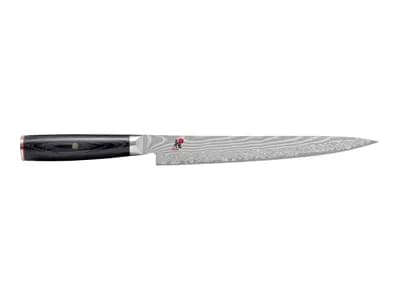
Miyabi 5000FCD – 24 cm Japanese Sujihiki (Slicing Knife)
€210
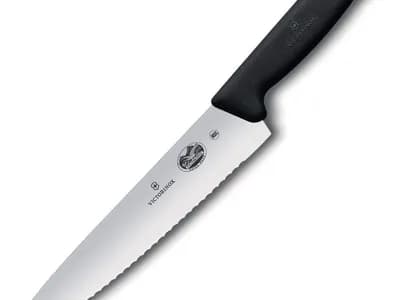
Victorinox Fibrox carving knife 25 cm
€42
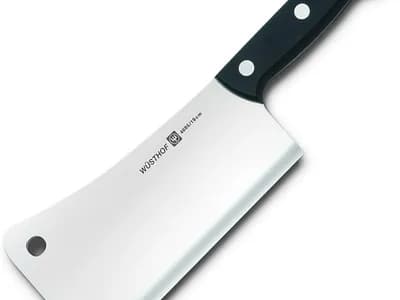
Wüsthof Classic Cleaver 4685/19 — Butcher Knife 19 cm
€129
Recipes to get started
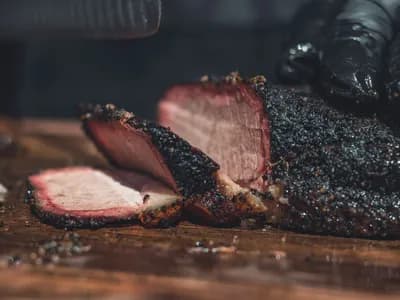
Low-and-slow smoked brisket
The kamado acid test. Ten hours at 110°C, a deep bark, a pink smoke ring and a texture that gives way under the weight of a fork.
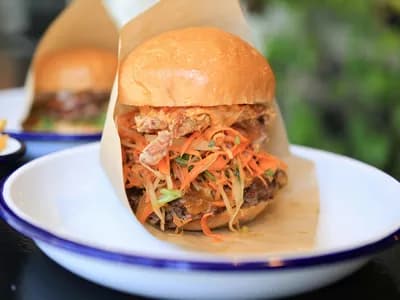
Carolina-style smoked pulled pork
Eight hours of patience, a five-and-a-half-kilo pork shoulder and North-Carolina vinegar — this is what a kamado does better than any other fire.
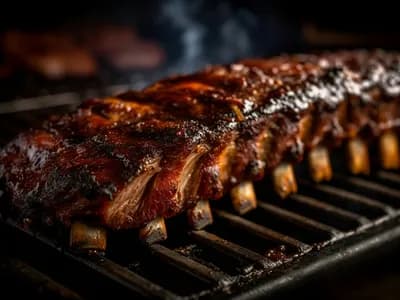
St. Louis-style ribs on the kamado
St. Louis-cut ribs (no rib tips), cooked reverse-sear: four hours at 130°C with light smoke, then a final blast of direct heat to caramelise the glaze.
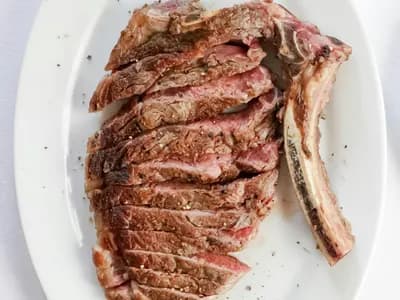
Galician ribeye on the kamado, direct sear
A one-kilo Galician ribeye, Maldon salt, embers at 350°C and not a thing more. The shortest recipe of the year and the hardest to mess up if you respect the timings.
GO DEEPER
Continue with these
- Related guide
Kamado cooking temperatures and times: a cheat-sheet by cut
The four heat zones, the technique-to-temperature table and the cut-to-internal-temp-to-time cheat-sheet. Why the probe beats the clock, every time.
- Related guide
Minion Method and Snake Method: 12 Hours of Kamado Fire
How to build the charcoal bed to hold 110-120 °C for 8-14 hours without refueling or lifting the lid. The mother technique of low & slow, step by step.
- Related guide
What to Cook in a Kamado: Ideas Beyond Meat
A kamado isn't just a steak machine. Pizza, bread, vegetables, fish, rice and even dessert come out just as well. Here's how, and at what temperature.
- Recipe to practice
Low-and-slow smoked brisket
The kamado acid test. Ten hours at 110°C, a deep bark, a pink smoke ring and a texture that gives way under the weight of a fork.
- Recipe to practice
Carolina-style smoked pulled pork
Eight hours of patience, a five-and-a-half-kilo pork shoulder and North-Carolina vinegar — this is what a kamado does better than any other fire.
- Recipe to practice
St. Louis-style ribs on the kamado
St. Louis-cut ribs (no rib tips), cooked reverse-sear: four hours at 130°C with light smoke, then a final blast of direct heat to caramelise the glaze.
- Editorial comparison
big green egg large vs kamado joe classic iii
The classic kamado matchup: the Big Green Egg Large, the indestructible pioneer with the widest accessory network, again
- Glossary term
Heat deflector
Ceramic plate placed between the coals and the grate to turn direct fire into indirect cooking.
- Glossary term
Cast-iron griddle (plancha)
Solid cast-iron plate heated over the grate to cook by contact heat, like a kitchen griddle.
- Glossary term
Low & slow
Cooking at low temperature (95-130 °C) for many hours to tenderise tough cuts and develop deep smoke.
Frequently asked questions
What is brisket called at a Spanish butcher?
It is called pecho, and in some areas pecho de aguja or falda alta. It is a boneless piece of 4 to 6 kg made up of two muscles: the point, fattier, and the flat, leaner. Here it is nearly always sold split and trimmed because its usual destiny is the stewpot, so you have to ask expressly for it whole, with point and flat still joined and a finger of outer fat left on.
What do I ask for to make pulled pork in Spain?
Cabecero de lomo, also called aguja or cabeza de lomo: the upper part of the pig's shoulder, 2 to 3 kg. Ask for it with the blade bone in and with its layer of fat on. If you can choose the breed, make it duroc or ibérico de cebo: Spanish white pork is bred very lean and gives a correct but dry pulled pork, and that marbling is what you notice most after ten hours.
Is picanha the same as tapilla?
Yes. Brazilian picanha is the tapilla, called rabillo de cadera across much of Spain. The difference is not in the muscle but in the butchery: here it is trimmed right down so it can be cut into steaks, and its whole point is precisely that cap of fat of nearly a centimetre that covers it. Ask for it whole, uncut and with that fat intact; the right piece weighs between 1 and 1.5 kg.
How do I ask for a whole rack of ribs without it being cut into strips?
By saying so in advance, because costillar means ribs cut across into strips by default. The sentence is «el costillar entero, sin cortar, y quítame la telilla del lado del hueso»: the whole rack, uncut, membrane off the bone side. Make clear which one you want, too: the carré or loin rack is the baby back, short and curved, 1 to 1.3 kg; the belly one is the spare rib, longer and fattier, 1.5 to 2 kg, and squared off it becomes the St. Louis.
How much meat should I reckon per person for the kamado?
For long cooks, between 400 and 500 g of raw meat per guest, because a breast or a cabecero loses 30 to 45 % between rendered fat and evaporated water. Bone-in, that rises to 500-600 g: on a tomahawk, the handle is 200-300 g nobody eats. A 2 kg free-range chicken feeds three or four people, and a whole belly rack, two with an appetite.
Ternera, añojo or vaca for a long cook?
Añojo or vaca. Spanish ternera is under twelve months old and is lean, pale meat with barely any marbling: at 110 °C for twelve hours it does not fall apart, it dries out. An older, well-fattened animal carries the intramuscular fat and the collagen that low & slow needs. Darker meat and fat with a yellowish tone are not a defect; they are the sign that you picked the right piece.