GUÍA DE COMPRA
Kamado Joe: complete guide to the range and which model to buy
Joe Jr, Classic, Big Joe, Konnected and KettleJoe explained without the brochure: what changes between series, which one suits your terrace and your table, and where to buy in Spain.
Quick answer
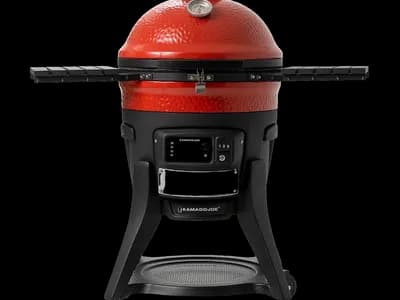
Kamado Joe is a ceramic kamado brand based in Atlanta, owned by Middleby since 2021. For 1-2 people, the Joe Jr (34 cm); for a family, the 46 cm Classic, in Series III if you smoke often; for groups, the 61 cm Big Joe. The Konnected Joe adds digital ignition and control, and the KettleJoe is a steel kettle with ceramic parts.
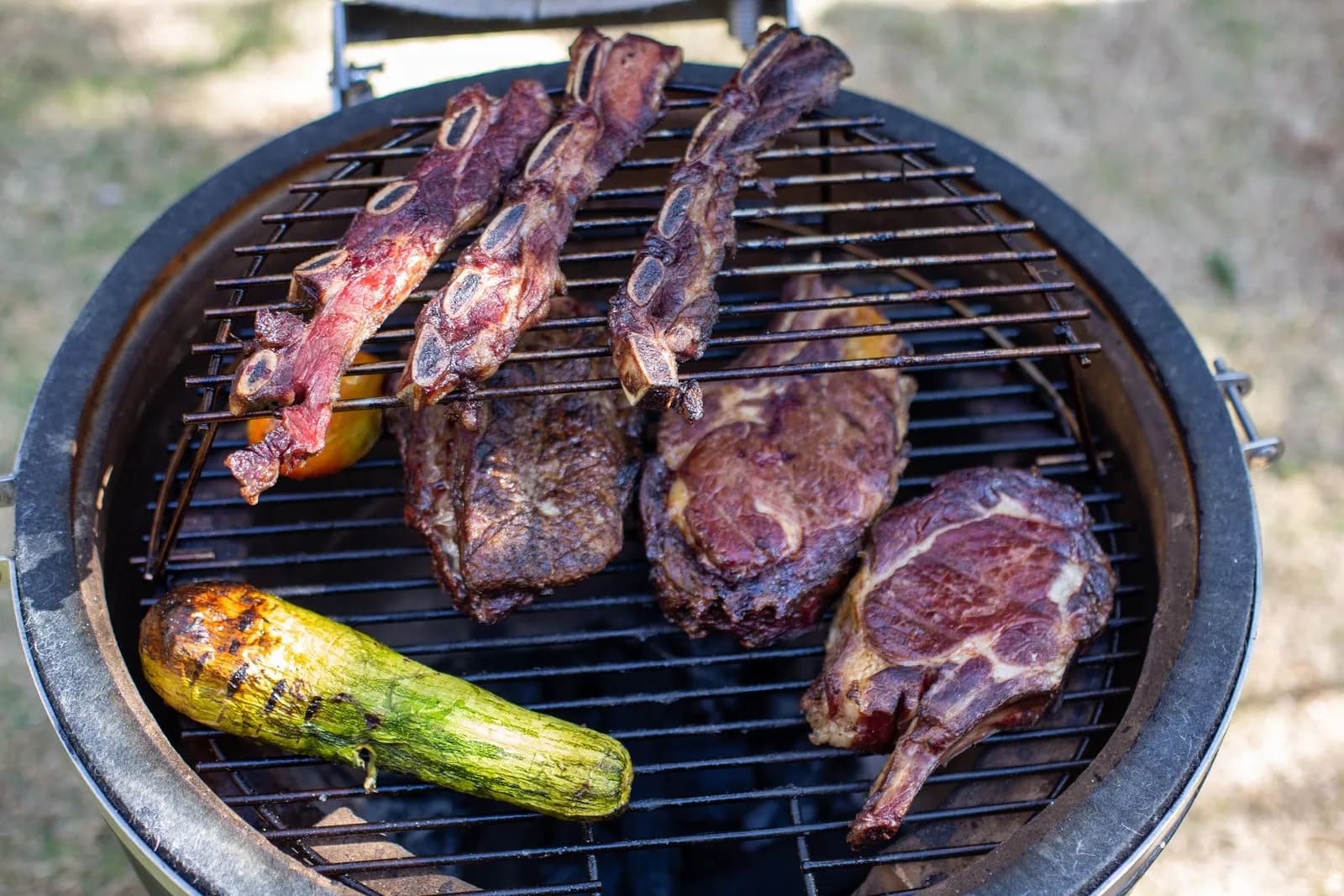
If you are searching for "kamado joe", the brand is probably already decided and the hard part is left: size, series and where to buy without losing your warranty. The official website does not help much, because it mixes three sizes, three series, two digital versions and a steel hybrid with names that are far too similar.
This guide puts the range in order as it is sold in Spain today, using the figures the brand itself publishes and flagging where they clash with other sources. No prices, which change with every promotion: everything comes from the spec sheets and warranty terms the brand publishes, from guides already published on mikamado and from the physics of ceramic.
| Model | Cooking grate diameter | Declared weight | Diners | What sets it apart | Who it is for |
|---|---|---|---|---|---|
| Joe Jr | 34 cm (13.5") | 37 kg with stand | 1-2 (3 occasionally) | Portable, cast-iron stand and ceramic deflector | Couples, terraces or a second kamado |
| Classic Series I | 46 cm (18") | 103 kg with cart | 2-5 (6-8 occasionally) | Basics: daisy-wheel vent, standard hinge, felt gasket | Anyone who wants the brand's ceramic at minimum spec |
| Classic Series II | 46 cm (18") | 103 kg with cart | 2-5 (6-8 occasionally) | Kontrol Tower, Air Lift hinge, fibreglass gasket | Families who want what they will notice most day to day |
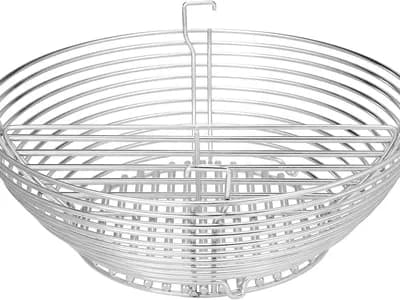
| Classic Series III | 46 cm (18") | 127 kg with cart (108 without cart) | 2-5 (6-8 occasionally) | Adds SlōRoller, three tiers and stainless steel charcoal basket | Families who smoke often |
| Big Joe Series I / II | 61 cm (24") | 163 / 185 kg with cart | Groups (10-12 occasionally) | Same differences as Classic I and II | Groups who do not need the SlōRoller |
| Big Joe Series III | 61 cm (24") | 184 kg with cart | Groups (10-12 occasionally) | The Classic III at 61 cm | Regular hosts |
| Konnected Joe | 46 cm (also 61 cm) | 98 kg declared (46 cm version) | 2-5 (6-8 occasionally) | Automatic ignition, fan and app | Anyone who wants to smoke without watching |
| KettleJoe | 56 cm (22") | About 56 kg (shop figure; not published by the brand) | 4-6 (per our product page) | Steel kettle with ceramic firebox and SlōRoller | Anyone coming from a kettle who does not want 100 kg |
What Kamado Joe is and who is behind it
Kamado Joe is an American ceramic kamado brand based in the Atlanta area. In its press releases it dates its origin to 2009, thirty-five years after Big Green Egg was born in Atlanta. Its bet is still the same: sell the kamado with a good part of the equipment already in the box.
Ownership has changed more than the product. Middleby Corporation, an American maker of kitchen equipment with a consumer division, announced on 6 December 2021 the purchase of Masterbuilt Holdings, the company that grouped Kamado Joe and Masterbuilt, and reported the deal closed on the 29th of that month. If you read that Middleby bought it in 2017 or 2018, its press release says otherwise.
Where is it made? The official website does not say in which country the ceramic is fired, and we are not going to claim one without a source. What you can rely on is your own unit: according to the brand, the serial number and date code are on a red sticker at the back of the base.
Against Big Green Egg, the difference fits in one line: the EGG is a system to which you add pieces; a Series III Kamado Joe arrives with a cart, grates at several heights, a smoke diffuser (the SlōRoller) and a charcoal basket. The complete Big Green Egg guide follows the same structure so you can compare brand with brand.
The range on sale in Spain, model by model
The official shop for Spain lists four families of ceramic kamado and one steel hybrid. The figures are those the brand publishes, which gives the weight with the cart: that is why they come out higher than on many shop product pages. The Classic III declares 127 kg with the cart and 108 kg without it.
- Joe Jr: 34 cm cooking grate and 37 kg with its cast-iron stand. The brand's portable model, for one or two people, a small terrace or camping. - Classic Joe, in Series I, II and III: 46 cm (18 inches), the size the brand recommends for most people. - Big Joe, also in Series I, II and III: 61 cm (24 inches). The brand declares 0.29 m² of cooking area against the Classic's 0.16 m². - Konnected Joe: 46 cm with automatic ignition, a fan and control from a panel or app. It also exists in 61 cm. - KettleJoe: a 56 cm (22 inch) steel kettle with ceramic parts inside. It is still in the official Spanish catalogue, but its product page did not load on 3 October 2026: confirm stock and spare parts before buying it.
On numbers served, the brand talks about one or two people for the Joe Jr, families of two to five for the Classic and large groups for the Big Joe. Our sizing guide gives six to eight for a 46 cm and ten to twelve for a 61 cm, because it counts a one-off meal as host rather than everyday cooking; the table shows both readings.
Series I, II and III: how to tell them apart (and why there is no Series IV)
Today the brand sells all three series side by side and tells them apart by equipment. According to its comparison table:
- Series I: daisy-wheel cast-iron vent, standard hinge, felt gasket, two-tier Divide & Conquer and ash drawer. - Series II: adds the Kontrol Tower chimney, the Air Lift assisted hinge and the fibreglass mesh gasket. - Series III: adds the SlōRoller, the three-tier Divide & Conquer, the stainless steel charcoal basket, a reinforced cart and aluminium side tables.
On a second-hand unit, look at the chimney first: a rotating cast-iron disc means Series I; a tower with graduated adjustment means II or III. Lift the dome: with Air Lift the spring offsets much of the weight. The basket and the SlōRoller are sold separately, so a Classic II can have them without being a III; the tower, the hinge and the aluminium tables are harder to mistake, but ask for the serial number on the red sticker on the base to confirm the model with a dealer, and ask whether any part has been swapped. The rest of the inspection is in the guide to second-hand kamados.
Three dates help when reading classified ads. Series III was presented on 19 March 2019. The KettleJoe was announced in March 2021, the year of the Middleby purchase, which would explain the search "kamado joe 2021". The Konnected Joe was announced in March 2023. As of 3 October 2026, the official website lists no Series IV and no "Big Joe 4". If you are torn between the two most compared series, see Classic II vs Classic III.
What defines the brand, in brief
The Divide & Conquer is a half-moon rack system for placing grates, griddles or stones at different heights: you sear on one side while the other works indirectly. The Air Lift is a spring-assisted hinge that takes weight off the dome. The Kontrol Tower holds its setting even when you open the lid. And the fibreglass gasket replaces felt, the consumable that wears out first on any kamado.
The SlōRoller is a hyperbolic-shaped ceramic insert that sits over the fire so smoke and heat circulate in a swirl. The brand claims it reduces hot spots by up to 80%; that is a manufacturer figure, not an independent measurement.
None of this changes the essentials: ceramic cooks just as well as it does in its rivals. What changes is convenience. The long explanation, set against the Big Green Egg and Monolith systems, is in Big Green Egg vs Kamado Joe vs Monolith.
Which model to buy for your situation
Couple or small terrace: Joe Jr. It cooks comfortably for two and can be moved between two people. According to our sizing guide, a whole chicken fits snugly; if you invite people often, it falls short. Be careful with balconies: its manual asks for 3 metres clear of walls, railings, roofs and any combustible material, and forbids using it under roofs, awnings or overhangs; many balconies cannot offer that distance. And never indoors or on an enclosed terrace: charcoal gives off carbon monoxide. Your building's rules are covered in kamado on a terrace.
Family of four or five: Classic. Series II already brings what you notice most day to day, the assisted hinge and the Kontrol Tower. The Classic III pays off if you do long smokes often. Before ordering it, think about the floor and the lift: 127 kg with the cart.
Groups: Big Joe III. The Big Joe III is the Classic III at 61 cm: a whole brisket fits, but it declares 184 kg with the cart and about 1.3 metres of width. If you cook for four, you are hauling that weight for nothing.
Smoking without watching: Konnected Joe. It lights at the push of a button and holds the temperature with a fan. In exchange, it adds electronics and comes with half-moon deflectors instead of the SlōRoller. The Classic III vs Konnected Joe comparison sets the two side by side point by point.
Coming from a kettle and not wanting a hundred kilos: KettleJoe. Steel, hinge, ceramic firebox and SlōRoller, much lighter than a kamado, but with less thermal inertia. The guide kamado vs Weber kettle explains what you gain and what you lose.
Buying Kamado Joe in Spain: shops, Amazon, warranty and spare parts
There are three routes. The official shop has a Spanish version with a dealer locator. The shops with showrooms that, according to their websites, work with the brand include La Carbonería (Madrid), Weber Center Barcelona, Top Barbacoas (Girona), The Barbecue Store and Zona Barbacoa (both in Mijas Costa), Expochimeneas (Camas) and BBQ Corner Shop (Gran Canaria); the detail is in where to buy a kamado in Spain. And Amazon.es: in our check on 2 October 2026, of the seven models we have listed, only the Konnected Joe appeared as available.
According to the terms the brand publishes in October 2026, the ceramic has a limited lifetime warranty as long as the first owner keeps the kamado; metal, cast iron and the KettleJoe, five years; electronics, deflectors and pizza stones, three; thermometer, gaskets and accessories, two. It requires you to register the product with proof of purchase and to have bought from an authorised dealer: the brand says buying from an unauthorised seller voids the warranty, so on a marketplace check who is selling. Kamado Joe does not publish whether Amazon.es or its sellers are an authorised channel in Spain: ask the seller and confirm with an official dealer before buying there. Separately, Spanish law gives you a three-year legal guarantee against the shop. The lifetime cover applies to the key ceramic parts against defects; it does not cover labour, normal wear (scratches, glaze chips) or transport damage, so check the ceramic on delivery and note any knock on the delivery slip.
Gaskets, grates and thermometers are ordered through the dealer network; several of those shops have a spare parts section.
Why does a Kamado Joe cost what it does? The brand does not break down its price, but three factors can be checked: weight and shipping (the Classic III declares 127 kg with the cart and travels on a pallet), equipment that other brands sell separately, and a lifetime warranty on the ceramic. That is reasoning, not a manufacturer figure.
Kamado Joe against Big Green Egg, Monolith and Kamado Bono
Big Green Egg cooks in a very similar way. The deciding factors are philosophy and weight: according to our guide to the brand, its Large weighs around 73 kg against the 108 kg Kamado Joe declares for the Classic III without its cart (127 kg with it), and it wins on accessory ecosystem; Kamado Joe wins on what comes as standard.
Monolith, of German origin, also comes very well equipped from the factory. Here the deciding factor is the network of shops and spare parts near your home. The comparison Classic III vs Monolith Classic Pro 2 goes into detail.
Kamado Bono is sold mainly in specialist shops and online, with thick ceramic and good equipment. The deciding factor is the warranty: Kamado Joe's is published; we have not found Kamado Bono's, so ask for it in writing. For groups, see Kamado Bono Grande Limited vs Big Joe III.
For two people, the Joe Jr's natural rival is the Big Green Egg MiniMax: see MiniMax vs Joe Jr.
Accessories worth having for each model
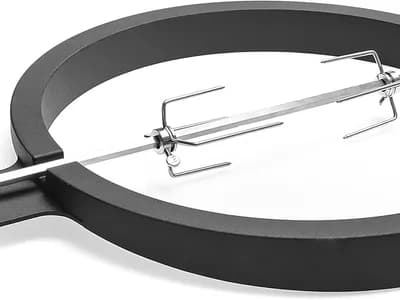
Compatibility goes by diameter: Classic parts fit 46 cm, Big Joe parts fit 61 cm and the Joe Jr has its own pieces. The brand points out two exceptions: the Konnected Joe accepts most accessories of its size, but not the charcoal basket; and the KettleJoe takes the Classic's cooking surfaces and the Big Joe's deflectors, but not the JoeTisserie or the DoJoe.
On a Classic, the JoeTisserie is a ring that slots between base and dome and mounts a motorised rotisserie. If you have a Classic I or II, the stainless steel charcoal basket gives you what Series III includes as standard: charcoal kept out of the ash and two zones of embers. The SoapStone and the Half Moon griddle turn half the grate into a flat-top.
On a Big Joe, the DoJoe is a wedge-shaped ring that sits between base and dome and opens a front mouth to load and unload pizza without lifting the lid; the brand rates it for 204-370 °C, so use gloves and a long peel.
On a Joe Jr, the most useful items are the cover, the SoapStone in its size, the 26 cm basket and the cart with shelves, which according to the brand raises the grate to about 79 cm from the floor.
Choosing a Kamado Joe means choosing a diameter and a series. The diameter is decided by your real table and your terrace: Joe Jr for two, Classic for almost every family, Big Joe only if you host groups often. The series is decided by how you cook: II brings what you notice most day to day and III adds convenience for anyone who smokes a lot.
Before paying, three checks: an authorised dealer, the receipt kept to register the warranty and a floor that can bear the weight with the cart.
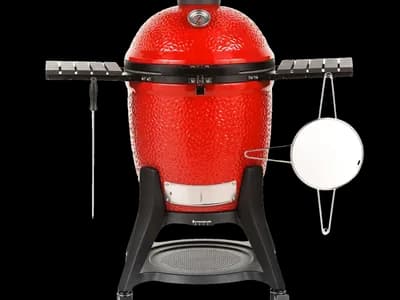
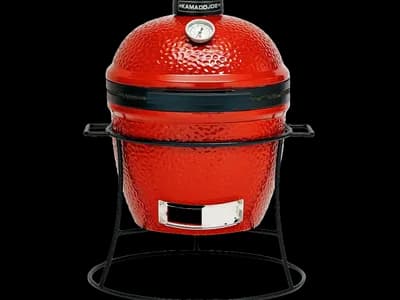
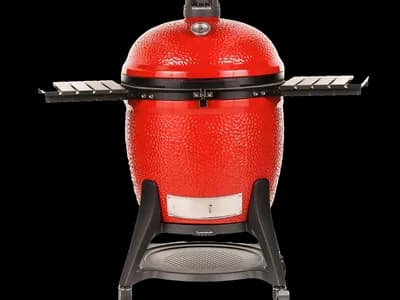
Gear featured in this guide
Recipes to get started
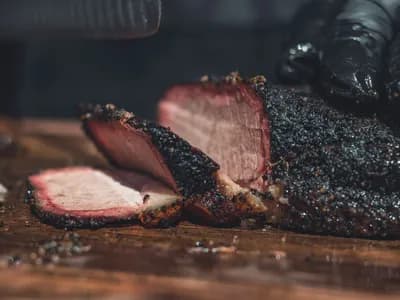
Low-and-slow smoked brisket
The kamado acid test. Ten hours at 110°C, a deep bark, a pink smoke ring and a texture that gives way under the weight of a fork.
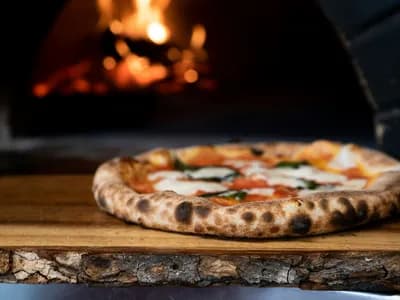
Neapolitan pizza on the kamado
At 350°C the base puffs in 90 seconds and the cornicione comes out leopard-spotted and pillowy. One pizza, three minutes, zero margin for error.
GO DEEPER
Continue with these
- Related guide
Big Green Egg vs Kamado Joe vs Monolith in Spain
The three big premium brands head to head: ecosystem, cooking system, Spanish distribution and after-sales. An honest comparison to choose well.
- Related guide
Big Green Egg: analysis and complete guide
What it really is, what its ceramic is actually made of, how the EGGcessories system works, what the warranty covers and where it wins or loses against Kamado Joe. Honest analysis, no space-age myths.
- Related guide
Second-hand kamado: what to check before you buy (and how much to pay)
Ceramic lasts for decades and people move house: that is why Spain's used kamado market is a good one. Here is the ten-minute inspection, the questions to ask the seller and the price bands that keep you from overpaying.
- Related guide
Where to buy a kamado in Spain: shops and showrooms by city (2026)
Madrid, Barcelona, Valencia, Alicante, Málaga, Seville, Galicia and the Canary Islands: which shops have kamados on display, which brands they carry and when buying online makes more sense.
- Recipe to practice
Low-and-slow smoked brisket
The kamado acid test. Ten hours at 110°C, a deep bark, a pink smoke ring and a texture that gives way under the weight of a fork.
- Recipe to practice
Neapolitan pizza on the kamado
At 350°C the base puffs in 90 seconds and the cornicione comes out leopard-spotted and pillowy. One pizza, three minutes, zero margin for error.
- Editorial comparison
big green egg large vs kamado joe classic iii
The classic kamado matchup: the Big Green Egg Large, the indestructible pioneer with the widest accessory network, again
- Glossary term
Heat deflector
Ceramic plate placed between the coals and the grate to turn direct fire into indirect cooking.
- Glossary term
SlōRoller
Convection chamber patented by Kamado Joe that evens out low-temperature heat and removes hotspots.
- Glossary term
Divide & Conquer
Kamado Joe's modular two-tier grate and deflector system that enables simultaneous multi-zone cooking.
Frequently asked questions
Where are Kamado Joes made?
Kamado Joe is an American brand based in the Atlanta area, owned by Middleby Corporation since December 2021. Its official website does not say in which country the ceramic is made, so be wary of anyone who claims it without a source. If the country of manufacture matters to you, ask the dealer to confirm it in writing before you pay; the brand only documents where the company is based (Atlanta), not where the ceramic comes from. The serial number and manufacturing date are on a red sticker behind the base.
What is the difference between the Classic II and the Classic III?
They share the 46 cm ceramic, the Air Lift hinge, the Kontrol Tower chimney and the fibreglass gasket. The Classic III adds the SlōRoller, a third tier in the Divide & Conquer, the stainless steel charcoal basket, a reinforced cart and aluminium side tables. For grilling and pizza, the II performs the same; the III pays off if you smoke often and want those parts as standard.
Joe Jr or Classic III for two people?
It depends on space and guests. If there are two of you, you cook on a small terrace or you want to be able to move it, the Joe Jr is enough: 34 cm cooking grate and 37 kg with stand, according to the brand, and its manual asks for 3 metres clear of walls, railings and combustible material. If you have guests often, smoke large cuts or want to cook at two heights, the 46 cm Classic gives you room and is not overkill: in a kamado you only load the charcoal you need, not what fits. Bear in mind the Classic III declares 127 kg with the cart: measure the floor and the access before ordering.
Is the KettleJoe a ceramic kamado?
No. According to the brand's FAQs, the Classic and the Big Joe have bodies made entirely of ceramic, whereas the KettleJoe is a steel kettle with ceramic parts: a heat-retaining firebox and the SlōRoller insert for smoking. It has a 56 cm cooking grate, a hinge and an ash drawer. It weighs far less than a kamado, retains less heat and its warranty is five years.
Is the Konnected Joe worth it over the Classic III?
It depends on how much you value not watching the fire. The Konnected Joe lights itself, holds the temperature with a fan and is controlled from the app, a real help on overnight smokes. In exchange, it needs mains power, adds electronics that can fail and has neither the SlōRoller nor support for the Classic's charcoal basket. If you like managing the airflow by hand, the Classic III is simpler.
What does the Kamado Joe warranty cover in Spain?
According to the terms the brand published in October 2026: ceramic for life as long as the first owner keeps the kamado, five years on metal, cast iron and the KettleJoe, three on electronics, deflectors and stones, and two on the thermometer, gaskets and accessories. It requires you to register the product and to have bought from an authorised dealer. It does not cover labour, wear or transport damage. Separately, Spanish law gives a three-year legal guarantee against the seller.