Recipe · Reverse-sear · Medium
Kamado buzhenina: garlic-studded pork neck, reverse-seared and served in cold slices
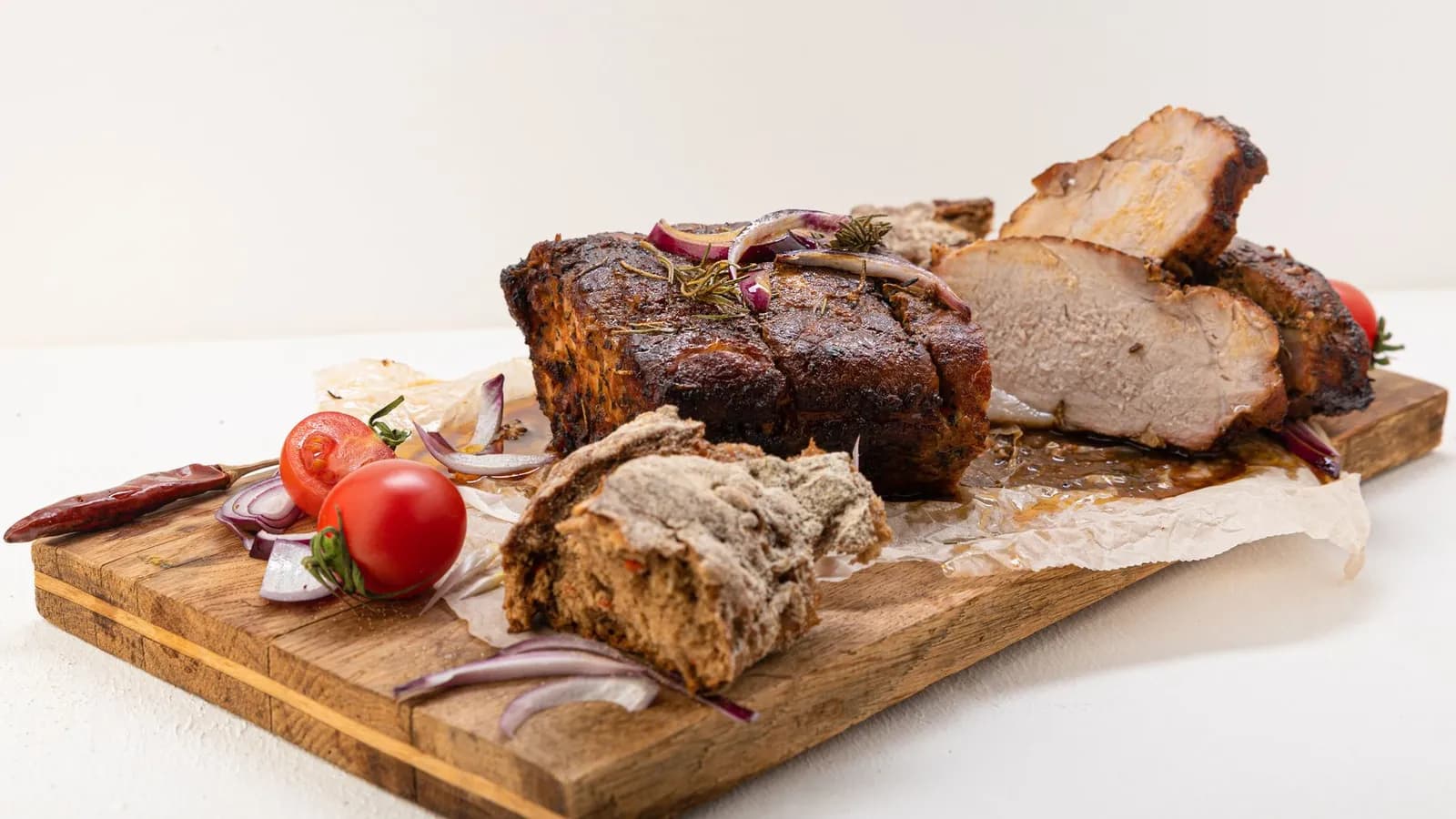
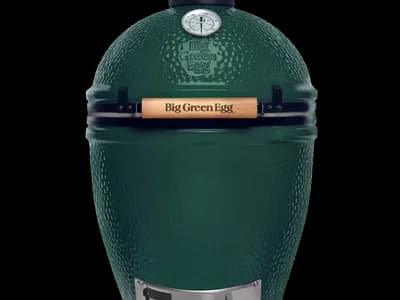
Buzhenina (буженина), the Russian cold pork roast, made on my Big Green Egg Large: garlic-studded pork neck, indirect at 120 °C to 65 °C, a direct sear to 71-75 °C and a night in the fridge before slicing thin.
Quick answer
Stud a 1.5-2 kg pork neck with garlic and bay, rub it with mustard, paprika and salt and leave it 12-24 h in the fridge. Cook it in the kamado at 120 °C indirect until 65 °C in the centre (about 2.5 h), remove the deflector, raise to 250-280 °C and sear it direct on every face to 71 °C. Rest 20 min (71-75 °C), chill overnight and slice thin.
- Prep
- 30 min
- Cook
- 180 min
- Servings
- 8 servings
- Temperature
- 120 °C
Ingredients
- whole pork neck (collar, sold in Spain as cuello or aguja), fat left on1.8 kg
- garlic cloves, peeled and whole14 ud
- bay leaves, cut into strips4 ud
- coarse salt (1.5 % of the meat's weight)27 g
- Dijon or Russian mustard2 cda
- sweet smoked paprika from La Vera (pimentón dulce de la Vera)1 cda
- black peppercorns, coarsely crushed1 cdta
- ground coriander seed1 cdta
- extra virgin olive oil1 cda
- loaf of black rye bread, Borodinsky style, to serve1 ud
- hot Russian mustard or grated horseradish (khren, хрен), to serve4 cda
- pickled gherkins, to serve6 ud


Method
- 01
Stud the neck
Ask for a whole pork neck of 1.5 to 2 kg, fat on and untied. Pat the joint dry with kitchen paper and make 14 deep incisions with the tip of a knife, spread over both faces, and push a whole garlic clove and a strip of bay into each one. Press them in until they disappear inside the meat: on the surface the garlic burns; inside, it confits.
- 02
Rub and rest in the fridge
Mix the mustard, paprika, crushed pepper, ground coriander, salt and oil into a thick paste and rub it over the whole joint. Wrap it in cling film or put it in a sealed bag and leave it in the fridge for 12 to 24 hours. The salt, at 1.5 % of the weight, works as a dry brine: in a day it travels only a few millimetres, seasons the outside and dries the surface for the crust; the inside is perfumed by the garlic. Take it out an hour before you light the kamado.
- 03
Light the kamado to 120 °C
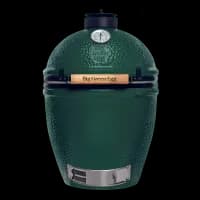
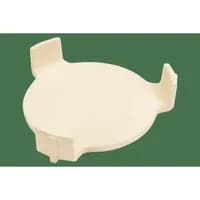
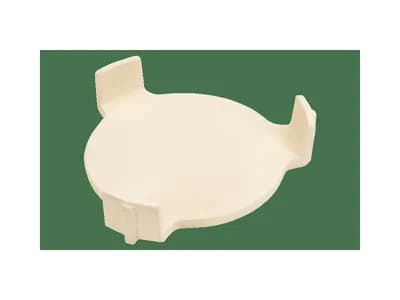
I fill the firebox of my Big Green Egg Large to the rim with lump charcoal; a dense quebracho such as Jealous Devil's lasts the two and a half hours without topping up. Light a single spot in the centre, leave the dome open for ten minutes and set the ConvEGGtor legs up with the grate on top. Close, and adjust both vents until the dome settles at 120 °C with the smoke almost invisible.
- 04
Indirect cook to 65 °C
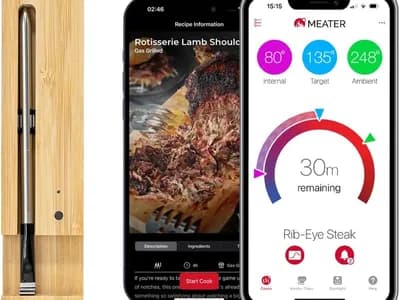
Push the probe into the centre of the thickest part, avoiding the garlic and the seams of fat, and set the joint on the grate fat side up. Dome closed at 120 °C, and keep it closed. A 1.8 kg neck takes about two and a half hours to reach 65 °C inside; the number rules, not the clock. A wireless probe such as the MEATER+ lets you follow it from indoors.
- 05
Remove the deflector and build the fire
At 65 °C, move the meat to a board and take out the probe. Put on barbecue gloves, lift out the grate and then the ConvEGGtor, which is at dome temperature, and set it down on a heatproof surface. Put the grate back on its own straight onto the fire ring, close the dome and open both vents fully: the coals recover to 250-280 °C in five to ten minutes and the grate heats with them, so you open only once, to put the meat on.
- 06
Sear direct on every face
The dome is at 250-280 °C and with the vents open it can pass 300, so always burp it before opening: five centimetres, two seconds, open. Lay the neck straight on the grate and sear each face for 90 seconds to 2 minutes, turning it with tongs, until the mustard-and-paprika crust is dark and crisp on all six sides. If the fat flares, close the dome fully for a few seconds and burp it again before opening; never leave it ajar. After the last face, move the joint to the board and probe it: at 71 °C in the centre it does not go back on; if it is short, give it another turn.
- 07
Rest and chill
Leave the joint on a board for twenty minutes, uncovered; the temperature keeps climbing and settles between 71 and 75 °C. If you want to eat it hot, slice it now, a centimetre thick. For true buzhenina, wait until it is lukewarm, wrap it well in foil or cling film and put it in the fridge for at least eight hours, ideally overnight.
- 08
Slice thin and serve
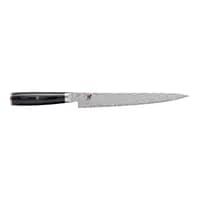
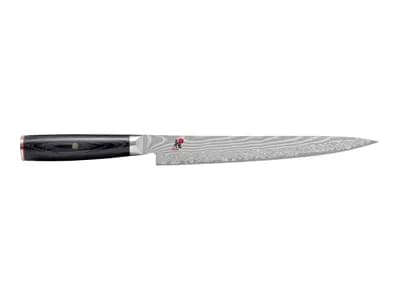
Cold, the fat is firm and the meat holds the cut. With a long, narrow knife, a 24 cm sujihiki such as the Miyabi 5000FCD, take slices two to three millimetres thick in a single stroke from heel to tip, without sawing. Serve at room temperature on black bread with hot Russian mustard or horseradish, and the gherkins alongside.
About this recipe
Buzhenina (буженина) is the cold pork roast of Russian and Ukrainian tables: a whole piece of pork neck studded with garlic, roasted slowly and served cold, in thin slices, with hot mustard and black bread. At home it is done in the oven. I make it on my Big Green Egg Large using the [reverse sear](/glosario#reverse-sear), the technique we usually associate here with a chuletón (bone-in rib steak): first indirect at 120 °C over the deflector until 65 °C in the centre, then a direct sear on every face to a final 71-75 °C. The result is a joint cooked evenly from edge to edge, with no dry grey band under the crust, the fat rendered and a mustard-and-paprika crust that a domestic oven does not give you.
Why the neck, and why studded with garlic
The neck, which Spanish butchers also call aguja or cabecera de lomo, carries its fat in seams running through the whole piece. It is the same cut as for [shashlik](/recetas/shashlik-cerdo-cuello-kamado), but here it is cooked whole rather than cubed, and the slow cook turns that fat into juice instead of flame. A loin would be dry at 73 °C; the neck, at that temperature, is exactly right. Studding means pushing whole garlic cloves into deep incisions spread across the joint: over two and a half hours at 120 °C the garlic confits inside the meat and perfumes every slice without burning, which is what would happen to it on the surface. The [guide to cuts](/guias/cortes-de-carne-para-kamado-equivalencias-espana) explains how to ask for the piece and what it should look like.
Reverse sear on pork: even inside, crust at the end
In a traditional roast the joint goes into an oven at 180-200 °C and the outside runs far ahead of the centre: by the time the middle reaches temperature, the outer two centimetres are already dry. The reverse sear flips the order. At 120 °C [indirect](/guias/coccion-directa-vs-indirecta-kamado-deflector), with the [ConvEGGtor](/accesorios/bge-conveggtor-large) between the coals and the meat, the temperature climbs slowly and almost evenly through the whole thickness, and the joint comes off at 65 °C with very little gradient. The sear that follows, short and direct, has only one job: to brown the surface and set the mustard and paprika. With pork this matters twice as much as with beef, because buzhenina is eaten cold and thinly sliced, and any dry band shows in every bite.
From deflector to direct grate without losing the fire
The delicate moment of a reverse sear in a kamado is the changeover. When the probe reads 65 °C, I lift the meat onto a board, open the bottom and top vents fully, and take out the grate and the deflector with barbecue gloves: a ceramic deflector such as the ConvEGGtor is at dome temperature and it is heavy. With the deflector out and air moving, the charcoal bed climbs to 250-280 °C in a few minutes, because you are not starting from cold: the fire has been lit for more than two hours and a dense lump such as Jealous Devil's quebracho keeps plenty in reserve for the sear. At that temperature, opening the dome calls for burping: lift it five centimetres, wait two seconds, then open fully, as the [guide to temperature problems](/guias/kamado-temperatura-problemas-soluciones) explains. The grate, set back on the fire ring as soon as the deflector is out, is already hot: all that is left is to sear the joint on every face.
Measure without opening, slice the next day
With the lid shut for two and a half hours, a thermometer that stays in the meat saves you openings: a wireless probe such as the MEATER+ goes into the centre of the joint and sends the reading to your phone. The manufacturer rates that probe for 275 °C ambient, so it is best pulled before the sear and pushed back in with the joint already on the board, after the last face: on the grate over direct heat the probe's tip would exceed that limit. You are looking for 71 °C coming off the fire; with twenty minutes' rest the joint settles between 71 and 75 °C, the range the neck needs for the fat to be rendered and the meat juicy. Then, patience: wrapped, and a night in the fridge. Cold, the fat is firm and a long, narrow blade like the 24 cm Miyabi 5000FCD sujihiki takes two-millimetre slices in a single stroke, with no sawing. If what you want is hot, falling-apart pork, that is a different recipe: [pulled pork](/recetas/pulled-pork-ahumado-carolina).
In 30 seconds
A 1.8 kg pork neck studded with garlic and bay, rubbed with mustard, paprika and salt, 12-24 h in the fridge. Kamado at 120 °C indirect over the deflector until 65 °C in the centre (about 2.5 h), deflector out, coals to 250-280 °C and a direct sear on every face to 71 °C; 20 minutes' rest to 71-75 °C. A night in the fridge and thin slices with hot mustard and black bread.
Editor's tips
- Salt at 1.5 % of the weight is the ceiling: buzhenina is eaten cold and cold sharpens salt, so what tastes about right hot will be plenty in the next day's slice.
- If your neck is nearer 2 kg, allow three hours indirect instead of two and a half; measure in the centre and do not go by the clock, because thickness matters more than weight.
- Leave the mustard crust alone during the indirect stage: it dries and forms the base the sear browns on. If it looks dark too early, the dome is above 120 °C and it is time to close the top vent a little.
- Keep it whole and wrapped in the fridge for up to four days, and slice only what you are going to eat: a loose slice dries out far sooner than the joint.
Gear for this recipe
As an Amazon Associate, mikamado.es earns from qualifying purchases. At no extra cost to you.

FAQ
What is buzhenina, and how does it differ from a pork roast?
Buzhenina (буженина) is a whole piece of pork, almost always neck or leg, studded with garlic, roasted slowly and served cold in thin slices, like a cold cut. The difference from a Sunday roast is in how it is used: it is not served hot with sides, it is sliced the next day and put on the table with hot mustard, horseradish and black bread, as a zakuska (Russian cold starter).
What internal temperature is a whole pork neck done at?
Between 71 and 75 °C in the centre. The neck carries marbled fat that needs that heat to render; at 63-65 °C, the point you would choose for a lean Ibérico loin, it would be rubbery. In the reverse sear the joint comes off the indirect stage at 65 °C, is seared to 71 °C and the twenty-minute rest leaves it in the range. Always measure in the thickest part, away from the garlic.
Can you make buzhenina with loin instead of neck?
You can, but it is a different dish. Loin has no marbling and at 71-75 °C it turns dry; you have to pull it at 63-65 °C and eat it hot, which is exactly what the mustard and honey pork loin recipe does. For cold slices that are still juicy the next day, the neck, or aguja, is the piece that holds up.
How long does a 2 kg pork neck take in the kamado at 120 °C?
Allow about three hours to 65 °C inside, against two and a half for a 1.8 kg piece, plus five to ten minutes for the coals to climb with the deflector out and another ten to twelve of direct searing. Thickness matters more than weight: a long, flat piece gets there before a short, round one. The probe decides, not the timer.
Why take the deflector out to sear instead of raising the temperature with it in place?
Because the deflector blocks the radiant heat of the coals and leaves only convection. At 250 °C with the deflector in, hot air browns the surface slowly, and in that time the centre goes past 75 °C. Direct, the charcoal's radiation forms the crust in a couple of minutes per face and the inside barely moves. The changeover is done with gloves, and the dome is always burped before opening: with the vents open it sits around or above 300 °C.
More kamado recipes
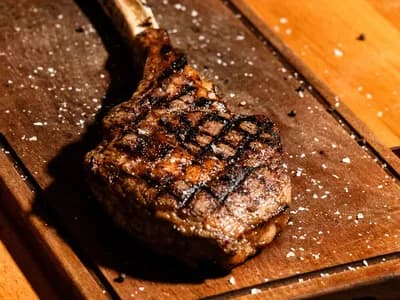
Reverse-sear tomahawk on the kamado
A 1.4 kg tomahawk, probe in the centre, ceramic at 110°C and a 90-second final sear. The Sunday centrepiece for when you want to impress without gambling on doneness.
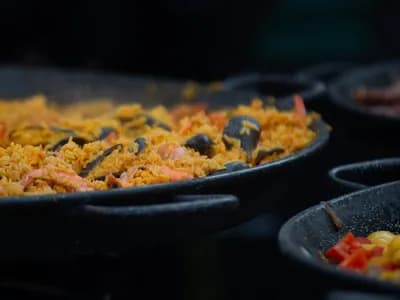
Alicante-style baked rice on the kamado in a clay cazuela
Traditional Alicante baked rice —chickpeas, pork rib, blood sausage, potato and tomato, with a whole garlic head in the centre— baked in a clay cazuela at 220°C indirect.
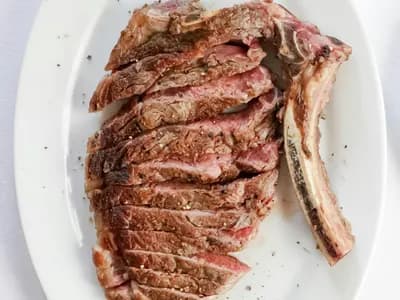
Galician ribeye on the kamado, direct sear
A one-kilo Galician ribeye, Maldon salt, embers at 350°C and not a thing more. The shortest recipe of the year and the hardest to mess up if you respect the timings.
KEEP READING
Go deeper on this dish
- Recommended kamado
Big Green Egg Large
The classic kamado that defined the category
- Editorial guide
How to light a kamado: the step-by-step method
No petrol, no weird tablets and no 45-minute waits. The cone method, airflow control and the mistakes that prevent 80% of the frustration.
- Glossary term
Heat deflector
Ceramic plate placed between the coals and the grate to turn direct fire into indirect cooking.
- Related comparison
big green egg large vs kamado joe classic iii
The classic kamado matchup: the Big Green Egg Large, the indestructible pioneer with the widest accessory network, agai…