Analysis by Valery Grin · · updated September 11, 2026
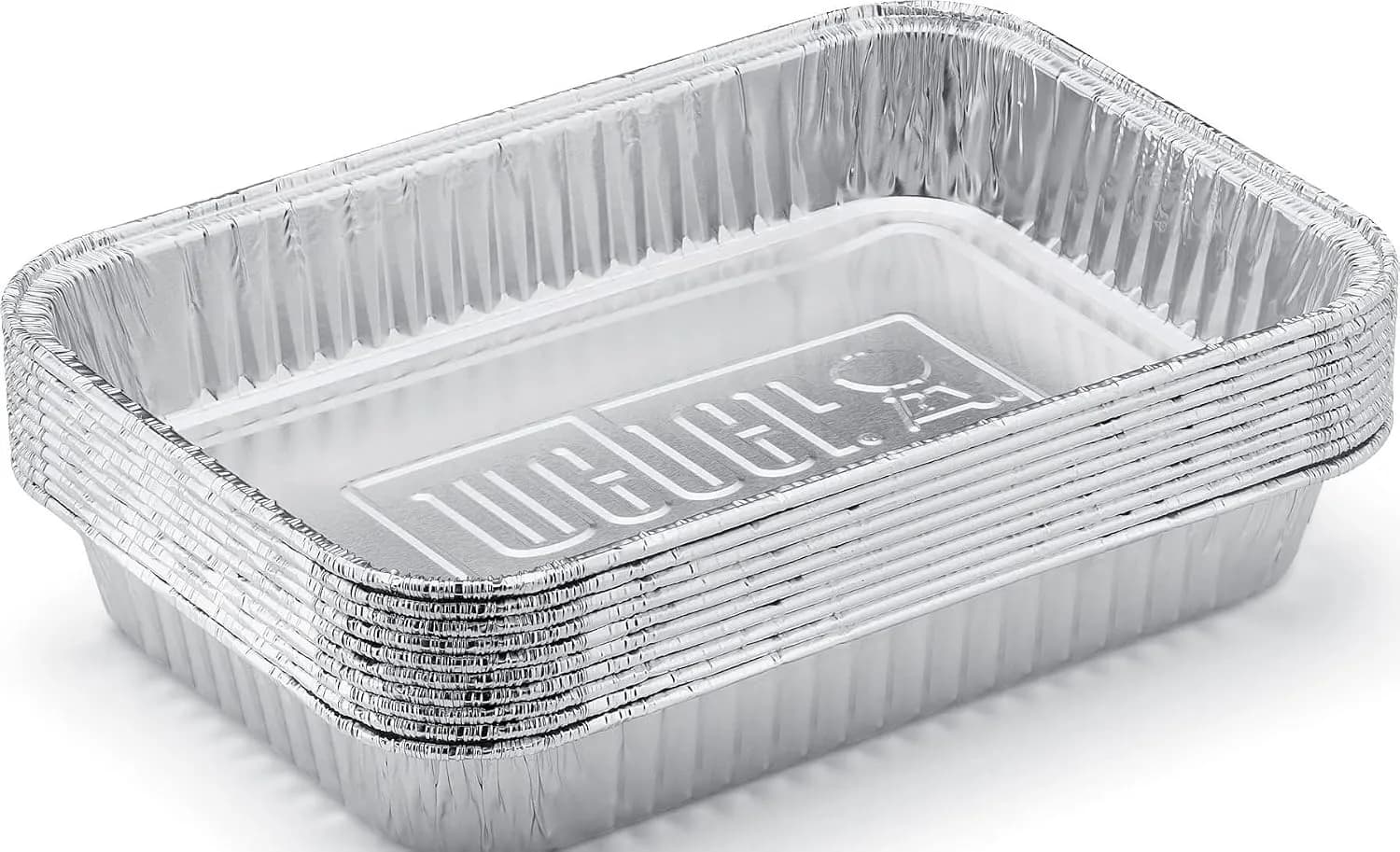
Weber 6415 — small aluminium drip pans, 22 × 15 cm, pack of 10
Disposable aluminium, 21.8 × 15.2 × 3.6 cm per the maker's data sheet; pack of ten
From€6
Price verified on Amazon on September 12, 2026 · may change
As an Amazon Associate, mikamado.es earns from qualifying purchases. At no extra cost to you.
- Material
- Aluminium
Quick answer
On paper yes, with one caveat: they are small. The manufacturer's data gives 21.8 × 15.2 cm, so on a large kamado you need two side by side to sit under a whole brisket. In exchange you get disposable aluminium that will not pit in coastal salt air, and today this pack tops the drip-pan sales ranking on Amazon.es. Below 135 °C they earn their place; at 400 °C for pizza they have no job at all.
The fat from a twelve-hour pulled pork ends up somewhere: either on your ceramic deflector or inside one of these. Weber sells them ten at a time, and few silly little things save so much scrubbing.
In a closed kamado the fat does not evaporate: it lands on the ceramic deflector, scorches there and sends back a sour smoke with nothing in common with wood smoke. An aluminium tray between the meat and the deflector is the cheapest way to avoid that, and these Weber pans are the catalogue version of the trick. Ten to a pack, thin aluminium, binned and forgotten.
They were not designed for a kamado. Weber sells them as protection for the grease catcher on its gas barbecues and as an indirect tray on its kettles; working on ceramic is a consequence, not a design brief. The published measurements are 21.8 × 15.2 × 3.6 cm, so two sit side by side on a 38 cm deflector with very little room to spare. Enough for a rack of ribs, a chicken or a pork loin; a whole brisket wants two and a certain tolerance for drips down the sides.
Their natural range is low and slow: 105-135 °C with the dome shut and the airflow restricted, where thin aluminium neither warps nor smokes. At around 250 °C for roasting they still hold. At the 350-400 °C of a napoletana they have no job: you cook on stone and nothing drips. One coastal detail: aluminium does not pit in salt air, which a cheap steel tray in Torrevieja certainly does by its third summer. Weber asks you to hand-wash them before first use.
Disposable aluminium that saves the deflector's ceramic from burnt fat. They are small: on a large kamado you use them in pairs. Very useful low and slow, pointless for pizza.
Editorial rating from spec sheet, measurements and kamado fit · not a hands-on test
Pros
- Disposable aluminium: the fat goes in the bin, not onto the ceramic
- Ten to a pack — a whole season of long cooks covered
- No pitting in salt air, which cheap coastal steel never forgives
- Two fit side by side on the deflector of a large kamado
- The maker also lists them for roasting side dishes, not just for drips
Cons
- Small for a large kamado: a whole brisket wants two or three at once
- Thin aluminium flexes when full; lift them supported on something rigid
- Disposable: every long cook sends one more tray to the bin
Who it's for
For anyone running long cooks on a kamado — ribs, pulled pork, chicken — who would rather bin a tray than scrape burnt fat off a ceramic deflector.
Not for
If you want one tray spanning the full diameter of a large kamado, these measure 22 × 15 cm and you will need two or three for a whole cut.
Specifications
- Material
- Aluminium
As an Amazon Associate, mikamado.es earns from qualifying purchases. At no extra cost to you.
Goes well with
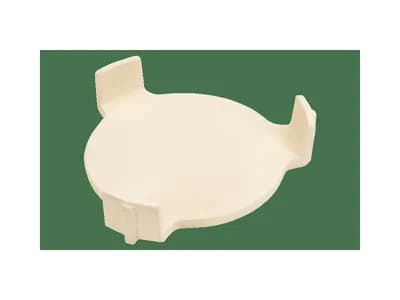
Big Green Egg ConvEGGtor plate setter (Large)
The pan protects exactly this part: the ConvEGGtor is what turns a Large into an oven, and fat carbonised on its ceramic is among the most tedious things to clean.
€85
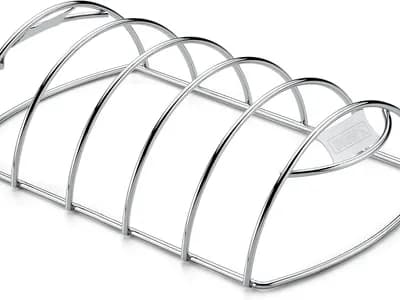
Weber Rib Rack (6605)
The rack stands the ribs upright and the pan goes right underneath: it catches the drips from four racks without anything reaching the ceramic deflector.
€18
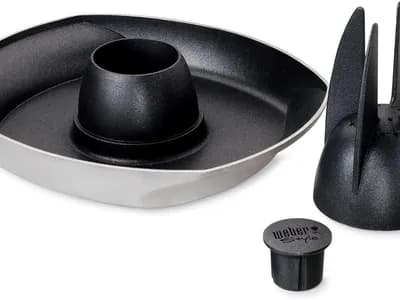
Weber Style Poultry Roaster (6731)
With the chicken upright the fat falls in a straight line; a pan underneath keeps it off the ceramic and leaves you a usable base for the sauce.
€70
FAQ
Can I rest the pan straight on the ceramic deflector?
You can, but you lose part of the point: in direct contact with hot ceramic the fat overheats and starts smoking sooner. The usual trick is to leave a finger of air, resting it on the lower grate or on spacers, or to add a shallow layer of water. That way it catches the drips instead of turning into a frying pan.
Do they cope with kamado temperatures?
Low and slow, between 105 and 135 °C, and roasting around 250 °C give them no trouble: aluminium stays nowhere near its melting point. What must not happen is contact with the coals or exposure to direct flame, where they burn through. For pizza at 350-400 °C you do not need them: you are cooking on stone.
Do they work in a Big Green Egg Large or a Kamado Joe Classic?
Yes, even though they were not designed for it. The published measurements are 21.8 × 15.2 cm, so two sit side by side on a deflector of about 38 cm. In a small kamado such as a MiniMax or a Joe Jr, one already covers much of the usable area. Measure your deflector with a ruler before ordering.
Can they be reused, or are they single-use?
People who use them daily report two or three cooks per pan if the fat has not fully carbonised, but the aluminium warps and the corners end up splitting. Weber asks for hand washing, including before first use, and says nothing about the dishwasher. Treating them as a consumable is more realistic than insisting on rescuing them.
YOU MIGHT ALSO LIKE