Recipe · Indirect · Medium
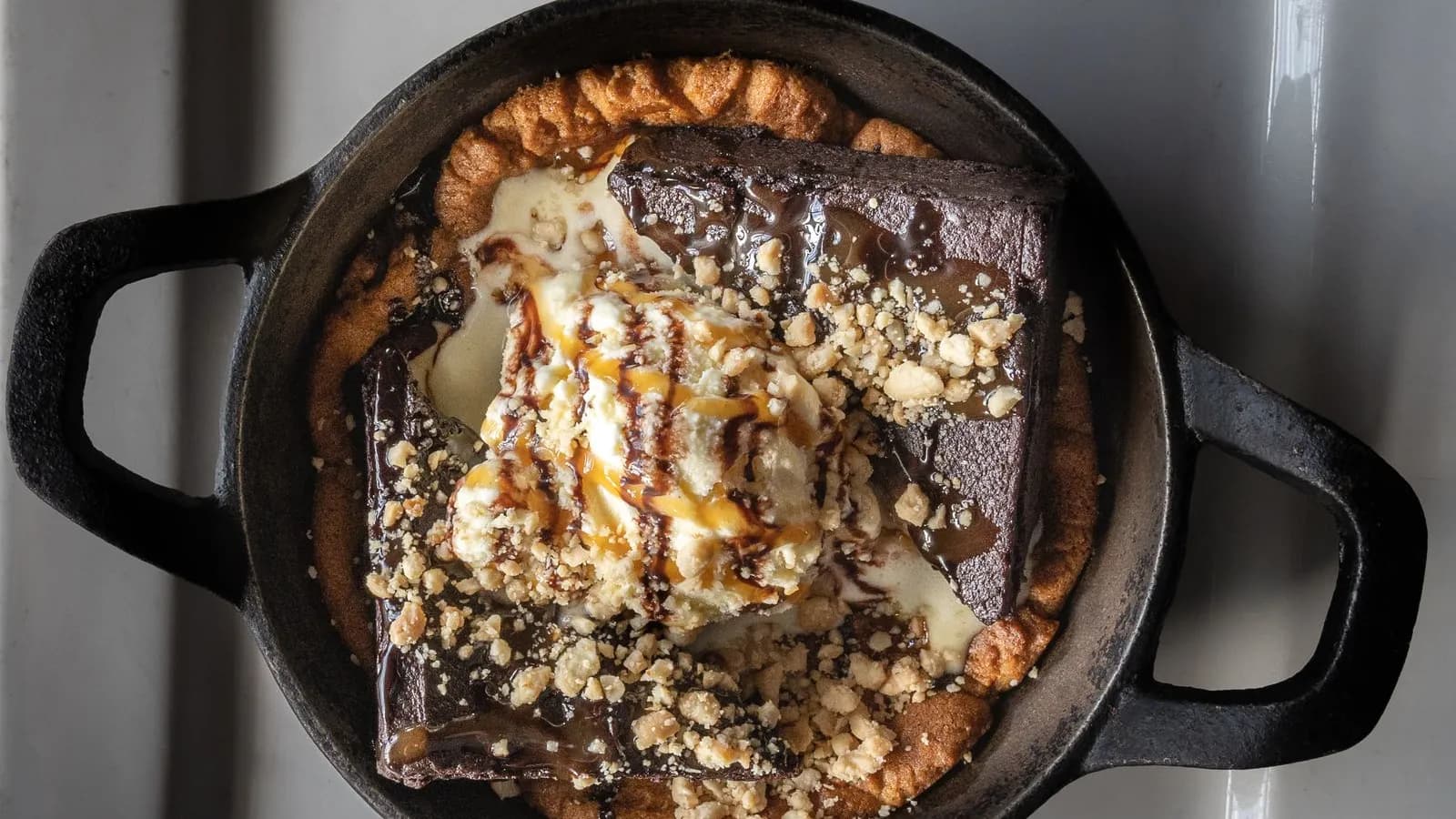
Smoked skillet brownie on the kamado, fudgy centre
Chocolate brownie baked in a cast-iron skillet over indirect heat, with a veil of apple-wood smoke. Crackled crust, fudgy centre and a hint of orange. Serves 10.
Quick answer
Smoked brownie bakes in a cast-iron skillet at 175 °C indirect with a deflector, 30-35 minutes, with a small handful of apple wood at the start only. Pull it when the crust is crackled and a toothpick comes out with moist crumbs, never clean: the hot skillet keeps setting the centre for 15-20 minutes off the heat, leaving it fudgy.
One big step at a time, screen kept on and built-in timers.
- Prep
- 20 min
- Cook
- 35 min
- Servings
- 10 servings
- Temperature
- 175 °C
What time do you want to eat?
Pick a time and we'll tell you when to start.
12:25
Start the prep
12:45
Light the kamado
13:15
Onto the kamado
14:00
Serve
Estimate: it includes lighting and settling the kamado plus a margin for large cuts. If the recipe asks you to marinate or salt ahead, add that time.
Fire setupIndirect
- Dome
- 175 °C
- Deflector
- Yes
- Grate
- Standard height
- Fuel
- Charcoal
- Wood
- A small handful of apple wood chips
- Setup
- Deflector; cast-iron pan
Temperature curve
1:25 h from lighting
Kamado dome
| # | From | Phase | Dome |
|---|---|---|---|
| 1 | 0:00 | Light the charcoalCharcoal lit, deflector in, reliable chamber probe | 20 → 175 °C |
| 2 | 0:25 | StabiliseHold a dead-steady 175 °C for 10 min before the batter goes in | 175 °C |
| 3 | 0:35 | Put the food inA small handful of apple chips, pan in the centre | 175 → 150 °C |
| 4 | 0:36 | BakeDo not open; at 30 min a pick comes out with wet crumbs | 150 → 175 °C |
| 5 | 1:10 | RestRest in the pan with flaky salt until it sets | 175 → 140 °C |
| 6 | 1:25 | Serve | off |
0:00 is the moment you light the charcoal. Internal temperatures are the ones the recipe gives; without a probe, go by the times. Turn these times into clock times with the planner
For this recipe
Ingredients
- dark chocolate 70%, chopped200 g
- unsalted butter120 g
- mild extra-virgin olive oil (replaces part of the butter)60 ml
- brown sugar220 g
- large eggs, room temperature4
- plain (cake) flour110 g
- unsweetened cocoa powder (+ extra to flour the skillet)35 g
- orange (the zest)1
- dark or milk chocolate in big chunks (for the molten pockets)100 g
- vanilla extract1 tsp
- flaky sea salt, Maldon-style (to finish, balances the sweetness)1 pinch
Allergens
- Gluten
- Eggs
- Milk
The chocolate may contain soy lecithin or traces of tree nuts: check the label.
Based on the recipe's ingredients. Always check the label of every product you buy.
The gear for this recipe
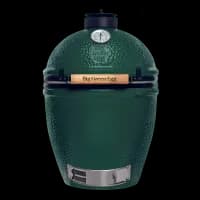 Big Green Egg LargeThe Large holds a steady 175 °C indirect to bake the skillet brownie for 10.
 Kamado Joe Big Block XL lump charcoal 9.1 kg
 Onlyfire GCG-8552 Cooking System (2 grates + rack + 2 deflectors) for Large Kamado
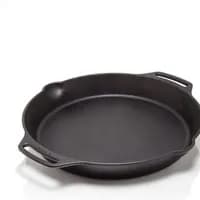 Petromax FP35 Cast Iron Fire Skillet 35 cm with HandlesCast-iron skillet for the crackled top and the molten centre.
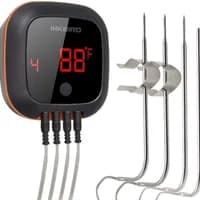 Inkbird IBT-4XS Bluetooth thermometerMake sure the chamber stays locked at 175 °C throughout the bake.
Method
- 01
Set the deflector and stabilise 175°C
Light the charcoal, set the deflector to block direct heat and stabilise the chamber at 175°C with a reliable chamber probe, not the dome thermometer. It takes 20-25 minutes to settle. Do not load the batter until the temperature holds steady at 175°C for 10 minutes.
- 02
Melt chocolate, butter and olive oil
Over low heat or a bain-marie, melt the 70% chocolate, the butter and the olive oil into a smooth, glossy cream; take it off and let it cool five minutes. The oil keeps the centre fudgy for longer and brings a clean richness that butter alone won't.
- 03
Whisk eggs and sugar, then fold
Whisk the eggs with the brown sugar for 3-4 minutes until foamy and pale; that's where the crackled crust is born. Fold in the cooled chocolate and the vanilla, then sift in flour and cocoa and mix only until combined. Don't overbeat: too much air dries the brownie out.
- 04
Grease and cocoa-flour the skillet
Grease the cast-iron skillet well with butter, dust with cocoa powder and shake off the excess: it won't stick and you avoid white streaks of flour. Pour in the batter, scatter the big chocolate chunks and the orange zest over the top, and level it without pressing down.
- 05
Bake indirect with apple smoke
Toss a small handful of apple-wood chips on the coals and set the skillet in the centre of the grate, over the deflector. Close the lid. After 10-12 minutes, once the batter has set, the smoke has done its job: don't add more wood or open the lid out of curiosity.
- 06
Watch the fudgy point, 30-35 min
At 30 minutes, check: the crust should be crackled and, when you pierce the centre with a toothpick, it should come out with moist crumbs clinging to it, never clean. If it comes out clean, you've gone too far. Between 30 and 35 minutes depending on the skillet. Pull it with gloves while the centre still wobbles slightly.
- 07
Rest in the skillet and cut
Sprinkle flaky salt over the top and let the brownie rest in the skillet itself for 15-20 minutes: the residual heat sets the centre, turning it from liquid to fudgy. Cut into 10 portions in the skillet with a serrated knife, without scratching the iron. Serve warm.
About this recipe
A smoked barbecue brownie works because the kamado, with a deflector in place, is a better oven than most kitchen ones: stable, enveloping, and able to add a veil of apple-wood smoke that pairs with chocolate the way coffee or caramel do. The secret isn't the brownie recipe —that part is textbook— it's treating the kamado as what it is here, a convection oven at 175°C indirect, and pulling the skillet while the centre still wobbles. That pull point is the difference between a fudgy brownie and a dry chocolate cake.
The kamado as an oven: deflector, 175°C and no rushing
Kamado baking is oven baking with one extra variable: the ceramic's radiant heat. You set the deflector to block direct heat from the coals and stabilise the chamber at 175°C, the baking temperature of a classic brownie. Not a degree of improvisation: a reliable chamber probe is mandatory, because the dome thermometer lies thanks to the cupola. The cast-iron skillet goes in the centre of the grate, over the deflector, never at the edge where the ceramic radiates hardest. At 175°C the brownie rises slowly, the crust crackles and the centre stays fudgy, not raw: we're talking about a point of doneness, not liquid batter.
The apple smoke: light, sweet and early
Here's the nuance that separates a kamado brownie from an oven one: a small handful of apple-wood chips on the coals, no more. Chocolate drinks in smoke greedily, and overdoing it turns it bitter in seconds. We want a sweet, fruity background you can sense, not a brownie that tastes of chimney. The wood goes on early, in the first 10-12 minutes, while the batter is still wet and locks the aroma in; after that you don't need it. Apple beats cherry here because it's milder: cherry, deeper and more tannic, pulls against the cocoa instead of accompanying it.
The Mediterranean touch: orange, olive oil and a pinch of salt
In Torrevieja oranges are at hand all winter, and a generous zest in the batter lifts the chocolate and talks to the apple smoke beautifully. I swap part of the butter for mild extra-virgin olive oil: it brings a clean richness, keeps the centre fudgy for longer and is an honest nod to the baking of this coast. A pinch of flaky salt on top as the skillet comes out balances the sweetness and makes the cocoa flavour pop. No filler: real chocolate (70%), good eggs, just enough sugar and a hit of Costa Blanca citrus.
In 30 seconds
Kamado with deflector at 175°C indirect, reliable chamber probe. A small handful of apple-wood chips on the coals, early only. Brownie batter with 70% chocolate, part of the fat as olive oil, orange zest. Greased, cocoa-floured cast-iron skillet in the centre of the grate over the deflector. 30-35 min until the crust crackles and the centre still wobbles (toothpick with moist crumbs, not clean). Flaky salt on the way out. Rest 15-20 min in the skillet before cutting. Serves 10.
Will it fit your kamado?
Small
33-40 cm · Joe Jr, MiniMax
Won't fit
The 35 cm pan with handles won't fit; with a ~25 cm pan, half the recipe.
Medium
46-51 cm · Classic, Large
Tight
The 35 cm pan with handles is probably tight; a 30 cm pan fits easily.
Large
56-61 cm · Big Joe, XL
Fits
The 35 cm pan fits comfortably.
What to serve with it
Sides
- Vanilla ice cream
- Fresh red berries
- Wine
- Pedro Ximénez from Montilla-Moriles
- Beer
- Stout or porter with cocoa notes
- Alcohol-free
- Cold brew coffee or cold milk with cinnamon
Leftovers and storage
- In the fridge
- Barely set centre: covered in the fridge within 2 hours, 2-3 days.
- Freezing
- Freezes well in wrapped portions, 2-3 months. Thaw in the fridge; do not refreeze.
- Reheating
- 150 °C oven for 5-6 minutes to bring back the molten centre; or cold, denser.
- Using them up
- In chunks over ice cream, or layered in glasses with cream and berries.
Cool and refrigerate within 2 hours. When in doubt, throw it out.
Leftover embers
You still have embers: what to do with the leftover heat
For 35 min at 175 °C in a classic kamado you load about 800 g of charcoal and burn 400 g: when you serve, about 380 g of live embers remain. Before you shut the vents, that is still enough for:
Without touching the vents
175 °Cdessert while you eat
1 h 20 minof embers
- Apple crumble on the kamado in a dutch oven40 min · 190 °C
- Smoked Loaded Nachos on the Kamado12 min · 185 °C
- Reina Pepiada Arepas on a Budare in the Kamado, Crisp Outside1 h · 200 °C
No recipe needed
- Yesterday's bread with oil and garlic, on the grate (10 min)
- Corn cobs in their husks (30 min)
- Whole apples with a slit in the skin (45 min)
Closing the vents almost fully and waiting for it to drop
100-130 °Ca short smoke
2 h 25 minof embers
- Hot-Smoked Whole Mackerel on the Kamado45 min · 120 °C
No recipe needed
- Coarse salt on a tray, with a wood chunk: smoked salt for months (1-2 h)
- Almonds or walnuts on a rack (45 min)
- Whole heads of garlic, for spreading (1 h)
Opening the vents almost fully
210-270 °Cgrilled vegetables
30 minof embers
- Grilled peaches with honey and vanilla ice cream on the kamado8 min · 210 °C
- Bacon-Wrapped Dates on the Grill14 min · 210 °C
- Olive Oil Ciabatta on the Kamado25 min · 245 °C
No recipe needed
- Strips of courgette and aubergine, char-marked (5 min)
- Pita or naan from shop dough, on the grate (3 min each)
- Halved tomatoes, cut side down, for a sauce (10 min)
Before opening the lid, crack it open for a few seconds first; if you raise the heat, stir the ash so the coals can breathe. And if you are not going to use them: once the food is out, close the bottom and top vents. The charcoal that does not burn (about 380 g) can be used next time. Different size of kamado? Work out your load for 1 h 30 min of fire, lighting included.
No kamado?
How to make it without a kamado: oven, gas grill or pellets
The brownie bakes for 30-35 minutes at 175 °C with a handful of apple wood. The oven makes a perfect fudgy brownie; only the smoke is lost.
Home oven
- Temp.
- 175 °C conventional (160-165 °C fan)
- Time
- 30-35 min, same as on the kamado
- The cast-iron pan on the middle rack, top and bottom heat
- No smoke: a pinch of smoked salt instead of the flakes echoes the apple wood
- Same doneness cue: pull it when the skewer comes out with moist crumbs
SmokeBarkJuicinessA perfect fudgy brownie, minus the apple wood note
Gas grill
- Temp.
- 175 °C indirect: one burner low, pan on the unlit side
- Time
- 32-40 min; one-sided heat sets it more slowly
- A box with a handful of apple chips for the first 10-12 min only
- Turn the pan 180° once, at 20 min; the lit side sets first
- Slip a tray or stone under the pan if the base darkens
SmokeBarkJuicinessVery good with gentle smoke; keep the base from overbaking
Pellet grill or electric smoker
- Temp.
- 175 °C on a pellet grill
- Time
- 30-35 min, same as on the kamado
- Pellet grill only; at an electric smoker's 135 °C the crackly top never forms
- Apple pellets; the smoke runs the whole bake, so it comes through more than the kamado handful
- Pan in the centre of the grate, away from the firepot
SmokeBarkJuicinessVery close, a little smokier; an electric smoker will not do
Temperatures and times are a guide; the original recipe is the kamado one. Tempted? which kamado to choose for what you cook
Editor's tips
- The pull point is the whole dish. A fudgy brownie comes out while the centre still wobbles and the toothpick shows moist crumbs, because the cast iron's residual heat keeps setting it for 15 minutes off the fire. Wait for a clean toothpick inside the kamado and the rest dries it into a cake. The hot skillet cooks by inertia: count on it and pull earlier.
- With chocolate, less smoke is more. A small handful of apple-wood chips at the start is plenty for a fruity background; a big handful or wood throughout the bake leaves a phenolic bitterness that buries the cocoa. Chocolate is a sponge for aromas: treat it like a delicate white fish, not a rack of ribs that takes hours of smoke.
- Trust the chamber probe, not the dome thermometer. In a kamado the cupola holds more heat than the grate, so the dome gauge can read 175°C while the skillet sits at 190°C, and a brownie at 190°C dries at the edges before the centre sets. Sink a probe at grate level and govern the vents by that reading.
Gear for this recipe
As an Amazon Associate, mikamado.es earns from qualifying purchases. At no extra cost to you.
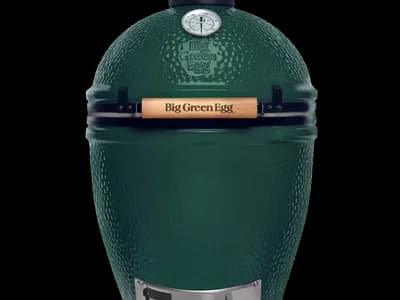
Big Green Egg Large
The Large holds a steady 175 °C indirect to bake the skillet brownie for 10.
€2,099
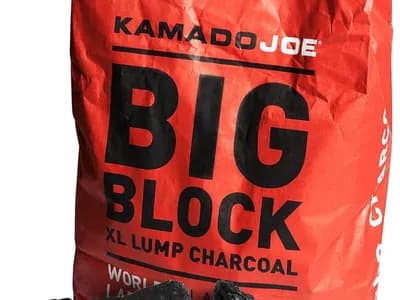
Kamado Joe Big Block XL lump charcoal 9.1 kg
€67
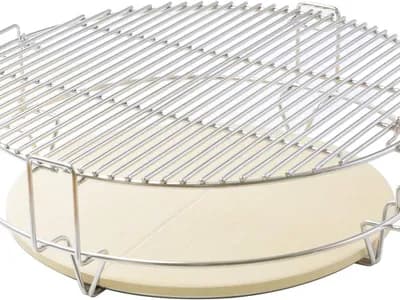
Onlyfire GCG-8552 Cooking System (2 grates + rack + 2 deflectors) for Large Kamado
€95
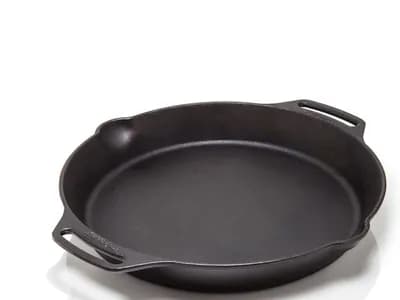
Petromax FP35 Cast Iron Fire Skillet 35 cm with Handles
Cast-iron skillet for the crackled top and the molten centre.
€70
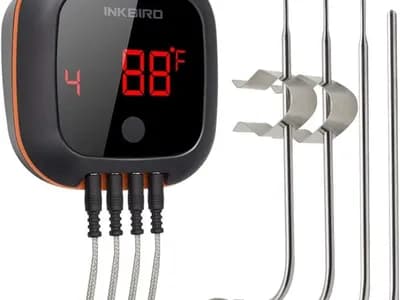
Inkbird IBT-4XS Bluetooth thermometer
Make sure the chamber stays locked at 175 °C throughout the bake.
€72
Have you made it?
Tell us how it turned out on your kamado. We review every rating before publishing it.
No published ratings yet. Be the first!
FAQ
How much wood should I use so the brownie gets smoke without turning bitter?
Very little: a small handful of apple-wood chips, around 30-40 grams, on the coals at the start of the bake. Chocolate absorbs smoke extremely easily, and overdoing it turns it bitter within minutes with phenolic notes that bury the cocoa. The rule is counterintuitive: for a dessert you want a fraction of the smoke you'd use on a rack of ribs. Add the wood only at the start, in the first 10-12 minutes, while the batter is still wet and locks in the aroma; after that the surface sets and absorbs nothing useful, only soot. When in doubt, go short: a fruity veil you can just sense always beats a brownie that tastes of chimney.
How do I get the fudgy, not dry, point in the brownie?
Three keys. First, the ratio: more chocolate and fat (butter and olive oil) than flour, with cocoa for depth; a fudgy brownie has little flour. Second, don't overbeat after adding the flour, only until combined, because excess gluten and air dry the crumb. And third, the pull point, which is what most often goes wrong: take the skillet out when the crust is crackled but the centre still wobbles and the toothpick comes out with moist crumbs clinging, never clean. The cast-iron skillet keeps cooking by inertia for 15-20 minutes off the kamado, so the centre finishes setting during the rest. Wait for a dry toothpick over the fire and the rest turns it into cake.
Which sweet wood pairs better with chocolate: apple or cherry?
For a brownie I'd go with apple. It's the mildest, sweetest fruit wood, with a light smoke that settles as a fruity background behind the cocoa without competing with it. Cherry is excellent and very popular, but it's a touch deeper and slightly tannic, and over chocolate it tends to pull towards a bitterness that fights the cocoa instead of accompanying it, especially if you go heavy. If cherry is all you have, use an even smaller dose than apple and only at the start. What you must avoid in baking are the strong woods —mesquite, hickory, holm oak, oak—: superb for meat but they steamroll a delicate dessert, leaving it smoky and bitter.
How do I season and grease the cast-iron skillet so the brownie doesn't stick?
Start from a well-seasoned skillet: if it's new, rub it with the thinnest film of oil and bake it in the kamado at 200°C for about 40 minutes to set the patina, repeating two or three times until it's dark and satin. For this recipe specifically, just before pouring the batter, grease the whole surface and walls generously with soft butter and then dust with cocoa powder (instead of flour, which would leave white streaks), shaking off the excess. That layer of fat and cocoa creates a non-stick barrier perfect for baking and blends into the flavour. After turning it out, don't wash the skillet with soap or leave it to soak: clean it hot with water and a brush, dry it over the fire and wipe it with oil to keep the patina.
Can I freeze the brownie and reheat it keeping the centre creamy?
Yes, and it freezes surprisingly well thanks to its high fat and chocolate content, which stops it crystallising and drying out. Let it cool completely, cut it into portions and wrap each in cling film and then foil or a freezer bag; it keeps for up to 3 months. To reheat while keeping the centre fudgy, thaw at room temperature and give it gentle, short heat: in the kamado or oven at 150°C for about 5-6 minutes, just enough for the centre to soften again without the edges drying out. The microwave works in a pinch, 15-20 seconds per portion, but it dries the crackled crust and kills the charm. A trick: serve the reheated portion warm with a scoop of vanilla ice cream, and the hot-cold contrast hides any loss of texture.
Can you make a smoked brownie without a kamado?
In the oven at 175 °C for 30-35 minutes you get a perfect fudgy brownie, just without smoke. To keep the apple wood, use a gas grill with a smoker box or a pellet grill at the same temperature.
What do I do with the embers left after making Smoked skillet brownie on the kamado, fudgy centre?
After 35 min at 175 °C in a classic kamado about 380 g of live embers remain: 1 h 20 min more at 175 °C without touching the vents, 2 h 25 min at 100-130 °C closing the vents or 30 min at 210-270 °C opening the vents. If you are not going to use them, close both vents and keep the charcoal for next time.
More kamado recipes
KEEP READING
Go deeper on this dish
- Recommended kamado
Big Green Egg Large
The Large holds a steady 175 °C indirect to bake the skillet brownie for 10.
- Editorial guide
How to light a kamado: the step-by-step method
No petrol, no weird tablets and no 45-minute waits. The cone method, airflow control and the mistakes that prevent 80% of the frustration.
- Glossary term
Heat deflector
Ceramic plate placed between the coals and the grate to turn direct fire into indirect cooking.
- Related comparison
big green egg large vs kamado joe classic iii
The classic kamado matchup: the Big Green Egg Large, the indestructible pioneer with the widest accessory network, agai…