Recipe · Indirect · Medium
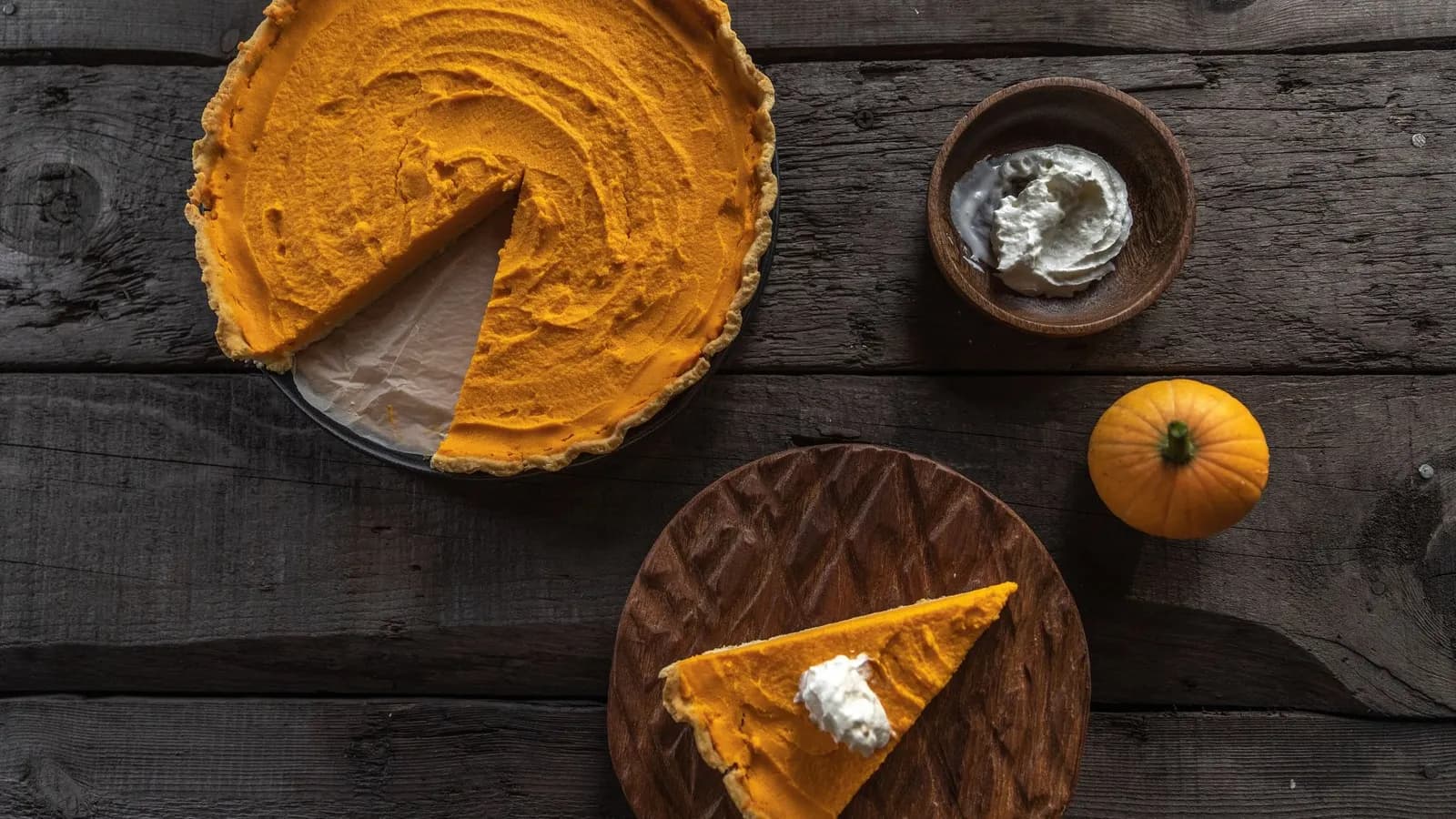
Kamado Pumpkin Pie with the Squash Roasted in the Same Fire
First the butternut squash roasts at 200 °C, then the shortcrust base bakes blind, and finally the custard filling sets at 170-175 °C indirect. One fire for the autumn pie of Halloween and Thanksgiving.
Quick answer
Roast a halved butternut squash (calabaza cacahuete) at 200 °C indirect for 45-60 minutes and purée 450 g of flesh. Blind-bake shortcrust in a 23 cm springform tin: 15 minutes with weights, 5-8 without. Drop to 170-175 °C, fill with purée, 3 eggs plus 1 white, cream, brown sugar and spice, and bake 45-60 minutes until the centre barely wobbles.
- Prep
- 40 min
- Cook
- 150 min
- Servings
- 8 servings
- Temperature
- 175 °C
Ingredients
- butternut squash (calabaza cacahuete) or calabaza de Castilla (a Spanish winter squash), halved and deseeded1.3 kg
- mild olive oil, for roasting the squash1 cda
- plain flour, plus a little for rolling200 g
- unsalted butter, very cold, diced110 g
- ice-cold water40 ml
- large eggs (the yolk of one for the pastry; its white and the other three eggs go in the filling)4 ud
- soft brown sugar140 g
- whipping cream (35% fat)250 ml
- ground cinnamon2 cdta
- ground ginger1 cdta
- freshly grated nutmeg0.5 cdta
- fine salt (half for the pastry, half for the filling)1 cdta
The gear for this recipe
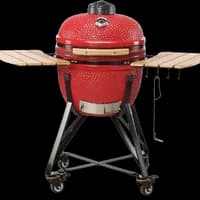 Kamado Bono Media 51 cmThe recipe chains three bakes in the same fire, squash, base and filling, and calls for going from 200 to 170-175 °C with no embers in sight. The Kamado Bono Media fits for two reasons. It comes with two side deflectors that together cover all the embers, so indirect cooking does not mean buying a separate stone. And its grate is about 45 cm according to distributor listings: both squash halves fit on a tray and, afterwards, the 23 cm tin sits centred with air around it so the custard sets evenly. Its thick ceramic holds temperature on little air, the condition for the filling not to overcook at the edges.
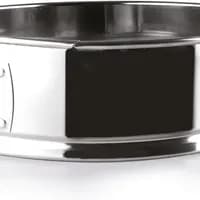 IBILI 650223 Stainless Steel Springform Cake Tin, 23 cmA pumpkin pie is served unmoulded and whole, and a custard filling cannot be turned out upside down. That is why the tin is a springform: you open the ring and the pie stays on its base without touching the surface. The IBILI 650223 declares a 23 cm diameter and a 6.5 cm height, in uncoated 18/10 stainless steel, so there is no coating to suffer at 200 °C during blind baking. The 23 cm size suits 450 g of purée and three eggs. The seam of the ring is the weak point of any springform with a runny filling: the shortcrust base, pushed up the walls and baked beforehand, is what seals it.
 NaturBraza marabu charcoal, pack of two 5 kg bags (10 kg)Between lighting, squash, base and filling the kamado is lit for more than two hours, and topping up with the pie inside is not an option. NaturBraza marabú charcoal comes from a very dense wood: it burns slowly, with a short flame, and according to the product sheet leaves little ash, although it publishes no figure or grading. With the firebox full there is fuel to hold 200 °C and then 170-175 °C with the vents almost closed; temperature is decided by the air, not the amount of charcoal, and what is left goes out when you close up. For a dessert it also matters that, according to the sheet, it is only marabú wood with no additives: once the white lighting smoke has gone, there are no binders or lighting chemicals to reach the custard.
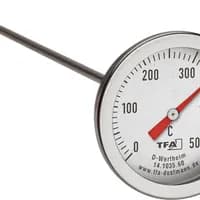 TFA Dostmann 14.1035.60 analogue thermometer, 30 cm stemA custard filling is won or lost within a few degrees, and the dome thermometer reads the highest air in the chamber, not the air at the grate where the pie sits. The TFA Dostmann 14.1035.60 is an analogue replacement thermometer with a 30 cm stem and a scale up to 500 °C, designed for wood-fired ovens; fitted in the dome hole, its tip sits much closer to the grate. Two checks first: that the hole in your dome matches the fitting TFA specifies, about 10 mm with an inner nut, and that with the lid closed the tip does not touch the tin. At 170-200 °C it reads in the lower part of the dial, enough to set the baking temperature.
Method
- 01
Light the fire and set up indirect
Before lighting, fit the TFA thermometer in the dome hole instead of the standard one if the fitting matches; with the lid closed, check its tip clears the tray and the tin. Fill the firebox of the Kamado Bono Media with NaturBraza marabú charcoal (marabú, sicklebush wood), sifted of dust, and light it in the centre. Once lit, cover the fire with the two standard deflectors, grate on top. Close up and adjust the vents to a steady 200 °C on the TFA: 30-40 minutes to heat through.
- 02
Roast the squash
Brush the cut face of the halves with the oil and lay them cut side down on baking parchment in a tray that fits on the grate. Close the lid and roast at 200 °C for 45-60 minutes, depending on thickness, until a paring knife slides into the thickest part without resistance and the edges are browned. Burp the lid open and lift out the tray with gloves, then close the lid again so the kamado stays at 200 °C.
- 03
Shortcrust pastry
While the squash roasts, mix the flour with half a teaspoon of salt and rub in the cold butter with your fingertips until it looks like coarse sand. Add the yolk and the ice-cold water and bring the dough together without kneading, in 1-2 minutes. Flatten it into a disc, wrap it in cling film and chill for 30 minutes: cold butter is what gives a crumbly base rather than a leathery one.
- 04
Roast squash purée
Scoop out the flesh with a spoon and blend it until smooth. Leave it in a fine sieve for 15 minutes to drain any juice left in it and weigh out 450 g; the rest is good for a soup. Let the purée cool before mixing it with the eggs: if it is hot, they begin to set in the bowl. You can roast and blend the squash the day before and keep it covered in the fridge.
- 05
Line the tin and blind-bake
Roll the pastry out to about 3 mm and line the IBILI 23 cm tin: whole base and walls up to about 4 cm, pressing the corner in well so there are no gaps over the seam of the ring. Prick the base, chill for 15 minutes, cover with baking parchment and baking beans up to the rim of the pastry and bake at 200 °C for 15 minutes. Remove parchment and weights and carry on for 5-8 minutes until the base loses its sheen.
- 06
Drop to 170-175 °C and make the filling
As soon as the base is out, close the bottom vent almost completely and the top vent halfway: the kamado has to come down from 200 to 170-175 °C, and ceramic cools slowly. Meanwhile whisk the purée with the brown sugar, the spices and the remaining salt, add the three eggs, the spare egg white and the cream, and mix without whipping in air. Do not put the pie in until the temperature is steady.
- 07
Bake the filling
Set the tin with the base in the centre of the grate, pour in the filling to half a centimetre below the rim of the pastry and close the lid. Bake at 170-175 °C for 45 to 60 minutes, without opening until minute 40. Burp the lid open (about 5 cm, about 5 seconds), with gloves on, and move the tin: it is ready when the edges are firm and only a central circle of about 5 cm barely wobbles, or when the centre reads 80-85 °C.
- 08
Cool and unmould
Take the pie out and leave it on a wire rack at room temperature, without unmoulding, until just warm; the residual heat finishes setting the centre. Before two hours have passed since it left the kamado, put it in the fridge and let it settle for at least 3 hours more. Run a thin knife between pastry and ring, undo the clasp and serve cold or with whipped cream.
About this recipe
The tarta de calabaza (pumpkin tart) lives two lives on the coast. For the British or North American neighbour it is the pumpkin pie of Halloween and Thanksgiving, with its shortcrust base and spiced custard. For the Spanish kitchen it is the classic home-style pumpkin tart, grandmother's recipe, simple and juicy. This version serves both and plays to what the kamado does better than a saucepan: the squash is not boiled, it is roasted in the same fire in which the pie is then baked. One lighting, three phases and a filling that tastes more of squash than of cinnamon.
Why roast the squash instead of boiling it
Boiled, the flesh soaks up water and tastes of little; that water ends up in the filling, which takes longer to set and turns out watery. Roasted at 200 °C cut side down, the opposite happens: it loses moisture, the natural sugar concentrates and the edges touching the tray brown through the Maillard reaction. It is the same logic as the roast squash with honey and paprika, at the same temperature, except that here the squash is not served: it is puréed. Use calabaza cacahuete (butternut squash) or calabaza de Castilla (a Spanish winter squash). The orange pumpkins sold for Halloween are bred for carving, not eating, and their flesh is stringy and watery.
The kamado as a baking oven
A custard tart needs gentle, enveloping heat, never visible embers. That is indirect cooking: the heat deflector sits between the fire and the tin and the kamado works as a convection oven, as the guide to direct and indirect cooking explains. The Kamado Bono Media comes with two side deflectors that together cover all the embers, and its 44.5 cm grate leaves the IBILI 23 cm springform tin centred with air all round it.
The delicate phase is dropping from 200 to 170-175 °C between the base and the filling. Ceramic holds a lot of heat and coming down is slower than going up, so the vents are closed early, before the custard is mixed, as the guide to temperature control describes. Measure where the pie is: the dome thermometer reads the highest air in the chamber, and a long-stemmed TFA Dostmann 14.1035.60, fitted in the dome hole, puts its tip much closer to the grate.
When it is done: wobble, not cocktail stick
The filling is an egg custard and sets with heat, just like a crème caramel. The sign is visual: firm edges and a central circle of about 5 cm that barely wobbles when you move the tin, like jelly, with no ripples of liquid. A clean cocktail stick comes too late: by then the centre is overcooked and the surface cracks as it cools. If you have an instant-read thermometer, the technical reference is 80-85 °C in the centre; above that the custard overcooks and cracks, and the residual heat keeps working once it is out of the kamado. This is not the Basque burnt cheesecake, which bakes at 210 °C to burn the surface: here you want a smooth, pale top.
The shortcrust base, baked blind before filling, does two jobs. It stays crisp under the custard and it seals the seam of the springform tin, which is where a runny filling would escape. Nothing guarantees a pie without a single crack, but a steady oven, taking it out on time and cooling it without hurry all lower the odds considerably.
In 30 seconds
Kamado with deflectors at 200 °C: butternut squash roasted 45-60 minutes and shortcrust base blind-baked 20-23 minutes. Close the vents towards 170-175 °C, fill with 450 g of purée, 3 eggs plus 1 white, cream, brown sugar and spice, and bake 45-60 minutes until the centre barely wobbles (80-85 °C). Cool, then into the fridge within two hours.
Editor's tips
- If the surface darkens before the centre sets, the chamber is running hotter than you think: close the top vent a little and do not open the lid to cool it. The guide to temperature problems explains how to correct without losing control of the kamado.
- To use up the leftover purée, which there nearly always is, freeze it in 200 g portions or stir it into yoghurt with honey for breakfast. And for clean slices, dip a long knife in hot water, dry it and cut in one smooth stroke, wiping the blade between cuts.
- The pie improves overnight: the spices settle and the custard cuts more cleanly. For Thanksgiving or a Halloween dinner, bake it the day before and serve it cold.
- A crack does not ruin the pie. Cover it with unsweetened whipped cream or a little soured cream, which also cuts the sweetness of the filling.
Gear for this recipe
As an Amazon Associate, mikamado.es earns from qualifying purchases. At no extra cost to you.
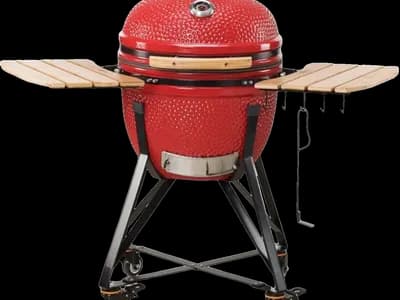
Kamado Bono Media 51 cm
The recipe chains three bakes in the same fire, squash, base and filling, and calls for going from 200 to 170-175 °C with no embers in sight. The Kamado Bono Media fits for two reasons. It comes with two side deflectors that together cover all the embers, so indirect cooking does not mean buying a separate stone. And its grate is about 45 cm according to distributor listings: both squash halves fit on a tray and, afterwards, the 23 cm tin sits centred with air around it so the custard sets evenly. Its thick ceramic holds temperature on little air, the condition for the filling not to overcook at the edges.
€923
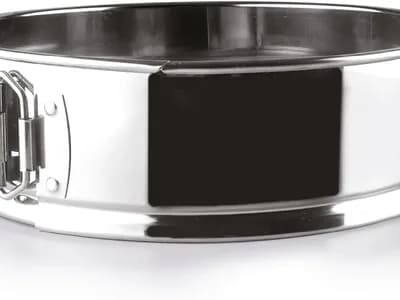
IBILI 650223 Stainless Steel Springform Cake Tin, 23 cm
A pumpkin pie is served unmoulded and whole, and a custard filling cannot be turned out upside down. That is why the tin is a springform: you open the ring and the pie stays on its base without touching the surface. The IBILI 650223 declares a 23 cm diameter and a 6.5 cm height, in uncoated 18/10 stainless steel, so there is no coating to suffer at 200 °C during blind baking. The 23 cm size suits 450 g of purée and three eggs. The seam of the ring is the weak point of any springform with a runny filling: the shortcrust base, pushed up the walls and baked beforehand, is what seals it.
€11
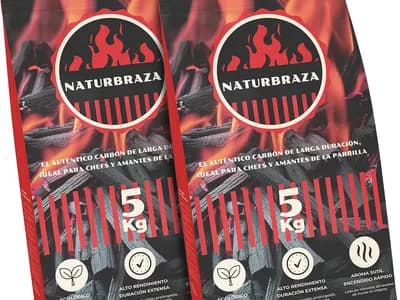
NaturBraza marabu charcoal, pack of two 5 kg bags (10 kg)
Between lighting, squash, base and filling the kamado is lit for more than two hours, and topping up with the pie inside is not an option. NaturBraza marabú charcoal comes from a very dense wood: it burns slowly, with a short flame, and according to the product sheet leaves little ash, although it publishes no figure or grading. With the firebox full there is fuel to hold 200 °C and then 170-175 °C with the vents almost closed; temperature is decided by the air, not the amount of charcoal, and what is left goes out when you close up. For a dessert it also matters that, according to the sheet, it is only marabú wood with no additives: once the white lighting smoke has gone, there are no binders or lighting chemicals to reach the custard.
€47
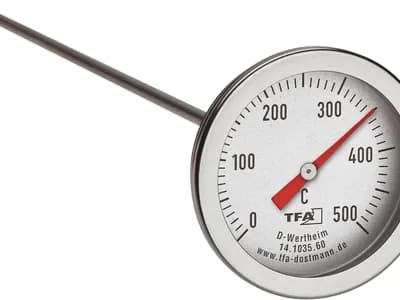
TFA Dostmann 14.1035.60 analogue thermometer, 30 cm stem
A custard filling is won or lost within a few degrees, and the dome thermometer reads the highest air in the chamber, not the air at the grate where the pie sits. The TFA Dostmann 14.1035.60 is an analogue replacement thermometer with a 30 cm stem and a scale up to 500 °C, designed for wood-fired ovens; fitted in the dome hole, its tip sits much closer to the grate. Two checks first: that the hole in your dome matches the fitting TFA specifies, about 10 mm with an inner nut, and that with the lid closed the tip does not touch the tin. At 170-200 °C it reads in the lower part of the dial, enough to set the baking temperature.
€12
FAQ
Which squash is best for pumpkin pie?
Butternut squash (calabaza cacahuete in Spain) or calabaza de Castilla. Both have dense, sweet, barely stringy flesh, and roasting drives off water and concentrates the flavour. The orange pumpkins sold for Halloween are selected for carving: their flesh is stringy and watery and gives a pale, bland filling. If you use tinned purée, pick one of pure pumpkin with no added sugar or spices.
How do you know when pumpkin pie is done?
Move the tin gently: the edges should be firm and only a central circle of about 5 cm should wobble a little, like jelly, with no ripples of liquid. If you have an instant-read thermometer, the reference is 80 to 85 °C in the centre. Do not wait for a cocktail stick to come out clean: by then the filling is overcooked and will crack as it cools, because the residual heat keeps setting it outside the oven.
Why does pumpkin pie crack?
Almost always from overbaking. When the egg custard goes past its point, the proteins tighten, squeeze out water and the surface splits as it cools. An oven that is too hot and a sudden chill also contribute. In the kamado, the fix is to measure the temperature near the grate, hold a steady 170-175 °C, take the pie out while the centre still wobbles and let it cool at room temperature before the fridge.
Can you make pumpkin pie with condensed milk?
Yes, it is a very common version. Replace the cream and brown sugar with a tin of condensed milk of about 370-400 g and keep the purée, eggs and spices. The filling comes out denser and sweeter, with a hint of caramel, and it sets the same way: same blind-baked base, same 170-175 °C and the same wobble test. Taste the mix before adding the eggs and cut back the spices if the condensed milk dominates.
Does pumpkin pie need to go in the fridge?
Yes. It is an egg-rich pie, like a flan, and the United States Department of Agriculture (USDA) recommends refrigerating such pies within two hours of baking if they are not going to be served in that time. In the fridge, covered, it keeps for 3 to 4 days. You can serve it cold or take it out a little beforehand so it loses the deep chill.
More kamado recipes
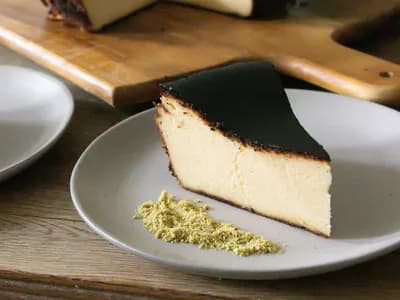
Burnt Basque cheesecake on the kamado, creamy inside
La Viña on the kamado: a near-burnt mahogany top and a wobbly, creamy centre. Indirect at 210°C, the Basque cheesecake that beats the home-oven version.

Apple tarte Tatin in a dutch oven on the kamado, golden caramel
Caramelised apples in a cast-iron dutch oven, golden puff pastry and an amber caramel that runs as you flip it. Indirect at 190°C: the tarte Tatin that earns applause.
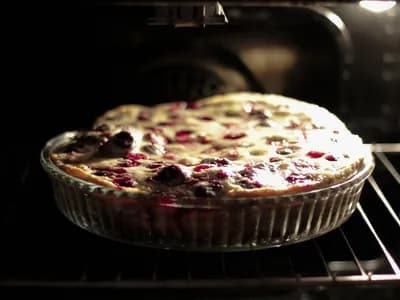
Cherry clafoutis in a cast-iron skillet on the kamado
Dark cherries suspended in a custard halfway between flan and sponge, baked in a cast-iron skillet at 180°C indirect. The French summer dessert the kamado nails.
KEEP READING
Go deeper on this dish
- Recommended kamado
Kamado Bono Media 51 cm
The recipe chains three bakes in the same fire, squash, base and filling, and calls for going from 200 to 170-175 °C with no embers in sight. The Kamado Bono Media fits for two reasons. It comes with two side deflectors that together cover all the embers, so indirect cooking does not mean buying a separate stone. And its grate is about 45 cm according to distributor listings: both squash halves fit on a tray and, afterwards, the 23 cm tin sits centred with air around it so the custard sets evenly. Its thick ceramic holds temperature on little air, the condition for the filling not to overcook at the edges.
- Editorial guide
How to light a kamado: the step-by-step method
No petrol, no weird tablets and no 45-minute waits. The cone method, airflow control and the mistakes that prevent 80% of the frustration.
- Glossary term
Heat deflector
Ceramic plate placed between the coals and the grate to turn direct fire into indirect cooking.
- Related comparison
big green egg large vs kamado joe classic iii
The classic kamado matchup: the Big Green Egg Large, the indestructible pioneer with the widest accessory network, agai…