Recipe · Indirect · Medium
Nectarine and raspberry galette on the kamado
A rustic summer tart: flaky shortcrust, wedges of ripe nectarine and raspberries bursting into syrup, baked indirect over a stone until the free-form edges turn deep gold.
Quick answer
Bake the nectarine and raspberry galette on the kamado using indirect heat at 190 °C, with a deflector and preheated stone, for 35-45 minutes, until the shortcrust is golden and crisp and the fruit juices bubble. Let it rest 15 minutes so the filling sets before serving it warm.
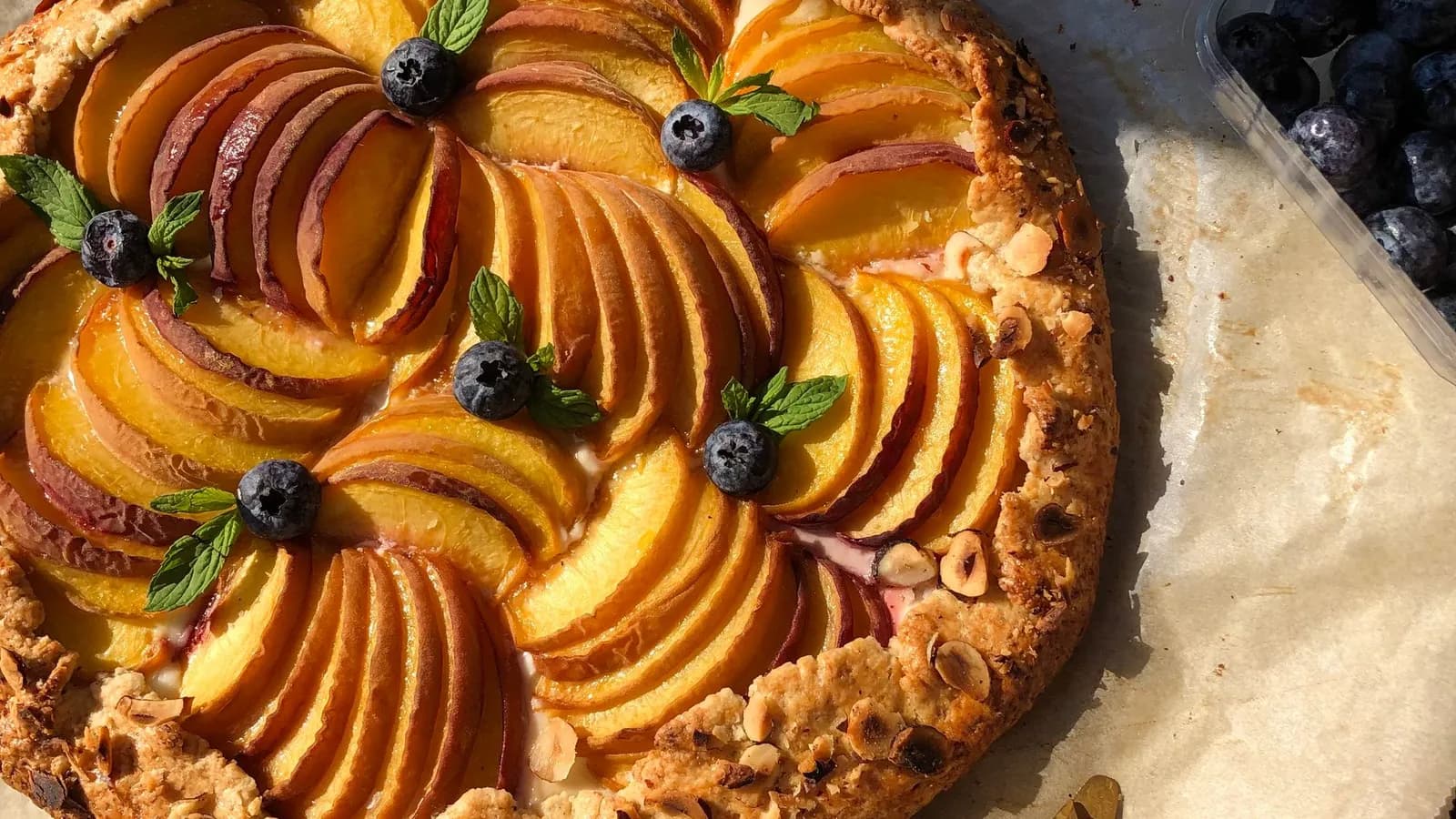
One big step at a time, screen kept on and built-in timers.
- Prep
- 30 min
- Cook
- 40 min
- Servings
- 8 servings
- Temperature
- 190 °C
What time do you want to eat?
Pick a time and we'll tell you when to start.
12:10
Start the prep
12:40
Light the kamado
13:10
Onto the kamado
14:00
Serve
Estimate: it includes lighting and settling the kamado plus a margin for large cuts. If the recipe asks you to marinate or salt ahead, add that time.
Fire setupStone or steel
- Dome
- 190 °C
- Deflector
- Yes
- Grate
- Standard height
- Fuel
- Holm oak lump charcoal
- Setup
- Heat deflector and cordierite baking stone
Temperature curve
1:40 h from lighting
Kamado dome
| # | From | Phase | Dome |
|---|---|---|---|
| 1 | 0:00 | Light the charcoalDeflector and baking stone on the grate | 20 → 190 °C |
| 2 | 0:30 | StabiliseStone at least 20 min at 190 °C before baking | 190 °C |
| 3 | 0:50 | Put the food inGalette on its paper over the hot stone | 190 → 165 °C |
| 4 | 0:52 | BakeTurn halfway; golden with bubbling juice | 165 → 190 °C |
| 5 | 1:25 | RestOn a rack so the filling sets (15 min in the recipe) | 190 → 100 °C |
| 6 | 1:40 | Serve | off |
0:00 is the moment you light the charcoal. Internal temperatures are the ones the recipe gives; without a probe, go by the times. Turn these times into clock times with the planner
For this recipe
Ingredients
- Plain flour250 g
- Cold butter, diced150 g
- Sugar (40 g for dough and fruit, 40 g to dust)80 g
- Salt1 pinch
- Ice-cold water60 ml
- Ripe nectarines, cut into wedges4
- Fresh raspberries150 g
- Egg, for the wash1
Allergens
- Gluten
- Eggs
- Milk
- Tree nuts
The steps add ground almond to the base; it can be left out. Serving with cream or ice cream adds dairy.
Based on the recipe's ingredients. Always check the label of every product you buy.
The gear for this recipe
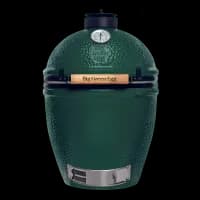 Big Green Egg LargeThe Big Green Egg Large is the ideal oven for this galette: its thick ceramic wall holds a steady 190 °C through the full 45-minute bake, without the temperature spikes that scorch the pastry edges. Its diameter comfortably takes a 30 cm disc on the stone, and the enveloping dome heat browns the pleats while the base sets from below.
 Carboext 100% Holm Oak Lump Charcoal, 15 kg Sack
 Onlyfire GCG-8552 Cooking System (2 grates + rack + 2 deflectors) for Large Kamado
 Ooni Cordierite Pizza Baking StoneOoni's cordierite stone is your ally against a soggy base, the number-one flaw of fruit tarts. Preheated for 20 minutes, it stores dry heat and transfers it in one shot to the dough as you slide it on: it sets the base before the nectarine juice can soften it. Its surface also makes it easy to load and unload the galette on baking paper without distorting it.
Method
- 01
Shortcrust dough
Mix the flour with the salt and 20 g of sugar. Add the very cold butter and work it with your fingertips into coarse crumbs with visible flecks of butter. Stir in the ice water a spoonful at a time until the dough just comes together without kneading. Shape a disc, wrap it and chill for at least 1 hour.
- 02
Macerate the fruit
Cut the nectarines into 1 cm wedges. Toss them with 20 g of sugar and a teaspoon of cornstarch (or lemon zest) and let them sit for 15 minutes. Drain off the excess juice. Keep the raspberries aside and fold them in last so they hold their shape.
- 03
Set up the kamado
Fire up the kamado for indirect cooking: set the deflector in place and the baking stone on the grate. Stabilise the dome at 190 °C and let the stone preheat for at least 20 minutes. A cold stone is the number-one cause of a soggy base.
- 04
Shape the galette
Roll the dough on baking paper into a 30 cm circle. Scatter a tablespoon of ground almonds over the centre, leaving a 5 cm border. Pile on the nectarines and dot in the raspberries. Fold the border over the fruit in rustic pleats. Brush the pastry with beaten egg and sprinkle with the remaining sugar.
- 05
Bake indirect
Slide the galette, paper and all, onto the hot stone. Close the lid and bake 35-45 minutes at 190 °C, until the pastry is golden and the juices bubble at the edges. Rotate the galette halfway through for even colour; if the edges brown too fast, shield them with foil.
- 06
Rest and serve
Lift the galette off and let it rest 15 minutes on a rack: the filling sets and the base finishes crisping. Serve it warm, cut into generous wedges, with whipped cream or a scoop of vanilla ice cream.
About this recipe
The galette is the tart for tasteful slackers: no tin, no perfect edges. You roll out the dough, pile the fruit in the centre and fold the border inward however it falls. The rustier it looks, the better. At the height of summer, when nectarines arrive juicy and raspberries stain your fingers, this is the dessert that rewards ripe fruit instead of disguising it.
The kamado's ceramic turns indirect baking into a stable, enveloping oven. With the deflector and a preheated stone, the base takes a blast of dry heat that sets it before the fruit juices can soften it, while the dome browns the pastry from above. The payoff is a crisp bottom and flaky edges that a domestic oven rarely matches.
The trick is a steady temperature: settle the kamado at 190 °C and let it hold for ten minutes before the galette goes in. A heat spike scorches the edges; a dip leaves the base pale and damp.
Nectarines give structure and a sweetness edged with acidity; raspberries bring perfume and a ruby juice that seeps between the wedges. Macerate the fruit with sugar and a pinch of cornstarch so the syrup thickens rather than floods. A thin layer of ground almonds over the dough acts as a cushion and soaks up excess liquid.
Serve it warm, when the filling still glistens but has set, with a spoonful of whipped cream or a scoop of vanilla ice cream melting slowly over the hot pastry.
In 30 seconds
Cold shortcrust, nectarine wedges and raspberries macerated with sugar and cornstarch. Indirect at 190 °C with deflector and preheated stone, 35-45 min until golden. Rest 15 min, then serve warm with ice cream.
Will it fit your kamado?
Small
33-40 cm · Joe Jr, MiniMax
Tight
A 30 cm galette is very tight on a ~33 cm stone; better roll it to about 25 cm.
Medium
46-51 cm · Classic, Large
Fits
The 30 cm galette fits on the stone with room to turn it.
Large
56-61 cm · Big Joe, XL
Fits
Fits comfortably; with a large stone, two smaller galettes could be baked.
What to serve with it
Sides
- Whipped cream or vanilla ice cream
- Greek yogurt with honey
- Wine
- Moscatel de Valencia or a sweet Málaga wine
- Beer
- Fruity raspberry sour or wheat beer
- Alcohol-free
- Iced red berry tea
Leftovers and storage
- In the fridge
- Covered in the fridge 2-3 days; the base softens with the fruit juices.
- Freezing
- Freeze 2-3 months in well-wrapped slices; thaw in the fridge.
- Reheating
- Kamado or oven at 170 °C, 8-10 minutes on the stone so the pastry crisps again.
- Using them up
- Crumble and layer with Greek yogurt and fresh fruit, parfait-style.
Cool and refrigerate within 2 hours. When in doubt, throw it out.
Leftover embers
You still have embers: what to do with the leftover heat
For 40 min at 190 °C in a classic kamado you load about 800 g of charcoal and burn 400 g: when you serve, about 380 g of live embers remain. Before you shut the vents, that is still enough for:
Without touching the vents
190 °Cdessert while you eat
1 h 20 minof embers
- Kamado-Roasted Squash with Honey and Pimentón de la Vera45 min · 200 °C
- Apple tarte Tatin in a dutch oven on the kamado, golden caramel45 min · 190 °C
- Kamado-roasted figs with goat cheese and honey7 min · 200 °C
No recipe needed
- Yesterday's bread with oil and garlic, on the grate (10 min)
- Corn cobs in their husks (30 min)
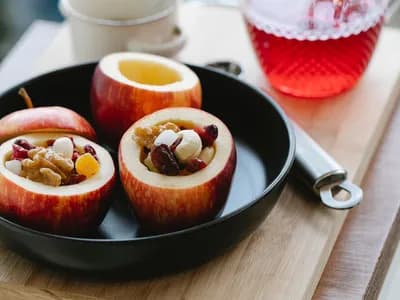
- Whole apples with a slit in the skin (45 min)
Closing the vents almost fully and waiting for it to drop
100-130 °Ca short smoke
2 h 25 minof embers
- Hot-Smoked Whole Mackerel on the Kamado45 min · 120 °C
No recipe needed
- Coarse salt on a tray, with a wood chunk: smoked salt for months (1-2 h)
- Almonds or walnuts on a rack (45 min)
- Whole heads of garlic, for spreading (1 h)
Opening the vents almost fully
210-270 °Cgrilled vegetables
30 minof embers
- Bacon-Wrapped Dates on the Grill14 min · 210 °C
- Coca de recapte on the kamado, escalivada and sardine25 min · 250 °C
- Saffron Milk Caps on a Steel Griddle with Garlic and Parsley10 min · 250 °C
No recipe needed
- Strips of courgette and aubergine, char-marked (5 min)
- Pita or naan from shop dough, on the grate (3 min each)
- Halved tomatoes, cut side down, for a sauce (10 min)
Before opening the lid, crack it open for a few seconds first; if you raise the heat, stir the ash so the coals can breathe. And if you are not going to use them: once the food is out, close the bottom and top vents. The charcoal that does not burn (about 380 g) can be used next time. Different size of kamado? Work out your load for 1 h 30 min of fire, lighting included.
Editor's tips
- Keep everything cold: butter, water and the formed dough. If the kitchen is warm, chill the assembled galette for 15 minutes before baking so the pleats hold their shape.
- The layer of ground almonds (or breadcrumbs) under the fruit soaks up juice and protects the base. Draining the macerated nectarines well keeps the dough from going soggy.
- Watch the dome stability with the lid thermometer: the preheated stone and deflector are what separate a crisp base from a raw one. Rotate the galette if your kamado runs hotter on one side.
Gear for this recipe
As an Amazon Associate, mikamado.es earns from qualifying purchases. At no extra cost to you.

Big Green Egg Large
The Big Green Egg Large is the ideal oven for this galette: its thick ceramic wall holds a steady 190 °C through the full 45-minute bake, without the temperature spikes that scorch the pastry edges. Its diameter comfortably takes a 30 cm disc on the stone, and the enveloping dome heat browns the pleats while the base sets from below.
€2,099

Carboext 100% Holm Oak Lump Charcoal, 15 kg Sack
€38
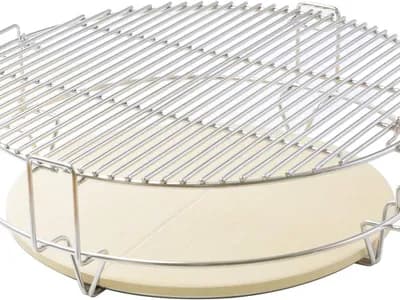
Onlyfire GCG-8552 Cooking System (2 grates + rack + 2 deflectors) for Large Kamado
€95

Ooni Cordierite Pizza Baking Stone
Ooni's cordierite stone is your ally against a soggy base, the number-one flaw of fruit tarts. Preheated for 20 minutes, it stores dry heat and transfers it in one shot to the dough as you slide it on: it sets the base before the nectarine juice can soften it. Its surface also makes it easy to load and unload the galette on baking paper without distorting it.
€68
Have you made it?
Tell us how it turned out on your kamado. We review every rating before publishing it.
No published ratings yet. Be the first!
FAQ
What temperature do you bake a fruit galette at on the kamado?
At 190 °C with indirect heat, a deflector and a preheated stone. That range browns the shortcrust and sets the fruit juices without scorching the edges, in 35-45 minutes.
How do I stop the galette base from going soggy?
Preheat the stone properly, drain the macerated nectarines and scatter ground almonds or breadcrumbs under the fruit. The cornstarch in the macerate thickens the syrup so it does not flood the dough.
Can I use other summer fruit instead of nectarine?
Yes. Peach, plum, apricot or figs work just as well. Adjust the sugar to the sweetness of the fruit and keep the raspberries (or blueberries) as a tart counterpoint.
Do I need a tin to make a galette?
No. A galette is free-form with rustic edges: you assemble it on baking paper and pleat it by hand. That simplicity is exactly what makes it ideal for baking on the kamado.
Fresh or frozen raspberries?
Fresh give better texture and release less juice. If you use frozen, add them without thawing and stir in an extra teaspoon of cornstarch to offset the water they shed while baking.
What do I do with the embers left after making Nectarine and raspberry galette on the kamado?
After 40 min at 190 °C in a classic kamado about 380 g of live embers remain: 1 h 20 min more at 190 °C without touching the vents, 2 h 25 min at 100-130 °C closing the vents or 30 min at 210-270 °C opening the vents. If you are not going to use them, close both vents and keep the charcoal for next time.
More kamado recipes


KEEP READING
Go deeper on this dish
- Recommended kamado
Big Green Egg Large
The Big Green Egg Large is the ideal oven for this galette: its thick ceramic wall holds a steady 190 °C through the full 45-minute bake, without the temperature spikes that scorch the pastry edges. Its diameter comfortably takes a 30 cm disc on the stone, and the enveloping dome heat browns the pleats while the base sets from below.
- Editorial guide
How to light a kamado: the step-by-step method
No petrol, no weird tablets and no 45-minute waits. The cone method, airflow control and the mistakes that prevent 80% of the frustration.
- Glossary term
Heat deflector
Ceramic plate placed between the coals and the grate to turn direct fire into indirect cooking.
- Related comparison
big green egg large vs kamado joe classic iii
The classic kamado matchup: the Big Green Egg Large, the indestructible pioneer with the widest accessory network, agai…