Recipe · Direct · Easy
Reina Pepiada Arepas on a Budare in the Kamado, Crisp Outside
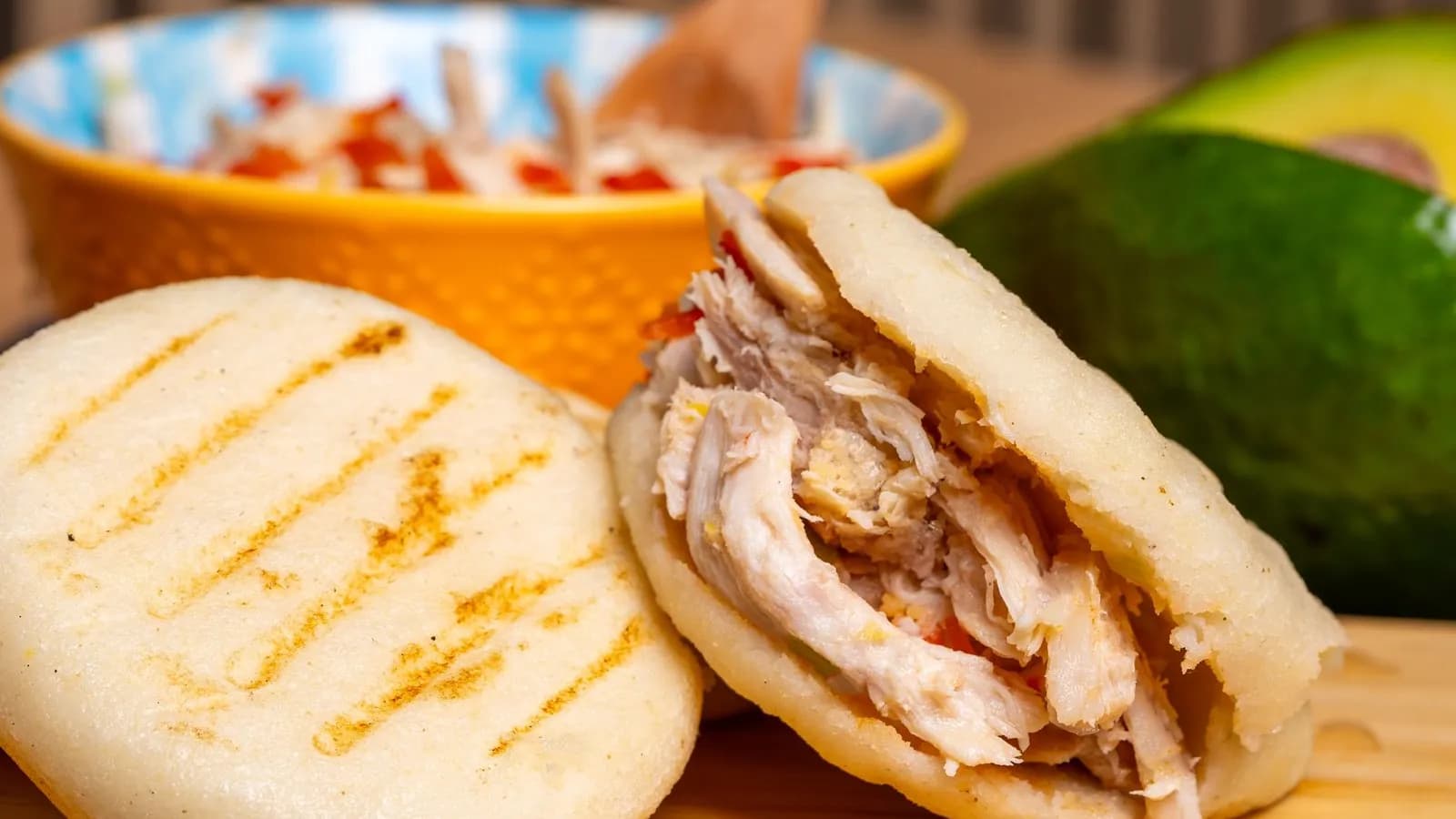
Arepas of precooked white maize flour on a cast-iron budare inside the kamado: a crust over medium heat, lid closed so they puff up, and a reina pepiada filling of roast chicken, avocado, mayonnaise and coriander.
Quick answer
Knead 360 g of precooked white maize flour with 480 ml of warm water and 7 g of salt, and shape 6 discs, 11 cm across and 1.5 cm thick. Cook them on a budare heated inside the kamado at 190-200 °C, 7-8 minutes a side with the lid closed, until they sound hollow. Split and fill with shredded chicken, avocado, mayonnaise and coriander.
- Prep
- 30 min
- Cook
- 60 min
- Servings
- 3 servings
- Temperature
- 200 °C
Ingredients
- precooked white maize flour360 g
- warm water480 ml
- fine salt for the dough, and a little more for the filling7 g
- sunflower oil, for the hands and the budare15 ml
- roast chicken, shredded (breast and thigh, skinless)400 g
- ripe avocados (about 300 g of flesh)2 ud
- mayonnaise80 g
- fresh coriander, chopped15 g
- white onion, very finely chopped60 g
- lime, juiced1 ud
- garlic clove, grated1 ud
The gear for this recipe
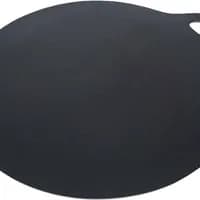 Victoria 38526: 38 cm round enamelled cast iron budareThis recipe is the use a budare exists for: arepas on thick, flat iron. The 38 cm, 5 kg Victoria stores more than enough heat that six discs of cold dough do not cool it when they land, and its round shape leaves free air around it inside a kamado with a roughly 45 cm grate, which a rectangular griddle would not. It is enamelled: it goes in with the kamado cold, the arepas are turned with a flat spatula, and it cools down inside the ceramic. The one doubt is the handle, whose measurement the product page does not publish, so the lid has to be tested cold before lighting.
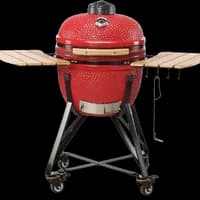 Kamado Bono Media 51 cmThe Kamado Bono Media has a 51 cm body and a roughly 45 cm grate (44.5 cm for the cast-iron spare, according to the distributor). With the 38 cm budare centred, about 3.5 cm is left on each side, just enough margin for air to rise past the edge and for the dome to keep working as an oven with the lid closed. That is what lets the arepa be made in one place: crust underneath on the iron and the top face cooked by the ceramic's radiant heat, with no transfer to an oven afterwards. And the thermal mass of the ceramic holds 190-200 °C with the vents almost closed.
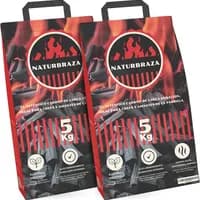 NaturBraza marabu charcoal, pack of two 5 kg bags (10 kg)Arepas ask for medium, steady heat for close to an hour, counting the lighting, the budare's warm-up and about 15 minutes of cooking. NaturBraza marabú charcoal is very dense wood: it burns slowly, with a short flame and little ash, the profile that holds 190-200 °C with the vents almost closed without opening up to refuel. The product page publishes neither the grade nor an ash figure, so it is best to light a single spot in the centre and let the bed spread by itself rather than lighting the whole firebox, which would push the chamber past what the enamel and the dough need.
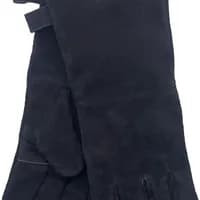 WMF BBQ Heat-Resistant Leather Gloves 40 cm (Pair)A 5 kg budare over the coals, with the dome at 200 °C, is at least that hot all the way through, handle included, and every time the lid opens an arm goes over the mouth of the kamado. The WMF leather gloves, at 40 cm, cover the hand and a good part of the forearm, which is what brushes the ceramic rim when placing or turning the arepas. They serve for the burping too, with the hand kept clear of the gap under the lid. And they are what you put on to set the grate and the budare over the lit charcoal. At the end the budare is not taken out: it cools inside, and the gloves are there for lifting the grate the next day.
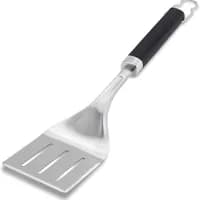 Weber Precision Grill Spatula (6769)The arepa is turned once, in a single move, and that takes a thin blade that slides under the crust without breaking it. The Weber Precision spatula has an edge bevelled on three sides and a long handle, so it goes in flat under each disc from the rim of the budare with your hand outside the dome. It is stainless steel on an enamelled budare: used for sliding and lifting, never for scraping or striking the iron, because enamel is glass. Waiting for the crust to form, 7-8 minutes, lets the arepa release by itself so the spatula never has to force it.
Method
- 01
Test it cold
With the kamado cold and no deflector in, set the Victoria budare in the centre of the grate of the Kamado Bono Media and lower the lid slowly. The handle must not touch the rim or the dome; if it does, the budare is no use in this kamado with the lid closed. About 3.5 cm of grate is left free on each side. Take out the grate and budare so you can light the charcoal.
- 02
Light and heat together
Fill the firebox with NaturBraza marabú charcoal to the rim of the ring and light one spot in the centre, vents open. After 10 minutes, while the ceramic is still only warm, put on the WMF gloves and set the grate, then the budare, using both hands (it weighs 5 kg) and keeping clear of the kamado's mouth. Close the lid and shut the vents down until it settles at 190-200 °C. Once it has held steady for a while, give it 15-20 minutes more: the iron takes time to heat through.
- 03
Make the filling
While the kamado heats, shred 400 g of roast chicken with two forks. Mash the avocados with the lime juice, the garlic and a pinch of salt, then mix in the mayonnaise, onion and coriander. Fold in the chicken and taste for salt. If you roast the chicken for this recipe, do it beforehand, to 74 °C in the thickest part of the breast, and let it cool in the fridge before mixing. Keep the mixture covered in the fridge until filling time.
- 04
Knead
Dissolve 7 g of salt in 480 ml of warm water and add 360 g of precooked white maize flour a little at a time, stirring by hand so it does not lump. Knead for 2-3 minutes until the dough is smooth and not sticky, cover and rest for 5 minutes so the flour hydrates. If the edge cracks when you press a piece flat, add a spoonful of water.
- 05
Shape
Rub your hands with a few drops of oil and divide the dough into 6 balls of about 140 g. Flatten each between your palms into a disc 11 cm across and 1.5 cm thick, turning it so it comes out round. Smooth the edge with a damp finger: a cracked edge opens on the budare and the arepa dries out. Lay them on a plate, not stacked.
- 06
First side
Wearing the WMF gloves, burp the lid: raise it about 5 cm, wait about 5 seconds, then open fully with your face turned away (why). Wipe the budare with a folded, oiled piece of kitchen paper held in long tongs, then lay the 6 arepas, 5 around and 1 in the centre, 1 cm apart and clear of the rim. Close the lid and leave them 7-8 minutes untouched: once the crust has formed, they release by themselves.
- 07
Turn
Burp the lid again and turn each arepa with the Weber Precision spatula: slide it flat underneath, without scraping the enamel, and flip in one go. When you flip them, swap the centre one with an outer one: the iron runs hotter over the coals. Close the lid for another 7-8 minutes at 190-200 °C. Lift one out with the spatula and rap it with your knuckles: if it sounds hollow, they are done; if it sounds dull, give them 2-3 more minutes with the lid closed.
- 08
Split, fill and shut down
Move the arepas to a board, leave for 2 minutes and split each along the edge with a serrated knife, stopping before the far side, like a pocket. Fill each with about 120 g of reina pepiada and serve. Close the kamado vents and let the budare cool inside, with the ceramic: no water, and no carrying it hot onto a cold worktop.
About this recipe
The arepa is a maize bread with no yeast and no oven: a dough of precooked white maize flour, water and salt, set on a budare, the cast-iron griddle (comal) of Venezuelan kitchens. The reina pepiada is its best-known filling: shredded chicken, avocado, mayonnaise and coriander, named in the 1950s after Susana Duijm, Miss World 1955. Here the budare goes into the kamado, where it does what it does on the hob and a little more: the closed dome finishes the inside of an arepa that a home kitchen would finish in the oven.
The budare inside the ceramic
In a home kitchen the arepa browns on the budare and then goes into the oven so that it cooks through and puffs. In a closed kamado that second step is unnecessary. The iron gives the crust underneath, and the dome, radiating at 200 °C, heats the top face at the same time, so the dough sets all the way through without being moved. It is the logic set out in the guide to cast iron in the kamado: inside the ceramic the piece works from every side, not just from the base.
The Victoria budare is an enamelled cast-iron disc, 38 cm across and 5 kg in weight. On the roughly 45 cm grate (44.5 cm for the cast-iron spare, according to the distributor) of the Kamado Bono Media it leaves about 3.5 cm free on each side, a figure worked out by subtracting diameters: room for air to rise past the edge so the kamado keeps cooking with the lid closed. The product page does not publish the measurement with the handle, so check cold that the handle does not touch the rim or the dome as the lid comes down. And enamel is glass: the budare heats up together with the kamado and never meets cold water while hot.
Medium heat and a closed lid
An arepa does not want fierce heat. In direct mode the budare sits over the coals, so its underside runs hotter than the air the lid thermometer reads. With the dome at 250 °C the crust burns before the centre sets and the iron goes past the 250-260 °C usually given as the ceiling for enamel. At 190-200 °C on the lid, with the coals gathered in the centre, each side needs 7-8 minutes with the dome closed. NaturBraza marabú charcoal, dense and short-flamed (marabú is a hardwood shrub, used here as charcoal), holds that medium heat with the vents nearly closed and without asking for a refill. To tell when they are done, the Venezuelan test is simple: rap the arepa with your knuckles and it should sound hollow, like a small drum.
A filling that uses yesterday's chicken
Reina pepiada is eaten cold, which makes it the natural home for chicken left over from a roast. The meat of a spatchcock chicken on the kamado also carries a note of live fire that boiled chicken lacks. If you roast one for the occasion, the breast comes off at 74 °C at its thickest point. If it is leftover, it must have gone into the fridge within two hours of cooking and be used within three or four days. Shred it with two forks, mix it with the mashed avocado, mayonnaise, coriander and lime, and spoon it into the freshly split arepa, which warms the mixture without cooking it. If you then want to carry on with flatbreads cooked over direct heat, the garlic butter naan is the next step, and the guide to what to cook beyond meat gives the rest of the map.
In 30 seconds
Dough of 360 g of precooked white maize flour, 480 ml of warm water and 7 g of salt, shaped into 6 discs, 11 cm across and 1.5 cm thick. A 38 cm budare heated together with the kamado to 190-200 °C, 7-8 minutes a side with the lid closed, until they sound hollow. Cold filling of roast chicken (74 °C in the breast), avocado, mayonnaise, coriander and lime.
Editor's tips
- Correct the dough by the spoonful: if the edge cracks when you flatten it, it needs water; if it sticks to your hands, it needs flour. Better to adjust before shaping than to patch things up on the budare.
- The enamel needs no seasoning, but it does need treating like glass: clean it only once cold, with warm water and a soft brush, never wire wool, and dry it before storing.
- Leftover arepas keep for a day in the fridge wrapped in cling film. Revive them for 4-5 minutes a side on the budare over medium heat, and the crust crisps up again.
- With leftover chicken the clock rules: into the fridge within two hours of roasting, and into the arepa within three or four days at most.
Gear for this recipe
As an Amazon Associate, mikamado.es earns from qualifying purchases. At no extra cost to you.
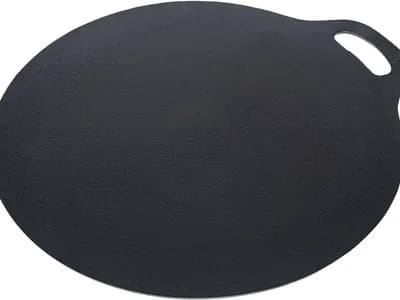
Victoria 38526: 38 cm round enamelled cast iron budare
This recipe is the use a budare exists for: arepas on thick, flat iron. The 38 cm, 5 kg Victoria stores more than enough heat that six discs of cold dough do not cool it when they land, and its round shape leaves free air around it inside a kamado with a roughly 45 cm grate, which a rectangular griddle would not. It is enamelled: it goes in with the kamado cold, the arepas are turned with a flat spatula, and it cools down inside the ceramic. The one doubt is the handle, whose measurement the product page does not publish, so the lid has to be tested cold before lighting.
€53
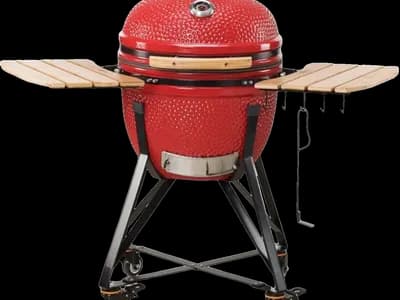
Kamado Bono Media 51 cm
The Kamado Bono Media has a 51 cm body and a roughly 45 cm grate (44.5 cm for the cast-iron spare, according to the distributor). With the 38 cm budare centred, about 3.5 cm is left on each side, just enough margin for air to rise past the edge and for the dome to keep working as an oven with the lid closed. That is what lets the arepa be made in one place: crust underneath on the iron and the top face cooked by the ceramic's radiant heat, with no transfer to an oven afterwards. And the thermal mass of the ceramic holds 190-200 °C with the vents almost closed.
€923
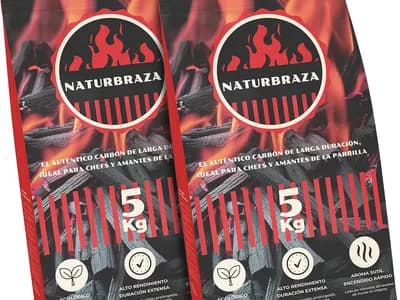
NaturBraza marabu charcoal, pack of two 5 kg bags (10 kg)
Arepas ask for medium, steady heat for close to an hour, counting the lighting, the budare's warm-up and about 15 minutes of cooking. NaturBraza marabú charcoal is very dense wood: it burns slowly, with a short flame and little ash, the profile that holds 190-200 °C with the vents almost closed without opening up to refuel. The product page publishes neither the grade nor an ash figure, so it is best to light a single spot in the centre and let the bed spread by itself rather than lighting the whole firebox, which would push the chamber past what the enamel and the dough need.
€47
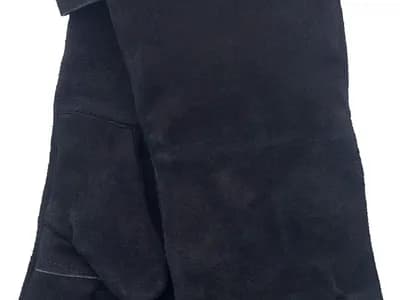
WMF BBQ Heat-Resistant Leather Gloves 40 cm (Pair)
A 5 kg budare over the coals, with the dome at 200 °C, is at least that hot all the way through, handle included, and every time the lid opens an arm goes over the mouth of the kamado. The WMF leather gloves, at 40 cm, cover the hand and a good part of the forearm, which is what brushes the ceramic rim when placing or turning the arepas. They serve for the burping too, with the hand kept clear of the gap under the lid. And they are what you put on to set the grate and the budare over the lit charcoal. At the end the budare is not taken out: it cools inside, and the gloves are there for lifting the grate the next day.
€39
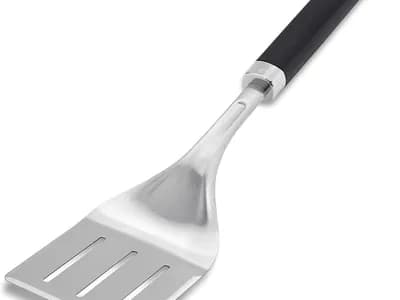
Weber Precision Grill Spatula (6769)
The arepa is turned once, in a single move, and that takes a thin blade that slides under the crust without breaking it. The Weber Precision spatula has an edge bevelled on three sides and a long handle, so it goes in flat under each disc from the rim of the budare with your hand outside the dome. It is stainless steel on an enamelled budare: used for sliding and lifting, never for scraping or striking the iron, because enamel is glass. Waiting for the crust to form, 7-8 minutes, lets the arepa release by itself so the spatula never has to force it.
€36
FAQ
What goes into a reina pepiada arepa?
Cooked, shredded chicken, mashed ripe avocado, mayonnaise and coriander, seasoned with salt and often a little onion, garlic and lime. It is a cold salad spooned into a freshly made arepa. In this version the chicken comes from a roast on the kamado, which gives it a note of live fire. The proportions are flexible: some cooks load more avocado and some more mayonnaise, and neither is the right one.
Why is it called reina pepiada?
After Susana Duijm, the Venezuelan who won Miss World in 1955. An arepa seller in Caracas named the chicken and avocado arepa in her honour, and "pepiada" was an expression of the time for a good-looking, well-built young woman. The name stuck, and today the reina pepiada is one of the most ordered arepas in and outside Venezuela. The recipe has variants; the origin of the name does not.
How long do arepas take on a budare?
It depends on thickness and heat. Discs 1.5 cm thick over medium heat need about 7-8 minutes a side if the kamado lid is closed, because the dome cooks the top face while the iron browns the bottom. Without a dome, on a hob, they brown on the budare and finish in the oven. The final test is the same: rapped with your knuckles, a cooked arepa sounds hollow.
What flour is used for arepas?
Precooked white maize flour, the kind sold in supermarkets for arepas. Cornflour (maicena) will not do, as it is only starch, and neither will the flour for Mexican tortillas, which is nixtamalised maize and gives a different dough. The precooked kind absorbs water within minutes and is kneaded with no yeast and no long rest. A yellow maize version also exists, which makes sweeter, golden arepas.
Can you make arepas without a budare?
Yes. Any thick, flat piece of iron does the same job: a frying pan or a cast-iron griddle holds heat and browns without burning. What matters is thermal mass, because a thin pan swings up and down in temperature and gives arepas that are pale outside and raw inside. In the kamado, measure your grate first: the piece must leave a margin all round so air can circulate with the lid closed.
More kamado recipes
Brioche Burger Buns on the Kamado
Brioche burger buns baked on the kamado: a soft, buttery crumb, an egg-glazed shine and a scatter of sesame. The perfect cushion for your next homemade smash burger.
Valencian coca de recapte on the kamado, escalivada and sardine
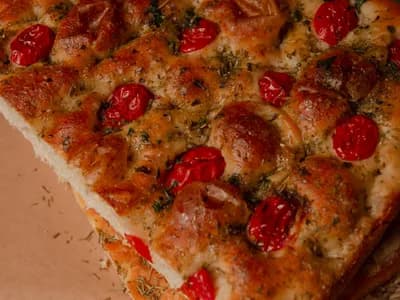
A thin oil-dough savoury coca topped with red-pepper and aubergine escalivada and salted sardine strips. Indirect at 250°C on stone, crisp base. No cheese, the Levante way. Serves 6.
Olive Oil Ciabatta on the Kamado
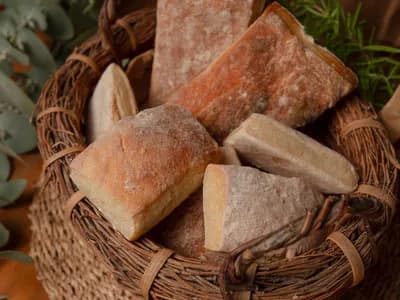
A very wet poolish dough with a wild, open crumb and a thin, crackly crust. Baked on a cordierite stone with a burst of steam, this ciabatta comes out of the kamado like it left a hearth oven.
KEEP READING
Go deeper on this dish
- Recommended kamado
Kamado Bono Media 51 cm
The Kamado Bono Media has a 51 cm body and a roughly 45 cm grate (44.5 cm for the cast-iron spare, according to the distributor). With the 38 cm budare centred, about 3.5 cm is left on each side, just enough margin for air to rise past the edge and for the dome to keep working as an oven with the lid closed. That is what lets the arepa be made in one place: crust underneath on the iron and the top face cooked by the ceramic's radiant heat, with no transfer to an oven afterwards. And the thermal mass of the ceramic holds 190-200 °C with the vents almost closed.
- Editorial guide
How to light a kamado: the step-by-step method
No petrol, no weird tablets and no 45-minute waits. The cone method, airflow control and the mistakes that prevent 80% of the frustration.
- Glossary term
Heat deflector
Ceramic plate placed between the coals and the grate to turn direct fire into indirect cooking.
- Related comparison
big green egg large vs kamado joe classic iii
The classic kamado matchup: the Big Green Egg Large, the indestructible pioneer with the widest accessory network, agai…