Recipe · Direct · Medium
Iberian pork tenderloin grilled with Pedro Ximénez glaze
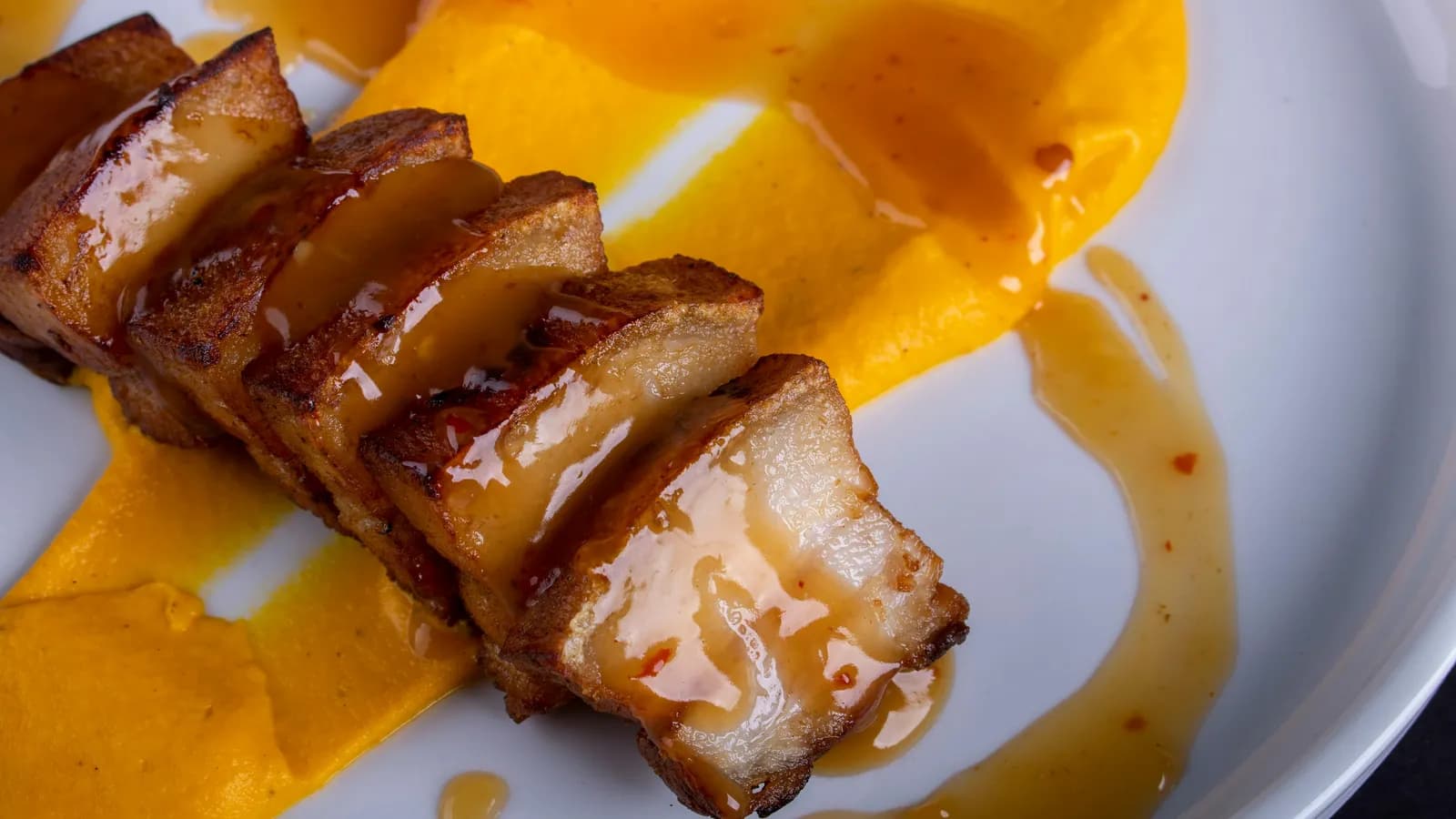
Free-range Iberian pork tenderloin, embers at 280°C, two minutes per side and a Pedro Ximénez Montilla-Moriles reduction that turns into a knockout glaze at slicing time.
Quick answer
Ibérico de cebo de campo pork tenderloin sears at 280 °C, 2 minutes per side, to 56 °C internal (carryover to 58-59 °C, the ideal rosy point). Separately, reduce Pedro Ximénez from Montilla-Moriles to a syrup. Slice it thick across the grain and spoon the PX over to serve, paired with the same wine at 12 °C.
One big step at a time, screen kept on and built-in timers.
- Prep
- 30 min
- Cook
- 8 min
- Servings
- 4 servings
- Temperature
- 280 °C
What time do you want to eat?
Pick a time and we'll tell you when to start.
12:52
Start the prep
13:22
Light the kamado
13:42
Onto the kamado
14:00
Serve
Estimate: it includes lighting and settling the kamado plus a margin for large cuts. If the recipe asks you to marinate or salt ahead, add that time.
Fire setupDirect heat
- Dome
- 280 °C
- Grate
- Standard height
- Bottom vent
- Open
- Top vent
- Half open
- Fuel
- Lump charcoal in a basket
- Setup
- Charcoal basket; optional GrillGrate panels
Temperature curve
0:33 h from lighting
Kamado domeInside the meat (probe)
| # | From | Phase | Dome | Internal |
|---|---|---|---|---|
| 1 | 0:00 | Light the charcoalCharcoal basket, bottom vent wide open, clean grid | 20 → 280 °C | no probe |
| 2 | 0:20 | Put the food inTempered tenderloin onto the grid | 280 → 250 °C | 15 °C |
| 3 | 0:21 | Sear2 min per side on all 4 sides, probe at the end | 250 → 280 °C | 15 → 56 °C |
| 4 | 0:28 | RestOn a rack, rises to 58-59 °C | 280 → 250 °C | 56 → 59 °C |
| 5 | 0:33 | Serve | off | no probe |
0:00 is the moment you light the charcoal. Internal temperatures are the ones the recipe gives; without a probe, go by the times. Turn these times into clock times with the planner
For this recipe
Ingredients
- free-range Iberian pork tenderloin (1 piece)700 g
- Pedro Ximénez Montilla-Moriles (Alvear or Toro Albalá)200 ml
- flaky salt1 tbsp
- freshly ground black pepper1 tsp
- extra-virgin olive oil (picual)2 tbsp
- toasted pine nuts (optional)30 g
- probe thermometer1
Another cut
Got a different cut? Here is how the recipe changes
For 4 people the recipe uses 1.25 kg (in 2 pieces) of Ibérico presa: reverse sear at 115 °C, 53 min plus 15 min rest. If the shop had something else:
- Pork loin (roast)Buy 1.25 kg
- Fire
- Indirect · 180 °C
- Time
- 1 h 9 min
- Rest
- 15 min
Light 15 min earlier
No reverse sear: an indirect roast. Dome at 180 °C and pull at 63 °C in the centre. It is leaner than presa: rest it loosely covered with foil.
- Pork collar (neck)Buy 1.25 kg
- Fire
- Indirect · 160 °C
- Time
- 2 h 5 min
- Rest
- 15 min
Light 1 h 30 min earlier
Same marbling, more hours. Indirect at 160 °C; for tender slices take the centre to 85 °C, though it is safe from 63 °C. The final sear is optional.
- Picanha (rump cap)Buy 1.25 kg
- Fire
- Reverse sear · 160 °C
- Time
- 40 min
- Rest
- 10 min
Light 20 min later
Beef, same reverse sear. Dome at 160 °C, pull at 46-49 °C and sear to 52 °C in the centre. Slice against the grain.
Times are a guide, based on the How much to buy figures; follow the recipe first. Full fire plan for 4 people: Pork loin (roast), Pork collar (neck), Picanha (rump cap).
Allergens
- Sulphites
Pine nuts (optional) are not on the EU tree-nut list, but they can cause allergies.
Based on the recipe's ingredients. Always check the label of every product you buy.
The gear for this recipe
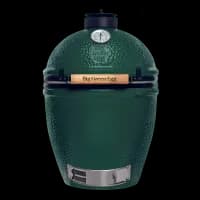 Big Green Egg LargeThe Large gives a broad bed of embers at 280 °C to sear the tenderloin for 4.
 Kamado Joe Big Block XL lump charcoal 9.1 kgXL lump for intense embers for direct searing.
 MEATER+ wireless WiFi thermometerMonitor the tenderloin's pink centre without lifting the lid.
 Weber Precision Tongs 46 cm (6760)Turn the meat and brush on the PX glaze over the embers.
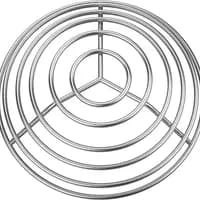 Onlyfire stainless steel charcoal basket for kamado
Method
- 01
Trim the cut
Slide a sharp knife under the silverskin and pull it off in strips. Remove the hard surface fat too. White intramuscular fat stays — it renders and brings juiciness.
- 02
Reduce the PX
In a small saucepan, warm the 200 ml of Pedro Ximénez over medium heat. Reduce uncovered for 12-15 minutes until it loses two-thirds and turns into a light syrup. Keep warm.
- 03
Salt and temper
Twenty minutes before cooking, sprinkle flaky salt and a touch of pepper across the cut. Brush with picual olive oil and leave it out of the fridge.
- 04
Light the kamado to 280°C
Load the firebowl, lower vent fully open, top vent two thirds. Stabilise at 280°C with a clean hot grate. If you use a GrillGrate, slide the panels in during the warm-up.
- 05
Sear 2 min per side
Lay the tenderloin on the grate. 2 minutes per side, marking all four faces (top, bottom, both sides). Total 8 minutes. Probe the centre during the last sear.
- 06
Pull at 56°C
When the probe reads 56°C in the centre, pull immediately and rest 5 minutes on a wire rack. Carryover takes the meat to 58-59°C, the ideal blush.
- 07
Slice and glaze
Slice into thick 2 cm rounds across the grain. Arrange on a warm plate. Drizzle generously with the PX reduction, scatter the toasted pine nuts if using and serve immediately.
About this recipe
For Iberian pork tenderloin with Pedro Ximénez glaze: trim the silverskin, salt 20 minutes ahead and sear at 280°C on a GrillGrate or regular grate 2 minutes per side until 56°C internal. Reduce 200 ml of PX Montilla-Moriles separately to a syrup and pour over the meat at slicing, cut into thick rounds across the grain.
Free-range cebo, not bellota
Bellota Iberian tenderloin is extraordinary raw and wasted on the grill: rendered fat drips into the coals and the montanera nuance is lost under the Maillard. Free-range cebo, by contrast, carries just enough marbling to take direct heat without drying out, at a 40-50% lower cost. Ideal cut: 600-700 g, one piece, unsplit. Carefully trim all silverskin and hard surface fat — that layer contracts under fire and warps the meat, it does not tenderise. The white intramuscular fat stays.
A short sear and the mandatory probe
Tenderloin is a thin cut (4-5 cm diameter) and overcooks in a blink. Embers at 280°C, clean hot grate, 2 minutes per side — only two flips, four max. Probe to the centre: pull at 56°C internal. Carryover brings it to 58-59°C, the perfect blush of Iberian pork — any longer and the intramuscular fat hardens. Without a probe this is Russian roulette. A GrillGrate gives you the photogenic crosshatch but a plain grate works identically — the magic is heat and time, not the tool.
PX reduction and the obvious pairing
In a saucepan off the kamado, reduce 200 ml of Pedro Ximénez Montilla-Moriles over medium heat for 12-15 minutes until it loses two-thirds and turns into a light syrup. Do not use cooking-grade PX — it is sugared white wine, not real PX. Buy an Alvear or a young Toro Albalá, around 15 €. After the meat rests, slice across the grain (thick 2 cm rounds) and drizzle with PX at the table. Pairing: the same PX, small glass, 12°C. Optional: toasted pine nuts on top.
In 30 seconds
Free-range Iberian tenderloin 600-700 g, trimmed. Salt 20 min ahead. Direct sear 280°C, 2 min per side, probe to 56°C. Rest 5 min. Reduce 200 ml Pedro Ximénez Montilla-Moriles separately to a syrup. Slice across the grain, drizzle with PX. Pairing: same PX, 12°C.
Will it fit your kamado?
Small
33-40 cm · Joe Jr, MiniMax
Fits
The 700 g tenderloin fits whole on the grate.
Medium
46-51 cm · Classic, Large
Fits
Fits with room to spare; probably two tenderloins at once.
Large
56-61 cm · Big Joe, XL
Fits
Several pieces fit; you'll need more charcoal to hold 280 °C.
What to serve with it
- Wine
- Ribera del Duero crianza red or a Jerez oloroso
- Beer
- Dubbel or toasty ale
- Alcohol-free
- Red grape juice with a hint of orange
Leftovers and storage
- In the fridge
- Whole or sliced, airtight within 2 h: 3-4 days in the fridge; glaze kept apart.
- Freezing
- Freezes 2-3 months but loses its pink centre; thaw in the fridge, never refreeze.
- Reheating
- Slices in a covered pan over medium heat to 74 °C in the centre; or cold, with the PX glaze warmed.
- Using them up
- Small toasts topped with pork, PX glaze and pine nuts.
Cool and refrigerate within 2 hours. When in doubt, throw it out.
Leftover embers
You still have embers: what to do with the leftover heat
For 8 min at 280 °C in a classic kamado you load about 800 g of charcoal and burn 500 g: when you serve, about 350 g of live embers remain. Before you shut the vents, that is still enough for:
Without touching the vents
280 °Cfull heat, direct
20 minof embers
- Sesame-Crusted Seared Bluefin Tuna on the Kamado (Tataki)4 min · 280 °C
- Red prawns over live fire on the kamado in 6 minutes6 min · 280 °C
No recipe needed
- Pita or naan from shop dough, on the grate (2 min each)
- Whole peppers until the skin blackens, for peeling (8 min)
- Pineapple or peach slices, char-marked (3 min)
Closing the vents a little and waiting for it to drop
210-270 °Cgrilled vegetables
20 minof embers
- Rum-glazed grilled pineapple on the kamado14 min · 220 °C
- Grilled provolone on the kamado with tomato, oregano and olive oil, in a cast-iron skillet12 min · 230 °C
- Charred Wild Green Asparagus on the Kamado8 min · 240 °C
No recipe needed
- Strips of courgette and aubergine, char-marked (5 min)
- Pita or naan from shop dough, on the grate (3 min each)
- Halved tomatoes, cut side down, for a sauce (10 min)
Before opening the lid, crack it open for a few seconds first; if you raise the heat, stir the ash so the coals can breathe. And if you are not going to use them: once the food is out, close the bottom and top vents. The charcoal that does not burn (about 350 g) can be used next time. Different size of kamado? Work out your load for 30 min of fire, lighting included.
Editor's tips
- Do not use cooking-grade PX. It is sugared white wine behind a misleading label. Real Pedro Ximénez is DOC Montilla-Moriles — Alvear is the easiest to source.
- The probe is not instinct. Even when it feels obvious, pull at exactly 56°C — never on gut feel or visual cue.
- Always slice across the grain, never along it. Lengthwise gives you chewy strips; crosswise, rounds that melt in your mouth.
- Toasted pine nuts are optional but very recommended. Toast them in a dry pan over medium heat 4 minutes until golden — they add crunch the tenderloin lacks.
Gear for this recipe
As an Amazon Associate, mikamado.es earns from qualifying purchases. At no extra cost to you.
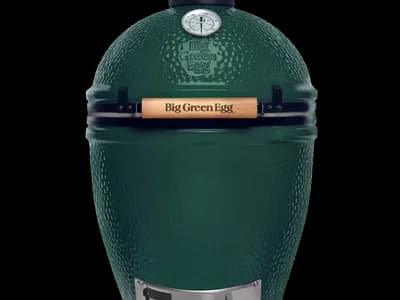
Big Green Egg Large
The Large gives a broad bed of embers at 280 °C to sear the tenderloin for 4.
€2,099
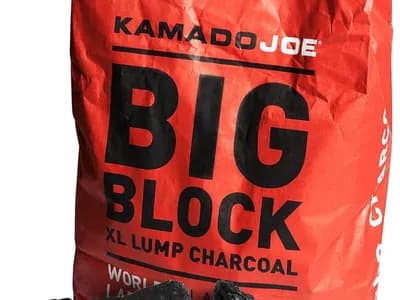
Kamado Joe Big Block XL lump charcoal 9.1 kg
XL lump for intense embers for direct searing.
€67
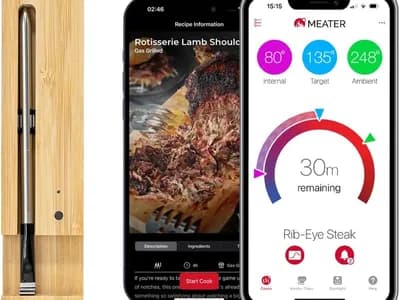
MEATER+ wireless WiFi thermometer
Monitor the tenderloin's pink centre without lifting the lid.
€99
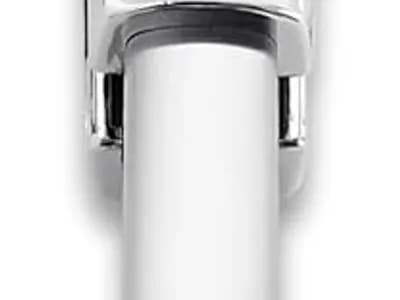
Weber Precision Tongs 46 cm (6760)
Turn the meat and brush on the PX glaze over the embers.
€28
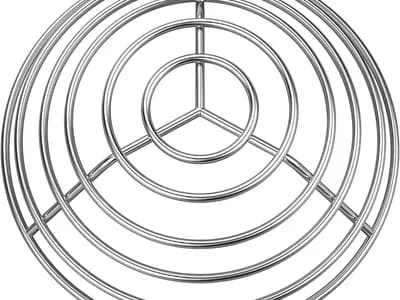
Onlyfire stainless steel charcoal basket for kamado
€28
Have you made it?
Tell us how it turned out on your kamado. We review every rating before publishing it.
No published ratings yet. Be the first!
FAQ
Cebo de campo or bellota for the grill?
Free-range cebo, no contest. Bellota is exceptional raw or cured, but on the grill the montanera fat (its premium component) renders into the coals and is lost. Cebo de campo has enough marbling to hold up to a direct sear, better fire flavour and costs 40-50% less. Save bellota for charcuterie boards.
Which Pedro Ximénez should I buy?
Alvear PX or a young Toro Albalá (not the 60 € Don PX vintage). Both run 12-18 € at a specialist shop and are genuine DOC Montilla-Moriles. At a supermarket, look for PX with a denomination of origin on the label — no DOC, not real PX. Using a vintage for a reduction wastes exceptional product.
Substitute if I cannot find PX?
A sweet oloroso or an Italian Vin Santo are closest, but you lose the raisin character that defines PX. Emergency workaround: 150 ml red wine + 50 ml port + a tablespoon of molasses, reduced the same. Not identical, but saves dinner. What does not work: Moscato-style sweet wines — very aromatic but no body to reduce.
What wine pairs with Iberian tenderloin and PX?
The same Pedro Ximénez, served chilled (12°C) in a small glass. It sounds odd but it is the formula: the wine sweetness cuts Iberian fat better than any red. For a drier alternative, a fino or a manzanilla en rama, also at 12°C. Reds only if very light — a young Mencía or a Gredos Garnacha.
Can I make this recipe with a different cut instead of Ibérico presa?
Picanha keeps the reverse sear, with a hotter dome and a lower finish. Pork loin and collar switch to an indirect roast; collar takes more doneness and can get a final sear if you want a crust. The probe decides, not the clock.
What do I do with the embers left after making Iberian pork tenderloin grilled with Pedro Ximénez glaze?
After 8 min at 280 °C in a classic kamado about 350 g of live embers remain: 20 min more at 280 °C without touching the vents or 20 min at 210-270 °C closing the vents. If you are not going to use them, close both vents and keep the charcoal for next time.
More kamado recipes
KEEP READING
Go deeper on this dish
- Recommended kamado
Big Green Egg Large
The Large gives a broad bed of embers at 280 °C to sear the tenderloin for 4.
- Editorial guide
How to light a kamado: the step-by-step method
No petrol, no weird tablets and no 45-minute waits. The cone method, airflow control and the mistakes that prevent 80% of the frustration.
- Glossary term
Heat deflector
Ceramic plate placed between the coals and the grate to turn direct fire into indirect cooking.
- Related comparison
big green egg large vs kamado joe classic iii
The classic kamado matchup: the Big Green Egg Large, the indestructible pioneer with the widest accessory network, agai…