Recipe · Indirect · Easy
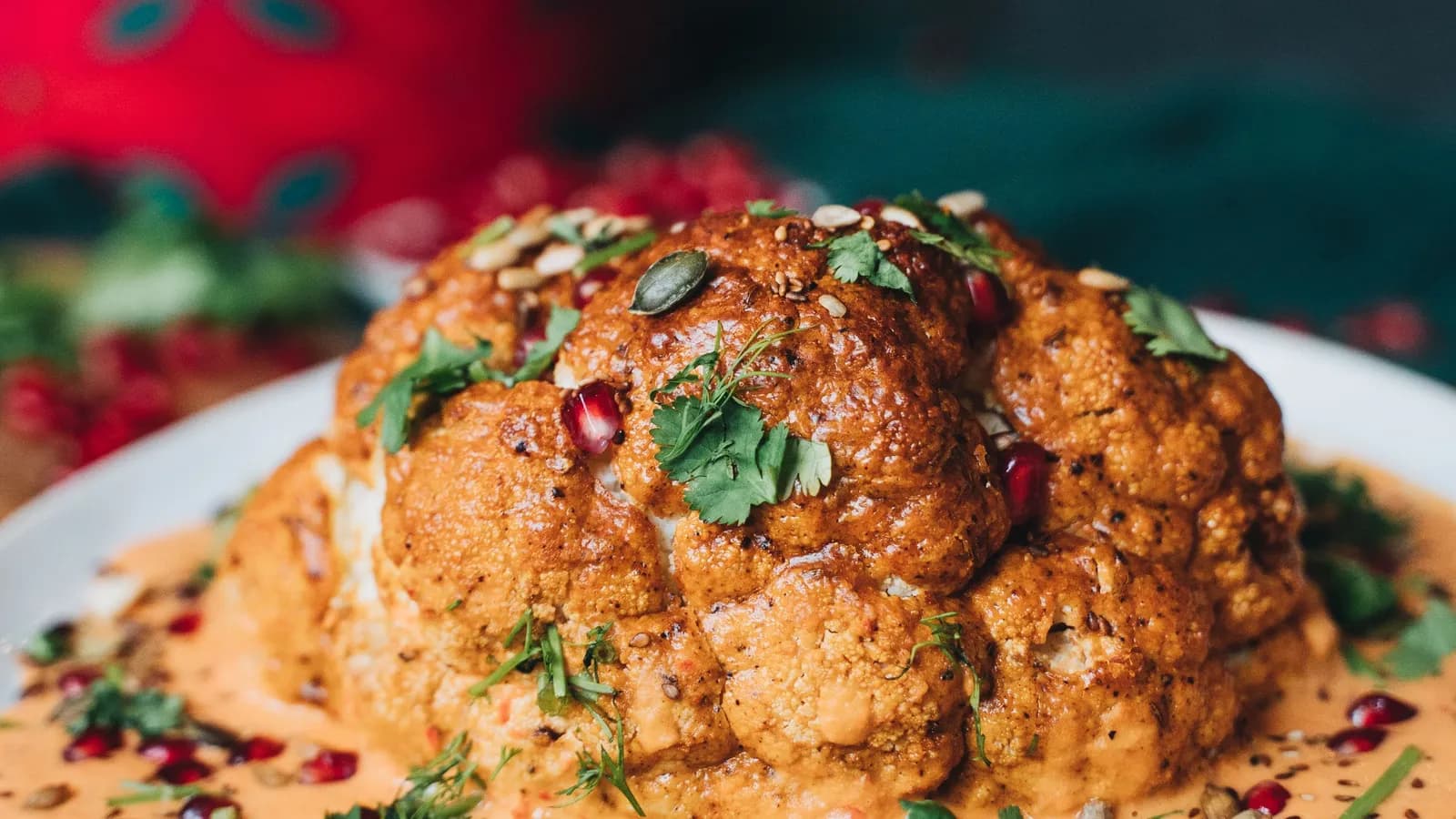
Whole roasted cauliflower on the kamado with saffron aioli
A whole cauliflower roasted indirect at 180°C: steam first to tame the core, then a deep sear and a spiced glaze. Golden outside, tender inside, with saffron aioli. Serves 4.
Quick answer
Roast the whole cauliflower indirect at 180°C with a deflector. Give it 10-15 min of steam in a covered pot to soften the core, then 45-50 min uncovered with a spiced glaze until golden. It's done at a 90-93°C core: golden outside, tender inside. Serve with saffron aioli.
- Prep
- 15 min
- Cook
- 60 min
- Servings
- 4 servings
- Temperature
- 180 °C
Ingredients
- large whole cauliflower (1.2-1.4 kg), tender leaves left on1 ud
- vegetable stock or water (for the initial steam)150 ml
- extra-virgin olive oil (for the glaze)60 ml
- sweet smoked paprika (or hot, to taste)2 cdita
- ground cumin1 cdita
- garlic cloves (1 for the glaze, 2 for the aioli)3 ud
- flaky salt and freshly ground black pepper1 pizca
- saffron threads (a generous pinch, for the aioli)1 pizca
- egg yolk, room temperature (for the aioli)1 ud
- mild extra-virgin olive oil to build the aioli150 ml
- lemon (the zest and a squeeze of juice)1 ud
Method
- 01
Set the deflector and stabilise 180°C
Light the charcoal, set the deflector to block direct heat and stabilise the chamber at 180°C with a reliable probe, not the dome thermometer. It takes 20-25 minutes to settle. Meanwhile, trim the cauliflower: remove the tough outer leaves leaving the tender ones, level the stem so it stands upright, and rinse it.
- 02
Initial steam in a covered pot
Sit the cauliflower upright in the cast-iron pot and pour the stock into the base, no deeper than a finger. Cover and set the pot in the centre of the grate, over the deflector. Cook 10-15 minutes: the steam softens the dense core from inside without toasting anything. Check by piercing the stem with a knife; it should go in with little resistance.
- 03
Make the spice glaze
While the steam works, mix the 60 ml of olive oil with the paprika, cumin, one grated garlic clove, salt and pepper into a loose red paste. Infuse the saffron too: crush it lightly and leave it in a tablespoon of warm water for 10 minutes, until it releases its colour and aroma for the aioli.
- 04
Uncover, glaze and roast to golden
Lift the lid and carefully brush the whole dome and crevices of the cauliflower with the glaze, letting it run between the florets. Return it uncovered and roast indirect for 45-50 minutes. The radiant heat caramelises the spices into a golden crust and browns the head evenly. Don't poke or move it for the first half hour.
- 05
Build the saffron aioli
In a mortar or bowl, pound the 2 garlic cloves with a pinch of salt into a paste. Add the yolk and the infused saffron with its water, and start pouring the mild olive oil in the thinnest stream, stirring constantly until it emulsifies and thickens. Finish with the lemon zest and a squeeze of juice. It should be dense and hold on the spoon.
- 06
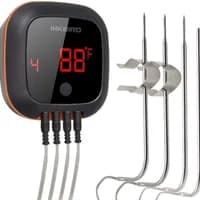
Check doneness with the probe, 90-93°C
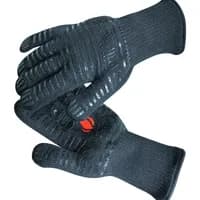
Around the 45-minute mark, sink the probe into the heart of the stem: doneness sits between 90 and 93°C, when the centre is creamy and a knife slides in without resistance. If the surface browns too soon, drop to 170°C or tent it with foil for the final stretch. Pull the pot with gloves once it reaches the point.
- 07
Rest, serve whole and carve
Let the cauliflower rest for 5 minutes: the residual heat finishes softening the centre and the juices settle. Carry it whole to the table in the pot itself or on a platter, sprinkle flaky salt and a little parsley if you like, and carve into wedges like a roast. Serve the saffron aioli in a separate bowl for dipping.
About this recipe
A whole roasted cauliflower on the kamado works because it solves this vegetable's eternal problem: the surface scorches before the core softens. The fix isn't randomly raising or lowering the fire, it's treating the kamado as a precise convection oven —deflector in place, 180°C indirect— and splitting the cook into two acts. First steam to tame that dense core from within; then dry, radiant heat to brown the dome and caramelise the spices. The result is a cauliflower you carve like a roast, golden outside and tender to the heart, not raw in the middle and charred on top.
Steam first: tame the core before browning
A whole cauliflower is a solid mass: roast it straight and the surface toasts in fifteen minutes while the heart stays raw for another half hour. So we start with steam. Sit the cauliflower in a cast-iron pot with a finger of water or stock, cover it and hold 180°C indirect: in 10-15 minutes the steam penetrates the dense core and softens it from inside, with nothing toasting yet. It's the same trick as blanching, but done in the kamado itself so you don't lose the live-fire aroma. When a knife slides into the stem with little resistance, you lift the lid and move to the second act. Skipping the steam is the number-one cause of cauliflowers charred outside and hard within.
Browning indirect: why the kamado browns better than the oven
With the core already tender, you uncover the pot and let the kamado do what it does best: brown with enveloping radiant heat. At 180°C with the deflector, the ceramic mass returns a dry, even heat from every side, so the cauliflower's dome toasts uniformly, not just on the face turned to the element as in an electric oven. This is where the spice glaze comes in —olive oil, paprika, cumin, garlic— brushed over the now-tender surface: the radiant heat caramelises it into a golden, fragrant crust. The probe rules: the perfect point is 90-93°C at the core, when the stem is creamy but the head still holds together to carry to the table in one piece.
The saffron aioli: the Mediterranean counterpoint
A roasted cauliflower calls for a creamy, aromatic contrast, and here the saffron aioli is pure Levante. The saffron, infused in a spoonful of warm water, tints the aioli gold and lends that floral, faintly earthy depth that talks to the paprika in the glaze. I build it the local way, with garlic, regional olive oil and egg yolk, emulsifying slowly into a dense sauce that holds on the spoon. A pinch of lemon zest lifts it and cuts the richness. Served in a separate bowl, each portion of golden cauliflower is dipped in that golden aioli: the whole dish plays in a single range of colour and flavour, from the field to the fire to the Mediterranean.
In 30 seconds
Kamado with deflector at 180°C indirect, reliable probe. Whole trimmed cauliflower in a cast-iron pot with a finger of stock, covered, 10-15 min of steam until a knife slides into the stem with little resistance. Uncover, brush on the spice glaze (olive oil, paprika, cumin, garlic) and roast 45-50 min until evenly golden and at a 90-93°C core. Meanwhile, build the saffron aioli (infused saffron, garlic, yolk, olive oil, lemon). Rest 5 min, serve whole and carve at the table with the aioli on the side. Serves 4.
Editor's tips
- The initial steam isn't optional, it's what makes the centre tender. A whole cauliflower is a solid mass, and without those 10-15 minutes in a covered pot the surface scorches long before the heart softens. The steam penetrates the dense stem from inside while the exterior hasn't toasted yet, so when you uncover to brown you start from an almost-cooked core. Skip this step to save time and you end up with a cauliflower black outside and raw inside: the classic failure of roasting it whole in one go.
- Govern by the probe, not the clock. The cauliflower's size matters more than the minutes: a 1.2 kg head reaches the point sooner than a 1.5 kg one, and stem density varies from piece to piece. That's why the reliable figure is the core temperature, 90-93°C, not a fixed time. Sink the probe into the thickest part of the stem, not a floret, which heats faster and misleads. When a thin knife slides to the centre without resistance, it's done, whatever the clock says.
- If the aioli splits, don't bin it. The emulsion breaks when you pour the oil too fast or the garlic and yolk are at different temperatures. The fix is simple: put a fresh yolk (or a spoonful of the split aioli itself) in a clean bowl and re-incorporate the broken mix in the thinnest stream, stirring constantly, as if it were the oil. It comes back together in a minute. To prevent it in the first place, have everything at room temperature and be patient with the oil stream early on: haste is the enemy of aioli.
Gear for this recipe
As an Amazon Associate, mikamado.es earns from qualifying purchases. At no extra cost to you.
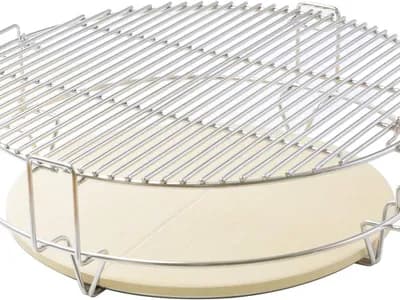
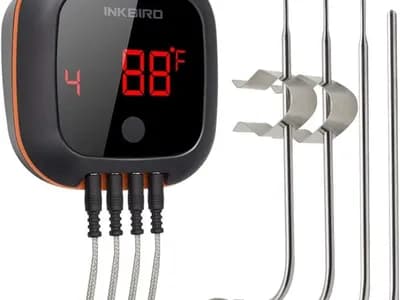
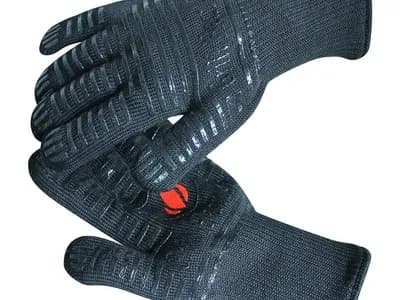
FAQ
Why steam the cauliflower before roasting it whole?
Because a whole cauliflower is a solid, dense mass, and under the dry heat of roasting the surface toasts long before the core softens. Put it in to roast as is at 180°C and the dome scorches in fifteen or twenty minutes while the stem stays raw and hard for another half hour. The initial steam fixes that: with the cauliflower in a covered pot holding a finger of stock, the steam penetrates the dense core and cooks it from inside without toasting anything outside. In 10-15 minutes the stem already yields to a knife. From there you uncover and the roast only has to brown a head that's almost cooked within, so it comes out golden outside and tender to the heart. It's the equivalent of classic blanching, but done inside the kamado itself so you don't lose the live-fire aroma.
How do I know the cauliflower is done inside?
The reliable method is the probe, not the clock or the colour outside. The perfect point sits between 90 and 93°C at the heart of the stem, which is the thickest part and the last to cook. At that temperature the centre is creamy but the head still holds together, ideal for carrying to the table in one go and carving into wedges. If you don't have a probe, the knife test works: a thin knife should slide to the centre of the stem with almost no resistance, gliding as if through butter. If it hits a hard zone at the heart, it needs more; give it five more minutes and check again. Be careful piercing a floret instead of the stem: florets cook sooner and will tell you it's ready when the centre is still firm. The cauliflower's size changes the timing, which is why the golden colour of the surface isn't enough as a guide.
Do I need a deflector to roast the whole cauliflower, or can I do it direct?
For a whole cauliflower the deflector is essential. Without it, the charcoal's direct flame hits the base of the head and scorches it underneath while the rest stays raw: it's impossible to cook something this bulky evenly over direct heat. The deflector turns the kamado into a convection oven, blocks the direct heat and spreads an enveloping radiant heat that browns the cauliflower's dome uniformly on all sides, exactly what a large piece needs. At 180°C indirect you cook and brown at once without burning. Direct roasting is reserved for loose, flat florets, which cook fast on the grate with a good grill char; but the whole head, given its thickness, demands indirect, no exceptions. If your kamado comes with a plate setter or ceramic stone, it works just the same: any deflector that separates the coals from the food does the job.
Does a bit of smoke suit the cauliflower, or does it overpower it?
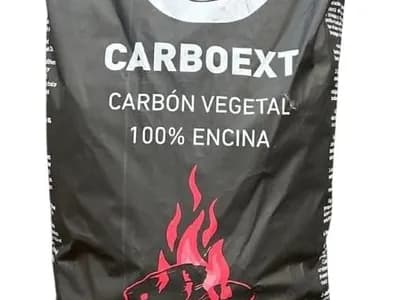
It suits it very well, in moderation. Roasted cauliflower has a sweet, nutty flavour that smoke enhances without burying, unlike a delicate dessert. The ideal is a light, fruity smoke: a small handful of apple or cherry on the coals, added when you uncover for the browning stage, not during the steam (in a covered pot the smoke doesn't reach the vegetable). With sweet woods the risk of bitterness is low and they pair beautifully with the paprika in the glaze. If you like it more intense, a pinch of holm oak or oak brings a more serious smoky backbone, but there it's wise to go short, because strong woods can leave an acrid edge that fights the vegetable's natural sweetness. Either way, the smoke here is a garnish, not the star: the cauliflower shines for its texture and the glaze, and the smoke only rounds it out.
Can I make the saffron aioli ahead and store it?
Yes, and it actually improves with rest. Saffron needs time to release its colour and aroma, so an aioli made a couple of hours ahead, or even the day before, comes out more intense and a prettier gold than a freshly built one. Keep it well covered in the fridge, where it safely lasts 2-3 days thanks to the garlic and the lemon's acidity; take it out 15 minutes before serving so it regains body and temperature. As it contains raw egg yolk, respect the cold chain and don't leave it at room temperature for more than an hour, especially in summer. If you prefer it without raw egg, you can build the milk version instead of yolk (an aioli emulsified with just garlic, oil and a little milk), which is more stable and keeps just as well chilled. Stir before serving in case some oil has separated on the surface.
More kamado recipes
Grilled Corn Mexican Elote Style on the Kamado
Cobs charred over direct fire, slathered with lime mayo, cotija cheese, chili and cilantro. Got leftovers? Strip the kernels and turn them into cups of esquites.
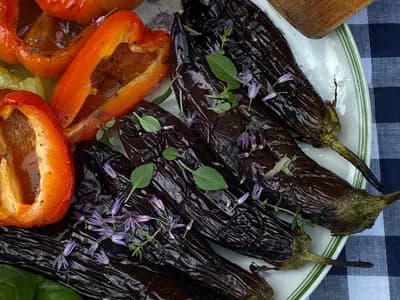
Kamado escalivada with smoked peppers and aubergine
Red pepper, aubergine and onion roasted whole over live coals until the skin chars black, then peeled and dressed with nothing but extra-virgin olive oil and flaky salt.
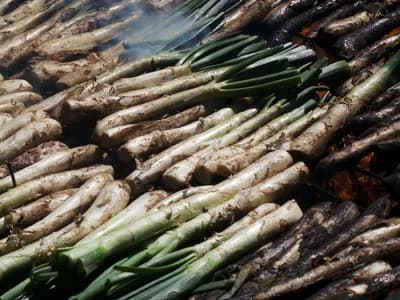
Grilled Calçots on the Kamado with Romesco Sauce
A whole calçotada fits in a kamado: live flame to char the outer layer until it is completely black, then a rest wrapped in paper where steam finishes the job. Dipped in romesco of ñora, hazelnut and almond.
KEEP READING
Go deeper on this dish
- Recommended kamado
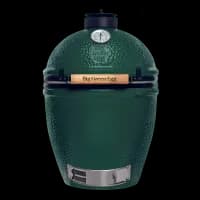
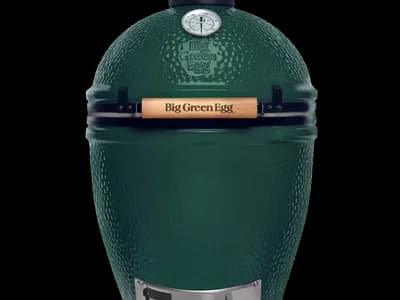
Big Green Egg Large
The classic kamado that defined the category
- Editorial guide
How to light a kamado: the step-by-step method
No petrol, no weird tablets and no 45-minute waits. The cone method, airflow control and the mistakes that prevent 80% of the frustration.
- Glossary term
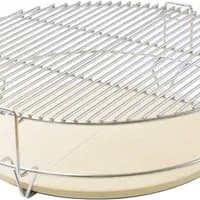
Heat deflector
Ceramic plate placed between the coals and the grate to turn direct fire into indirect cooking.
- Related comparison
big green egg large vs kamado joe classic iii
The classic kamado matchup: the Big Green Egg Large, the indestructible pioneer with the widest accessory network, agai…