Recipe · Indirect · Easy
Valencian coca de llanda on the kamado, the fluffy classic
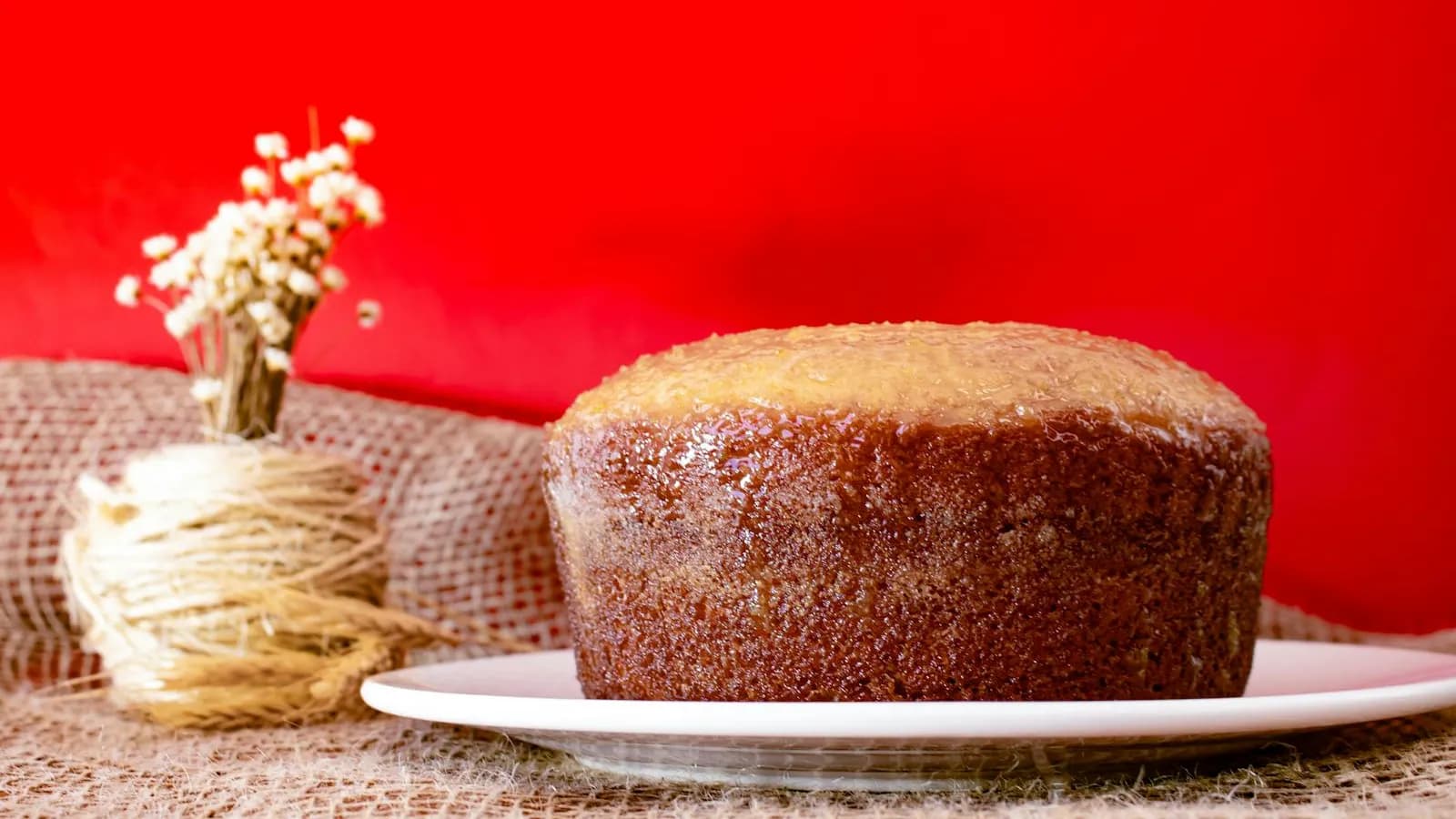
The Valencian afternoon sponge, baked in a tray on the kamado at 180°C indirect: tall, moist, with its cracked sugar-and-cinnamon crust. Cinnamon, lemon and a hint of anise.
Quick answer
Coca de llanda on the kamado bakes in a tray at 180 °C indirect with a deflector for about 40 minutes, without lifting the lid for the first 30. The secret to its height is whipping the eggs until they triple in volume, not more leavening. It comes out tall, moist, with its cracked crust of sugar and cinnamon.
One big step at a time, screen kept on and built-in timers.
- Prep
- 15 min
- Cook
- 40 min
- Servings
- 12 servings
- Temperature
- 180 °C
What time do you want to eat?
Pick a time and we'll tell you when to start.
12:25
Start the prep
12:40
Light the kamado
13:10
Onto the kamado
14:00
Serve
Estimate: it includes lighting and settling the kamado plus a margin for large cuts. If the recipe asks you to marinate or salt ahead, add that time.
Fire setupIndirect
- Dome
- 180 °C
- Deflector
- Yes
- Grate
- Standard height
- Setup
- Deflector and metal baking tray (llanda)
Temperature curve
1:30 h from lighting
Kamado dome
| # | From | Phase | Dome |
|---|---|---|---|
| 1 | 0:00 | Light the charcoalDeflector in, 20-25 min to reach 180 °C | 20 → 180 °C |
| 2 | 0:25 | StabiliseHold 180 °C for 10 min before the tray goes in | 180 °C |
| 3 | 0:35 | Put the food inTray over the deflector; do not open for 30 min | 180 → 165 °C |
| 4 | 0:37 | BakeClean toothpick in the centre, cracked crust | 165 → 180 °C |
| 5 | 1:15 | RestOn a rack for 15 min before cutting | 180 → 100 °C |
| 6 | 1:30 | Serve | off |
0:00 is the moment you light the charcoal. Internal temperatures are the ones the recipe gives; without a probe, go by the times. Turn these times into clock times with the planner
For this recipe
Ingredients
- large eggs, at room temperature4
- white sugar250 g
- whole milk250 ml
- mild extra-virgin olive oil (local verdial or arbequina)150 ml
- plain flour, sifted300 g
- baking powder (most of a Royal-style sachet)12 g
- Costa Blanca lemon (zest)1
- ground anise seed or a splash of anise liqueur1 tsp
- salt1 pinch
- sugar to dust on top3 tbsp
- ground cinnamon to dust on top1 tsp
Allergens
- Gluten
- Eggs
- Milk
Based on the recipe's ingredients. Always check the label of every product you buy.
The gear for this recipe
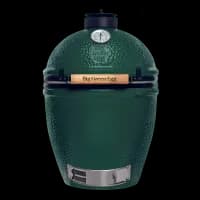 Big Green Egg Large
 Weber Briquettes 8 kgBriquettes for an even, long-lasting oven temperature.
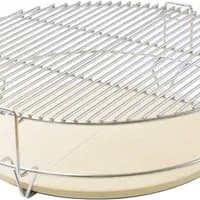 Onlyfire GCG-8552 Cooking System (2 grates + rack + 2 deflectors) for Large Kamado
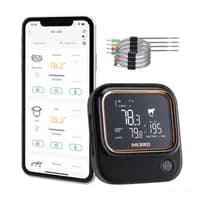 Inkbird IBT-26S WiFi + Bluetooth thermometer
 Baldassare Agnelli Aluminised Steel Baking Tray, 40 × 30 × 3 cm
Method
- 01
Set the deflector and stabilise 180°C
Light the kamado, set the deflector (plate-setter) and stabilise the chamber at 180°C indirect. It takes 20-25 minutes. Do not load the tray until the thermometer holds at 180°C for 10 minutes: an oven still climbing sets the crust before the crumb and leaves the coca low.
- 02
Whip the eggs with the sugar
Whip the eggs with the sugar and the pinch of salt at high speed for 5-6 minutes, until pale, tripled in volume and the mixture ribbons off the whisk. This whipped-in air is the engine of the fluffiness: without it, no leavening will lift the coca. Do not rush this step.
- 03
Add the liquids and aromatics
Still beating on low speed, add the milk, the olive oil in a thin stream, the lemon zest and the anise. The oil is what keeps the coca moist for days; add it gradually so it emulsifies and the mix does not split. You will end up with a loose, aromatic batter.
- 04
Fold in flour and baking powder
Sift the flour and baking powder together and fold them in two or three additions with a folding motion, by hand or at the lowest speed. Stop as soon as no lumps show: over-mixing develops gluten and the coca turns chewy instead of tender. The baking powder always goes sifted with the flour so it distributes evenly.
- 05
Pour into the llanda and dust sugar and cinnamon
Grease the metal tray (the llanda) and pour in the batter: it should sit about a finger deep, roughly 1.5-2 cm, so it rises tall without overflowing. Mix the 3 tablespoons of sugar with the cinnamon and dust it evenly over the whole surface. That layer melts and caramelises into a thin, cracked crust, the signature of coca de llanda.
- 06
Bake 40 min without lifting the lid
Set the tray on the grate, above the deflector, and close the kamado. Bake 40 minutes at 180°C without opening the lid for the first 30: every opening deflates the sponge. It is ready when it has risen tall, the sugar crust is golden and cracked and a skewer in the centre comes out clean or barely moist.
- 07
Rest 15 min and cut into squares
Pull the tray with a glove and let the coca rest 15 minutes: the crumb finishes setting and it slices more cleanly. Cut it into squares straight in the llanda with a long-bladed knife. Eat it warm or at room temperature, on its own or dunked in milk, and it stays moist for several days well covered.
About this recipe
Coca de llanda is the everyday sponge of the Valencia region, the one you have with milk for an afternoon snack, and the kamado nails it because what it wants is exactly what a ceramic with a deflector does best: an even indirect oven at 180°C that lifts the batter slowly and leaves it tall and fluffy. You whisk eggs with sugar until pale, fold in milk, oil, self-raising flour, lemon zest and a hint of anise, pour it into the tray (the llanda), dust the top with sugar and cinnamon and bake 40 minutes without lifting the lid. No fine pastry work: well-whipped eggs, a steady oven and patience.
What coca de llanda is and where it comes from
Coca de llanda is a homestyle Valencian sponge baked in a rectangular metal tray —the llanda, which gives it its name— and cut into squares to snack on. It is not one of the savoury cocas, nor a sweet enriched one like the coca de San Juan: it is a moist, humble sponge, the kind made in every home across l'Horta and la Ribera and once carried to the neighbourhood oven to bake. It is defined by the oil in the batter (traditionally olive or sunflower oil, never butter), which keeps it moist for days, and by its aromatic trio of cinnamon, lemon zest and a touch of anise. Here in Torrevieja I make it with a mild local extra-virgin olive oil and Costa Blanca lemon: the green oil gives a rounded backdrop no butter sponge can match.
Why the kamado leaves it tall and fluffy
A sponge's number-one enemy is a swinging oven: if the temperature rises and falls, the leavening pushes out of sync, the crust sets before the inside and the coca comes out low and dense. Once pinned at 180°C with the deflector in, the kamado behaves like an oven of enormous thermal inertia that simply does not move, and that is gold for baking. The heat wraps the tray in gentle convection rather than attacking it from below, so the batter rises evenly and stays tall. The key is never to lift the lid in the first 30 minutes: each opening is a blast of cold air that deflates the sponge at once —just as it would in a home oven, but worse, because the ceramic is slow to recover.
Sugar and cinnamon on top: the crust that defines it
Before baking you dust sugar and cinnamon over the whole surface, and it is not decoration: that sugar melts and caramelises in the kamado's heat into a thin, crisp, cracked crust that contrasts with the moist crumb beneath. It is the signature of coca de llanda, the first thing you recognise on sight. The cinnamon perfumes and the sugar seals the top so it does not dry out. This coca does not want smoke —it is baking, not barbecue— but if you fancy an almost imperceptible backdrop, a single small piece of apple wood plays nicely with the lemon. I almost always do it clean.
In 30 seconds
Deflector in, kamado a stable 180°C indirect oven. Whisk 4 eggs with sugar until pale and tripled in volume. Add milk, mild olive oil, sifted self-raising flour, lemon zest and a touch of anise. Pour into the greased llanda (metal tray). Dust sugar and cinnamon on top. Bake 40 minutes without lifting the lid until it rises tall and a skewer comes out clean. Rest 15 min. Cut into squares. Moist for several days. Serves 12.
Will it fit your kamado?
Small
33-40 cm · Joe Jr, MiniMax
Won't fit
The 40 × 30 cm tray won't fit; make half the recipe in a ~25 cm tin.
Medium
46-51 cm · Classic, Large
Tight
The 40 × 30 cm tray (~50 cm diagonal) probably won't fit a 46 cm grate and is tight on 51; a ~35 × 25 cm one fits easily.
Large
56-61 cm · Big Joe, XL
Fits
The 40 × 30 cm tray fits with room to spare: 12 servings in one batch.
What to serve with it
Sides
- A glass of cold milk for dunking
- Seasonal strawberries or oranges
- Wine
- Moscatel de Valencia or an Alicante mistela
- Beer
- Witbier with citrus and coriander notes
- Alcohol-free
- Chilled horchata or café con leche
Leftovers and storage
- In the fridge
- 1-2 days at room temperature, well wrapped or in an airtight tin; no need to refrigerate.
- Freezing
- Freezes well in wrapped squares for 2-3 months; thaw in the fridge, never refreeze.
- Reheating
- No reheating needed; to serve warm, 10 s in the microwave or 5 min at 150 °C in the kamado.
- Using them up
- If it dries out, toast slices or turn it into a bread pudding with milk, egg and cinnamon.
Cool and refrigerate within 2 hours. When in doubt, throw it out.
Leftover embers
You still have embers: what to do with the leftover heat
For 40 min at 180 °C in a classic kamado you load about 800 g of charcoal and burn 400 g: when you serve, about 380 g of live embers remain. Before you shut the vents, that is still enough for:
Without touching the vents
180 °Cdessert while you eat
1 h 20 minof embers
- Nectarine and raspberry galette on the kamado40 min · 190 °C
- Kamado-roasted figs with goat cheese and honey7 min · 200 °C
- Brioche Burger Buns on the Kamado18 min · 190 °C
No recipe needed
- Yesterday's bread with oil and garlic, on the grate (10 min)
- Corn cobs in their husks (30 min)
- Whole apples with a slit in the skin (45 min)
Closing the vents almost fully and waiting for it to drop
100-130 °Ca short smoke
2 h 25 minof embers
- Hot-Smoked Whole Mackerel on the Kamado45 min · 120 °C
No recipe needed
- Coarse salt on a tray, with a wood chunk: smoked salt for months (1-2 h)
- Almonds or walnuts on a rack (45 min)
- Whole heads of garlic, for spreading (1 h)
Opening the vents almost fully
210-270 °Cgrilled vegetables
30 minof embers
- Grilled Watermelon with Feta, Mint and Balsamic Reduction10 min · 250 °C
- Bacon-Wrapped Dates on the Grill14 min · 210 °C
- Coca de recapte on the kamado, escalivada and sardine25 min · 250 °C
No recipe needed
- Strips of courgette and aubergine, char-marked (5 min)
- Pita or naan from shop dough, on the grate (3 min each)
- Halved tomatoes, cut side down, for a sauce (10 min)
Before opening the lid, crack it open for a few seconds first; if you raise the heat, stir the ash so the coals can breathe. And if you are not going to use them: once the food is out, close the bottom and top vents. The charcoal that does not burn (about 380 g) can be used next time. Different size of kamado? Work out your load for 1 h 30 min of fire, lighting included.
History of the dish
- Origin
- Valencian Community (Spain)
- Period
- Uncertain origin; oral tradition of wartime scarcity, undocumented
- Where it is cooked today
- Valencian Community, especially L'Horta Nord, Castellón and Alicante; a traditional afternoon snack.
The coca de llanda is a light, spongy sponge cake from the Valencian Community. Its name refers to the mould: the llanda is the tin or metal tray in which it is baked. The cake is rectangular and most commonly measures about 20 x 30 cm, around 5 cm high.
There is no written record of its origin. Craftsmen and elders agree that it was born in a time of wartime economy, when Valencian households kept only basic ingredients such as flour, sugar and eggs; it is therefore an oral tradition rather than a documented fact. It also belongs to the family of cocas, whose theoretical origin, according to Éliane Thibaut-Comelade, lies in making use of bread dough that had not risen.
Today it is the most traditional of Valencian afternoon snacks and can be found in any bakery in L'Horta Nord, where the name coca de llanda is most used; in Castellón it is called coca mal feta or coca de mida, and in Alicante, coca boba or coca secreta.
Sources
- Un bizcocho con apellido valenciano: la coca de llanda — Gastronosfera (gastronosfera.com)
- Cocas valencianas que te conquistarán con su sabor — Turisme Comunitat Valenciana (comunitatvalenciana.com)
- Coca (alimento) — Wikipedia (es.wikipedia.org)
Editor's tips
- An independent chamber thermometer (Inkbird) is more reliable than the dome gauge, which reads the air under the lid, not at tray height. Clip the probe by the grate and tune the vents to that number: an exact 180°C is the difference between a tall coca and a low, dense one.
- The secret to height is whipping the eggs properly, not adding more leavening. Four eggs beaten 5-6 minutes until tripled in volume lift higher and better than excess baking powder, which leaves a metallic aftertaste and makes the coca shoot up then sink in the centre as it cools.
- Use a mild extra-virgin olive oil, not an intense early-harvest one: a local verdial or arbequina gives a rounded backdrop without bitterness. A powerful picual overpowers the lemon and anise. If the olive flavour in baking bothers you, half mild EVOO and half sunflower is an honest, traditional middle ground.
Gear for this recipe
As an Amazon Associate, mikamado.es earns from qualifying purchases. At no extra cost to you.
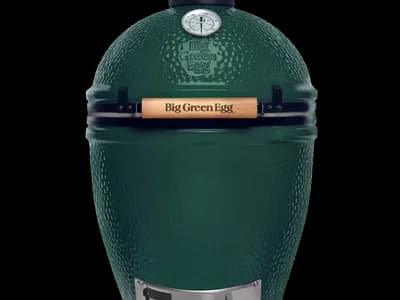
Big Green Egg Large
€2,099
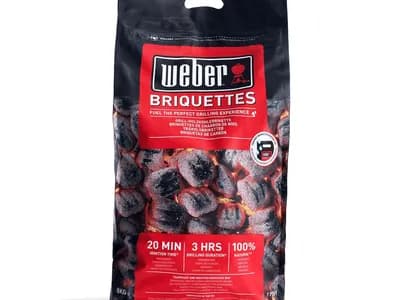
Weber Briquettes 8 kg
Briquettes for an even, long-lasting oven temperature.
€28
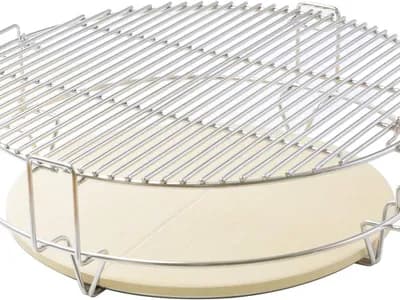
Onlyfire GCG-8552 Cooking System (2 grates + rack + 2 deflectors) for Large Kamado
€95

Inkbird IBT-26S WiFi + Bluetooth thermometer
€90
Baldassare Agnelli Aluminised Steel Baking Tray, 40 × 30 × 3 cm
€16
Have you made it?
Tell us how it turned out on your kamado. We review every rating before publishing it.
No published ratings yet. Be the first!
FAQ
What is coca de llanda and where does it originate?
Coca de llanda is a homestyle sponge typical of the Valencia region, especially the comarcas of l'Horta, la Ribera and la Costera. It takes its name from the llanda, the rectangular metal tray it is baked in and cut into squares. It is the everyday afternoon sponge, the one dunked in milk or hot chocolate, made with oil instead of butter and flavoured with cinnamon, lemon and anise. In the old days each family mixed the batter at home and carried it to the neighbourhood oven to bake, a custom shared by many village Mediterranean sweets.
What role do cinnamon, lemon and anise play in the Valencian coca?
They are the aromatic trio that defines coca de llanda and sets it apart from any plain sponge. Lemon zest brings citrus freshness and cuts the sweetness, the anise —ground seed or a splash of liqueur— gives that gentle liquorice backdrop so typical of the Mediterranean, and the cinnamon perfumes both the batter and, above all, the sugar crust on top. There is no need to overdo it: one lemon's zest, a teaspoon of anise and the dusted cinnamon are enough. Together they are what makes this coca smell of a Valencian grandmother's kitchen, an aromatic profile impossible to mistake.
Why dust sugar and cinnamon on top before baking?
It is not just decoration: it serves a technical and flavour purpose. The dusted sugar melts in the kamado's heat and caramelises into a thin, crisp, cracked crust that contrasts with the moist crumb beneath; that texture is what tells a coca de llanda apart from an ordinary sponge. The sugar layer also seals the surface and helps the top not dry out over the 40-minute bake. The cinnamon mixed into the sugar perfumes that crust and is the first thing you smell when you cut it. Do it right before baking, over the batter already in the tray, not earlier.
How do you get coca de llanda to come out tall and fluffy?
Three keys, in order of importance. First: whip the eggs with the sugar for 5-6 minutes until tripled in volume and ribboning —that whipped-in air is the real engine of the rise, far more than the leavening. Second: a steady oven at 180°C; the kamado with the deflector pinned at that temperature lifts the batter slowly and evenly, whereas a swinging oven leaves it low. Third: do not open the lid for the first 30 minutes, because the blast of cold air deflates the sponge at once. And do not overdo the baking powder: too much makes it rise fast and sink as it cools.
How long does coca de llanda keep and how do you keep it moist?
It is one of its great merits: thanks to the oil in the batter, it stays moist for 3-4 days, far longer than a butter sponge, which dries out in one. Keep it at room temperature well wrapped in cling film or in an airtight container, never in the fridge —the cold dries the crumb and hardens the coca, the opposite of what you want. If you cut it into squares, cover them as soon as they cool so they do not lose moisture at the edges. For a piece that is a few days old, 15 seconds in the microwave or a short stint in a warm kamado brings back the just-baked feel. It also freezes well as individually wrapped squares.
What do I do with the embers left after making Valencian coca de llanda on the kamado, the fluffy classic?
After 40 min at 180 °C in a classic kamado about 380 g of live embers remain: 1 h 20 min more at 180 °C without touching the vents, 2 h 25 min at 100-130 °C closing the vents or 30 min at 210-270 °C opening the vents. If you are not going to use them, close both vents and keep the charcoal for next time.
More kamado recipes


KEEP READING
Go deeper on this dish
- Recommended kamado
Big Green Egg Large
The classic kamado that defined the category
- Editorial guide
How to light a kamado: the step-by-step method
No petrol, no weird tablets and no 45-minute waits. The cone method, airflow control and the mistakes that prevent 80% of the frustration.
- Glossary term
Heat deflector
Ceramic plate placed between the coals and the grate to turn direct fire into indirect cooking.
- Related comparison
big green egg large vs kamado joe classic iii
The classic kamado matchup: the Big Green Egg Large, the indestructible pioneer with the widest accessory network, agai…