Recipe · Direct · Easy
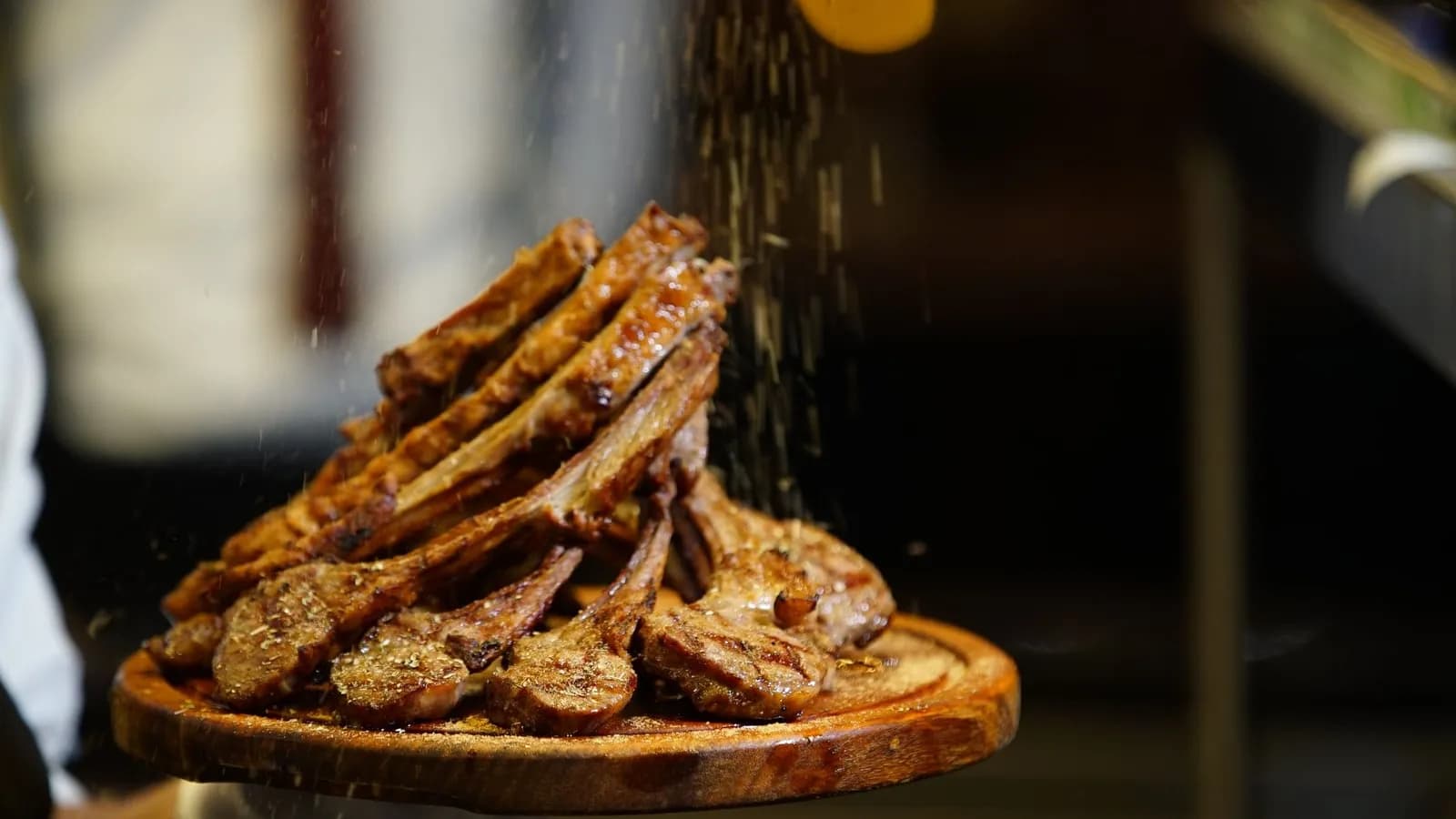
Grilled milk-fed lamb chops on the kamado, just salt and live fire
The Castilian asador classic in a small kamado for two: quebracho over live fire, a hot, clean grid, lechal (milk-fed lamb) chops 2-3 minutes a side and coarse salt at the end. Nothing else.
Quick answer
Heat the kamado to 250-280 °C with the charcoal piled to one side and the grid inside. Burp it open (lift the lid 5 cm, wait 5 seconds), brush and oil the grid, and cook the lechal (milk-fed lamb) chops over the coals 2-3 minutes a side, turning once. If the fat flares, move them to the coal-free zone. Coarse salt as they come off, then rest 2-3 minutes.
- Prep
- 25 min
- Cook
- 35 min
- Servings
- 2 servings
- Temperature
- 260 °C
Ingredients
- lechal (milk-fed) lamb rib chops (chuletillas de palo), bone in14 ud
- coarse salt (sal gorda) or flaky salt10 g
- mild olive oil, for oiling the grid15 ml
- ripe tomatoes2 ud
- spring onion (cebolleta)1 ud
- little gem lettuce heart (cogollo)1 ud
- extra virgin olive oil, for the salad30 ml
- wine vinegar10 ml
- lemon, optional1 ud
The gear for this recipe
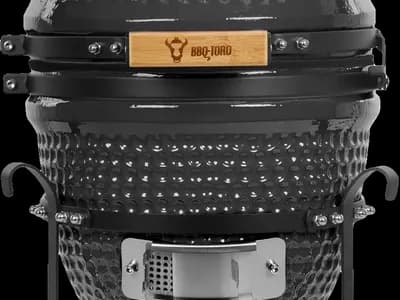
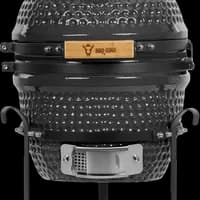 BBQ-Toro Haiiro 32 cmA few chops for two do not need a kamado built for six diners and loaded with charcoal. The BBQ-Toro Haiiro 32 is a compact ceramic kamado, sized for one or two, which with a small bed of coals reaches the 250-280 °C of this recipe and comes with a lid thermometer so you know when to open it. Its limit is surface area: the chops go spaced out and over the coal zone, so for two you cook in two or three batches back to back. For four a larger kamado makes sense; for a couple's dinner, it is enough if you run the batches one after another.
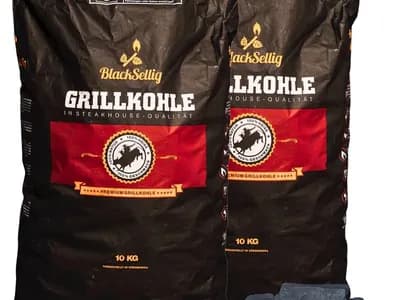
 BlackSellig Steakhouse10: white quebracho lump charcoal, 20 kgThe Castilian asador asks for live, steady fire, and BlackSellig white quebracho charcoal is very dense wood in big chunks that holds a high temperature without crumbling into fines. The hours of burn time quoted on the listing are the seller's figures; this recipe only needs half an hour of sustained heat; even so, the firebox is filled: whatever does not burn is recovered when you close the vents. It pays to break the largest chunks before loading the kamado's small firebox, and to pile them to one side so there is a coal-free zone where you can rescue the chop that catches.
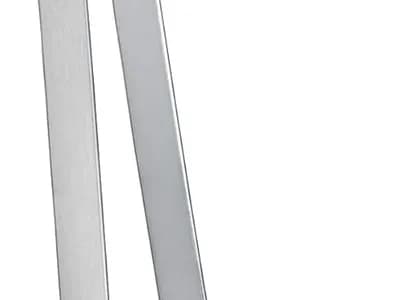
 Rösle Curved Barbecue TongsLechal chops are held by the bone, turned once and, if the fat catches, moved off the coals in a second. The Rösle curved tongs are 35 cm long in 18/10 stainless steel, a length that in a small, shallow kamado keeps the hand away from the heat without losing precision. The curve follows the wrist over a low grid and the tips close firmly on a thin bone without crushing the meat or piercing it. They also hold the oiled paper when you grease the grid.
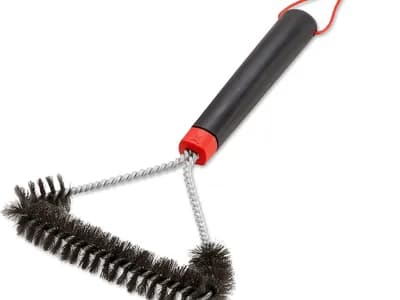
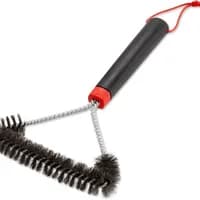 Weber 6277: triangular grate brush with stainless steel bristles, 30 cmA thin chop on a dirty grid sticks and loses its crust when you turn it. The Weber 6277 triangular brush, with stainless steel bristles and 30 cm overall length, works on the hot grid, which is how a kamado grid is cleaned, and the triangular head reaches the edge. In this recipe it is used before the first batch and between batches to clear away what the last one left. Because of its length, wear a glove, and wipe the grid with the oiled paper afterwards to pick up any loose bristle. It is for bare steel or cast iron grids, not enamelled ones: check your manual to see what yours is made of.
Method
- 01
Prepare
Take the chops out of the fridge 20-30 minutes before cooking and pat them dry with kitchen paper on both sides: surface moisture slows browning. Do not salt them yet. Meanwhile, cut the tomatoes into wedges, the spring onion into fine julienne and the little gem heart into quarters, and leave the salad assembled on the serving dish, undressed, so it does not go limp.
- 02
Load the charcoal
Fill the firebox of the BBQ-Toro Haiiro 32 with BlackSellig quebracho charcoal, breaking up the biggest chunks first, and heap it onto one half, leaving the other almost empty: a direct zone and a coal-free zone. The vents set the temperature, not the amount of charcoal, and whatever is left over goes out when you close up and is ready for the next lighting. Light it on the loaded side with one or two wax firelighters or an electric starter, never with lighter fluid.
- 03
Preheat
Set the grid in, close the lid and open the bottom vent fully and the top vent about three quarters. Let the kamado climb to 250-280 °C on the lid thermometer, with the charcoal on the loaded side covered in white ash. The grid heats up with it, and a hot grid is the one that marks the meat and releases it without tearing.
- 04
Open and clean
Open with burping: raise the lid about 5 cm, wait about 5 seconds and then open it fully, wearing gloves and keeping your face turned away, as the temperature problems guide explains. Brush the hot grid with the Weber triangular brush, then wipe it with folded kitchen paper soaked in oil, held in the Rösle tongs, never in your fingers. The oiled paper also picks up any loose bristle from the brush: check the grid before the meat goes on.
- 05
First batch
With the lid open, lay the chops over the coal zone, a finger's width apart and with the bone pointing towards the coal-free side. Leave them untouched for 2-3 minutes, until the underside releases by itself. If the fat catches and a flame appears, do not cover or half-close the lid: move that chop to the coal-free zone with the Rösle tongs and bring it back when the flame has died down.
- 06
A single turn
Turn them once, holding them by the bone with the tongs and without piercing them, and cook the second side another 2-3 minutes. Doneness is read by eye and by touch: even browning, toasted fat on the edge and firm meat that gives when pressed. If you use a thermometer, the USDA sets 63 °C with a 3-minute rest; taking them off at 60 °C is a choice of doneness.
- 07
Salt and rest
Move the chops to a warm dish, sprinkle the coarse salt over them at that moment and let them rest for 2-3 minutes while you cook the next batch. Before each batch, brush the grid again with the Weber brush and wipe it over with the oiled paper: leftovers from the last round stick to the new meat. For two, plan on two or three batches, depending on how many fit without touching.
- 08
Serve and shut down
Dress the salad with the extra virgin olive oil, the vinegar and a pinch of salt, and serve the chops straight from their rest, with a wedge of lemon for anyone who wants one. They are eaten with the fingers, by the bone. Close the lid and both vents of the kamado: without air, the quebracho that is left goes out and you can reuse it at the next lighting.
About this recipe
Lechal lamb chops (chuletillas de lechal, from milk-fed baby lamb) are the dish of the Castilian asador (a traditional roast house cooking over wood) that asks for the least technique and forgives the least inattention. They are thin, carry little fat and cook in the time it takes to pour the wine. So they do not need a big kamado or a charcoal load meant to last six hours: they ask for live fire, a hot, clean grid, and someone paying attention to the tongs for five minutes a batch. This recipe brings them to a compact kamado, the BBQ-Toro Haiiro 32, designed for one or two diners, which suits a plate of chops on any ordinary Tuesday.
Lechal, recental or pascual: what to ask the butcher for
In Spain lamb is sold by age, and age changes everything. Lechal has only had its mother's milk: pale meat, almost no marbling, mild flavour. The Lechazo de Castilla y León PGI (protected geographical indication) also requires slaughter at no more than 35 days old and animals of the churra, castellana or ojalada breeds. Recental has eaten grass or feed after weaning, and pascual is older still, with more flavour and firmer fibre. All three give chops, but lechal chops are the smallest and the quickest to cook. Ask for chuletillas de palo, the rib chops with their long bone, which is what you hold them by. The guide to cuts and equivalents explains why lechal is for fast cooking over coals and not for hours of smoke, which is the territory of Levante-style smoked lamb.
A small kamado, quebracho and two zones
A 32 cm kamado has the same thing going for it as an asador grill: a small, well-concentrated bed of coals very close to the meat. It reaches temperature sooner and burns less charcoal; with the lid open, what cooks the meat is the radiant heat of the coals from below, just as on an asador grill. The limit is surface area: the chops go spaced out and directly over the coals, so for two you cook in two or three batches. For four, a 38 or 46 cm kamado makes more sense, as the guide to sizes and diners explains.
Fuel matters. White quebracho is a very dense wood and its lump charcoal holds a high temperature without crumbling into fines; the kamado charcoal guide explains why it beats briquettes. The BlackSellig bag comes with big chunks, so break the largest ones up and pile them to one side: you get a direct zone and a coal-free one. That second zone is your insurance against flare-ups. When the fat drips and catches, the chop goes to the cool side with the Rösle curved tongs and the flame dies on its own. Before each batch, brush the grid while it is hot with the Weber triangular brush, because charred residue tears off the crust when you turn the meat.
Salt at the end and doneness by eye
Coarse salt goes on as they come off, not before. On a cut this thin, salting ahead draws moisture to the surface and browning takes longer, which is the last thing you want with two minutes a side. Added at the end, the coarse salt crunches and you can taste it. Doneness is read by eye and by touch: a golden surface with the fat on the edge toasted, firm meat that gives when you press it with the tongs and a thread of pink juice. If you prefer to measure, the official USDA reference for lamb chops is 63 °C with a 3-minute rest; taking them off earlier, at 60 °C, is a choice of doneness, not the food-safety recommendation.
In 30 seconds
32 cm kamado at 250-280 °C with quebracho loaded to one side. Burp on opening, grid brushed and oiled. Lechal (milk-fed lamb) chops directly over the coals 2-3 minutes a side with a single turn, in two or three batches for two. If the fat catches, move them to the coal-free zone and leave the lid alone. Coarse salt as they come off and a 2-3 minute rest.
Editor's tips
- Ask the butcher for lechal chuletillas de palo (rib chops) with the bone cleaned. If you are offered recental or pascual, the recipe still works, but the chop is bigger and needs a minute more per side and closer attention to doneness.
- Flare-ups are put out by taking the meat off the coals, not by covering. Always keep the coal-free zone clear: if you fill it with chops, you have nowhere left to hide the one that catches.
- To serve them asador style, first make some Padrón peppers on the coals and keep them warm: they need the same high heat and are done in a few minutes.
- If there are four of you, a 32 cm kamado means too many batches and the first chops go cold. For that table a 38 or 46 cm kamado makes sense; the size guide crosses it with the number of diners.
Gear for this recipe
As an Amazon Associate, mikamado.es earns from qualifying purchases. At no extra cost to you.
BBQ-Toro Haiiro 32 cm
A few chops for two do not need a kamado built for six diners and loaded with charcoal. The BBQ-Toro Haiiro 32 is a compact ceramic kamado, sized for one or two, which with a small bed of coals reaches the 250-280 °C of this recipe and comes with a lid thermometer so you know when to open it. Its limit is surface area: the chops go spaced out and over the coal zone, so for two you cook in two or three batches back to back. For four a larger kamado makes sense; for a couple's dinner, it is enough if you run the batches one after another.
€145
BlackSellig Steakhouse10: white quebracho lump charcoal, 20 kg
The Castilian asador asks for live, steady fire, and BlackSellig white quebracho charcoal is very dense wood in big chunks that holds a high temperature without crumbling into fines. The hours of burn time quoted on the listing are the seller's figures; this recipe only needs half an hour of sustained heat; even so, the firebox is filled: whatever does not burn is recovered when you close the vents. It pays to break the largest chunks before loading the kamado's small firebox, and to pile them to one side so there is a coal-free zone where you can rescue the chop that catches.
€52
Rösle Curved Barbecue Tongs
Lechal chops are held by the bone, turned once and, if the fat catches, moved off the coals in a second. The Rösle curved tongs are 35 cm long in 18/10 stainless steel, a length that in a small, shallow kamado keeps the hand away from the heat without losing precision. The curve follows the wrist over a low grid and the tips close firmly on a thin bone without crushing the meat or piercing it. They also hold the oiled paper when you grease the grid.
€24
Weber 6277: triangular grate brush with stainless steel bristles, 30 cm
A thin chop on a dirty grid sticks and loses its crust when you turn it. The Weber 6277 triangular brush, with stainless steel bristles and 30 cm overall length, works on the hot grid, which is how a kamado grid is cleaned, and the triangular head reaches the edge. In this recipe it is used before the first batch and between batches to clear away what the last one left. Because of its length, wear a glove, and wipe the grid with the oiled paper afterwards to pick up any loose bristle. It is for bare steel or cast iron grids, not enamelled ones: check your manual to see what yours is made of.
€14
FAQ
How long do lechal lamb chops take on the grill?
With live coals at 250-280 °C and a very hot grid, lechal chops need 2-3 minutes per side, turned just once. They are thin and carry little fat, so one minute too many dries them out. More than the clock, watch the meat: a golden face that releases from the grid by itself, toasted fat on the edge and firm meat that still gives when pressed with the tongs. Then rest for 2-3 minutes.
What is the difference between lechal, recental and pascual lamb?
Age and diet. Lechal has only had its mother's milk; the Lechazo de Castilla y León PGI requires slaughter at no more than 35 days old. The meat is pale, tender and mild. Recental has eaten grass or feed after weaning and has a little more flavour. Pascual is older, with redder meat, firmer fibre and a more intense taste. For chops cooked fast over coals, lechal is the asador classic.
What internal temperature should lamb chops reach?
The USDA food-safety reference for lamb chops and whole cuts is 63 °C in the centre, with at least a 3-minute rest. Many people prefer them slightly pinker and take them off at 60 °C: that is a choice of doneness, not the official recommendation. With chops as thin as lechal, the probe is hard to place; doneness is better judged by eye and by touch, at 2-3 minutes a side.
Should you salt the chops before or after cooking?
For thin chops, after. Salt added ahead draws moisture to the surface and browning takes longer, time you cannot spare when each side spends only two or three minutes over the coals. Sprinkling coarse salt as they come off also gives the crunch you notice when you bite. If you would rather salt first, do it just as they go on the grid and dry the meat well beforehand.
How many people can a 32 cm kamado cook for?
One or two diners. The table in the size guide places 33 cm kamados at 2-3 people, and the Haiiro 32 product page puts it at one or two. In a fast-coals recipe like this, that means two or three batches of chops for two. For four, the guide points to a 38 cm kamado; for six to eight, to a 46 cm one.
More kamado recipes
Lamb Lyulya Kebab on the Kamado
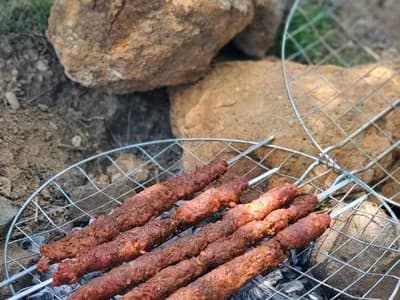
The question is never how to season it, but why it falls off the skewer. The answer is fat, a hand-chopped grain and real kneading: juicy lamb that holds together over direct fire.
Pork Neck Shashlik on the Kamado, Onion Marinade
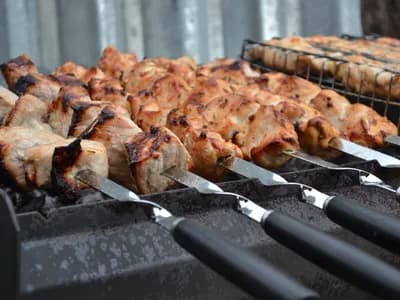
The skewer of the Russian-speaking world, cooked as I make it on my Big Green Egg Large: pork neck in 3 cm cubes, a grated onion marinade with not a drop of vinegar, and twenty minutes of steady direct fire.
Beef Cheeks in Red Wine, Braised in a Dutch Oven on the Kamado
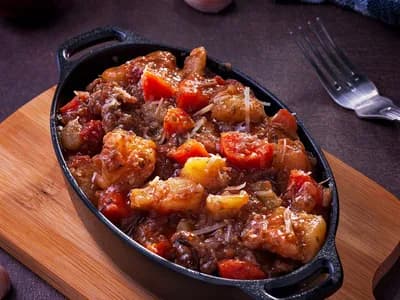
Three hours of red wine, cast iron and a thread of olive-wood smoke your kitchen oven simply cannot make. The braise that justifies lighting the kamado in midwinter.
KEEP READING
Go deeper on this dish
- Recommended kamado
BBQ-Toro Haiiro 32 cm
A few chops for two do not need a kamado built for six diners and loaded with charcoal. The BBQ-Toro Haiiro 32 is a compact ceramic kamado, sized for one or two, which with a small bed of coals reaches the 250-280 °C of this recipe and comes with a lid thermometer so you know when to open it. Its limit is surface area: the chops go spaced out and over the coal zone, so for two you cook in two or three batches back to back. For four a larger kamado makes sense; for a couple's dinner, it is enough if you run the batches one after another.
- Editorial guide
How to light a kamado: the step-by-step method
No petrol, no weird tablets and no 45-minute waits. The cone method, airflow control and the mistakes that prevent 80% of the frustration.
- Glossary term
Heat deflector
Ceramic plate placed between the coals and the grate to turn direct fire into indirect cooking.
- Related comparison
big green egg large vs kamado joe classic iii
The classic kamado matchup: the Big Green Egg Large, the indestructible pioneer with the widest accessory network, agai…