Analysis by Valery Grin · · updated September 26, 2026
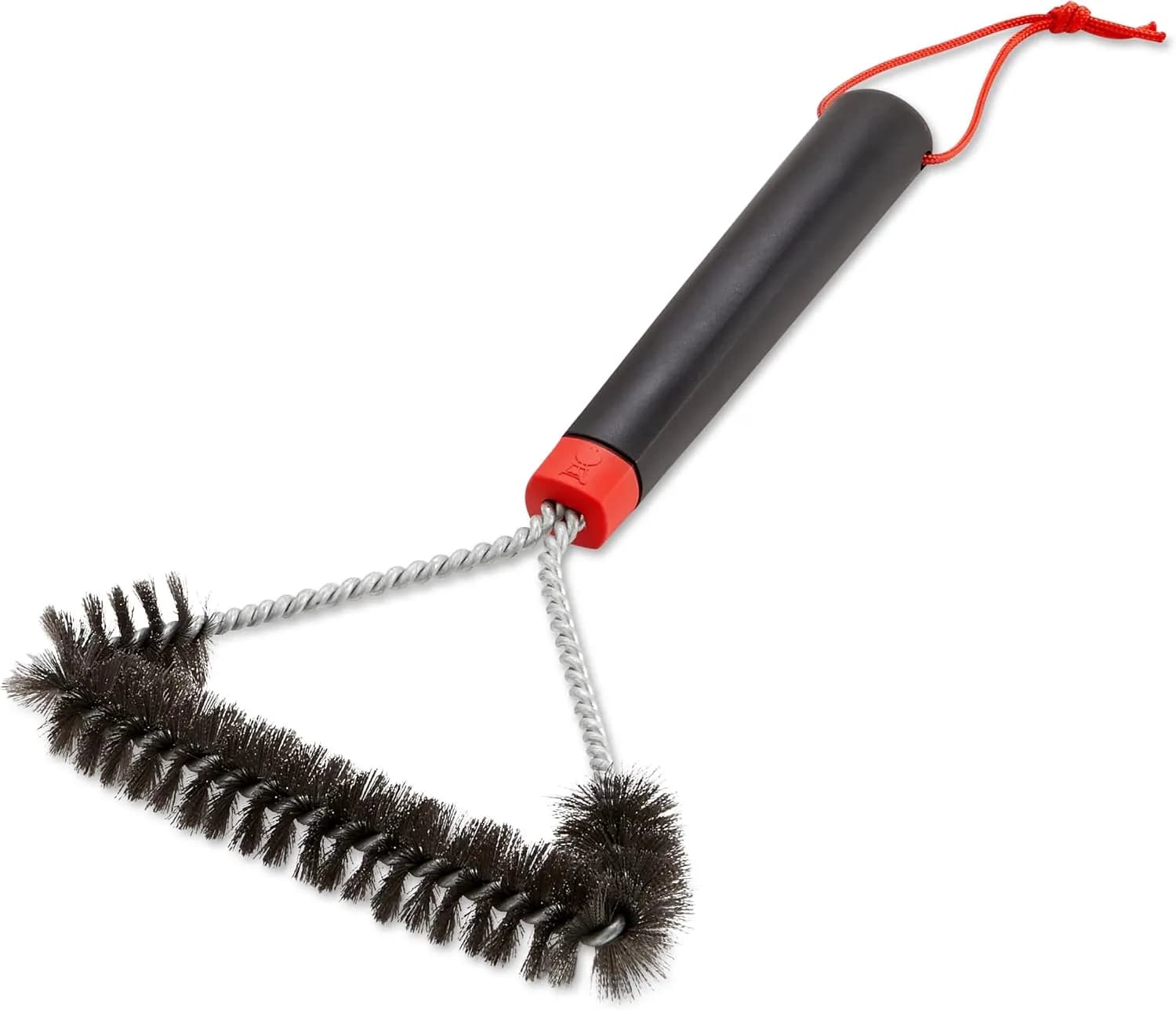
Weber 6277: triangular grate brush with stainless steel bristles, 30 cm
The steel brush for scraping a kamado's stainless or cast-iron grate while it is still hot
From€12
Reference price on Amazon (June 2026) · subject to change
As an Amazon Associate, mikamado.es earns from qualifying purchases. At no extra cost to you.
- Material
- Stainless steel bristles, aluminium handle with non-slip grip (per the listing)
Quick answer
Yes, if what you are cleaning is your kamado's standard stainless grate or an unenamelled cast-iron grate. Steel bristles scrape while hot, which is how a kamado grate gets cleaned, and the triangular head reaches the edge of the fire ring. Glove on: at 30 cm overall, handle included, your hand sits over the fire. Never on enamel or on the pizza stone.
Triangular head with stainless steel bristles, 30 cm overall with handle. The brush that works on a hot grate, where nylon cannot go, and one to use with a glove because it is short. Fine on stainless and bare iron, not enamel.
The Weber 6277 is a grate brush with a triangular head, stainless steel bristles and an overall length of 30 cm. The amazon.es listing publishes little more: 17 x 3.5 x 31.2 cm overall, an aluminium handle with a non-slip grip, black and steel colouring and the United States as the country of origin. It does not publish the weight, the length of the bristles or how much of those 30 cm is handle. It sits at number 4 among barbecue brushes with an average of 4.6 out of 5 across 3,793 ratings, the only outside reference: we have not held it in our hands.
On a kamado the grate is cleaned hot. The convenient moment is when you light the next session, with the chamber at 200-250 °C and the lid open for a few minutes: the old grease carbonises and comes away in two passes (see the [maintenance guide](/guias/mantenimiento-limpieza-kamado)). This is where a steel brush parts company with the nylon one in the catalogue, the [Char-Broil Cool-Clean](/accesorios/char-broil-360-cool-clean-brush), which only works cold. The triangular head makes sense: the tip gets between the bars and reaches the edge where the grate rests on the fire ring, and the head, no more than 17 cm wide going by the published dimensions, covers the standard grate of a Large or a Classic (46 cm) in a few passes. On an XL or a Big Joe (61 cm) it takes longer; on a MiniMax or a Joe Jr (33 cm) there is brush to spare. After a [rib steak cooked direct](/recetas/chuleton-gallego-kamado) is when it earns its keep.
Stainless steel bristles are fine on the stainless steel grate that Big Green Egg, Kamado Joe or Monolith fit as standard, and also on bare cast iron such as Big Green Egg's cast-iron grate, although afterwards you need to replace the oil you scrape off; on Kamado Joe's cast-iron half-moon check first that it is not enamelled, because its listing does not say. It must not go on enamelled surfaces: cocottes, enamelled griddles or porcelain-coated steel grates. Steel scratches enamel and the iron underneath rusts. Nor on the pizza stone or the deflector, which want brass or a scraper. The listing says nothing about surfaces: this rule is ours, not Weber's.
Two underlying drawbacks and one about the listing. The first belongs to every metal-bristle brush: with use the bristles bend and come loose, and a steel bristle in the food is a serious problem. Run a gloved hand over the grate before putting anything on it, and retire the brush as soon as you see bent bristles or a loose head. The second is the length: 30 cm in total, handle included; over a grate at 250 °C with the lid open your hand sits above the fire, so a glove, no exceptions. And the listing contradicts itself: the title says "triangular" and the details table says "Shape: rectangular"; the "high quality product" bullet adds nothing, and the components field points to a description that does not exist.
A cheap brush for what it is, from a brand already in the catalogue, which does the one thing asked of it: scrape a stainless or cast-iron grate while hot. You buy it with a glove and throw it away without remorse when it gets old.
The steel brush the catalogue was missing: it scrapes hot, fits the edge of the fire ring and costs little. Glove on always, away from enamel, and binned the moment it sheds its first bristle.
Editorial rating from spec sheet, measurements and kamado fit · not a hands-on test
Pros
- Stainless steel bristles: they scrape the grate while hot, where nylon cannot go
- Triangular head of about 17 cm (from overall dimensions): the tip reaches the ring edge
- A brand already in the catalogue; 4.6 out of 5 across 3,793 ratings on amazon.es
- Cheap for what it is and stocked on amazon.es, not Global Store: no customs surprises
Cons
- Only 30 cm overall, handle included: your hand sits above the fire; glove compulsory
- Metal bristles: they work loose with use; not for enamel or the pizza stone
- Thin, muddled listing: no weight, "triangular" in the title, "rectangular" in the table
Who it's for
For anyone who cooks direct often and wants to clean a stainless or cast-iron grate with the kamado hot, in two minutes, at the start of the next session.
Not for
If your grate, griddle or cocotte is enamelled, or if what you dirty is the pizza stone. And if you are not going to wear a glove, a long-handled brush is a better bet.
Specifications
- Material
- Stainless steel bristles, aluminium handle with non-slip grip (per the listing)
As an Amazon Associate, mikamado.es earns from qualifying purchases. At no extra cost to you.
Goes well with
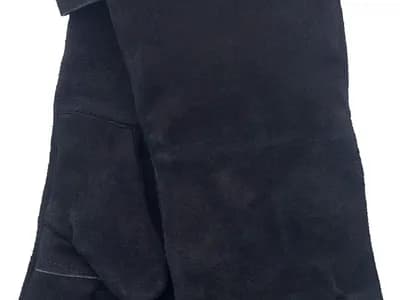
WMF BBQ Heat-Resistant Leather Gloves 40 cm (Pair)
The 30 cm overall length is this brush's big drawback: over a grate at 250 °C your hand sits above the fire. A 40 cm leather glove covers the wrist and forearm, which is exactly what you expose when scraping the edge of the fire ring with the lid open. Without a glove there is no hot cleaning, and without hot cleaning this brush loses its reason to exist.
€25
Weber Grill Cleaner Biodegradable 300 ml
The brush takes off the carbonised grease; Weber's biodegradable cleaner deals with the rest when the grate is cold and you want it spotless before putting the kamado away for a season. The same brush serves both stages, the hot pass for burnt-on grease and the cold one for the final clean. It is the logical partner for a thorough clean a couple of times a year.
€11
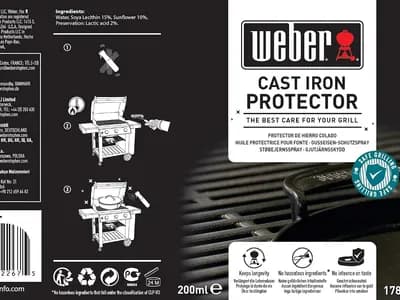
Weber Cast Iron Protector 17889, 200 ml fine-mist spray
If what you are brushing is bare cast iron, such as BGE's cast-iron grate, every pass of steel takes off part of the oil layer that protects the metal. Weber's protector spray is meant to replace it before you store the iron, and prevents the film of rust that appears if you leave it scraped and dry. In a coastal home it is not optional.
€10
FAQ
Can I use it on my kamado's grate without damaging it?
It depends on the material. On the standard stainless grate of a Big Green Egg, a Kamado Joe or a Monolith, yes. On bare cast iron, such as BGE's cast-iron grate, also yes, although scraping takes off part of the oil layer and it needs replacing; on Kamado Joe's half-moon check first whether the iron is bare or enamelled, because its listing does not say. On enamelled surfaces, no: steel scratches the enamel and the iron underneath rusts. Weber specifies no surfaces; the rule is ours.
Do you clean the grate hot or cold?
Hot; that is what justifies the steel. Do it when lighting the next session: with the chamber at 200-250 °C and the lid open for a few minutes the residue carbonises and comes away in two passes; cold, the grease is stuck. If you do it at the end of a session, open the lid in two stages, a crack first, so air does not rush into an oxygen-starved chamber and flash flame your way. Always a leather glove: 30 cm overall leaves your hand over the coals.
How does it differ from the nylon Char-Broil and the brass Fackelmann in the catalogue?
Three tools for three moments. The Char-Broil Cool-Clean is all nylon and only works cold; in return it sheds no metal bristles and scratches nothing. The brass Fackelmann has softer bristles and is 42 cm long: it is the one for the pizza stone and delicate surfaces. The Weber 6277 is the only one with stainless steel bristles, which scrape hot on stainless and bare cast iron. If you cook direct often, it is the one you will use most; if you only make pizza, you do not need it.
When does it need replacing?
Sooner than you would like. Every metal-bristle brush ends up shedding them, and a steel bristle that travels from the grate to the food is a real risk, not fussiness. The rule is simple: when you see bristles bent outwards, bald patches on the head or the head loose against the handle, it goes. In the meantime, run a gloved hand or a cloth over the grate after brushing and before putting anything on it. Cheap as it is, replacing it the moment it sheds bristles does not hurt.