GUÍA DE COMPRA
Big Green Egg: analysis and complete guide
What it really is, what its ceramic is actually made of, how the EGGcessories system works, what the warranty covers and where it wins or loses against Kamado Joe. Honest analysis, no space-age myths.
Quick answer
The Big Green Egg is a ceramic kamado from the pioneering American brand (since 1974). Its thick refractory ceramic holds heat so you can grill, smoke and bake pizza in one cooker. It is worth it if you want a durable, versatile cooker backed by the widest accessory network on the market.
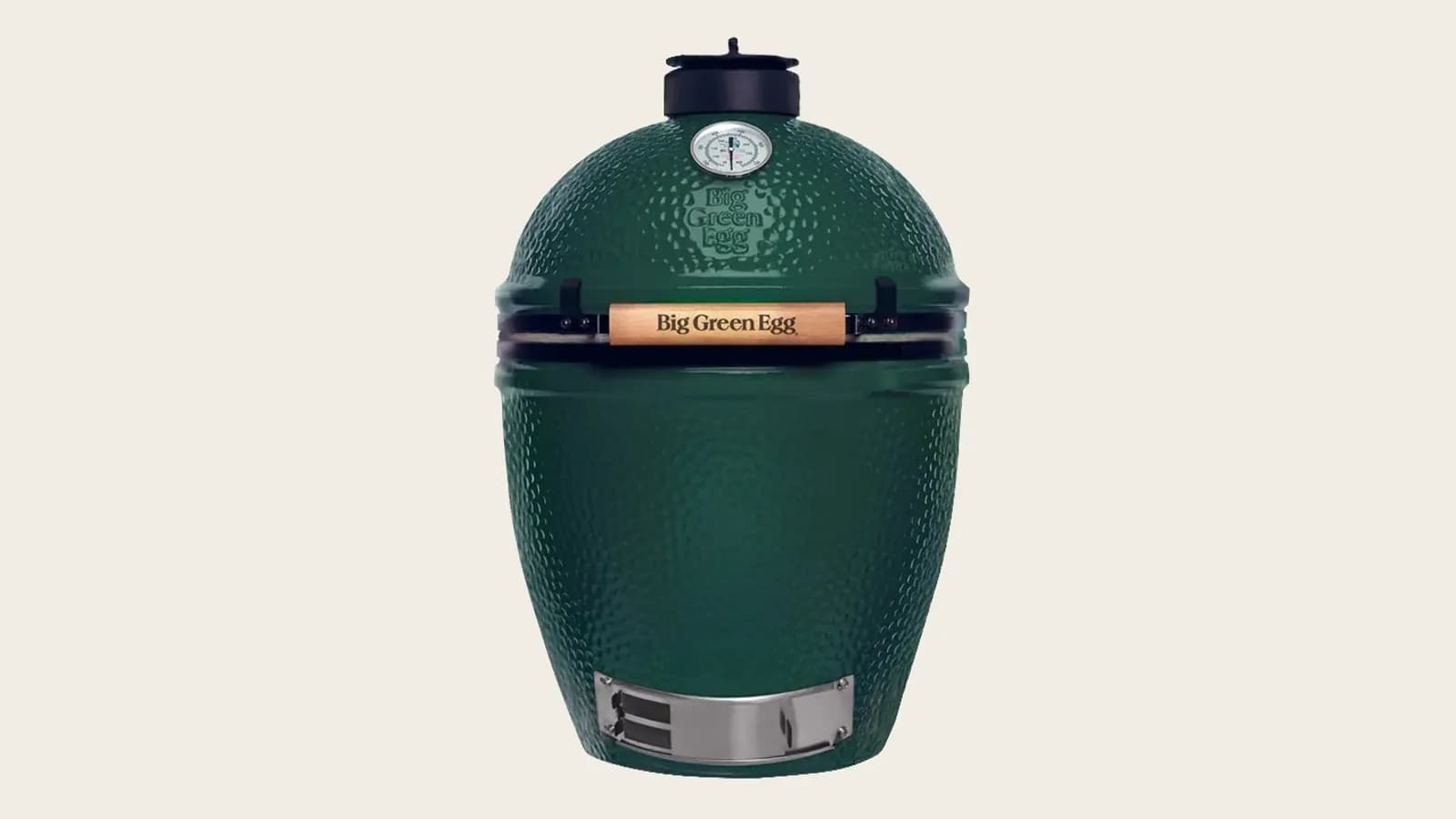
The Big Green Egg is probably the best-known kamado in the world, and also one of the most misunderstood. This guide is not about which one to buy (that is what our Big Green Egg buyer guide is for); it is about understanding the cooker: what it is, what its ceramic is really made of, how its accessory ecosystem works, what the lifetime warranty covers and where it wins or loses against Kamado Joe.
I write from experience: I own a Big Green Egg Large on my terrace and cook on it every week. Whenever I speak in the first person it is always about that specific Large; everything else is analysis, not marketing.
| Size | Diameter | Diners | When to choose it |
|---|---|---|---|
| MiniMax | 33 cm | 1-2 | Portable: balcony, couples, camping or travel |
| Large | 46 cm | 4-6 | The best-selling all-rounder; the default for a family |
| XL | 61 cm | 8-12 | You host often or want to roast whole cuts like a turkey |
| 2XL | 74 cm | 20+ | Events, large groups or semi-professional use |
What the Big Green Egg is and why it matters
A Big Green Egg is a kamado: an egg-shaped ceramic grill-oven that cooks with charcoal and is controlled by two air vents. If the concept is still fuzzy, start with what a kamado is and come back.
What sets the brand apart is its history. The Big Green Egg was born in Atlanta (USA) in 1974, when Ed Fisher began importing and then refining the Asian clay cooker that every modern kamado descends from. That decades-long head start shows up in two things: product maturity and the size of its dealer and accessory network.
It is neither the cheapest kamado nor the one that includes the most in the box. It matters because it is the benchmark the rest are measured against: when someone says ceramic kamado, the mental image is usually a green EGG. That seniority also means spare parts available for years and a huge community documenting every technique. To browse the full brand catalogue, visit the Big Green Egg page.
The ceramic and heat retention, without the myths
Honesty matters here, because a lot of legend circulates. The Big Green Egg ceramic does not come from NASA or the space shuttle: that is a marketing myth that does not hold up. What you actually get is high-fired refractory ceramic, the same kind of material used in industrial kilns and thermal linings, with thick walls and a hard glazed exterior.
That is more than enough, and it explains the behaviour that is real: the walls store heat and release it steadily, so the temperature barely swings even when the wind changes. With the vents nearly closed the EGG holds 110-130 C for hours for a smoke; wide open it comfortably clears 300 C for pizza or searing.
The honest trade-off of all that thermal mass is inertia: the ceramic is slow to heat and, above all, slow to cool. You have to adjust the air ahead of time, because if you overshoot the temperature it will not drop in two minutes. Used with care, that same inertia is what turns one basket of charcoal into a very long low-and-slow session. On my Large, a full load easily lasts an overnight cook without a refill.
The EGGcessories system and the nest
The real moat of the Big Green Egg is not the ceramic: it is its accessory ecosystem, which the brand calls EGGcessories. It is the widest in the industry, and many functions other brands include as standard are bought separately here.
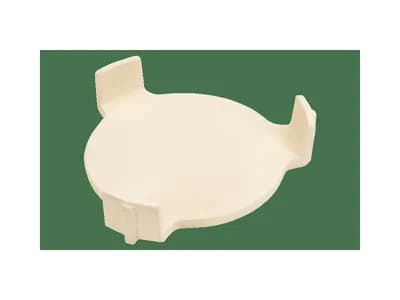
The key piece is the ConvEGGtor: a footed ceramic deflector that sits over the charcoal to switch from direct fire to indirect cooking: it turns the EGG into a convection oven for smoking, baking bread or roasting large cuts without scorching them underneath. If you own a Large, the ConvEGGtor for Large is, in my view, the first accessory to add. To understand the direct/indirect logic, see direct vs indirect cooking.
The nest is the wheeled metal base the EGG sits in, and from there you chain the EGG Mates (side tables), stainless grids, pizza stones, multi-level racks and stands. Plan it as a system: the real cost of an EGG is the cooker plus the two or three accessories you will genuinely use.
Sizes: how to choose without regret
The Big Green Egg comes in a family of sizes that share the same ceramic and the same principles; the only thing that changes is the grid diameter and, with it, how many people you feed and how much charcoal you burn. The table above sums up the most relevant ones.
In practice, three cover 90% of people: the portable MiniMax for a balcony, couples or travel; the Large, the best-seller and the all-rounder I recommend by default for a family; and the XL for anyone who entertains often or wants to roast a whole turkey. The Large also has the widest range of accessories available, a detail that matters more than it looks.
This section is about understanding the size logic, not deciding for you. If you already want the verdict on which specific model to buy for your use and your terrace, that decision is developed in the Big Green Egg buyer guide and, if this is your first cooker, in how to choose your first kamado.
Lifetime warranty and after-sales
The warranty is one of the Big Green Egg strongest arguments, but it has to be read precisely. The ceramic components (base, dome, ring and firebox) carry a lifetime warranty for the original buyer: if a ceramic part cracks from a material defect, the brand replaces it. It is a real guarantee and one of the reasons an EGG is seen as a decades-long purchase.
The honest part is clarifying what is not lifetime. The metal parts (bands, hinge, cap) are usually covered for about five years, and wear items like the thermometer and the gasket have much shorter coverage: they are consumables you replace, not failures. Register the purchase and keep the receipt, because the warranty applies to the original owner.
In after-sales, seniority helps: as the most widespread brand, finding replacement gaskets, thermometers or bands is easy, and you are never left with a useless cooker over a five-euro part.
Big Green Egg versus Kamado Joe
It is the inevitable comparison, and the honest answer is that they cook very similarly: same ceramic, same principle. The difference is philosophy. You have the full breakdown in Big Green Egg Large vs Kamado Joe Classic III; here is the candid summary.
Where the EGG wins: simplicity and longevity. Fewer moving parts to fail, the widest accessory and dealer network, better resale value and, concretely, less weight: the Large is around 73 kg versus 108 kg for the Classic III without its cart (127 kg with it, according to Kamado Joe), which decides a lot on a small terrace.
Where it loses: what comes in the box. Kamado Joe includes as standard things you pay extra for on the EGG: the multi-level Divide & Conquer system, the SlōRoller diffuser for convection and a lighter assisted hinge. If you value factory equipment and the better entry price, Kamado Joe usually wins. If you value the ecosystem, the simplicity and buying once for many years, the EGG is hard to beat.
Maintenance and who it is for
Big Green Egg maintenance is among the simplest there is. The ceramic self-cleans with a clean burn: take it up to high heat and the grease burns off. Ash is removed cold and little else; the only things I watch on my Large are the felt gasket around the mouth, which is the consumable that wears first, and keeping the hinge area dry. The full routine is in kamado maintenance and cleaning.
Who is it for? For anyone who wants one cooker that grills, smokes and bakes and thinks in years, not seasons; for anyone who values parts and accessory availability over price; and for anyone who enjoys the process of controlling air and fire. It is not for whoever wants the cheapest option, nor for whoever wants to light up and eat in fifteen minutes with no learning curve.
If it fits you, you will see it fast: start with a beer-can chicken with crispy skin, build a Neapolitan pizza on the stone and leave some bacon-wrapped dates for guests. That is when you suddenly understand why people obsess over the green egg.
The Big Green Egg is not space magic nor the cheapest option: it is honest, very well-executed refractory ceramic inside the most mature ecosystem in the kamado world. That is its proposition and it delivers. If you now want to move from understanding it to choosing the right model for your home, continue with the Big Green Egg buyer guide.
Gear featured in this guide
Recipes to get started

Beer-can chicken with crackling skin
The American beer-can chicken classic, taken to the kamado: the beer steams from within, the ceramic concentrates the heat and the skin finishes like crisp parchment.
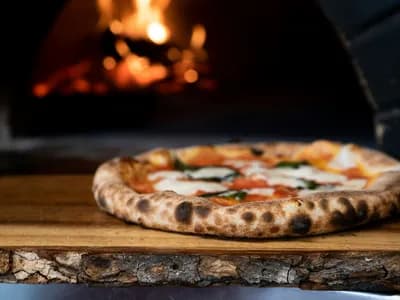
Neapolitan pizza on the kamado
At 350°C the base puffs in 90 seconds and the cornicione comes out leopard-spotted and pillowy. One pizza, three minutes, zero margin for error.

Bacon-Wrapped Dates on the Grill
The sweet-and-savory bite that vanishes first: Medjool dates stuffed with blue cheese, hugged in crisp bacon and lacquered with Pedro Ximénez, caramelized over the kamado's direct fire.
GO DEEPER
Continue with these
- Related guide
Your first kamado: the complete pre-purchase guide
Size, materials, brand and budget. Everything you have to decide before clicking Buy, told by someone who has made enough mistakes.
- Related guide
What Is a Kamado: The Complete Guide
What a kamado is, how it works and what it's for: the honest guide to understanding the ceramic grill before you buy.
- Related guide
How to maintain and clean a ceramic kamado
Ceramic almost cleans itself: burn-off, grates, gaskets and rust, explained with no miracle products and no needless chemicals.
- Recipe to practice
Beer-can chicken with crackling skin
The American beer-can chicken classic, taken to the kamado: the beer steams from within, the ceramic concentrates the heat and the skin finishes like crisp parchment.
- Recipe to practice
Neapolitan pizza on the kamado
At 350°C the base puffs in 90 seconds and the cornicione comes out leopard-spotted and pillowy. One pizza, three minutes, zero margin for error.
- Recipe to practice
Bacon-Wrapped Dates on the Grill
The sweet-and-savory bite that vanishes first: Medjool dates stuffed with blue cheese, hugged in crisp bacon and lacquered with Pedro Ximénez, caramelized over the kamado's direct fire.
- Editorial comparison
big green egg large vs kamado joe classic iii
The classic kamado matchup: the Big Green Egg Large, the indestructible pioneer with the widest accessory network, again
- Glossary term
Refractory ceramic
High-density ceramic that absorbs, stores and radiates heat between 70 and 400 °C without cracking.
- Glossary term
Heat deflector
Ceramic plate placed between the coals and the grate to turn direct fire into indirect cooking.
- Glossary term
SlōRoller
Convection chamber patented by Kamado Joe that evens out low-temperature heat and removes hotspots.
Frequently asked questions
Is it true the Big Green Egg ceramic comes from NASA?
No. It is a marketing myth. The EGG uses high-fired refractory ceramic, the same kind of material as industrial kilns: thick walls, a hard glaze and excellent heat retention. It needs no space-age legend to work very well.
Which Big Green Egg size should I buy?
For most families, the Large is the all-rounder. The MiniMax suits a balcony, couples or travel, and the XL is for those who host large groups. The verdict by use case is developed in the buyer guide.
Which Big Green Egg accessory do I absolutely need?
The ConvEGGtor. It is the ceramic deflector that enables indirect cooking for smoking, baking bread or roasting large cuts. Without it you are limited to direct fire. For a Large, see the ConvEGGtor for Large.
Does the lifetime warranty cover everything?
Not exactly. It is lifetime only for the ceramic components and for the original buyer. Metal parts are covered for a few years, and the thermometer and gasket are consumables with short coverage. Register the purchase to activate it.
Big Green Egg or Kamado Joe?
They cook similarly. The EGG wins on ecosystem, simplicity, weight and resale; Kamado Joe includes more as standard (Divide & Conquer, SlōRoller). The detail is in the Large vs Classic III comparison.
How much maintenance does a Big Green Egg need?
Very little. An occasional clean burn chars off the grease, you remove ash cold and watch the mouth gasket, which is the consumable that wears first. The full routine is in maintenance and cleaning.